
Global Bra Cups Market Size, Growth & Revenue 2024-2034
Global Bra Cups Market is segmented by Product Type (Foam Cups, Gel Cups, Silicone Cups, Fabric Cups, Cotton Cups), Application (Sportswear, Casual Wear, Formal Wear, Maternity, Swimwear), End-Use Industry (Retail Apparel, Sports Apparel, Maternity Products, Swimwear Industry), Distribution Channel (Online Retail, Specialty Stores, Mass Merchandisers), and Geography (North America, LATAM, West Europe, Central & Eastern Europe, Northern Europe, Southern Europe, East Asia, Southeast Asia, South Asia, Central Asia, Oceania, MEA)
Pricing
Report Overview
Executive Summary
- •The global Bra Cups market represents a vital segment within the intimate apparel industry, focusing on products designed to offer comfort, support, and aesthetic appeal to women across various demographics. This market spans multiple product types, including foam, gel, silicone, fabric, and cotton cups, which cater to a range of applications such as sportswear, casual wear, formal wear, maternity, and swimwear. Innovations in materials and design have expanded market scope, with emphasis on ergonomic fits, enhanced durability, and eco-friendly alternatives. The market's boundaries cover manufacturing, distribution, and retail sectors worldwide, highlighting a growing demand driven by increasing health awareness, fashion consciousness, and rising disposable incomes. Key drivers include technological advancements, expanding e-commerce platforms, and evolving consumer preferences towards personalized and sustainable products. The market also faces challenges like raw material price volatility and competition from alternative products. Overall, the Bra Cups market is poised for robust growth, fueled by global trends in women’s fashion and wellness.
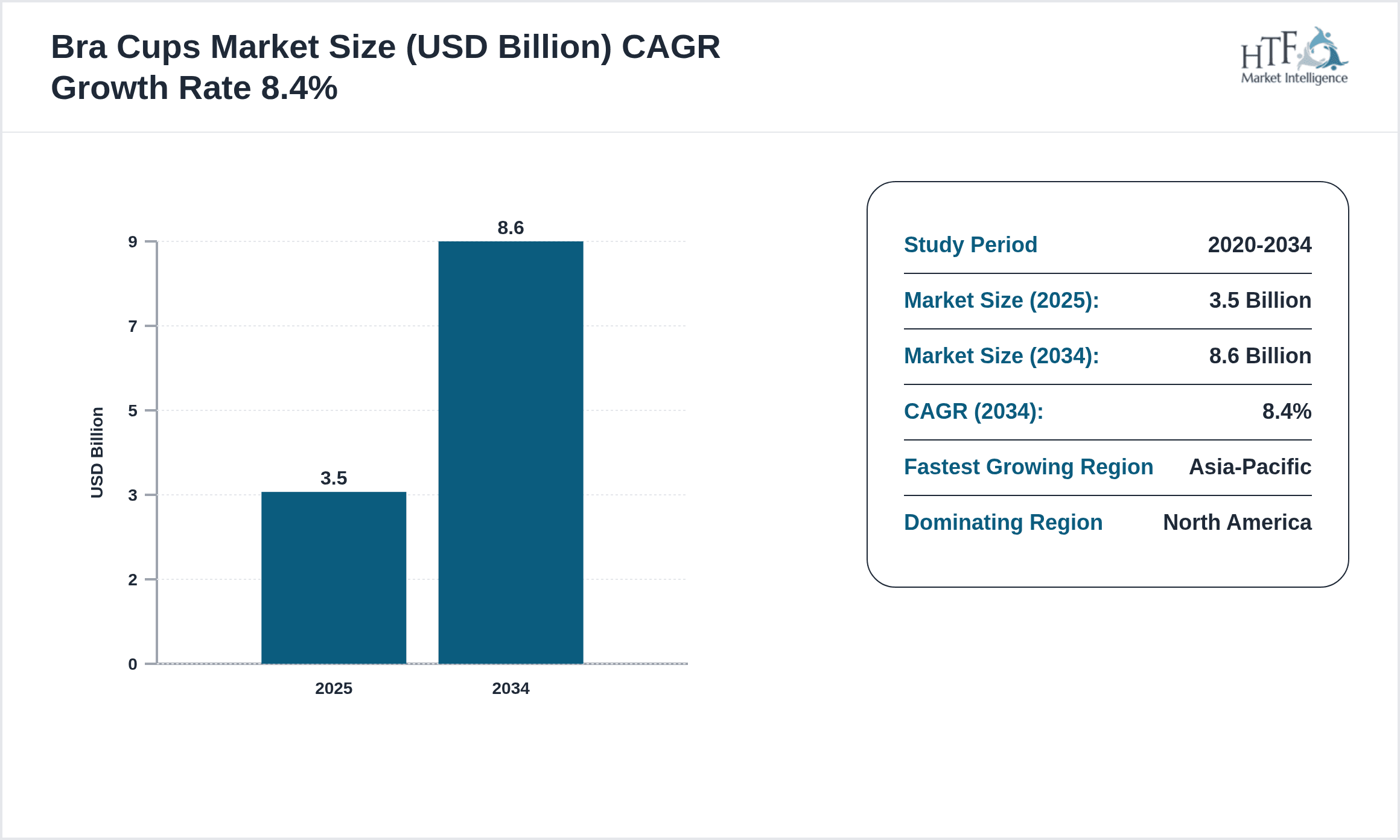
- •Key market highlights include a strong CAGR of 8.4% projected from 2024 to 2034, with the market size expected to grow from USD 3.5 billion in 2024 to USD 8.6 billion by 2034. North America currently dominates the market owing to high consumer awareness and established retail channels, whereas Asia-Pacific is the fastest-growing region due to rising disposable incomes and expanding urban populations. Foam cups remain the leading product type, favored for their comfort and affordability, while silicone cups exhibit the fastest growth driven by increasing demand for premium and reusable products. Sportswear and casual wear applications collectively account for the majority of market consumption. The growth trajectory is supported by technological enhancements in materials and customization capabilities, with digital retail channels playing a critical role in market expansion.
- •The Bra Cups market offers significant value propositions to apparel manufacturers, retailers, and consumers by providing diverse product options tailored to specific needs and lifestyles. Its strategic importance lies in catering to the global shift towards health-conscious and fashion-forward consumers who seek both functionality and style. For manufacturers, the market represents opportunities for product innovation and differentiation through advanced materials and sustainable solutions. Retailers benefit from increasing demand across traditional and digital platforms, while consumers gain from improved comfort, fit, and aesthetic appeal. The market’s evolution is closely linked to broader trends in women's empowerment, fitness culture, and eco-conscious purchasing, making it a critical focus area for stakeholders aiming to capture long-term growth and loyalty in the intimate apparel sector.
Competitive Landscape
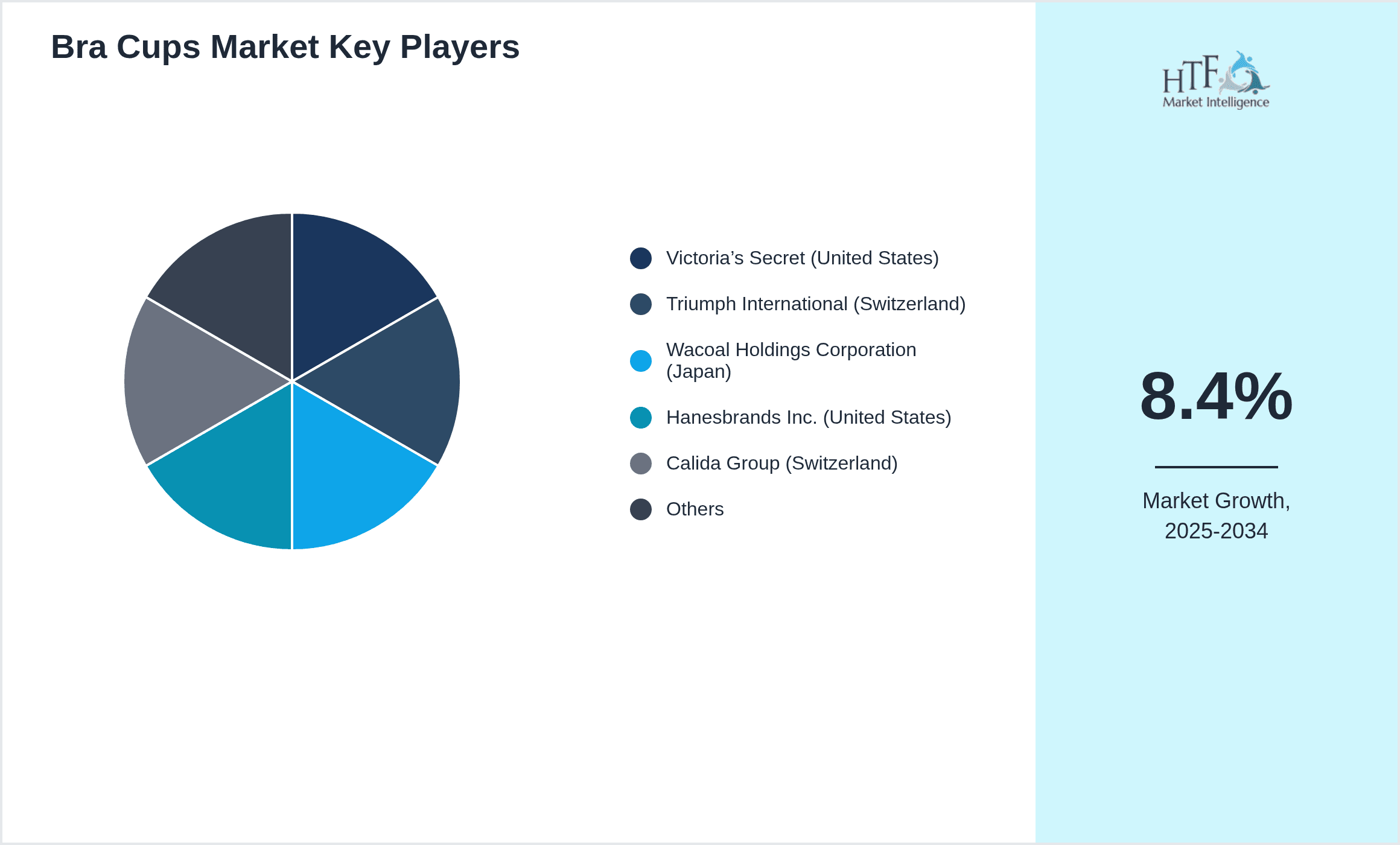
The global Bra Cups market is characterized by intense competition among established international brands and emerging regional players, emphasizing innovation, product quality, and brand differentiation. Companies invest heavily in research and development to enhance material technology, fit customization, and sustainability credentials, which serve as key competitive differentiators. Market rivalry is intensified by the presence of numerous players adopting varied pricing strategies to capture diverse consumer segments, from premium to budget-friendly offerings. Strategic partnerships with apparel manufacturers and retailers enhance distribution reach, while digital marketing and e-commerce platforms have become pivotal for customer engagement and sales growth. Additionally, mergers and acquisitions are common as firms seek to consolidate market position and expand product portfolios. The competitive landscape is dynamic, with players focusing on rapid product launches, regional expansions, and sustainability initiatives to maintain relevance and leadership.
Leading Companies in Bra Cups Market
- •Victoria’s Secret (United States)
- •Triumph International (Switzerland)
- •Wacoal Holdings Corporation (Japan)
- •Hanesbrands Inc. (United States)
- •Calida Group (Switzerland)
- •L Brands Inc. (United States)
- •Soma Intimates (United States)
- •Marks & Spencer (United Kingdom)
- •H&M Group (Sweden)
- •Chantelle Group (France)
- •Glamorise Foundations (United States)
- •Frederick’s of Hollywood (United States)
- •Cosabella Inc. (United States)
- •Bali Intimates (United States)
- •Jockey International (United States)
- •Intimissimi (Italy)
- •La Perla (Italy)
- •Lively Group (United States)
- •ThirdLove (United States)
- •Spanx Inc. (United States)
- •Calvin Klein (United States)
- •Aimer Group (China)
- •Enamor (India)
- •Sloggi (Switzerland)
- •Charnos Group (United Kingdom)

Market Breakdown
- •By Product Type
- ◦Foam Cups
- ◦Gel Cups
- ◦Silicone Cups
- ◦Fabric Cups
- ◦Cotton Cups
- •By Application
- ◦Sportswear
- ◦Casual Wear
- ◦Formal Wear
- ◦Maternity
- ◦Swimwear
- •By End-Use Industry
- ◦Retail Apparel
- ◦Sports Apparel
- ◦Maternity Products
- ◦Swimwear Industry
- •By Distribution Channel
- ◦Online Retail
- ◦Specialty Stores
- ◦Mass Merchandisers
Growth Dynamics
- •Increasing participation of women in sports and fitness activities is driving demand for specialized bra cups such as foam and silicone types designed for enhanced comfort and support. This trend is bolstered by rising health awareness and athleisure fashion popularity worldwide.
- •Advancements in material technology, including the development of breathable, lightweight, and skin-friendly fabrics, are significantly enhancing product appeal and functionality, fostering higher consumer adoption across casual and formal wear segments.
- •The growth of e-commerce platforms facilitates wider accessibility and personalized shopping experiences, enabling consumers to explore a broader range of bra cup options and driving market expansion internationally.
- •Rising disposable incomes in emerging economies, coupled with increasing urbanization and changing lifestyle preferences, are creating new customer bases eager for premium and diverse bra cup products.
- •Sustainability concerns are propelling manufacturers to innovate eco-friendly bra cups using recycled and biodegradable materials, appealing to environmentally conscious consumers and opening new market opportunities.
- •Customization trends, including 3D fitting technologies and made-to-measure bra cups, are gaining traction, allowing brands to differentiate and cater to niche consumer needs with higher precision and satisfaction.
- •Collaborations between apparel brands and technology firms are fostering innovative product designs, incorporating smart textiles and antibacterial properties to enhance user experience and product longevity.

Market Trends
- •The rise of sustainable fashion has led to increased adoption of organic cotton and recycled materials in bra cup manufacturing, reducing environmental impact and appealing to eco-conscious demographics worldwide.
- •Digital fitting tools and virtual try-on technologies are revolutionizing the bra cups shopping experience, reducing return rates and improving customer satisfaction by ensuring better fit and comfort.
- •Premiumization is a growing trend, with consumers willing to pay more for high-quality gel and silicone cups offering superior support, durability, and aesthetic appeal, driving product innovation and brand differentiation.
- •The integration of athleisure into mainstream fashion has blurred the lines between sports and casual wear, boosting demand for versatile bra cups that combine function and style.
- •Increasing collaborations between lingerie brands and influencers or celebrities are boosting market visibility and driving consumer engagement through targeted marketing and limited-edition collections.
- •The shift towards online retailing accelerated by the COVID-19 pandemic continues to influence distribution strategies, with brands investing heavily in direct-to-consumer channels and omnichannel approaches.
- •Technological innovations such as 3D knitting and seamless cup manufacturing are gaining traction, enabling cost-effective production and enhanced product comfort, shaping future market trajectories.
Market Opportunities
- •Expanding the product portfolio to include adaptive bra cups for women with special needs or post-surgical requirements offers untapped growth potential, addressing niche yet underserved segments globally.
- •Emerging markets in Asia-Pacific and Latin America present significant opportunities due to rising female workforce participation and increasing awareness of intimate apparel benefits, encouraging market entry and expansion.
- •Integration of smart textiles and wearable technologies into bra cups can create innovative products that monitor health metrics, appealing to tech-savvy consumers and creating new revenue streams.
- •Collaborations with fashion designers and lifestyle brands can help create exclusive collections that attract premium customers and enhance brand prestige, driving higher margins and market share.
- •Growth in online customization platforms enables brands to offer personalized bra cup solutions, improving customer loyalty and reducing inventory costs through made-to-order models.
- •Sustainability-focused innovations, including biodegradable and recyclable bra cups, align with global environmental goals and consumer preferences, enabling market players to differentiate and lead in green product segments.
- •Expansion of multi-channel distribution networks combining online and offline presence provides broader market reach and enhanced consumer convenience, fostering incremental sales growth.
Market Challenges
- •Fluctuating raw material costs, especially for silicone and foam, create pricing pressures and impact profitability, necessitating efficient supply chain management and cost optimization strategies.
- •High competition from low-cost manufacturers in emerging economies challenges established brands, pushing them to innovate and reinforce brand loyalty through quality and service differentiation.
- •Complexities in achieving an optimal fit for diverse body types impose design and manufacturing challenges, requiring investment in R&D and advanced fitting technologies to minimize returns and enhance satisfaction.
- •Regulatory compliance related to materials, safety standards, and environmental norms varies across regions, complicating global market operations and increasing time-to-market for new products.
- •Counterfeit products and grey market imports erode brand equity and revenues, demanding stringent intellectual property protection and supply chain transparency.
- •Consumer skepticism towards new materials or technologies, particularly in conservative markets, limits rapid adoption and necessitates educational marketing efforts.
- •Logistical challenges exacerbated by global disruptions such as pandemics and geopolitical tensions affect raw material availability and distribution efficiency, impacting market growth trajectories.
Regulatory Framework
- •From 2019 to 2024, several regions implemented stricter safety and quality standards governing intimate apparel materials to ensure consumer protection, mandating certifications for chemical content and skin compatibility. These regulations have increased compliance costs but enhanced product reliability and consumer trust.
- •The European Union introduced the REACH regulation amendments in 2021, imposing tighter restrictions on hazardous substances in silicone and foam components used in bra cups. Manufacturers adapted by sourcing compliant raw materials and reformulating products to maintain market access.
- •In North America, updated labeling requirements enacted in 2022 require detailed disclosure of fabric composition, country of origin, and care instructions, promoting transparency and aiding consumer decision-making in the bra cups market.
- •Environmental regulations focusing on reducing plastic waste and promoting sustainable materials have gained prominence globally, encouraging the adoption of recyclable and biodegradable components in bra cup manufacturing.
- •Government initiatives in Asia-Pacific to support textile and apparel innovation include grants and tax incentives for companies investing in eco-friendly technologies and advanced manufacturing processes, fostering market modernization and competitiveness.
Market Intelligence
- •15th January 2025, Victoria’s Secret launched its new line of eco-friendly silicone bra cups featuring biodegradable materials and enhanced breathability. Targeting environmentally conscious consumers, the product integrates advanced design for superior comfort and durability, aiming to capture growing demand in North America and Europe. This launch aligns with the brand’s sustainability goals and is expected to drive significant market share growth in premium segments. Source: Official Victoria’s Secret Press Release
- •3rd March 2025, Wacoal Holdings Corporation introduced a 3D-printed customized foam bra cup designed to provide perfect fit and support tailored to individual body shapes. Leveraging cutting-edge additive manufacturing technology, this innovation reduces production waste and enhances consumer satisfaction. The product rollout began in Asia-Pacific markets, with plans for global expansion by late 2025. This move underscores Wacoal’s commitment to innovation and sustainability in intimate apparel. Source: Wacoal Corporate Website
- •21st May 2025, Hanesbrands Inc. announced a strategic partnership with a leading sportswear brand to co-develop high-performance gel bra cups for activewear applications. The collaboration focuses on integrating moisture-wicking and antibacterial technologies to appeal to fitness enthusiasts globally. This initiative is part of Hanesbrands’ growth strategy to strengthen its position in the athleisure segment and expand into emerging markets. Source: Hanesbrands Investor Relations
- •12th July 2025, Triumph International completed the acquisition of a niche lingerie startup specializing in sustainable fabric cups made from recycled materials. This acquisition enhances Triumph’s product portfolio with eco-conscious offerings and strengthens its market footprint in Europe and Asia-Pacific. The deal reflects ongoing consolidation trends and a strategic focus on sustainability-driven innovation within the bra cups market. Source: Industry Publication
Regional Outlook
The North America currently holds a significant share of the market, primarily due to several key factors: increasing consumption rates, a burgeoning population, and robust economic momentum. These elements collectively drive demand, positioning this region as a leader in the market. On the other hand, Asia-Pacific is rapidly emerging as the fastest-growing area within the industry. This remarkable growth can be attributed to swift infrastructure development, the expansion of various industrial sectors, and a marked increase in consumer demand. These dynamics make this region a crucial player in shaping future market growth.
In our report, we cover a comprehensive analysis of the following regions and countries:
- North America
- LATAM
- West Europe
- Central & Eastern Europe
- Northern Europe
- Southern Europe
- East Asia
- Southeast Asia
- South Asia
- Central Asia
- Oceania
- MEA
| Feature | Details |
|---|---|
| Base Year Market Size | USD 3.5 Billion |
| Forecast Year Market Size | USD 8.6 Billion |
| CAGR | 8.4% |
| Forecast Period | 2026 to 2033 |
| YoY Growth | 8.1% |
| Scope of Report | Market is segmented by Product Type (Foam Cups, Gel Cups, Silicone Cups, Fabric Cups, Cotton Cups), Application (Sportswear, Casual Wear, Formal Wear, Maternity, Swimwear), End-Use Industry (Retail Apparel, Sports Apparel, Maternity Products, Swimwear Industry), Distribution Channel (Online Retail, Specialty Stores, Mass Merchandisers) |
| Regions Covered | North America, LATAM, West Europe, Central & Eastern Europe, Northern Europe, Southern Europe, East Asia, Southeast Asia, South Asia, Central Asia, Oceania, MEA |
| Key Companies | Victoria’s Secret (United States), Triumph International (Switzerland), Wacoal Holdings Corporation (Japan), Hanesbrands Inc. (United States), Calida Group (Switzerland), L Brands Inc. (United States), Soma Intimates (United States), Marks & Spencer (United Kingdom), H&M Group (Sweden), Chantelle Group (France), Glamorise Foundations (United States), Frederick’s of Hollywood (United States), Cosabella Inc. (United States), Bali Intimates (United States), Jockey International (United States), Intimissimi (Italy), La Perla (Italy), Lively Group (United States), ThirdLove (United States), Spanx Inc. (United States), Calvin Klein (United States), Aimer Group (China), Enamor (India), Sloggi (Switzerland), Charnos Group (United Kingdom) |
Global Bra Cups Market Size, Growth & Revenue 2024-2034 - Table of Contents
Frequently Asked Questions (FAQ):
The Compact Track Loaders market is expected to see value worth 5.3 Billion in 2025.
North America currently leads the market with approximately 45% market share, followed by Europe at 28% and Asia-Pacific at 22%. The remaining regions account for 5% of the global market.
Key growth drivers include increasing construction activities, rising demand for versatile equipment in agriculture, technological advancements in track loader design, and growing preference for compact equipment in urban construction projects.