
Global Triethylaluminum Market - Outlook 2020-2034
Global Triethylaluminum Market is segmented by Product Type (Liquid Triethylaluminum, Solid Triethylaluminum, Solutions, Modified Triethylaluminum, Others), Application (Catalysts, Semiconductor Industry, Organic Synthesis, Polymerization, Others), End-Use Industry (Chemical Manufacturing, Plastics & Polymers, Electronics & Semiconductors, Pharmaceuticals), Distribution Channel (Direct Sales, Distributors, Online Platforms), and Geography (North America, LATAM, West Europe, Central & Eastern Europe, Northern Europe, Southern Europe, East Asia, Southeast Asia, South Asia, Central Asia, Oceania, MEA)
Pricing
Report Overview
Executive Summary
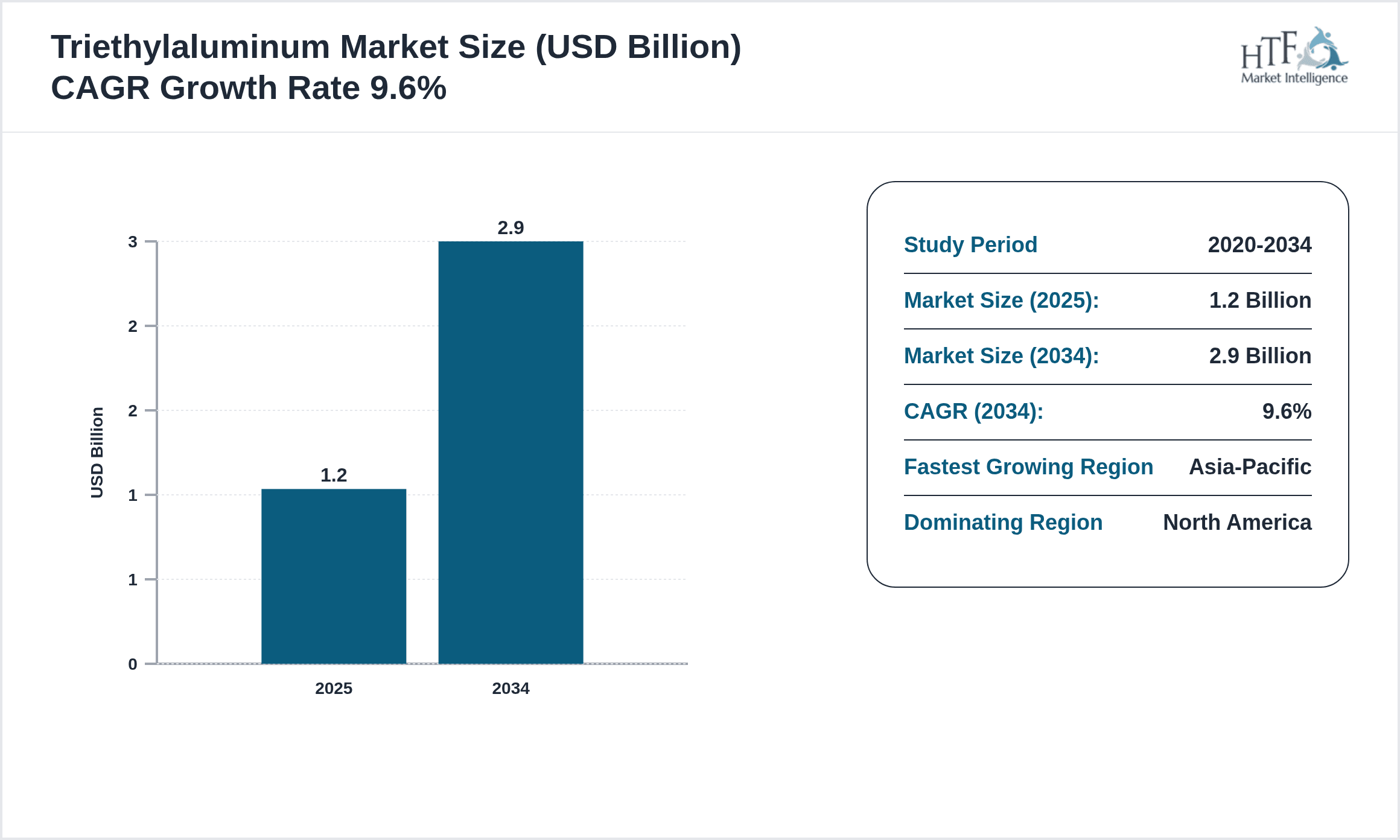
The global Triethylaluminum market is defined by the production and utilization of triethylaluminum, a highly reactive organoaluminum compound essential in catalyzing polymerization reactions and semiconductor manufacturing. This market covers diverse product types including liquid, solid, and solution forms, each tailored for specific industrial applications such as polyolefin production, organic synthesis, and thin-film deposition in semiconductors. The value chain spans raw material procurement, advanced chemical synthesis, distribution, and end-user industries primarily in chemicals, plastics, and electronics. Key market drivers include the growth of the polymer industry, technological advancements in semiconductor fabrication, and increasing demand for specialty chemicals. The market faces challenges related to stringent safety regulations owing to TEAl's pyrophoric properties and the need for specialized handling infrastructure. Regional dynamics reveal dominance by North America due to established chemical manufacturing hubs and significant semiconductor industry presence, while Asia-Pacific emerges as the fastest-growing region driven by rapid industrialization and expanding polymer sectors. Strategic investments, innovation in product formulations, and regulatory compliance shape the competitive landscape, underscoring the market's critical role in advanced manufacturing and chemical processing sectors globally.
Competitive Landscape
The global Triethylaluminum market is highly competitive, driven by a mix of large multinational chemical corporations and specialized regional manufacturers. Market players compete on the basis of product quality, technological innovation, production capacity, and strategic partnerships with end-user industries. Innovation is focused on improving the safety profile of TEAl products and expanding application areas such as semiconductor-grade materials and advanced polymerization catalysts. Companies adopt various competitive strategies including mergers and acquisitions, joint ventures, and capacity expansions to strengthen market share and geographic presence. Pricing strategies are influenced by raw material costs and supply-demand dynamics, with distributors playing a vital role in market penetration. The market is also shaped by stringent regulatory requirements necessitating compliance certifications and safety standards, which act as barriers to entry. Regional competition is intensified by emerging players in Asia-Pacific who leverage cost advantages and expanding industrial bases to capture market share. Future competitive trends suggest increased focus on sustainable production methods and enhanced product formulations to meet evolving industry demands.
Leading Companies in Triethylaluminum Market
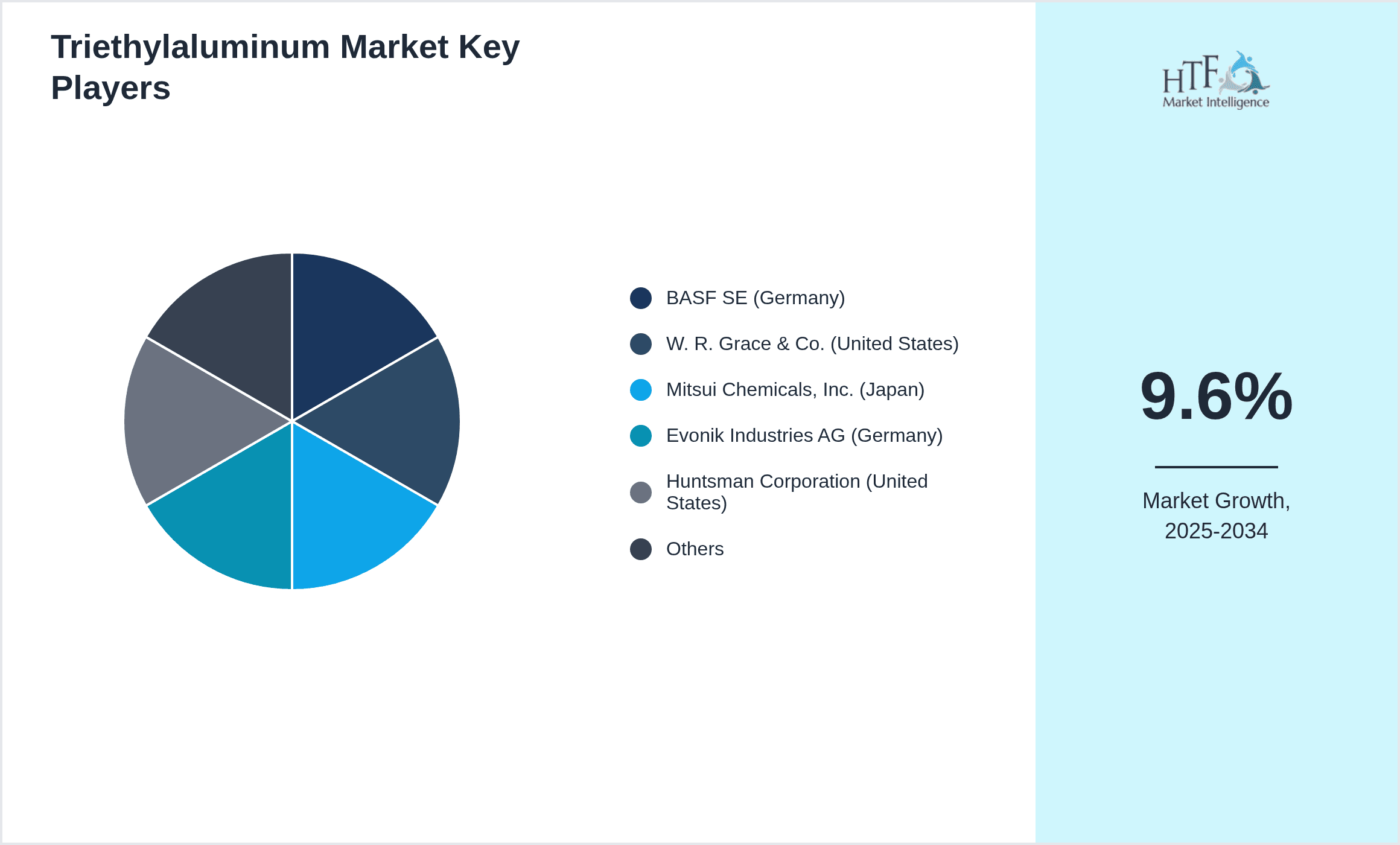
- •BASF SE (Germany)
- •W. R. Grace & Co. (United States)
- •Mitsui Chemicals, Inc. (Japan)
- •Evonik Industries AG (Germany)
- •Huntsman Corporation (United States)
- •Chevron Phillips Chemical Company LP (United States)
- •Nouryon (Netherlands)
- •MGC Pure Chemicals Co., Ltd. (Japan)
- •Clariant AG (Switzerland)
- •Arkema S.A. (France)
- •Sumitomo Chemical Co., Ltd. (Japan)
- •LyondellBasell Industries N.V. (Netherlands)
- •Dow Inc. (United States)
- •INEOS Group Limited (United Kingdom)
- •Shell Chemicals (Netherlands)
- •Evonik Operations GmbH (Germany)
- •Lanxess AG (Germany)
- •Nippon Aluminum Co., Ltd. (Japan)
- •Sumitomo Osaka Cement Co., Ltd. (Japan)
- •Celanese Corporation (United States)
- •PetroChina Company Limited (China)
- •Toray Industries, Inc. (Japan)
- •Mitsubishi Chemical Corporation (Japan)
- •Solvay S.A. (Belgium)
- •Chevron Corporation (United States)
Market Breakdown
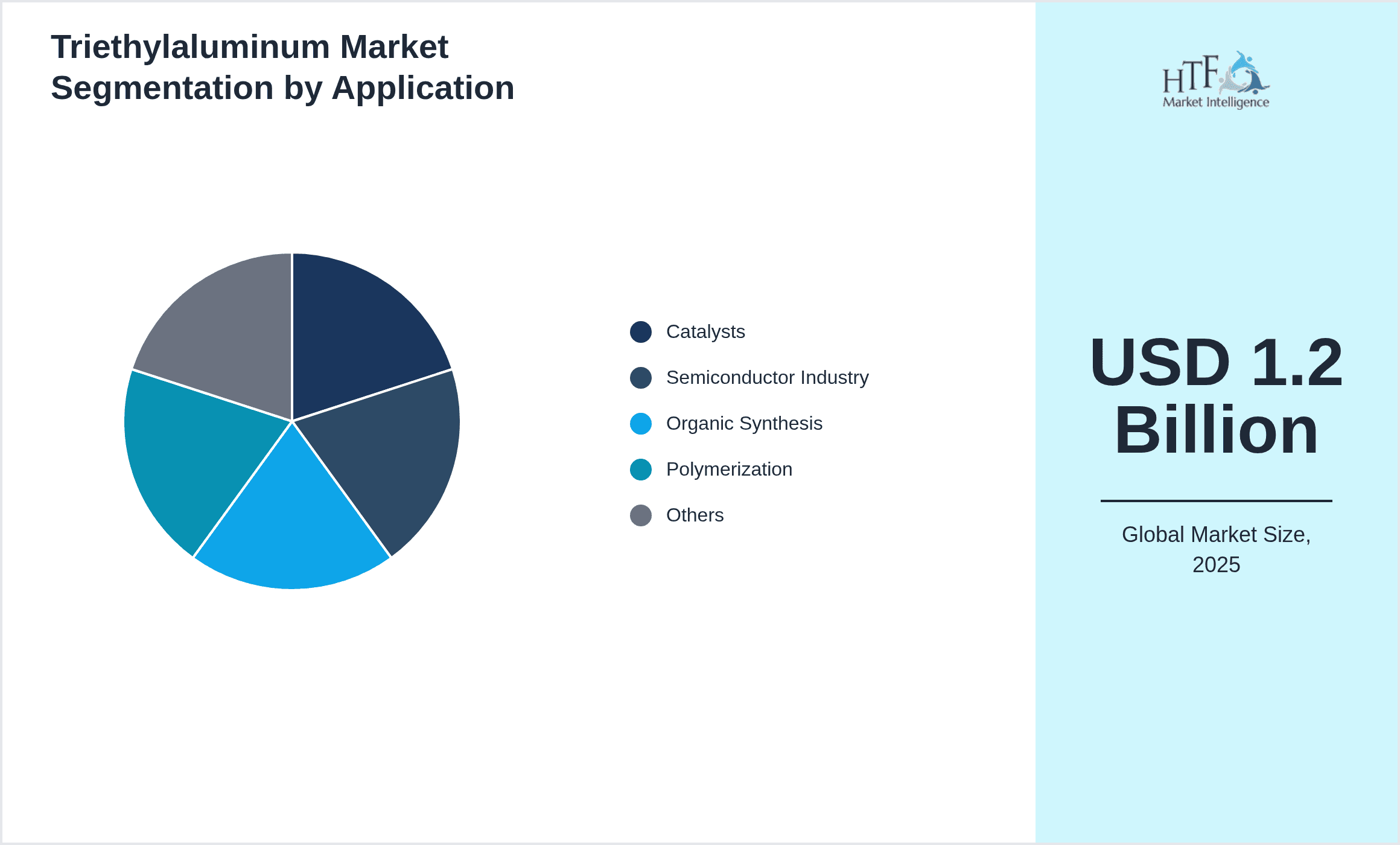
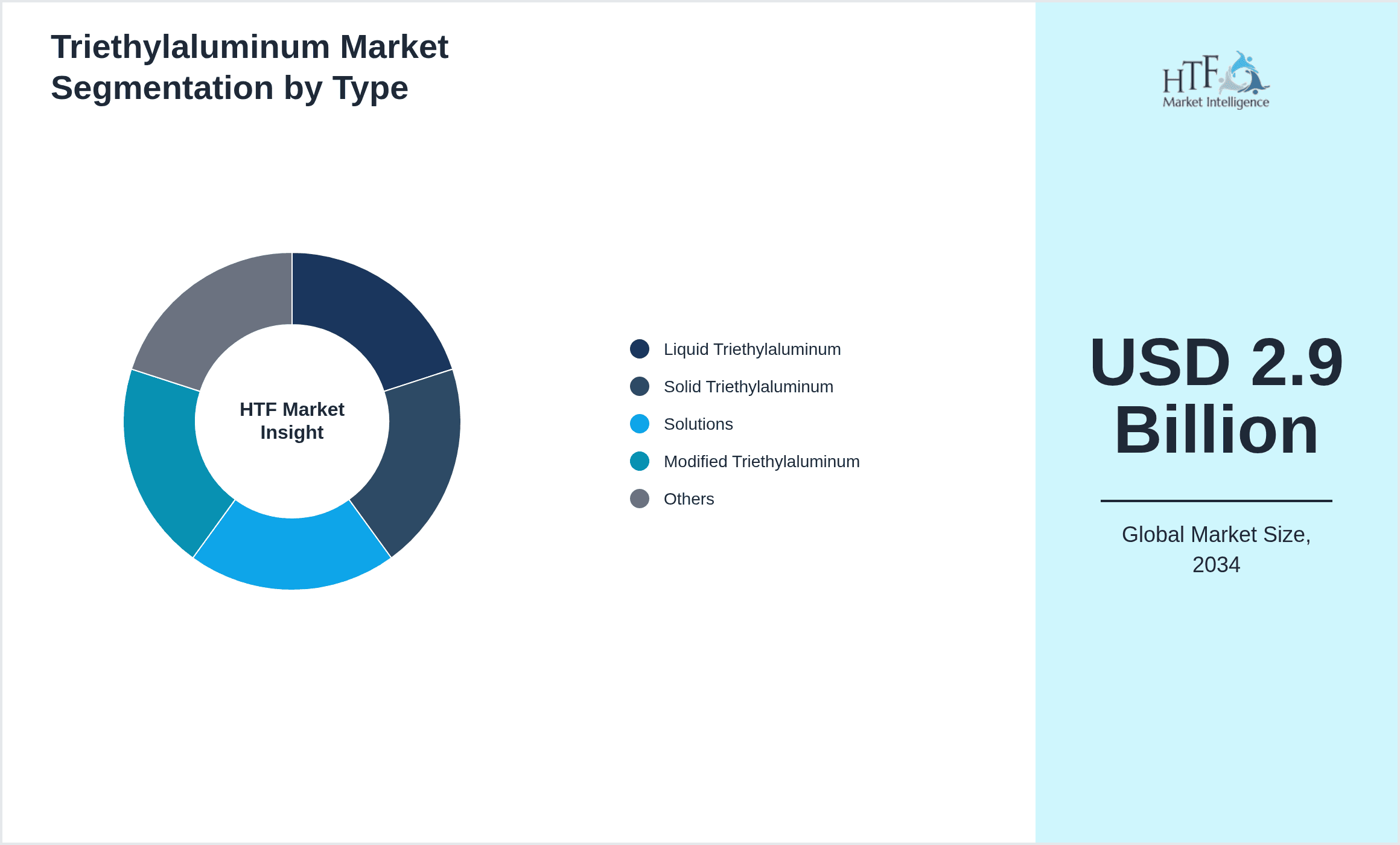
- •By Product Type
- ◦Liquid Triethylaluminum
- ◦Solid Triethylaluminum
- ◦Solutions
- ◦Modified Triethylaluminum
- ◦Others
- •By Application
- ◦Catalysts
- ◦Semiconductor Industry
- ◦Organic Synthesis
- ◦Polymerization
- ◦Others
- •By End-Use Industry
- ◦Chemical Manufacturing
- ◦Plastics & Polymers
- ◦Electronics & Semiconductors
- ◦Pharmaceuticals
- •By Distribution Channel
- ◦Direct Sales
- ◦Distributors
- ◦Online Platforms
Growth Dynamics
- •The global Triethylaluminum market growth is primarily driven by the expanding polymer industry, where TEAl acts as a crucial co-catalyst in Ziegler-Natta polymerization processes, enabling the production of high-density polyethylene and other polyolefins. This growth is supported by increasing demand for lightweight, durable plastics in automotive, packaging, and construction sectors.
- •Advancements in semiconductor manufacturing have increased the utilization of triethylaluminum for atomic layer deposition and chemical vapor deposition processes, enhancing product quality and device miniaturization, thereby boosting market demand substantially in North America and Asia-Pacific regions.
- •Rising demand for specialty chemicals and fine chemical synthesis uses TEAl as an alkylating agent and catalyst, expanding its application scope beyond traditional polymerization, which positively impacts market growth and diversifies end-user bases.
- •Stringent environmental and safety regulations mandate improved handling and storage protocols for pyrophoric substances like triethylaluminum, driving innovation in safer formulations and delivery systems that promote market expansion through enhanced user confidence and compliance.
- •The Asia-Pacific region's rapid industrialization and infrastructure development increase demand for polymers and semiconductors, making it the fastest growing market region with significant investment by key chemical manufacturers to expand production capacities.
- •Growing collaborations between chemical manufacturers and end-users to develop customized TEAl formulations tailored to specific polymerization and semiconductor requirements stimulate innovation and broaden market adoption globally.
- •Investment in research and development activities focusing on improving catalyst efficiency and reducing environmental impact fosters sustainable growth and competitive advantage for market participants.
Market Trends
- •Increasing adoption of liquid triethylaluminum solutions over solid forms is a notable trend due to easier handling, enhanced safety, and improved dosing precision in polymerization processes, facilitating operational efficiencies.
- •Integration of advanced process control technologies in TEAl production plants is enhancing product consistency and reducing waste, aligning with sustainability initiatives and regulatory compliance demands across regions.
- •Collaborations between chemical producers and semiconductor manufacturers are fostering innovation in ultra-pure TEAl materials designed for next-generation electronic devices, driving product differentiation and market segmentation.
- •The emergence of bio-based and green chemistry approaches in organoaluminum compound production reflects a broader industry shift towards environmentally responsible manufacturing, influencing future product development strategies.
- •Digitization of supply chains and adoption of online distribution channels are improving market accessibility and customer engagement, particularly in emerging economies, expanding the global reach of triethylaluminum suppliers.
- •Regulatory emphasis on worker safety and environmental protection is accelerating the development of safer TEAl variants and comprehensive training programs, shaping market offerings and end-user practices.
- •Expanding applications of TEAl in pharmaceuticals and specialty chemicals are emerging trends that diversify market opportunities and reduce dependency on traditional polymerization sectors.
Market Opportunities
- •The increasing demand for lightweight and high-performance polymers in automotive and packaging sectors offers significant growth opportunities for triethylaluminum-based catalyst systems, enabling manufacturers to capitalize on expanding end-use segments.
- •Emerging markets in Asia-Pacific and Latin America present untapped potential driven by industrial growth, infrastructural development, and growing semiconductor fabrication activities, encouraging capacity expansions and market entry strategies.
- •Innovations in TEAl formulations aimed at improving safety and reducing environmental impact create opportunities for product differentiation and premium pricing, appealing to sustainability-conscious customers and regulators.
- •Strategic partnerships between chemical suppliers and end-user industries to develop customized catalyst solutions can enhance market penetration and foster long-term customer relationships globally.
- •Advancements in green chemistry and bio-based manufacturing processes provide an avenue to develop eco-friendly TEAl products, aligning with global sustainability goals and opening new market segments.
- •Expansion of semiconductor manufacturing capacity, especially in Asia-Pacific, offers lucrative opportunities for high-purity TEAl products required in thin-film deposition and advanced electronics applications.
- •Digital transformation of supply chains and sales platforms can improve market reach and operational efficiency, allowing companies to exploit e-commerce channels and real-time customer insights.
Market Challenges
- •The pyrophoric and highly reactive nature of triethylaluminum imposes significant safety and handling challenges, necessitating specialized infrastructure and training that increase operational costs and complicate logistics.
- •Stringent environmental and regulatory compliance requirements across major markets restrict production flexibility and increase capital expenditure on safety and emission control systems.
- •Fluctuations in raw material prices, especially ethylene and aluminum derivatives, create supply chain uncertainties and impact product pricing, affecting market stability and profitability.
- •Competition from alternative catalysts and emerging technologies in polymerization processes may limit market growth and pressure traditional TEAl product demand.
- •Limited availability of skilled workforce proficient in handling pyrophoric materials constrains operational scalability and increases training costs for manufacturers.
- •Global economic uncertainties and trade restrictions pose risks to supply chain continuity and cross-border market expansion strategies.
- •High capital investment requirements for production scale-up and technology upgrades limit new entrants and slow market diversification.
Regulatory Framework
- •Between 2020 and 2025, key regulations such as the European Union’s REACH (Registration, Evaluation, Authorization, and Restriction of Chemicals) imposed comprehensive chemical safety assessments and strict handling protocols for pyrophoric substances like triethylaluminum, mandating rigorous compliance from manufacturers and distributors.
- •The U.S. Environmental Protection Agency (EPA) implemented enhanced Hazard Communication Standards and Process Safety Management (PSM) regulations during this period, requiring detailed risk assessments, emergency preparedness, and worker training to mitigate hazards associated with TEAl.
- •Japan’s Chemical Substances Control Law was updated to include stricter environmental discharge limits and labeling requirements for reactive organoaluminum compounds, influencing production and export practices in Asian markets.
- •China’s Ministry of Ecology and Environment introduced mandatory registration and safety evaluation protocols for manufacturing and usage of pyrophoric chemicals, reinforcing local compliance and enhancing product traceability from 2023 onwards.
- •Government initiatives globally have focused on promoting safe handling practices, with incentives for adopting safer chemical formulations and technologies, thereby encouraging manufacturers to invest in innovation and sustainability within the triethylaluminum market.
Market Intelligence
- •15th January 2025, BASF SE announced the launch of a new liquid triethylaluminum formulation designed to enhance safety and ease of handling in polymerization processes. This product features improved stability and reduced pyrophoricity, targeting major polyolefin producers globally. The initiative aligns with increasing regulatory demands and aims to support customers in achieving sustainable production goals while maintaining catalyst efficiency. BASF’s strategic objective includes expanding its footprint in Asia-Pacific where demand growth is robust. Source: BASF Official Press Release
- •22nd March 2025, W. R. Grace & Co. introduced an advanced triethylaluminum catalyst system integrated with proprietary additives to improve olefin polymerization yields and lower environmental impact. The innovation supports the production of bio-based polymers and caters to growing sustainability standards in North America and Europe. The company plans to collaborate with leading plastics manufacturers to customize solutions and expand market share. This development underscores the trend towards greener chemical processes in the organoaluminum segment. Source: W. R. Grace & Co. Corporate News
- •7th June 2025, Mitsui Chemicals, Inc. announced a strategic partnership with semiconductor manufacturers to supply ultra-high purity triethylaluminum tailored for atomic layer deposition applications. This collaboration aims to meet the increasing demand for advanced semiconductor components with enhanced miniaturization and performance. Mitsui Chemicals’ investment in state-of-the-art purification technologies will bolster its position in the Asia-Pacific semiconductor chemical market, anticipated to grow rapidly through 2034. Source: Mitsui Chemicals Press Release
- •Recent market developments and strategic initiatives are continuously tracked through industry publications, company announcements, and regulatory filings. For the most current information, stakeholders are advised to monitor official corporate communications and recognized market intelligence platforms.
Regional Outlook
The North America currently holds a significant share of the market, primarily due to several key factors: increasing consumption rates, a burgeoning population, and robust economic momentum. These elements collectively drive demand, positioning this region as a leader in the market. On the other hand, Asia-Pacific is rapidly emerging as the fastest-growing area within the industry. This remarkable growth can be attributed to swift infrastructure development, the expansion of various industrial sectors, and a marked increase in consumer demand. These dynamics make this region a crucial player in shaping future market growth.
In our report, we cover a comprehensive analysis of the following regions and countries:
- North America
- LATAM
- West Europe
- Central & Eastern Europe
- Northern Europe
- Southern Europe
- East Asia
- Southeast Asia
- South Asia
- Central Asia
- Oceania
- MEA
| Feature | Details |
|---|---|
| Base Year Market Size | USD 1.2 Billion |
| Forecast Year Market Size | USD 2.9 Billion |
| CAGR | 9.6% |
| Forecast Period | 2026 to 2033 |
| YoY Growth | 9.2% |
| Scope of Report | Market is segmented by Product Type (Liquid Triethylaluminum, Solid Triethylaluminum, Solutions, Modified Triethylaluminum, Others), Application (Catalysts, Semiconductor Industry, Organic Synthesis, Polymerization, Others), End-Use Industry (Chemical Manufacturing, Plastics & Polymers, Electronics & Semiconductors, Pharmaceuticals), Distribution Channel (Direct Sales, Distributors, Online Platforms) |
| Regions Covered | North America, LATAM, West Europe, Central & Eastern Europe, Northern Europe, Southern Europe, East Asia, Southeast Asia, South Asia, Central Asia, Oceania, MEA |
| Key Companies | BASF SE (Germany), W. R. Grace & Co. (United States), Mitsui Chemicals, Inc. (Japan), Evonik Industries AG (Germany), Huntsman Corporation (United States), Chevron Phillips Chemical Company LP (United States), Nouryon (Netherlands), MGC Pure Chemicals Co., Ltd. (Japan), Clariant AG (Switzerland), Arkema S.A. (France), Sumitomo Chemical Co., Ltd. (Japan), LyondellBasell Industries N.V. (Netherlands), Dow Inc. (United States), INEOS Group Limited (United Kingdom), Shell Chemicals (Netherlands), Evonik Operations GmbH (Germany), Lanxess AG (Germany), Nippon Aluminum Co., Ltd. (Japan), Sumitomo Osaka Cement Co., Ltd. (Japan), Celanese Corporation (United States), PetroChina Company Limited (China), Toray Industries, Inc. (Japan), Mitsubishi Chemical Corporation (Japan), Solvay S.A. (Belgium), Chevron Corporation (United States) |
Global Triethylaluminum Market - Outlook 2020-2034 - Table of Contents
Research enthusiast focused on transforming data uncovering into actionable insights through data-driven decision-making.
Frequently Asked Questions (FAQ):
The Compact Track Loaders market is expected to see value worth 5.3 Billion in 2025.
North America currently leads the market with approximately 45% market share, followed by Europe at 28% and Asia-Pacific at 22%. The remaining regions account for 5% of the global market.
Key growth drivers include increasing construction activities, rising demand for versatile equipment in agriculture, technological advancements in track loader design, and growing preference for compact equipment in urban construction projects.