
Global Timing Belt Market Size, Growth & Revenue 2024-2034
Global Timing Belt Market is segmented by Product Type (Rubber Timing Belts, Polyurethane Timing Belts, Neoprene Timing Belts, Steel Reinforced Timing Belts, HTD Timing Belts), Application (Automotive Engines, Industrial Machinery, Agricultural Equipment, Robotics, Consumer Electronics), End-Use Industry (Automotive, Manufacturing, Agriculture, Electronics), Distribution Channel (OEM, Aftermarket, Direct Sales), and Geography (North America, LATAM, West Europe, Central & Eastern Europe, Northern Europe, Southern Europe, East Asia, Southeast Asia, South Asia, Central Asia, Oceania, MEA)
Pricing
Report Overview
Executive Summary
- •The global Timing Belt market is a critical segment within mechanical components, facilitating precise synchronization of engine and machinery functions across various industries such as automotive, industrial machinery, agriculture, robotics, and consumer electronics. Timing belts are primarily made from durable materials like rubber, polyurethane, and neoprene, often reinforced with steel or fiberglass to withstand high mechanical stress and temperature variations. The global market accounts for the design, production, and distribution of these belts, emphasizing advancements in material science and manufacturing processes that enhance belt longevity and operational efficiency. This market serves as a backbone for power transmission systems, enabling the smooth and accurate transfer of motion in engines and complex machinery. The report analyzes market trends, growth drivers such as increasing automotive production and industrial automation, and challenges including raw material price volatility and stringent regulatory compliance. Furthermore, the market is segmented by product type and application, covering a wide geographic area with a focus on major regions like North America, Europe, and Asia-Pacific, which dominate the market landscape.
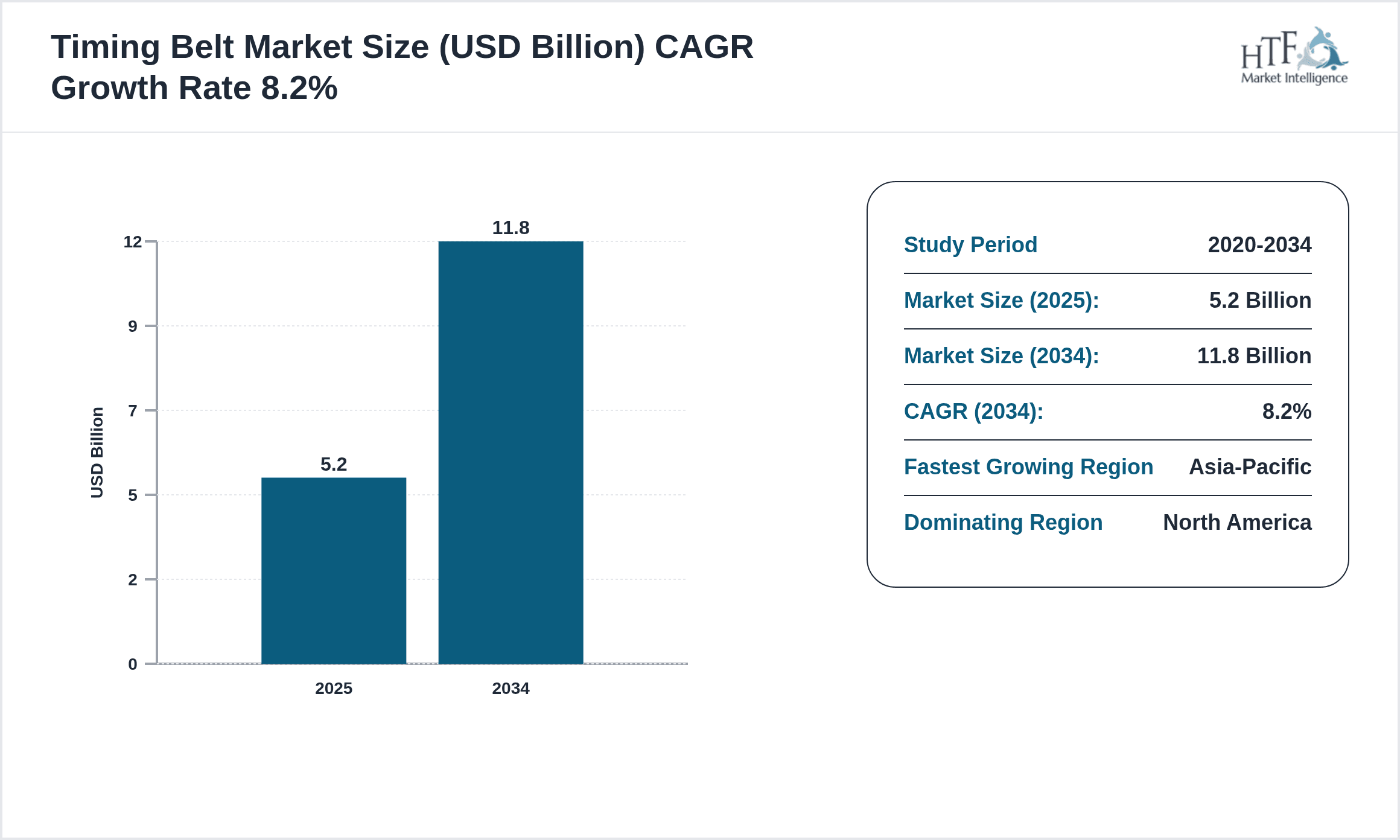
- •Key highlights include a base market size of USD 5.2 Billion in 2024, projected to reach USD 11.8 Billion by 2034, registering a robust CAGR of 8.2%. North America currently leads the market in terms of revenue, while Asia-Pacific is identified as the fastest-growing region due to rapid industrialization and increasing automotive manufacturing. Rubber Timing Belts dominate the product segment, but Polyurethane Timing Belts are the fastest-growing type, driven by their superior resistance to wear and chemical exposure. Automotive Engines remain the primary application area, followed closely by industrial machinery. Market dynamics are influenced by technological innovations, increasing demand for lightweight and durable belts, and rising investments in automation and robotics.
- •The timing belt market offers significant value propositions to stakeholders across automotive, manufacturing, and agricultural sectors by enhancing mechanical efficiency and reducing maintenance costs. Strategic importance lies in the development of advanced materials and manufacturing techniques that improve belt performance under extreme conditions. This market holds promising opportunities for manufacturers investing in R&D to develop eco-friendly and high-performance belts. The global timing belt market is also crucial for OEMs and aftermarket suppliers focusing on expanding their footprint across emerging economies. Overall, the market is characterized by intense competition, rapid technological evolution, and increasing demand for customized solutions tailored to specific industry needs.
Competitive Landscape
The global timing belt market is highly competitive with numerous players vying for market share through innovation, strategic partnerships, and expansion activities. Market leaders focus on continuous product development to enhance belt durability, reduce noise, and improve efficiency, leveraging advancements in materials like high-grade rubber and polyurethane composites. Competitive strategies include mergers and acquisitions to consolidate market presence, diversification of product portfolios to cater to various industries, and geographic expansion to tap into emerging markets. Pricing strategies are aligned with quality differentiation, wherein premium belts command higher prices due to superior performance and longevity. Distribution channels are being optimized for faster delivery and customer support. Technological adoption, such as integrating smart sensors for predictive maintenance, is emerging among key players to gain a competitive edge. Barriers to entry remain high due to the capital-intensive nature of manufacturing and stringent quality standards, fostering a market environment that rewards innovation and operational excellence.
Leading Companies in Timing Belt Market
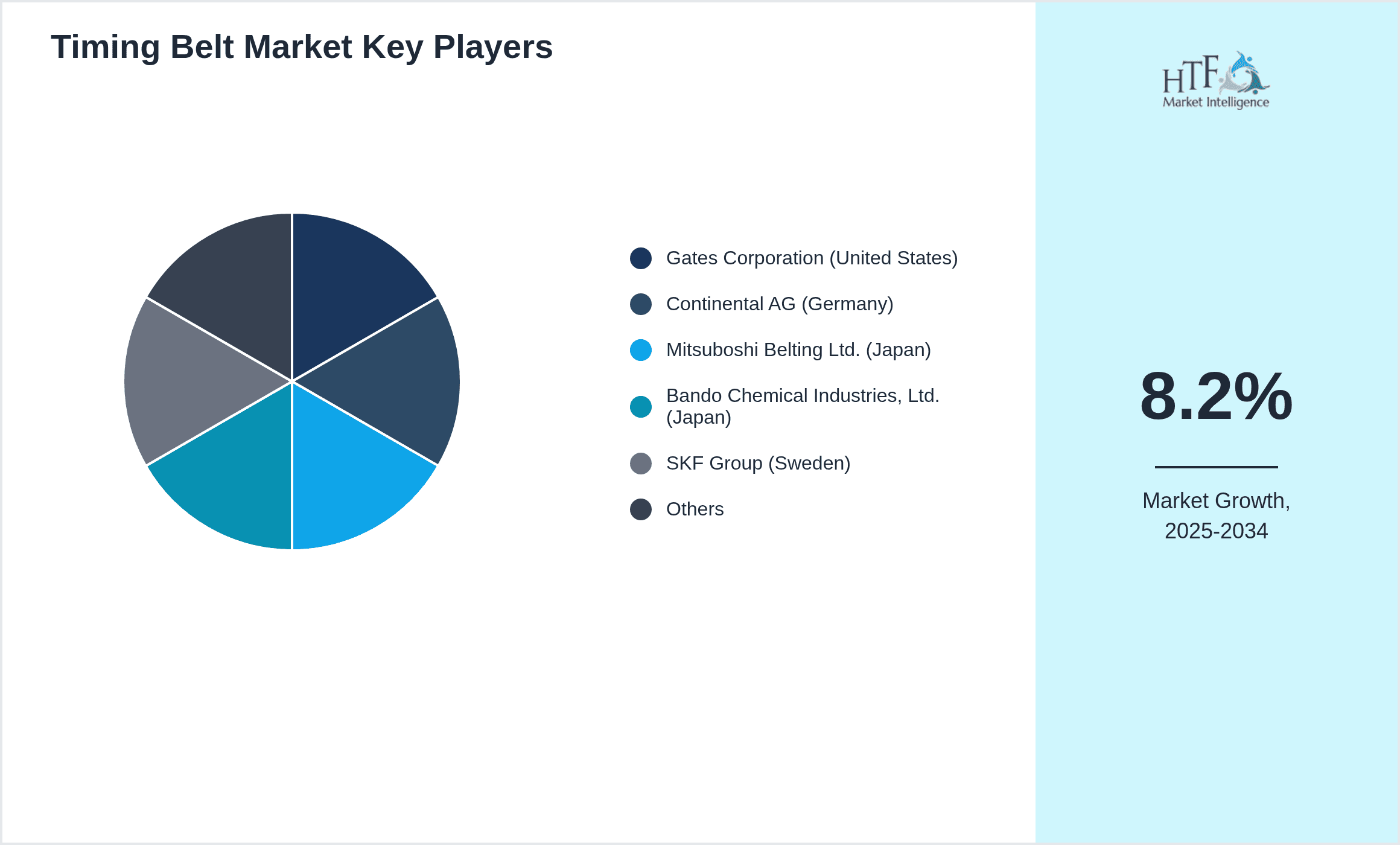
- •Gates Corporation (United States)
- •Continental AG (Germany)
- •Mitsuboshi Belting Ltd. (Japan)
- •Bando Chemical Industries, Ltd. (Japan)
- •SKF Group (Sweden)
- •Dayco Products LLC (United States)
- •Optibelt Group (Germany)
- •Tsubakimoto Chain Co. (Japan)
- •Rexnord Corporation (United States)
- •BorgWarner Inc. (United States)
- •Fenner PLC (United Kingdom)
- •Mitsui Chemicals, Inc. (Japan)
- •Megadyne Group (Italy)
- •Richmond Rubber Group (United States)
- •Poly V Belts Limited (India)
- •Hutchinson SA (France)
- •Trelleborg AB (Sweden)
- •Amulet Group (China)
- •Beltservice Corporation (United States)
- •Fenner Drives (United Kingdom)
- •Nitta Corporation (Japan)
- •Gates Europe (Belgium)
- •Continental ContiTech (Germany)
- •SKF USA Inc. (United States)
- •Bando Chemical America, Inc. (United States)
Market Breakdown
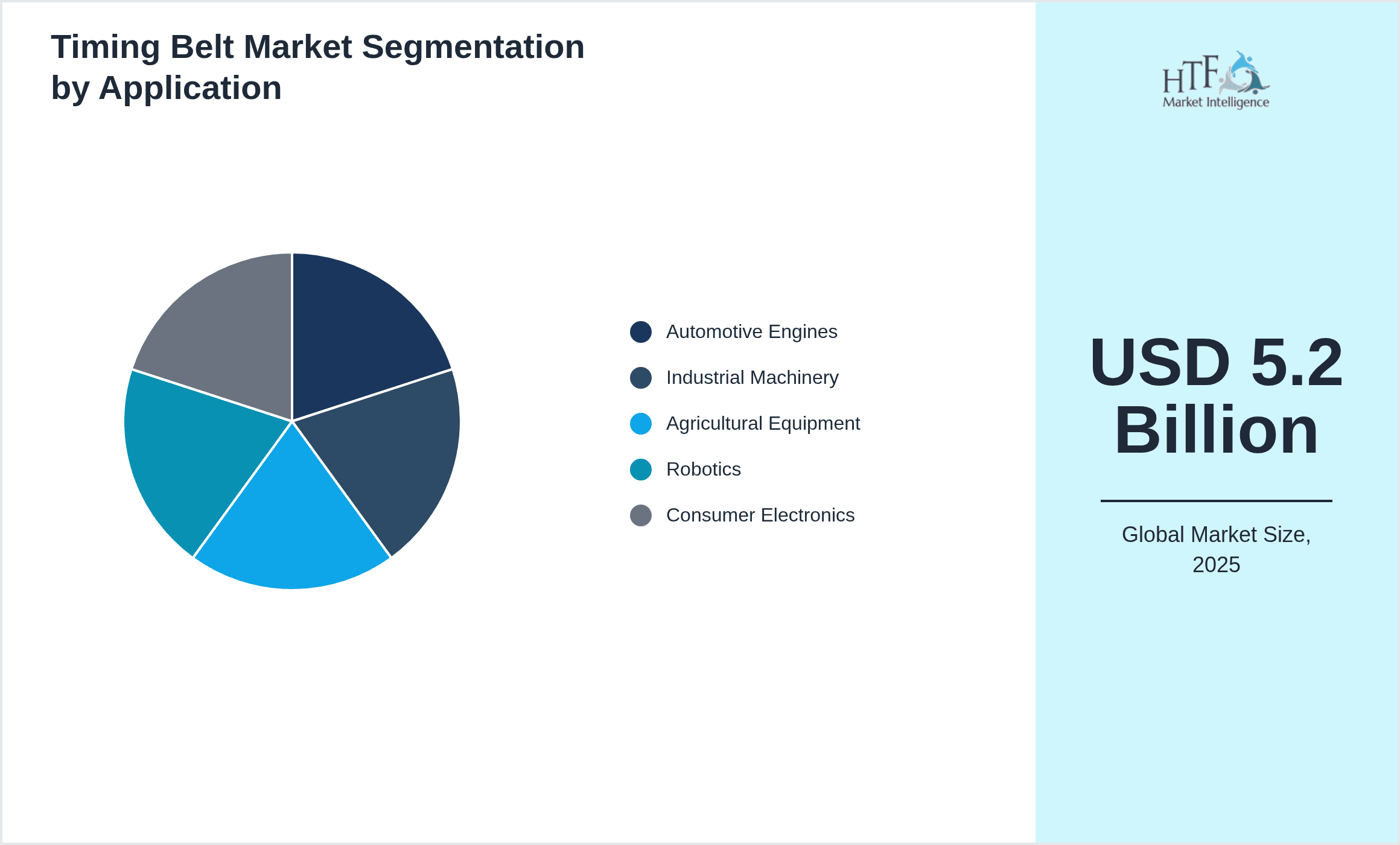
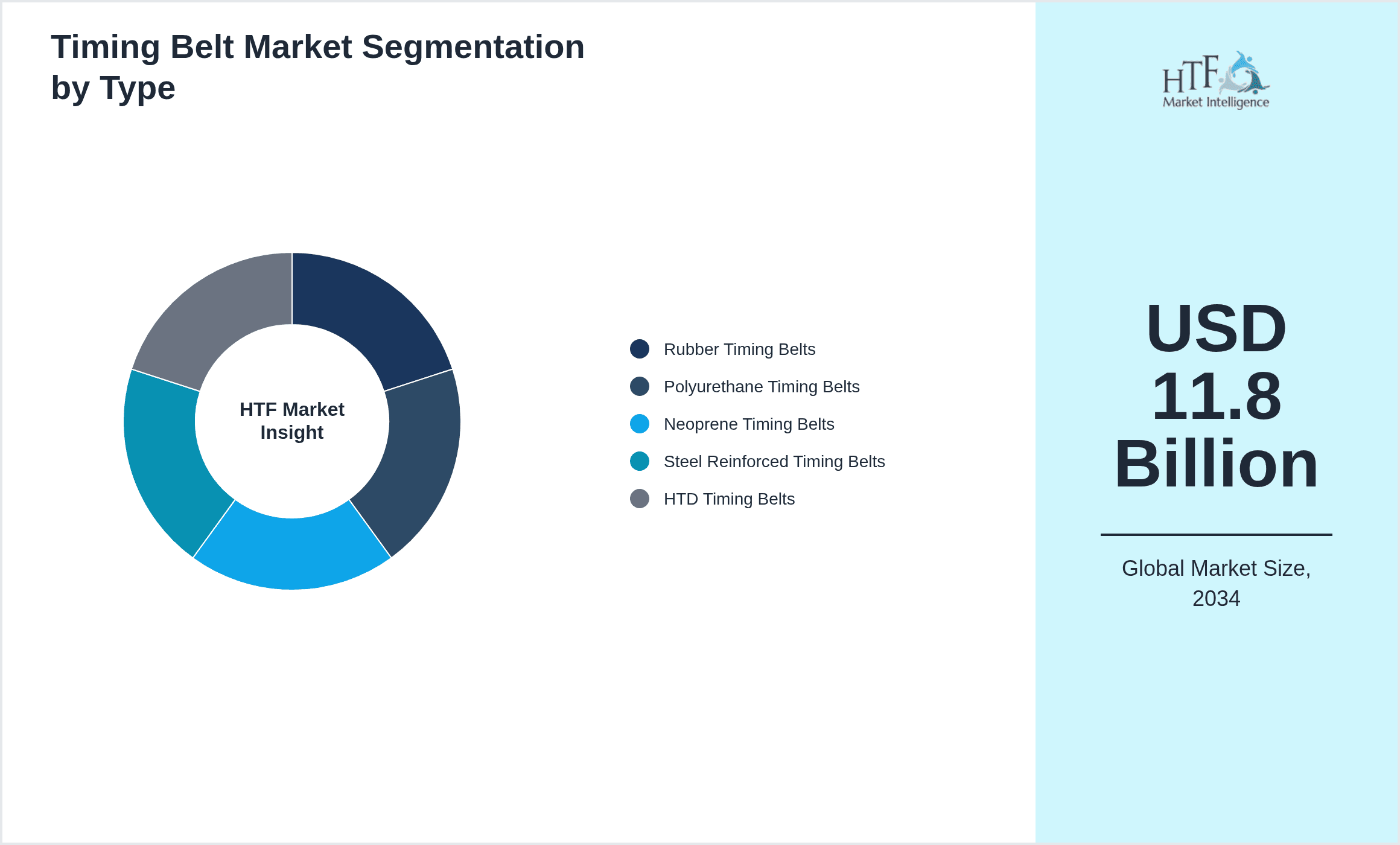
- •By Product Type
- ◦Rubber Timing Belts
- ◦Polyurethane Timing Belts
- ◦Neoprene Timing Belts
- ◦Steel Reinforced Timing Belts
- ◦HTD Timing Belts
- •By Application
- ◦Automotive Engines
- ◦Industrial Machinery
- ◦Agricultural Equipment
- ◦Robotics
- ◦Consumer Electronics
- •By End-Use Industry
- ◦Automotive
- ◦Manufacturing
- ◦Agriculture
- ◦Electronics
- •By Distribution Channel
- ◦OEM
- ◦Aftermarket
- ◦Direct Sales
Growth Dynamics
- •The rising demand for fuel-efficient and emission-compliant vehicles has driven the growth of the timing belt market, as timing belts are critical for engine synchronization and performance optimization. Manufacturers are increasingly adopting advanced materials to meet stringent regulatory standards, thereby propelling market expansion.
- •Industrial automation trends, including robotics and machinery upgrades across sectors such as manufacturing and agriculture, are pushing the need for reliable timing belts that ensure precision and durability in high-speed operations, reinforcing market growth.
- •The proliferation of electric and hybrid vehicles is shifting product requirements towards lightweight and long-lasting timing belts, fostering innovation in polyurethane and composite materials to meet evolving automotive industry standards.
- •Geographical expansion into emerging economies with growing automotive and industrial sectors, particularly in Asia-Pacific and Latin America, is creating new revenue streams and bolstering global market growth trajectories.
- •Increased investments in R&D by leading companies to develop belts with improved wear resistance, noise reduction, and environmental sustainability are fueling product advances and competitive differentiation in the timing belt market.
Market Trends
- •A growing trend is the integration of smart sensors within timing belts to enable predictive maintenance and real-time condition monitoring, which enhances operational reliability and reduces downtime across automotive and industrial applications.
- •Sustainability has become a key focus, with manufacturers developing eco-friendly timing belts using recyclable materials and low-emission manufacturing processes to align with global environmental regulations and consumer preferences.
- •Customization of timing belts to cater to specific industry requirements, such as high-temperature resistance for automotive turbochargers and chemical resistance for agricultural machinery, is gaining traction among OEMs and aftermarket suppliers.
- •Collaborations between material science companies and timing belt manufacturers are accelerating innovation cycles, facilitating the introduction of belts with enhanced mechanical properties and extended service life.
- •The rise of Industry 4.0 is encouraging digital transformation in supply chains and manufacturing processes, leading to more efficient production and distribution of timing belts globally.
Market Opportunities
- •Expanding aftermarket demand for replacement timing belts presents lucrative opportunities for manufacturers to develop premium and cost-effective solutions tailored to different vehicle models and machinery types.
- •Emerging technologies such as additive manufacturing (3D printing) offer new avenues for rapid prototyping and customized timing belt production, reducing lead times and costs.
- •The increasing adoption of electric vehicles globally drives the need for timing belts with specialized materials that support lightweight design and electrical insulation properties, creating niche market segments.
- •Geographical expansion into underpenetrated markets in Latin America and Middle East & Africa provides growth potential due to rising industrialization and automotive production activities.
- •Strategic partnerships and joint ventures between raw material suppliers and timing belt manufacturers can enhance supply chain stability and foster innovation.
Market Challenges
- •Volatility in raw material prices, particularly synthetic rubber and polyurethane, poses cost management challenges for timing belt manufacturers, potentially impacting profitability and pricing strategies.
- •Strict regulatory requirements related to environmental standards and product safety necessitate continuous compliance efforts, increasing operational complexity and costs for market participants.
- •Intense competition from low-cost manufacturers in emerging economies pressures established players to innovate and optimize production costs to maintain market share.
- •Technological challenges in developing timing belts that can withstand extreme operating conditions, such as high temperatures and chemical exposures, require significant R&D investments.
- •Supply chain disruptions, including logistics bottlenecks and raw material scarcity, have emerged as critical risks affecting timely delivery and production continuity.
Regulatory Framework
- •Between 2019 and 2024, global regulations such as the European Union’s REACH and RoHS directives mandated stricter controls on chemical substances in timing belt materials, compelling manufacturers to reformulate products and ensure compliance to avoid market restrictions.
- •The enactment of automotive emission standards like Euro 6 and equivalent regulations in North America and Asia-Pacific increased the demand for timing belts that contribute to engine efficiency and reduced emissions, influencing product innovation and testing protocols.
- •Safety standards, including ISO 9001 and TS16949 certifications, have become mandatory for suppliers in the automotive and industrial sectors, ensuring consistent product quality and enhancing market trust.
- •Country-specific mandates on waste management and recycling, particularly in Europe and Japan, require manufacturers to implement end-of-life product management strategies, promoting sustainability in timing belt production.
- •Government incentives in regions like Asia-Pacific to boost local manufacturing and technology innovation have encouraged investments in advanced timing belt production facilities, supporting market growth.
Market Intelligence
- •15th January 2025, Gates Corporation launched a new line of eco-friendly timing belts made from bio-based polyurethane, targeting automotive manufacturers focusing on sustainability and reduced carbon footprint. The belts feature enhanced wear resistance and compatibility with electric vehicle engines, aiming to capture the growing EV segment globally. This initiative aligns with Gates’ strategic objectives to lead innovation in sustainable power transmission solutions and expand its market share in Asia-Pacific and Europe. The launch has been well received by major OEMs, with expected adoption in upcoming vehicle models by late 2025. Source: Gates Corporation Official Website
- •7th March 2025, Continental AG introduced an advanced timing belt reinforced with high-tensile steel cords and a new polymer blend that improves heat resistance and durability by 20%. This product is designed for heavy-duty industrial machinery and agricultural equipment sectors, addressing the demand for longer service intervals and lower maintenance costs. Continental’s innovation is expected to enhance operational efficiency for end-users and position the company as a leader in high-performance timing belts. The product rollout is supported by strategic partnerships with distributors in North America and Latin America to boost market penetration. Source: Continental AG Press Release
- •22nd April 2025, Bando Chemical Industries announced a strategic partnership with a leading robotics firm to develop customized timing belts for robotic arms used in precision manufacturing. The collaboration focuses on integrating sensor technology for real-time belt condition monitoring, aiming to reduce downtime and improve production accuracy. This initiative reflects Bando’s commitment to innovation and diversification into emerging automation markets, with pilot projects underway in Japan and the United States. The partnership is anticipated to create new revenue streams and enhance Bando’s competitive positioning globally. Source: Bando Chemical Industries News
- •30th May 2025, SKF Group completed the acquisition of a niche timing belt manufacturer specializing in polyurethane belts for consumer electronics applications. This strategic move expands SKF’s product portfolio and strengthens its presence in the electronics sector, characterized by rapid growth and high precision requirements. The acquisition enables SKF to leverage synergies in R&D and manufacturing capabilities, accelerating product innovation cycles. SKF plans to integrate the acquired entity's technologies into its global supply chain and offer enhanced solutions to existing and new customers worldwide. Source: SKF Group Corporate Announcement
Regional Outlook
The North America currently holds a significant share of the market, primarily due to several key factors: increasing consumption rates, a burgeoning population, and robust economic momentum. These elements collectively drive demand, positioning this region as a leader in the market. On the other hand, Asia-Pacific is rapidly emerging as the fastest-growing area within the industry. This remarkable growth can be attributed to swift infrastructure development, the expansion of various industrial sectors, and a marked increase in consumer demand. These dynamics make this region a crucial player in shaping future market growth.
In our report, we cover a comprehensive analysis of the following regions and countries:
- North America
- LATAM
- West Europe
- Central & Eastern Europe
- Northern Europe
- Southern Europe
- East Asia
- Southeast Asia
- South Asia
- Central Asia
- Oceania
- MEA
| Feature | Details |
|---|---|
| Base Year Market Size | USD 5.2 Billion |
| Forecast Year Market Size | USD 11.8 Billion |
| CAGR | 8.2% |
| Forecast Period | 2026 to 2033 |
| YoY Growth | 7.9% |
| Scope of Report | Market is segmented by Product Type (Rubber Timing Belts, Polyurethane Timing Belts, Neoprene Timing Belts, Steel Reinforced Timing Belts, HTD Timing Belts), Application (Automotive Engines, Industrial Machinery, Agricultural Equipment, Robotics, Consumer Electronics), End-Use Industry (Automotive, Manufacturing, Agriculture, Electronics), Distribution Channel (OEM, Aftermarket, Direct Sales) |
| Regions Covered | North America, LATAM, West Europe, Central & Eastern Europe, Northern Europe, Southern Europe, East Asia, Southeast Asia, South Asia, Central Asia, Oceania, MEA |
| Key Companies | Gates Corporation (United States), Continental AG (Germany), Mitsuboshi Belting Ltd. (Japan), Bando Chemical Industries, Ltd. (Japan), SKF Group (Sweden), Dayco Products LLC (United States), Optibelt Group (Germany), Tsubakimoto Chain Co. (Japan), Rexnord Corporation (United States), BorgWarner Inc. (United States), Fenner PLC (United Kingdom), Mitsui Chemicals, Inc. (Japan), Megadyne Group (Italy), Richmond Rubber Group (United States), Poly V Belts Limited (India), Hutchinson SA (France), Trelleborg AB (Sweden), Amulet Group (China), Beltservice Corporation (United States), Fenner Drives (United Kingdom), Nitta Corporation (Japan), Gates Europe (Belgium), Continental ContiTech (Germany), SKF USA Inc. (United States), Bando Chemical America, Inc. (United States) |
Global Timing Belt Market Size, Growth & Revenue 2024-2034 - Table of Contents
Research enthusiast focused on transforming data uncovering into actionable insights through data-driven decision-making.
Frequently Asked Questions (FAQ):
The Market market is expected to see significant growth and value in 2025.
North America currently leads the market, followed by Europe and Asia-Pacific.
Key growth drivers include increasing activities, rising demand for innovative solutions, technological advancements, and growing preference for efficient products.