
Global Compressed Natural Gas Cylinders Market Size, Growth & Revenue 2025-2034
Global Compressed Natural Gas (CNG) Cylinders Market is segmented by Product Type (Type I: All-metal Cylinders, Type II: Metal Cylinder with Composite Wrap, Type III: Metal Liner Fully Wrapped with Composite Material, Type IV: Polymer Liner Fully Wrapped with Composite Material, Type V: All Composite Cylinders), Application (Automotive, Industrial, Residential, Commercial, Transportation), End-Use Industry (Automotive Manufacturing, Energy & Utilities, Construction, Public Transportation), Distribution Channel (Direct Sales, Distributors, Online Platforms), and Geography (North America, LATAM, West Europe, Central & Eastern Europe, Northern Europe, Southern Europe, East Asia, Southeast Asia, South Asia, Central Asia, Oceania, MEA)
Pricing
Report Overview
Executive Summary
- •The global Compressed Natural Gas (CNG) Cylinders market represents a critical segment in the alternative fuel ecosystem, focused on the production and supply of specialized high-pressure vessels designed to safely store compressed natural gas. These cylinders serve diverse applications including automotive, industrial, residential, commercial, and transportation sectors, supporting the shift towards cleaner fuel alternatives. The market encompasses various cylinder types categorized by materials and manufacturing technologies, such as all-metal Type I, metal-composite hybrids Type II and III, and advanced polymer-composite Type IV and V cylinders. Rising environmental concerns, stringent emission regulations, and the push for sustainable energy solutions are primary growth drivers shaping global demand. The increasing adoption of CNG vehicles, government incentives for alternative fuels, and advancements in cylinder manufacturing technologies further amplify market expansion. The report provides a detailed analysis of market segmentation, competitive landscape, growth dynamics, challenges, and opportunities from 2020 through a robust forecast to 2034, delivering critical insights for stakeholders across industries and investment communities seeking to capitalize on the evolving CNG cylinder market landscape.
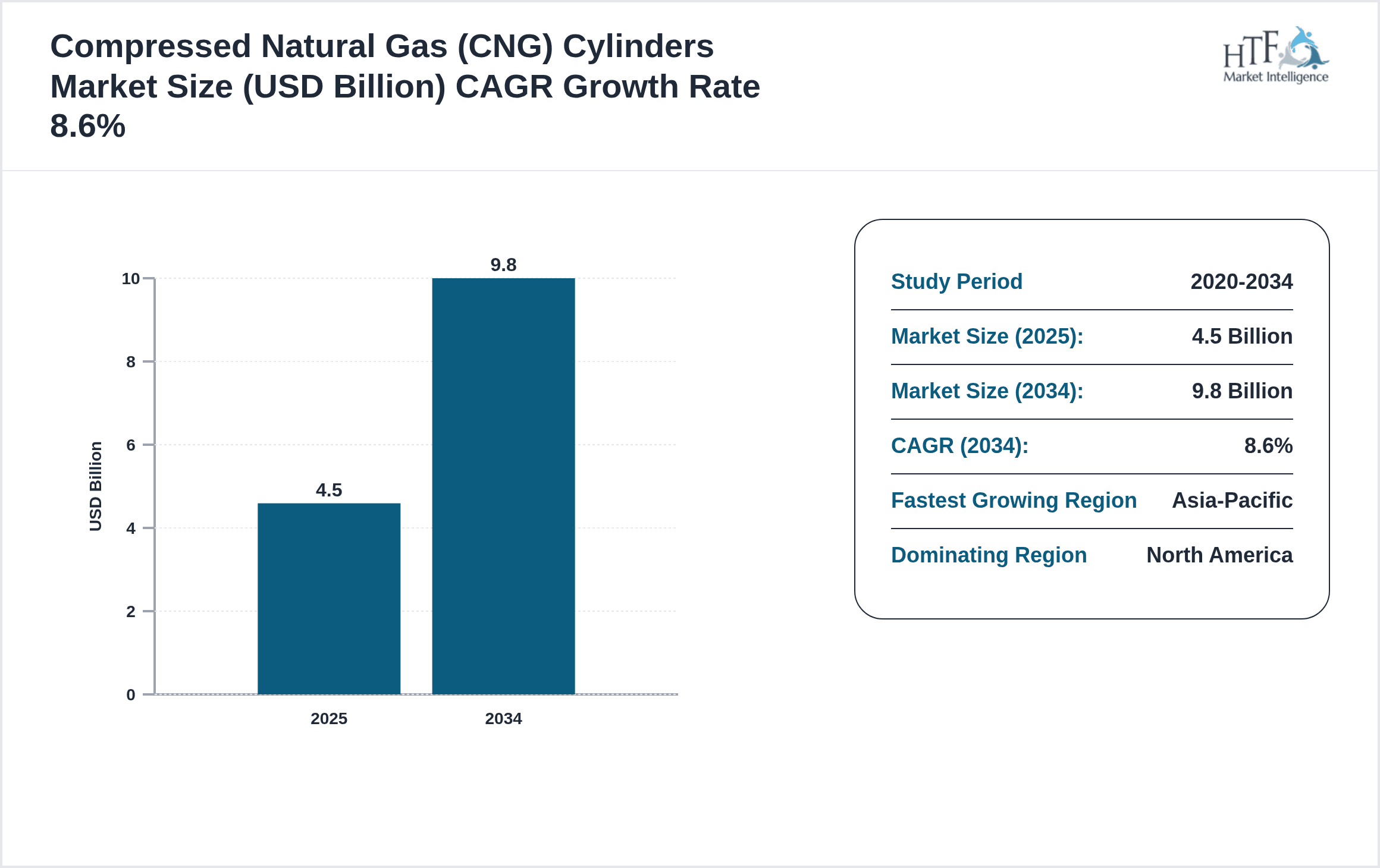
- •Key market highlights include a base market size of USD 4.5 billion in 2025, forecasted to reach USD 9.8 billion by 2034, reflecting a compound annual growth rate (CAGR) of 8.6%. The Asia-Pacific region is identified as the fastest-growing market segment driven by increasing urbanization, government support for clean transportation, and expansive infrastructure development. North America dominates the global market owing to early adoption of CNG technologies, advanced manufacturing capabilities, and regulatory frameworks favoring low-emission alternatives. Technological innovations, such as the rise of lightweight Type IV and Type V cylinders, are revolutionizing the market by improving fuel efficiency and vehicle performance. These trends underscore the positive momentum and strategic importance of the CNG cylinders market within the global sustainable energy transition context.
- •The value proposition of the CNG cylinders market lies in its contribution to reducing greenhouse gas emissions, enhancing energy security, and providing cost-effective fuel storage solutions across multiple sectors. Stakeholders including manufacturers, automotive OEMs, energy companies, and policymakers benefit from insights into market drivers, barriers, and emerging opportunities. The strategic importance of CNG cylinders is amplified by their role in enabling broader adoption of natural gas vehicles and industrial applications, aligning with global climate goals and energy diversification strategies. This comprehensive report equips investors and industry participants with actionable data and analysis to navigate competitive challenges, leverage technological advancements, and optimize market positioning in a dynamically evolving energy landscape.
Competitive Landscape
The global Compressed Natural Gas (CNG) Cylinders market is characterized by intense competition among key industry players focusing on innovation, strategic partnerships, and global expansion to consolidate market share. Companies employ differentiated strategies including product portfolio diversification, investment in research and development, and adoption of advanced materials to enhance cylinder safety, weight reduction, and durability. Market leaders leverage extensive manufacturing capacities and robust distribution networks to cater to growing demand across regions. Mergers and acquisitions serve as pivotal tools for expanding technological capabilities and geographic reach. Additionally, sustainability trends propel the adoption of eco-friendly production processes and compliance with evolving global safety and environmental standards. Competitive pricing, customer-centric solutions, and adherence to stringent certifications further define market positioning. The competitive landscape is also influenced by regional market dynamics, regulatory frameworks, and the emergence of new entrants focusing on niche applications and innovative cylinder technologies. Looking ahead, companies are expected to intensify investments in smart cylinder solutions integrated with IoT and digital monitoring to enhance safety and operational efficiency, shaping future competitive paradigms.
Key Participants in Compressed Natural Gas Cylinders Market
- •Luxfer Gas Cylinders (United Kingdom)
- •Worthington Industries, Inc. (United States)
- •Faber Industrie S.p.A. (Italy)
- •CIMC Enric Holdings Limited (China)
- •Hexagon Composites ASA (Norway)
- •Quantum Fuel Systems Technologies Worldwide, Inc. (United States)
- •Plastic Omnium (France)
- •Warren Gas Cylinders Pvt. Ltd. (India)
- •Faber Cylinders Pvt. Ltd. (India)
- •Ningbo Haishu Weicheng Cylinder Co., Ltd. (China)
- •Altech Co., Ltd. (South Korea)
- •SHV Energy (Netherlands)
- •Messer Group GmbH (Germany)
- •CNG Cylinders Manufacturing Co. (USA)
- •China Gas Holdings Limited (Hong Kong)
- •Zhejiang Tiansheng New Energy Technology Co., Ltd. (China)
- •Kompozit Ltd. (Russia)
- •Korea Gas Safety Corporation (South Korea)
- •Linde plc (Ireland)
- •Worthington Industries (United States)
- •Faber Group (Italy)
- •GTT Group (France)
- •Air Liquide S.A. (France)
- •CIMC Vehicles (China)
- •Warren Gas Cylinders Pvt Ltd (India)
Market Breakdown
- •By Product Type
- ◦Type I: All-metal Cylinders
- ◦Type II: Metal Cylinder with Composite Wrap
- ◦Type III: Metal Liner Fully Wrapped with Composite Material
- ◦Type IV: Polymer Liner Fully Wrapped with Composite Material
- ◦Type V: All Composite Cylinders
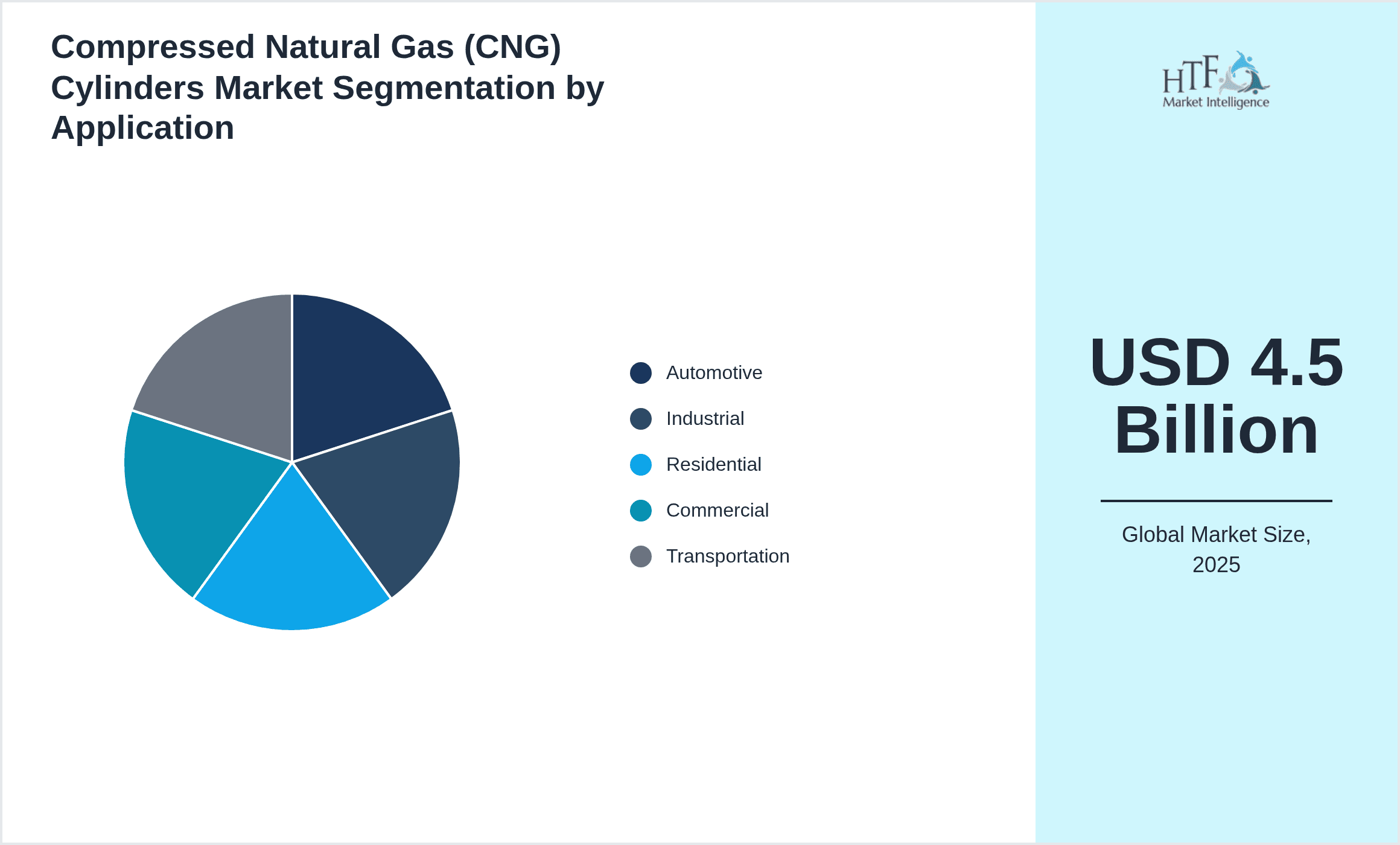
- •By Application
- ◦Automotive
- ◦Industrial
- ◦Residential
- ◦Commercial
- ◦Transportation
- •By End-Use Industry
- ◦Automotive Manufacturing
- ◦Energy & Utilities
- ◦Construction
- ◦Public Transportation
- •By Distribution Channel
- ◦Direct Sales
- ◦Distributors
- ◦Online Platforms
Growth Dynamics
The global compressed natural gas cylinders market is propelled by rising environmental concerns and government initiatives aimed at reducing carbon emissions across the transportation and industrial sectors. Increasing adoption of CNG vehicles due to lower fuel costs and improved energy security supports market expansion. Technological advancements such as the development of lightweight Type IV and Type V cylinders enhance vehicle fuel efficiency and safety, encouraging industry uptake. Growing investments in clean energy infrastructure and supportive regulatory frameworks further stimulate demand. Moreover, the expanding industrial applications of CNG cylinders in manufacturing and residential sectors contribute to diversified market growth globally, positioning the market for sustained expansion through 2034.

Market Trends
A prominent trend in the CNG cylinders market is the shift towards advanced composite materials that offer enhanced strength-to-weight ratios, improving fuel efficiency and vehicle performance. Additionally, integration of smart sensor technologies for real-time cylinder status monitoring is gaining traction, ensuring higher safety standards and operational reliability. The increasing global emphasis on sustainability drives collaborations between manufacturers and governments to promote CNG adoption. Furthermore, regional diversification with emerging markets in Asia-Pacific and Latin America enhancing infrastructure capabilities is reshaping market dynamics. These trends reflect the market’s evolution towards innovative, safer, and environmentally friendly storage solutions.
Market Opportunities
The global CNG cylinders market presents significant growth opportunities driven by the rising demand for alternative fuels in the automotive and transportation sectors, particularly in developing regions with supportive government policies. Expansion in public transportation networks adopting CNG buses and vehicles offers lucrative avenues. Technological innovations enabling cost-effective manufacturing of high-performance Type V cylinders open new market segments. Moreover, increasing industrial and residential adoption of compressed natural gas for cleaner energy usage creates additional growth pathways. Strategic partnerships and regional infrastructure investments further enhance market penetration and scalability prospects.
Market Challenges
Despite promising growth, the CNG cylinders market faces challenges such as high initial investment costs for advanced composite cylinders, which can limit widespread adoption, especially in price-sensitive markets. Regulatory compliance across diverse regions involves complex certification processes, adding to operational hurdles. Concerns regarding cylinder safety, maintenance, and lifecycle management require continuous innovation and stringent quality control. Additionally, fluctuating natural gas prices and competition from alternative fuel technologies, such as electric and hydrogen fuel cells, present market uncertainties. Supply chain constraints and raw material availability for composite manufacturing also pose significant challenges to scaling production efficiently.
Regulatory Framework
Between 2020 and 2025, several global and regional regulatory frameworks have been implemented to ensure the safety, quality, and environmental compliance of compressed natural gas cylinders. The UN Economic Commission for Europe (UNECE) has established stringent standards such as Regulation No. 110 for CNG vehicle fuel systems, mandating rigorous testing protocols and certification for cylinder manufacturing. The U.S. Department of Transportation (DOT) enforces comprehensive safety requirements for cylinder design, testing, and periodic inspection under CFR Title 49. Europe’s Pressure Equipment Directive (PED) harmonizes safety norms within the European Economic Area, facilitating market access while ensuring safety. Additionally, environmental regulations targeting emission reductions incentivize the adoption of CNG technologies, indirectly influencing cylinder demand. Governments worldwide are progressively introducing incentives and subsidies to promote cleaner fuel alternatives, further shaping the regulatory landscape. These evolving frameworks necessitate compliance agility from manufacturers and stakeholders to meet global market standards while fostering innovation and safety enhancements in cylinder technologies.
Market Intelligence
- •15th February 2025, Hexagon Composites ASA launched its latest Type V composite CNG cylinder designed for heavy-duty commercial vehicles, targeting enhanced fuel efficiency and safety. The new product features a carbon fiber composite structure that reduces weight by 20% compared to previous models, enabling extended driving ranges and lower emissions. Hexagon’s innovation aligns with growing demand for lightweight, high-pressure storage solutions, and supports the company’s strategic objective to lead in sustainable transportation technologies. This launch is expected to bolster the adoption of CNG vehicles globally, particularly in Europe and North America where emissions regulations are stringent. Source: Hexagon Composites Official Press Release
- •10th April 2025, CIMC Enric Holdings Limited announced the expansion of its CNG cylinder manufacturing facility in China, increasing annual production capacity by 30% to meet rising demand across Asia-Pacific. The investment includes adoption of advanced automated winding technology for Type IV cylinders, enhancing quality and reducing production costs. CIMC’s expansion supports regional infrastructure growth and government initiatives promoting alternative fuel vehicles in emerging markets. This strategic move positions CIMC to capture significant market share in the fastest-growing region for CNG storage solutions. Source: CIMC Enric Corporate Announcement
- •22nd June 2025, Plastic Omnium entered a strategic partnership with a leading automotive OEM to co-develop integrated CNG storage systems combining cylinders with vehicle fuel management technologies. This collaboration aims to optimize system efficiency, safety, and cost-effectiveness for light commercial vehicles. The partnership leverages Plastic Omnium’s expertise in composite materials and fuel system components, anticipating accelerated market penetration in Europe and North America. This initiative reflects broader industry trends toward integrated fuel storage solutions enhancing vehicle performance and regulatory compliance. Source: Plastic Omnium Corporate Release
- •Market Intelligence: Recent developments and industry insights are being monitored. For latest updates, consult official company announcements and industry publications.
Regional Outlook
The North America currently holds a significant share of the market, primarily due to several key factors: increasing consumption rates, a burgeoning population, and robust economic momentum. These elements collectively drive demand, positioning this region as a leader in the market. On the other hand, Asia-Pacific is rapidly emerging as the fastest-growing area within the industry. This remarkable growth can be attributed to swift infrastructure development, the expansion of various industrial sectors, and a marked increase in consumer demand. These dynamics make this region a crucial player in shaping future market growth.
In our report, we cover a comprehensive analysis of the following regions and countries:
- North America
- LATAM
- West Europe
- Central & Eastern Europe
- Northern Europe
- Southern Europe
- East Asia
- Southeast Asia
- South Asia
- Central Asia
- Oceania
- MEA
| Feature | Details |
|---|---|
| Base Year Market Size | USD 4.5 Billion |
| Forecast Year Market Size | USD 9.8 Billion |
| CAGR | 8.6% |
| Forecast Period | 2026 to 2033 |
| YoY Growth | 8.3% |
| Scope of Report | Market is segmented by Product Type (Type I: All-metal Cylinders, Type II: Metal Cylinder with Composite Wrap, Type III: Metal Liner Fully Wrapped with Composite Material, Type IV: Polymer Liner Fully Wrapped with Composite Material, Type V: All Composite Cylinders), Application (Automotive, Industrial, Residential, Commercial, Transportation), End-Use Industry (Automotive Manufacturing, Energy & Utilities, Construction, Public Transportation), Distribution Channel (Direct Sales, Distributors, Online Platforms) |
| Regions Covered | North America, LATAM, West Europe, Central & Eastern Europe, Northern Europe, Southern Europe, East Asia, Southeast Asia, South Asia, Central Asia, Oceania, MEA |
| Key Companies | The global CNG cylinders market presents significant growth opportunities driven by the rising demand for alternative fuels in the automotive and transportation sectors, particularly in developing regions with supportive government policies. Expansion in public transportation networks adopting CNG buses and vehicles offers lucrative avenues. Technological innovations enabling cost-effective manufacturing of high-performance Type V cylinders open new market segments. Moreover, increasing industrial and residential adoption of compressed natural gas for cleaner energy usage creates additional growth pathways. Strategic partnerships and regional infrastructure investments further enhance market penetration and scalability prospects. |
Global Compressed Natural Gas Cylinders Market Size, Growth & Revenue 2025-2034 - Table of Contents
Research enthusiast focused on transforming data uncovering into actionable insights through data-driven decision-making.
Frequently Asked Questions (FAQ):
The Compact Track Loaders market is expected to see value worth 5.3 Billion in 2025.
North America currently leads the market with approximately 45% market share, followed by Europe at 28% and Asia-Pacific at 22%. The remaining regions account for 5% of the global market.
Key growth drivers include increasing construction activities, rising demand for versatile equipment in agriculture, technological advancements in track loader design, and growing preference for compact equipment in urban construction projects.