
Global Transportation Services In Healthcare Market Size, Growth & Revenue 2025-2034
Global Transportation Services In Healthcare Market is segmented by Product Type (Road Ambulance Services, Air Ambulance Services, Rail Ambulance Services, Water Ambulance Services, Specialized Medical Transport), Application (Patient Transport, Medical Equipment Delivery, Pharmaceutical Logistics, Emergency Services, Non-Emergency Medical Transport), End-Use Industry (Hospitals and Clinics, Pharmaceutical Companies, Emergency Medical Services, Government Healthcare Agencies), Distribution Channel (Direct Service Contracts, Third-Party Logistics Providers, Government EMS Programs), and Geography (North America, LATAM, West Europe, Central & Eastern Europe, Northern Europe, Southern Europe, East Asia, Southeast Asia, South Asia, Central Asia, Oceania, MEA)
Pricing
Report Overview
Executive Summary
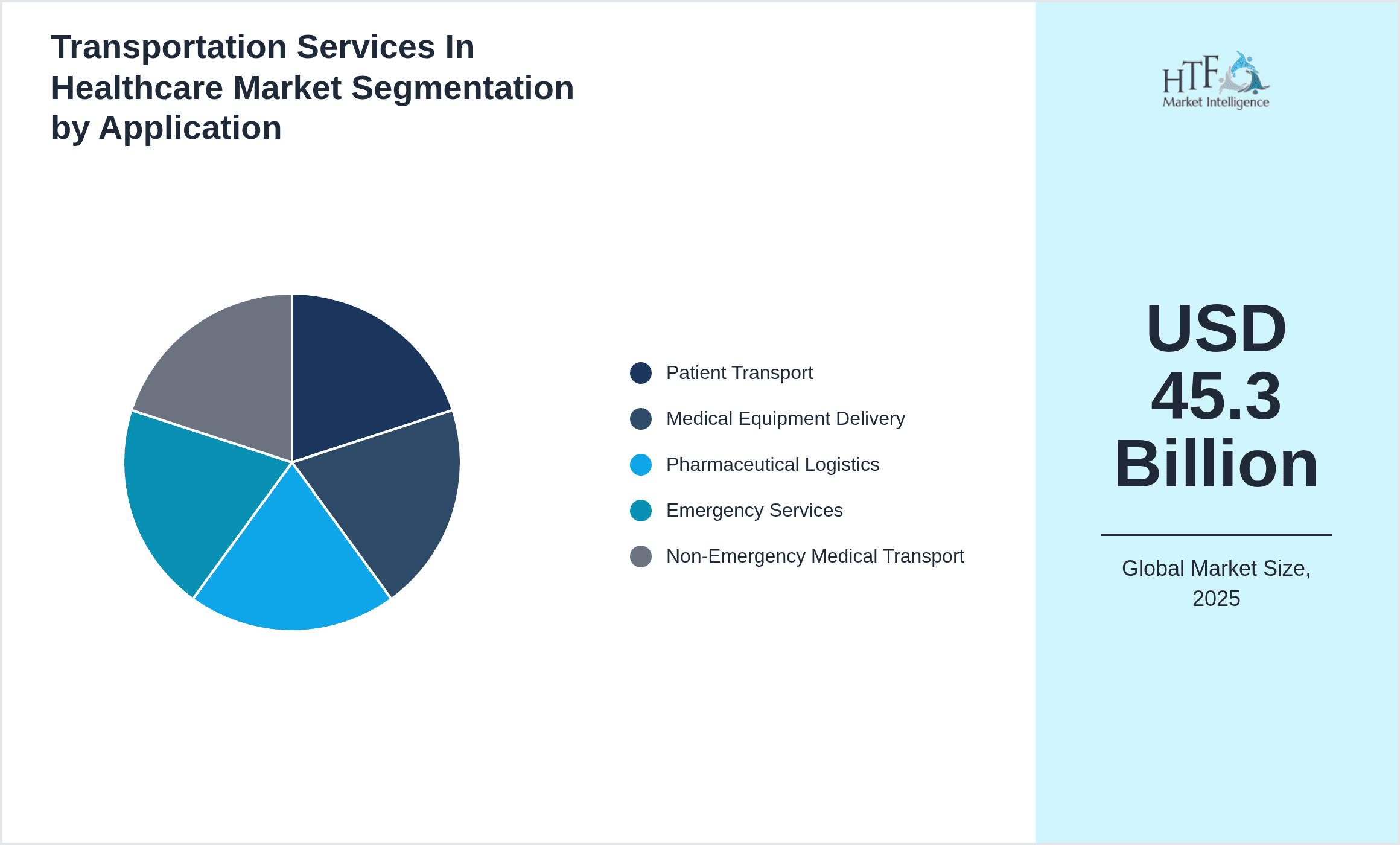
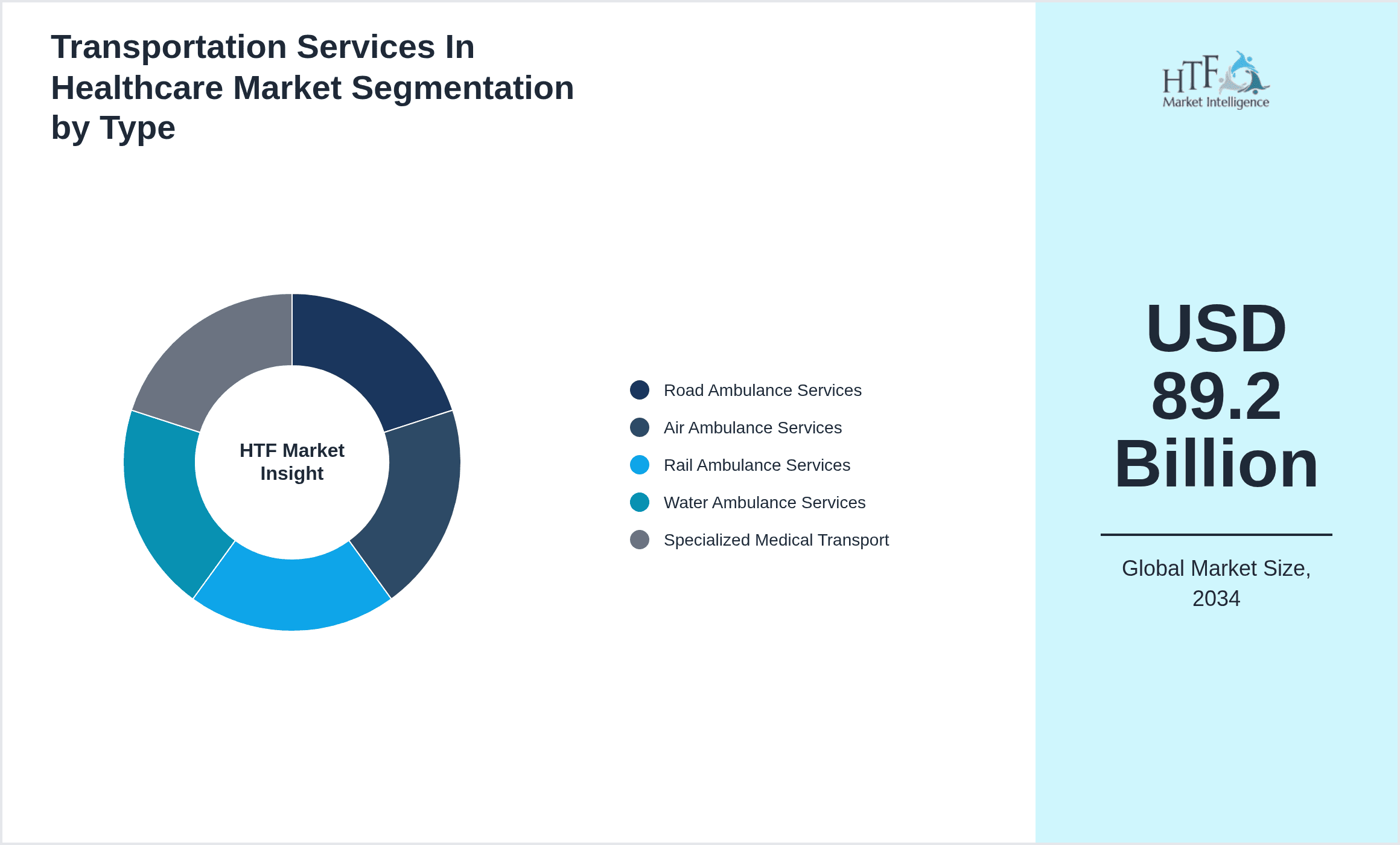
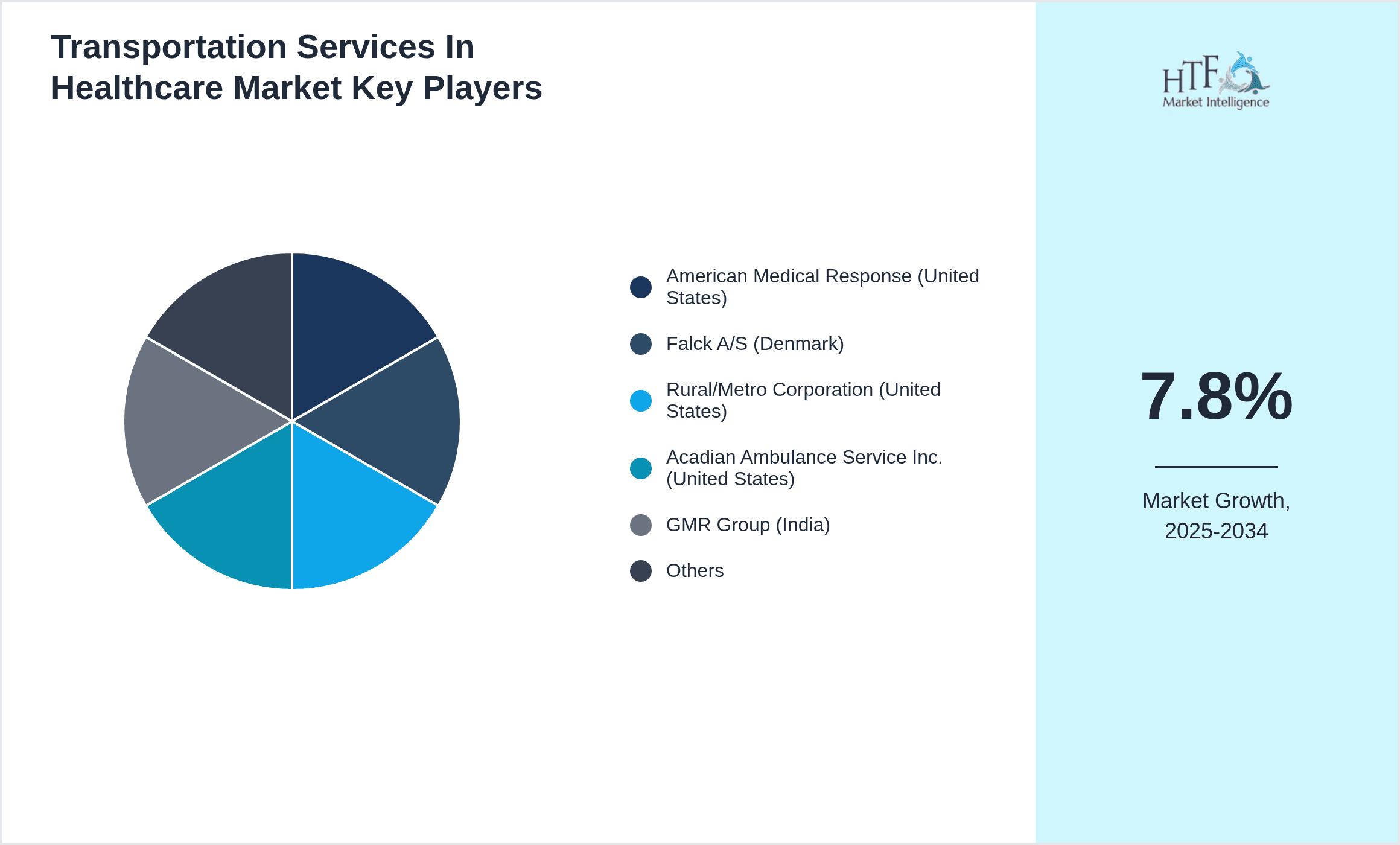
- •The Global Transportation Services in Healthcare market plays a pivotal role in ensuring timely and efficient movement of patients and critical medical resources. This sector includes diverse transportation modes such as road, air, rail, and water ambulance services alongside specialized medical transport solutions. The market caters to emergency medical services, non-emergency patient transfers, pharmaceutical and medical equipment logistics, and healthcare personnel mobility. Increasing prevalence of chronic diseases, rising geriatric population, and expanding healthcare infrastructure globally fuel the demand for reliable healthcare transportation. The integration of advanced technologies including GPS tracking, telematics, and digital dispatch systems enhances operational efficiency and patient safety. Market growth is driven by increasing investments in healthcare infrastructure, rising awareness of emergency medical services, and regulatory frameworks emphasizing timely medical response. Key applications span hospital transfers, home healthcare support, remote area medical outreach, and logistics for critical healthcare supplies. End users encompass hospitals, EMS providers, pharmaceutical companies, and government healthcare agencies, reflecting a broad value chain. With rising urbanization and healthcare expenditure, the global market is projected to witness significant expansion from USD 45.3 Billion in 2025 to USD 89.2 Billion by 2034, growing at a CAGR of 7.8%. North America currently dominates the market due to advanced healthcare systems and robust EMS infrastructure, while Asia-Pacific is the fastest growing region driven by expanding healthcare access and technological adoption.
- •Market highlights include the dominance of road ambulance services accounting for the largest revenue share, while air ambulance services are the fastest growing segment due to their critical role in remote and emergency medical transport. The market is characterized by a competitive landscape with multiple service providers leveraging technology integration and strategic partnerships to enhance service delivery. Increasing government initiatives aimed at improving emergency medical response times and investments in healthcare transportation infrastructure further propel growth. The rising adoption of digital fleet management and telemedicine integration within transportation services adds to operational efficiencies and improved patient outcomes.
- •Transportation services in healthcare offer crucial value propositions including reducing patient transfer times, ensuring safe delivery of medical supplies, and enabling rapid emergency response. These services support healthcare providers by alleviating logistical challenges, improving patient care continuity, and enhancing operational effectiveness. Strategic importance spans emergency medical systems, pharmaceutical supply chains, and remote healthcare access, positioning the market as a backbone for modern healthcare delivery. Stakeholders including healthcare providers, EMS operators, technology vendors, and policymakers benefit from market advancements that address growing healthcare demands and evolving patient mobility needs.

Competitive Landscape
The competitive environment in the Global Transportation Services in Healthcare market is shaped by a dynamic array of service providers, technology innovators, and logistics specialists. Market participants prioritize strategic partnerships, technological advancements, and service diversification to gain competitive advantages. Key strategies include the deployment of advanced fleet management systems, integration of telehealth solutions, and expansion into emerging markets. Competitive positioning is influenced by the ability to deliver rapid response times, maintain regulatory compliance, and offer specialized transport services such as neonatal or critical care ambulances. Mergers and acquisitions have been instrumental in consolidating market share and expanding geographic footprints. Pricing strategies balance cost efficiency with high service quality to attract healthcare institutions and government contracts. Distribution channels encompass direct contracts with hospitals, government EMS programs, and collaborations with pharmaceutical logistics providers. Technological adoption, including electric ambulances and AI-enabled dispatch systems, is driving differentiation. Market entry barriers such as regulatory approvals, capital-intensive infrastructure, and skilled workforce requirements further shape competition. Regional competition is intensified by varying healthcare policies and infrastructure capabilities. Future trends suggest increased consolidation, digital transformation, and service innovation to meet growing patient mobility demands globally.
Leading Companies in Transportation Services In Healthcare Market
- •American Medical Response (United States)
- •Falck A/S (Denmark)
- •Rural/Metro Corporation (United States)
- •Acadian Ambulance Service Inc. (United States)
- •GMR Group (India)
- •Air Methods Corporation (United States)
- •Global Medical Response (United States)
- •Lifeline Ambulance Service (United Kingdom)
- •Stryker Corporation (United States)
- •MedTrans Corporation (United States)
- •Babcock International Group (United Kingdom)
- •Sunrise Medical (United Kingdom)
- •Sterling Medical Transport (United States)
- •Zurich Ambulance Services AG (Switzerland)
- •Paramount Ambulance (United States)
- •JET Ambulance Service Ltd (Canada)
- •Empress Ambulance Service (United States)
- •Philippine Ambulance Services Inc. (Philippines)
- •St. John Ambulance (Australia)
- •Ambulnz Inc. (United States)
- •Mediclean GmbH (Germany)
- •Rapid Response Medical Transport (United States)
- •Transmedic Group (United Kingdom)
- •Angel MedFlight Worldwide Air Ambulance (United States)
- •LifeFlight of Maine (United States)
Market Breakdown
- •By Product Type
- ◦Road Ambulance Services
- ◦Air Ambulance Services
- ◦Rail Ambulance Services
- ◦Water Ambulance Services
- ◦Specialized Medical Transport
- •By Application
- ◦Patient Transport
- ◦Medical Equipment Delivery
- ◦Pharmaceutical Logistics
- ◦Emergency Services
- ◦Non-Emergency Medical Transport
- •By End-Use Industry
- ◦Hospitals and Clinics
- ◦Pharmaceutical Companies
- ◦Emergency Medical Services
- ◦Government Healthcare Agencies
- •By Distribution Channel
- ◦Direct Service Contracts
- ◦Third-Party Logistics Providers
- ◦Government EMS Programs
Growth Dynamics
- •The increasing prevalence of chronic diseases and aging populations worldwide drive higher demand for transportation services to facilitate timely patient transfers and continuous care. Healthcare providers are increasingly reliant on efficient transport methods to optimize patient outcomes and reduce hospital readmission rates.
- •Advancements in technology, including GPS tracking, telematics, and AI-enabled dispatch systems, enhance operational efficiency and enable real-time monitoring of medical transport vehicles, improving response times and safety.
- •Expanding healthcare infrastructure in emerging economies coupled with rising government initiatives to improve emergency medical services creates significant market growth opportunities, especially in Asia-Pacific and Latin America regions.
- •Increasing integration of telemedicine and remote patient monitoring with transportation services facilitates coordinated healthcare delivery, reducing delays and improving access in rural and underserved areas.
- •The growing focus on specialized medical transport, including neonatal and critical care ambulances, addresses complex patient needs, thereby expanding market segments with higher value service offerings.
- •Investment in green and electric ambulance fleets is gaining traction as healthcare providers aim to reduce carbon footprints while maintaining efficient emergency response capabilities.
- •Strategic partnerships between healthcare providers and logistics companies foster integrated service models, enhancing scalability and geographic reach of transportation services.
Market Trends
- •There is a growing trend towards digitization of healthcare transportation processes, including mobile apps for real-time ambulance bookings and automated scheduling systems, enhancing user convenience and operational transparency.
- •Adoption of electric and hybrid ambulances is increasing globally, driven by sustainability initiatives and rising fuel costs, contributing to reduced environmental impact in healthcare transport.
- •Collaborations between telemedicine providers and transport services are enabling integrated care pathways, allowing patients to receive remote consultations en route to healthcare facilities.
- •Expansion of non-emergency medical transport services supports outpatient care and home healthcare sectors, reflecting shifts towards decentralized healthcare delivery models.
- •Use of drones for delivery of pharmaceuticals and medical equipment is emerging as an innovative solution to overcome geographic barriers and expedite critical deliveries.
- •Providers are increasingly leveraging data analytics to optimize routes, reduce response times, and improve resource allocation across transportation fleets.
- •Integration of wearable health monitoring devices with transport services allows for continuous patient status tracking during transit, improving emergency preparedness.
Market Opportunities
- •Expanding healthcare infrastructure in emerging markets presents significant opportunities for transportation service providers to establish and grow operations in underpenetrated regions.
- •Integration of advanced telematics and AI for predictive maintenance and route optimization offers potential to reduce operational costs and improve service reliability.
- •Development and deployment of specialized transport solutions catering to critical care, neonatal, and infectious disease patients create high-value market segments.
- •Partnerships with pharmaceutical companies for dedicated logistics services enable secure and compliant delivery of temperature-sensitive medications and vaccines.
- •Emerging technologies such as drone deliveries and autonomous vehicles offer transformative potential for last-mile healthcare logistics.
- •Growing demand for environmentally sustainable transport solutions encourages investment in electric ambulances and green fleet technologies.
- •Expansion of non-emergency patient transport services to support home healthcare and outpatient care creates new revenue streams.
Market Challenges
- •Stringent regulatory requirements and compliance standards across different regions impose operational challenges for transportation service providers, requiring significant investment in certifications and training.
- •High capital expenditure for fleet acquisition, maintenance, and technology integration limits market entry for smaller players and constrains scalability.
- •Variability in healthcare infrastructure and EMS readiness across regions results in uneven market development and service quality disparities.
- •Shortage of trained medical transport personnel and paramedics impacts service delivery and response times, particularly in developing regions.
- •Complex logistics and coordination challenges arise from the need to integrate with multiple healthcare stakeholders and emergency response systems.
- •Rising operational costs including fuel, insurance, and technology investments exert pressure on profitability margins.
- •Cybersecurity risks associated with digital dispatch and telematics systems pose potential threats to patient data privacy and service continuity.
Regulatory Framework
- •The Emergency Medical Treatment and Labor Act (EMTALA) in the United States, enforced between 2020 and 2025, mandates non-discriminatory patient transport and emergency care, shaping EMS provider obligations and compliance requirements.
- •European Union Medical Device Regulation (MDR) 2017/745, effective from 2020, governs medical equipment used in transport vehicles, requiring strict certification and safety standards impacting service providers and manufacturers.
- •The Health Insurance Portability and Accountability Act (HIPAA) regulations updated between 2020 and 2025 emphasize patient data protection during transport and telematics integration, influencing IT and operational protocols within healthcare transportation services.
- •Regional mandates such as the National Ambulance Standards in Australia, implemented during 2020-2025, establish operational benchmarks for ambulance services including vehicle specifications, personnel training, and response time targets.
- •Government initiatives promoting green transportation, such as the EU Green Deal, encourage adoption of electric ambulances and sustainable practices within healthcare transport operations since 2020.
Market Intelligence
- •15th February 2025, American Medical Response announced the launch of its next-generation electric ambulance fleet featuring advanced telematics and zero-emission technology. This initiative targets reducing carbon footprint while enhancing emergency response capabilities in urban centers across North America. The new vehicles integrate real-time GPS tracking, patient monitoring systems, and AI-driven route optimization to improve operational efficiency and patient safety. This development positions the company as a leader in sustainable healthcare transportation solutions and aligns with growing environmental regulations. The launch is expected to accelerate adoption of electric ambulances industry-wide and foster partnerships with healthcare providers focused on green initiatives. Source: American Medical Response Official Press Release
- •8th June 2024, Falck A/S introduced a comprehensive digital platform integrating ambulance dispatch, patient health monitoring, and telemedicine services across Europe. The platform leverages AI algorithms to prioritize emergency calls, optimize fleet deployment, and facilitate remote clinical consultations during patient transport. This innovation enhances real-time decision-making, reduces response times, and improves patient outcomes. Falck's digital solution supports interoperability with hospital systems and emergency services, enabling seamless care coordination. The initiative reflects broader industry trends towards digitization and integrated healthcare delivery models. Market analysts anticipate this platform will set new benchmarks for EMS operational efficiency in Europe. Source: Falck A/S Corporate Website
- •22nd January 2025, Global Medical Response completed its acquisition of Air Methods Corporation, consolidating its position as the world's largest air ambulance provider. The merger combines extensive helicopter and fixed-wing ambulance fleets with advanced logistical capabilities, expanding service reach across North America and select international markets. The integration aims to enhance patient transport services by leveraging combined technology platforms, operational expertise, and expanded geographic footprint. The deal is expected to drive cost efficiencies, improve service quality, and stimulate innovation in critical care transport. This strategic acquisition signals continued consolidation trends within the healthcare transportation sector. Source: Global Medical Response Press Release
- •30th November 2024, MedTrans Corporation announced a strategic partnership with drone technology startup Zipline to pilot autonomous delivery of pharmaceuticals and medical supplies in remote areas of Southeast Asia. The collaboration focuses on leveraging drone logistics to overcome geographic and infrastructure challenges, enabling rapid delivery of vaccines, blood products, and essential medications. The pilot program includes integration with existing healthcare transport networks to ensure seamless last-mile delivery. This initiative represents a significant innovation in healthcare logistics, addressing critical access issues and reducing delivery times. Industry observers view this partnership as a potential model for global expansion of drone-assisted medical transport services. Source: MedTrans Corporation Press Release
Regional Outlook
The North America currently holds a significant share of the market, primarily due to several key factors: increasing consumption rates, a burgeoning population, and robust economic momentum. These elements collectively drive demand, positioning this region as a leader in the market. On the other hand, Asia-Pacific is rapidly emerging as the fastest-growing area within the industry. This remarkable growth can be attributed to swift infrastructure development, the expansion of various industrial sectors, and a marked increase in consumer demand. These dynamics make this region a crucial player in shaping future market growth.
In our report, we cover a comprehensive analysis of the following regions and countries:
- North America
- LATAM
- West Europe
- Central & Eastern Europe
- Northern Europe
- Southern Europe
- East Asia
- Southeast Asia
- South Asia
- Central Asia
- Oceania
- MEA
| Feature | Details |
|---|---|
| Base Year Market Size | USD 45.3 Billion |
| Forecast Year Market Size | USD 89.2 Billion |
| CAGR | 7.8% |
| Forecast Period | 2026 to 2033 |
| YoY Growth | 7.8% |
| Scope of Report | Market is segmented by Product Type (Road Ambulance Services, Air Ambulance Services, Rail Ambulance Services, Water Ambulance Services, Specialized Medical Transport), Application (Patient Transport, Medical Equipment Delivery, Pharmaceutical Logistics, Emergency Services, Non-Emergency Medical Transport), End-Use Industry (Hospitals and Clinics, Pharmaceutical Companies, Emergency Medical Services, Government Healthcare Agencies), Distribution Channel (Direct Service Contracts, Third-Party Logistics Providers, Government EMS Programs) |
| Regions Covered | North America, LATAM, West Europe, Central & Eastern Europe, Northern Europe, Southern Europe, East Asia, Southeast Asia, South Asia, Central Asia, Oceania, MEA |
| Key Companies | American Medical Response (United States), Falck A/S (Denmark), Rural/Metro Corporation (United States), Acadian Ambulance Service Inc. (United States), GMR Group (India) |
Global Transportation Services In Healthcare Market Size, Growth & Revenue 2025-2034 - Table of Contents
Frequently Asked Questions (FAQ):
The Compact Track Loaders market is projected to grow at a CAGR of 6.8% from 2025 to 2030, driven by increasing demand in construction and agricultural sectors.
North America currently leads the market with approximately 45% market share, followed by Europe at 28% and Asia-Pacific at 22%. The remaining regions account for 5% of the global market.
Key growth drivers include increasing construction activities, rising demand for versatile equipment in agriculture, technological advancements in track loader design, and growing preference for compact equipment in urban construction projects.