
Global Household Refrigerators And Freezers Market Size, Growth & Revenue 2024-2034
Global Household Refrigerators And Freezers Market is segmented by Product Type (Single Door Refrigerators, Double Door Refrigerators, Side-by-Side Refrigerators, French Door Refrigerators, Compact Refrigerators), Application (Built-in Refrigerators, Free-standing Refrigerators, Chest Freezers, Upright Freezers, Wine Coolers), End-Use Industry (Residential Households, Rental Properties, Hospitality Industry, Retail and Grocery Stores), Distribution Channel (Offline Retail Stores, Online Sales Channels, Wholesale Distributors), and Geography (North America, LATAM, West Europe, Central & Eastern Europe, Northern Europe, Southern Europe, East Asia, Southeast Asia, South Asia, Central Asia, Oceania, MEA)
Pricing
Report Overview
Executive Summary
- •The global household refrigerators and freezers market is a dynamic sector that involves the production and distribution of refrigeration appliances tailored for residential use. These products include several types such as single door, double door, side-by-side, French door, and compact refrigerators, alongside chest and upright freezers and specialty items like wine coolers. The market serves the essential purpose of food preservation by maintaining optimal cooling environments, thereby extending food lifespan and enhancing safety. Innovations in energy efficiency, smart connectivity, and eco-friendly refrigerants are transforming product offerings and consumer experience. Geographically, the market spans multiple regions including North America, Europe, Asia-Pacific, Latin America, and the Middle East & Africa, each exhibiting unique growth trajectories influenced by urbanization, consumer preferences, and regulatory policies. The forecast period from 2024 to 2034 anticipates robust growth driven by rising income levels, increasing demand for advanced and energy-efficient appliances, and expansions in emerging markets. Key applications include built-in refrigerators, free-standing models, chest freezers, upright freezers, and wine coolers, catering to diverse household needs.
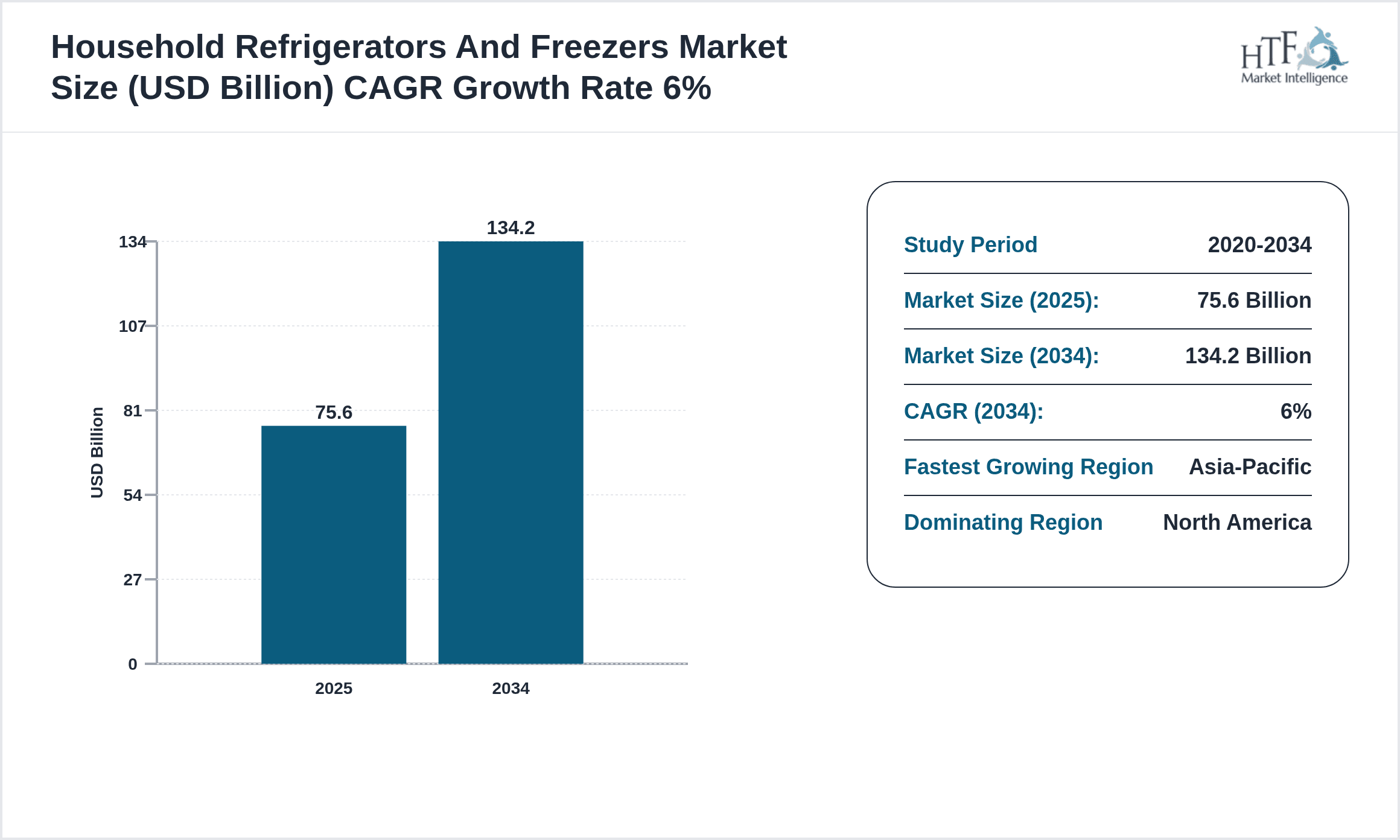
- •Market highlights include a forecasted compound annual growth rate (CAGR) of 6.0% from 2024 to 2034, with the market expected to reach USD 134.2 billion by 2034 from USD 75.6 billion in 2024. The double door refrigerator segment currently dominates in terms of market share, with French door refrigerators identified as the fastest-growing product type due to consumer preferences for larger storage and premium features. North America leads as the dominating region, driven by high disposable incomes and technological adoption, while Asia-Pacific stands out as the fastest-growing region fueled by rapid urbanization and increasing electrification of households. The household refrigerators and freezers market’s segmentation by application and product type underscores the diverse consumer needs and technological advancements shaping the marketplace.
- •This market presents a compelling value proposition for manufacturers, retailers, and investors by addressing critical household needs for food preservation and convenience. The integration of smart technologies offers enhanced user interaction, energy savings, and sustainability, aligning with global environmental goals. Strategic importance is underscored by the market’s role in supporting food security, reducing waste, and contributing to energy-efficient home solutions. Stakeholders benefit from ongoing innovation, expanding global demand, and regulatory frameworks promoting environmentally safe refrigerants and energy standards. The market’s growth potential spans mature and emerging economies, ensuring broad-based opportunities across different regions and consumer segments.
Competitive Landscape
The competitive environment in the global household refrigerators and freezers market is marked by intense rivalry among leading multinational corporations and regional players. Market participants leverage innovation, product differentiation, and technological advancements to secure and expand market share. Companies focus on developing energy-efficient and smart-enabled refrigeration units to meet evolving consumer demands and comply with stringent environmental regulations. Strategic partnerships, mergers and acquisitions, and global expansions are prevalent tactics to enhance distribution networks and technological capabilities. Pricing strategies are tailored to balance affordability and premium features across diverse consumer segments. The competitive landscape also reflects regional variations in consumer preferences and regulatory frameworks, prompting companies to customize product portfolios accordingly. Future trends suggest increased investment in sustainable technologies and digital integration, which will further intensify competition and drive market evolution.
Leading Companies in Household Refrigerators And Freezers Market
- •Whirlpool Corporation (United States)
- •LG Electronics (South Korea)
- •Samsung Electronics (South Korea)
- •Haier Group Corporation (China)
- •Electrolux AB (Sweden)
- •Bosch Siemens Hausgeräte (Germany)
- •Miele & Cie. KG (Germany)
- •Panasonic Corporation (Japan)
- •GE Appliances (United States)
- •Hisense Group (China)
- •Beko (Turkey)
- •Fisher & Paykel Appliances Holdings (New Zealand)
- •Arcelik A.S. (Turkey)
- •Viking Range LLC (United States)
- •Gree Electric Appliances (China)
- •Hitachi Appliances, Inc. (Japan)
- •Liebherr Group (Germany)
- •Mitsubishi Electric Corporation (Japan)
- •Fagor Electrodomésticos (Spain)
- •Candy Hoover Group (Italy)
- •Daewoo Electronics (South Korea)
- •Sharp Corporation (Japan)
- •Indesit Company (Italy)
- •Kelvinator (United States)
- •Smeg S.p.A. (Italy)
Market Breakdown
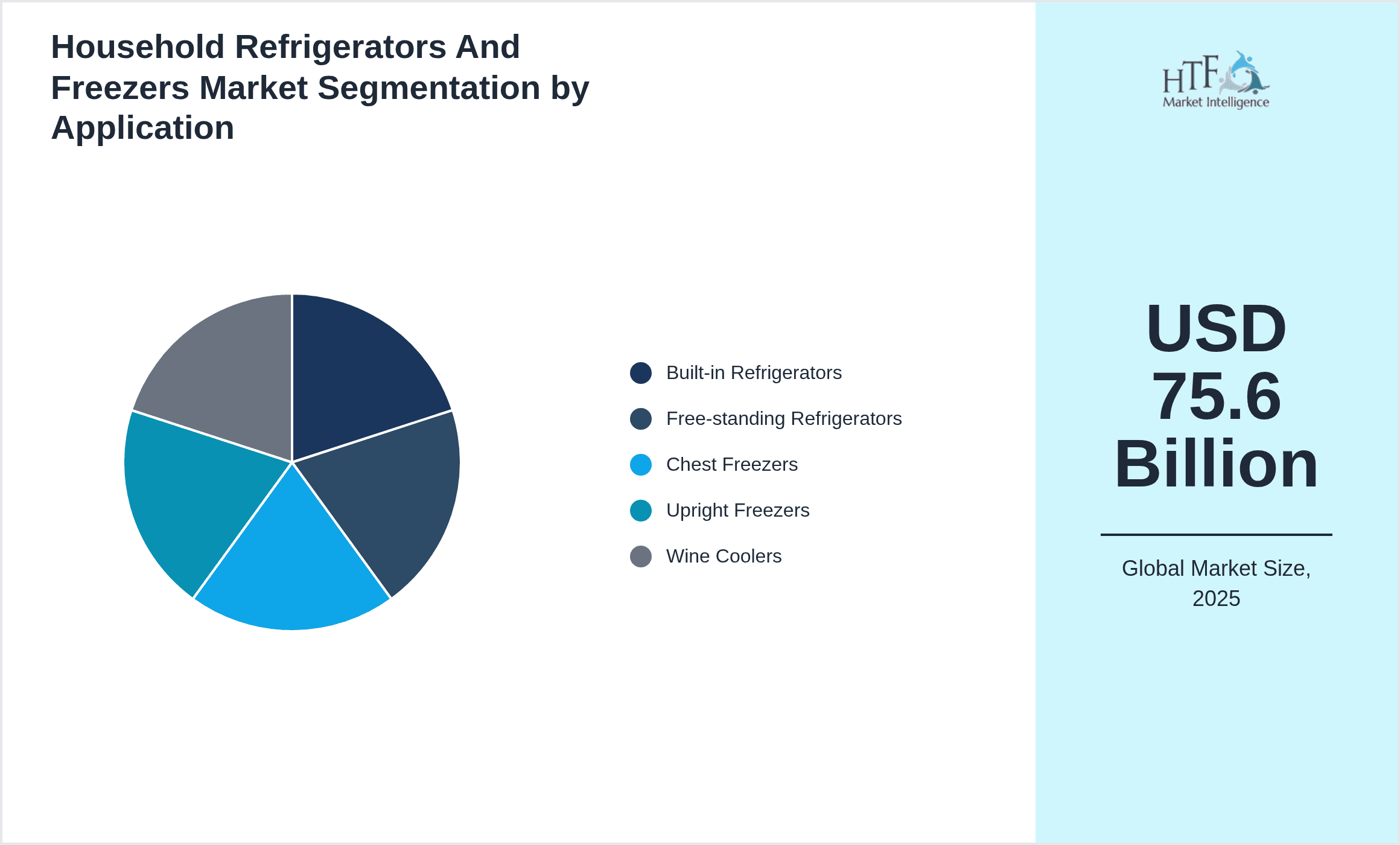
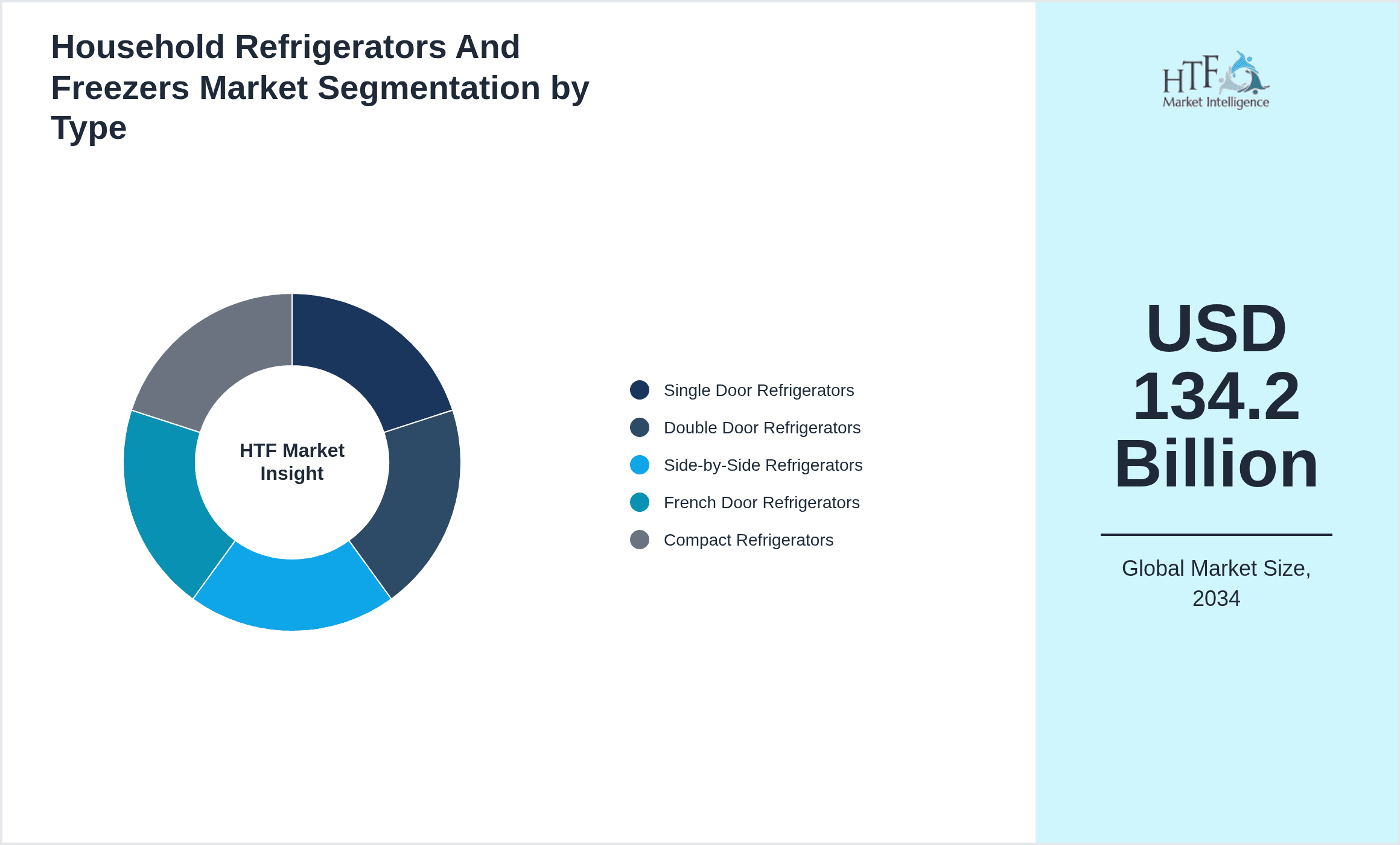
- •By Product Type
- ◦Single Door Refrigerators
- ◦Double Door Refrigerators
- ◦Side-by-Side Refrigerators
- ◦French Door Refrigerators
- ◦Compact Refrigerators
- •By Application
- ◦Built-in Refrigerators
- ◦Free-standing Refrigerators
- ◦Chest Freezers
- ◦Upright Freezers
- ◦Wine Coolers
- •By End-Use Industry
- ◦Residential Households
- ◦Rental Properties
- ◦Hospitality Industry
- ◦Retail and Grocery Stores
- •By Distribution Channel
- ◦Offline Retail Stores
- ◦Online Sales Channels
- ◦Wholesale Distributors
Growth Dynamics
The global household refrigerators and freezers market growth is primarily driven by rising disposable incomes and urbanization across emerging economies, which boost demand for modern refrigeration appliances. Technological advancements such as energy-efficient compressors, inverter technology, and integration of smart home features enhance product appeal, contributing to consumer preference shifts. Increasing awareness about food safety and the need to reduce food wastage also underpin market expansion. Additionally, governmental policies promoting energy-efficient appliances and environmental sustainability create a favorable regulatory environment. The proliferation of e-commerce and expanding retail networks facilitate greater product accessibility, further accelerating market growth. Growing middle-class populations in Asia-Pacific and Latin America represent significant untapped demand, supporting sustained long-term growth for global manufacturers focusing on these regions.
Market Trends
A notable trend in the household refrigerators and freezers market is the widespread adoption of smart refrigeration units equipped with IoT-enabled features such as remote temperature control, inventory management, and energy monitoring. This digital transformation enhances user convenience and operational efficiency, aligning with the growing smart home ecosystem. Another key trend is the increasing use of eco-friendly refrigerants like R600a and R290, driven by stringent environmental regulations and consumer preference for sustainable products. Modular and customizable refrigerator designs are gaining traction, allowing consumers to tailor functionalities to their specific needs. Additionally, manufacturers are focusing on aesthetic innovations, offering a variety of finishes and colors to complement modern kitchen designs. The trend towards compact and multi-functional appliances caters to smaller living spaces, particularly in urban environments.

Market Opportunities
Expanding urban populations in developing regions present significant opportunities for market players to tap into growing demand for household refrigeration appliances. The rising preference for energy-efficient and eco-friendly refrigerators opens avenues for innovation and premium product offerings. The increasing penetration of online retail platforms allows companies to reach a broader customer base with targeted marketing and competitive pricing. Collaborations with smart home technology providers can lead to integrated solutions, enhancing product differentiation. Furthermore, emerging consumer trends favoring health and wellness, such as fresh food storage and preservation, provide opportunities for specialized product development including advanced temperature control and humidity management features.
Market Challenges
The household refrigerators and freezers market faces challenges including the high initial cost of advanced models, which may deter price-sensitive consumers especially in developing countries. Supply chain disruptions and fluctuations in raw material costs impact manufacturing expenses and product pricing. Regulatory compliance with evolving environmental standards requires continuous investment in research and development, raising operational costs. Additionally, intense competition leads to price wars, squeezing profit margins for manufacturers. Consumer preference variability across regions demands extensive customization, complicating production and inventory management. The environmental impact of refrigerants and appliance disposal also poses sustainability challenges that manufacturers must address to comply with stricter regulations and public expectations.
Regulatory Framework
Between 2019 and 2024, several regulatory measures significantly influenced the household refrigerators and freezers market. The implementation of stricter energy efficiency standards, such as the U.S. Department of Energy’s updated regulations in 2021, mandated higher performance benchmarks for refrigeration appliances, incentivizing manufacturers to innovate energy-saving technologies. The European Union’s Ecodesign Directive required reductions in power consumption and phased out high-global warming potential refrigerants by 2023, impacting product design and refrigerant selection. Additionally, the Kigali Amendment to the Montreal Protocol, ratified globally, accelerated the transition to environmentally friendly refrigerants like hydrocarbons and HFOs. Regional regulations in Asia-Pacific and Latin America have also increasingly targeted appliance labeling and energy consumption disclosures, promoting consumer awareness and sustainable purchasing decisions. These regulations collectively drive market evolution towards greener, more efficient refrigeration solutions.
Market Intelligence
- •15th January 2025, Whirlpool Corporation launched its latest line of eco-friendly refrigerators equipped with inverter compressors and smart sensors designed to optimize energy usage and maintain optimal food preservation conditions. Targeting environmentally conscious consumers in North America and Europe, this product line aims to reduce carbon footprint while enhancing user convenience through smartphone app integration and voice control features. The launch aligns with increasing global demand for energy-efficient household appliances and regulatory mandates for greener refrigerants. Whirlpool’s strategic focus on sustainability and digitalization positions it to capture growing market segments seeking innovative and responsible refrigeration solutions. This initiative also includes partnerships with technology firms to develop AI-driven maintenance alerts and inventory management systems, enhancing overall product value and lifecycle performance. Source: Official Whirlpool press release
- •10th March 2025, LG Electronics introduced its advanced French door refrigerator featuring smart diagnostics, customizable temperature zones, and eco-friendly R600a refrigerant across Asia-Pacific markets. The product emphasizes sleek design and multi-functional storage options to meet evolving consumer preferences in dense urban environments. This launch reflects LG’s commitment to blending innovation with sustainability, addressing both energy efficiency and user-centric design. The refrigerator integrates with smart home platforms, allowing remote monitoring and control, thereby enhancing the connected living experience. LG’s expansion into premium refrigerator segments in emerging economies complements its strategy to increase market share amid rising middle-class demand. The product also incorporates antimicrobial coatings and humidity control systems to enhance food safety and freshness, contributing to healthier lifestyles. Source: LG Electronics official website
- •Recent market developments and strategic initiatives are continuously tracked through industry publications, company announcements, and regulatory filings. For the most current information, stakeholders are advised to monitor official corporate communications and recognized market intelligence platforms.
- •Recent market developments and strategic initiatives are continuously tracked through industry publications, company announcements, and regulatory filings. For the most current information, stakeholders are advised to monitor official corporate communications and recognized market intelligence platforms.
Regional Outlook
The North America currently holds a significant share of the market, primarily due to several key factors: increasing consumption rates, a burgeoning population, and robust economic momentum. These elements collectively drive demand, positioning this region as a leader in the market. On the other hand, Asia-Pacific is rapidly emerging as the fastest-growing area within the industry. This remarkable growth can be attributed to swift infrastructure development, the expansion of various industrial sectors, and a marked increase in consumer demand. These dynamics make this region a crucial player in shaping future market growth.
In our report, we cover a comprehensive analysis of the following regions and countries:
- North America
- LATAM
- West Europe
- Central & Eastern Europe
- Northern Europe
- Southern Europe
- East Asia
- Southeast Asia
- South Asia
- Central Asia
- Oceania
- MEA
| Feature | Details |
|---|---|
| Base Year Market Size | USD 75.6 Billion |
| Forecast Year Market Size | USD 134.2 Billion |
| CAGR | 6% |
| Forecast Period | 2026 to 2033 |
| YoY Growth | 5.8% |
| Scope of Report | Market is segmented by Product Type (Single Door Refrigerators, Double Door Refrigerators, Side-by-Side Refrigerators, French Door Refrigerators, Compact Refrigerators), Application (Built-in Refrigerators, Free-standing Refrigerators, Chest Freezers, Upright Freezers, Wine Coolers), End-Use Industry (Residential Households, Rental Properties, Hospitality Industry, Retail and Grocery Stores), Distribution Channel (Offline Retail Stores, Online Sales Channels, Wholesale Distributors) |
| Regions Covered | North America, LATAM, West Europe, Central & Eastern Europe, Northern Europe, Southern Europe, East Asia, Southeast Asia, South Asia, Central Asia, Oceania, MEA |
| Key Companies | Whirlpool Corporation (United States), LG Electronics (South Korea), Samsung Electronics (South Korea), Haier Group Corporation (China), Electrolux AB (Sweden), Bosch Siemens Hausgeräte (Germany), Miele & Cie. KG (Germany), Panasonic Corporation (Japan), GE Appliances (United States), Hisense Group (China), Beko (Turkey), Fisher & Paykel Appliances Holdings (New Zealand), Arcelik A.S. (Turkey), Viking Range LLC (United States), Gree Electric Appliances (China), Hitachi Appliances, Inc. (Japan), Liebherr Group (Germany), Mitsubishi Electric Corporation (Japan), Fagor Electrodomésticos (Spain), Candy Hoover Group (Italy), Daewoo Electronics (South Korea), Sharp Corporation (Japan), Indesit Company (Italy), Kelvinator (United States), Smeg S.p.A. (Italy) |
Global Household Refrigerators And Freezers Market Size, Growth & Revenue 2024-2034 - Table of Contents
Frequently Asked Questions (FAQ):
The Compact Track Loaders market is expected to see value worth 5.3 Billion in 2025.
North America currently leads the market with approximately 45% market share, followed by Europe at 28% and Asia-Pacific at 22%. The remaining regions account for 5% of the global market.
Key growth drivers include increasing construction activities, rising demand for versatile equipment in agriculture, technological advancements in track loader design, and growing preference for compact equipment in urban construction projects.