
Global Adjustable Bed Base and Bed Set Market Size, Growth & Revenue 2024-2034
Global Adjustable Bed Base and Bed Set Market is segmented by Product Type (Electric Adjustable Bed Base, Manual Adjustable Bed Base, Hybrid Adjustable Bed Base, Smart Adjustable Bed Base, Others), Application (Home Use, Healthcare Facilities, Hospitality, Assisted Living, Others), End-Use Industry (Residential, Medical and Healthcare, Hospitality and Leisure, Assisted Living and Elderly Care), Distribution Channel (Online Retail, Specialty Stores, Direct Sales), and Geography (North America, LATAM, West Europe, Central & Eastern Europe, Northern Europe, Southern Europe, East Asia, Southeast Asia, South Asia, Central Asia, Oceania, MEA)
Pricing
Report Overview
Executive Summary
- •The global Adjustable Bed Base and Bed Set market represents an evolving sector focusing on sleep comfort and therapeutic benefits through variable bed positioning. This market includes electric, manual, hybrid, and smart adjustable bed bases designed to enhance sleep quality and address health issues such as back pain, sleep apnea, and circulation problems. Key applications encompass residential use, healthcare institutions, hospitality, and assisted living, reflecting diverse end-user needs. The industry is propelled by technological advancements including IoT integration and smart home compatibility, alongside demographic trends such as aging populations and rising chronic diseases. Global demand is supported by increased awareness of sleep health and comfort, with manufacturers innovating to offer customizable and ergonomically optimized solutions. Market growth is influenced by expanding distribution channels, rising disposable incomes, and evolving consumer preferences for premium and health-focused bedding systems. Competitive dynamics are shaped by product differentiation, strategic partnerships, and investments in R&D, positioning the market for robust growth through 2034.
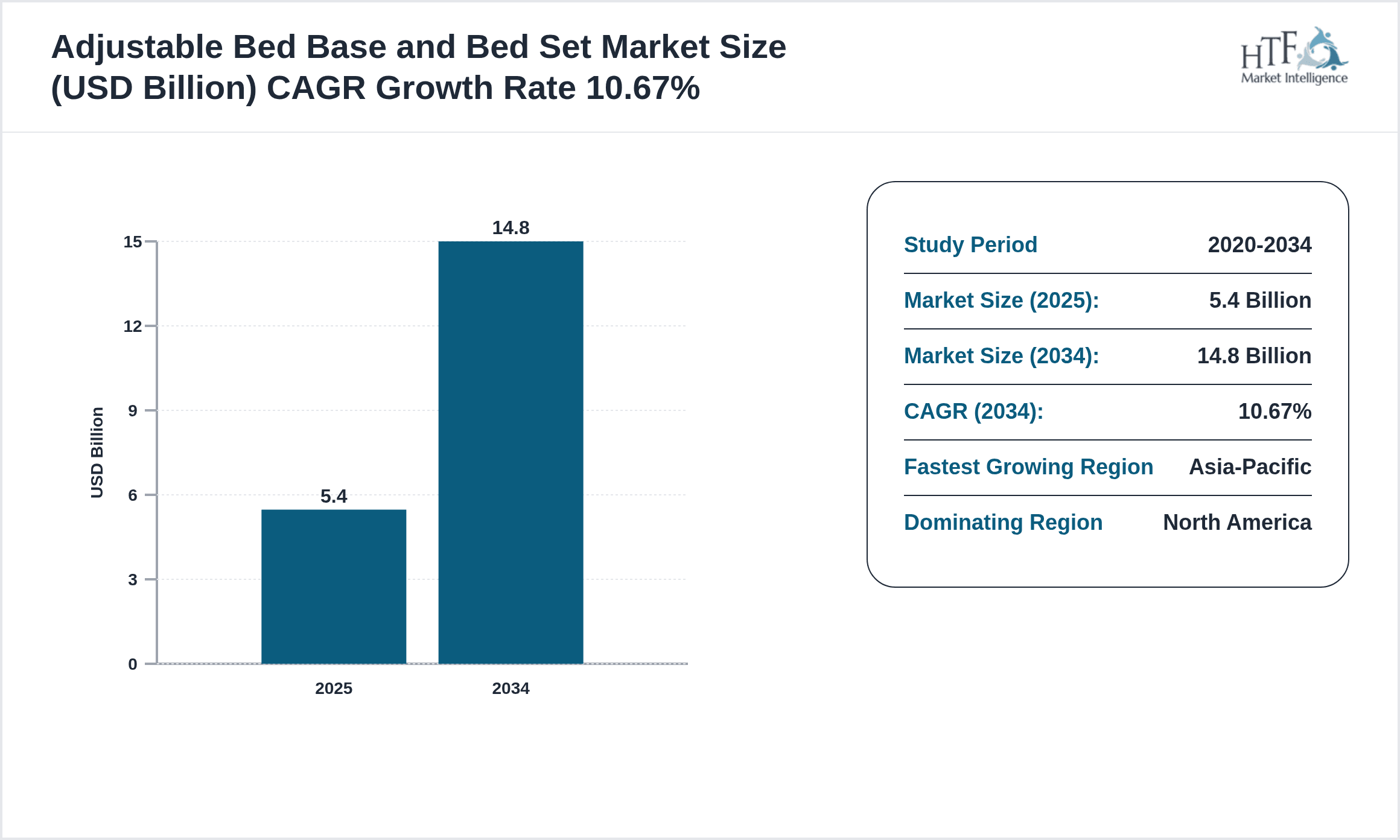
- •Key market highlights reveal a base market size of USD 5.4 Billion in 2024, projected to reach USD 14.8 Billion by 2034 with a CAGR of 10.67%. The electric adjustable bed base dominates product type share, while smart adjustable bed bases exhibit the fastest growth, driven by technological innovation. North America leads regional dominance due to high healthcare expenditure and consumer awareness, whereas Asia-Pacific is the fastest growing region fueled by expanding middle-class populations and increasing healthcare infrastructure. Home use remains the primary application segment, followed by healthcare facilities which demand specialized adjustable beds. Market dynamics reflect increasing investment in smart technologies and personalized comfort solutions across regions. Competitive intensity is heightened by key players focusing on innovation, strategic acquisitions, and expanding global footprint to capture emerging markets.
- •The adjustable bed base and bed set industry offers significant value propositions by enhancing user comfort, improving health outcomes, and enabling better sleep quality. For healthcare providers, these products reduce patient recovery times and improve mobility assistance. In the hospitality sector, adjustable beds enhance guest experience and satisfaction, driving premium service offerings. For consumers, the integration of smart technologies provides convenience and customization, supporting wellness-oriented lifestyles. Stakeholders including manufacturers, distributors, healthcare institutions, and end-users benefit from the market's growth through innovation, expanding product portfolios, and evolving consumer preferences. The strategic importance of this market lies in addressing global health challenges, aging demographics, and rising demand for lifestyle-enhancing furniture, making it a critical sector within the broader sleep solutions and medical equipment industries.
Competitive Landscape
The global adjustable bed base and bed set market is characterized by intense competition among established multinational corporations and emerging regional players. Market leaders employ strategies such as continuous product innovation, integration of cutting-edge smart technologies, and expansion of global distribution networks to maintain competitive advantage. Innovation focuses on enhancing ergonomic design, increasing motor efficiency, and incorporating IoT-enabled features for remote control and health monitoring. Strategic partnerships and mergers are common to leverage technological capabilities and broaden product portfolios. Pricing strategies vary from premium offerings targeting healthcare and luxury hospitality sectors to value-for-money options for residential consumers. Market entry barriers include high R&D costs, regulatory compliance complexities, and the need for extensive after-sales service networks. Regional competition is amplified by local manufacturers catering to specific consumer preferences and price sensitivities. Future competitive trends will likely emphasize sustainability, smart home integration, and personalized sleeping solutions to capture evolving market demands.
Top Companies in Adjustable Bed Base and Bed Set Market
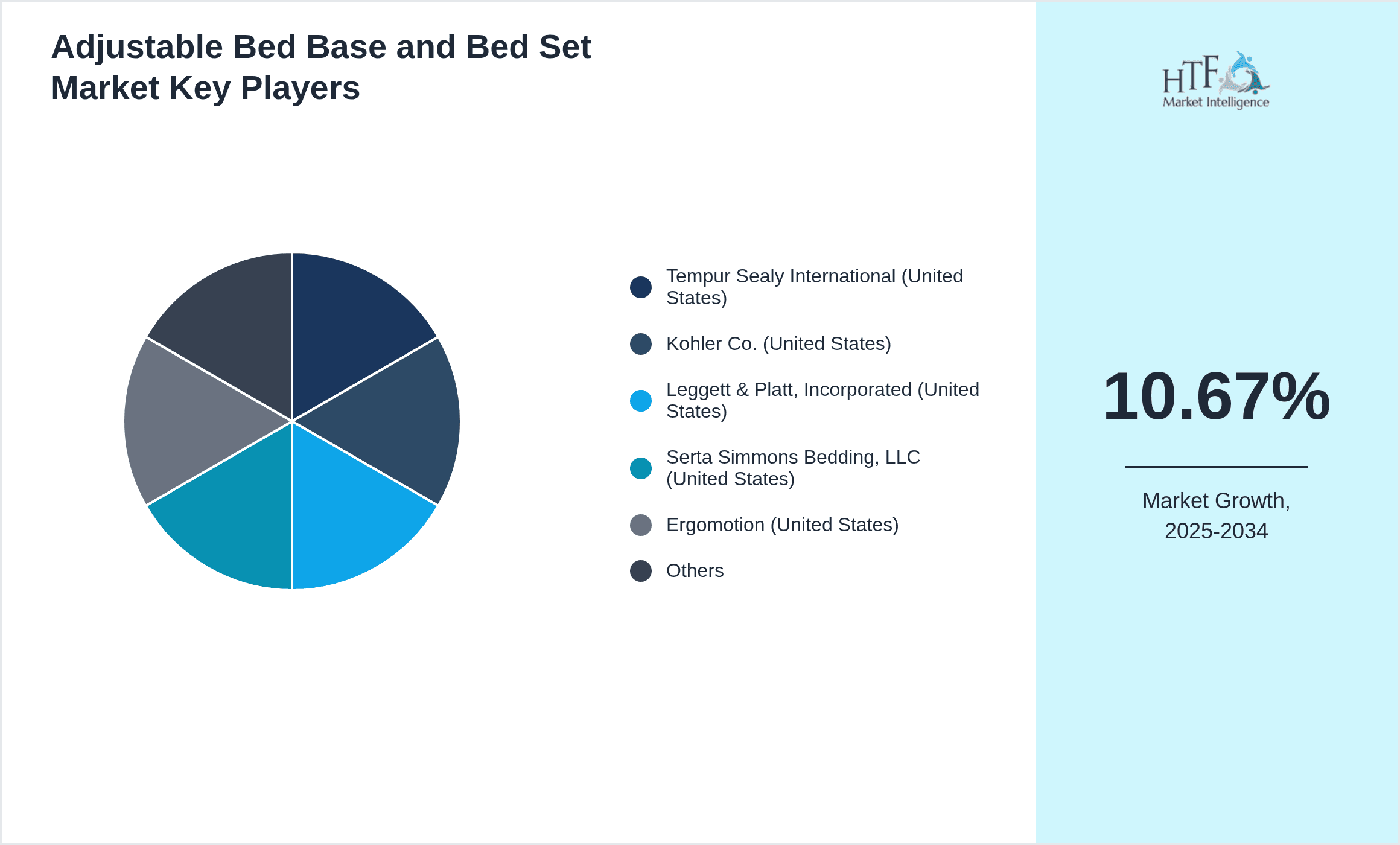
- •Tempur Sealy International (United States)
- •Kohler Co. (United States)
- •Leggett & Platt, Incorporated (United States)
- •Serta Simmons Bedding, LLC (United States)
- •Ergomotion (United States)
- •Silentnight Group Limited (United Kingdom)
- •Reverie Inc. (United States)
- •Sealy Corporation (United States)
- •Dorel Industries Inc. (Canada)
- •Invacare Corporation (United States)
- •Hukla Germany GmbH & Co. KG (Germany)
- •Sleep Number Corporation (United States)
- •Leggett & Platt Europe (Belgium)
- •Flexsteel Industries, Inc. (United States)
- •King Koil (United States)
- •Jaymar Inc. (United States)
- •Icon Health & Fitness, Inc. (United States)
- •Ergomotion Europe (France)
- •Meda Beds (Sweden)
- •Invacare Europe (Netherlands)
- •Homecrest Furniture (United States)
- •Restonic Corporation (United States)
- •Leggett & Platt Asia-Pacific (China)
- •Harrison Spinks (United Kingdom)
- •Hill-Rom Holdings, Inc. (United States)
Market Breakdown
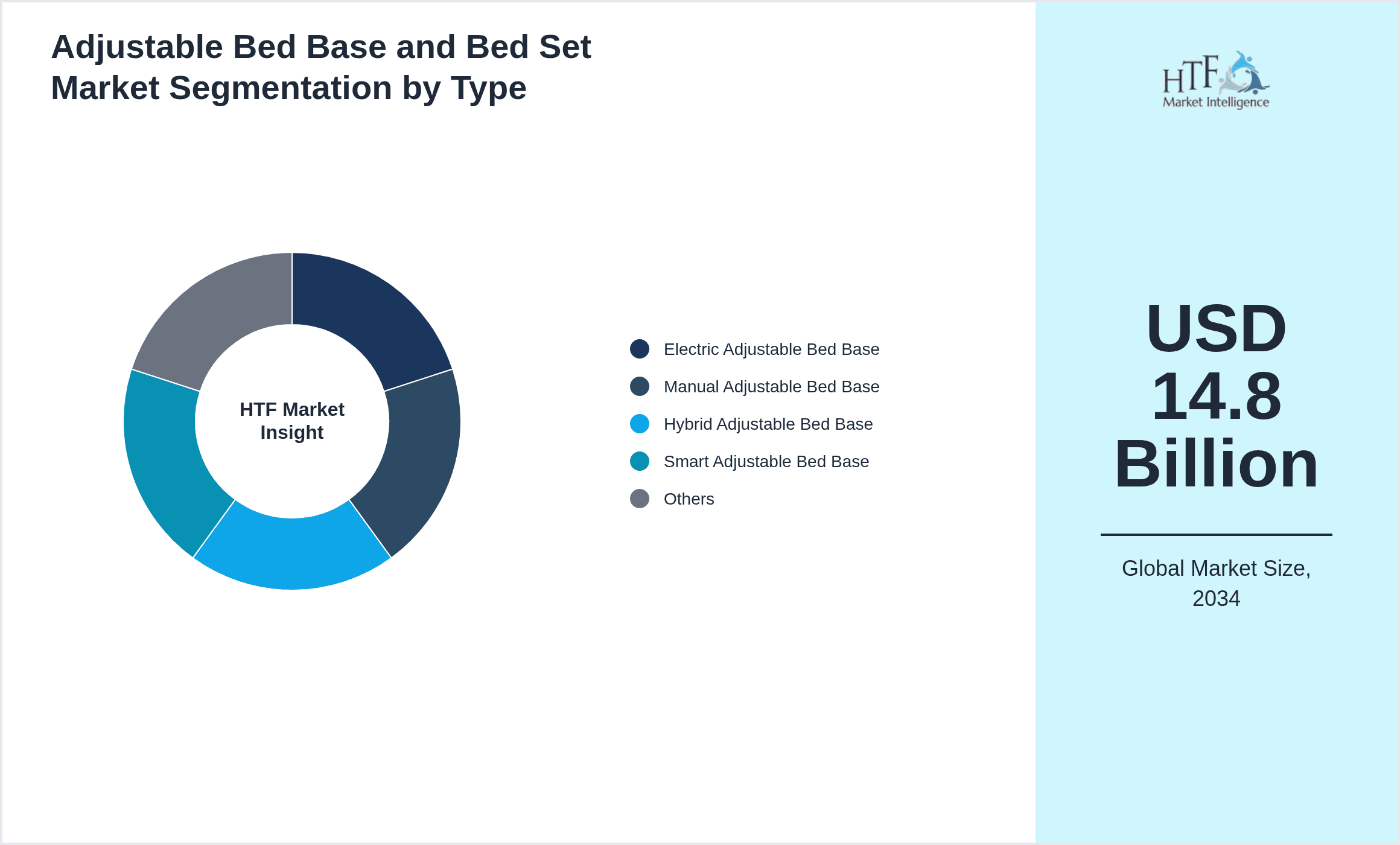
- •By Product Type
- ◦Electric Adjustable Bed Base
- ◦Manual Adjustable Bed Base
- ◦Hybrid Adjustable Bed Base
- ◦Smart Adjustable Bed Base
- ◦Others
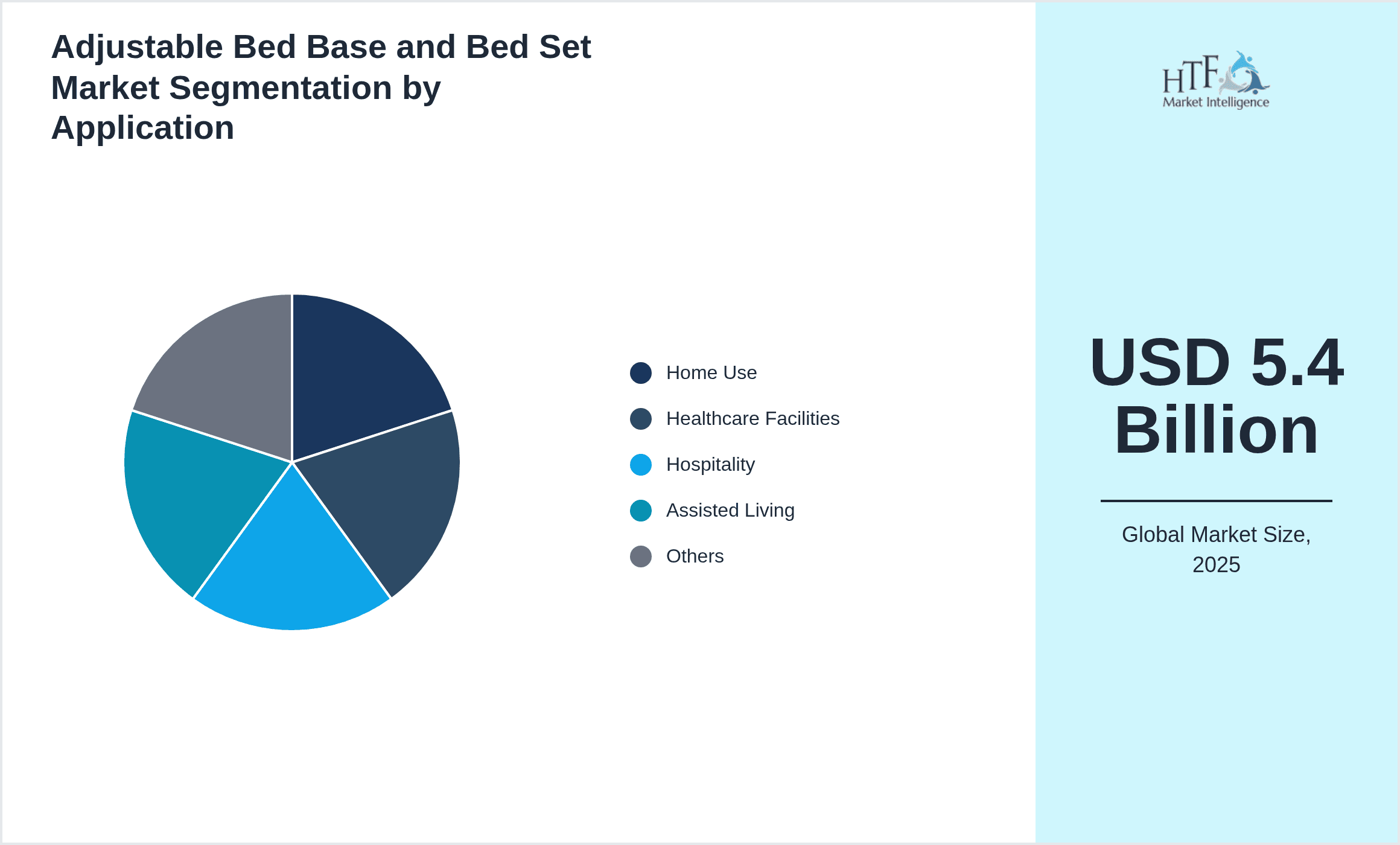
- •By Application
- ◦Home Use
- ◦Healthcare Facilities
- ◦Hospitality
- ◦Assisted Living
- ◦Others
- •By End-Use Industry
- ◦Residential
- ◦Medical and Healthcare
- ◦Hospitality and Leisure
- ◦Assisted Living and Elderly Care
- •By Distribution Channel
- ◦Online Retail
- ◦Specialty Stores
- ◦Direct Sales
Growth Dynamics
- •The global adjustable bed base and bed set market is driven by increasing health consciousness and the aging global population, which demand ergonomic sleep solutions to alleviate chronic conditions such as arthritis and sleep apnea. Technological advances in motorized systems and smart integration have enhanced product appeal, enabling remote adjustments and personalized comfort settings. Rising disposable incomes and consumer preference for premium bedroom furniture further fuel demand. Healthcare facilities' growing adoption of adjustable beds for patient mobility and recovery also contributes significantly. Moreover, the expanding hospitality industry is integrating adjustable beds to enhance guest experience, creating additional growth avenues worldwide.
- •Emerging trends highlight the integration of Internet of Things (IoT) and smart home technologies within adjustable bed bases, allowing users to monitor sleep patterns and control bed positions through mobile applications. Sustainability is gaining prominence, with manufacturers adopting eco-friendly materials and energy-efficient motors. Customizable designs tailored to individual health needs and aesthetic preferences are becoming standard. The rise of e-commerce platforms has also facilitated broader market accessibility and consumer outreach. These trends collectively shape a dynamic market landscape oriented towards innovation and personalized user experience.
- •Despite growth prospects, the market faces restraints such as high product costs limiting adoption in price-sensitive regions. Technical complexities and the need for reliable after-sales support pose challenges for manufacturers. Regulatory compliance related to electrical safety and medical device standards increases operational costs. Additionally, competition from traditional bedding products and alternative sleep technologies may impede rapid market penetration. Supply chain disruptions and raw material price volatility also affect production timelines and profitability, requiring strategic mitigation approaches.
- •Opportunities abound in emerging economies where increasing healthcare infrastructure investments and rising middle-class populations create new demand for adjustable beds. Innovations in smart bed technology, including AI-driven sleep optimization and health monitoring, offer avenues for product differentiation. Collaborations between technology firms and traditional bed manufacturers can accelerate innovation cycles. Expansion through online retail channels and strategic partnerships with healthcare providers and hospitality chains are promising growth strategies. Furthermore, customization for specific therapeutic applications presents untapped potential in niche markets.
- •The market confronts challenges such as stringent regulatory environments across different regions, which complicate product approvals and increase time-to-market. High R&D expenses for developing next-generation smart beds strain smaller players. Consumer skepticism regarding new technologies and the need for educational marketing to demonstrate benefits represent additional hurdles. Furthermore, intense competition drives pricing pressures, impacting margins. Supply chain limitations and component shortages, particularly in electronics, necessitate robust risk management to ensure consistent product availability and quality.
Market Trends
- •A prominent market trend is the rapid adoption of smart adjustable bed bases equipped with sensors and connectivity features enabling integration with smartphones and voice assistants. This advancement allows users to customize sleep settings, monitor health metrics, and receive personalized sleep recommendations, enhancing user engagement and satisfaction across regions.
- •Sustainability initiatives are influencing manufacturing processes, with companies increasingly using eco-friendly materials and energy-efficient components to reduce environmental impact. This trend aligns with consumer demand for green products and regulatory pressures for sustainable practices, creating a competitive advantage for proactive manufacturers.
- •The rise of direct-to-consumer online sales channels is reshaping distribution strategies, enabling manufacturers to reach wider audiences while reducing intermediary costs. This shift has accelerated market penetration in emerging markets and facilitated personalized customer interactions and service responsiveness.
- •Customization and modularity in bed base design are gaining traction, allowing consumers to tailor products to specific health needs and aesthetic preferences. This trend enhances product differentiation and fosters brand loyalty by addressing diverse consumer requirements.
- •Collaborative innovation between technology companies and traditional bedding manufacturers is fostering the development of hybrid adjustable beds that combine manual and electric features with smart capabilities, aiming to balance cost and functionality for various market segments.
- •Healthcare providers increasingly adopt adjustable beds integrated with advanced pressure-relief and positioning technologies to improve patient outcomes, reflecting a trend towards medical-grade home care and rehabilitation equipment in the residential market.
- •Emerging markets are witnessing increasing investments in hospitality infrastructure featuring adjustable beds to elevate guest comfort and differentiate services, driving regional market expansion and product innovation focused on durability and ease of use.
Market Opportunities
- •Expanding middle-class populations in Asia-Pacific and Latin America present significant growth opportunities for adjustable bed base manufacturers to penetrate emerging residential markets with affordable and technologically advanced products. Tailored marketing strategies and localized product development can capture these untapped segments effectively.
- •Integration of artificial intelligence and machine learning in smart adjustable beds offers avenues for creating personalized sleep environments that adapt dynamically to user behavior, opening new product development frontiers and enhancing user satisfaction.
- •Partnerships between adjustable bed manufacturers and healthcare institutions can facilitate the co-creation of specialized beds designed for rehabilitation and chronic condition management, driving adoption in medical facilities and home care markets.
- •Growth in e-commerce and omnichannel retailing provides scalable distribution platforms, enabling manufacturers to broaden reach and improve customer engagement through interactive online experiences and after-sales support services.
- •Customization and modular product offerings allow for increased consumer choice and adaptability, fostering brand differentiation and loyalty by addressing diverse health requirements and lifestyle preferences.
- •Sustainability-focused innovations in materials and production methods can attract environmentally conscious consumers and comply with tightening regulations, creating long-term competitive advantages.
- •Emerging applications such as integration with wellness and fitness ecosystems provide cross-industry collaboration opportunities, expanding the market scope beyond traditional bedding segments.
Market Challenges
- •High costs associated with advanced motorized and smart bed technologies limit adoption in cost-sensitive markets, constraining market expansion and necessitating development of affordable alternatives without compromising quality or features.
- •Complex regulatory requirements for electrical safety, medical device classification, and energy consumption vary across regions, imposing compliance burdens and elongating product certification timelines.
- •Supply chain disruptions, particularly in sourcing electronic components and raw materials, increase production lead times and costs, challenging manufacturers' ability to meet growing demand efficiently.
- •Consumer skepticism and lack of awareness about the benefits of adjustable and smart beds require extensive educational marketing, which increases go-to-market costs and delays adoption rates.
- •Intense competition from traditional mattress and bed manufacturers, as well as emerging sleep technology startups, drives pricing pressures and challenges differentiation strategies.
- •After-sales service complexity, including maintenance and repair of motorized and smart components, necessitates robust support infrastructure to ensure customer satisfaction and retention.
- •Limited interoperability standards for smart bed components hinder seamless integration with other smart home devices, potentially reducing consumer appeal and market growth.
Regulatory Framework
- •Between 2020 and 2024, regulatory agencies globally have tightened electrical safety standards for adjustable beds, mandating compliance with updated IEC and UL certifications to ensure user safety and product reliability. These requirements have necessitated design modifications and increased testing protocols, impacting time to market and manufacturing costs.
- •Data privacy regulations introduced since 2021, especially in regions such as Europe under GDPR, affect smart adjustable bed manufacturers by requiring secure handling of user health and sleep data collected via IoT devices. Compliance has driven investments in cybersecurity measures and user consent management.
- •Medical device classification updates in several markets have redefined adjustable beds used in healthcare facilities, imposing stricter quality controls and post-market surveillance obligations to enhance patient safety and product efficacy.
- •Environmental regulations enacted from 2020 to 2023 have encouraged manufacturers to adopt eco-friendly materials and energy-efficient motors, aligned with government incentives aimed at reducing carbon footprints and promoting sustainable manufacturing practices.
- •Regional mandates introduced for accessibility and ergonomic standards for beds used in assisted living and healthcare settings have standardized product specifications, facilitating wider adoption but requiring compliance adaptations by manufacturers.
Market Intelligence
- •15th March 2024, Tempur Sealy International launched a new line of smart adjustable bed bases featuring integrated sleep tracking sensors and compatibility with major smart home platforms. The product targets tech-savvy consumers seeking personalized sleep optimization, combining premium comfort with advanced health monitoring capabilities. This launch strengthens the company's position in the growing smart bed segment and aligns with increasing consumer demand for connected bedroom solutions. Source: Official company website
- •22nd July 2023, Leggett & Platt, Incorporated introduced a hybrid adjustable bed base combining manual and electric adjustment features, designed to offer a cost-effective alternative for emerging markets. The product leverages durable materials and simplified controls to enhance accessibility without compromising comfort. This innovation aims to expand the company's footprint in Asia-Pacific and Latin America, where demand for affordable adjustable beds is rising. Source: Industry publication
- •10th November 2024, Reverie Inc. announced a strategic partnership with a leading IoT technology provider to develop next-generation smart adjustable beds incorporating AI-driven sleep analytics and voice control. This collaboration aims to accelerate product innovation and enhance user experience through seamless integration with home automation ecosystems, positioning Reverie as a pioneer in smart bedding solutions. Source: Company press release
- •5th February 2025, Sleep Number Corporation completed the acquisition of a European adjustable bed manufacturer to expand its product portfolio and strengthen its presence in the European market. The acquisition facilitates access to advanced motor technologies and broadens Sleep Number’s distribution channels across key regions, supporting its global growth strategy. Source: Official press release
Regional Outlook
The North America currently holds a significant share of the market, primarily due to several key factors: increasing consumption rates, a burgeoning population, and robust economic momentum. These elements collectively drive demand, positioning this region as a leader in the market. On the other hand, Asia-Pacific is rapidly emerging as the fastest-growing area within the industry. This remarkable growth can be attributed to swift infrastructure development, the expansion of various industrial sectors, and a marked increase in consumer demand. These dynamics make this region a crucial player in shaping future market growth.
In our report, we cover a comprehensive analysis of the following regions and countries:
- North America
- LATAM
- West Europe
- Central & Eastern Europe
- Northern Europe
- Southern Europe
- East Asia
- Southeast Asia
- South Asia
- Central Asia
- Oceania
- MEA
| Feature | Details |
|---|---|
| Base Year Market Size | USD 5.4 Billion |
| Forecast Year Market Size | USD 14.8 Billion |
| CAGR | 10.67% |
| Forecast Period | 2026 to 2033 |
| YoY Growth | 10.2% |
| Scope of Report | Market is segmented by Product Type (Electric Adjustable Bed Base, Manual Adjustable Bed Base, Hybrid Adjustable Bed Base, Smart Adjustable Bed Base, Others), Application (Home Use, Healthcare Facilities, Hospitality, Assisted Living, Others), End-Use Industry (Residential, Medical and Healthcare, Hospitality and Leisure, Assisted Living and Elderly Care), Distribution Channel (Online Retail, Specialty Stores, Direct Sales) |
| Regions Covered | North America, LATAM, West Europe, Central & Eastern Europe, Northern Europe, Southern Europe, East Asia, Southeast Asia, South Asia, Central Asia, Oceania, MEA |
| Key Companies | Tempur Sealy International (United States), Kohler Co. (United States), Leggett & Platt, Incorporated (United States), Serta Simmons Bedding, LLC (United States), Ergomotion (United States), Silentnight Group Limited (United Kingdom), Reverie Inc. (United States), Sealy Corporation (United States), Dorel Industries Inc. (Canada), Invacare Corporation (United States), Hukla Germany GmbH & Co. KG (Germany), Sleep Number Corporation (United States), Leggett & Platt Europe (Belgium), Flexsteel Industries, Inc. (United States), King Koil (United States), Jaymar Inc. (United States), Icon Health & Fitness, Inc. (United States), Ergomotion Europe (France), Meda Beds (Sweden), Invacare Europe (Netherlands), Homecrest Furniture (United States), Restonic Corporation (United States), Leggett & Platt Asia-Pacific (China), Harrison Spinks (United Kingdom), Hill-Rom Holdings, Inc. (United States) |
Global Adjustable Bed Base and Bed Set Market Size, Growth & Revenue 2024-2034 - Table of Contents
Frequently Asked Questions (FAQ):
The Compact Track Loaders market is expected to see value worth 5.3 Billion in 2025.
North America currently leads the market with approximately 45% market share, followed by Europe at 28% and Asia-Pacific at 22%. The remaining regions account for 5% of the global market.
Key growth drivers include increasing construction activities, rising demand for versatile equipment in agriculture, technological advancements in track loader design, and growing preference for compact equipment in urban construction projects.