
Light Vehicle Front End Modules Market - Europe Size & Outlook 2025-2034
Europe Light Vehicle Front End Modules Market is segmented by Type (Plastic Front End Modules, Steel Front End Modules, Aluminum Front End Modules, Composite Front End Modules, Other Metal Front End Modules), Application (Bumper Systems, Cooling Systems, Lighting Systems, Pedestrian Protection Systems, Aerodynamics), End-Use Industry (Passenger Vehicles, Light Commercial Vehicles, Electric Vehicles, Aftermarket Replacement), Distribution Channel (OEM Direct Supply, Aftermarket Dealers, Third Party Distributors), and Geography (Germany, France, The United Kingdom, BeNeLux, Spain, Italy, NORDIC, CEE, Others)
Pricing
Report Overview
Executive Summary
- •The Europe Light Vehicle Front End Modules Market involves the production and assembly of integrated front-end components used in light vehicles, encompassing bumper, cooling, lighting, pedestrian protection, and aerodynamic systems. These modules are pivotal for vehicle safety, structural integrity, and regulatory compliance, particularly in meeting pedestrian impact standards and reducing vehicle weight. The market’s scope includes a variety of materials like plastics, steel, aluminum, and composites, reflecting the automotive industry's focus on lightweighting and enhanced functionality. This sector serves OEMs and aftermarket segments, with growing demand driven by the rising adoption of electric and hybrid vehicles requiring advanced front-end designs. Regional regulatory frameworks and consumer safety expectations strongly influence product innovation and market growth. The market’s dynamics are shaped by technological advancements such as the integration of active aerodynamic features and sensor mounts for ADAS systems, positioning front-end modules as key enablers of next-generation vehicle design across Europe.
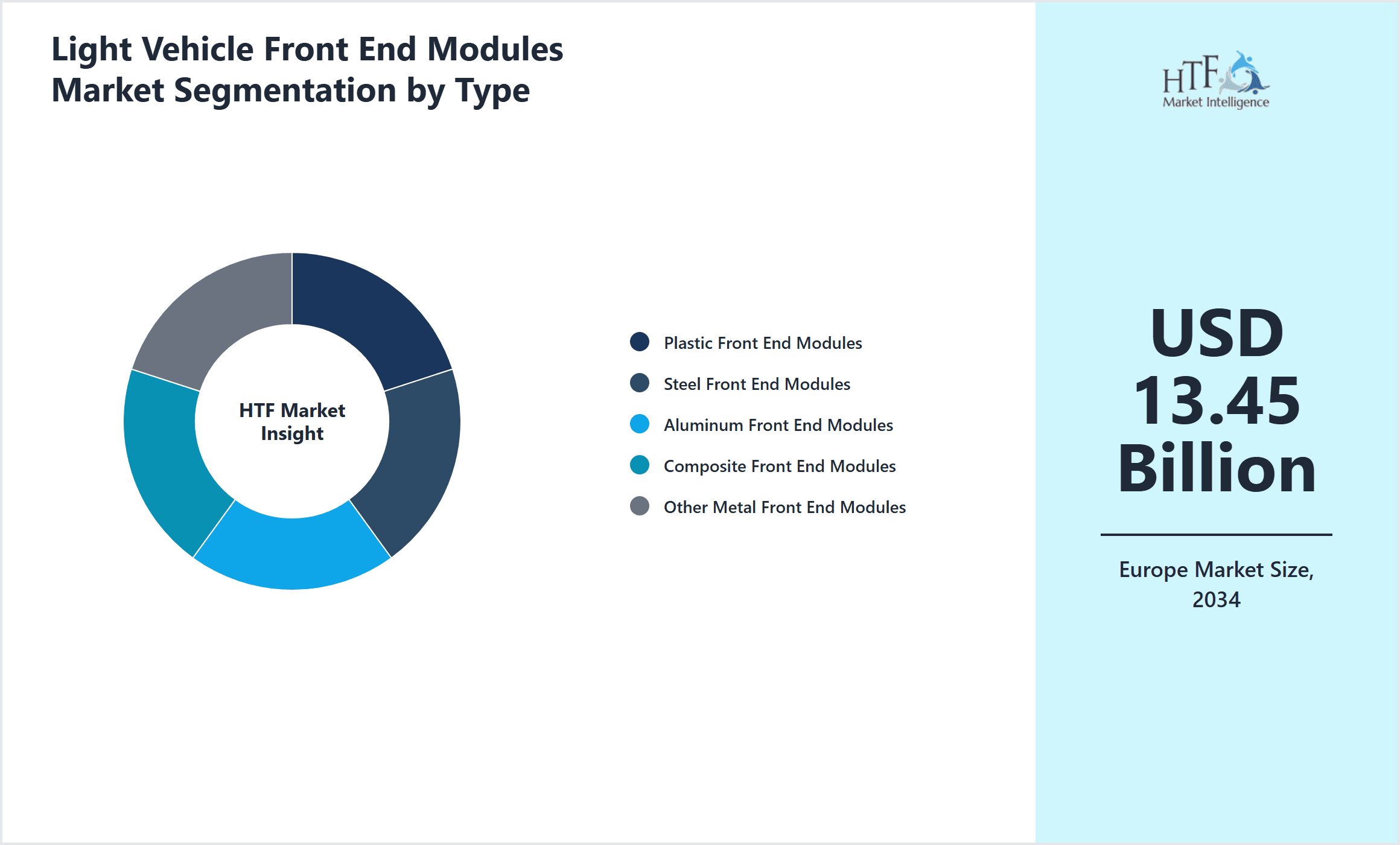
- •Key market highlights include a base market valuation of USD 6.3 Billion in 2025, with an expected CAGR of 7.2% leading to a forecast size of USD 13.45 Billion by 2034. The plastic segment dominates due to its lightweight and design flexibility, while composites are the fastest growing material category, driven by innovation and performance benefits. Germany leads the regional market in size, supported by its strong automotive manufacturing base, while Italy is witnessing the fastest growth due to increasing investments in automotive components and emerging OEMs. The bumper systems application holds the largest market share, with pedestrian protection systems gaining traction as safety standards tighten. These growth indicators underscore the sector's resilience and potential amidst evolving vehicle design paradigms and regulatory pressures.
- •The market offers significant value propositions by enabling vehicle manufacturers to improve safety, fuel efficiency, and cost-effectiveness through modular front-end designs. For stakeholders, these modules reduce assembly time and complexity, facilitate customization, and support integration of advanced driver assistance systems. The strategic importance spans OEMs seeking to meet stringent EU regulations, tier-1 suppliers focusing on innovation and material advancements, and aftermarket players catering to replacement and upgrade demands. Overall, the front end modules market is critical for advancing vehicle performance, sustainability targets, and consumer safety expectations within Europe's competitive automotive landscape.

Competitive Landscape
The Europe Light Vehicle Front End Modules Market exhibits intense competition characterized by a blend of multinational automotive suppliers and specialized regional manufacturers. Market players are primarily engaged in innovation-driven strategies, focusing on lightweight materials such as composites and advanced plastics to meet evolving regulatory and consumer demands. The competitive environment is marked by continuous product differentiation, integration of smart technologies like sensor mounts for ADAS, and strategic collaborations with automotive OEMs to secure long-term supply contracts. Mergers and acquisitions are common as companies aim to expand technological capabilities and geographic footprints. Pricing strategies vary with material costs and customization levels, while manufacturers invest heavily in R&D to optimize module design for aerodynamics and pedestrian safety. Regional competition is influenced by proximity to major automotive hubs in Germany, France, and Italy, with emerging players in Eastern Europe gaining market share by offering cost-effective solutions. Future trends indicate a shift towards sustainable materials and digitalized manufacturing processes, intensifying rivalry and innovation focus.
Prominent Players in Light Vehicle Front End Modules Market
- •Magneti Marelli S.p.A. (Italy)
- •Faurecia S.E. (France)
- •Plastic Omnium SE (France)
- •Valeo S.A. (France)
- •Helvetia Automotive Group (Germany)
- •Schaeffler AG (Germany)
- •ZF Friedrichshafen AG (Germany)
- •Brose Fahrzeugteile GmbH & Co. KG (Germany)
- •Gestamp Automoción S.A. (Spain)
- •Lear Corporation (United States)
- •Plastic Omnium Auto Exteriors (France)
- •Johnson Controls International plc (Ireland)
- •BASF SE (Germany)
- •Continental AG (Germany)
- •Brose Group (Germany)
- •Toyota Boshoku Corporation (Japan)
- •Denso Corporation (Japan)
- •Yanfeng Automotive Interiors (China)
- •Benteler International AG (Austria)
- •Motherson Sumi Systems Ltd. (India)
- •Aptiv PLC (Ireland)
- •TI Fluid Systems plc (United Kingdom)
- •Kostal Group (Germany)
- •Autoneum Holding AG (Switzerland)
- •Plastic Omnium (France)

Market Breakdown
- •By Type
- ◦Plastic Front End Modules
- ◦Steel Front End Modules
- ◦Aluminum Front End Modules
- ◦Composite Front End Modules
- ◦Other Metal Front End Modules
- •By Application
- ◦Bumper Systems
- ◦Cooling Systems
- ◦Lighting Systems
- ◦Pedestrian Protection Systems
- ◦Aerodynamics
- •By End-Use Industry
- ◦Passenger Vehicles
- ◦Light Commercial Vehicles
- ◦Electric Vehicles
- ◦Aftermarket Replacement
- •By Distribution Channel
- ◦OEM Direct Supply
- ◦Aftermarket Dealers
- ◦Third Party Distributors
Growth Dynamics
- •Innovations in lightweight composite materials are driving growth by enabling manufacturers to reduce vehicle weight, thereby improving fuel efficiency and meeting stricter European CO2 emission standards.
- •Increasing adoption of electric and hybrid vehicles in Europe necessitates advanced front end modules capable of integrating cooling and aerodynamic systems optimized for battery performance.
- •Stringent pedestrian safety regulations in Europe, including impact testing and modular design mandates, are compelling OEMs to adopt advanced front end modules that enhance vehicle compliance and safety ratings.
- •Rising consumer demand for aesthetic vehicle designs with integrated lighting and aerodynamic features is encouraging suppliers to innovate in multifunctional front end module solutions.
- •Supply chain digitization and modular manufacturing processes are reducing production costs and lead times, facilitating faster adoption of front end modules among European automotive manufacturers.
- •Government incentives supporting electric vehicle adoption indirectly boost front end module demand as vehicles require specialized cooling and aerodynamic solutions.
- •Strategic partnerships between OEMs and suppliers focusing on R&D collaborations accelerate technological advancements in front end module design and integration.
Market Trends
- •The shift towards composite materials is gaining momentum due to their superior strength-to-weight ratio and design flexibility, which supports the production of complex front end modules with integrated functions.
- •Integration of active aerodynamic components such as grille shutters and variable air intake systems into front end modules is becoming prevalent to enhance vehicle efficiency and performance.
- •OEMs are increasingly embedding sensor mounts and wiring harnesses within front end modules to support ADAS and autonomous driving technologies, reflecting a trend towards modularized electronic integration.
- •Sustainability is a key focus, with suppliers adopting recyclable plastics and bio-based composites to align with circular economy initiatives and reduce environmental impact.
- •Collaborations between automotive suppliers and technology firms are fostering innovation in smart front end modules that can adapt to different driving conditions and user preferences.
- •Growth in vehicle personalization is driving demand for customizable front end modules that allow consumers to select designs, colors, and integrated lighting options.
- •Digital twin and simulation technologies are being leveraged for front end module design optimization, reducing development time and improving product quality.

Market Opportunities
- •Expanding electric vehicle production in Europe offers significant opportunities for front end module suppliers to develop specialized cooling and aerodynamic solutions tailored to EV architectures.
- •Untapped aftermarket segments focused on vehicle refurbishment and upgrades present growth avenues for modular front end components that simplify installation and customization.
- •Investment in research for advanced composite materials and smart integration technologies can position companies as leaders in the evolving front end module landscape.
- •Geographical expansion into emerging Eastern European markets with growing automotive manufacturing bases offers new revenue streams and diversification.
- •Developing multifunctional front end modules that combine safety, aerodynamic, and aesthetic features can meet rising consumer expectations and regulatory demands.
- •Strategic alliances with OEMs and tech startups focused on ADAS integration can accelerate innovation and market penetration.
- •Leveraging digital manufacturing and Industry 4.0 technologies can improve production efficiency, enabling cost-competitive offerings in a price-sensitive market.
Market Challenges
- •High costs associated with advanced composite materials and manufacturing technologies can limit adoption, especially among smaller OEMs and aftermarket players.
- •Complex regulatory requirements for pedestrian safety and vehicle crash standards impose stringent testing and certification burdens on front end module manufacturers.
- •Supply chain disruptions and raw material price volatility, particularly for metals and specialty plastics, affect production stability and profitability.
- •Intense competition from established global suppliers requires continuous innovation and price optimization, challenging new entrants and smaller firms.
- •Integration of electronic components within front end modules increases technical complexity, necessitating cross-disciplinary expertise and quality control.
- •Rapid technological changes in vehicle design and electrification demand agile adaptation, posing risks of obsolescence for slower innovators.
- •Environmental sustainability pressures require investment in recyclable materials and eco-friendly processes, which may increase operational costs.
Regulatory Framework
- •Between 2015 and 2025, the European Union implemented the General Safety Regulation (EU) 2019/2144 mandating advanced pedestrian protection and front-end safety features, directly influencing front end module design and materials.
- •The EU End-of-Life Vehicles Directive (2000/53/EC) has been reinforced with stricter recycling and material recovery targets, compelling manufacturers to adopt recyclable plastics and metals in front end modules.
- •Euro NCAP’s evolving crash test protocols introduced between 2018 and 2024 require modular front-end components to ensure improved pedestrian impact mitigation and active safety integration.
- •Country-specific mandates in Germany and France promote use of lightweight materials to reduce vehicle emissions, incentivizing adoption of plastics and composites in front end modules.
- •Government initiatives supporting electric vehicle adoption, including subsidies and infrastructure investments, indirectly drive demand for innovative front end modules optimized for EV cooling and aerodynamics.
Market Intelligence
- •15th February 2025, Faurecia S.E. announced the launch of its next-generation lightweight composite front end module designed for electric vehicles, featuring integrated active aerodynamic elements and sensor mounts for ADAS. This module reduces weight by 20% compared to previous models, enhancing vehicle efficiency and safety compliance. The innovation aligns with growing EV production trends in Europe and responds to stricter regulatory requirements. Faurecia aims to supply major European OEMs with this module by late 2025, positioning itself as a market leader in sustainable automotive components. Source: Faurecia Official Press Release
- •1st August 2024, Plastic Omnium SE introduced a modular front end system integrating pedestrian protection and cooling functionalities for compact cars, using recyclable plastics and advanced manufacturing processes. The system reduces assembly time by 15% and supports circular economy goals, garnering interest from multiple OEMs across Europe. Plastic Omnium’s strategic focus on sustainability and lightweighting is expected to accelerate adoption of this product line throughout 2025 and beyond. Source: Plastic Omnium Corporate Announcement
- •Recent market developments and strategic initiatives are continuously tracked through industry publications, company announcements, and regulatory filings. For the most current information, stakeholders are advised to monitor official corporate communications and recognized market intelligence platforms.
- •Recent market developments and strategic initiatives are continuously tracked through industry publications, company announcements, and regulatory filings. For the most current information, stakeholders are advised to monitor official corporate communications and recognized market intelligence platforms.
Regional Outlook
The Germany currently holds a significant share of the market, primarily due to several key factors: increasing consumption rates, a burgeoning population, and robust economic momentum. These elements collectively drive demand, positioning this region as a leader in the market. On the other hand, Italy is rapidly emerging as the fastest-growing area within the industry. This remarkable growth can be attributed to swift infrastructure development, the expansion of various industrial sectors, and a marked increase in consumer demand. These dynamics make this region a crucial player in shaping future market growth.
In our report, we cover a comprehensive analysis of the following regions and countries:
- Germany
- France
- The United Kingdom
- BeNeLux
- Spain
- Italy
- NORDIC
- CEE
- Others
| Feature | Details |
|---|---|
| Base Year Market Size | USD 6.3 Billion |
| Forecast Year Market Size | USD 13.45 Billion |
| CAGR | 7.2% |
| Forecast Period | 2026 to 2033 |
| YoY Growth | 7% |
| Scope of Report | Market is segmented by Type (Plastic Front End Modules, Steel Front End Modules, Aluminum Front End Modules, Composite Front End Modules, Other Metal Front End Modules), Application (Bumper Systems, Cooling Systems, Lighting Systems, Pedestrian Protection Systems, Aerodynamics), End-Use Industry (Passenger Vehicles, Light Commercial Vehicles, Electric Vehicles, Aftermarket Replacement), Distribution Channel (OEM Direct Supply, Aftermarket Dealers, Third Party Distributors) |
| Regions Covered | Germany, France, The United Kingdom, BeNeLux, Spain, Italy, NORDIC, CEE, Others |
| Key Companies | Magneti Marelli S.p.A. (Italy), Faurecia S.E. (France), Plastic Omnium SE (France), Valeo S.A. (France), Helvetia Automotive Group (Germany), Schaeffler AG (Germany), ZF Friedrichshafen AG (Germany), Brose Fahrzeugteile GmbH & Co. KG (Germany), Gestamp Automoción S.A. (Spain), Lear Corporation (United States), Plastic Omnium Auto Exteriors (France), Johnson Controls International plc (Ireland), BASF SE (Germany), Continental AG (Germany), Brose Group (Germany), Toyota Boshoku Corporation (Japan), Denso Corporation (Japan), Yanfeng Automotive Interiors (China), Benteler International AG (Austria), Motherson Sumi Systems Ltd. (India), Aptiv PLC (Ireland), TI Fluid Systems plc (United Kingdom), Kostal Group (Germany), Autoneum Holding AG (Switzerland), Plastic Omnium (France) |
Light Vehicle Front End Modules Market - Europe Size & Outlook 2025-2034 - Table of Contents
Frequently Asked Questions (FAQ):
The Compact Track Loaders market is expected to see value worth 5.3 Billion in 2025.
North America currently leads the market with approximately 45% market share, followed by Europe at 28% and Asia-Pacific at 22%. The remaining regions account for 5% of the global market.
Key growth drivers include increasing construction activities, rising demand for versatile equipment in agriculture, technological advancements in track loader design, and growing preference for compact equipment in urban construction projects.