
Global Variable Frequency Driver Market Size, Growth & Revenue 2024-2034
Global Variable Frequency Driver (Vfd) Market is segmented by Product Type (Standard Variable Frequency Drive (VFD), Regenerative Variable Frequency Drive (VFD), Multi-level Variable Frequency Drive (VFD), Matrix Converter Variable Frequency Drive (VFD), Servo Drive), Application (HVAC Systems, Industrial Automation, Water & Wastewater Treatment, Oil & Gas, Renewable Energy), End-Use Industry (Manufacturing, Energy & Utilities, Oil & Gas, Automotive), Distribution Channel (Direct Sales, Distributors & Dealers, Online Sales), and Geography (North America, LATAM, West Europe, Central & Eastern Europe, Northern Europe, Southern Europe, East Asia, Southeast Asia, South Asia, Central Asia, Oceania, MEA)
Pricing
Report Overview
Executive Summary
- •The global Variable Frequency Driver (VFD) market is a pivotal sector enabling precise speed and torque control of electric motors through modulation of voltage and frequency. This market spans a broad spectrum of applications including HVAC systems, industrial automation, water and wastewater treatment, oil and gas operations, and renewable energy installations. VFD technologies include standard, regenerative, multi-level, matrix converter, and servo drives, each tailored to optimize performance and energy efficiency in diverse industrial settings. Over the forecast period, the market is poised for robust growth driven by increasing industrial electrification, stringent energy efficiency regulations, and the rising adoption of automation technologies. The integration of VFDs with IoT and smart grid systems further propels innovation and expands market reach. Geographically, North America currently dominates due to advanced infrastructure and regulatory frameworks, while Asia-Pacific is projected as the fastest-growing region owing to rapid industrialization and urbanization. Key market participants are investing in R&D and strategic collaborations to strengthen their product portfolios and geographic presence, underscoring the dynamic competitive landscape.
- •Key highlights of the global VFD market include a base market size of USD 12.4 billion in 2025 with a forecast to reach USD 27.9 billion by 2034, reflecting a compound annual growth rate (CAGR) of 9.3%. Standard VFDs hold the leading product type share, while regenerative VFDs exhibit the fastest growth trajectory due to their energy recovery capabilities. HVAC systems and industrial automation dominate the application segments, driven by demand for energy-efficient motor operations. North America leads the market in revenue generation, supported by favorable regulations and technological advancements, whereas Asia-Pacific registers the highest growth rate, fueled by expanding industrial sectors and infrastructure projects. Market dynamics are shaped by technological innovations, increasing environmental awareness, and evolving industrial processes, positioning the global VFD market as a critical enabler of sustainable industrial growth.
- •The value proposition of the VFD market lies in its ability to significantly reduce energy consumption and operational costs, enhance motor control precision, and improve overall equipment lifespan. Stakeholders across industries such as manufacturing, utilities, and oil & gas benefit from VFD adoption by achieving regulatory compliance and operational excellence. Strategic importance is underscored by the growing emphasis on sustainable practices and digital transformation, where VFDs serve as integral components in smart manufacturing and energy management systems. For investors and market participants, the expanding application scope and technological advancements present lucrative opportunities to capitalize on the ongoing energy transition and industrial automation waves globally.

Competitive Landscape
The global Variable Frequency Driver market exhibits a highly competitive environment characterized by the presence of numerous multinational corporations and regional players striving for market supremacy through innovation, strategic partnerships, and market expansion. Companies focus heavily on research and development to introduce advanced VFD products with enhanced energy efficiency, compact design, and intelligent control features that cater to evolving customer needs. The competitive dynamics are influenced by aggressive pricing strategies, product differentiation, and comprehensive after-sales services. Market leaders leverage their extensive distribution networks and brand reputation to maintain dominant market positions, while emerging players target niche applications and regional markets to gain foothold. Mergers and acquisitions are common strategic moves employed to consolidate technological capabilities and expand geographic reach. Additionally, the adoption of Industry 4.0 technologies such as IoT integration and predictive maintenance solutions is intensifying competition by enabling smarter and more reliable VFD systems. Overall, the competitive landscape fosters continuous innovation and customer-centric solutions, driving the market's progressive growth trajectory.
Companies Shaping the Variable Frequency Driver Market
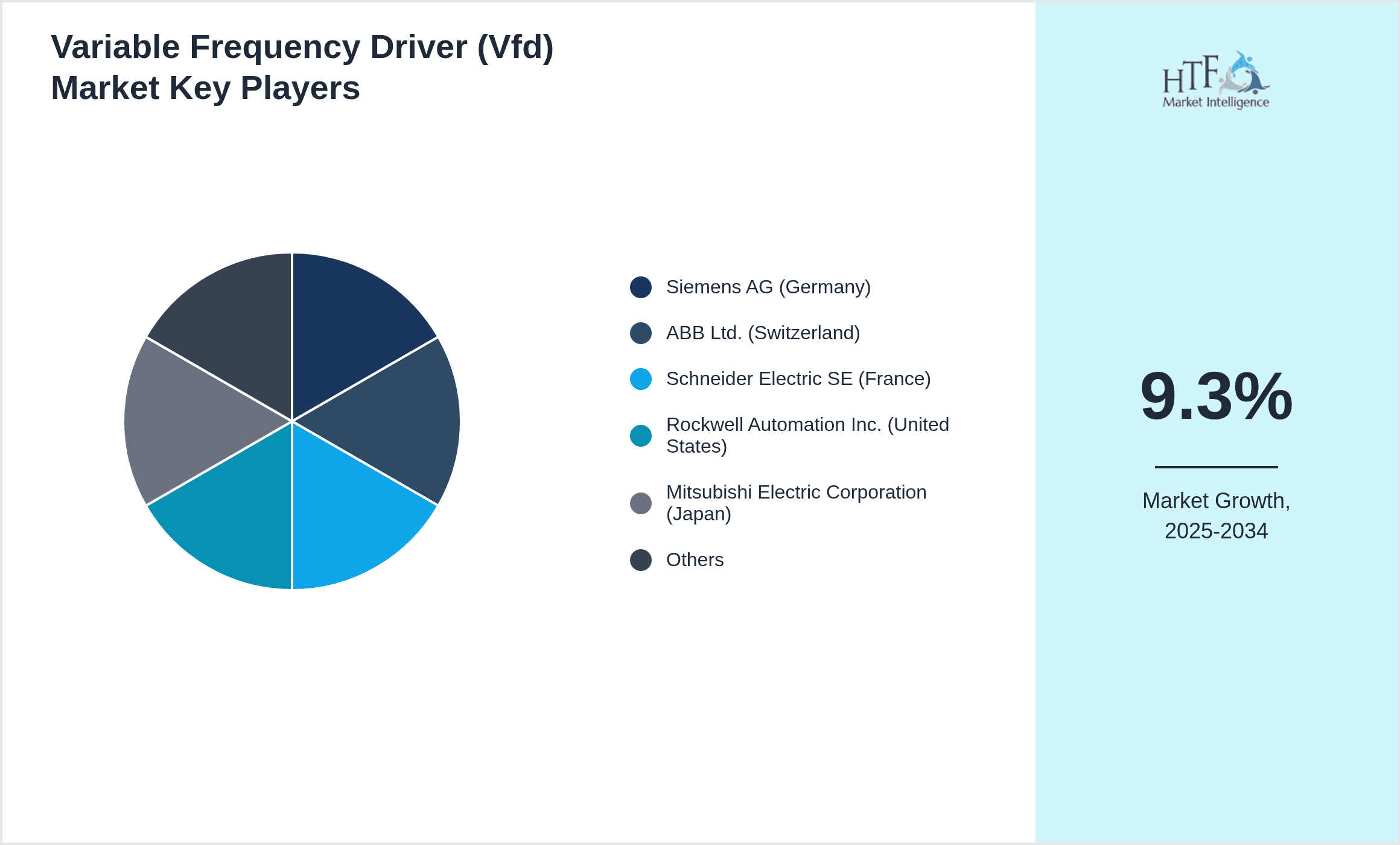
- •Siemens AG (Germany)
- •ABB Ltd. (Switzerland)
- •Schneider Electric SE (France)
- •Rockwell Automation Inc. (United States)
- •Mitsubishi Electric Corporation (Japan)
- •Yaskawa Electric Corporation (Japan)
- •Hitachi Ltd. (Japan)
- •Danfoss A/S (Denmark)
- •Eaton Corporation plc (Ireland)
- •Toshiba Corporation (Japan)
- •Fuji Electric Co., Ltd. (Japan)
- •WEG S.A. (Brazil)
- •Nidec Corporation (Japan)
- •Emerson Electric Co. (United States)
- •Lenze SE (Germany)
- •Delta Electronics, Inc. (Taiwan)
- •LS Industrial Systems Co., Ltd. (South Korea)
- •Fuji Electric FA Components & Systems Co., Ltd. (Japan)
- •Control Techniques (United Kingdom)
- •Baldor Electric Company (United States)
- •Schneider Electric India Pvt. Ltd. (India)
- •Hitachi Industrial Equipment Systems Co., Ltd. (Japan)
- •Sanyo Denki Co., Ltd. (Japan)
- •Fuji Electric India Pvt. Ltd. (India)
- •TECO Electric & Machinery Co., Ltd. (Taiwan)

Market Breakdown
- •By Product Type
- ◦Standard Variable Frequency Drive (VFD)
- ◦Regenerative Variable Frequency Drive (VFD)
- ◦Multi-level Variable Frequency Drive (VFD)
- ◦Matrix Converter Variable Frequency Drive (VFD)
- ◦Servo Drive
- •By Application
- ◦HVAC Systems
- ◦Industrial Automation
- ◦Water & Wastewater Treatment
- ◦Oil & Gas
- ◦Renewable Energy
- •By End-Use Industry
- ◦Manufacturing
- ◦Energy & Utilities
- ◦Oil & Gas
- ◦Automotive
- •By Distribution Channel
- ◦Direct Sales
- ◦Distributors & Dealers
- ◦Online Sales
Growth Dynamics
The global Variable Frequency Driver market is propelled by increasing industrial automation and the urgent need for energy-efficient motor control solutions. Growing environmental regulations globally mandate reductions in energy consumption and carbon emissions, prompting industries to adopt VFDs to optimize motor performance and lower operational costs. Rapid urbanization and infrastructure development, especially in emerging economies, fuel demand for HVAC systems and water treatment applications, which are significant end-users of VFD technology. Additionally, advancements in VFD technology such as integration with IoT and smart grid systems enhance operational reliability and predictive maintenance capabilities, further driving adoption. Government incentives promoting energy-saving technologies and rising awareness about sustainability contribute to market expansion. These dynamics collectively position the VFD market for accelerated growth, with manufacturers focusing on innovative product development and expanding geographic footprints to capitalize on emerging opportunities worldwide.

Market Trends
The Variable Frequency Driver market is witnessing a pronounced shift towards digitalization, with smart VFDs integrated into IoT ecosystems enabling real-time monitoring and advanced predictive maintenance. This trend enhances operational efficiency and reduces downtime, appealing to industries emphasizing Industry 4.0 adoption. Additionally, there is a rising preference for regenerative VFDs in renewable energy applications due to their ability to recover energy during braking processes. Manufacturers are also focusing on compact and modular VFD designs to facilitate easy installation and scalability. Sustainability-driven initiatives are accelerating the replacement of legacy motor control systems with energy-efficient VFD solutions, supported by stringent regulatory frameworks worldwide. Collaborations between technology providers and end-users foster innovation in customized VFD solutions catering to specific industry needs. Overall, these trends underscore a market evolution towards smarter, more efficient, and sustainable motor control technologies.
Market Opportunities
Significant growth opportunities exist in emerging markets across Asia-Pacific and Latin America, driven by rapid industrialization and infrastructure expansion. The increasing adoption of renewable energy sources such as wind and solar presents a lucrative avenue for advanced VFD technologies, particularly regenerative drives that enhance energy recovery. Integration of VFDs with smart grid and IoT platforms opens new horizons for intelligent energy management and predictive maintenance solutions. Expanding applications in water and wastewater treatment plants driven by environmental concerns offer additional market potential. Strategic partnerships and collaborations between VFD manufacturers and technology firms can accelerate innovation and market penetration. Additionally, growing awareness about energy efficiency in small and medium enterprises creates opportunities for tailored VFD solutions, fostering wider market adoption globally.
Market Challenges
The Variable Frequency Driver market faces challenges such as high initial capital investment and complexity of system integration, particularly for advanced regenerative and multi-level VFDs. Limited awareness and technical expertise in emerging economies hinder widespread adoption, impacting market growth. Additionally, the presence of counterfeit and low-quality products in certain regions raises concerns about reliability and safety, affecting customer confidence. Compatibility issues with existing motor and control systems pose technological barriers. Furthermore, fluctuating raw material costs and supply chain disruptions impact manufacturing and pricing. Stringent regulatory compliance requirements across different regions add to operational complexities for manufacturers and distributors. Addressing these challenges requires focused efforts on education, quality assurance, and strategic collaborations to ensure sustainable market development.
Regulatory Framework
Between 2019 and 2025, several key regulations have been enacted globally to promote energy efficiency and reduce carbon emissions, directly impacting the Variable Frequency Driver market. Notably, the European Union's Ecodesign Directive mandates minimum energy performance standards for electric motors and drives, compelling manufacturers to innovate energy-saving VFD solutions. The U.S. Department of Energy has enforced efficiency standards for motor-driven systems, encouraging VFD adoption in industrial sectors. In Asia-Pacific, countries such as China and Japan have implemented energy conservation laws and incentive programs promoting VFD integration in manufacturing and infrastructure projects. Environmental protection policies increasingly emphasize sustainable industrial practices, driving compliance-related demand for advanced motor control technologies. These regulatory frameworks foster a competitive landscape where compliance and innovation are critical for market success, enhancing the overall adoption of VFD technologies worldwide.
Market Intelligence
- •15th January 2025, Siemens AG launched its latest energy-efficient Variable Frequency Drive series featuring enhanced IoT connectivity and predictive maintenance capabilities targeted at industrial automation and HVAC applications. This new product line integrates advanced sensor technologies and cloud-based analytics to optimize motor performance and reduce downtime, aiming to meet rising demand for smart manufacturing solutions globally. The launch positions Siemens as a leader in innovative motor control technology, supporting energy sustainability goals across diverse sectors. Source: Siemens Official Press Release
- •10th March 2025, ABB Ltd. introduced a next-generation regenerative Variable Frequency Drive optimized for renewable energy applications such as wind turbines and solar farms. The new VFD model enhances energy recovery during braking and load fluctuations, improving overall system efficiency and reliability. ABB’s strategic focus on renewable energy solutions aligns with global decarbonization efforts, expanding its market presence in emerging green energy sectors. Source: ABB Corporate News
- •22nd February 2025, Mitsubishi Electric Corporation announced a strategic partnership with a leading IoT platform provider to develop integrated smart VFD solutions for industrial clients. This collaboration aims to leverage advanced data analytics and machine learning to provide real-time motor diagnostics and predictive maintenance, enhancing operational efficiency and reducing maintenance costs. The initiative reflects a growing trend towards digital transformation in motor control markets. Source: Mitsubishi Electric Newsroom
- •5th April 2025, Rockwell Automation Inc. expanded its Variable Frequency Driver product portfolio to include modular designs enabling easy scalability and integration into existing motor control systems. This expansion targets the mid-sized manufacturing segment, aiming to provide flexible and cost-effective VFD solutions. The move enhances Rockwell’s competitive positioning by addressing diverse customer requirements and application scenarios globally. Source: Rockwell Automation Press Release
Regional Outlook
The North America currently holds a significant share of the market, primarily due to several key factors: increasing consumption rates, a burgeoning population, and robust economic momentum. These elements collectively drive demand, positioning this region as a leader in the market. On the other hand, Asia-Pacific is rapidly emerging as the fastest-growing area within the industry. This remarkable growth can be attributed to swift infrastructure development, the expansion of various industrial sectors, and a marked increase in consumer demand. These dynamics make this region a crucial player in shaping future market growth.
In our report, we cover a comprehensive analysis of the following regions and countries:
- North America
- LATAM
- West Europe
- Central & Eastern Europe
- Northern Europe
- Southern Europe
- East Asia
- Southeast Asia
- South Asia
- Central Asia
- Oceania
- MEA
| Feature | Details |
|---|---|
| Base Year Market Size | USD 12.4 Billion |
| Forecast Year Market Size | USD 27.9 Billion |
| CAGR | 9.3% |
| Forecast Period | 2026 to 2033 |
| YoY Growth | 8.9% |
| Scope of Report | Market is segmented by Product Type (Standard Variable Frequency Drive (VFD), Regenerative Variable Frequency Drive (VFD), Multi-level Variable Frequency Drive (VFD), Matrix Converter Variable Frequency Drive (VFD), Servo Drive), Application (HVAC Systems, Industrial Automation, Water & Wastewater Treatment, Oil & Gas, Renewable Energy), End-Use Industry (Manufacturing, Energy & Utilities, Oil & Gas, Automotive), Distribution Channel (Direct Sales, Distributors & Dealers, Online Sales) |
| Regions Covered | North America, LATAM, West Europe, Central & Eastern Europe, Northern Europe, Southern Europe, East Asia, Southeast Asia, South Asia, Central Asia, Oceania, MEA |
| Key Companies | Siemens AG (Germany), ABB Ltd. (Switzerland), Schneider Electric SE (France), Rockwell Automation Inc. (United States), Mitsubishi Electric Corporation (Japan), Yaskawa Electric Corporation (Japan), Hitachi Ltd. (Japan), Danfoss A/S (Denmark), Eaton Corporation plc (Ireland), Toshiba Corporation (Japan), Fuji Electric Co., Ltd. (Japan), WEG S.A. (Brazil), Nidec Corporation (Japan), Emerson Electric Co. (United States), Lenze SE (Germany), Delta Electronics, Inc. (Taiwan), LS Industrial Systems Co., Ltd. (South Korea), Fuji Electric FA Components & Systems Co., Ltd. (Japan), Control Techniques (United Kingdom), Baldor Electric Company (United States), Schneider Electric India Pvt. Ltd. (India), Hitachi Industrial Equipment Systems Co., Ltd. (Japan), Sanyo Denki Co., Ltd. (Japan), Fuji Electric India Pvt. Ltd. (India), TECO Electric & Machinery Co., Ltd. (Taiwan) |
Global Variable Frequency Driver Market Size, Growth & Revenue 2024-2034 - Table of Contents
Frequently Asked Questions (FAQ):
The Compact Track Loaders market is projected to grow at a CAGR of 6.8% from 2025 to 2030, driven by increasing demand in construction and agricultural sectors.
North America currently leads the market with approximately 45% market share, followed by Europe at 28% and Asia-Pacific at 22%. The remaining regions account for 5% of the global market.
Key growth drivers include increasing construction activities, rising demand for versatile equipment in agriculture, technological advancements in track loader design, and growing preference for compact equipment in urban construction projects.