
Global Solid State Transformers Market - Outlook 2020-2034
Global Solid State Transformers (SST) Market is segmented by Product Type (High Voltage Solid State Transformer, Medium Voltage Solid State Transformer, Low Voltage Solid State Transformer, Modular Solid State Transformer, Compact Solid State Transformer), Application (Smart Grid, Renewable Energy Integration, Industrial Automation, Electric Vehicles, Data Centers), End-Use Industry (Utilities, Manufacturing, Transportation, Telecommunications), Distribution Channel (Direct Sales, OEM Partnerships, Channel Partners), and Geography (North America, LATAM, West Europe, Central & Eastern Europe, Northern Europe, Southern Europe, East Asia, Southeast Asia, South Asia, Central Asia, Oceania, MEA)
Pricing
Report Overview
Executive Summary
- •The global Solid State Transformer (SST) market represents a transformative segment in power distribution technology, characterized by the replacement of conventional transformers with power electronic-based devices that offer superior control, efficiency, and adaptability. SSTs integrate semiconductor switching devices such as IGBTs, MOSFETs, and emerging wide-bandgap semiconductors to facilitate voltage conversion, power flow management, and grid interfacing within compact footprints. Their ability to support bidirectional power flow and rapid response to dynamic load conditions makes them critical components in modern smart grid architectures, renewable energy systems, electric vehicle charging infrastructure, and industrial automation. The market scope covers various SST types including high, medium, and low voltage classes, as well as modular and compact designs tailored to diverse applications. The increasing penetration of distributed energy resources and the demand for enhanced grid resiliency and power quality are propelling SST adoption worldwide. Key applications stretch across smart grids, integration of solar and wind energy, industrial power management, electric vehicle fast charging, and data centers requiring reliable and efficient power conversion. The market faces challenges including high initial costs, technological complexity, and regulatory compliance but offers significant growth potential driven by innovation and increasing energy infrastructure modernization efforts globally. This comprehensive analysis provides insights into market segmentation, competitive dynamics, growth drivers, trends, opportunities, challenges, and regional performance over the forecast period 2025 to 2034, anchored by historical data from 2020.
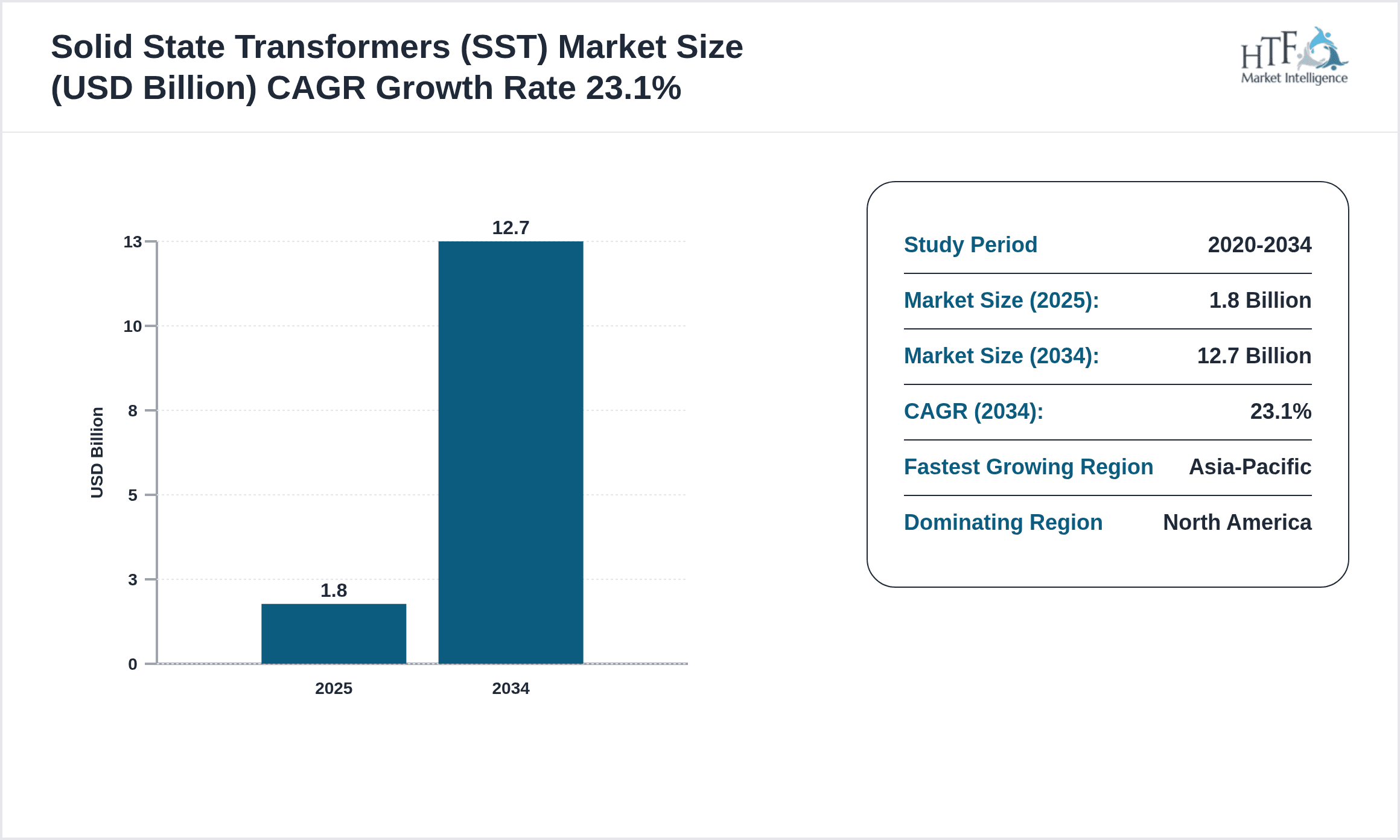
- •The global SST market was valued at USD 0.9 billion in 2020 and expanded to USD 1.8 billion by 2025, reflecting a compound annual growth rate (CAGR) of approximately 15.0% during the historical period. Forecasts for 2034 predict the market to reach USD 12.7 billion, exhibiting an accelerated CAGR of 23.1% from 2025 to 2034. Year-on-year growth is estimated at 21.0% in the forecast horizon, indicating robust industry momentum fueled by the increasing demand for smart grid modernization and renewable energy integration. North America currently dominates the market due to early technology adoption and supportive regulatory frameworks, while Asia-Pacific is anticipated to be the fastest growing region driven by rapid industrialization and electrification initiatives. Medium voltage SSTs hold the largest market share owing to their suitability for utility and industrial applications, whereas modular SSTs are the fastest growing product segment as they offer scalability and ease of integration. This growth is supported by technological advancements, strategic partnerships, and government incentives promoting clean and intelligent energy distribution systems.
- •Solid State Transformers offer substantial value propositions to utilities, industrial manufacturers, and infrastructure developers by enabling enhanced grid flexibility, improved power quality, and efficient energy management. Their compact design reduces physical footprint and installation complexity compared to traditional transformers, while digital control and communication capabilities facilitate real-time monitoring and adaptive operations. SSTs support the integration of renewable energy sources and electric vehicles, which increasingly demand bidirectional power flow and dynamic voltage regulation. Additionally, their modularity allows for easier maintenance and upgrades, reducing lifecycle costs. These factors position SSTs as strategic enablers for future power systems aimed at achieving sustainability, resilience, and operational efficiency. Stakeholders across energy, transportation, and industrial sectors view SST technology as a key investment to meet evolving regulatory standards and consumer expectations for reliable and clean energy solutions.
Competitive Landscape
The global Solid State Transformers market is highly competitive and characterized by the presence of numerous multinational corporations, specialized technology providers, and emerging startups focusing on innovation and strategic growth. Market participants employ a variety of competitive strategies including product innovation, mergers and acquisitions, strategic partnerships, and collaborations with utility providers to expand their market share and enhance technological capabilities. The adoption of wide bandgap semiconductor technologies such as silicon carbide and gallium nitride has become a key differentiator, enabling manufacturers to deliver higher efficiency, thermal performance, and compact designs. Pricing strategies vary with product complexity and application scope, with a trend towards modular and scalable solutions that offer cost-effective deployment. Distribution channels include direct sales to utility companies and OEM partnerships, supported by strong after-sales services and technical support. Barriers to entry remain significant due to the high capital intensity and technical complexity of SST development. Regional competition varies with North America and Europe leading in innovation and Asia-Pacific emerging as a hub for manufacturing and adoption. The competitive landscape is expected to evolve with increasing emphasis on digital integration, cybersecurity features, and sustainability-focused product developments, shaping the future trajectory of the SST market.
Key Participants in Solid State Transformers Market
- •ABB Ltd (Switzerland)
- •Siemens AG (Germany)
- •General Electric Company (United States)
- •Schneider Electric SE (France)
- •Eaton Corporation plc (Ireland)
- •Mitsubishi Electric Corporation (Japan)
- •Hitachi ABB Power Grids Ltd (Japan)
- •Toshiba Corporation (Japan)
- •Hyundai Electric & Energy Systems Co., Ltd (South Korea)
- •NARI Technology Development Co., Ltd (China)
- •Citrine Power Inc. (United States)
- •Effekta Group (Canada)
- •Siemens Energy AG (Germany)
- •Efacec Power Solutions (Portugal)
- •Delta Electronics, Inc. (Taiwan)
- •S&C Electric Company (United States)
- •Power Electronic Systems GmbH (Germany)
- •ABB Power Grids (Switzerland)
- •Hitachi Energy (Switzerland)
- •Toshiba Energy Systems & Solutions Corporation (Japan)
- •Eaton Corporation (United States)
- •General Electric Renewable Energy (United States)
- •Alstom Grid (France)
- •Siemens Digital Grid (Germany)
- •Nidec Corporation (Japan)

Market Breakdown
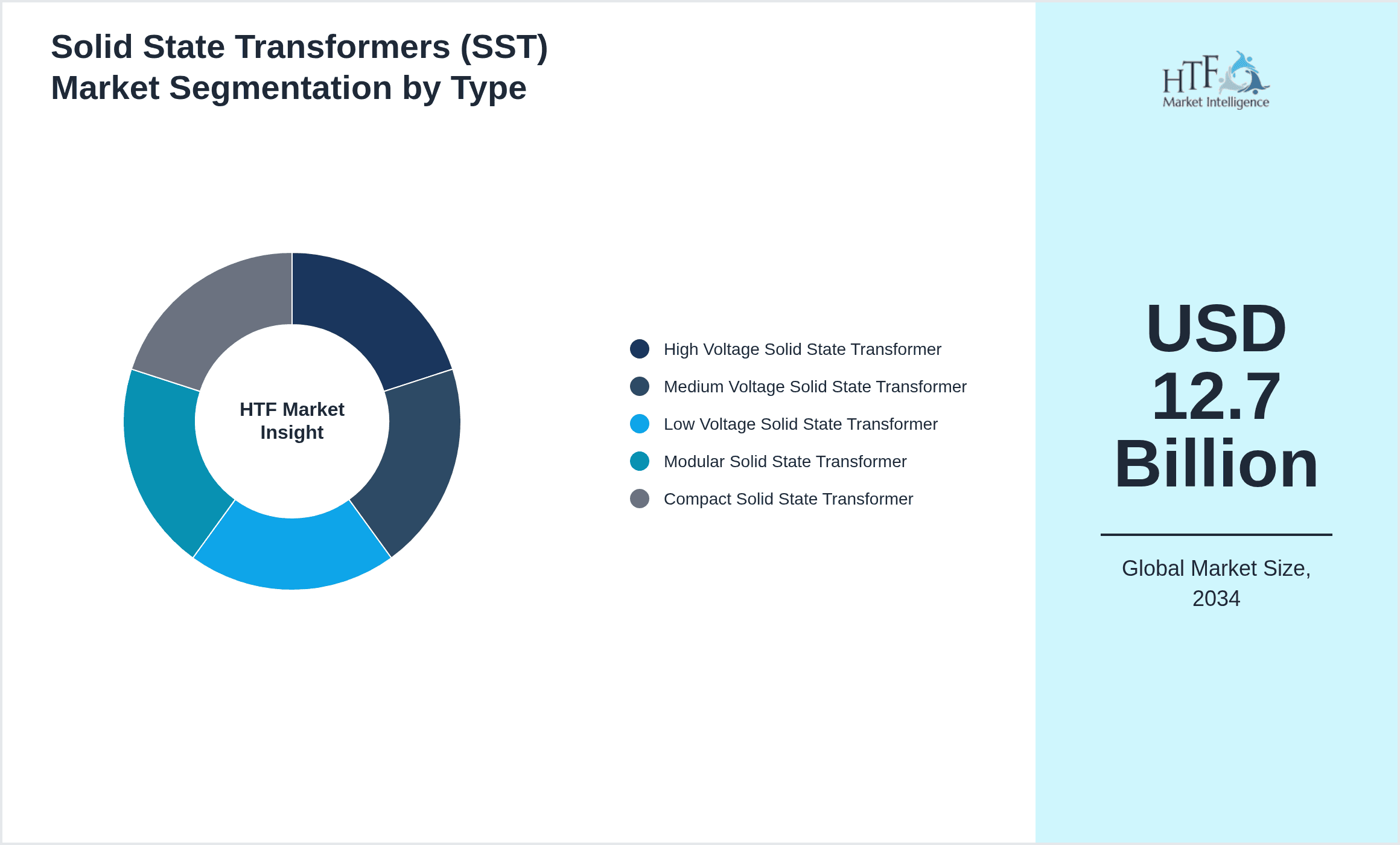
- •By Product Type
- ◦High Voltage Solid State Transformer
- ◦Medium Voltage Solid State Transformer
- ◦Low Voltage Solid State Transformer
- ◦Modular Solid State Transformer
- ◦Compact Solid State Transformer
- •By Application
- ◦Smart Grid
- ◦Renewable Energy Integration
- ◦Industrial Automation
- ◦Electric Vehicles
- ◦Data Centers
- •By End-Use Industry
- ◦Utilities
- ◦Manufacturing
- ◦Transportation
- ◦Telecommunications
- •By Distribution Channel
- ◦Direct Sales
- ◦OEM Partnerships
- ◦Channel Partners
Growth Dynamics
The global Solid State Transformers market is driven by the accelerating adoption of smart grid technologies, which require flexible and intelligent power distribution solutions capable of supporting bidirectional power flow and real-time grid management. Increasing installation of renewable energy sources such as solar and wind necessitates advanced transformers that can efficiently manage variable power inputs and enhance grid stability. Furthermore, the rising demand for electric vehicles and the expansion of fast-charging infrastructure are creating significant opportunities for SST deployment, as these transformers facilitate rapid voltage conversion and power quality control. Technological advancements in semiconductor materials, particularly silicon carbide and gallium nitride, are improving SST efficiency, thermal performance, and reliability, thus accelerating commercial viability. Government policies and incentives promoting grid modernization and decarbonization further fuel market growth by reducing financial barriers and encouraging utility-scale SST integration. Additionally, the compact size and modular design of SSTs enable easier installation and maintenance, aligning with industry trends towards digitalization and automation. The convergence of these factors is expected to sustain a high growth trajectory throughout the forecast period, positioning SSTs as essential components in future energy infrastructures.
Market Trends
A significant trend in the SST market is the widespread integration of digital communication and control systems within transformers, enabling improved monitoring, diagnostics, and adaptive power management. This digitalization supports predictive maintenance and enhances grid resilience by allowing operators to respond swiftly to faults and load changes. Innovation in wide bandgap semiconductor technologies has led to more compact, efficient, and robust SST designs, facilitating wider adoption in space-constrained environments. The push towards renewable energy integration has driven SST development tailored for compatibility with solar farms, wind turbines, and battery storage systems, ensuring seamless power conversion and grid interconnection. Moreover, increasing collaboration between technology providers, utilities, and governments is fostering standardization and accelerating commercialization. The emergence of modular SST architectures allows for scalable deployment aligned with growing infrastructure demands. These trends collectively underscore a shift towards intelligent, sustainable, and flexible power distribution networks worldwide.
Market Opportunities
The Solid State Transformer market presents substantial opportunities in expanding renewable energy integration, where SSTs can address challenges of variability and intermittency by enabling dynamic voltage regulation and bidirectional power flow. Emerging electric vehicle markets require rapid and efficient charging solutions, positioning SSTs as critical enablers for fast-charging stations that improve grid interaction and power quality. Geographical expansion into developing regions with rising electrification and grid modernization initiatives offers untapped potential for SST deployment. Additionally, ongoing advancements in semiconductor materials and power electronics open avenues for product innovation, cost reduction, and enhanced reliability. Strategic partnerships between SST manufacturers and utility companies can accelerate pilot projects and commercial adoption. Furthermore, the increasing emphasis on smart cities and digital infrastructure creates demand for intelligent power distribution solutions, expanding SST applications beyond traditional utilities to industries such as telecommunications and data centers. These opportunities align with global sustainability goals and government incentives promoting clean energy technologies.
Market Challenges
Despite promising growth, the Solid State Transformer market faces several challenges including high initial capital costs associated with advanced semiconductor components and complex system integration. Technical complexities such as thermal management, electromagnetic interference, and long-term reliability require rigorous design and testing, which can delay commercialization and increase development expenses. Regulatory and standardization hurdles remain significant as SSTs operate in critical infrastructure environments demanding stringent safety, performance, and interoperability compliance. Market adoption is also hindered by the entrenched presence of conventional transformers and conservative investment approaches within utilities. Supply chain constraints, particularly for wide bandgap semiconductor materials, pose risks to production scalability and cost stability. Additionally, skilled workforce shortages in power electronics and digital control systems limit rapid deployment. These barriers necessitate continuous innovation, supportive policies, and collaborative ecosystems to realize the full market potential.
Regulatory Framework
Between 2020 and 2025, multiple regions have enacted regulations and standards to facilitate the adoption of advanced power electronics including Solid State Transformers. The North American Electric Reliability Corporation (NERC) implemented updated grid reliability standards mandating enhanced monitoring and control capabilities, indirectly promoting SST integration. The European Union introduced directives targeting energy efficiency and renewable integration, such as the Clean Energy Package, which incentivizes deployment of smart grid technologies including SSTs. In Asia-Pacific, countries like Japan and South Korea have established certification protocols for power electronic equipment focusing on safety and electromagnetic compatibility. Globally, the International Electrotechnical Commission (IEC) has been developing standardized testing and performance criteria for SSTs to ensure interoperability and safety compliance. These regulatory frameworks impact market dynamics by defining compliance requirements and influencing investment decisions. Governments have also introduced incentive programs and funding initiatives to support grid modernization projects that include SST technology adoption. Such policies foster innovation and reduce market entry barriers, enabling a more rapid transition to intelligent and sustainable power distribution systems worldwide.
Market Intelligence
- •15th January 2025, ABB Ltd announced the launch of its next-generation Medium Voltage Solid State Transformer designed for smart grid applications. The product features silicon carbide-based power semiconductors enabling higher efficiency and thermal management compared to traditional designs. ABB's SST includes advanced digital control and communication modules facilitating real-time grid monitoring and fault detection. Targeted at utilities and renewable energy operators, this transformer aims to accelerate grid modernization efforts and enhance integration of distributed energy resources. ABB plans commercial deployment across North America and Europe in 2025, positioning the product as a key enabler for future energy networks. Source: ABB Official Press Release
- •10th March 2025, Siemens AG introduced a modular Solid State Transformer platform optimized for electric vehicle fast-charging infrastructure. The innovation leverages gallium nitride semiconductor technology to deliver compact, scalable, and highly efficient transformers capable of handling rapid load fluctuations typical in EV charging stations. Siemens' SST solution integrates with digital grid management software to provide dynamic voltage regulation and enhanced power quality. The product launch aligns with increasing demand for sustainable transportation and supports government initiatives promoting EV adoption globally. Siemens targets deployments primarily in Asia-Pacific and Europe with plans to expand to North America by late 2025. Source: Siemens AG Corporate Announcement
- •22nd May 2025, General Electric Company announced a strategic partnership with leading utility providers in Latin America to pilot Solid State Transformer installations aimed at improving grid reliability and renewable energy integration. The initiative involves deploying GE's medium voltage SSTs equipped with advanced fault tolerance and communication capabilities in selected urban and rural grids. The partnership intends to evaluate performance benefits, operational cost reductions, and integration challenges over a two-year period. This move reflects increasing collaboration between technology companies and utilities to accelerate smart grid rollouts and meet regional energy transition targets. GE plans to leverage pilot outcomes for broader commercial expansion across emerging markets. Source: General Electric Press Release
- •30th September 2024, Mitsubishi Electric Corporation completed the acquisition of a startup specializing in wide bandgap semiconductor devices for Solid State Transformers. This strategic acquisition aims to enhance Mitsubishi Electric’s technological capabilities and accelerate the commercialization of high-efficiency SST products. The startup’s proprietary silicon carbide MOSFET technology is expected to improve transformer efficiency and thermal performance, enabling competitive advantages in key markets such as smart grids and electric vehicle infrastructure. Mitsubishi Electric anticipates integration of this technology into its product portfolio by 2026, strengthening its position as a global leader in power electronics and energy solutions. Source: Mitsubishi Electric Corporate Website
Regional Outlook
The North America currently holds a significant share of the market, primarily due to several key factors: increasing consumption rates, a burgeoning population, and robust economic momentum. These elements collectively drive demand, positioning this region as a leader in the market. On the other hand, Asia-Pacific is rapidly emerging as the fastest-growing area within the industry. This remarkable growth can be attributed to swift infrastructure development, the expansion of various industrial sectors, and a marked increase in consumer demand. These dynamics make this region a crucial player in shaping future market growth.
In our report, we cover a comprehensive analysis of the following regions and countries:
- North America
- LATAM
- West Europe
- Central & Eastern Europe
- Northern Europe
- Southern Europe
- East Asia
- Southeast Asia
- South Asia
- Central Asia
- Oceania
- MEA
| Feature | Details |
|---|---|
| Base Year Market Size | USD 1.8 Billion |
| Forecast Year Market Size | USD 12.7 Billion |
| CAGR | 23.1% |
| Forecast Period | 2026 to 2033 |
| YoY Growth | 21% |
| Scope of Report | Market is segmented by Product Type (High Voltage Solid State Transformer, Medium Voltage Solid State Transformer, Low Voltage Solid State Transformer, Modular Solid State Transformer, Compact Solid State Transformer), Application (Smart Grid, Renewable Energy Integration, Industrial Automation, Electric Vehicles, Data Centers), End-Use Industry (Utilities, Manufacturing, Transportation, Telecommunications), Distribution Channel (Direct Sales, OEM Partnerships, Channel Partners) |
| Regions Covered | North America, LATAM, West Europe, Central & Eastern Europe, Northern Europe, Southern Europe, East Asia, Southeast Asia, South Asia, Central Asia, Oceania, MEA |
| Key Companies | The Solid State Transformer market presents substantial opportunities in expanding renewable energy integration, where SSTs can address challenges of variability and intermittency by enabling dynamic voltage regulation and bidirectional power flow. Emerging electric vehicle markets require rapid and efficient charging solutions, positioning SSTs as critical enablers for fast-charging stations that improve grid interaction and power quality. Geographical expansion into developing regions with rising electrification and grid modernization initiatives offers untapped potential for SST deployment. Additionally, ongoing advancements in semiconductor materials and power electronics open avenues for product innovation, cost reduction, and enhanced reliability. Strategic partnerships between SST manufacturers and utility companies can accelerate pilot projects and commercial adoption. Furthermore, the increasing emphasis on smart cities and digital infrastructure creates demand for intelligent power distribution solutions, expanding SST applications beyond traditional utilities to industries such as telecommunications and data centers. These opportunities align with global sustainability goals and government incentives promoting clean energy technologies. |
Global Solid State Transformers Market - Outlook 2020-2034 - Table of Contents
Frequently Asked Questions (FAQ):
The Compact Track Loaders market is projected to grow at a CAGR of 6.8% from 2025 to 2030, driven by increasing demand in construction and agricultural sectors.
North America currently leads the market with approximately 45% market share, followed by Europe at 28% and Asia-Pacific at 22%. The remaining regions account for 5% of the global market.
Key growth drivers include increasing construction activities, rising demand for versatile equipment in agriculture, technological advancements in track loader design, and growing preference for compact equipment in urban construction projects.