
North America Chemicals E-Commerce Logistics Market - Outlook 2020-2034
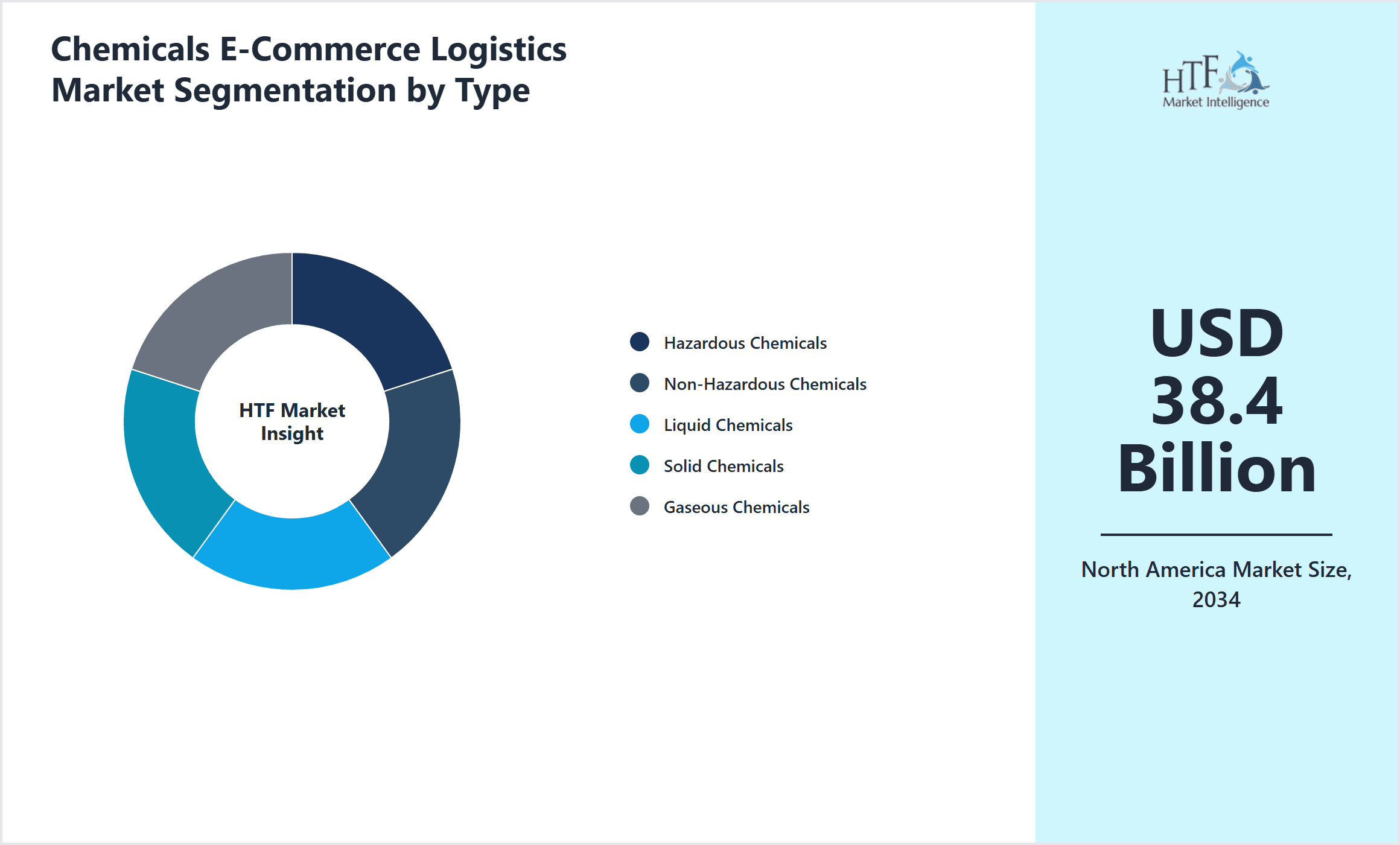
North America Chemicals E-Commerce Logistics Market is segmented by Product Type (Hazardous Chemicals, Non-Hazardous Chemicals, Liquid Chemicals, Solid Chemicals, Gaseous Chemicals), Application (Industrial Chemicals, Specialty Chemicals, Agrochemicals, Pharmaceuticals, Consumer Chemicals), End-Use Industry (Manufacturing, Agriculture, Healthcare, Consumer Goods), Distribution Channel (Direct-to-Industry, Third-Party Logistics Providers, Online Marketplaces), and Geography (United States, Canada, Mexico)
Pricing
Report Overview
Executive Summary
- •The North America Chemicals E-Commerce Logistics market represents a critical segment of the regional supply chain industry, focusing on the digital ordering and subsequent transport of chemical products across various sectors. This market addresses the complexities involved in managing logistics for chemicals, which include hazardous and sensitive materials requiring rigorous safety standards and compliance with multiple regulatory authorities. The rise of e-commerce platforms in chemicals procurement has revolutionized traditional distribution models, enabling faster, more efficient, and cost-effective delivery solutions. The market includes a wide range of chemical types such as industrial, specialty, agrochemicals, pharmaceuticals, and consumer chemicals, each with distinct handling and transportation requirements. Major applications span manufacturing, agriculture, healthcare, and consumer goods industries, where timely and compliant delivery is crucial. The market growth is propelled by increasing digital adoption, expanding industrial activities, and heightened demand for specialty chemicals, with logistics providers leveraging technological advancements such as IoT-enabled tracking systems, automated warehousing, and AI-driven route optimization. However, challenges persist around regulatory compliance, infrastructure limitations, and the safe handling of hazardous chemicals. The strategic importance of this market lies in its ability to integrate e-commerce convenience with stringent chemical logistics needs, thereby enhancing supply chain agility and reliability across North America. This report provides a detailed analysis of market size, growth drivers, trends, challenges, competitive landscape, and regional performance, with a forecast period extending to 2034.
- •Key market highlights include a base market size of USD 18.6 billion in 2025, projected to reach USD 38.4 billion by 2034, reflecting a robust CAGR of 7.8%. The United States dominates the market in terms of size and volume, while Canada exhibits the fastest growth rate due to increasing industrial expansion and investments in logistics infrastructure. Hazardous chemicals currently lead product segments, driven by stringent safety regulations and specialized transport needs, whereas specialty chemicals are the fastest growing product type due to their rising applications in multiple industries. The market is shaped by ongoing digital transformation, regulatory frameworks, and evolving customer preferences towards integrated e-commerce solutions for chemical procurement.
- •The value proposition of the North America Chemicals E-Commerce Logistics market is substantial for manufacturers, distributors, and end-users by enabling seamless, safe, and compliant chemical deliveries that reduce operational costs and enhance supply chain resilience. Strategic importance extends to regulatory bodies and environmental stakeholders by ensuring adherence to safety and environmental standards. Additionally, technological innovations such as IoT-enabled monitoring, blockchain for transaction security, and AI for predictive logistics planning amplify market efficiency. This market supports industrial growth, sustainability goals, and the digital economy's expansion, making it an essential component of North America's chemical industry ecosystem.

Competitive Landscape
The North America Chemicals E-Commerce Logistics market is characterized by a competitive environment where major logistics providers, technology innovators, and chemical distributors collaborate and compete to offer integrated, compliant, and efficient solutions. Companies adopt strategies such as strategic partnerships with e-commerce platforms, investments in specialized hazardous material handling capabilities, and deployment of advanced digital technologies including AI, IoT, and blockchain to enhance supply chain transparency and efficiency. Competitive advantages are gained through differentiated service offerings, including cold chain logistics for temperature-sensitive chemicals, customized packaging solutions, and real-time shipment tracking. Mergers and acquisitions are leveraged to expand geographic reach and service portfolios, while pricing strategies focus on balancing cost-effectiveness with the high safety and compliance standards required in chemical logistics. Market entry barriers include regulatory complexity, high capital expenditure for specialized infrastructure, and the need for skilled personnel. Regional competition is influenced by infrastructure quality, regulatory frameworks, and customer demand variations across the United States, Canada, and Mexico. Looking forward, innovation in automation, sustainability initiatives, and digital integration are expected to redefine competitive dynamics and enable market players to capture emerging opportunities.
Key Players in Chemicals E-Commerce Logistics Market
- •DHL Supply Chain (United States)
- •FedEx Logistics (United States)
- •UPS Supply Chain Solutions (United States)
- •Kuehne + Nagel Inc. (United States)
- •XPO Logistics (United States)
- •C.H. Robinson Worldwide Inc. (United States)
- •Ryder System Inc. (United States)
- •Ceva Logistics (United States)
- •DB Schenker (United States)
- •Expeditors International (United States)
- •NFI Industries (United States)
- •Americold Logistics (United States)
- •Panalpina Inc. (United States)
- •Geodis North America (United States)
- •Brenntag North America (United States)
- •Univar Solutions Inc. (United States)
- •Nexeo Solutions (United States)
- •Helm AG (United States)
- •Logwin AG (United States)
- •Kerry Logistics Network (United States)
- •CEVA Logistics (Canada)
- •TransForce Inc. (Canada)
- •Purolator Inc. (Canada)
- •Day & Ross Inc. (Canada)
- •Manitoulin Transport (Canada)

Market Breakdown
- •By Product Type
- ◦Hazardous Chemicals
- ◦Non-Hazardous Chemicals
- ◦Liquid Chemicals
- ◦Solid Chemicals
- ◦Gaseous Chemicals
- •By Application
- ◦Industrial Chemicals
- ◦Specialty Chemicals
- ◦Agrochemicals
- ◦Pharmaceuticals
- ◦Consumer Chemicals
- •By End-Use Industry
- ◦Manufacturing
- ◦Agriculture
- ◦Healthcare
- ◦Consumer Goods
- •By Distribution Channel
- ◦Direct-to-Industry
- ◦Third-Party Logistics Providers
- ◦Online Marketplaces
Growth Dynamics
The North America Chemicals E-Commerce Logistics market is propelled by increasing industrial digitization, which enhances procurement efficiency and supply chain visibility. The growing demand for safe and compliant handling of hazardous chemicals necessitates advanced logistics services, encouraging investments in specialized infrastructure. Expanding applications of specialty and agrochemicals in manufacturing and agriculture sectors further boost market growth. Additionally, rising customer preference for streamlined, e-commerce-based purchasing channels supports market expansion. Government initiatives to improve transportation safety and environmental compliance also contribute positively. Strategic collaborations between logistics providers and chemical manufacturers facilitate integrated solutions, creating competitive advantages. Future growth is expected from innovations in automation, AI-based route planning, and real-time tracking technologies, which optimize operations and reduce costs, thereby reinforcing market resilience and sustainability.
Market Trends
The North America Chemicals E-Commerce Logistics market is witnessing a significant shift towards digital integration, with logistics providers adopting IoT and blockchain technologies to enhance transparency and security. There is a growing trend of adopting green logistics practices to reduce carbon footprints amid tightening environmental regulations. Demand for cold chain logistics is rising, particularly for temperature-sensitive pharmaceuticals and specialty chemicals. Additionally, consolidation within the logistics sector is increasing, driven by mergers and partnerships aimed at expanding service capabilities and geographic reach. The emergence of AI-powered predictive analytics is enabling proactive supply chain management, reducing disruptions and optimizing inventory levels. Customer expectations for faster delivery and real-time shipment updates are driving investments in last-mile delivery innovations and automated warehousing systems.

Market Opportunities
Growing industrialization and chemical manufacturing in Canada and Mexico present significant opportunities for expanding chemicals e-commerce logistics services beyond the United States. The increasing adoption of specialty chemicals in pharmaceuticals and agriculture opens new avenues for customized logistics solutions. Digital transformation initiatives offer opportunities for providers to develop integrated e-commerce platforms with advanced analytics and AI capabilities. Expansion into cold chain logistics for sensitive chemicals can capture underserved market segments. Moreover, rising regulatory scrutiny creates demand for compliance-focused logistics services, enabling firms to differentiate through certification and safety expertise. Strategic partnerships with chemical manufacturers and e-commerce platforms can accelerate market penetration and create bundled service offerings, enhancing customer value propositions. Lastly, investments in sustainable logistics practices align with evolving environmental policies and customer preferences, unlocking new growth pathways.
Market Challenges
The North America Chemicals E-Commerce Logistics market faces challenges including complex regulatory compliance requirements across multiple jurisdictions, which increase operational costs and risk. Handling and transporting hazardous chemicals safely demand specialized infrastructure and skilled personnel, which can be capital intensive and limit scalability. Fragmented logistics networks and infrastructure disparities across the United States, Canada, and Mexico pose difficulties in maintaining consistent service quality. Cybersecurity risks associated with digital e-commerce platforms require continuous investment in technology and protocols. Pricing pressure from customers seeking cost efficiencies can affect profit margins. Additionally, fluctuating raw material costs and supply chain disruptions, such as those caused by geopolitical tensions and pandemics, impact service reliability. Overcoming these challenges necessitates strategic investments, regulatory expertise, and innovation in operational processes.
Regulatory Framework
Between 2020 and 2025, North American regulations governing chemical logistics have evolved to enhance safety and environmental protection. The United States Environmental Protection Agency (EPA) and the Department of Transportation (DOT) updated hazardous materials transportation standards, requiring improved packaging, labeling, and tracking systems to mitigate risks associated with chemical shipments. Canada’s Transportation of Dangerous Goods (TDG) regulations introduced stricter compliance mandates for cross-border chemical logistics, emphasizing documentation and personnel training. Mexico enacted reforms aligning with international chemical safety protocols, facilitating safer transnational logistics operations. Additionally, the Occupational Safety and Health Administration (OSHA) enhanced workplace safety standards for chemical handling in logistics contexts. These regulations have driven logistics providers to invest in advanced safety technologies, employee training programs, and compliance management systems. The regulatory landscape continues to evolve with increasing emphasis on sustainability, including rules targeting emissions reductions and waste management during chemical transportation. Multilateral cooperation between North American countries fosters harmonization of standards, facilitating smoother cross-border chemical e-commerce logistics. The regulatory environment remains a critical factor shaping operational strategies and investments in the market.
Market Intelligence
- •12th February 2025, DHL Supply Chain announced the launch of an advanced digital platform designed to optimize chemicals e-commerce logistics across North America. The platform integrates AI-driven route optimization, real-time IoT tracking, and enhanced safety compliance features tailored for hazardous and specialty chemicals. Targeting industrial and pharmaceutical customers, the solution aims to reduce delivery times by up to 20% while ensuring regulatory adherence and environmental sustainability. This initiative positions DHL as a leader in the digital transformation of chemical logistics, responding to increasing demand for efficient and safe e-commerce supply chain solutions. The platform’s modular design allows scalable deployment across the United States, Canada, and Mexico, supporting cross-border operations seamlessly. Source: DHL Official Press Release
- •3rd May 2025, FedEx Logistics introduced a cold chain logistics service specifically designed for temperature-sensitive chemicals, including pharmaceuticals and specialty agrochemicals. The new offering features state-of-the-art temperature monitoring systems and rapid response protocols to maintain product integrity during transit. This service addresses growing market demand for specialized handling in chemicals e-commerce logistics, particularly from healthcare and agricultural sectors. FedEx aims to capture a larger share of the specialty chemicals segment by leveraging its extensive North American network and technological investments. The company expects this innovation to enhance customer satisfaction and compliance with stringent regulatory requirements. Source: FedEx Logistics Corporate Announcement
- •18th September 2025, UPS Supply Chain Solutions announced a strategic partnership with a leading e-commerce platform specializing in industrial chemicals to offer integrated order management and logistics services. The collaboration includes shared data analytics capabilities to forecast demand and optimize inventory management, improving delivery accuracy and reducing lead times. This initiative exemplifies the trend of convergence between e-commerce platforms and logistics providers in North America’s chemicals sector, aiming to streamline the supply chain and enhance transparency. UPS’s extensive logistics infrastructure supports nationwide coverage, including cross-border shipments to Canada and Mexico. The partnership is expected to drive revenue growth and strengthen market positioning amid intensifying competition. Source: UPS Press Release
- •28th November 2025, XPO Logistics completed the acquisition of a regional chemical logistics specialist in Canada, expanding its footprint and capabilities in hazardous materials handling. This acquisition enables XPO to offer enhanced compliance expertise and infrastructure for chemicals e-commerce logistics, addressing increasing demand in the Canadian market. The move supports XPO’s strategic growth objectives by broadening its service portfolio and geographic reach within North America. Integration of the acquired company’s specialized workforce and technology is underway to create synergistic operational efficiencies. This transaction reflects ongoing consolidation trends in the chemicals logistics sector, driven by the need for scale, specialization, and regulatory compliance. Source: XPO Logistics Official Statement
Regional Outlook
The United States currently holds a significant share of the market, primarily due to several key factors: increasing consumption rates, a burgeoning population, and robust economic momentum. These elements collectively drive demand, positioning this region as a leader in the market. On the other hand, Canada is rapidly emerging as the fastest-growing area within the industry. This remarkable growth can be attributed to swift infrastructure development, the expansion of various industrial sectors, and a marked increase in consumer demand. These dynamics make this region a crucial player in shaping future market growth.
In our report, we cover a comprehensive analysis of the following regions and countries:
- United States
- Canada
- Mexico
| Feature | Details |
|---|---|
| Base Year Market Size | USD 18.6 Billion |
| Forecast Year Market Size | USD 38.4 Billion |
| CAGR | 7.8% |
| Forecast Period | 2026 to 2033 |
| YoY Growth | 7.3% |
| Scope of Report | Market is segmented by Product Type (Hazardous Chemicals, Non-Hazardous Chemicals, Liquid Chemicals, Solid Chemicals, Gaseous Chemicals), Application (Industrial Chemicals, Specialty Chemicals, Agrochemicals, Pharmaceuticals, Consumer Chemicals), End-Use Industry (Manufacturing, Agriculture, Healthcare, Consumer Goods), Distribution Channel (Direct-to-Industry, Third-Party Logistics Providers, Online Marketplaces) |
| Regions Covered | United States, Canada, Mexico |
| Key Companies | DHL Supply Chain (United States), FedEx Logistics (United States), UPS Supply Chain Solutions (United States), Kuehne + Nagel Inc. (United States), XPO Logistics (United States), C.H. Robinson Worldwide Inc. (United States), Ryder System Inc. (United States), Ceva Logistics (United States), DB Schenker (United States), Expeditors International (United States), NFI Industries (United States), Americold Logistics (United States), Panalpina Inc. (United States), Geodis North America (United States), Brenntag North America (United States), Univar Solutions Inc. (United States), Nexeo Solutions (United States), Helm AG (United States), Logwin AG (United States), Kerry Logistics Network (United States), CEVA Logistics (Canada), TransForce Inc. (Canada), Purolator Inc. (Canada), Day & Ross Inc. (Canada), Manitoulin Transport (Canada) |
North America Chemicals E-Commerce Logistics Market - Outlook 2020-2034 - Table of Contents
Frequently Asked Questions (FAQ):
The Compact Track Loaders market is expected to see value worth 5.3 Billion in 2025.
North America currently leads the market with approximately 45% market share, followed by Europe at 28% and Asia-Pacific at 22%. The remaining regions account for 5% of the global market.
Key growth drivers include increasing construction activities, rising demand for versatile equipment in agriculture, technological advancements in track loader design, and growing preference for compact equipment in urban construction projects.