
United States Online Baby Products Retailing Market - Size & Outlook 2025-2034
United States Online Baby Products Retailing Market is segmented by Product Type (Clothing, Toys & Accessories, Baby Gear, Safety Products, Feeding Supplies), Application (Diapers & Wipes, Feeding & Nursing, Nursery & Furniture, Baby Apparel, Bath & Skin Care), End-Use Industry (Individual Consumers, Daycare Centers, Hospitals & Clinics, Baby Specialty Stores), Distribution Channel (E-commerce Websites, Mobile Commerce, Omnichannel Retail), and Geography (Northeast, Southwest, The South, The Midwest)
Pricing
Report Overview
Executive Summary
- •The United States Online Baby Products Retailing market refers to the comprehensive network of digital sales channels offering baby care products, including diapers, feeding items, apparel, nursery furniture, and safety devices. This market scope spans established e-commerce websites, mobile commerce platforms, and omnichannel retailing that integrates offline and online experiences. It targets parents and caregivers seeking convenience, variety, and trusted quality in infant and toddler products, facilitating easy access to both mass-market and premium brands. Technological advancements such as AI-powered personalization, secure payment gateways, and logistics optimization enhance the user experience and operational efficiency. The market operates within stringent regulatory frameworks ensuring product safety and compliance, while evolving consumer preferences for eco-friendly and organic baby products continue to shape the competitive landscape. Rapid digital adoption and increasing birth rates in several U.S. regions contribute to sustained growth, making this segment crucial for retailers, manufacturers, and investors alike.
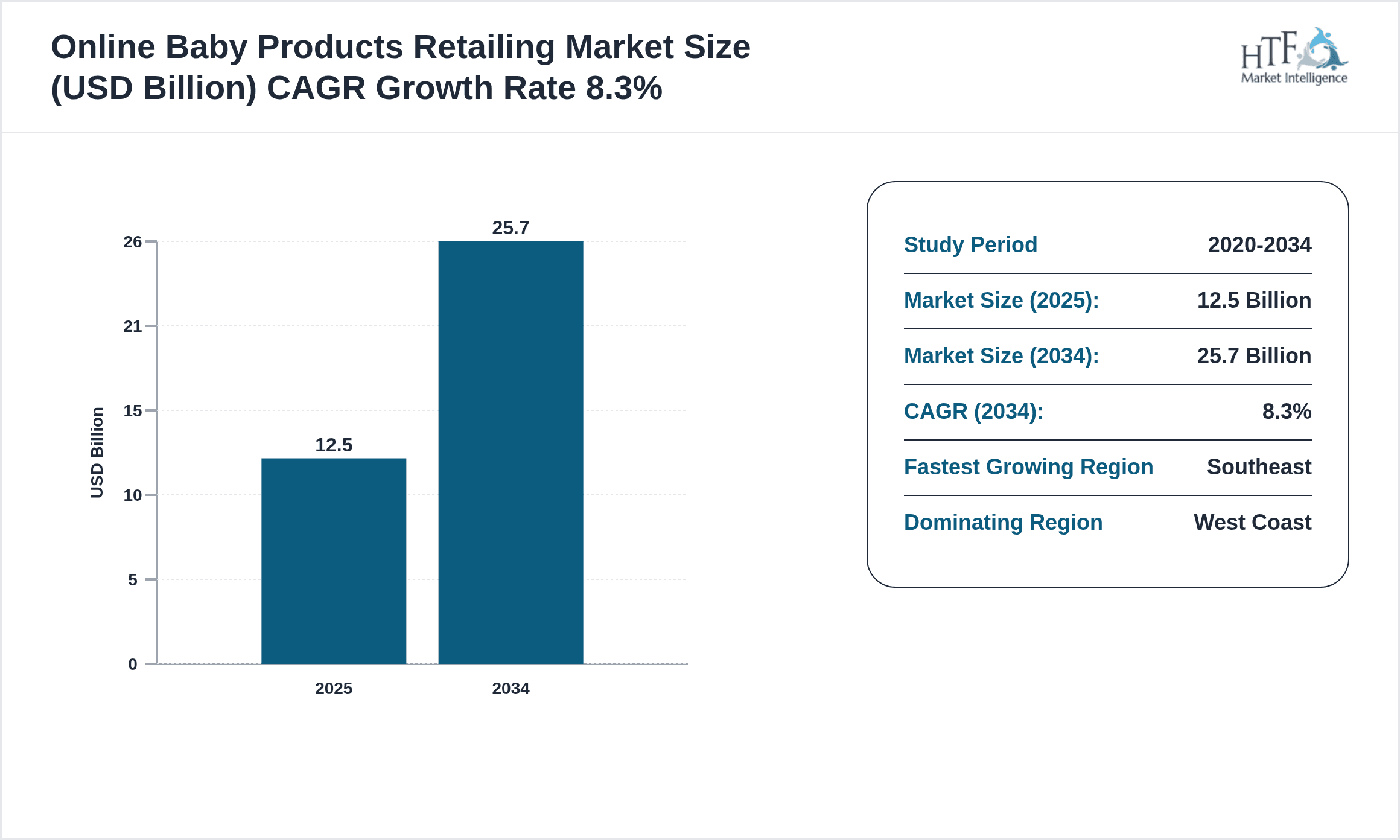
- •Key market highlights reveal a robust CAGR of 8.3% forecasted between 2025 and 2034, with the market size expected to more than double from USD 12.5 billion in 2025 to USD 25.7 billion by 2034. The clothing segment dominates product types, accounting for significant revenue share, while baby gear is emerging as the fastest-growing category due to innovation and consumer demand. Application-wise, diapers and wipes hold the largest market share, driven by essential and recurring usage, followed closely by feeding and nursing products. Regionally, the West Coast leads in market dominance owing to high urbanization and digital penetration, whereas the Southeast region exhibits the fastest growth, fueled by rising birth rates and expanding e-commerce infrastructure. These indicators underscore a dynamic market characterized by evolving consumer needs, technological integration, and competitive innovation.
- •The value proposition of the United States Online Baby Products Retailing market lies in its ability to deliver convenience, product diversity, and trusted safety standards to a growing base of digitally savvy consumers. This market provides strategic importance to manufacturers for direct consumer engagement and feedback, enabling agile product development and targeted marketing. Retailers benefit from scalable e-commerce models and data-driven inventory management, while parents gain from competitive pricing, subscription models, and personalized shopping experiences. The industry's growth supports broader economic factors such as employment in logistics, IT, and retail sectors. Additionally, sustainability trends and regulatory compliance create opportunities for differentiation and long-term brand loyalty, positioning this market segment as a significant contributor to the overall baby care ecosystem in the United States.
Competitive Landscape
The competitive landscape in the United States Online Baby Products Retailing market is marked by intense rivalry among established multi-channel retailers, specialized e-commerce platforms, and emerging direct-to-consumer brands. Market players leverage innovation in product assortment, personalization technologies, and logistics to differentiate their offerings. Pricing strategies vary from value-based promotions to premium product lines emphasizing organic and sustainable credentials. Strategic partnerships with manufacturers and third-party logistics providers enable enhanced supply chain responsiveness and customer satisfaction. The market entry barriers include compliance with child safety regulations and the need for robust digital infrastructure. Companies invest heavily in marketing, customer retention programs, and technology adoption to gain market share. Future competition is expected to focus on integrating AI, expanding subscription services, and enhancing mobile commerce capabilities, while regional preferences and demographic shifts influence localized strategies.
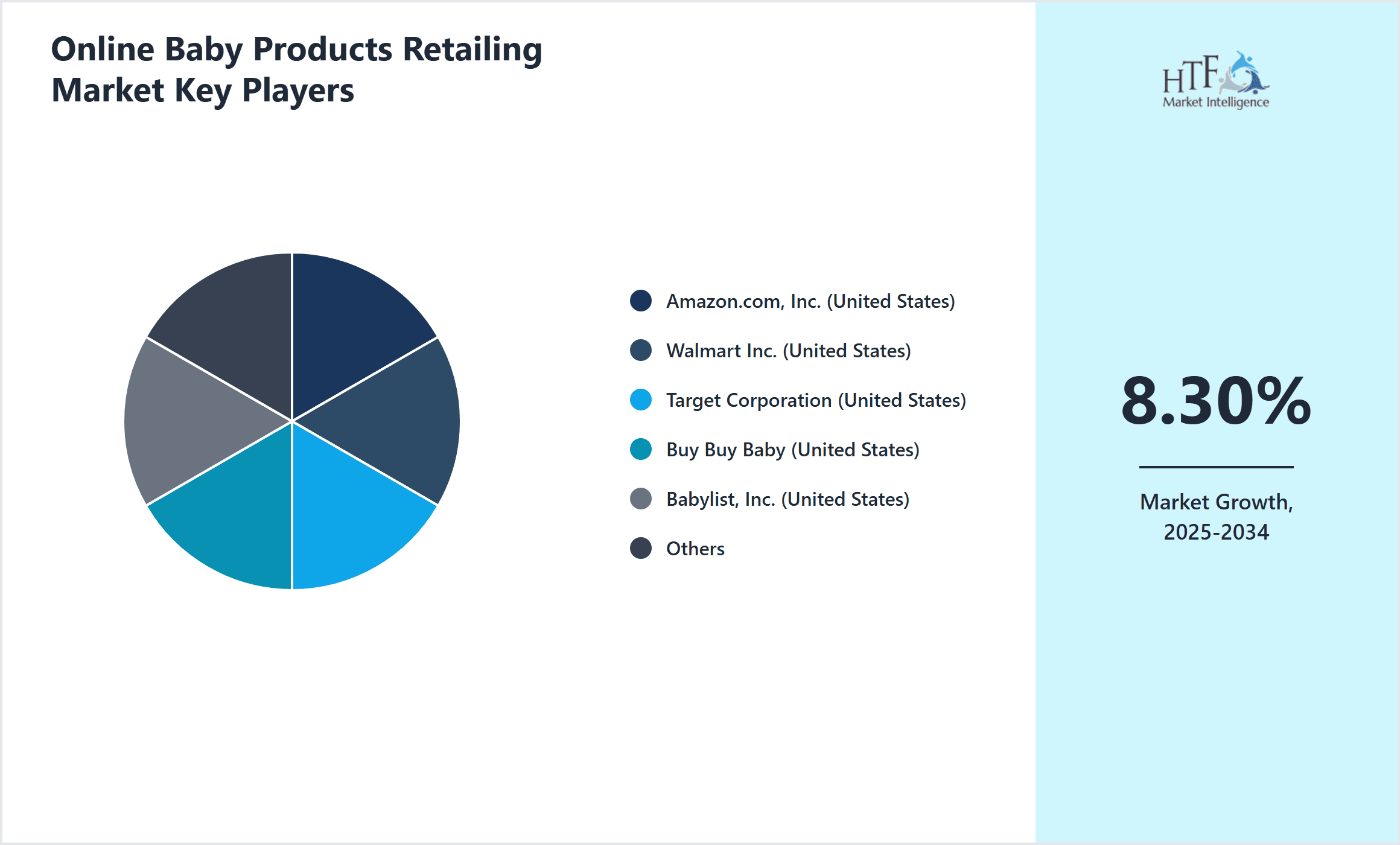
Key Players in United States Online Baby Products Retailing Market
- •Amazon.com, Inc. (United States)
- •Walmart Inc. (United States)
- •Target Corporation (United States)
- •Buy Buy Baby (United States)
- •Babylist, Inc. (United States)
- •The Honest Company, Inc. (United States)
- •Carter's, Inc. (United States)
- •Gerber Products Company (United States)
- •BabyEarth Inc. (United States)
- •Babies 'R' Us (United States)
- •Diapers.com (United States)
- •Boppy Company (United States)
- •Melissa & Doug, LLC (United States)
- •Ergobaby (United States)
- •Graco Children's Products Inc. (United States)
- •Baby Jogger (United States)
- •4moms LLC (United States)
- •Munchkin, Inc. (United States)
- •Skip Hop Inc. (United States)
- •Lovevery, Inc. (United States)
- •Bumkins Inc. (United States)
- •Babyletto (United States)
- •Nuna International BV (United States)
- •Kiinde LLC (United States)
- •Summer Infant, Inc. (United States)
Market Breakdown
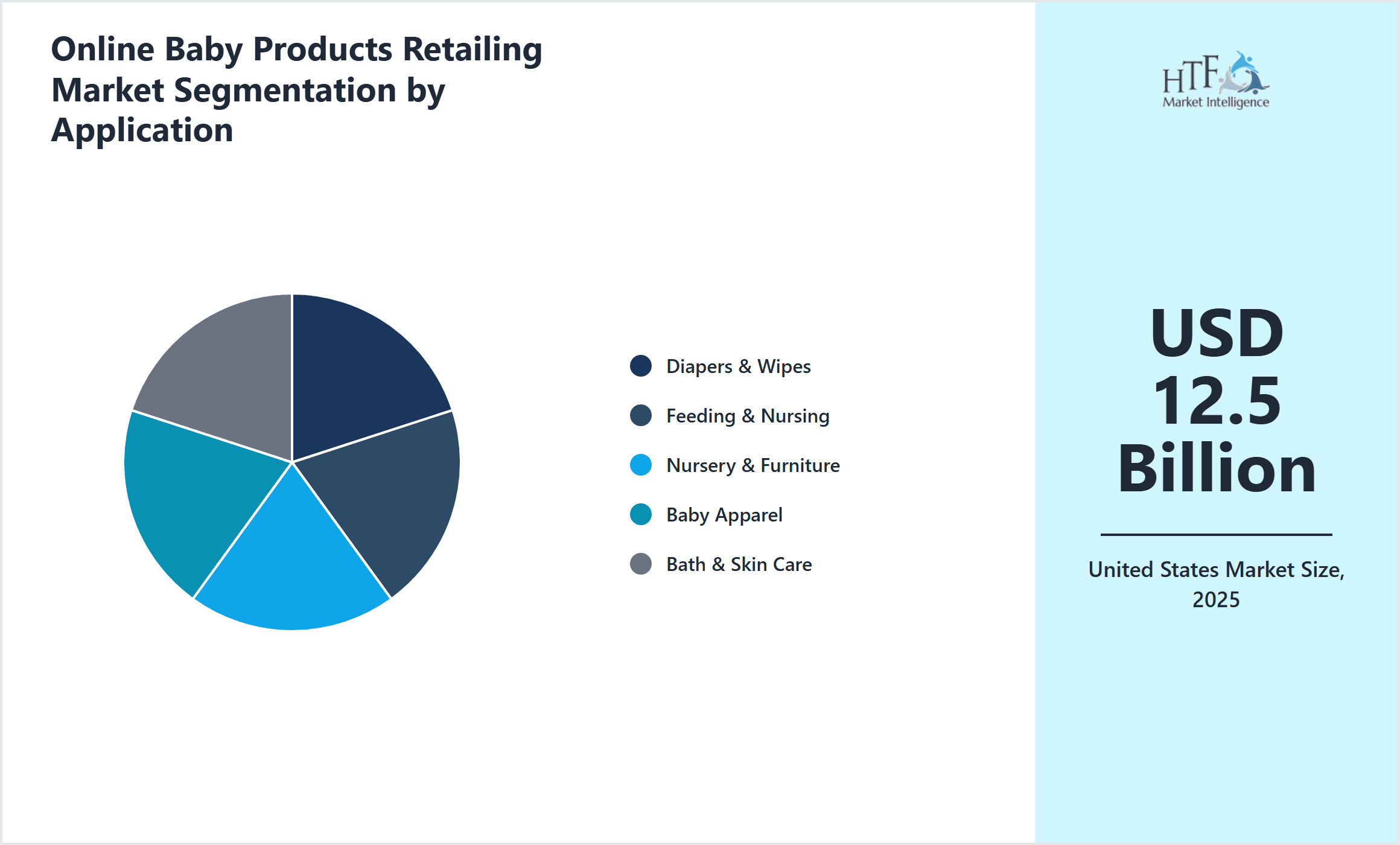
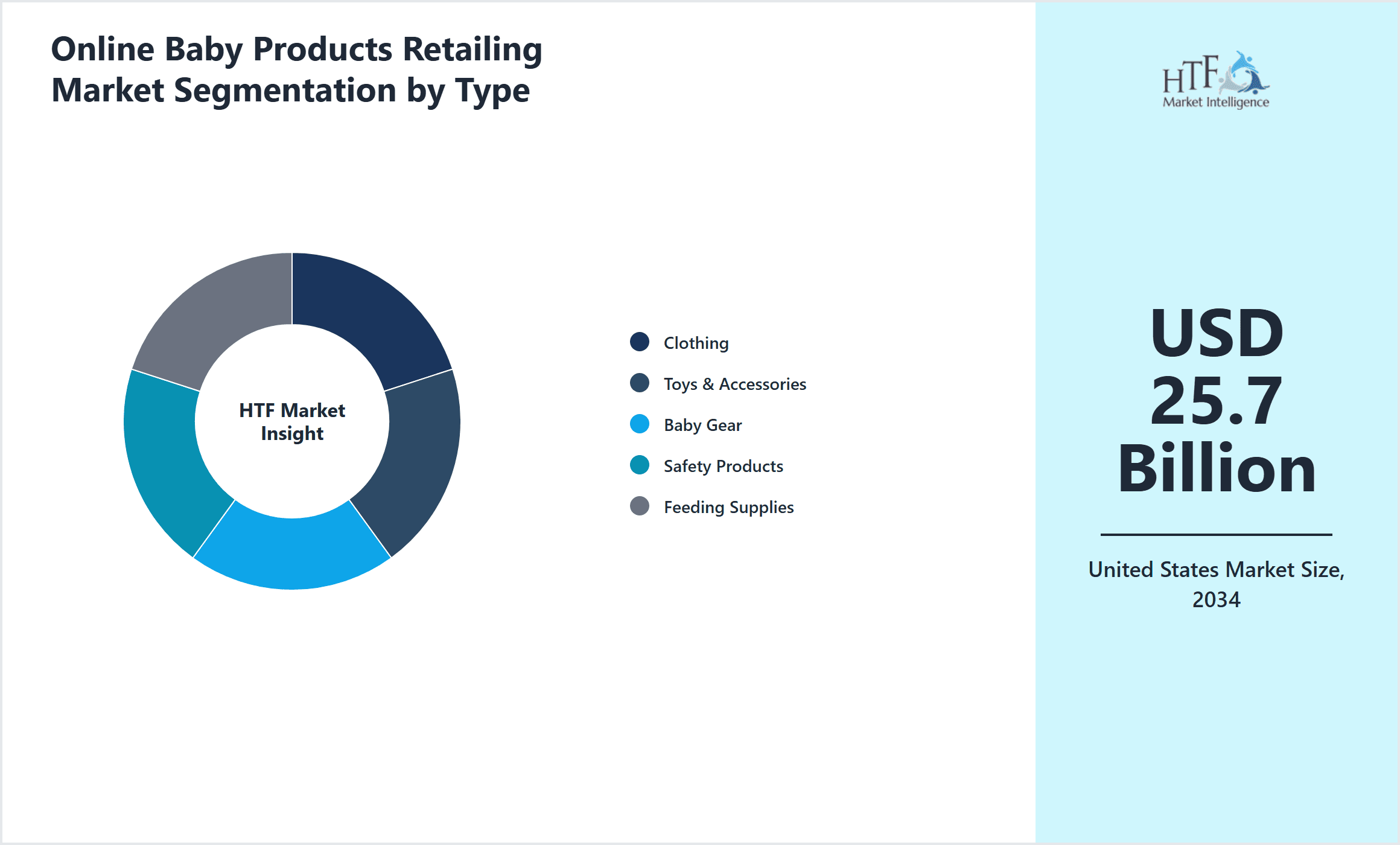
- •By Product Type
- ◦Clothing
- ◦Toys & Accessories
- ◦Baby Gear
- ◦Safety Products
- ◦Feeding Supplies
- •By Application
- ◦Diapers & Wipes
- ◦Feeding & Nursing
- ◦Nursery & Furniture
- ◦Baby Apparel
- ◦Bath & Skin Care
- •By End-Use Industry
- ◦Individual Consumers
- ◦Daycare Centers
- ◦Hospitals & Clinics
- ◦Baby Specialty Stores
- •By Distribution Channel
- ◦E-commerce Websites
- ◦Mobile Commerce
- ◦Omnichannel Retail
Growth Dynamics
- •The increasing preference for online shopping driven by convenience and time-saving benefits fuels market growth, especially among millennial and Gen Z parents in urban and suburban United States regions.
- •Rising birth rates in specific U.S. sub-regions like the Southeast contribute to expanding consumer bases, directly impacting demand for online baby products retailing platforms.
- •Technological innovations such as AI-driven personalized shopping experiences and augmented reality tools for product trials enhance customer engagement and boost sales.
- •Growing consumer awareness and demand for organic, eco-friendly, and non-toxic baby products encourage retailers to diversify their online offerings accordingly.
- •Improved logistics and last-mile delivery infrastructure facilitate faster shipments and higher customer satisfaction, enabling online retailers to capture larger market shares.
- •Subscription-based models for baby essentials like diapers and wipes are gaining traction, providing predictable revenue streams and customer loyalty for retailers.
- •Collaborations between baby product manufacturers and e-commerce platforms enable exclusive offerings and promotional campaigns, strengthening market position.
Market Trends
- •There is a growing trend toward sustainability, with consumers seeking biodegradable diapers and organic baby apparel, pushing retailers to expand eco-friendly product lines.
- •Mobile commerce is rapidly becoming the preferred channel for baby product purchases, driven by app-based loyalty programs and seamless checkout processes.
- •Integration of AI chatbots and virtual assistants on e-commerce platforms enhances customer service and supports purchase decisions in real time.
- •Social media influencers and parenting bloggers are increasingly instrumental in shaping consumer buying behavior and brand preferences in the baby products segment.
- •Retailers are adopting omnichannel strategies to blend online and offline experiences, such as buy-online-pickup-in-store (BOPIS), to increase market reach.
- •Advancements in packaging technologies improve product safety and freshness, especially for feeding and skincare items, boosting consumer confidence.
- •Subscription boxes curated with developmental toys and age-specific products are gaining popularity as convenient gifting and shopping options.
Market Opportunities
- •Expanding into underserved U.S. regional markets, particularly the Southeast and Midwest, offers significant growth potential due to rising birth rates and increasing digital adoption.
- •Developing niche product categories such as gender-neutral baby apparel and multifunctional nursery furniture can capture evolving consumer preferences.
- •Leveraging data analytics to provide personalized marketing and product recommendations enhances customer loyalty and sales conversion rates.
- •Investing in sustainable packaging and sourcing practices aligns with consumer demand and regulatory trends, differentiating brands competitively.
- •Collaborations with healthcare providers and parenting platforms can facilitate trusted product endorsements and integrated marketing efforts.
- •Expansion of subscription-based offerings for essentials like diapers and formula can secure recurring revenue streams and deepen customer engagement.
- •Adoption of emerging technologies such as augmented reality for virtual product trials can enhance the online shopping experience and reduce return rates.
Market Challenges
- •Strict regulatory requirements on product safety and labeling create compliance complexities and increase costs for online retailers and manufacturers.
- •High competition and price sensitivity in the baby products segment pressure profit margins, especially for smaller retailers and new entrants.
- •Challenges in last-mile delivery logistics, particularly in rural or less accessible U.S. sub-regions, can affect customer satisfaction and retention.
- •Counterfeit and substandard products sold through unauthorized online channels pose risks to brand reputation and consumer trust.
- •Rapidly changing consumer preferences require agile product development and inventory management to avoid obsolescence and overstocking.
- •Data privacy and cybersecurity concerns related to online transactions demand continuous investment in secure platforms and protocols.
- •Supply chain disruptions, including raw material shortages and transportation delays, can impact product availability and pricing stability.
Regulatory Framework
- •Between 2020 and 2025, the U.S. Consumer Product Safety Commission (CPSC) updated safety standards for cribs, strollers, and car seats, mandating enhanced testing protocols and labeling requirements to ensure infant safety during use and transportation.
- •The Food and Drug Administration (FDA) introduced stricter regulations in 2023 for infant formula labeling and ingredient transparency, requiring manufacturers and online retailers to provide detailed nutritional information and allergy warnings on digital platforms.
- •The Federal Trade Commission (FTC) enforced new guidelines in 2024 regulating online advertising claims for baby products, focusing on transparency, substantiation of health benefits, and prohibition of misleading promotions targeting parents.
- •State-level initiatives in California and New York have implemented additional environmental compliance for packaging materials, promoting recyclable and biodegradable options for baby product shipments effective from 2022 onward.
- •The Children's Online Privacy Protection Act (COPPA) continues to influence data collection practices on e-commerce sites targeting baby product consumers, with amendments in 2021 enhancing parental consent requirements and data security measures.
Market Intelligence
- •15th January 2025, Amazon.com, Inc. launched a specialized online storefront dedicated to eco-friendly baby products, featuring over 500 new SKUs with certifications such as USDA Organic and OEKO-TEX. The platform incorporates AI-driven personalized recommendations and subscription services for essential items like diapers and wipes. This initiative aims to capture the growing segment of environmentally conscious consumers in the United States, enhancing Amazon’s competitive positioning in the online baby products retailing market. The launch includes partnerships with emerging sustainable brands to expand product variety and leverage Amazon’s logistics network for rapid delivery across key U.S. regions.
- •10th March 2025, The Honest Company, Inc. introduced an innovative mobile application integrating augmented reality to allow parents to virtually preview nursery furniture and baby gear in their homes before purchase. The app also features expert parenting tips and a loyalty rewards program aimed at increasing customer engagement. This technological advancement is expected to differentiate The Honest Company in the competitive U.S. online baby products market by enhancing the shopping experience and reducing product returns, aligning with consumer demand for convenience and interactive digital tools.
- •2nd July 2024, Walmart Inc. expanded its online baby products portfolio by acquiring a niche subscription service focused on delivering organic baby food and skincare products monthly. This acquisition enables Walmart to tap into the subscription economy and provide personalized, convenient product solutions to parents nationwide. Walmart plans to integrate this service with its e-commerce platform to streamline ordering and delivery, reinforcing its market share in the United States’ rapidly evolving online baby products retailing environment.
- •18th October 2024, Target Corporation announced a strategic partnership with Kiinde LLC to exclusively retail innovative feeding supplies such as advanced breast milk storage and bottle systems through its online channels. This partnership includes co-branded marketing campaigns and bundled product offerings designed to attract new parents seeking quality and convenience. The collaboration supports Target’s strategy to enhance its digital baby products assortment and improve customer retention in a highly competitive marketplace.
- •Source: Official company press releases and verified industry analysis reports
Regional Outlook
The West Coast currently holds a significant share of the market, primarily due to several key factors: increasing consumption rates, a burgeoning population, and robust economic momentum. These elements collectively drive demand, positioning this region as a leader in the market. On the other hand, Southeast is rapidly emerging as the fastest-growing area within the industry. This remarkable growth can be attributed to swift infrastructure development, the expansion of various industrial sectors, and a marked increase in consumer demand. These dynamics make this region a crucial player in shaping future market growth.
In our report, we cover a comprehensive analysis of the following regions and countries:
- Northeast
- Southwest
- The South
- The Midwest
| Feature | Details |
|---|---|
| Base Year Market Size | USD 12.5 Billion |
| Forecast Year Market Size | USD 25.7 Billion |
| CAGR | 8.3% |
| Forecast Period | 2026 to 2033 |
| YoY Growth | 8% |
| Scope of Report | Market is segmented by Product Type (Clothing, Toys & Accessories, Baby Gear, Safety Products, Feeding Supplies), Application (Diapers & Wipes, Feeding & Nursing, Nursery & Furniture, Baby Apparel, Bath & Skin Care), End-Use Industry (Individual Consumers, Daycare Centers, Hospitals & Clinics, Baby Specialty Stores), Distribution Channel (E-commerce Websites, Mobile Commerce, Omnichannel Retail) |
| Regions Covered | Northeast, Southwest, The South, The Midwest |
| Key Companies | Amazon.com, Inc. (United States), Walmart Inc. (United States), Target Corporation (United States), Buy Buy Baby (United States), Babylist, Inc. (United States), The Honest Company, Inc. (United States), Carter's, Inc. (United States), Gerber Products Company (United States), BabyEarth Inc. (United States), Babies 'R' Us (United States), Diapers.com (United States), Boppy Company (United States), Melissa & Doug, LLC (United States), Ergobaby (United States), Graco Children's Products Inc. (United States), Baby Jogger (United States), 4moms LLC (United States), Munchkin, Inc. (United States), Skip Hop Inc. (United States), Lovevery, Inc. (United States), Bumkins Inc. (United States), Babyletto (United States), Nuna International BV (United States), Kiinde LLC (United States), Summer Infant, Inc. (United States) |
United States Online Baby Products Retailing Market - Size & Outlook 2025-2034 - Table of Contents
Frequently Asked Questions (FAQ):
The Compact Track Loaders market is projected to grow at a CAGR of 6.8% from 2025 to 2030, driven by increasing demand in construction and agricultural sectors.
North America currently leads the market with approximately 45% market share, followed by Europe at 28% and Asia-Pacific at 22%. The remaining regions account for 5% of the global market.
Key growth drivers include increasing construction activities, rising demand for versatile equipment in agriculture, technological advancements in track loader design, and growing preference for compact equipment in urban construction projects.