
Global Atomic Absorption Spectrometer Market Size, Growth & Revenue 2024-2034
Global Atomic Absorption Spectrometer Market is segmented by Product Type (Flame Atomic Absorption Spectrometer, Graphite Furnace Atomic Absorption Spectrometer, Hydride Vapor Generation Atomic Absorption Spectrometer, Cold Vapor Atomic Absorption Spectrometer, Simultaneous Atomic Absorption Spectrometer), Application (Environmental Analysis, Food & Beverage Testing, Pharmaceutical Research, Metallurgy, Chemical Analysis), End-Use Industry (Research Laboratories, Industrial Quality Control, Academic Institutions, Government Agencies), Distribution Channel (Direct Sales, Third-Party Distributors, Online Platforms), and Geography (North America, LATAM, West Europe, Central & Eastern Europe, Northern Europe, Southern Europe, East Asia, Southeast Asia, South Asia, Central Asia, Oceania, MEA)
Pricing
Report Overview
Executive Summary
- •The Global Atomic Absorption Spectrometer market is a critical segment of the analytical instrumentation industry, focused on devices that measure elemental concentrations using atomic absorption principles. This market spans a variety of spectrometer types including Flame, Graphite Furnace, Hydride Vapor Generation, Cold Vapor, and Simultaneous Atomic Absorption Spectrometers. These instruments serve numerous applications such as environmental analysis for pollutant detection, food and beverage testing for quality control, pharmaceutical research for drug safety, metallurgy for material analysis, and chemical analysis for industrial processes. The market includes end-users across research laboratories, industrial sectors, quality control units, and academic institutions globally. Key attributes of this market include precision, sensitivity, and compliance with regulatory standards. Growing awareness about environmental safety, stricter food safety regulations, and advancements in spectrometry technology are driving demand. Additionally, the integration of software enhancements and automation improves analytical throughput and accuracy, making these instruments indispensable tools worldwide.
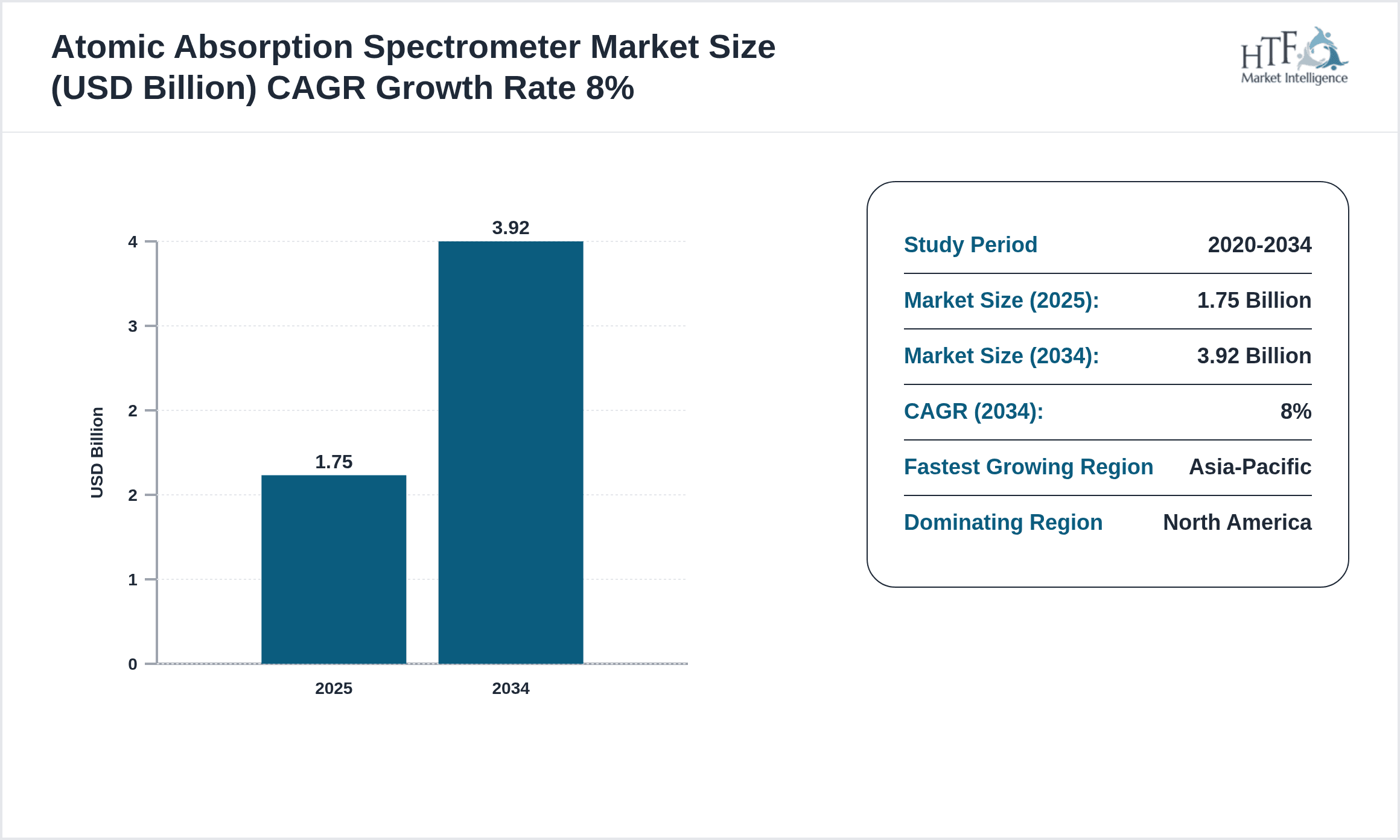
- •Market highlights indicate steady growth driven by technological innovations such as enhanced detection limits and user-friendly interfaces. The market size was valued at USD 1.75 Billion in 2024 and is projected to reach USD 3.92 Billion by 2034, exhibiting a CAGR of 8.0%. The Flame Atomic Absorption Spectrometer segment dominates the market due to its widespread use and cost-effectiveness, while the Graphite Furnace segment is the fastest-growing owing to its high sensitivity for trace element detection. Regionally, North America commands the largest market share, supported by advanced research infrastructure and stringent environmental regulations. Meanwhile, Asia-Pacific is the fastest-growing region, fueled by rapid industrialization and increasing environmental monitoring activities. Key players continue to invest in R&D and strategic collaborations to enhance product portfolios and expand global reach.
- •The Atomic Absorption Spectrometer market holds significant strategic value across multiple industries by ensuring regulatory compliance, enhancing product safety, and enabling precise material characterization. Stakeholders including manufacturers, distributors, and end-users benefit from the evolving landscape through innovation and market expansion. The growing emphasis on environmental conservation and food safety propels demand, while increasing investments in research and quality control further underscore the market's importance. As industries increasingly rely on accurate elemental analysis, the market's role becomes pivotal in driving sustainability, safety, and quality assurance worldwide.
Competitive Landscape
The competitive environment in the Global Atomic Absorption Spectrometer market is marked by intense rivalry among established multinational corporations and emerging regional players. Companies compete through technological innovation, product differentiation, and expansion of distribution networks. Innovation efforts focus on enhancing instrument sensitivity, user interface, and automation capabilities, enabling faster and more accurate analysis. Strategic partnerships, mergers, and acquisitions are common to consolidate market positions and access new geographic markets. Pricing strategies vary, with premium products targeting high-end research applications and cost-effective models for routine industrial use. Distribution channels include direct sales, third-party distributors, and online platforms, broadening market reach. Regulatory compliance and certifications also influence competitive advantage, as customers prioritize quality and reliability. Overall, the market’s competitive dynamics emphasize continuous product development, customer-centric service, and global expansion to maintain and grow market share.
Key Players in Atomic Absorption Spectrometer Market
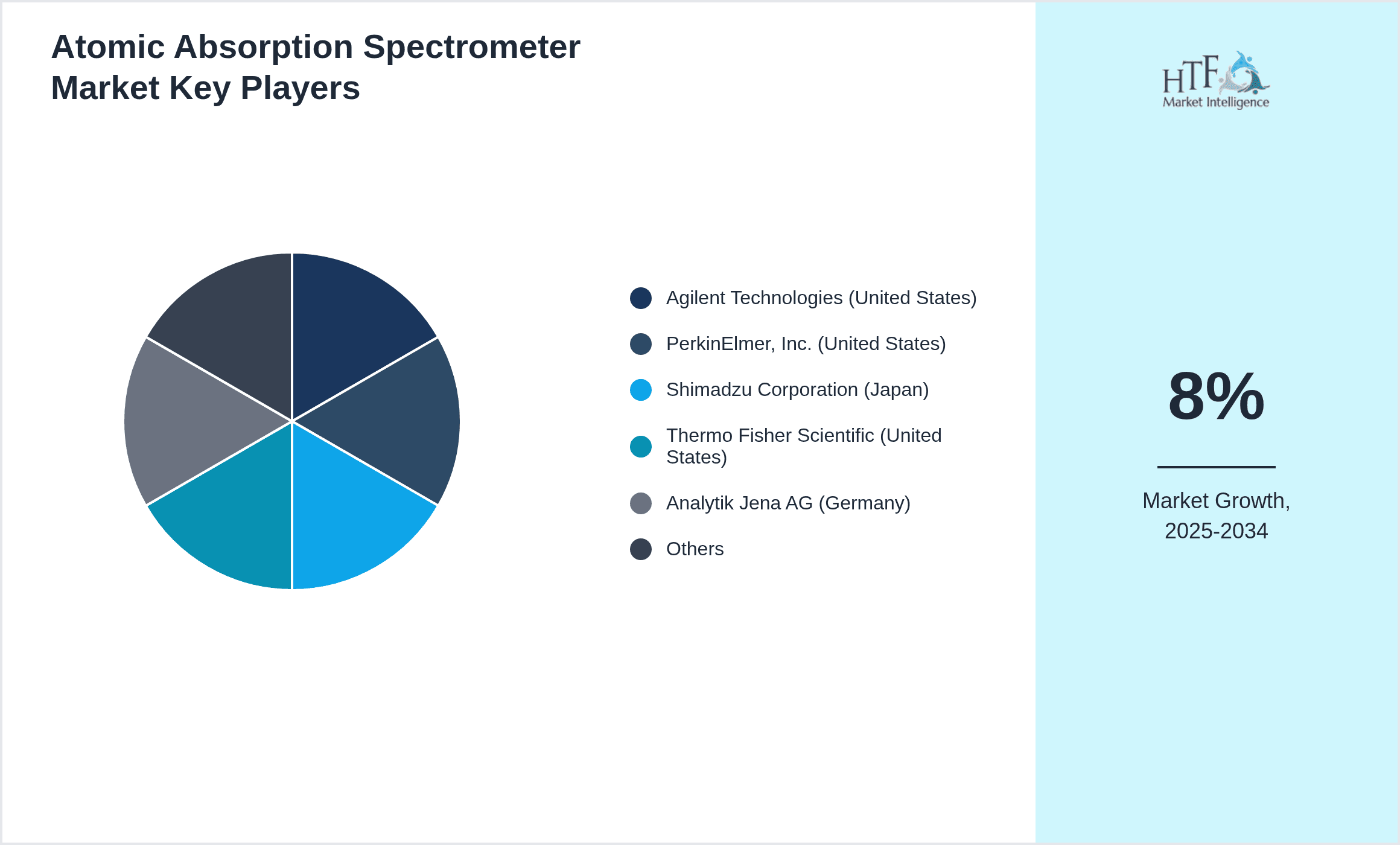
- •Agilent Technologies (United States)
- •PerkinElmer, Inc. (United States)
- •Shimadzu Corporation (Japan)
- •Thermo Fisher Scientific (United States)
- •Analytik Jena AG (Germany)
- •Hitachi High-Tech Corporation (Japan)
- •Analytical Instruments (China)
- •Metrohm AG (Switzerland)
- •Buck Scientific (United States)
- •GBC Scientific Equipment (Australia)
- •ELTRA GmbH (Germany)
- •Analytik Ltd. (United Kingdom)
- •Bruker Corporation (United States)
- •Horiba, Ltd. (Japan)
- •Celal Bayar University (Turkey)
- •Labindia Instruments Pvt. Ltd. (India)
- •Analytix Instrumentation Pvt. Ltd. (India)
- •Mile Stone Inc. (United States)
- •Hitachi High-Technologies Corporation (Japan)
- •Elementar Analysensysteme GmbH (Germany)
- •Savant Instruments (United States)
- •Analytica Instrumentation Pvt. Ltd. (India)
- •LabTech Instruments Co., Ltd. (South Korea)
- •Hach Company (United States)
- •Analytical Technologies Limited (United Kingdom)
Market Breakdown
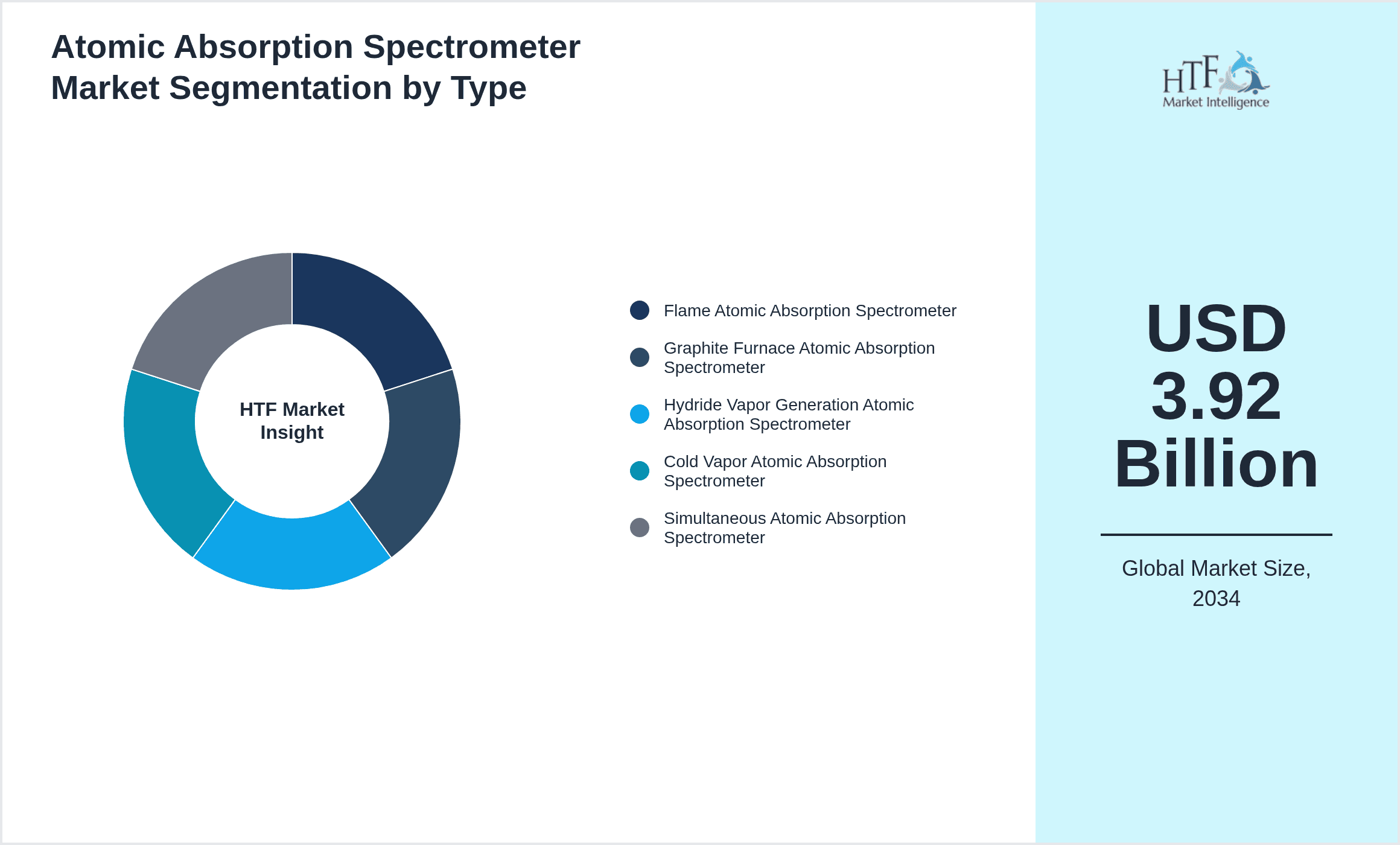
- •By Product Type
- ◦Flame Atomic Absorption Spectrometer
- ◦Graphite Furnace Atomic Absorption Spectrometer
- ◦Hydride Vapor Generation Atomic Absorption Spectrometer
- ◦Cold Vapor Atomic Absorption Spectrometer
- ◦Simultaneous Atomic Absorption Spectrometer
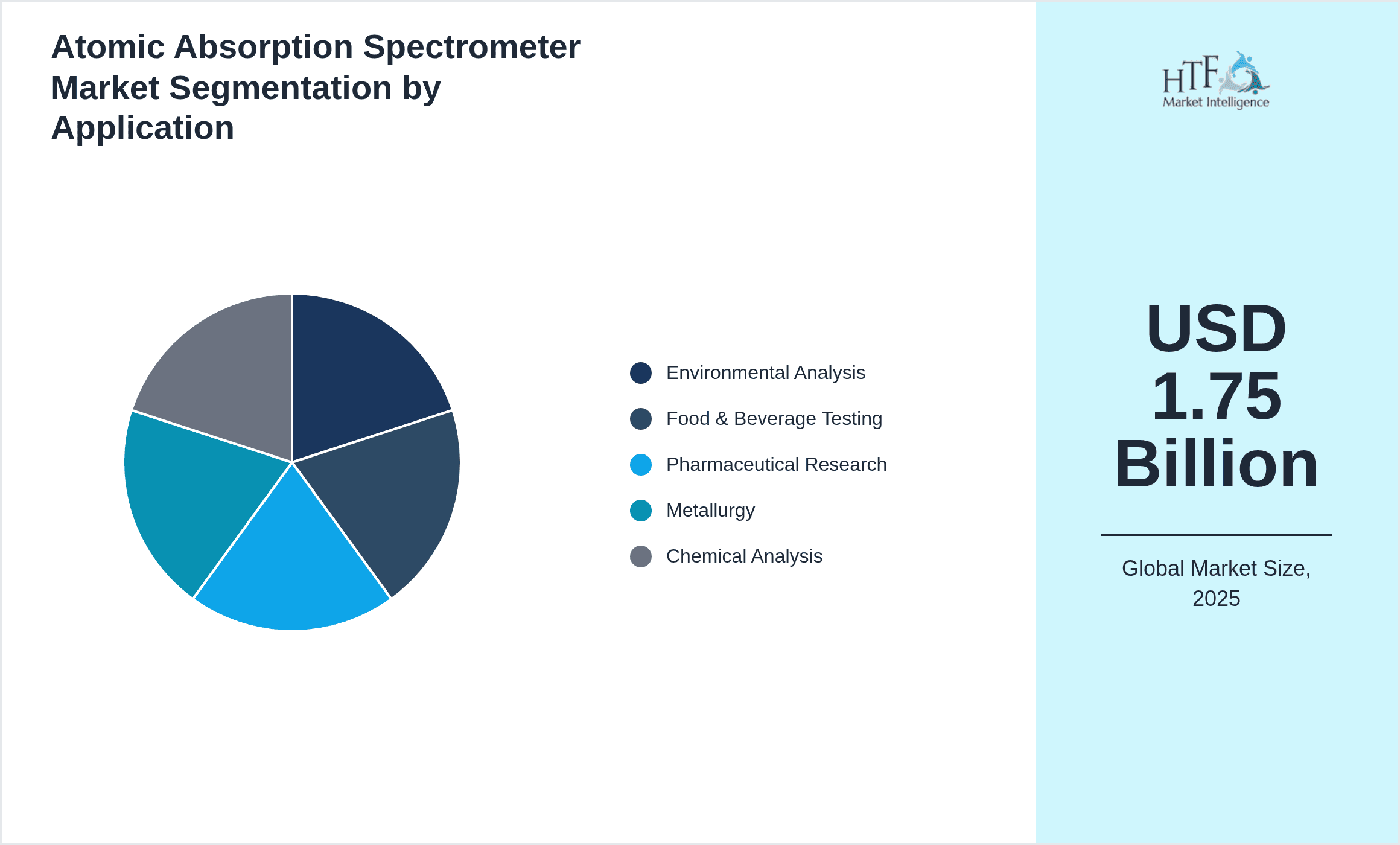
- •By Application
- ◦Environmental Analysis
- ◦Food & Beverage Testing
- ◦Pharmaceutical Research
- ◦Metallurgy
- ◦Chemical Analysis
- •By End-Use Industry
- ◦Research Laboratories
- ◦Industrial Quality Control
- ◦Academic Institutions
- ◦Government Agencies
- •By Distribution Channel
- ◦Direct Sales
- ◦Third-Party Distributors
- ◦Online Platforms
Growth Dynamics
- •The rising demand for precise elemental analysis in environmental monitoring is a key growth driver. Governments worldwide are tightening regulations on pollutant emissions, requiring accurate detection of trace metals in air, water, and soil, which fuels demand for advanced atomic absorption spectrometers.
- •Technological advancements such as improved detector sensitivity and automation enhance operational efficiency, attracting end-users from pharmaceutical and food industries where compliance with stringent quality standards is critical.
- •Increasing industrialization in emerging economies, particularly in Asia-Pacific, drives need for quality control and safety testing across metallurgy and chemical manufacturing sectors, expanding the market’s reach.
- •Growth in research and development activities globally, including academic and government-funded projects, promotes adoption of sophisticated spectrometry instruments to support innovation and scientific discovery.
- •Integration of user-friendly software and connectivity features in new spectrometers enables seamless data management and remote operation, enhancing market attractiveness and facilitating broader adoption.
Market Trends
- •There is a growing trend towards miniaturization and portability of atomic absorption spectrometers, allowing field-based elemental analysis, which is increasingly favored in environmental and industrial applications.
- •Adoption of cloud-based data analytics and IoT-enabled spectrometry instruments is gaining momentum, facilitating real-time monitoring and advanced data interpretation for end-users.
- •Strategic collaborations between instrument manufacturers and research institutions accelerate innovation cycles, resulting in enhanced product features and new application development.
- •Sustainability-focused manufacturing processes are being incorporated by leading players to reduce environmental impact and align with global green initiatives.
- •The market is witnessing increased customization options, allowing end-users to tailor spectrometry solutions to specific analytical requirements, improving user experience and accuracy.
Market Opportunities
- •Expanding environmental regulations in developing countries create opportunities for market expansion as governments invest in monitoring infrastructure requiring advanced spectrometry instruments.
- •Emerging applications in nanotechnology and biotechnology fields open new avenues for atomic absorption spectrometer usage, driving demand for highly sensitive instruments.
- •Growing emphasis on food safety and traceability in global supply chains enhances need for reliable elemental analysis, providing growth prospects in the food & beverage testing segment.
- •Technological integration with artificial intelligence and machine learning offers potential for developing predictive maintenance and analytical accuracy enhancements in spectrometry equipment.
- •Untapped markets in Latin America and Middle East & Africa present significant growth potential due to increasing industrial activities and investments in analytical infrastructure.
Market Challenges
- •High initial investment and maintenance costs of advanced atomic absorption spectrometers limit adoption among small-scale laboratories and developing markets, restraining overall growth.
- •Technical complexity and requirement for skilled personnel to operate and interpret results from these instruments pose barriers, especially in regions with limited technical expertise.
- •Availability of alternative analytical techniques such as ICP-MS and XRF spectroscopy challenges market share, particularly in high-end applications demanding multi-element detection.
- •Fluctuations in raw material costs and supply chain disruptions impact manufacturing expenses and delivery timelines, affecting market stability and pricing strategies.
- •Stringent regulatory compliance and certification processes increase time to market for new products and add to development costs, potentially delaying innovation cycles.
Regulatory Framework
- •Between 2019 and 2024, key environmental regulations such as the amended Clean Water Act in the United States mandated stricter limits on heavy metal discharge, increasing demand for precise elemental analysis instrumentation.
- •The European Union’s REACH regulation update in 2021 required detailed chemical safety assessments, compelling industries to adopt advanced spectrometry for compliance verification and reporting.
- •In 2020, the Food Safety Modernization Act (FSMA) enforcement in North America emphasized rigorous food contaminant testing, driving growth in food & beverage testing applications of atomic absorption spectrometers.
- •China’s Ministry of Ecology and Environment introduced new heavy metal monitoring standards in 2023, accelerating adoption of sensitive detection technologies within the Asia-Pacific region.
- •Government initiatives globally have incentivized research and development in analytical instrumentation through grants and subsidies, fostering innovation and market expansion from 2019 to 2024.
Market Intelligence
- •15th January 2025, Agilent Technologies launched its latest Graphite Furnace Atomic Absorption Spectrometer model featuring enhanced detection limits, automated sample handling, and integrated data analytics software. The product targets pharmaceutical and environmental laboratories requiring high precision and throughput, aiming to streamline workflows and reduce operator error while meeting stringent regulatory requirements. This launch strengthens Agilent’s market position by addressing growing demand for sensitive trace metal analysis. Source: Official press release from Agilent Technologies.
- •22nd March 2025, PerkinElmer, Inc. introduced a cloud-enabled Atomic Absorption Spectrometry platform that allows remote monitoring and real-time data sharing across multiple laboratory sites. This innovation supports decentralized testing environments and enhances collaborative research capabilities, particularly in food safety and environmental monitoring sectors. The platform’s scalability and user-friendly interface are expected to drive adoption among mid-sized laboratories globally. Source: PerkinElmer corporate announcement.
- •10th September 2024, Shimadzu Corporation completed a strategic acquisition of a European spectroscopy software firm to integrate advanced AI-based data analysis into its atomic absorption spectrometers. This move aims to improve analytical accuracy and predictive maintenance capabilities, positioning Shimadzu as a technology leader in smart analytical instrumentation with expanded service offerings. Source: Shimadzu official newsfeed.
- •5th November 2024, Thermo Fisher Scientific announced a global partnership with leading environmental agencies to deploy portable atomic absorption spectrometers for on-site heavy metal detection in water bodies. This initiative supports regulatory compliance and environmental conservation efforts, expanding Thermo Fisher’s footprint in field-deployable analytical solutions. Source: Thermo Fisher Scientific press release.
Regional Outlook
The North America currently holds a significant share of the market, primarily due to several key factors: increasing consumption rates, a burgeoning population, and robust economic momentum. These elements collectively drive demand, positioning this region as a leader in the market. On the other hand, Asia-Pacific is rapidly emerging as the fastest-growing area within the industry. This remarkable growth can be attributed to swift infrastructure development, the expansion of various industrial sectors, and a marked increase in consumer demand. These dynamics make this region a crucial player in shaping future market growth.
In our report, we cover a comprehensive analysis of the following regions and countries:
- North America
- LATAM
- West Europe
- Central & Eastern Europe
- Northern Europe
- Southern Europe
- East Asia
- Southeast Asia
- South Asia
- Central Asia
- Oceania
- MEA
| Feature | Details |
|---|---|
| Base Year Market Size | USD 1.75 Billion |
| Forecast Year Market Size | USD 3.92 Billion |
| CAGR | 8% |
| Forecast Period | 2026 to 2033 |
| YoY Growth | 7.4% |
| Scope of Report | Market is segmented by Product Type (Flame Atomic Absorption Spectrometer, Graphite Furnace Atomic Absorption Spectrometer, Hydride Vapor Generation Atomic Absorption Spectrometer, Cold Vapor Atomic Absorption Spectrometer, Simultaneous Atomic Absorption Spectrometer), Application (Environmental Analysis, Food & Beverage Testing, Pharmaceutical Research, Metallurgy, Chemical Analysis), End-Use Industry (Research Laboratories, Industrial Quality Control, Academic Institutions, Government Agencies), Distribution Channel (Direct Sales, Third-Party Distributors, Online Platforms) |
| Regions Covered | North America, LATAM, West Europe, Central & Eastern Europe, Northern Europe, Southern Europe, East Asia, Southeast Asia, South Asia, Central Asia, Oceania, MEA |
| Key Companies | Agilent Technologies (United States), PerkinElmer, Inc. (United States), Shimadzu Corporation (Japan), Thermo Fisher Scientific (United States), Analytik Jena AG (Germany), Hitachi High-Tech Corporation (Japan), Analytical Instruments (China), Metrohm AG (Switzerland), Buck Scientific (United States), GBC Scientific Equipment (Australia), ELTRA GmbH (Germany), Analytik Ltd. (United Kingdom), Bruker Corporation (United States), Horiba, Ltd. (Japan), Celal Bayar University (Turkey), Labindia Instruments Pvt. Ltd. (India), Analytix Instrumentation Pvt. Ltd. (India), Mile Stone Inc. (United States), Hitachi High-Technologies Corporation (Japan), Elementar Analysensysteme GmbH (Germany), Savant Instruments (United States), Analytica Instrumentation Pvt. Ltd. (India), LabTech Instruments Co., Ltd. (South Korea), Hach Company (United States), Analytical Technologies Limited (United Kingdom) |
Global Atomic Absorption Spectrometer Market Size, Growth & Revenue 2024-2034 - Table of Contents
Multidisciplinary researcher with 10+ years of experience uncovering insights across diverse domains focused on uncovering insights that drive informed decisions.
Frequently Asked Questions (FAQ):
The Compact Track Loaders market is projected to grow at a CAGR of 6.8% from 2025 to 2030, driven by increasing demand in construction and agricultural sectors.
North America currently leads the market with approximately 45% market share, followed by Europe at 28% and Asia-Pacific at 22%. The remaining regions account for 5% of the global market.
Key growth drivers include increasing construction activities, rising demand for versatile equipment in agriculture, technological advancements in track loader design, and growing preference for compact equipment in urban construction projects.