
Asia-Pacific Language Learning Application Market Size, Growth & Revenue 2025-2034
Asia-Pacific Language Learning Application Market is segmented by Product Type (Mobile Applications, Web-Based Platforms, AI-Powered Tools, Gamified Applications, Virtual Reality Applications), Application (Academic Learning, Corporate Training, Travel & Tourism, Personal Development, Government & Public Sector), End-Use Industry (Education, Corporate, Travel & Hospitality, Public Sector), Distribution Channel (App Stores, Direct Enterprise Sales, Partnerships with Educational Institutions), and Geography (Japan, China, Southeast Asia, India, Australia, South Korea, Others)
Pricing
Report Overview
Executive Summary
- •The Asia-Pacific Language Learning Application market represents a rapidly evolving segment of the digital education industry, focusing on software solutions that enable language acquisition through interactive, technology-driven platforms. This market includes mobile applications, web-based portals, AI-enhanced tools, gamified learning environments, and virtual reality applications designed to address diverse consumer needs from academic learning to corporate training and travel-related language skills. It serves a wide range of end users such as students, working professionals, tourists, and governmental agencies, integrating content creation, software development, platform distribution, and end-user engagement within its value chain. The market benefits from technological innovations like artificial intelligence and immersive technologies, which provide personalized learning experiences and greater user engagement. With increased smartphone penetration and rising emphasis on multilingual competencies in the Asia-Pacific region's globalized economy, the market is poised for strong growth. Key applications include academic learning, corporate language training, personal development, travel and tourism, and public sector communication enhancement, reflecting the broad utility and demand for language learning applications across industries and user demographics.
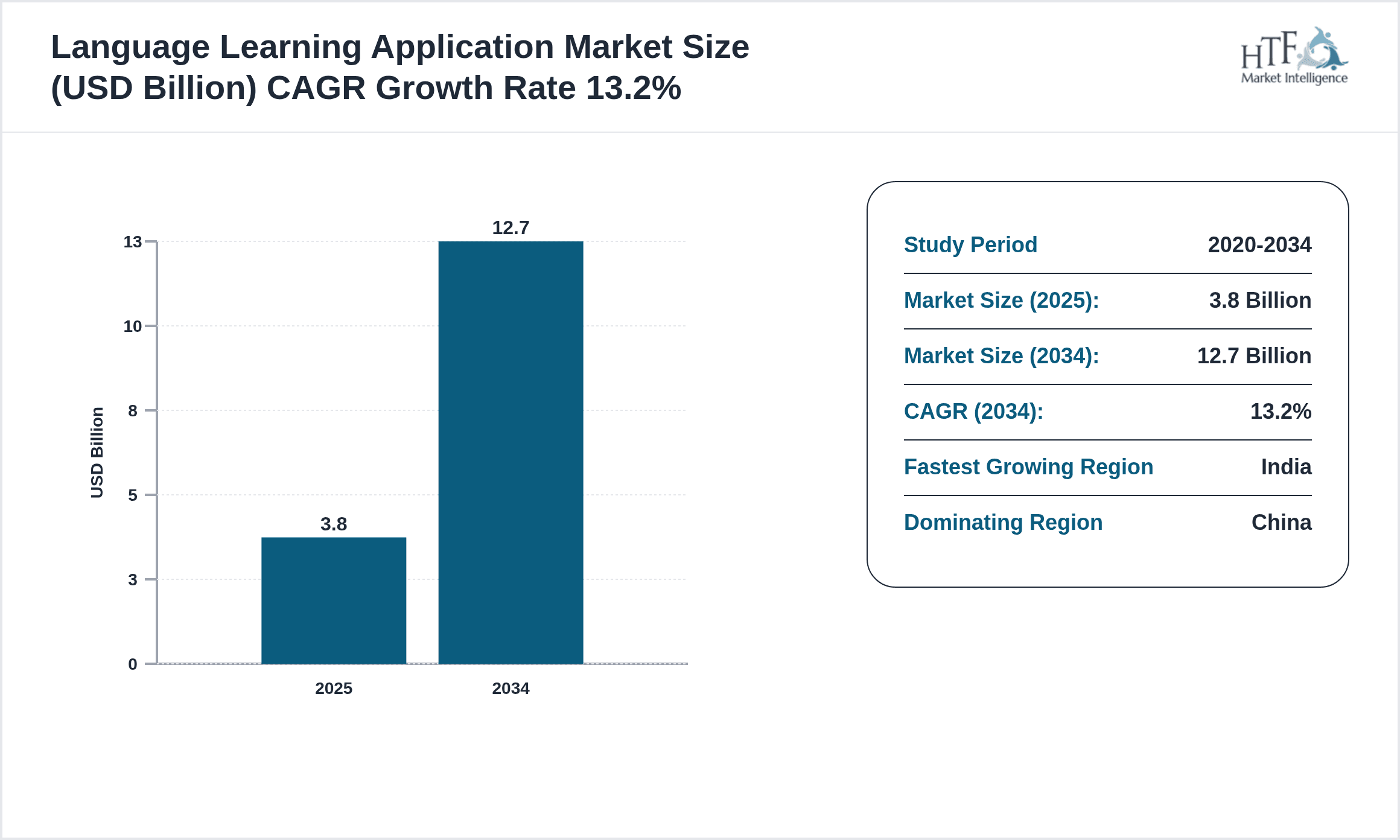
- •Key market highlights reveal a base market size of USD 3.8 billion in 2025, growing to an anticipated USD 12.7 billion by 2034 at a compound annual growth rate (CAGR) of 13.2%. Year-on-year growth averages around 12.4%, propelled by increasing digital adoption and the integration of AI and VR technologies in learning platforms. China leads as the dominating country with the largest market share, while India is identified as the fastest-growing regional market, driven by expanding internet access and a young, tech-savvy population. Mobile apps remain the leading product type due to accessibility and user convenience, whereas AI-powered tools exhibit the fastest growth, offering adaptive learning experiences and personalized content. These trends underscore the technological and demographic forces shaping market dynamics across the Asia-Pacific region.
- •The market's value proposition lies in offering scalable, accessible, and personalized language learning solutions that cater to the rising demand for multilingual skills in education, business, travel, and government sectors. Stakeholders including software developers, educational institutions, corporations, and governmental bodies benefit from enhanced communication capabilities, workforce competency, and cultural integration. The strategic importance of this market is underscored by its contribution to lifelong learning, global business expansion, and cross-cultural exchange, positioning it as a vital component of the region's digital education and technology ecosystem.
Competitive Landscape
The Asia-Pacific Language Learning Application market is characterized by intense competition among global technology firms, regional software developers, and emerging startups. Market participants employ strategies including product innovation, strategic partnerships, and regional expansion to capture market share. The market is marked by rapid technological advancements, such as AI integration and immersive learning through virtual reality, which serve as key differentiators. Pricing models vary from subscription-based to freemium offerings, enabling access across different consumer segments. Distribution channels encompass direct enterprise sales, app stores, and collaborations with educational institutions. Barriers to entry include high development costs and the need for localized content to address linguistic diversity across Asia-Pacific. The competitive environment is further shaped by mergers and acquisitions aimed at consolidating technological capabilities and expanding geographic reach. Future trends indicate increasing convergence of language learning with broader edtech platforms, fostering ecosystem development and sustained competitive pressure.
Leading Companies in Language Learning Application Market
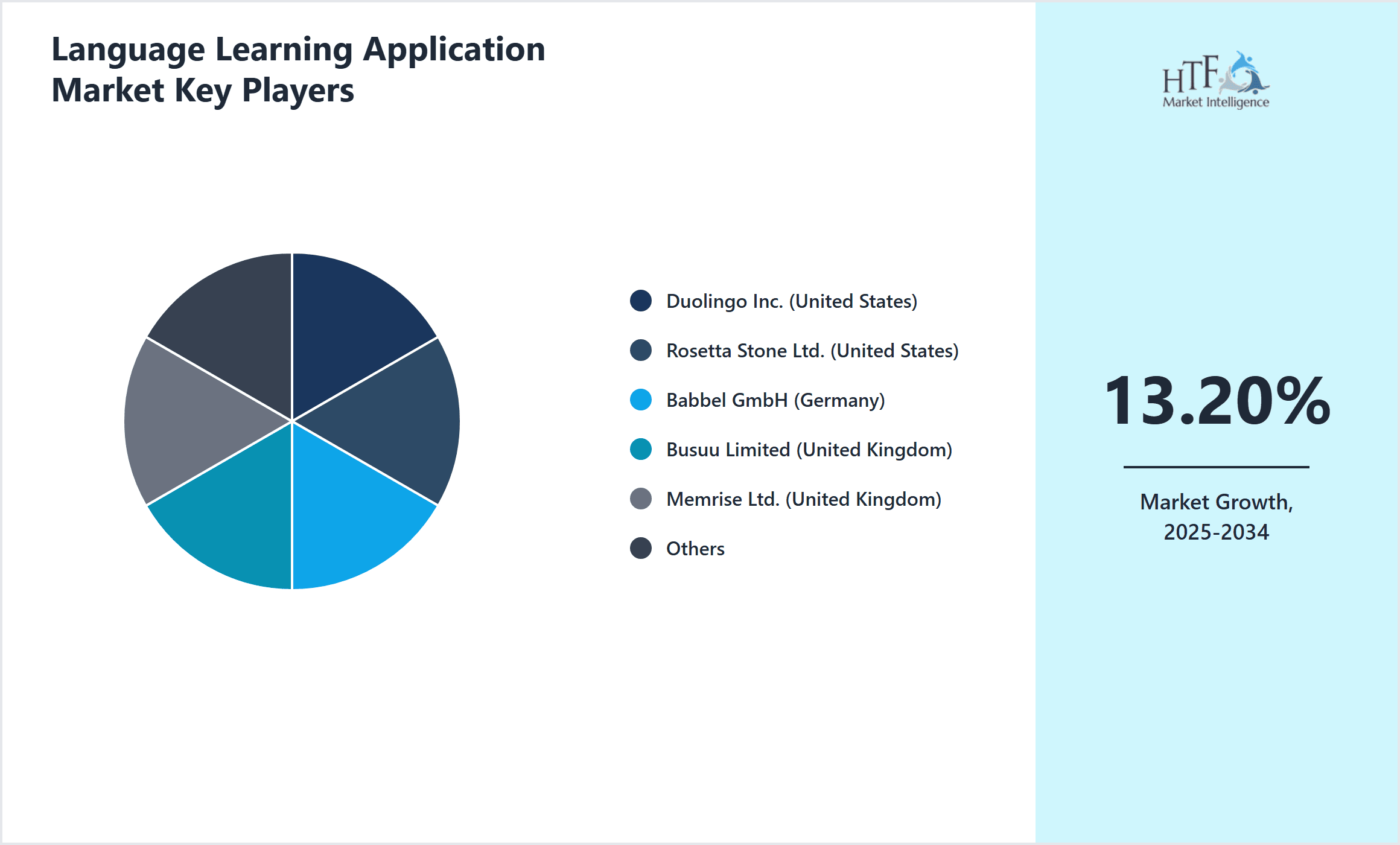
- •Duolingo Inc. (United States)
- •Rosetta Stone Ltd. (United States)
- •Babbel GmbH (Germany)
- •Busuu Limited (United Kingdom)
- •Memrise Ltd. (United Kingdom)
- •HelloTalk Co., Ltd. (China)
- •LingoDeer (Singapore)
- •Hello English (India)
- •Tandem (Germany)
- •Mondly (Romania)
- •LingQ (Canada)
- •Mango Languages (United States)
- •Lingodeer (Vietnam)
- •Yabla (Switzerland)
- •Beelinguapp (Germany)
- •Drops (Estonia)
- •EWA Technologies (Poland)
- •OpenLanguage (United States)
- •Pimsleur (United States)
- •Lingvist (Estonia)
- •Clozemaster (Iceland)
- •Simply Learn Languages (New Zealand)
- •Innovative Language Learning (United States)
- •LingualBox (Philippines)
- •Preply (Ukraine)
Market Breakdown
- •By Product Type
- ◦Mobile Applications
- ◦Web-Based Platforms
- ◦AI-Powered Tools
- ◦Gamified Applications
- ◦Virtual Reality Applications
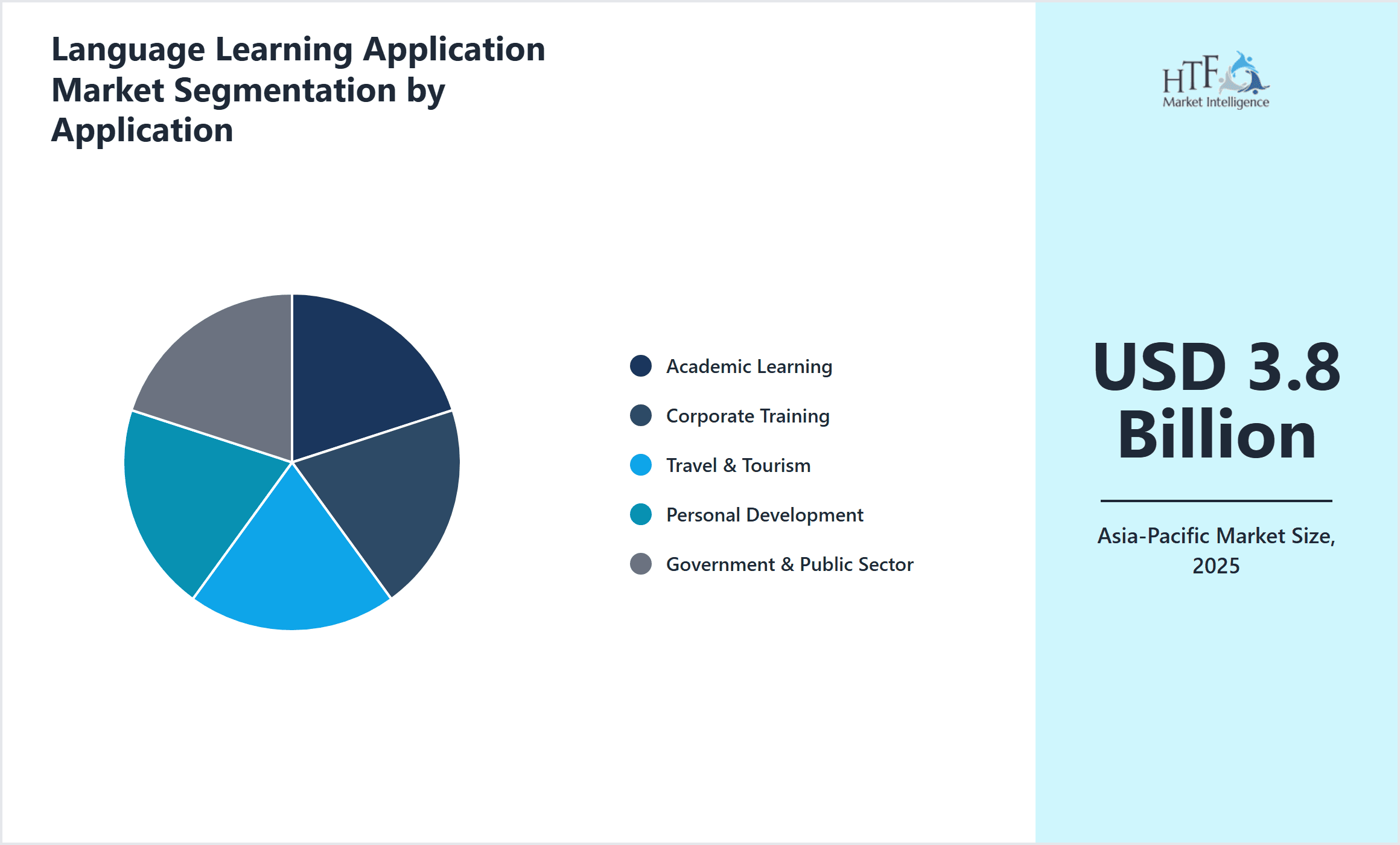
- •By Application
- ◦Academic Learning
- ◦Corporate Training
- ◦Travel & Tourism
- ◦Personal Development
- ◦Government & Public Sector
- •By End-Use Industry
- ◦Education
- ◦Corporate
- ◦Travel & Hospitality
- ◦Public Sector
- •By Distribution Channel
- ◦App Stores
- ◦Direct Enterprise Sales
- ◦Partnerships with Educational Institutions
Growth Dynamics
- •Rising smartphone penetration and increased internet accessibility across Asia-Pacific nations have substantially expanded the potential user base for language learning applications. This widespread digital adoption facilitates convenient access to language learning tools, significantly propelling market growth.
- •Advancements in artificial intelligence and machine learning enable the development of personalized, adaptive language learning experiences that cater to individual user needs, boosting engagement and learning efficiency, thereby driving market expansion.
- •The increasing globalization of businesses and the consequent demand for multilingual professionals encourage corporate investments in language training applications, fueling the demand for enterprise-oriented solutions within the region.
- •Government initiatives promoting digital literacy and language education, especially in emerging markets like India and Southeast Asia, provide regulatory and financial support that catalyze adoption of language learning technologies.
- •The rising trend of remote work and virtual collaboration across international borders has created a necessity for effective language communication tools, further expanding the market for language learning applications.
- •Integration of gamification techniques and virtual reality in learning apps enhances user motivation and retention, leading to increased usage and market penetration.
- •Strategic partnerships between language learning app providers and educational institutions or corporate organizations facilitate market penetration and broaden application scope.

Market Trends
- •The adoption of AI-powered chatbots and virtual tutors in language learning applications is becoming mainstream, providing users with real-time conversational practice and instant feedback, thereby improving language acquisition outcomes.
- •Gamification elements such as rewards, leaderboards, and interactive challenges are increasingly integrated into platforms to enhance learner engagement and motivation across diverse demographics.
- •The rise of hybrid learning models combining traditional classroom teaching with digital language apps reflects evolving educational paradigms, allowing for flexible and personalized learning experiences.
- •Mobile-first design approaches dominate app development in Asia-Pacific, catering to the high smartphone usage rates and enabling learning anytime, anywhere.
- •Collaborations between language learning platforms and content creators or cultural institutions help enrich content authenticity and relevance, attracting a wider audience.
- •Increasing focus on niche language markets, including regional and less commonly taught languages, addresses diverse user preferences and cultural preservation efforts.
- •Emerging technologies like augmented reality are beginning to supplement traditional language learning methods, offering immersive contextual experiences.
Market Opportunities
- •Expanding internet infrastructure and mobile device accessibility in developing Asia-Pacific countries open untapped markets for language learning applications, presenting substantial growth potential.
- •The increasing demand for English and other global languages in corporate and academic sectors creates opportunities for specialized and localized language learning content development.
- •Integration of emerging technologies such as AI and virtual reality into existing platforms offers avenues for innovation and differentiation in a competitive market.
- •Collaborations with educational institutions and government programs aimed at digital literacy and language skills enhancement generate new channels for market expansion.
- •Customization of language learning applications to regional languages and dialects can capture niche user bases and foster cultural inclusivity.
- •Corporate training and professional development segments show increasing willingness to invest in scalable language learning solutions, providing lucrative B2B market opportunities.
- •The growing trend of lifelong learning and self-improvement fuels demand for personal development language apps, encouraging product diversification.
Market Challenges
- •Language diversity across the Asia-Pacific region requires extensive localization efforts, increasing development time and costs for language learning applications.
- •Limited digital literacy in certain rural and underdeveloped areas hampers market penetration despite increasing internet access.
- •High competition with numerous free or low-cost language learning apps creates pricing pressure and challenges monetization strategies.
- •Data privacy concerns and regulatory compliance complexities in multiple countries pose operational challenges for app developers and providers.
- •Retention of users beyond initial engagement remains difficult due to varying learner motivation and the self-paced nature of digital learning.
- •Integration of advanced technologies like VR and AI requires significant investment and technical expertise, limiting adoption by smaller players.
- •Fragmented market with diverse linguistic and cultural needs complicates content standardization and scalability.
Regulatory Framework
- •Between 2020 and 2025, several Asia-Pacific countries implemented data protection regulations impacting language learning applications, mandating stringent user data privacy and security standards to comply with laws such as China’s Personal Information Protection Law (PIPL) and India’s proposed Personal Data Protection Bill.
- •Educational technology policies were introduced to promote digital learning infrastructure, with government programs in India and Australia incentivizing adoption of e-learning platforms, including language learning apps, through grants and subsidies.
- •Regulations addressing digital content localization have been enacted in countries like Japan and South Korea, requiring educational applications to provide content in native languages and adhere to cultural sensitivities, influencing app development and deployment strategies.
- •Compliance with accessibility standards, including provisions for learners with disabilities, has become mandatory in several jurisdictions, driving app developers to incorporate features such as screen readers and adjustable text sizes.
- •Governmental oversight on cross-border data flows and cloud storage has led to regional data hosting requirements, affecting operational models of multinational language learning application providers within Asia-Pacific.
Market Intelligence
- •15th February 2025, Duolingo Inc. launched an AI-driven personalized tutoring feature within its mobile app, designed to enhance conversational skills through real-time feedback and adaptive difficulty levels. This initiative targets the Asia-Pacific market's growing demand for customized learning experiences and aims to increase user retention and engagement metrics significantly. The feature leverages advanced natural language processing to simulate realistic dialogue scenarios, appealing to diverse linguistic groups across the region. Strategic marketing campaigns and partnerships with educational institutions in India and Southeast Asia support this rollout, positioning Duolingo as a leader in innovative language learning solutions. Source: Official Duolingo Press Release
- •30th March 2025, LingoDeer, headquartered in Singapore, introduced a virtual reality language immersion program catering to Japanese and Korean learners. The program utilizes immersive VR environments replicating real-world cultural contexts to improve language comprehension and verbal communication skills. This technological advancement is part of LingoDeer's strategy to differentiate itself in the competitive Asia-Pacific market and tap into the growing interest in immersive edtech solutions. Early pilot studies indicate enhanced learner motivation and language retention, with plans to expand content offerings and partnerships with VR hardware providers. Source: LingoDeer Official Website
- •10th May 2025, Hello English, a prominent language learning app in India, announced a strategic partnership with the Ministry of Education to integrate its platform into nationwide digital literacy programs. This collaboration aims to provide accessible English language training to millions of students and professionals in rural and semi-urban areas, leveraging governmental infrastructure and funding support. The initiative is expected to enhance digital inclusion and language proficiency, addressing critical skill gaps in the workforce. The partnership underscores the growing role of public-private collaborations in expanding the reach of language learning technologies in Asia-Pacific. Source: Ministry of Education India Press Release
- •Recent market developments and strategic initiatives are continuously tracked through industry publications, company announcements, and regulatory filings. For the most current information, stakeholders are advised to monitor official corporate communications and recognized market intelligence platforms.
Regional Outlook
The China currently holds a significant share of the market, primarily due to several key factors: increasing consumption rates, a burgeoning population, and robust economic momentum. These elements collectively drive demand, positioning this region as a leader in the market. On the other hand, India is rapidly emerging as the fastest-growing area within the industry. This remarkable growth can be attributed to swift infrastructure development, the expansion of various industrial sectors, and a marked increase in consumer demand. These dynamics make this region a crucial player in shaping future market growth.
In our report, we cover a comprehensive analysis of the following regions and countries:
- Japan
- China
- Southeast Asia
- India
- Australia
- South Korea
- Others
| Feature | Details |
|---|---|
| Base Year Market Size | USD 3.8 Billion |
| Forecast Year Market Size | USD 12.7 Billion |
| CAGR | 13.2% |
| Forecast Period | 2026 to 2033 |
| YoY Growth | 12.4% |
| Scope of Report | Market is segmented by Product Type (Mobile Applications, Web-Based Platforms, AI-Powered Tools, Gamified Applications, Virtual Reality Applications), Application (Academic Learning, Corporate Training, Travel & Tourism, Personal Development, Government & Public Sector), End-Use Industry (Education, Corporate, Travel & Hospitality, Public Sector), Distribution Channel (App Stores, Direct Enterprise Sales, Partnerships with Educational Institutions) |
| Regions Covered | Japan, China, Southeast Asia, India, Australia, South Korea, Others |
| Key Companies | Duolingo Inc. (United States), Rosetta Stone Ltd. (United States), Babbel GmbH (Germany), Busuu Limited (United Kingdom), Memrise Ltd. (United Kingdom), HelloTalk Co., Ltd. (China), LingoDeer (Singapore), Hello English (India), Tandem (Germany), Mondly (Romania), LingQ (Canada), Mango Languages (United States), Lingodeer (Vietnam), Yabla (Switzerland), Beelinguapp (Germany), Drops (Estonia), EWA Technologies (Poland), OpenLanguage (United States), Pimsleur (United States), Lingvist (Estonia), Clozemaster (Iceland), Simply Learn Languages (New Zealand), Innovative Language Learning (United States), LingualBox (Philippines), Preply (Ukraine) |
Asia-Pacific Language Learning Application Market Size, Growth & Revenue 2025-2034 - Table of Contents
Frequently Asked Questions (FAQ):
The Compact Track Loaders market is expected to see value worth 5.3 Billion in 2025.
North America currently leads the market with approximately 45% market share, followed by Europe at 28% and Asia-Pacific at 22%. The remaining regions account for 5% of the global market.
Key growth drivers include increasing construction activities, rising demand for versatile equipment in agriculture, technological advancements in track loader design, and growing preference for compact equipment in urban construction projects.