
Global Stress Management Supplements Market Size, Growth & Revenue 2024-2034
Global Stress Management Supplements Market is segmented by Product Type (Herbal Extracts, Vitamins & Minerals, Amino Acids, Adaptogens, Others), Application (Anxiety Relief, Sleep Aid, Mood Enhancement, Cognitive Support, Physical Relaxation), End-Use Industry (Pharmaceuticals, Nutraceuticals, Personal Care, Healthcare & Wellness), Distribution Channel (Online Retail, Pharmacies & Drug Stores, Health & Wellness Stores), and Geography (North America, LATAM, West Europe, Central & Eastern Europe, Northern Europe, Southern Europe, East Asia, Southeast Asia, South Asia, Central Asia, Oceania, MEA)
Pricing
Report Overview
Executive Summary
- •The global Stress Management Supplements market is a rapidly evolving sector focusing on products that aid in reducing stress, improving mood, enhancing sleep quality, and supporting cognitive functions. This market includes various product types such as herbal extracts, vitamins, minerals, amino acids, and adaptogens, which serve diverse applications like anxiety relief, sleep aid, and physical relaxation. Fueled by the rising global awareness of mental health and wellness, the market caters to a wide demographic seeking natural and scientifically backed alternatives to conventional pharmaceuticals. The industry is characterized by increasing innovation in formulation, expanding distribution networks, and heightened consumer demand for personalized health solutions. Furthermore, the market's scope extends across multiple regions, each contributing unique consumer behaviors and regulatory environments, thereby shaping the competitive landscape and growth trajectories. Stakeholders ranging from manufacturers to healthcare providers benefit from this dynamic market, which integrates holistic health approaches with emerging scientific insights.
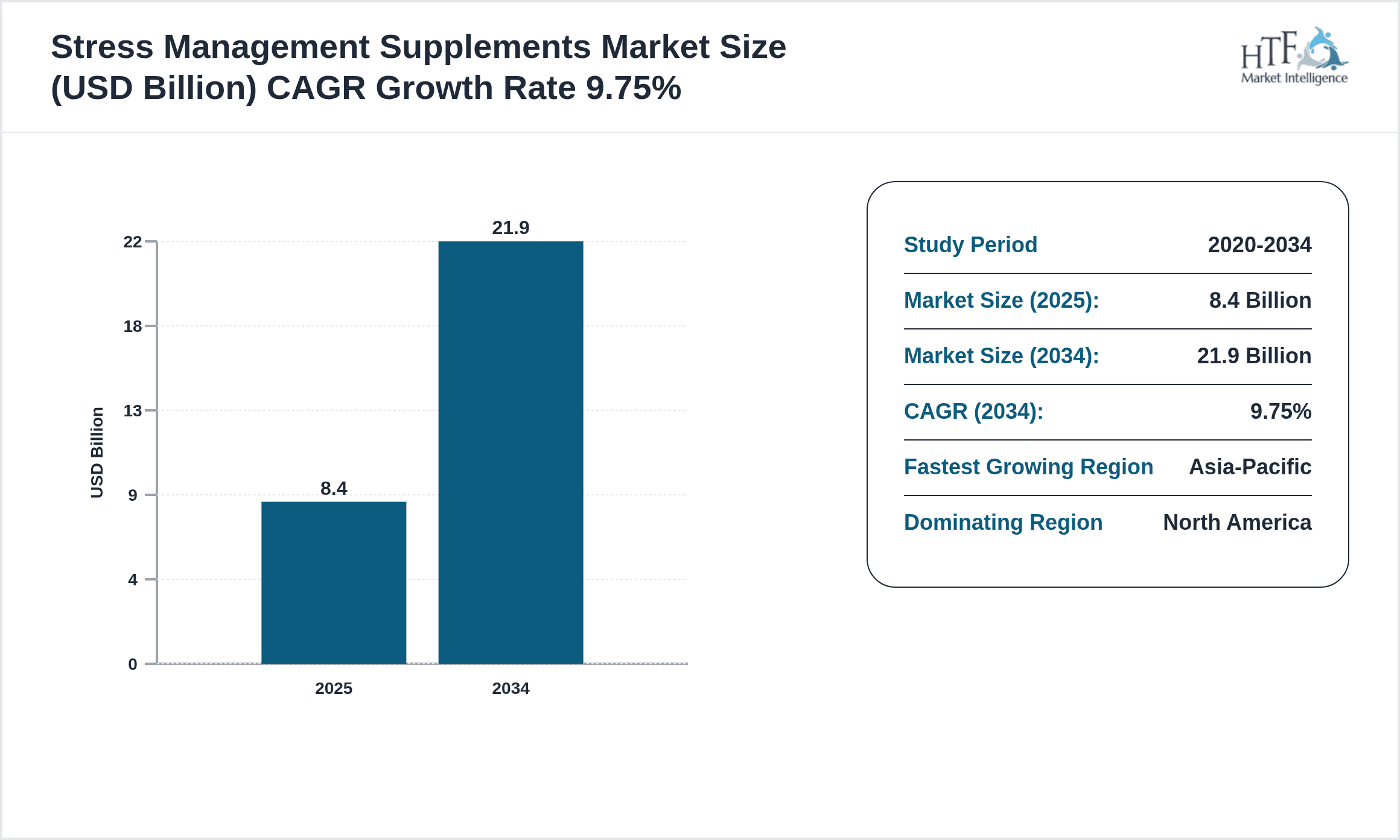
- •Significant market highlights include a projected CAGR of 9.75% from 2024 to 2034, with the market size expected to grow from USD 8.4 Billion in 2024 to USD 21.9 Billion by 2034. North America currently dominates the market due to high consumer awareness and established distribution channels, while Asia-Pacific is identified as the fastest-growing region driven by increasing health consciousness and expanding urban populations. Herbal extracts lead the product type segment, reflecting consumer preference for natural ingredients, whereas adaptogens are the fastest growing due to their rising prominence in stress relief formulations. Application-wise, anxiety relief remains the dominant segment, closely followed by sleep aid products, indicating a strong focus on mental health management. These trends underscore the market’s robust expansion potential and its strategic importance in the global wellness ecosystem.
- •The stress management supplements market holds strategic value for various industries including pharmaceuticals, nutraceuticals, and wellness sectors. It offers a value proposition centered on enhancing mental and physical health through accessible, non-pharmaceutical means, thus meeting the growing consumer demand for preventive health solutions. The market also supports healthcare providers by offering complementary treatment options for stress-related conditions. Moreover, ongoing research and development activities foster innovation, enabling companies to differentiate their product portfolios and gain competitive advantages. Investors and manufacturers benefit from expanding market opportunities fueled by technological advancements and shifting consumer preferences toward holistic health approaches. Overall, the market demonstrates a compelling convergence of health imperatives and commercial viability, positioning it as a critical segment in the global supplement landscape.
Competitive Landscape
The global Stress Management Supplements market is highly competitive with numerous multinational and regional players vying for market share. Competition is driven by innovation in product formulations, including the development of novel herbal blends and scientifically validated supplements targeting specific stress-related symptoms. Companies employ diverse strategies such as strategic partnerships, mergers and acquisitions, and expansive marketing campaigns to enhance their market presence. A significant focus on research and development enables firms to introduce differentiated products that meet evolving consumer demands and regulatory standards. Pricing strategies vary regionally to accommodate local purchasing power, while distribution channels are increasingly diversified to include e-commerce platforms alongside traditional retail. Market rivalry also revolves around brand loyalty, product efficacy, and transparency in ingredient sourcing. Emerging players capitalize on niche segments, while established companies leverage scale and global reach, fostering a dynamic and rapidly evolving competitive environment that continuously reshapes market positioning and growth prospects.
Leading Companies in Stress Management Supplements Market
- •Glanbia plc (Ireland)
- •Amway Corporation (United States)
- •Herbalife Nutrition Ltd. (United States)
- •NOW Foods (United States)
- •Nature's Bounty Co. (United States)
- •Swisse Wellness Pty Ltd. (Australia)
- •Himalaya Global Holdings Ltd. (India)
- •Natures Way Products, LLC (United States)
- •PharmaNutra S.p.A. (Italy)
- •Bayer AG (Germany)
- •GNC Holdings, Inc. (United States)
- •Blackmores Ltd. (Australia)
- •Nature's Sunshine Products, Inc. (United States)
- •Pfizer Inc. (United States)
- •USANA Health Sciences, Inc. (United States)
- •Solgar, Inc. (United States)
- •NutraScience Labs (United States)
- •Integrative Therapeutics, LLC (United States)
- •Sundown Naturals (United States)
- •MegaFood (United States)
- •Vitabiotics Ltd. (United Kingdom)
- •Jamieson Wellness Inc. (Canada)
- •Swanson Health Products (United States)
- •Mega Lifesciences Public Company Limited (Thailand)
- •Baebody (United States)
Market Breakdown
- •By Product Type
- ◦Herbal Extracts
- ◦Vitamins & Minerals
- ◦Amino Acids
- ◦Adaptogens
- ◦Others
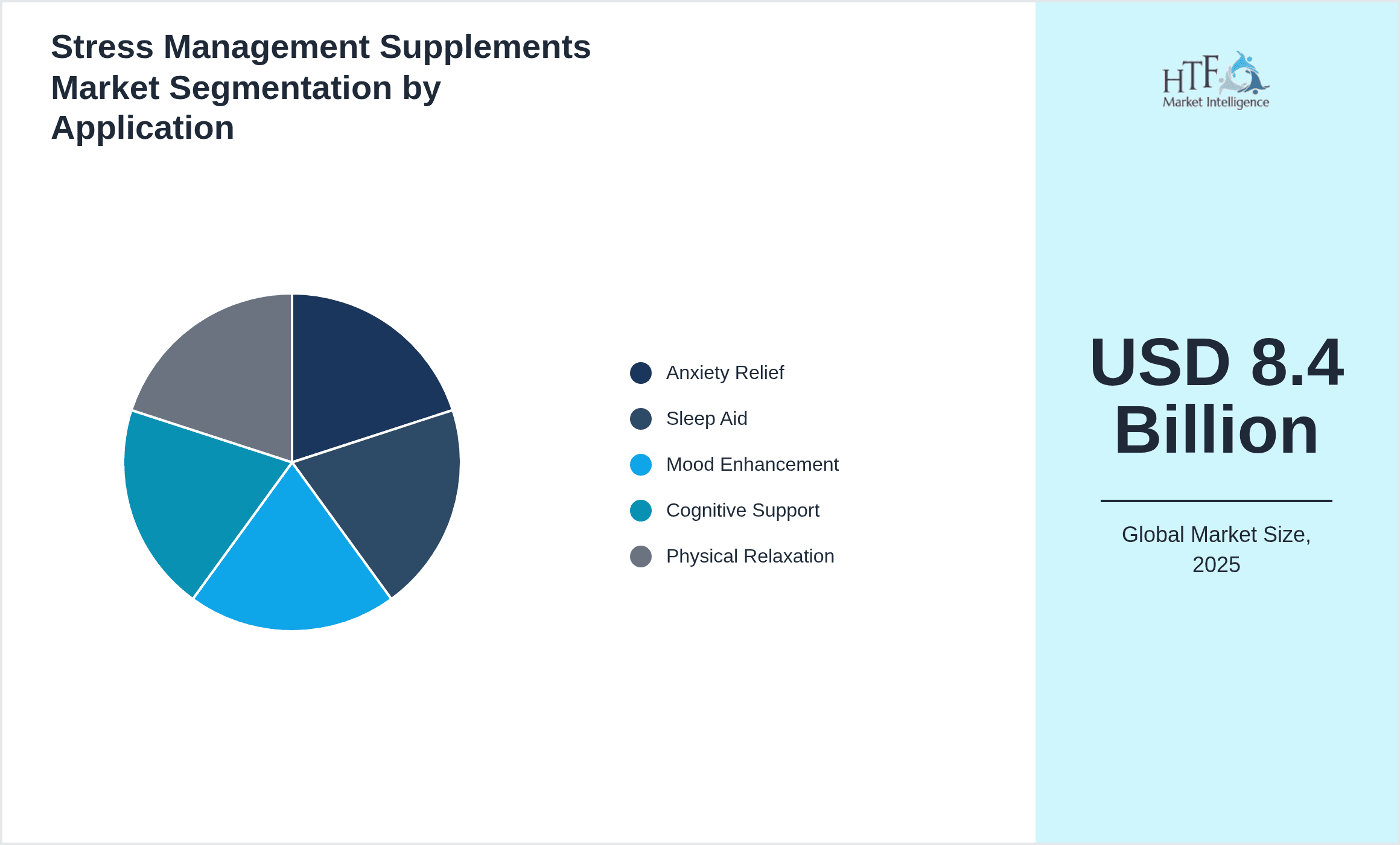
- •By Application
- ◦Anxiety Relief
- ◦Sleep Aid
- ◦Mood Enhancement
- ◦Cognitive Support
- ◦Physical Relaxation
- •By End-Use Industry
- ◦Pharmaceuticals
- ◦Nutraceuticals
- ◦Personal Care
- ◦Healthcare & Wellness
- •By Distribution Channel
- ◦Online Retail
- ◦Pharmacies & Drug Stores
- ◦Health & Wellness Stores
Growth Dynamics
- •Rising global awareness about mental health and wellness is a key growth driver, prompting consumers to seek natural stress relief options such as supplements. This shift towards preventive healthcare is accelerating demand across all regions.
- •Technological advancements in ingredient extraction and formulation have improved the efficacy and bioavailability of stress management supplements, enhancing consumer confidence and market penetration.
- •Expanding e-commerce platforms have significantly broadened market access, allowing manufacturers to reach a wider audience and offer personalized supplement solutions, boosting sales volume.
- •Rising incidences of stress-related disorders globally, exacerbated by urbanization and lifestyle changes, are compelling healthcare providers to recommend stress management supplements as adjunct therapies.
- •Government initiatives promoting natural and alternative medicine are providing regulatory support and funding to research, encouraging innovation and adoption in the stress supplements market.

Market Trends
- •There is a growing consumer preference for organic and plant-based supplements, leading to increased market share for products containing herbal extracts and adaptogens with proven efficacy.
- •Integration of digital health technologies, such as personalized nutrition apps and AI-driven wellness platforms, is shaping how consumers select and use stress management supplements.
- •Collaborations between supplement manufacturers and healthcare providers are becoming common, supporting clinical validation and boosting credibility of stress relief products.
- •Sustainability and ethical sourcing are influencing purchasing decisions, with companies adopting transparent supply chains and eco-friendly packaging to attract environmentally conscious consumers.
- •Emerging markets in Asia-Pacific and Latin America are witnessing rapid uptake due to increasing disposable incomes and rising health awareness, reshaping the global competitive landscape.
Market Opportunities
- •Developing novel adaptogenic formulations targeting younger demographics presents significant growth potential, capitalizing on trends of holistic self-care and mental wellness among millennials and Gen Z.
- •Expansion of online direct-to-consumer sales channels offers opportunities for personalized marketing and subscription-based models, enhancing customer retention and lifetime value.
- •Investing in clinical research to substantiate health claims can differentiate products in a crowded market, fostering regulatory approvals and consumer trust.
- •Geographical expansion into emerging regions with underserved markets offers high growth potential, especially with tailored products that align with local cultural preferences and health needs.
- •Strategic partnerships with wellness and fitness brands can create integrated health solutions, leveraging cross-industry synergies to boost brand visibility and market share.
Market Challenges
- •Stringent regulatory frameworks across regions pose challenges to product approvals, requiring extensive documentation and clinical evidence, which can delay market entry and increase costs.
- •High competition and market saturation in developed regions lead to price wars and reduced profitability, pressuring companies to innovate continuously to maintain margins.
- •Consumer skepticism regarding efficacy and safety of supplements necessitates transparent communication and education efforts, which can be resource-intensive for companies.
- •Supply chain disruptions, particularly in sourcing natural ingredients, impact product availability and pricing, posing risks to consistent market supply.
- •Rapidly changing consumer preferences require agile product development and marketing strategies, presenting operational challenges for traditional manufacturers.
Regulatory Framework
- •Between 2019 and 2024, multiple countries have implemented stricter labeling and safety requirements for dietary supplements, mandating detailed ingredient disclosures and evidence of product efficacy to ensure consumer safety.
- •The European Union introduced the Novel Food Regulation updates in 2021, affecting the approval process for new herbal ingredients used in stress management supplements, thereby increasing compliance costs for manufacturers.
- •In the United States, the FDA has enhanced post-market surveillance and enforcement actions against non-compliant products since 2020, emphasizing the importance of Good Manufacturing Practices (GMP) in the supplement industry.
- •Asia-Pacific countries like India and China have developed specific guidelines for traditional and herbal supplements, integrating modern regulatory approaches with traditional medicine frameworks, facilitating market access for local companies.
- •Government initiatives promoting natural health products, including tax incentives and research grants, have been introduced in various regions to support innovation and industry growth between 2019 and 2024.
Market Intelligence
- •15th January 2025, Glanbia plc launched a new line of adaptogen-based stress relief supplements targeting young adults, featuring scientifically backed ingredients such as Rhodiola rosea and Ashwagandha. The product launch aims to capture the growing millennial market seeking natural mental wellness solutions and is supported by a comprehensive digital marketing campaign to enhance brand visibility across North America and Europe. The launch aligns with Glanbia's strategic focus on expanding its nutraceutical portfolio in the stress management segment, leveraging advances in plant-based formulations to meet evolving consumer preferences. Source: Glanbia Official Press Release
- •10th March 2025, Herbalife Nutrition Ltd. introduced a cognitive support supplement enriched with vitamins, minerals, and amino acids designed to improve mental clarity and reduce stress-induced fatigue. The product incorporates cutting-edge delivery technology to enhance absorption and efficacy. Herbalife’s innovation reflects its commitment to addressing mental health challenges through scientifically validated nutraceuticals, targeting both Asian and Latin American markets where demand is surging. This launch is part of a broader strategic initiative to diversify product offerings and deepen market penetration. Source: Herbalife Corporate Announcement
- •28th February 2025, Bayer AG announced a strategic partnership with a leading biotech firm to develop next-generation herbal extract supplements aimed at stress and anxiety relief. The collaboration focuses on leveraging advanced extraction technologies and clinical trials to substantiate health claims, enhancing product credibility and regulatory compliance. Bayer’s move is expected to strengthen its position in the global stress management supplements market and accelerate innovation pipelines, reflecting an industry trend toward evidence-based natural health products. Source: Bayer Official News
- •20th April 2025, NOW Foods expanded its online retail presence by launching a direct-to-consumer platform offering personalized supplement subscriptions tailored to individual stress management needs. This digital transformation enhances customer engagement and retention by leveraging AI-driven assessments and customized product recommendations. NOW Foods’ initiative exemplifies the growing integration of technology in supplement marketing and distribution, aiming to capture a larger share of the expanding global wellness market. Source: NOW Foods Press Release
Regional Outlook
The North America currently holds a significant share of the market, primarily due to several key factors: increasing consumption rates, a burgeoning population, and robust economic momentum. These elements collectively drive demand, positioning this region as a leader in the market. On the other hand, Asia-Pacific is rapidly emerging as the fastest-growing area within the industry. This remarkable growth can be attributed to swift infrastructure development, the expansion of various industrial sectors, and a marked increase in consumer demand. These dynamics make this region a crucial player in shaping future market growth.
In our report, we cover a comprehensive analysis of the following regions and countries:
- North America
- LATAM
- West Europe
- Central & Eastern Europe
- Northern Europe
- Southern Europe
- East Asia
- Southeast Asia
- South Asia
- Central Asia
- Oceania
- MEA
| Feature | Details |
|---|---|
| Base Year Market Size | USD 8.4 Billion |
| Forecast Year Market Size | USD 21.9 Billion |
| CAGR | 9.75% |
| Forecast Period | 2026 to 2033 |
| YoY Growth | 9.34% |
| Scope of Report | Market is segmented by Product Type (Herbal Extracts, Vitamins & Minerals, Amino Acids, Adaptogens, Others), Application (Anxiety Relief, Sleep Aid, Mood Enhancement, Cognitive Support, Physical Relaxation), End-Use Industry (Pharmaceuticals, Nutraceuticals, Personal Care, Healthcare & Wellness), Distribution Channel (Online Retail, Pharmacies & Drug Stores, Health & Wellness Stores) |
| Regions Covered | North America, LATAM, West Europe, Central & Eastern Europe, Northern Europe, Southern Europe, East Asia, Southeast Asia, South Asia, Central Asia, Oceania, MEA |
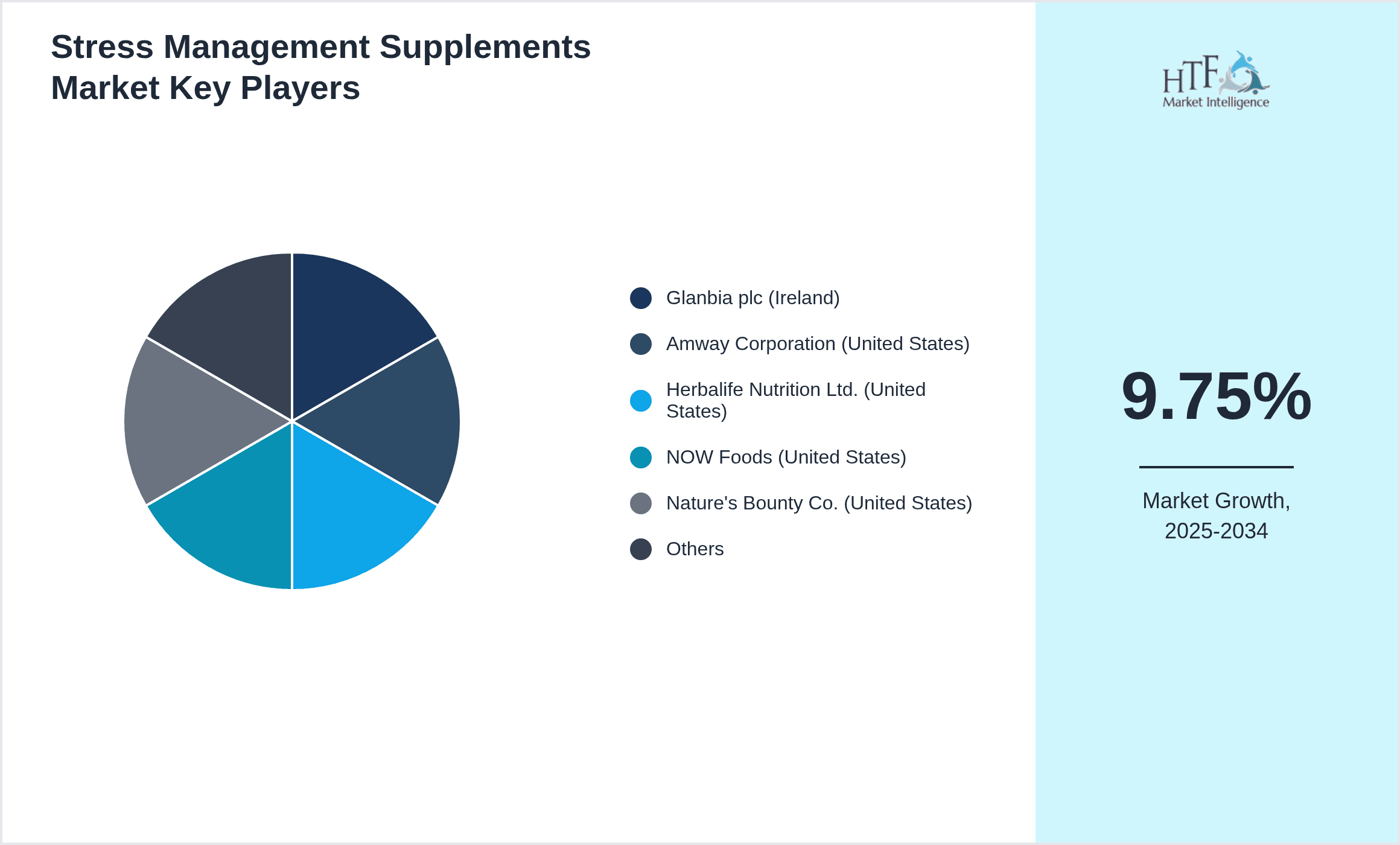
| Key Companies | Glanbia plc (Ireland), Amway Corporation (United States), Herbalife Nutrition Ltd. (United States), NOW Foods (United States), Nature's Bounty Co. (United States) |
Global Stress Management Supplements Market Size, Growth & Revenue 2024-2034 - Table of Contents
Research enthusiast focused on transforming data uncovering into actionable insights through data-driven decision-making.
Frequently Asked Questions (FAQ):
The Compact Track Loaders market is expected to see value worth 5.3 Billion in 2025.
North America currently leads the market with approximately 45% market share, followed by Europe at 28% and Asia-Pacific at 22%. The remaining regions account for 5% of the global market.
Key growth drivers include increasing construction activities, rising demand for versatile equipment in agriculture, technological advancements in track loader design, and growing preference for compact equipment in urban construction projects.