
Europe Automotive Power Window Motor Market - Outlook 2025-2034
Europe Automotive Power Window Motor Market is segmented by Type (Wound Rotor Motor, Brushless DC Motor, Stepper Motor, Permanent Magnet Motor, Series Motor), Application (Passenger Cars, Commercial Vehicles, Electric Vehicles, Luxury Vehicles, Aftermarket), End-Use Industry (Automotive OEMs, Aftermarket Service Providers, Electric Vehicle Manufacturers, Commercial Vehicle Manufacturers), Distribution Channel (Original Equipment Manufacturer (OEM), Aftermarket Dealers, Direct Sales), and Geography (Germany, France, The United Kingdom, BeNeLux, Spain, Italy, NORDIC, CEE, Others)
Pricing
Report Overview
Executive Summary
- •The Europe Automotive Power Window Motor market focuses on the design, production, and distribution of electric motors used to automate vehicle window operations across multiple vehicle categories including passenger cars, commercial vehicles, electric vehicles, and luxury segments. The product scope includes diverse motor types such as wound rotor motors, brushless DC motors, stepper motors, permanent magnet motors, and series motors, which differ in design, efficiency, and operational characteristics. This market is vital due to rising consumer demand for enhanced vehicle comfort, safety, and automation features. The market covers major European automotive hubs including Germany, France, the United Kingdom, Italy, and Spain. Technological advancements in motor efficiency, noise reduction, and integration with vehicle electronic control systems contribute to the market’s growth. Additionally, the aftermarket segment remains crucial for vehicle maintenance and upgrades. Increasing automotive production volumes and the rising penetration of electric and luxury vehicles drive consistent demand, making this market an essential component of Europe’s automotive industry ecosystem.
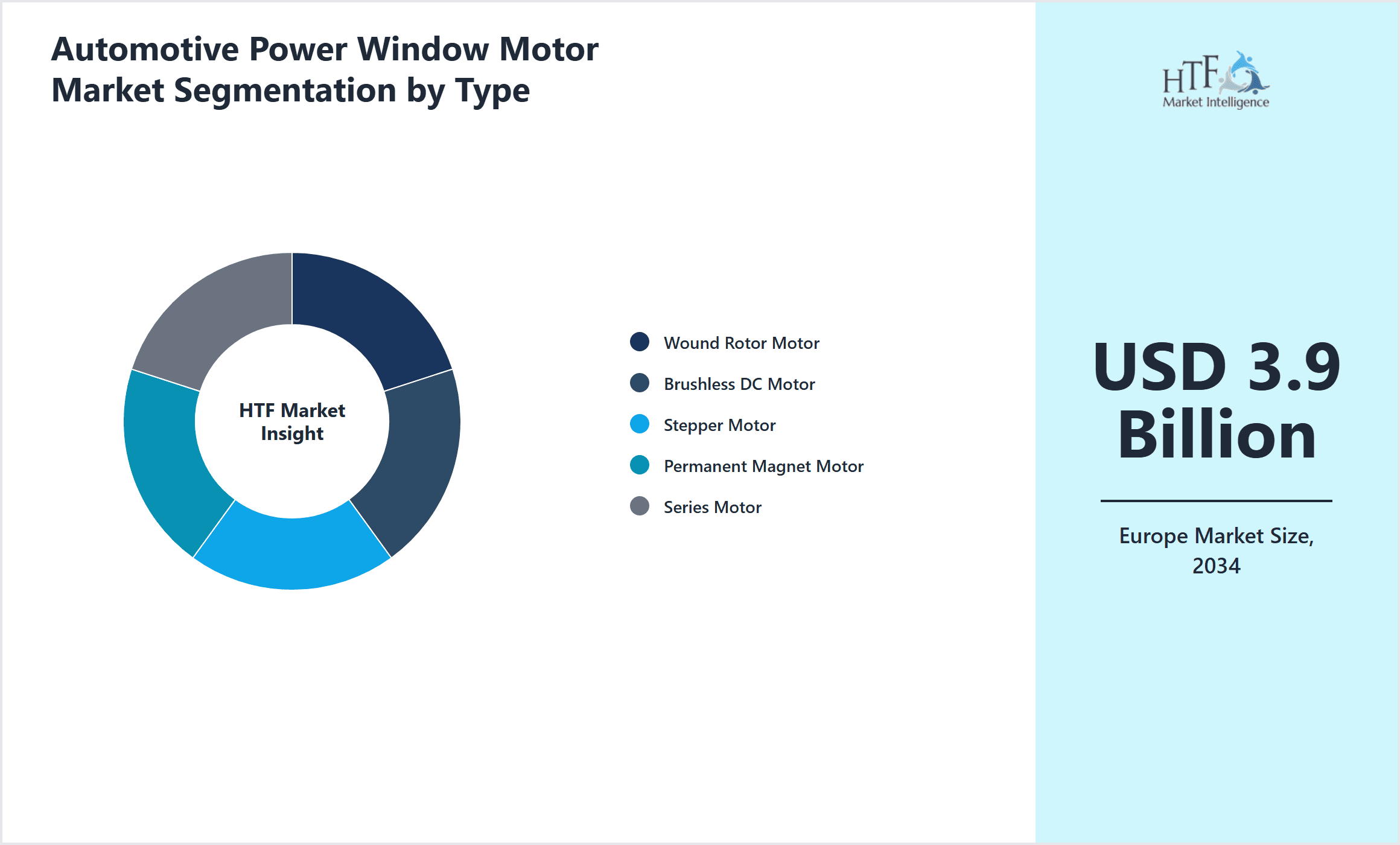
- •Key market highlights for 2025-2034 include a base market size of USD 1.8 Billion in 2025 growing to USD 3.9 Billion by 2034 at a CAGR of 8.7%. The Brushless DC Motor segment leads product type adoption driven by superior efficiency and reliability, while Permanent Magnet Motors exhibit the fastest growth rate due to technological advancements. Germany dominates the market with the largest share attributed to its strong automotive manufacturing base, followed by France and the United Kingdom. Italy represents the fastest growing regional market driven by increasing automotive electrification efforts. Passenger cars remain the dominant application segment, benefiting from rising vehicle production and preference for automated features. Commercial and electric vehicles contribute to steady growth as well. Year-over-year growth averages 8.4%, reflecting robust demand and ongoing innovation within the European automotive sector.
- •The market offers significant value propositions to OEMs, suppliers, and aftermarket service providers by enabling enhanced vehicle safety, convenience, and energy efficiency. Strategic importance arises from the integration of advanced motor technologies that contribute to vehicle electrification and automation trends. Companies participating in this market benefit from increasing regulatory support for vehicle emissions reduction and noise control, necessitating efficient motor solutions. The market also presents opportunities for innovation in lightweight materials, compact motor designs, and digital control integration, facilitating sustainable automotive design. Stakeholders leverage the market’s growth to expand product portfolios, enhance regional footprints, and foster technological partnerships, thus reinforcing competitiveness in the evolving European automotive landscape.

Competitive Landscape
Companies operating in the Europe Automotive Power Window Motor market pursue diverse strategies to sustain and expand their market presence. Partnerships with automotive OEMs enable tailored motor designs that meet stringent vehicle integration requirements and regulatory standards. Global expansion efforts focus on establishing manufacturing facilities and distribution networks across key European countries to optimize supply chain efficiencies and customer responsiveness. Continuous product innovation prioritizes advancements in motor efficiency, noise reduction, and electronic control compatibility, enhancing vehicle performance and user experience. Technological adoption includes incorporation of lightweight materials, brushless designs, and permanent magnet technologies to improve durability and energy consumption. Strategic mergers and acquisitions facilitate consolidation, broaden product portfolios, and enhance technological capabilities. Companies emphasize cost optimization and quality assurance to maintain competitive pricing and reliability. Overall, the competitive environment is characterized by a blend of innovation, strategic collaborations, and regional market penetration aimed at capturing growing demand within Europe’s automotive sector.
Key Players in Automotive Power Window Motor Market
- •Bosch (Germany)
- •Valeo (France)
- •Magneti Marelli (Italy)
- •Denso Corporation (Japan)
- •Johnson Electric (Switzerland)
- •Mitsuba Corporation (Japan)
- •Continental AG (Germany)
- •Nidec Corporation (Japan)
- •Schaeffler Group (Germany)
- •Brose Fahrzeugteile (Germany)
- •Hitachi Automotive Systems (Japan)
- •ZF Friedrichshafen (Germany)
- •Sanden Holdings Corporation (Japan)
- •Marelli (Italy)
- •Lucas Automotive (United Kingdom)
- •SKF (Sweden)
- •WABCO Holdings (Belgium)
- •Robert Bosch Automotive Steering GmbH (Germany)
- •Valeo Siemens eAutomotive (France)
- •Continental Automotive GmbH (Germany)

Market Breakdown
- •By Type
- ◦Wound Rotor Motor
- ◦Brushless DC Motor
- ◦Stepper Motor
- ◦Permanent Magnet Motor
- ◦Series Motor
- •By Application
- ◦Passenger Cars
- ◦Commercial Vehicles
- ◦Electric Vehicles
- ◦Luxury Vehicles
- ◦Aftermarket
- •By End-Use Industry
- ◦Automotive OEMs
- ◦Aftermarket Service Providers
- ◦Electric Vehicle Manufacturers
- ◦Commercial Vehicle Manufacturers
- •By Distribution Channel
- ◦Original Equipment Manufacturer (OEM)
- ◦Aftermarket Dealers
- ◦Direct Sales
Growth Dynamics
Rising automotive production in Europe, especially in Germany, France, and Italy, contributes to increased demand for automotive power window motors. The transition towards electric and luxury vehicles equipped with advanced motor systems further stimulates market expansion. Recent investments by key players like Bosch and Valeo in motor technology innovation bolster efficiency and noise reduction, addressing consumer preferences for comfort and reliability. Regulatory mandates targeting vehicle safety and emission reduction encourage adoption of energy-efficient motor types such as Brushless DC Motors. The automotive aftermarket segment also experiences growth driven by vehicle aging and replacement cycles. Strategic partnerships between motor manufacturers and OEMs facilitate customized solutions enhancing product integration and performance. Additionally, the expansion of electric vehicle production lines across Europe accelerates demand for advanced motor technologies, reflecting industry efforts towards sustainability and electrification.
Market Trends
The Europe Automotive Power Window Motor market embraces trends such as increased integration of permanent magnet motors, which offer higher efficiency and compact design, aligning with vehicle electrification trends. Adoption of brushless DC motor technology grows due to its advantages in noise reduction and durability, which enhance passenger comfort and vehicle reliability. Digitalization in vehicle control systems enables smart motor management, supporting features like auto-reverse and anti-pinch functionalities. Sustainability trends drive manufacturers to develop lightweight motor components and recyclable materials to reduce overall vehicle weight and environmental impact. Collaboration between automotive OEMs and motor manufacturers fosters innovation in motor design tailored for electric and luxury vehicles. Furthermore, the aftermarket segment increasingly leverages e-commerce platforms for distribution, expanding market accessibility. Continuous advancements in motor control electronics and materials science promise further enhancements in power window motor performance and energy efficiency.

Market Opportunities
The Europe Automotive Power Window Motor market holds significant growth opportunities driven by the expanding electric vehicle segment that demands advanced, energy-efficient motor technologies. Innovations in permanent magnet and brushless DC motors provide avenues for differentiation and performance enhancement. Geographic expansion into emerging European markets with growing automotive manufacturing capabilities presents untapped potential. The aftermarket sector offers opportunities for aftermarket motor replacements and upgrades, especially as the existing vehicle fleet ages. Collaborations with automotive OEMs for customized motor solutions enable companies to capture high-value contracts. Integration of IoT-enabled motor control systems opens new possibilities for smart vehicle applications, enhancing user convenience and safety. Government incentives promoting electric mobility and stringent regulations on vehicle emissions further support market penetration of advanced motor types. Investment in research and development focusing on lightweight materials and sustainable manufacturing processes aligns with evolving industry priorities, fostering long-term growth.
Market Challenges
The Europe Automotive Power Window Motor market faces challenges including high production costs associated with advanced motor technologies such as permanent magnet motors, which affect pricing competitiveness. Supply chain disruptions in raw materials like rare earth elements used in motor magnets lead to volatility and production delays. Regulatory compliance across multiple European countries requires continuous adaptation and investment in product certification and testing. Intense competition from low-cost manufacturers outside Europe pressures European companies to optimize cost structures without compromising quality. Integration of complex electronic control systems increases development time and necessitates specialized technical expertise. Additionally, fluctuating demand due to economic uncertainties impacts production planning and inventory management. Recent news highlights disruptions in semiconductor supply chains affecting motor controller availability, posing risks to timely product delivery. Addressing these challenges requires strategic sourcing, innovation in material alternatives, and strengthening partnerships across the supply chain.
Regulatory Framework
Over the period from 2020 to 2025, Europe has enacted several key regulations impacting the automotive power window motor market. The EU’s General Safety Regulation mandates enhanced vehicle safety features, including requirements for anti-pinch and auto-reverse functions in power window systems, driving adoption of advanced motor technologies. The Restriction of Hazardous Substances (RoHS) Directive limits the use of hazardous materials in motor manufacturing, encouraging environmentally friendly designs. The European Commission’s Circular Economy Action Plan promotes recycling and sustainability in automotive components, influencing motor material selection and production processes. Additionally, the EU’s End-of-Life Vehicles Directive enforces proper disposal and recycling of automotive parts, affecting aftermarket and replacement motor markets. Compliance with these regulations requires manufacturers to invest in product testing, certification, and adoption of sustainable practices, thereby shaping product development and market dynamics in Europe.
Market Intelligence
- •Recent market developments and strategic initiatives are continuously tracked through industry publications, company announcements, and regulatory filings. For the most current information, stakeholders are advised to monitor official corporate communications and recognized market intelligence platforms.
- •Recent market developments and strategic initiatives are continuously tracked through industry publications, company announcements, and regulatory filings. For the most current information, stakeholders are advised to monitor official corporate communications and recognized market intelligence platforms.
- •Recent market developments and strategic initiatives are continuously tracked through industry publications, company announcements, and regulatory filings. For the most current information, stakeholders are advised to monitor official corporate communications and recognized market intelligence platforms.
- •Recent market developments and strategic initiatives are continuously tracked through industry publications, company announcements, and regulatory filings. For the most current information, stakeholders are advised to monitor official corporate communications and recognized market intelligence platforms.
- •Source: Industry publications, company announcements, regulatory filings
Regional Outlook
The Germany currently holds a significant share of the market, primarily due to several key factors: increasing consumption rates, a burgeoning population, and robust economic momentum. These elements collectively drive demand, positioning this region as a leader in the market. On the other hand, Italy is rapidly emerging as the fastest-growing area within the industry. This remarkable growth can be attributed to swift infrastructure development, the expansion of various industrial sectors, and a marked increase in consumer demand. These dynamics make this region a crucial player in shaping future market growth.
In our report, we cover a comprehensive analysis of the following regions and countries:
- Germany
- France
- The United Kingdom
- BeNeLux
- Spain
- Italy
- NORDIC
- CEE
- Others
| Feature | Details |
|---|---|
| Base Year Market Size | USD 1.8 Billion |
| Forecast Year Market Size | USD 3.9 Billion |
| CAGR | 8.7% |
| Forecast Period | 2026 to 2033 |
| YoY Growth | 8.4% |
| Scope of Report | Market is segmented by Type (Wound Rotor Motor, Brushless DC Motor, Stepper Motor, Permanent Magnet Motor, Series Motor), Application (Passenger Cars, Commercial Vehicles, Electric Vehicles, Luxury Vehicles, Aftermarket), End-Use Industry (Automotive OEMs, Aftermarket Service Providers, Electric Vehicle Manufacturers, Commercial Vehicle Manufacturers), Distribution Channel (Original Equipment Manufacturer (OEM), Aftermarket Dealers, Direct Sales) |
| Regions Covered | Germany, France, The United Kingdom, BeNeLux, Spain, Italy, NORDIC, CEE, Others |
| Key Companies | Bosch (Germany), Valeo (France), Magneti Marelli (Italy), Denso Corporation (Japan), Johnson Electric (Switzerland), Mitsuba Corporation (Japan), Continental AG (Germany), Nidec Corporation (Japan), Schaeffler Group (Germany), Brose Fahrzeugteile (Germany), Hitachi Automotive Systems (Japan), ZF Friedrichshafen (Germany), Sanden Holdings Corporation (Japan), Marelli (Italy), Lucas Automotive (United Kingdom), SKF (Sweden), WABCO Holdings (Belgium), Robert Bosch Automotive Steering GmbH (Germany), Valeo Siemens eAutomotive (France), Continental Automotive GmbH (Germany) |
Europe Automotive Power Window Motor Market - Outlook 2025-2034 - Table of Contents
Frequently Asked Questions (FAQ):
The Compact Track Loaders market is expected to see value worth 5.3 Billion in 2025.
North America currently leads the market with approximately 45% market share, followed by Europe at 28% and Asia-Pacific at 22%. The remaining regions account for 5% of the global market.
Key growth drivers include increasing construction activities, rising demand for versatile equipment in agriculture, technological advancements in track loader design, and growing preference for compact equipment in urban construction projects.