
Europe Polypropylene Synthetic Rope Market - Outlook 2025-2034
Europe Polypropylene Synthetic Rope Market is segmented by Type (Monofilament Polypropylene Rope, Multifilament Polypropylene Rope, Braided Polypropylene Rope, Twisted Polypropylene Rope, Hollow Braid Polypropylene Rope), Application (Marine, Industrial, Construction, Agriculture, Sports), End-Use Industry (Shipping and Ports, Oil & Gas, Agricultural Operations, Infrastructure & Construction), Distribution Channel (Direct Sales, Distributors/Dealers, E-commerce Platforms), and Geography (Germany, France, The United Kingdom, BeNeLux, Spain, Italy, NORDIC, CEE, Others)
Pricing
Report Overview
Executive Summary
- •The Europe Polypropylene Synthetic Rope market captures the production and application of polypropylene-based ropes utilized extensively in marine, industrial, construction, agriculture, and sports sectors. This market's scope includes diverse rope types such as monofilament, multifilament, braided, twisted, and hollow braid varieties, each tailored to specific strength, flexibility, and durability requirements. Polypropylene ropes are favored for their lightweight, chemical resistance, and cost efficiency, enabling critical applications like mooring, cargo securing, lifting operations, and agricultural binding. Europe's expanding maritime activities, construction projects, and industrial growth drive the demand and innovation within this market, while technological advances in fiber processing enhance product performance. The market is also influenced by evolving regulations and sustainability concerns, shaping industry standards. This report delivers a holistic overview of market dynamics, key players, segmentation, and growth prospects specific to the European region, providing strategic insights to stakeholders and investors.
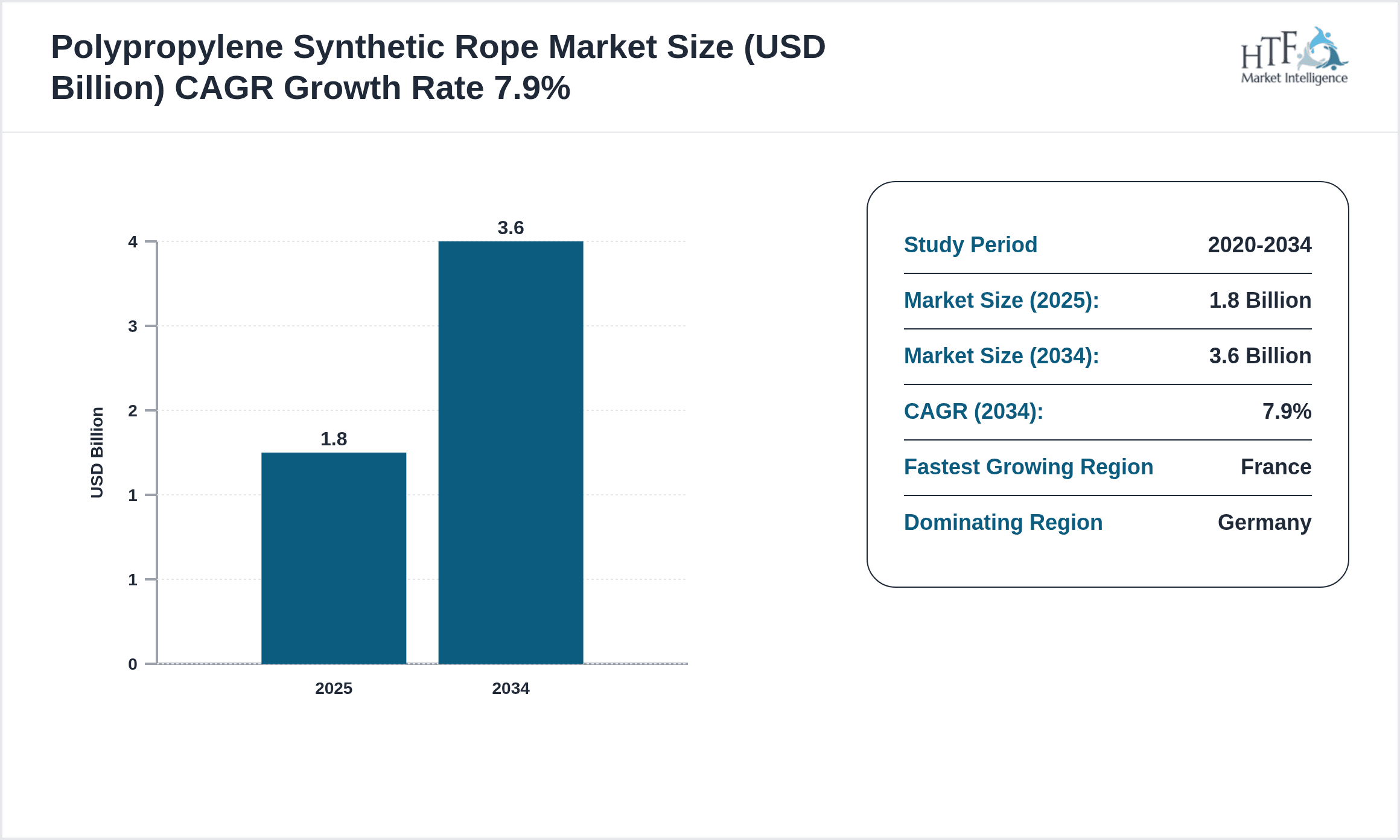
- •The Europe polypropylene synthetic rope market is poised to grow from USD 1.8 billion in 2025 to USD 3.6 billion by 2034, reflecting a compound annual growth rate of 7.9%. Dominated by Germany due to its strong industrial and maritime sectors, the market also sees France as the fastest-growing country fueled by infrastructure investments. Multifilament ropes currently lead in market share owing to their balance of strength and flexibility, while braided ropes show the highest growth rate due to increasing demand for durability in heavy-duty applications. Marine and industrial applications constitute the largest segments, accounting for the majority of consumption. The market benefits from rising infrastructural developments, expanding shipping activities, and advancements in polymer technology that improve product longevity and performance.
- •Polypropylene synthetic ropes hold a significant value proposition in Europe by enabling lightweight, corrosion-resistant solutions essential for marine, construction, and industrial operations. Their cost efficiency combined with high tensile strength supports operational safety and efficiency, reducing maintenance costs and downtime. The market's strategic importance is underscored by Europe's extensive coastline, leading shipping hubs, and robust construction industry. Innovation in rope design and fiber technology further enhances their applicability in emerging sectors such as offshore wind energy and sports equipment. These factors collectively position polypropylene synthetic ropes as indispensable components within Europe's industrial infrastructure, driving sustained investment and market expansion.
Competitive Landscape
Companies operating within the Europe polypropylene synthetic rope market adopt multifaceted strategies to maintain and enhance market presence. Product innovation remains central, with firms investing in advanced fiber treatments and weaving technologies to improve durability, UV resistance, and load capacity. Collaborations and strategic partnerships with distributors and end-users facilitate customized solutions targeting niche applications, particularly in marine and industrial sectors. Global expansion efforts focus on leveraging Europe's strong maritime and construction sectors while exploring adjacent markets. Technological adoption includes automation in manufacturing processes and digital inventory management to optimize supply chains. Additionally, companies emphasize sustainability by developing recyclable and environmentally friendly rope variants to align with tightening environmental regulations. Competitive pricing strategies coupled with quality certifications help firms differentiate in a market characterized by rising raw material costs and fluctuating demand. Overall, these strategies foster resilience, market adaptability, and long-term growth within the European polypropylene synthetic rope industry.
Key Participants in Polypropylene Synthetic Rope Market
- •Teufelberger Group (Austria)
- •Bridon-Bekaert The Ropes Group (United Kingdom)
- •Samson Rope Technologies (Germany)
- •Cortland Europe (Netherlands)
- •Marlow Ropes (United Kingdom)
- •Lankhorst Ropes Group (Netherlands)
- •Trelleborg AB (Sweden)
- •WireCo WorldGroup (United Kingdom)
- •Gurit Holding AG (Switzerland)
- •Austral Rope (United Kingdom)
- •Marlow Ropes (Germany)
- •PolyRope Europe (France)
- •Samson AG (Germany)
- •JDR Cable Systems (United Kingdom)
- •Rope Services Limited (United Kingdom)
- •Bexco Industrial (France)
- •Cordage Institute Europe (Belgium)
- •Sava Ropes (Slovenia)
- •Juta a.s. (Czech Republic)
- •Lloyds Ropes (United Kingdom)
Market Breakdown
- •By Type
- ◦Monofilament Polypropylene Rope
- ◦Multifilament Polypropylene Rope
- ◦Braided Polypropylene Rope
- ◦Twisted Polypropylene Rope
- ◦Hollow Braid Polypropylene Rope
- •By Application
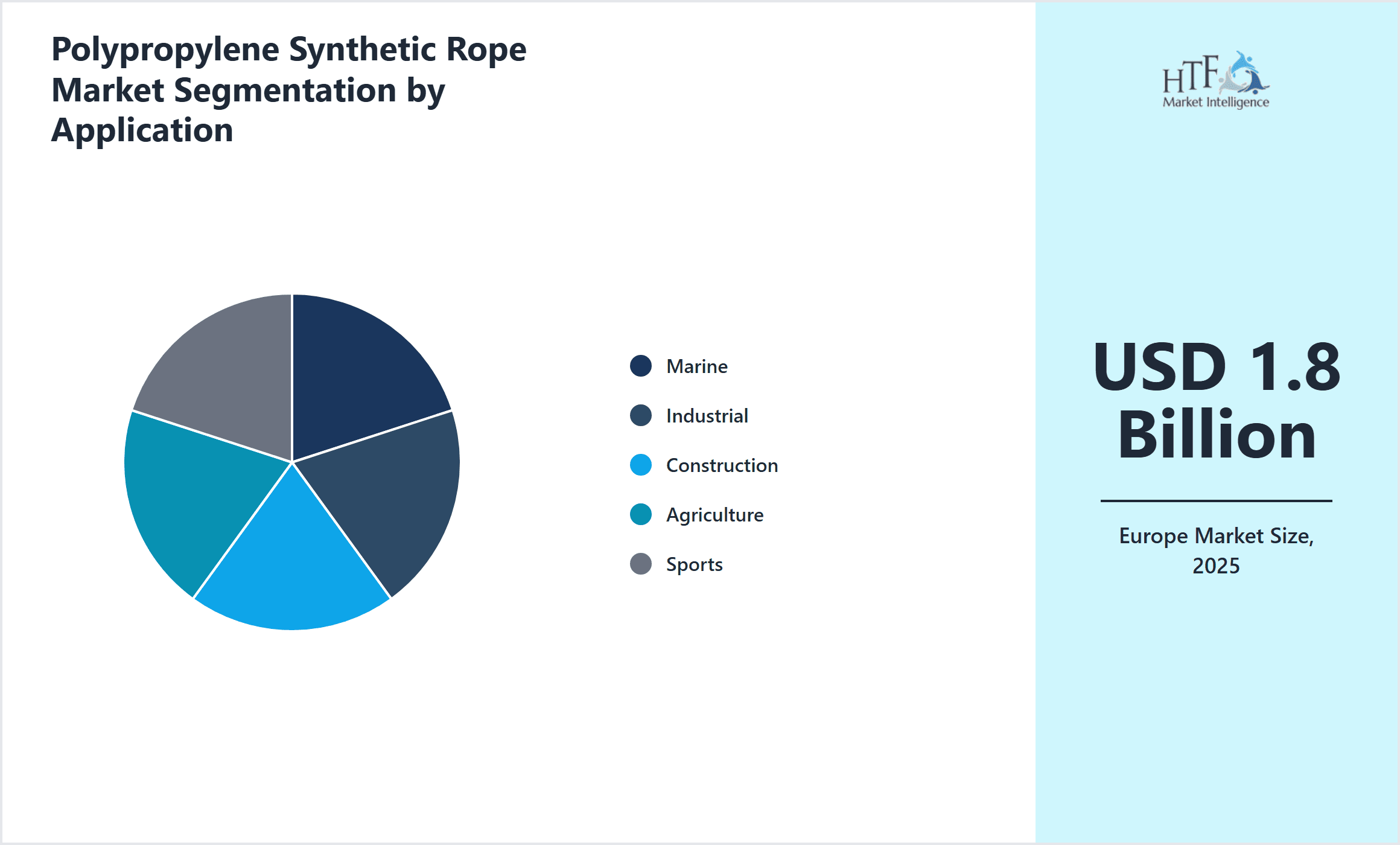
- ◦Marine
- ◦Industrial
- ◦Construction
- ◦Agriculture
- ◦Sports
- •By End-Use Industry
- ◦Shipping and Ports
- ◦Oil & Gas
- ◦Agricultural Operations
- ◦Infrastructure & Construction
- •By Distribution Channel
- ◦Direct Sales
- ◦Distributors/Dealers
- ◦E-commerce Platforms
Growth Dynamics
The Europe polypropylene synthetic rope market experiences growth enabled by expanding maritime trade, particularly in ports across Germany and the United Kingdom, where demand for durable mooring and towing ropes rises steadily. Industrial automation and infrastructure projects in France and Spain increase the need for high-strength ropes used in lifting and securing applications. Recent advancements in fiber technology improve resistance to abrasion, UV exposure, and chemicals, extending rope lifespan and reducing maintenance costs, thereby accelerating adoption. Environmental regulations promote sustainable product development, encouraging manufacturers to innovate recyclable and eco-friendly polypropylene ropes. The agricultural sector’s mechanization across Eastern Europe increases reliance on synthetic ropes for baling and securing produce. Strategic partnerships between rope manufacturers and key end-users foster customized solutions meeting specific operational requirements, driving deeper market penetration. Additionally, growing awareness about safety standards in construction and oil & gas sectors incentivizes the use of certified polypropylene ropes, underpinning robust market growth through 2034.

Market Trends
Europe’s polypropylene synthetic rope market exhibits a trend toward integration of smart technologies such as embedded sensors for real-time monitoring of rope tension, wear, and environmental exposure. This innovation enhances safety and operational efficiency, particularly in marine and industrial applications. Increasing demand for braided rope types reflects their superior durability and flexibility, supporting heavy-duty uses in offshore wind farms and port operations. Sustainability gains prominence as manufacturers adopt bio-based polypropylene fibers and recyclable rope designs to reduce environmental impact. Digital transformation in supply chains and e-commerce platforms facilitates faster procurement and inventory management, expanding market accessibility. Collaborative initiatives between manufacturers and research institutes accelerate development of high-performance fibers resistant to extreme weather conditions. The rise of urban infrastructure projects across Europe fuels demand for synthetic ropes in construction hoisting and securing applications. Collectively, these trends shape a technologically advanced, eco-conscious, and customer-oriented market landscape poised for sustained expansion.
Market Opportunities
The Europe polypropylene synthetic rope market presents significant opportunities in the offshore renewable energy sector, especially offshore wind farms requiring durable, lightweight mooring and lifting ropes able to withstand harsh marine environments. Expansion of port infrastructure and logistics hubs across countries such as Germany and the Netherlands opens avenues for specialized rope applications in cargo handling and ship mooring. Opportunities also arise from increasing adoption of eco-friendly, recyclable polypropylene fibers aligning with Europe’s stringent environmental regulations and circular economy goals. Growth in agricultural mechanization in Eastern European countries creates demand for robust baling and securing ropes. Additionally, the rise in adventure and water sports activities across Southern Europe drives demand for high-performance, abrasion-resistant ropes. Strategic investment in research and development to enhance rope strength and longevity offers manufacturers differentiation potential. Digital sales channels represent untapped avenues for market penetration, enabling direct-to-customer models and customized product offerings, collectively expanding the market’s growth horizon.
Market Challenges
The Europe polypropylene synthetic rope market faces challenges including raw material price volatility, particularly fluctuations in polypropylene resin costs due to global supply chain disruptions and energy price increases. Stringent environmental regulations impose compliance costs and necessitate investment in sustainable raw materials and recycling technologies, pressuring profit margins. Competition from alternative synthetic fibers such as polyester and high-modulus polyethylene ropes affects market share. Technical challenges in maintaining consistent product quality amid evolving performance standards create operational complexities. Market fragmentation with numerous small-scale producers complicates consolidation and scale efficiencies. Additionally, increasing demand for ropes with specialized properties requires continuous innovation and capital expenditure. Instances of supply chain bottlenecks during recent geopolitical tensions have impacted timely deliveries, affecting customer satisfaction. Furthermore, the need for enhanced workforce skills to manage advanced manufacturing technologies poses human resource challenges for manufacturers aiming to scale operations efficiently.
Regulatory Framework
Over the past five years, Europe has implemented regulations focusing on environmental sustainability and product safety impacting the polypropylene synthetic rope industry. The EU’s REACH regulation mandates strict chemical safety evaluations for polypropylene fibers, ensuring minimal environmental and health risks. The European Green Deal encourages manufacturers to adopt circular economy principles, promoting recyclable rope materials and reducing plastic waste. Marine equipment standards under the International Maritime Organization require compliance with durability and safety certifications for ropes used in shipping and offshore activities. Additionally, the Construction Products Regulation enforces performance and safety criteria for ropes utilized within infrastructure projects. These regulatory frameworks compel manufacturers to innovate sustainable products and maintain high-quality standards, fostering a competitive but compliant market environment.
Market Intelligence
- •Recent market developments and strategic initiatives are continuously tracked through industry publications, company announcements, and regulatory filings. For the most current information, stakeholders are advised to monitor official corporate communications and recognized market intelligence platforms.
- •Recent market developments and strategic initiatives are continuously tracked through industry publications, company announcements, and regulatory filings. For the most current information, stakeholders are advised to monitor official corporate communications and recognized market intelligence platforms.
- •Recent market developments and strategic initiatives are continuously tracked through industry publications, company announcements, and regulatory filings. For the most current information, stakeholders are advised to monitor official corporate communications and recognized market intelligence platforms.
- •Recent market developments and strategic initiatives are continuously tracked through industry publications, company announcements, and regulatory filings. For the most current information, stakeholders are advised to monitor official corporate communications and recognized market intelligence platforms.
Regional Outlook
The Germany currently holds a significant share of the market, primarily due to several key factors: increasing consumption rates, a burgeoning population, and robust economic momentum. These elements collectively drive demand, positioning this region as a leader in the market. On the other hand, France is rapidly emerging as the fastest-growing area within the industry. This remarkable growth can be attributed to swift infrastructure development, the expansion of various industrial sectors, and a marked increase in consumer demand. These dynamics make this region a crucial player in shaping future market growth.
In our report, we cover a comprehensive analysis of the following regions and countries:
- Germany
- France
- The United Kingdom
- BeNeLux
- Spain
- Italy
- NORDIC
- CEE
- Others
| Feature | Details |
|---|---|
| Base Year Market Size | USD 1.8 Billion |
| Forecast Year Market Size | USD 3.6 Billion |
| CAGR | 7.9% |
| Forecast Period | 2026 to 2033 |
| YoY Growth | 7.6% |
| Scope of Report | Market is segmented by Type (Monofilament Polypropylene Rope, Multifilament Polypropylene Rope, Braided Polypropylene Rope, Twisted Polypropylene Rope, Hollow Braid Polypropylene Rope), Application (Marine, Industrial, Construction, Agriculture, Sports), End-Use Industry (Shipping and Ports, Oil & Gas, Agricultural Operations, Infrastructure & Construction), Distribution Channel (Direct Sales, Distributors/Dealers, E-commerce Platforms) |
| Regions Covered | Germany, France, The United Kingdom, BeNeLux, Spain, Italy, NORDIC, CEE, Others |
| Key Companies | The Europe polypropylene synthetic rope market presents significant opportunities in the offshore renewable energy sector, especially offshore wind farms requiring durable, lightweight mooring and lifting ropes able to withstand harsh marine environments. Expansion of port infrastructure and logistics hubs across countries such as Germany and the Netherlands opens avenues for specialized rope applications in cargo handling and ship mooring. Opportunities also arise from increasing adoption of eco-friendly, recyclable polypropylene fibers aligning with Europe’s stringent environmental regulations and circular economy goals. Growth in agricultural mechanization in Eastern European countries creates demand for robust baling and securing ropes. Additionally, the rise in adventure and water sports activities across Southern Europe drives demand for high-performance, abrasion-resistant ropes. Strategic investment in research and development to enhance rope strength and longevity offers manufacturers differentiation potential. Digital sales channels represent untapped avenues for market penetration, enabling direct-to-customer models and customized product offerings, collectively expanding the market’s growth horizon. |
Europe Polypropylene Synthetic Rope Market - Outlook 2025-2034 - Table of Contents
Multidisciplinary researcher with 10+ years of experience uncovering insights across diverse domains focused on uncovering insights that drive informed decisions.
Frequently Asked Questions (FAQ):
The Compact Track Loaders market is projected to grow at a CAGR of 6.8% from 2025 to 2030, driven by increasing demand in construction and agricultural sectors.
North America currently leads the market with approximately 45% market share, followed by Europe at 28% and Asia-Pacific at 22%. The remaining regions account for 5% of the global market.
Key growth drivers include increasing construction activities, rising demand for versatile equipment in agriculture, technological advancements in track loader design, and growing preference for compact equipment in urban construction projects.