
Asia-Pacific Disperse Textile Fiber Dyes Market Size, Growth & Revenue 2024-2034
Asia-Pacific Disperse Textile Fiber Dyes Market is segmented by Type (Anthraquinone Dyes, Azo Dyes, Nitro Dyes, Other Synthetic Dyes, Natural Dyes), Application (Apparel, Home Textiles, Industrial Textiles, Automotive Textiles, Others), End-Use Industry (Textile Manufacturing, Automotive, Interior Furnishing, Technical Textiles), Distribution Channel (Direct Sales, Distributors and Dealers, Online Platforms), and Geography (Japan, China, Southeast Asia, India, Australia, South Korea, Others)
Pricing
Report Overview
Executive Summary
- •The Asia-Pacific Disperse Textile Fiber Dyes Market is a specialized segment within the textile chemicals industry, focusing on dyes used for synthetic fibers such as polyester, nylon, and acetate. These dyes offer superior color fastness and brightness, essential for diverse applications including apparel, home textiles, automotive fabrics, and industrial textiles. The market covers various dye chemistries such as anthraquinone, azo, nitro, and emerging natural dyes, each with distinct properties and environmental implications. Driven by rapid industrialization and expanding textile manufacturing bases in countries like China, India, and Southeast Asia, the market is propelled by increasing demand for vibrant and durable textile products. Environmental regulations and consumer preferences for sustainable and low-impact dyeing processes are shaping innovation, pushing manufacturers toward eco-friendly dye formulations and process optimizations. The segment also includes distribution channels, raw material sourcing, and technological advancements aimed at enhancing dye uptake and minimizing waste, reflecting a dynamic and evolving industry landscape within the Asia-Pacific region.
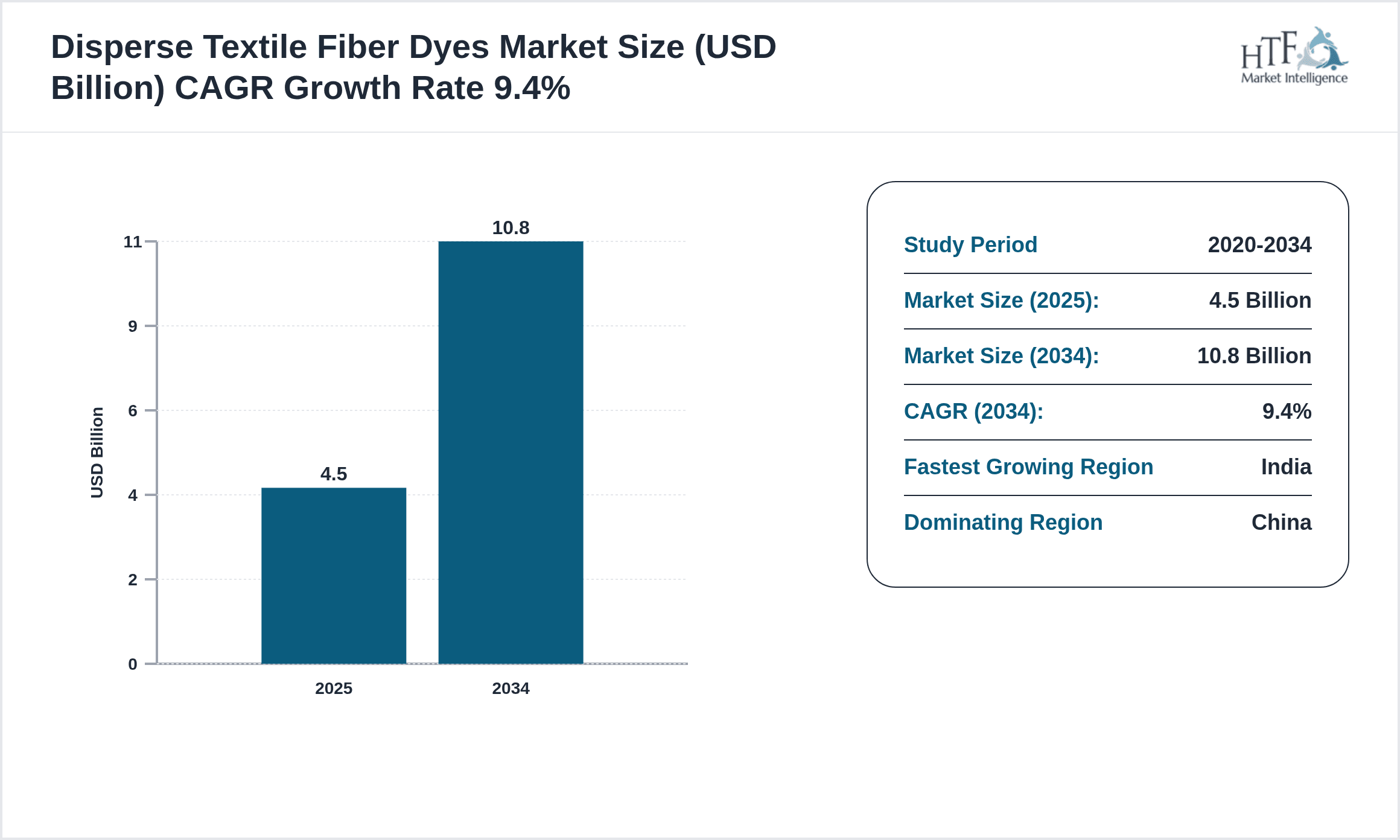
- •Market highlights reveal a robust CAGR of approximately 9.4% projected over 2024-2034, with the market size expanding from USD 4.5 billion in 2024 to an estimated USD 10.8 billion by 2034. The dominant dye category remains anthraquinone dyes due to their superior color properties and widespread adoption, while azo dyes exhibit the fastest growth rate fueled by cost-effectiveness and expanding applications. China leads the regional market owing to its large textile manufacturing infrastructure, whereas India is the fastest growing country driven by increasing textile exports and investments in dye manufacturing technologies. Key growth drivers include rising demand for synthetic textiles, innovation in eco-friendly dyeing processes, and expanding end-use industries such as automotive and home textiles. However, challenges such as environmental regulations, raw material price volatility, and competition from natural dyes pose restraints. Strategic opportunities lie in technological advancements, geographic expansion, and product portfolio diversification.
- •This market presents significant value propositions for stakeholders including textile manufacturers, chemical suppliers, and end-use industries by enabling high-quality, sustainable coloration solutions that meet evolving consumer and regulatory demands. The strategic importance of this sector is underscored by its contribution to the textile supply chain's competitiveness and environmental footprint. Advancements in disperse dye chemistries and process innovations enhance operational efficiencies and product differentiation, supporting brand positioning and export growth. Market participants benefit from leveraging regional production hubs and integrated supply chains, while addressing sustainability requirements to capture emerging market segments. Overall, the Asia-Pacific disperse textile fiber dyes market is positioned for substantial growth, innovation, and transformation over the forecast period.
Competitive Landscape
The Asia-Pacific Disperse Textile Fiber Dyes Market features a highly competitive environment driven by both global chemical giants and regional specialty manufacturers. Companies compete through innovation in dye formulations emphasizing eco-friendly and sustainable solutions to comply with stringent environmental regulations. Market leaders focus on expanding their product portfolios by developing dyes with enhanced fastness properties, reduced water consumption, and lower chemical waste during textile processing. Strategic partnerships, joint ventures, and regional expansions are common to strengthen distribution networks and increase market penetration. Pricing strategies are influenced by raw material cost fluctuations and customer demand for high-performance dyes. Additionally, investments in R&D for bio-based and natural disperse dyes are intensifying market rivalry. Entry barriers include high capital requirements for production facilities and compliance with regulatory standards, which protect established players. Regional competition is notable among countries such as China, India, and Japan, each leveraging local manufacturing capabilities and government support to maintain leadership. Future competitive trends point toward digitalization of dyeing processes and integration of sustainable practices as key differentiators.
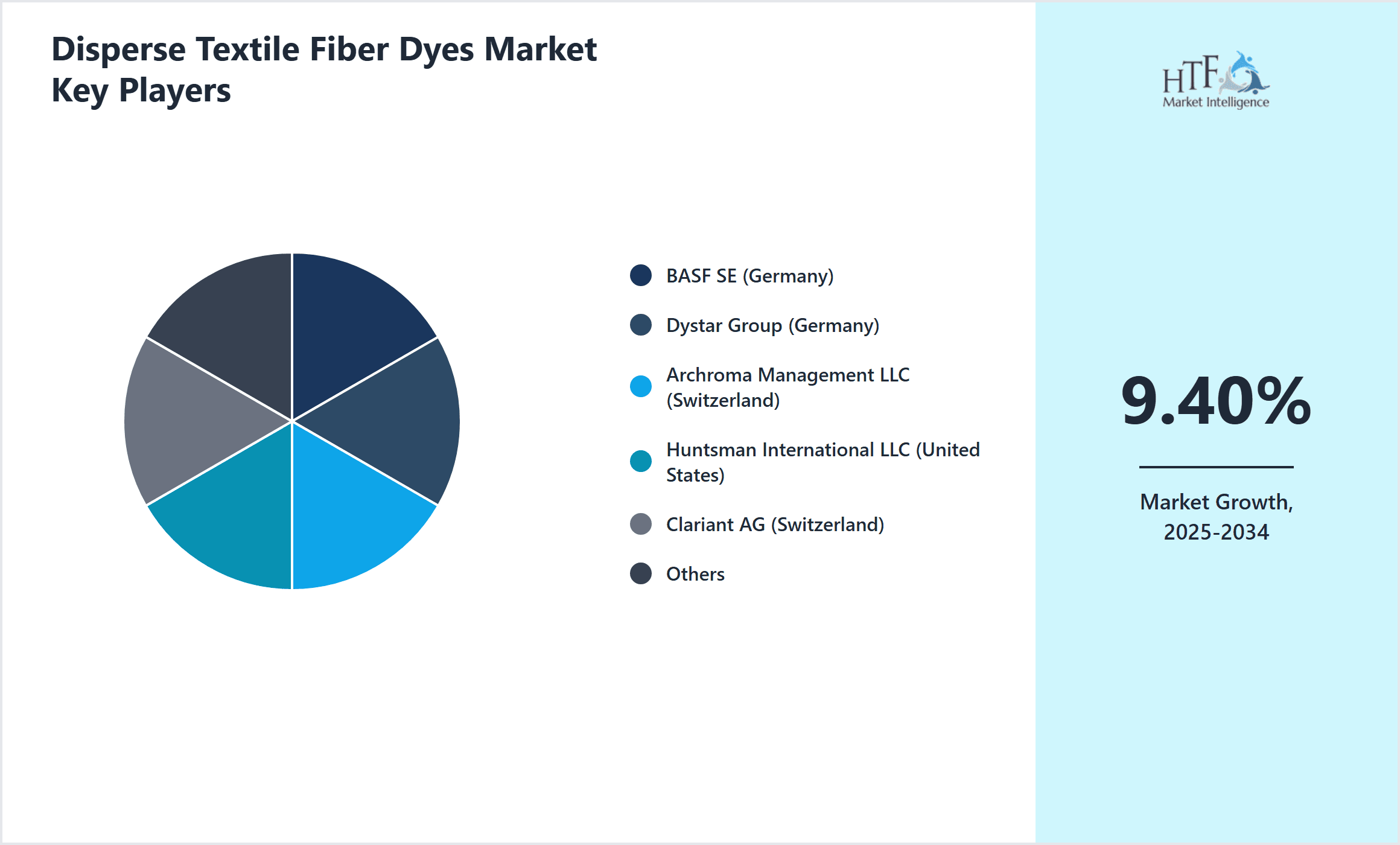
Leading Companies in Disperse Textile Fiber Dyes Market
- •BASF SE (Germany)
- •Dystar Group (Germany)
- •Archroma Management LLC (Switzerland)
- •Huntsman International LLC (United States)
- •Clariant AG (Switzerland)
- •Sumitomo Chemical Co., Ltd. (Japan)
- •DyStar Singapore Pte Ltd (Singapore)
- •Kiri Industries Ltd. (India)
- •Laxmi Organic Industries Ltd. (India)
- •Nippon Kayaku Co., Ltd. (Japan)
- •Hubei Xinlianxin Chemical Co., Ltd. (China)
- •Jiangsu Sanfangxiang Group Co., Ltd. (China)
- •Yarn Dyestuff Co., Ltd. (China)
- •Zhejiang Longsheng Group Company Limited (China)
- •Heubach GmbH (Germany)
- •Kabushiki Kaisha Dainichiseika Color & Chemicals Mfg (Japan)
- •Tata Chemicals Limited (India)
- •Toyo Ink SC Holdings Co., Ltd. (Japan)
- •Atul Ltd (India)
- •DIC Corporation (Japan)
- •Jiangsu Guotai International Group Guomao Co., Ltd. (China)
- •Sudarshan Chemical Industries Ltd. (India)
- •Zhejiang Xinao Dyeing Chemical Co., Ltd. (China)
- •Mitsubishi Chemical Corporation (Japan)
- •Aditya Birla Chemicals (India)
Market Breakdown
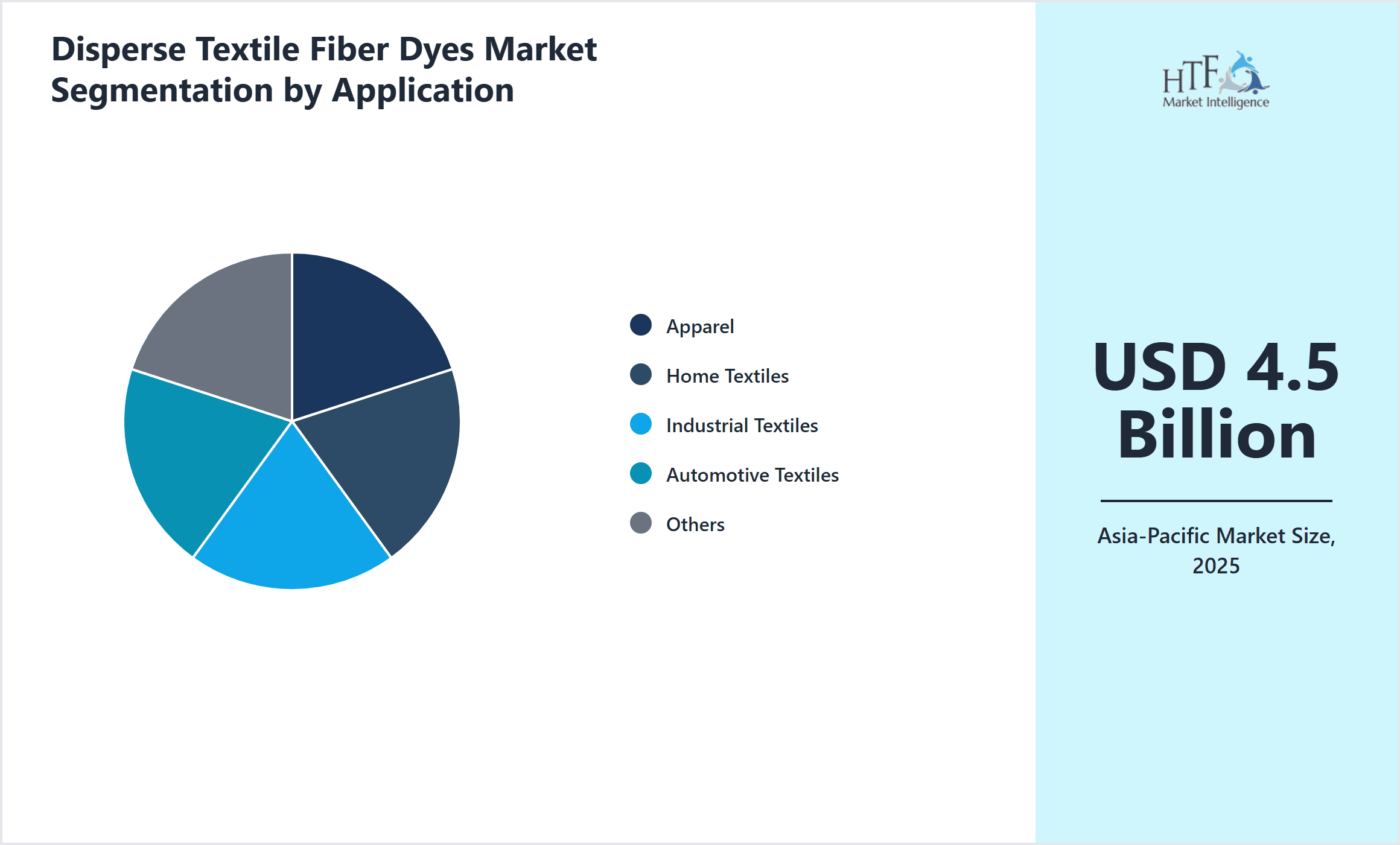
- •By Type
- ◦Anthraquinone Dyes
- ◦Azo Dyes
- ◦Nitro Dyes
- ◦Other Synthetic Dyes
- ◦Natural Dyes
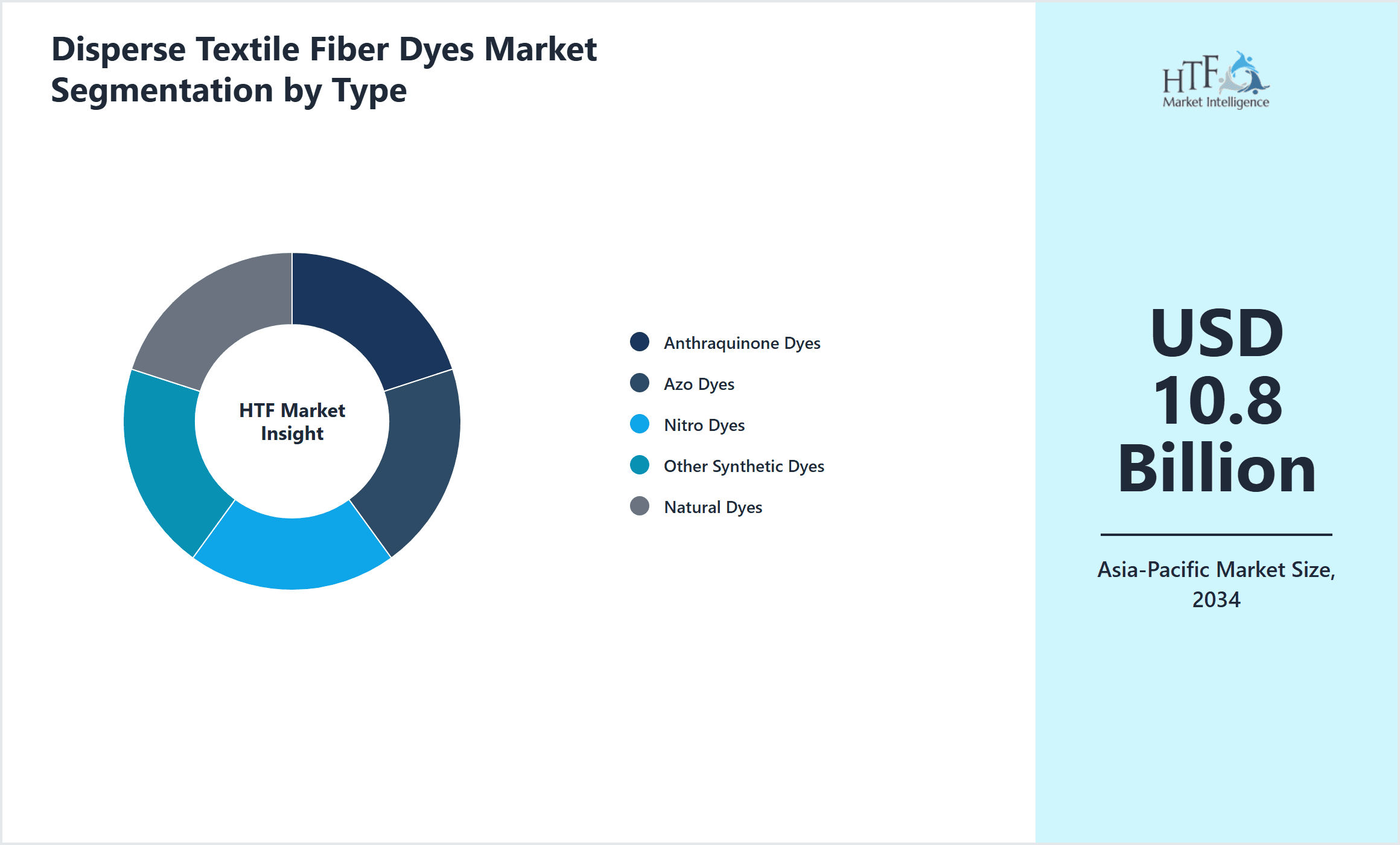
- •By Application
- ◦Apparel
- ◦Home Textiles
- ◦Industrial Textiles
- ◦Automotive Textiles
- ◦Others
- •By End-Use Industry
- ◦Textile Manufacturing
- ◦Automotive
- ◦Interior Furnishing
- ◦Technical Textiles
- •By Distribution Channel
- ◦Direct Sales
- ◦Distributors and Dealers
- ◦Online Platforms
Growth Dynamics
- •Rising demand for synthetic textiles such as polyester in Asia-Pacific is driving the disperse textile fiber dyes market, as these fibers require specialized dyes offering excellent color fastness and brightness essential for the apparel and automotive sectors.
- •Increasing environmental regulations in countries like China and India are prompting manufacturers to innovate eco-friendly disperse dyes with reduced harmful effluents, thereby stimulating market growth through sustainable product offerings.
- •Technological advancements in dyeing processes, including digital and jet dyeing methods, are improving dye uptake efficiency and reducing water consumption, attracting investments and boosting market expansion in the region.
- •Growing consumer preference for vibrant, durable, and fast-drying textiles in both fashion and home textile segments is fueling the demand for advanced disperse dyes with enhanced performance characteristics.
- •Expanding textile manufacturing hubs in Southeast Asia and India combined with government initiatives supporting chemical industry modernization are accelerating the adoption of innovative disperse dye solutions.
Market Trends
- •The shift towards sustainable and bio-based disperse dyes is gaining momentum, with companies investing in research to reduce environmental impact and meet stricter regional regulations without compromising dye performance.
- •Integration of digital textile printing technologies with disperse dye applications is creating new growth avenues by enabling customized and short-run production with reduced waste and enhanced color vibrancy.
- •Collaborations between chemical manufacturers and textile producers are intensifying to develop proprietary dye formulations tailored for high-performance synthetic fibers used in automotive and industrial applications.
- •Increasing emphasis on circular economy principles is encouraging the development of disperse dyes that enable textile recycling and reuse without significant color degradation, influencing product innovation pipelines.
- •Rising adoption of waterless or low-water dyeing technologies in Asia-Pacific textile factories is reducing operational costs and environmental footprints, thereby reshaping traditional dyeing practices.
Market Opportunities
- •The growing textile export markets in India, Vietnam, and Bangladesh offer significant opportunities for disperse dye manufacturers to expand their footprint by supplying regionally optimized dye products.
- •Innovations in eco-friendly and sustainable disperse dyes present lucrative avenues for companies to differentiate themselves and tap into the increasing demand for green textiles from global brands.
- •Expanding applications of disperse dyes in technical textiles, such as automotive interiors and protective clothing, provide new growth segments beyond traditional apparel and home textiles.
- •Digital printing and dyeing technologies integration creates potential for diversified product offerings, enabling manufacturers to cater to niche markets requiring short production runs and customization.
- •Government incentives and infrastructure development in chemical manufacturing hubs across Asia-Pacific facilitate capacity expansions and technological upgrades for dye producers.
Market Challenges
- •Strict environmental regulations on wastewater discharge and chemical use impose compliance costs and operational challenges for disperse dye manufacturers, especially in emerging Asia-Pacific economies.
- •Volatility in raw material prices, driven by fluctuations in petrochemical feedstocks, affects dye production costs and market price stability, complicating long-term planning for suppliers and buyers.
- •Competition from natural and alternative dye technologies threatens the market share of traditional synthetic disperse dyes, necessitating ongoing innovation to maintain relevance.
- •Limited awareness and adoption of advanced dyeing technologies in smaller textile manufacturing units restrict market penetration of high-performance disperse dyes in certain Asia-Pacific regions.
- •Intellectual property protection challenges and counterfeit dye products in the region undermine brand reputation and profitability for leading manufacturers.
Regulatory Framework
- •Between 2019 and 2024, countries such as China and India have implemented stringent wastewater treatment regulations mandating the reduction of hazardous chemicals used in dye manufacturing and textile processing, significantly impacting market operations and compliance strategies.
- •The Environmental Protection Agency of China enforced the revised Chemical Management Ordinance in 2021, requiring manufacturers to adhere to stricter chemical safety standards and reduce emissions, fostering innovation in eco-friendly disperse dyes.
- •India's textile dyeing sector has been subjected to the National Green Tribunal's mandates since 2020, compelling adoption of cleaner dyeing technologies and proper effluent treatment facilities to mitigate pollution concerns.
- •Japan updated its Chemical Substances Control Law in 2022, emphasizing the registration and safe use of synthetic dyes, including disperse dyes, to align with global environmental standards and protect consumer safety.
- •Government initiatives across Asia-Pacific promoting sustainable textile production include subsidies and incentives for manufacturers adopting waterless dyeing technologies and biodegradable dye formulations, accelerating regulatory-driven market transformation.
Market Intelligence
- •15th February 2025, BASF SE announced the launch of a new range of sustainable anthraquinone disperse dyes tailored for the Asia-Pacific market, featuring enhanced color fastness and reduced water consumption during dyeing processes. This product line aims to support textile manufacturers in China and India to meet increasing environmental regulations while maintaining high-quality standards in apparel and automotive textiles. The strategic objective is to capture growing demand for eco-friendly dye solutions and strengthen BASF’s market presence in the region. Source: BASF Official Press Release
- •10th April 2025, DyStar Singapore Pte Ltd introduced an innovative azo disperse dye series with improved biodegradability and compatibility with digital printing technologies, targeting the expanding home textiles and industrial textiles sectors in Southeast Asia. These dyes are designed to minimize environmental impact and optimize production efficiency, addressing customer demands for sustainable and cost-effective solutions. The initiative reflects DyStar’s commitment to advancing eco-conscious dyeing practices and enhancing its competitive edge in Asia-Pacific. Source: DyStar Corporate News
- •5th March 2025, Archroma Management LLC announced a strategic partnership with a leading Indian textile manufacturer to co-develop next-generation disperse dyes with superior fastness and reduced chemical load, aimed at boosting export competitiveness. The collaboration emphasizes joint R&D efforts and local production scaling to meet growing demand across South Asia’s apparel sector, reinforcing Archroma’s position as a key innovator in sustainable textile chemicals. Source: Archroma Industry Update
- •20th January 2025, Clariant AG completed the acquisition of a specialty dye manufacturer based in China, enhancing its product portfolio in disperse dyes and strengthening its distribution network across Asia-Pacific. This move supports Clariant’s strategy to expand market share in fast-growing textile hubs and accelerate the introduction of environmentally compliant dye technologies. The acquisition is expected to drive operational synergies and innovation pipelines over the coming years. Source: Clariant Press Release
Regional Outlook
The China currently holds a significant share of the market, primarily due to several key factors: increasing consumption rates, a burgeoning population, and robust economic momentum. These elements collectively drive demand, positioning this region as a leader in the market. On the other hand, India is rapidly emerging as the fastest-growing area within the industry. This remarkable growth can be attributed to swift infrastructure development, the expansion of various industrial sectors, and a marked increase in consumer demand. These dynamics make this region a crucial player in shaping future market growth.
In our report, we cover a comprehensive analysis of the following regions and countries:
- Japan
- China
- Southeast Asia
- India
- Australia
- South Korea
- Others
| Feature | Details |
|---|---|
| Base Year Market Size | USD 4.5 Billion |
| Forecast Year Market Size | USD 10.8 Billion |
| CAGR | 9.4% |
| Forecast Period | 2026 to 2033 |
| YoY Growth | 9% |
| Scope of Report | Market is segmented by Type (Anthraquinone Dyes, Azo Dyes, Nitro Dyes, Other Synthetic Dyes, Natural Dyes), Application (Apparel, Home Textiles, Industrial Textiles, Automotive Textiles, Others), End-Use Industry (Textile Manufacturing, Automotive, Interior Furnishing, Technical Textiles), Distribution Channel (Direct Sales, Distributors and Dealers, Online Platforms) |
| Regions Covered | Japan, China, Southeast Asia, India, Australia, South Korea, Others |
| Key Companies | BASF SE (Germany), Dystar Group (Germany), Archroma Management LLC (Switzerland), Huntsman International LLC (United States), Clariant AG (Switzerland) |
Asia-Pacific Disperse Textile Fiber Dyes Market Size, Growth & Revenue 2024-2034 - Table of Contents
Research enthusiast focused on transforming data uncovering into actionable insights through data-driven decision-making.
Frequently Asked Questions (FAQ):
The Compact Track Loaders market is projected to grow at a CAGR of 6.8% from 2025 to 2030, driven by increasing demand in construction and agricultural sectors.
North America currently leads the market with approximately 45% market share, followed by Europe at 28% and Asia-Pacific at 22%. The remaining regions account for 5% of the global market.
Key growth drivers include increasing construction activities, rising demand for versatile equipment in agriculture, technological advancements in track loader design, and growing preference for compact equipment in urban construction projects.