
Global Automotive Molded Carpet Market Size, Growth & Revenue 2024-2034
Global Automotive Molded Carpet Market is segmented by Product Type (Polypropylene Molded Carpets, Polyamide Molded Carpets, Polyester Molded Carpets, Nylon Molded Carpets, Others), Application (Passenger Cars, Commercial Vehicles, Electric Vehicles, Luxury Vehicles, Aftermarket Services), End-Use Industry (Automotive OEMs, Aftermarket Suppliers, Automotive Refurbishment, Specialty Vehicle Manufacturers), Distribution Channel (Direct OEM Supply, Aftermarket Retail, Online Distribution), and Geography (North America, LATAM, West Europe, Central & Eastern Europe, Northern Europe, Southern Europe, East Asia, Southeast Asia, South Asia, Central Asia, Oceania, MEA)
Pricing
Report Overview
Executive Summary
- •The Global Automotive Molded Carpet Market represents a critical segment within automotive interior components, focusing on specialized carpets molded for enhanced fit, durability, and aesthetic integration in vehicles. This market spans multiple vehicle types including passenger cars, commercial vehicles, electric vehicles, and luxury models, reflecting the diverse demand for tailored interior solutions. Molded carpets are manufactured using advanced synthetic fibers such as polypropylene, polyamide, polyester, and nylon, offering benefits like noise reduction, weight optimization, and environmental resistance. The industry ecosystem includes raw material suppliers, component manufacturers, and vehicle OEMs who collaborate to innovate with sustainable materials and cost-effective production methods. The market is influenced by consumer preferences for vehicle comfort, evolving automotive designs, and stringent regulatory requirements for interior materials. As electric and autonomous vehicles gain traction, the demand for lightweight and technically superior molded carpets is expected to rise, further expanding market opportunities globally.
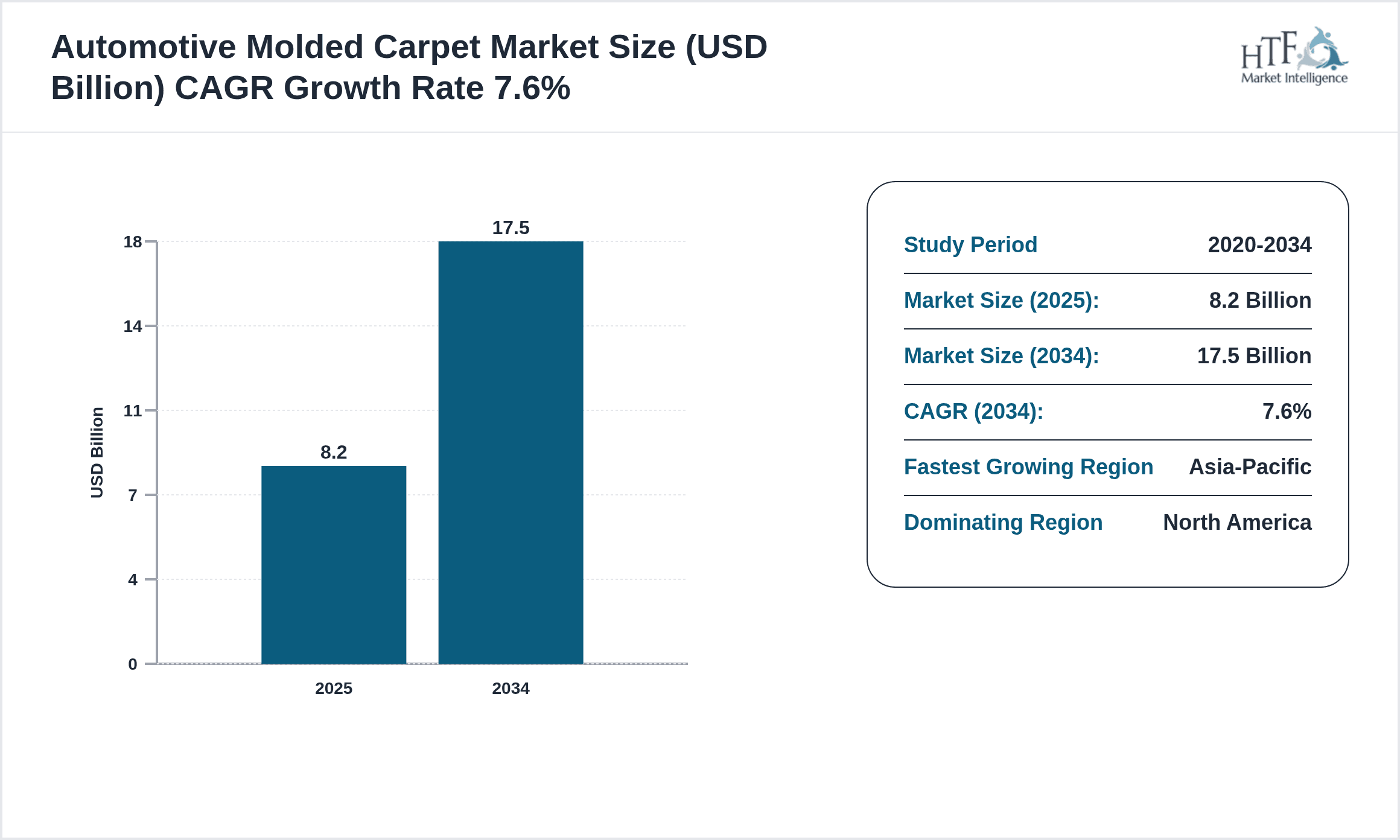
- •Key market highlights include a base market size of USD 8.2 Billion in 2024, projected to reach USD 17.5 Billion by 2034, registering a CAGR of 7.6%. North America currently dominates the market due to advanced automotive manufacturing infrastructure and high consumer demand for premium vehicle interiors. However, the Asia-Pacific region exhibits the fastest growth driven by rapid industrialization, increasing vehicle production, and rising disposable incomes. Polypropylene molded carpets lead the product segment owing to their cost-effectiveness and performance attributes, while polyamide molded carpets are the fastest-growing due to superior durability and luxury appeal. Passenger cars remain the dominant application segment, with commercial and electric vehicles presenting significant growth avenues. Market dynamics are shaped by technological innovations, regulatory pressures, and shifting end-user preferences toward sustainable and high-performance automotive interiors.
- •The automotive molded carpet market offers substantial value propositions to automotive manufacturers, aftermarket service providers, and material suppliers. It enables improved vehicle interior comfort, noise insulation, and aesthetic customization, meeting consumer expectations for quality and sustainability. Strategic importance lies in the integration of lightweight, eco-friendly materials that support fuel efficiency and emission reduction goals, critical for compliance with global environmental regulations. Additionally, the market fosters innovation in production techniques such as advanced molding and recycling processes, enhancing cost-efficiency and product performance. Stakeholders benefit from expanding electric vehicle adoption, which demands specialized interior components, and from emerging markets where vehicle sales growth is robust. This market’s evolution is pivotal for automotive OEMs aiming to differentiate through interior design and material innovation, thus driving competitive advantage and customer satisfaction.
Competitive Landscape
The competitive environment of the global automotive molded carpet market is characterized by intense rivalry among established component manufacturers, raw material suppliers, and automotive OEMs seeking to innovate and capture market share. Companies compete on the basis of product quality, material innovation, cost efficiency, and ability to meet evolving regulatory and consumer demands. Market leaders invest heavily in research and development to advance molding technologies, integrate sustainable materials, and optimize production processes. Strategic partnerships and collaborations with automotive manufacturers are common to tailor products for specific vehicle models and enhance supply chain integration. Competitive strategies also include geographic expansion, acquisition of niche players, and diversification into aftermarket services. Price pressures coexist with the need for technological differentiation, fostering a dynamic landscape where agility and innovation determine leadership. Regional competition varies, with North America and Europe emphasizing premium quality and sustainability, while Asia-Pacific focuses on volume growth and cost competitiveness.
Companies Shaping the Automotive Molded Carpet Market
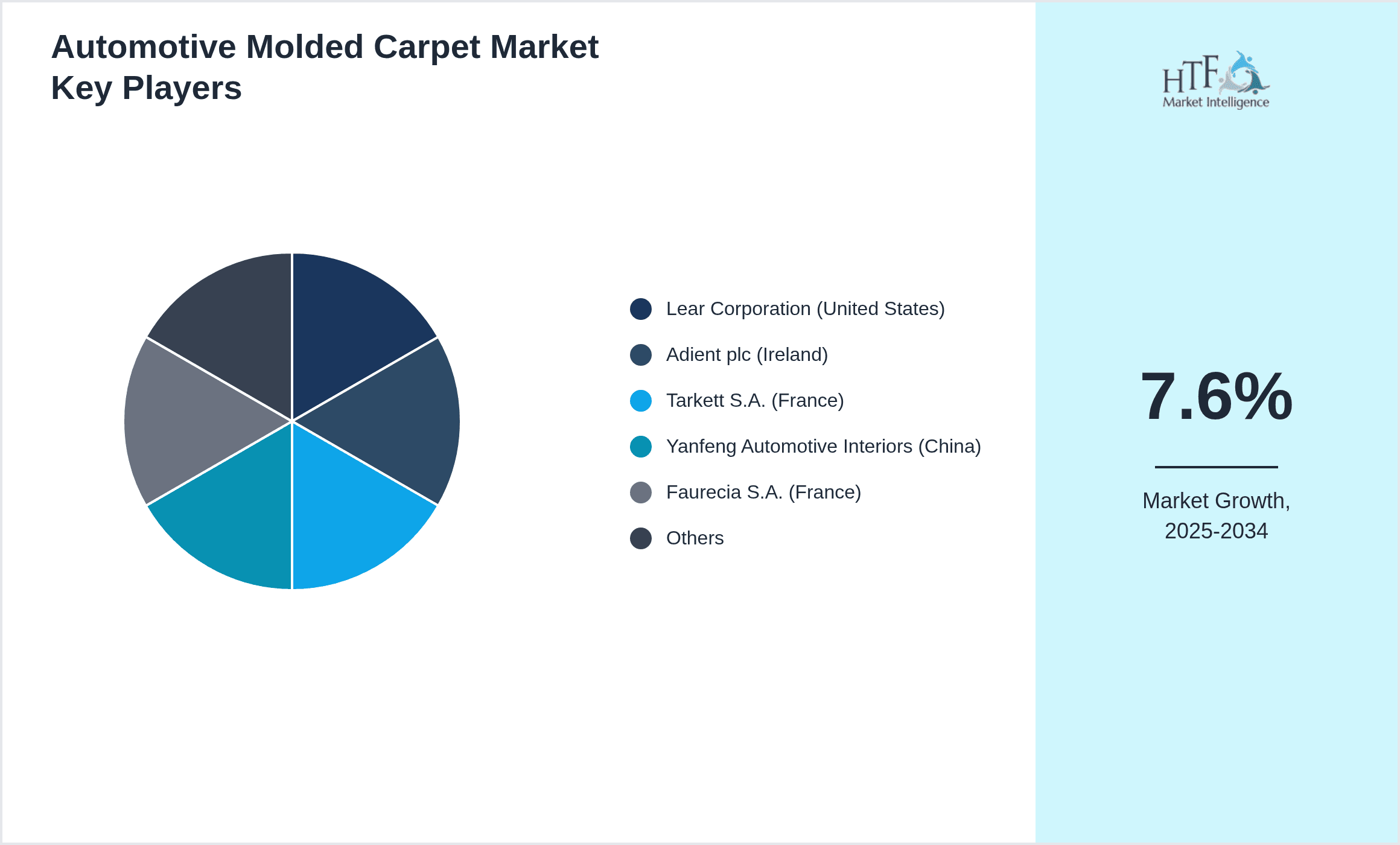
- •Lear Corporation (United States)
- •Adient plc (Ireland)
- •Tarkett S.A. (France)
- •Yanfeng Automotive Interiors (China)
- •Faurecia S.A. (France)
- •Toyota Boshoku Corporation (Japan)
- •GuanJie Group (China)
- •Magneti Marelli S.p.A. (Italy)
- •Mitsui Chemicals, Inc. (Japan)
- •Sogefi Group (Italy)
- •Autoneum Holding AG (Switzerland)
- •Schaeffler Technologies AG (Germany)
- •BASF SE (Germany)
- •Continental AG (Germany)
- •Motherson Sumi Systems Ltd. (India)
- •Minda Corporation (India)
- •Lear Corporation Brasil Ltda. (Brazil)
- •Sumitomo Riko Company Limited (Japan)
- •Faurecia Clarion Electronics Co., Ltd. (Japan)
- •Nittoku Engineering Co., Ltd. (Japan)
- •Dupont de Nemours, Inc. (United States)
- •DSM N.V. (Netherlands)
- •Hyundai Mobis (South Korea)
- •Kongsberg Automotive ASA (Norway)
- •Sumitomo Electric Industries, Ltd. (Japan)
Market Breakdown
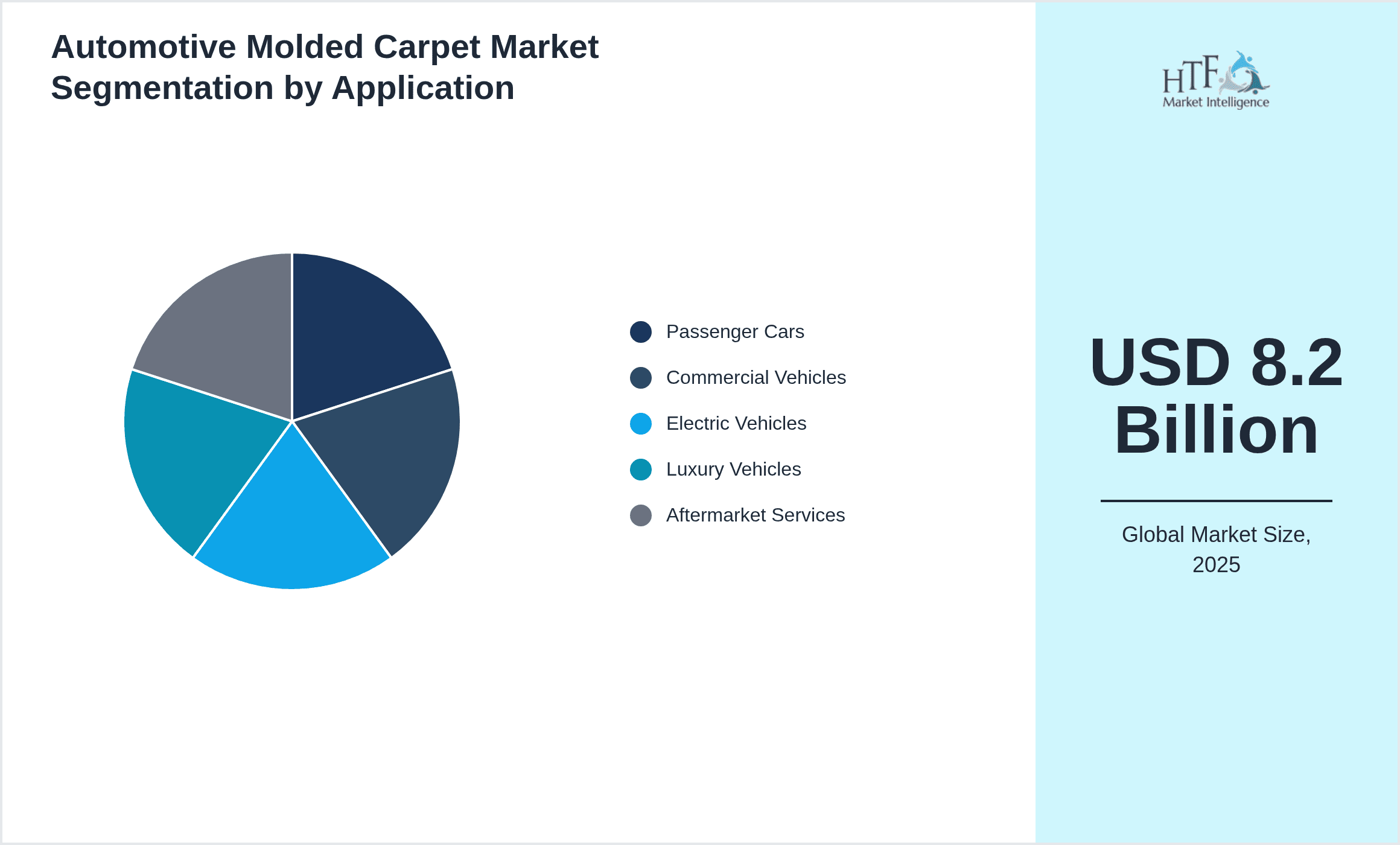
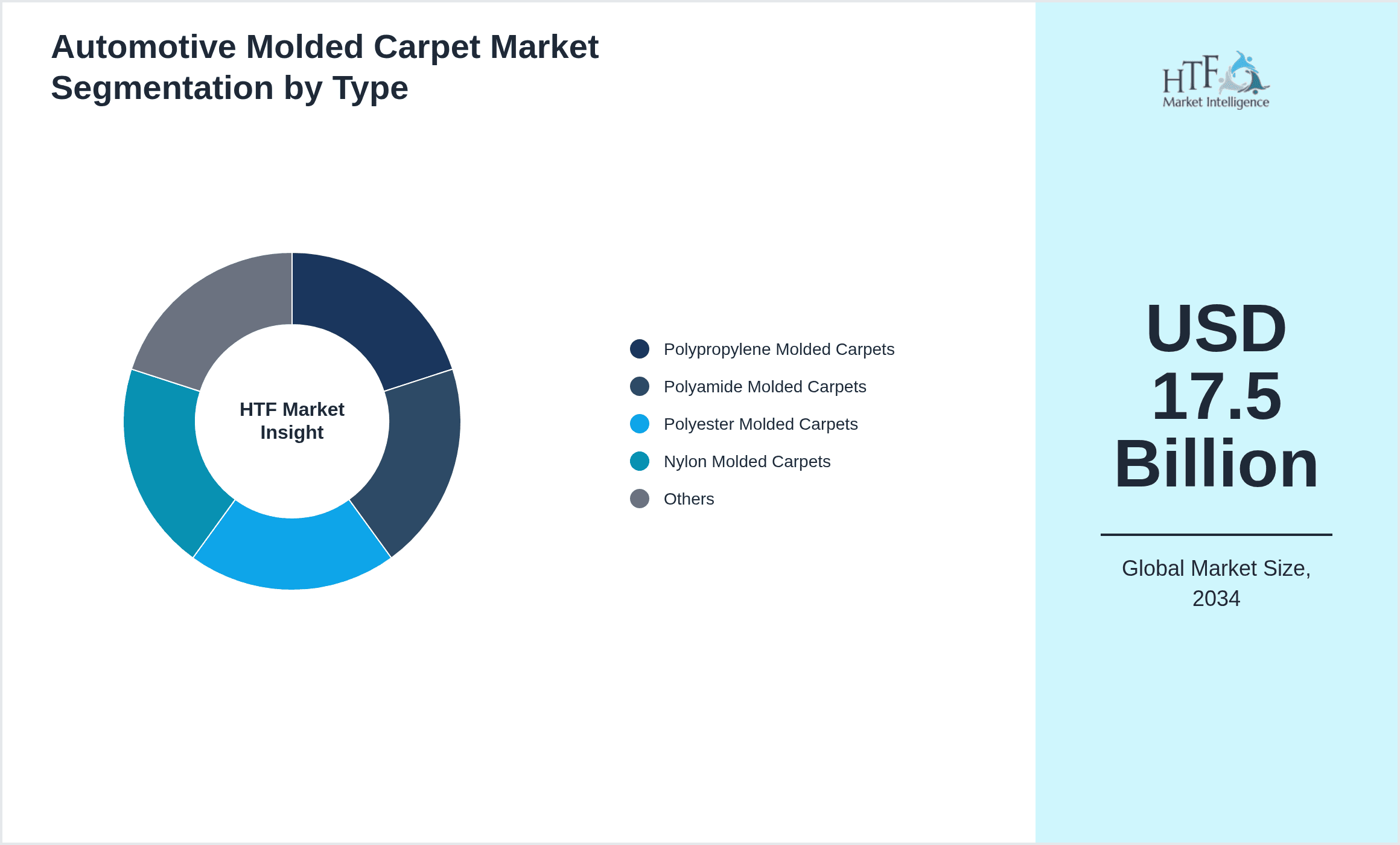
- •By Product Type
- ◦Polypropylene Molded Carpets
- ◦Polyamide Molded Carpets
- ◦Polyester Molded Carpets
- ◦Nylon Molded Carpets
- ◦Others
- •By Application
- ◦Passenger Cars
- ◦Commercial Vehicles
- ◦Electric Vehicles
- ◦Luxury Vehicles
- ◦Aftermarket Services
- •By End-Use Industry
- ◦Automotive OEMs
- ◦Aftermarket Suppliers
- ◦Automotive Refurbishment
- ◦Specialty Vehicle Manufacturers
- •By Distribution Channel
- ◦Direct OEM Supply
- ◦Aftermarket Retail
- ◦Online Distribution
Growth Dynamics
- •Rising demand for lightweight and eco-friendly automotive interior components is a primary growth driver, as manufacturers seek to improve fuel efficiency and meet stringent emission regulations globally.
- •Expansion of electric vehicle production worldwide is fueling the need for specialized molded carpets that offer noise reduction and thermal insulation, supporting the growth of this segment.
- •Technological advancements in molding processes and synthetic fiber materials enable production of carpets with enhanced durability, design flexibility, and cost efficiency, attracting OEM adoption.
- •Increasing consumer preference for premium and customized vehicle interiors is driving innovation in automotive molded carpets, especially in luxury and passenger car segments.
- •Growing aftermarket demand for replacement and upgraded molded carpets provides additional revenue streams, particularly in mature automotive markets with high vehicle ownership.
- •Government initiatives promoting sustainable materials and recycling in automotive interiors are accelerating the adoption of recyclable molded carpets and green manufacturing practices.
- •Strategic investments and collaborations between material suppliers and automotive manufacturers facilitate rapid product development and market penetration.
Market Trends
- •Integration of recycled and bio-based fibers in molded carpets is gaining prominence, reflecting the industry's commitment to sustainability and circular economy principles.
- •Use of advanced molding technologies such as injection molding and 3D contouring is enabling precise fitment and enhanced aesthetic appeal in automotive carpets.
- •Increasing collaboration between carpet manufacturers and automotive OEMs to develop vehicle-specific interior solutions is a key trend enhancing customization capabilities.
- •The shift towards electric and autonomous vehicles is encouraging development of carpets with integrated sensor capabilities and improved thermal management.
- •Emergence of online distribution channels and digital platforms is transforming aftermarket sales and customer engagement in automotive molded carpet products.
- •Growing emphasis on lightweight materials to reduce overall vehicle weight is driving material innovation in molded carpet manufacturing.
- •Regional market dynamics show Asia-Pacific emerging as a hub for cost-effective production and rapid adoption of new materials and designs.
Market Opportunities
- •Expanding electric vehicle production globally presents significant opportunities to supply specialized molded carpets with enhanced insulation and sustainability features.
- •Emerging markets in Asia-Pacific and Latin America offer untapped potential due to rising vehicle sales and increasing demand for quality automotive interiors.
- •Development of recyclable and bio-based molded carpet materials aligns with sustainability trends, opening avenues for innovation and premium product offerings.
- •Integration of smart textile technologies into molded carpets for enhanced vehicle cabin experience represents a futuristic growth avenue.
- •Aftermarket segment growth provides opportunities for product diversification, including customized and replacement molded carpets catering to vehicle refurbishment.
- •Collaborations between material science companies and automotive OEMs can accelerate development of lightweight, durable, and eco-friendly molded carpets.
- •Geographical expansion through strategic partnerships and localized manufacturing can enhance supply chain efficiency and market penetration.
Market Challenges
- •High cost of advanced synthetic fibers and molding technologies can limit adoption, especially in cost-sensitive emerging markets.
- •Stringent regulatory requirements for automotive interior materials necessitate continuous compliance efforts, increasing operational complexity.
- •Competition from alternative interior materials such as rubber mats and fabric carpets can constrain market growth for molded carpets.
- •Supply chain disruptions and raw material price volatility pose risks to manufacturing continuity and cost management.
- •Challenges in recycling and end-of-life management of molded carpets impact environmental sustainability goals and regulatory compliance.
- •Limited consumer awareness about benefits of molded carpets in certain regions affects market penetration and aftermarket growth.
- •Technological barriers in scaling new molding processes and materials for mass production present operational challenges for manufacturers.
Regulatory Framework
- •Between 2019 and 2024, several regions implemented regulations mandating the use of sustainable and recyclable materials in automotive interiors, pushing manufacturers to adopt eco-friendly molded carpets.
- •Safety standards related to flammability and toxicity of interior automotive components were updated globally, requiring stringent testing and certification of molded carpet products.
- •Environmental policies in Europe and North America introduced incentives and penalties to encourage reduction of carbon footprint in automotive manufacturing, impacting material sourcing and production processes.
- •China and Asia-Pacific countries have enforced regulations promoting electric vehicle adoption, indirectly boosting demand for specialized molded carpets suited for EVs.
- •Government initiatives supporting circular economy models have fostered development of recycling infrastructure and standards for automotive molded carpet disposal and reuse.
Market Intelligence
- •15th February 2025, Lear Corporation launched an innovative polypropylene-based molded carpet designed for electric vehicles, featuring enhanced thermal insulation and lightweight construction. This product aims to reduce vehicle weight and improve cabin comfort, aligning with EV manufacturers' sustainability goals. Lear's strategic focus on advanced materials positions it to capitalize on the growing EV market segment globally. Source: Official press release Lear Corporation
- •10th April 2025, Faurecia S.A. introduced a new line of bio-based molded carpets utilizing recycled fibers and environmentally friendly adhesives. The launch supports Faurecia’s commitment to sustainability and circular economy principles, appealing to automotive OEMs seeking greener interior solutions. The product received positive industry feedback for its durability and eco-credentials. Source: Faurecia corporate announcement
- •7th January 2025, Yanfeng Automotive Interiors announced a strategic partnership with a leading synthetic fiber manufacturer to co-develop next-generation molded carpet materials that integrate sensor technology for smart vehicle interiors. This initiative aims to enhance user experience and differentiate Yanfeng’s product offerings in competitive automotive markets. Source: Yanfeng official website
- •22nd March 2025, Motherson Sumi Systems Ltd. completed the acquisition of a European molded carpet specialist to expand its product portfolio and strengthen its presence in the premium automotive interiors segment. This acquisition is expected to enhance technological capabilities and market reach across Europe and Asia. Source: Motherson press release
Regional Outlook
The North America currently holds a significant share of the market, primarily due to several key factors: increasing consumption rates, a burgeoning population, and robust economic momentum. These elements collectively drive demand, positioning this region as a leader in the market. On the other hand, Asia-Pacific is rapidly emerging as the fastest-growing area within the industry. This remarkable growth can be attributed to swift infrastructure development, the expansion of various industrial sectors, and a marked increase in consumer demand. These dynamics make this region a crucial player in shaping future market growth.
In our report, we cover a comprehensive analysis of the following regions and countries:
- North America
- LATAM
- West Europe
- Central & Eastern Europe
- Northern Europe
- Southern Europe
- East Asia
- Southeast Asia
- South Asia
- Central Asia
- Oceania
- MEA
| Feature | Details |
|---|---|
| Base Year Market Size | USD 8.2 Billion |
| Forecast Year Market Size | USD 17.5 Billion |
| CAGR | 7.6% |
| Forecast Period | 2026 to 2033 |
| YoY Growth | 7.3% |
| Scope of Report | Market is segmented by Product Type (Polypropylene Molded Carpets, Polyamide Molded Carpets, Polyester Molded Carpets, Nylon Molded Carpets, Others), Application (Passenger Cars, Commercial Vehicles, Electric Vehicles, Luxury Vehicles, Aftermarket Services), End-Use Industry (Automotive OEMs, Aftermarket Suppliers, Automotive Refurbishment, Specialty Vehicle Manufacturers), Distribution Channel (Direct OEM Supply, Aftermarket Retail, Online Distribution) |
| Regions Covered | North America, LATAM, West Europe, Central & Eastern Europe, Northern Europe, Southern Europe, East Asia, Southeast Asia, South Asia, Central Asia, Oceania, MEA |
| Key Companies | Lear Corporation (United States), Adient plc (Ireland), Tarkett S.A. (France), Yanfeng Automotive Interiors (China), Faurecia S.A. (France), Toyota Boshoku Corporation (Japan), GuanJie Group (China), Magneti Marelli S.p.A. (Italy), Mitsui Chemicals, Inc. (Japan), Sogefi Group (Italy), Autoneum Holding AG (Switzerland), Schaeffler Technologies AG (Germany), BASF SE (Germany), Continental AG (Germany), Motherson Sumi Systems Ltd. (India), Minda Corporation (India), Lear Corporation Brasil Ltda. (Brazil), Sumitomo Riko Company Limited (Japan), Faurecia Clarion Electronics Co., Ltd. (Japan), Nittoku Engineering Co., Ltd. (Japan), Dupont de Nemours, Inc. (United States), DSM N.V. (Netherlands), Hyundai Mobis (South Korea), Kongsberg Automotive ASA (Norway), Sumitomo Electric Industries, Ltd. (Japan) |
Global Automotive Molded Carpet Market Size, Growth & Revenue 2024-2034 - Table of Contents
Frequently Asked Questions (FAQ):
The Compact Track Loaders market is projected to grow at a CAGR of 6.8% from 2025 to 2030, driven by increasing demand in construction and agricultural sectors.
North America currently leads the market with approximately 45% market share, followed by Europe at 28% and Asia-Pacific at 22%. The remaining regions account for 5% of the global market.
Key growth drivers include increasing construction activities, rising demand for versatile equipment in agriculture, technological advancements in track loader design, and growing preference for compact equipment in urban construction projects.