
Asia-Pacific Pharmaceutical Packaging Market Size, Growth & Revenue 2024-2034
Asia-Pacific Pharmaceutical Packaging Market is segmented by Product Type (Blister Packs, Bottles, Vials, Ampoules, Pouches), Application (Oral Solids, Injectable, Topical, Inhalation, Others), End-Use Industry (Pharmaceutical Manufacturers, Biotechnology Companies, Contract Packaging Organizations, Healthcare Providers), Distribution Channel (Direct Sales, Distributors, Online Channels), and Geography (Japan, China, Southeast Asia, India, Australia, South Korea, Others)
Pricing
Report Overview
Executive Summary
- •The Asia-Pacific pharmaceutical packaging market is defined by its comprehensive role in protecting pharmaceutical products throughout the supply chain while ensuring patient safety and regulatory compliance. This market covers a broad spectrum of packaging types, including blister packs, bottles, vials, ampoules, and flexible pouches, catering to pharmaceutical forms such as oral solids, injectables, topical, and inhalation products. The industry is characterized by the integration of innovative materials and technologies aimed at enhancing drug stability, preventing counterfeiting, and improving user convenience. Geographically, the market spans major countries like China, India, Japan, South Korea, and Southeast Asia, each contributing uniquely to market dynamics influenced by regulatory frameworks and healthcare infrastructure development. Rising pharmaceutical production, increased demand for personalized medicine, and sustainability initiatives are shaping the competitive landscape. Overall, the market serves as a critical enabler for pharmaceutical companies to meet evolving patient needs and stringent quality standards across Asia-Pacific.
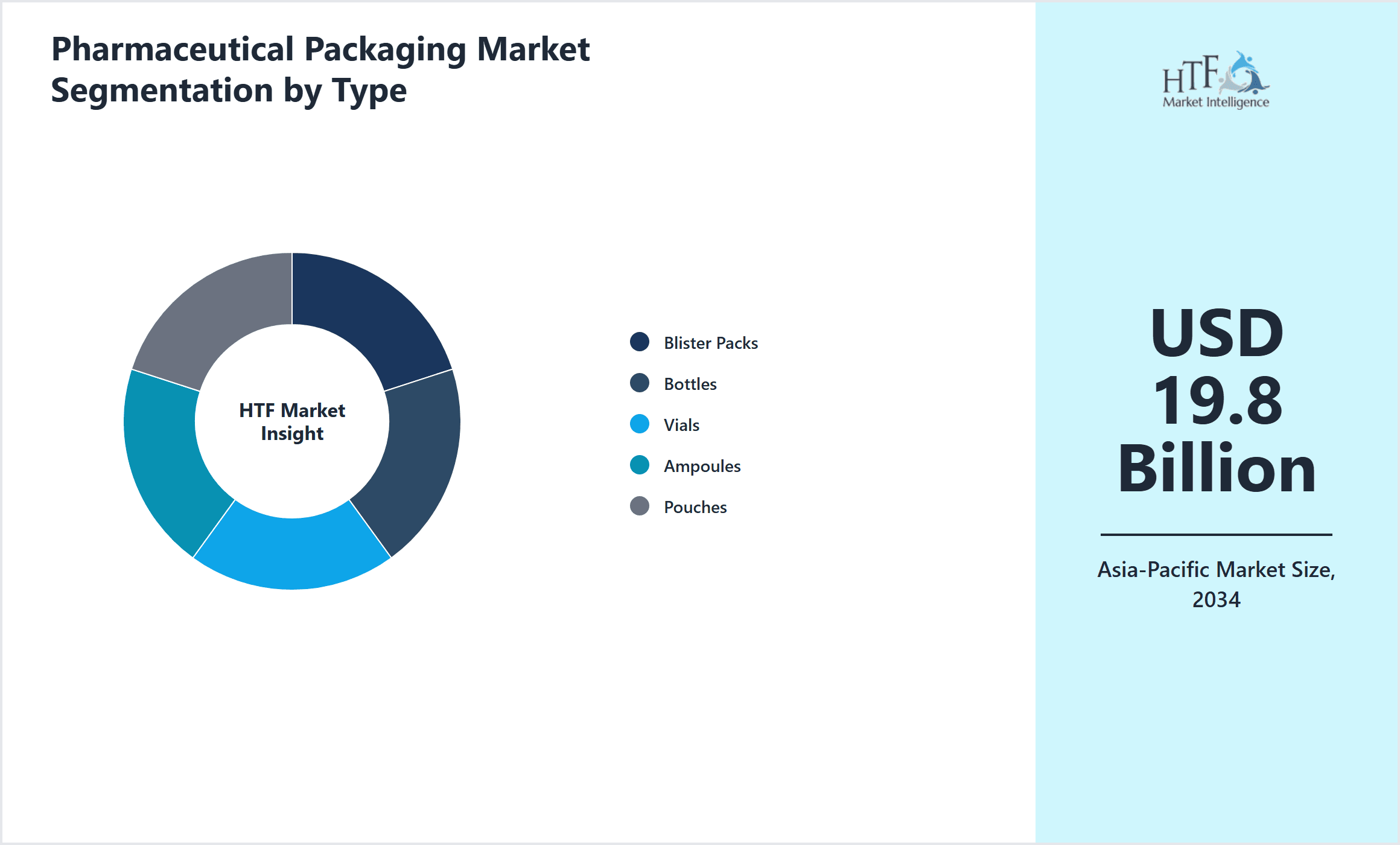
- •Key highlights indicate robust growth driven by increasing pharmaceutical manufacturing activities and a surge in demand for advanced packaging solutions that ensure drug safety and compliance. The market is projected to grow at a CAGR of 8.3% from USD 8.5 billion in 2024 to USD 19.8 billion by 2034. Innovations such as child-resistant packaging, smart packaging with tracking capabilities, and eco-friendly materials are gaining traction. Notably, blister packs dominate the market, supported by widespread use in oral solid dosage forms, while pouches represent the fastest-growing type due to their flexibility and cost-effectiveness. China leads in market size, whereas India is the fastest-growing country with expanding pharmaceutical exports and domestic consumption. This growth is underpinned by evolving regulatory standards, increasing healthcare expenditure, and technological advancements in packaging machinery and materials.
- •The pharmaceutical packaging market’s value proposition lies in its ability to safeguard product integrity, enhance patient adherence, and comply with regulatory mandates, which is vital for pharmaceutical manufacturers, healthcare providers, and patients. Its strategic importance extends to enabling the safe distribution of medicines in diverse climatic and logistical conditions prevalent in Asia-Pacific. By adopting innovative packaging technologies, companies can address counterfeit risks, improve supply chain transparency, and reduce environmental impact through sustainable materials. The market also offers significant opportunities for stakeholders to capitalize on rising demand for biologics and personalized medicines, which require specialized packaging. Consequently, pharmaceutical packaging is an indispensable component of the pharmaceutical industry’s ecosystem in Asia-Pacific, driving growth and innovation.

Competitive Landscape
The competitive landscape of the Asia-Pacific pharmaceutical packaging market is characterized by a mix of global multinational corporations and strong regional players, all competing to innovate and capture market share. Companies emphasize product differentiation through advanced packaging technologies such as child-resistant closures, tamper-evident features, and smart packaging solutions incorporating RFID and QR codes to enhance traceability. Strategic partnerships and collaborations with pharmaceutical manufacturers are common to customize packaging solutions tailored to specific drug formulations and regulatory requirements. Price competition remains intense, especially in emerging markets where cost efficiency drives purchasing decisions. Additionally, companies invest significantly in research and development to develop sustainable packaging materials aligned with growing environmental concerns. Market entry barriers include stringent regulatory compliance, high capital investment for sophisticated machinery, and maintaining quality standards, which collectively shape the competitive dynamics. The future competitive environment is expected to focus on digital innovation, sustainability, and expansion into emerging sub-regions within Asia-Pacific.
Key Participants in Pharmaceutical Packaging Market
- •Amcor Limited (Australia)
- •West Pharmaceutical Services, Inc. (United States)
- •Gerresheimer AG (Germany)
- •Berry Global Inc. (United States)
- •Uflex Limited (India)
- •Schott AG (Germany)
- •SGD S.A. (France)
- •Becton, Dickinson and Company (United States)
- •Mondi Group (United Kingdom)
- •Sealed Air Corporation (United States)
- •Constantia Flexibles Group GmbH (Austria)
- •AptarGroup, Inc. (United States)
- •Mitsubishi Gas Chemical Company, Inc. (Japan)
- •Nippon Kayaku Co., Ltd. (Japan)
- •Clondalkin Group Holdings B.V. (Netherlands)
- •CSP Technologies, Inc. (United States)
- •Ahlstrom-Munksjö Oyj (Finland)
- •Excellence Packaging Limited (India)
- •Winpak Ltd. (Canada)
- •Tekni-Plex, Inc. (United States)
- •Huhtamaki Oyj (Finland)
- •Jubilant Life Sciences Limited (India)
- •Sinopak Packaging Group Co., Ltd. (China)
- •Wintech Group (China)
- •Universal Leaf Tobacco Company, Inc. (United States)

Market Breakdown
- •By Product Type
- ◦Blister Packs
- ◦Bottles
- ◦Vials
- ◦Ampoules
- ◦Pouches
- •By Application
- ◦Oral Solids
- ◦Injectable
- ◦Topical
- ◦Inhalation
- ◦Others
- •By End-Use Industry
- ◦Pharmaceutical Manufacturers
- ◦Biotechnology Companies
- ◦Contract Packaging Organizations
- ◦Healthcare Providers
- •By Distribution Channel
- ◦Direct Sales
- ◦Distributors
- ◦Online Channels
Growth Dynamics
- •Rising pharmaceutical production in Asia-Pacific, particularly in China and India, is a primary growth driver, fueled by increasing domestic demand and export-oriented manufacturing. This boom necessitates advanced packaging solutions that ensure product integrity and regulatory compliance. The region’s expanding generic drug market further stimulates demand for cost-effective packaging options.
- •Technological advancements, such as smart packaging integrated with serialization and anti-counterfeiting features, are driving market growth by enhancing drug safety and supply chain transparency. Industry players are investing in R&D to develop innovative materials and automation in packaging processes, improving efficiency and reducing errors.
- •Government regulations mandating stringent packaging standards, including child-resistant and tamper-evident features, are propelling the adoption of sophisticated packaging formats. Compliance with environmental regulations encouraging biodegradable and recyclable materials is also influencing market dynamics positively.
- •The increasing prevalence of chronic diseases and aging populations in Asia-Pacific boosts demand for pharmaceutical products requiring specialized packaging, such as injectable and inhalation forms, creating new market growth avenues. Patient-centric packaging designs that improve adherence are gaining importance.
- •Rising awareness toward sustainability and eco-friendly packaging solutions is driving innovation in biodegradable materials and reduction in plastic usage. Companies adopting green packaging solutions are gaining competitive advantage and fulfilling consumer and regulatory expectations.
Market Trends
- •The adoption of digital technologies in pharmaceutical packaging, including RFID tags and QR codes, is a notable trend enhancing traceability and combating counterfeit drugs. This trend is supported by government initiatives and industry collaborations focused on supply chain security.
- •Flexible packaging, such as pouches, is gaining traction due to its lightweight nature, cost-effectiveness, and convenience, especially for oral solids and liquid formulations. This shift is influencing the product mix within the market.
- •Sustainability initiatives are leading to increased use of recyclable and biodegradable materials, with companies investing in eco-friendly packaging innovations to meet regulatory and consumer demands across Asia-Pacific.
- •Customization and patient-centric packaging designs tailored for ease of use, dosage accuracy, and enhanced compliance are increasingly being prioritized by pharmaceutical companies in the region.
- •Strategic partnerships between packaging manufacturers and pharmaceutical companies are becoming more common to co-develop innovative packaging technologies aligned with drug development pipelines and regulatory requirements.
Market Opportunities
- •Expanding pharmaceutical markets in emerging Asia-Pacific countries, including Indonesia, Vietnam, and the Philippines, offer significant growth potential for packaging manufacturers seeking to establish early presence and capture rising demand.
- •Increasing adoption of biologics and biosimilars in the region creates demand for specialized packaging solutions such as prefilled syringes and advanced vials, presenting lucrative opportunities for innovation.
- •Investment in smart packaging technologies integrating IoT and blockchain can enable real-time monitoring and enhanced supply chain security, opening new revenue streams and differentiation chances.
- •Growth in contract packaging organizations in Asia-Pacific offers opportunities for packaging companies to expand service offerings and enter long-term partnerships with pharmaceutical manufacturers.
- •Government incentives promoting sustainable manufacturing and packaging practices drive opportunities for development and adoption of eco-friendly materials and processes.
Market Challenges
- •Stringent and varying regulatory requirements across Asia-Pacific countries complicate market entry and product approvals, requiring substantial compliance efforts from packaging manufacturers.
- •High initial capital investment required for advanced packaging machinery and technology limits participation by smaller players and slows innovation adoption.
- •Raw material price volatility, particularly for plastics and specialty films, poses cost management challenges impacting profit margins and pricing strategies.
- •Competition from low-cost local manufacturers exerts pricing pressure on global companies, potentially affecting quality and innovation investment.
- •Supply chain disruptions due to geopolitical tensions and pandemic-related challenges affect timely delivery and production schedules, impacting market stability.
Regulatory Framework
- •Between 2019 and 2024, Asia-Pacific countries have implemented stricter pharmaceutical packaging regulations focusing on child-resistant and tamper-evident features to enhance patient safety and prevent misuse. These mandates require compliance with standardized testing protocols and certification.
- •Several countries, including Japan and Australia, have enforced environmental regulations mandating the use of biodegradable and recyclable packaging materials, encouraging manufacturers to adopt sustainable solutions.
- •Serialization and track-and-trace regulations have been introduced in key markets like China and India, requiring unique identification codes on packaging to combat counterfeit drugs and improve supply chain transparency.
- •Regulatory bodies have updated labeling requirements to include clearer dosage instructions, storage conditions, and safety warnings, enhancing user comprehension and compliance.
- •Government initiatives promoting the localization of pharmaceutical packaging manufacturing aim to reduce dependency on imports, supporting domestic industry growth through incentives and infrastructure development.
Market Intelligence
- •15th February 2025, Amcor Limited launched a new line of sustainable blister packaging designed specifically for cold chain injectable pharmaceuticals in Asia-Pacific. The new product incorporates biodegradable materials that maintain drug stability under varying temperature conditions and supports regulatory compliance for eco-friendly packaging. This innovation addresses increasing demand for environmentally responsible packaging solutions while ensuring product integrity during transportation and storage. Amcor’s strategic objective includes expanding its footprint in emerging markets such as India and Southeast Asia by offering differentiated packaging technologies that align with regional regulations and sustainability goals. The launch is expected to accelerate adoption among pharmaceutical manufacturers seeking to reduce carbon footprint without compromising safety.
- •3rd April 2025, Uflex Limited introduced an advanced child-resistant pouch packaging for oral solid dosage forms catering to the Asia-Pacific market. This product utilizes multi-layer laminate films that provide superior barrier properties and enhanced tamper evidence. Uflex’s innovation supports regulatory mandates for child safety and aims to improve patient compliance through convenient packaging formats. The company is targeting generic pharmaceutical producers and contract packaging organizations in India, China, and Southeast Asia with this offering, positioning itself as a leader in flexible pharmaceutical packaging. The technology also reduces material usage, contributing to sustainability efforts in line with governmental policies.
- •22nd January 2025, Gerresheimer AG announced a strategic partnership with a leading Chinese biopharmaceutical company to co-develop prefilled syringes and advanced vials tailored for biologics packaging. This collaboration focuses on integrating anti-counterfeiting features and smart sensor technology for real-time monitoring of storage conditions. The initiative aims to address the growing demand for specialized packaging in the fast-expanding biologics segment within Asia-Pacific, enhancing product safety and supply chain transparency. Gerresheimer expects this partnership to strengthen its market position in China and neighboring countries by offering customized, technology-driven packaging solutions aligned with stringent regulatory standards.
- •10th March 2025, Berry Global Inc. completed the acquisition of a leading flexible packaging manufacturer based in South Korea to expand its presence in the Asia-Pacific pharmaceutical packaging sector. This acquisition enables Berry Global to leverage local manufacturing capabilities and strengthen its product portfolio with innovative pouches and specialty films. The move supports Berry’s strategic growth objectives to address rising demand in emerging economies across Asia-Pacific while enhancing supply chain localization and responsiveness. The acquisition is expected to generate significant synergies in R&D and distribution, propelling Berry’s competitive edge in sustainable and high-performance pharmaceutical packaging solutions.
- •Source: Official press releases and company websites
Regional Outlook
The China currently holds a significant share of the market, primarily due to several key factors: increasing consumption rates, a burgeoning population, and robust economic momentum. These elements collectively drive demand, positioning this region as a leader in the market. On the other hand, India is rapidly emerging as the fastest-growing area within the industry. This remarkable growth can be attributed to swift infrastructure development, the expansion of various industrial sectors, and a marked increase in consumer demand. These dynamics make this region a crucial player in shaping future market growth.
In our report, we cover a comprehensive analysis of the following regions and countries:
- Japan
- China
- Southeast Asia
- India
- Australia
- South Korea
- Others
| Feature | Details |
|---|---|
| Base Year Market Size | USD 8.5 Billion |
| Forecast Year Market Size | USD 19.8 Billion |
| CAGR | 8.3% |
| Forecast Period | 2026 to 2033 |
| YoY Growth | 8% |
| Scope of Report | Market is segmented by Product Type (Blister Packs, Bottles, Vials, Ampoules, Pouches), Application (Oral Solids, Injectable, Topical, Inhalation, Others), End-Use Industry (Pharmaceutical Manufacturers, Biotechnology Companies, Contract Packaging Organizations, Healthcare Providers), Distribution Channel (Direct Sales, Distributors, Online Channels) |
| Regions Covered | Japan, China, Southeast Asia, India, Australia, South Korea, Others |
| Key Companies | Expanding pharmaceutical markets in emerging Asia-Pacific countries, including Indonesia, Vietnam, and the Philippines, offer significant growth potential for packaging manufacturers seeking to establish early presence and capture rising demand., Increasing adoption of biologics and biosimilars in the region creates demand for specialized packaging solutions such as prefilled syringes and advanced vials, presenting lucrative opportunities for innovation., Investment in smart packaging technologies integrating IoT and blockchain can enable real-time monitoring and enhanced supply chain security, opening new revenue streams and differentiation chances., Growth in contract packaging organizations in Asia-Pacific offers opportunities for packaging companies to expand service offerings and enter long-term partnerships with pharmaceutical manufacturers., Government incentives promoting sustainable manufacturing and packaging practices drive opportunities for development and adoption of eco-friendly materials and processes. |
Asia-Pacific Pharmaceutical Packaging Market Size, Growth & Revenue 2024-2034 - Table of Contents
Frequently Asked Questions (FAQ):
The Compact Track Loaders market is projected to grow at a CAGR of 6.8% from 2025 to 2030, driven by increasing demand in construction and agricultural sectors.
North America currently leads the market with approximately 45% market share, followed by Europe at 28% and Asia-Pacific at 22%. The remaining regions account for 5% of the global market.
Key growth drivers include increasing construction activities, rising demand for versatile equipment in agriculture, technological advancements in track loader design, and growing preference for compact equipment in urban construction projects.