
United States Dry Ice Blasting Machine Market Size, Growth & Revenue 2025-2034
United States Dry Ice Blasting Machine Market is segmented by Product Type (Portable Dry Ice Blasting Machines, Stationary Dry Ice Blasting Machines, Automated Dry Ice Blasting Systems, Custom Dry Ice Blasting Machines, Other Types), Application (Automotive, Manufacturing, Food Processing, Electronics, Aerospace), End-Use Industry (Automotive Industry, Industrial Manufacturing, Food & Beverage Processing, Electronics & Semiconductor), Distribution Channel (Direct Sales, Authorized Dealers, Online Platforms), and Geography (Northeast, Southwest, The South, The Midwest)
Pricing
Report Overview
Executive Summary
- •The United States Dry Ice Blasting Machine market is defined by the production and deployment of equipment that utilizes solid carbon dioxide pellets for industrial cleaning applications. This technology offers a non-abrasive, environmentally friendly alternative to conventional cleaning methods by sublimating dry ice pellets upon impact, leaving no secondary waste. The market includes a wide range of machine types such as portable units for on-site applications, stationary systems for production line integration, and advanced automated solutions for precision cleaning. Applications span across critical industries including automotive for paint removal and maintenance, manufacturing for mold cleaning, food processing for hygienic surface preparation, electronics for delicate component cleaning, and aerospace for debris removal without damaging sensitive parts. The value chain extends from carbon dioxide suppliers to equipment manufacturers, distributors, and after-sales service providers, ensuring efficient delivery and maintenance of these machines. Growing industrial automation, stringent environmental regulations, and the demand for cost-effective maintenance solutions underpin market expansion. The United States, with its advanced industrial base and emphasis on sustainable manufacturing practices, represents a key market where innovations and adoption of dry ice blasting technology continue to accelerate, reflecting in steady growth and diverse application penetration.
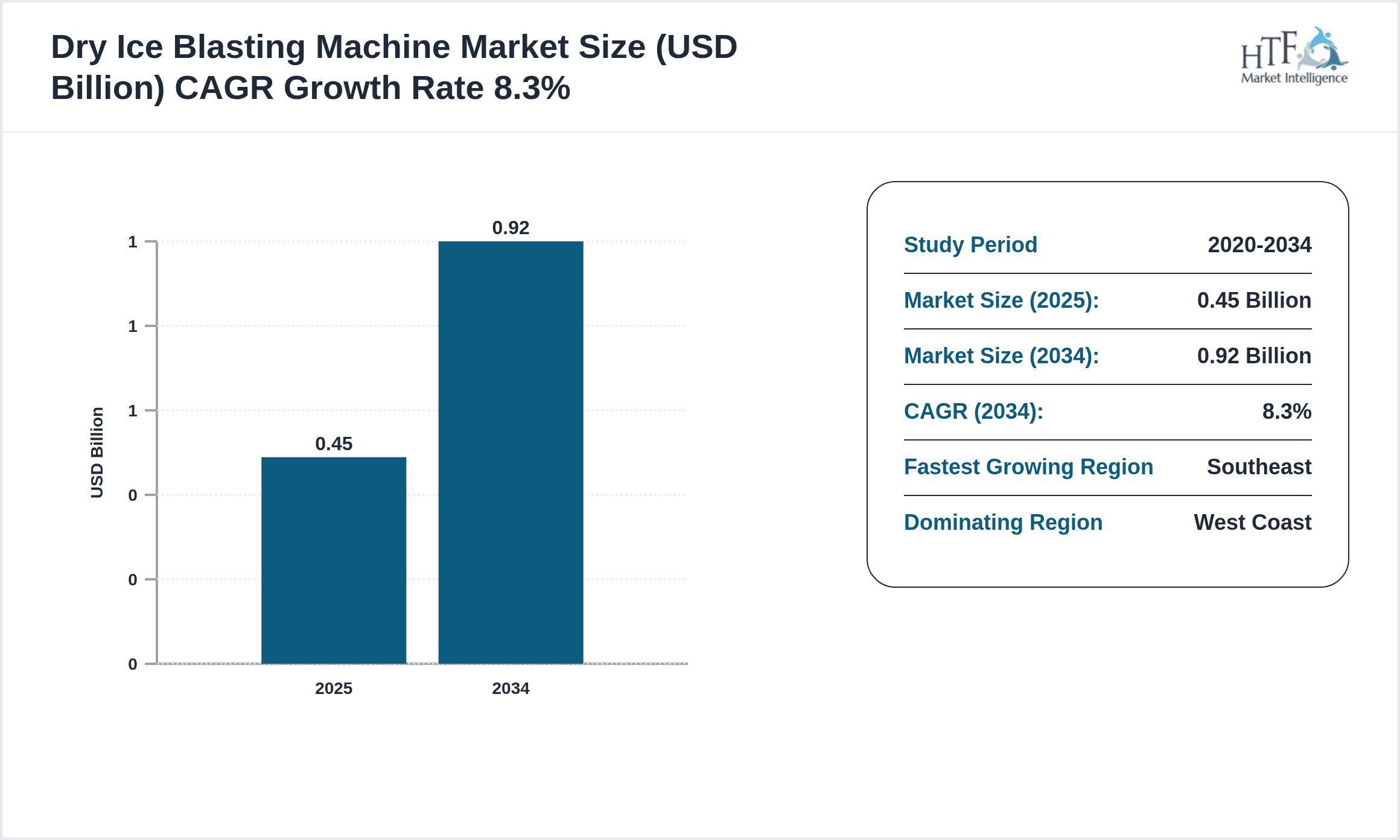
- •Key highlights of the market include an estimated market size of USD 450 million in 2025, with projections reaching USD 920 million by 2034, reflecting a robust CAGR of 8.3%. The West Coast dominates the regional market due to the concentration of technology-driven industries and stringent environmental initiatives. Meanwhile, the Southeast region is emerging as the fastest-growing area, propelled by rising manufacturing activities and infrastructure investments. Portable dry ice blasting machines currently lead product demand, favored for their flexibility and ease of use, whereas automated systems are witnessing the fastest growth, driven by increasing automation trends in production lines. The market's year-on-year growth rate aligns closely with the CAGR, indicating consistent annual expansion.
- •The dry ice blasting machine market offers strategic value for stakeholders in automotive, aerospace, food processing, and electronics sectors, providing efficient, cost-saving, and eco-friendly cleaning solutions. Its technology enables reduced downtime, enhanced operational safety, and compliance with environmental standards, making it indispensable for maintenance and manufacturing processes. Investment in research and development continues to yield innovations in machine design and automation, broadening the scope for applications. For equipment manufacturers, distributors, and end-users, understanding market dynamics and regional trends is crucial for leveraging growth opportunities and maintaining competitive advantage in a rapidly evolving industrial landscape.
Competitive Landscape
The competitive environment of the United States Dry Ice Blasting Machine market is characterized by the presence of a diverse set of players ranging from global equipment manufacturers to specialized regional providers. Market dynamics are influenced by technological innovation, strategic partnerships, and customer-centric service models. Companies are adopting competitive strategies such as product differentiation through advanced automation capabilities, enhanced portability, and energy-efficient designs to meet the growing demands of various end-use industries. The integration of IoT and smart maintenance features is becoming a key differentiator, enabling predictive service and operational efficiency. Pricing strategies vary, with premium products targeting high-end industrial applications and cost-effective models aimed at small to medium enterprises. Distribution channels encompass direct sales, authorized dealers, and online platforms, ensuring widespread market penetration. Barriers to entry include the need for significant R&D investment, compliance with environmental regulations, and establishing robust service networks. Regional competition is intense, especially in the West Coast and Southeast zones, where industrial hubs demand customized solutions. Future trends point towards increased consolidation through mergers and acquisitions, cross-industry collaborations, and heightened focus on sustainability to gain competitive advantage.
Leading Companies in Dry Ice Blasting Machine Market
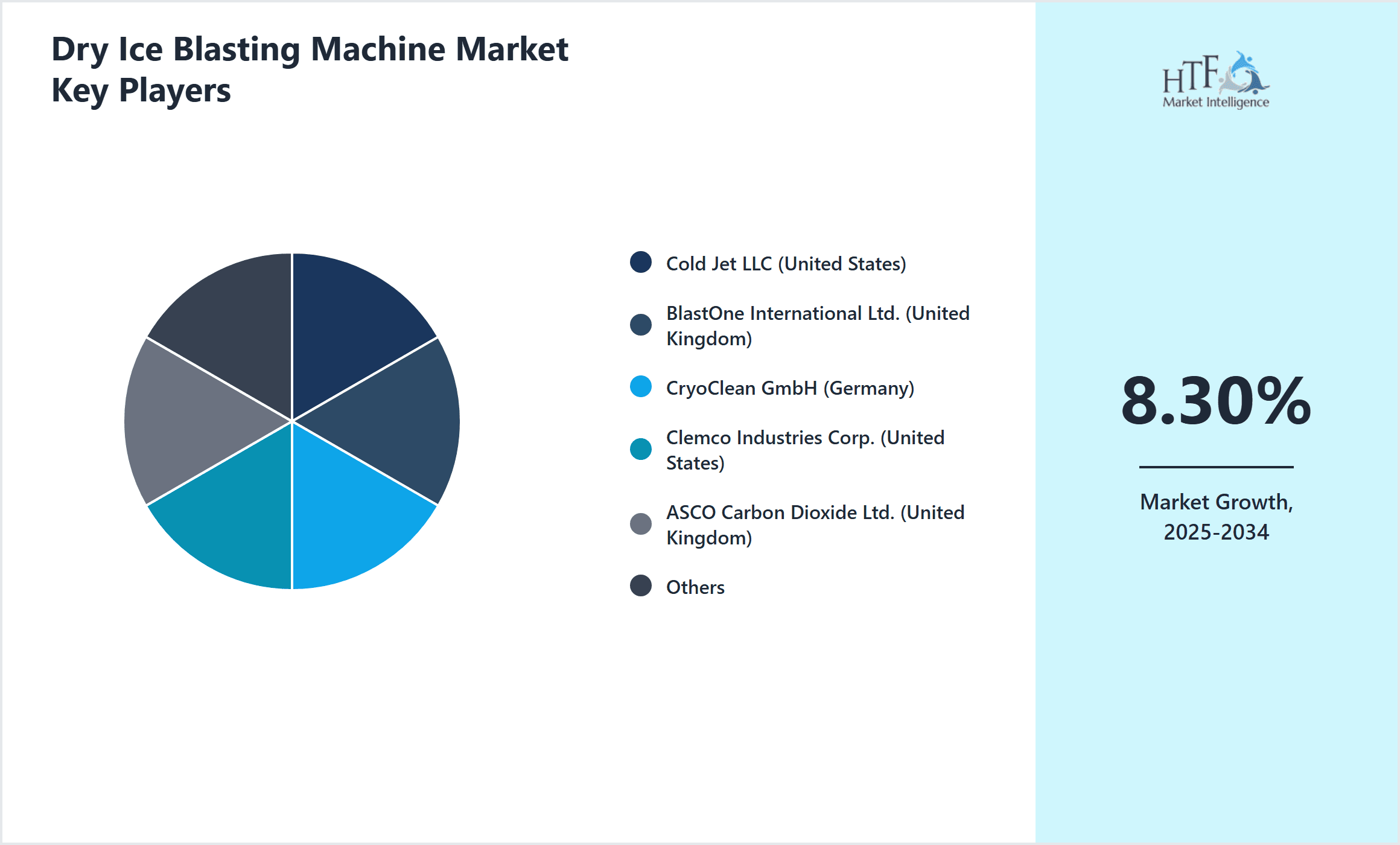
- •Cold Jet LLC (United States)
- •BlastOne International Ltd. (United Kingdom)
- •CryoClean GmbH (Germany)
- •Clemco Industries Corp. (United States)
- •ASCO Carbon Dioxide Ltd. (United Kingdom)
- •ICEsonic AB (Sweden)
- •Wagner Group GmbH (Germany)
- •Gema Switzerland GmbH (Switzerland)
- •Aero Technologies Inc. (United States)
- •KMT Waterjet Systems Inc. (United States)
- •Dry Ice Tech (Canada)
- •Praxair Technology Inc. (United States)
- •Cryo Snow (France)
- •IceTech Oy (Finland)
- •CO2Clean Technologies Inc. (United States)
- •Hollingsworth & Vose Company (United States)
- •Airblast Equipments Pvt. Ltd. (India)
- •Cryo Dynamics Inc. (United States)
- •Thermo Fisher Scientific (United States)
- •Linde plc (Ireland)
- •Aqua Jet Systems GmbH (Germany)
- •Powdertech Group (United Kingdom)
- •Kärcher GmbH & Co. KG (Germany)
- •Sani-Tech West Inc. (United States)
- •CryoBlast Ltd. (United Kingdom)
Market Breakdown
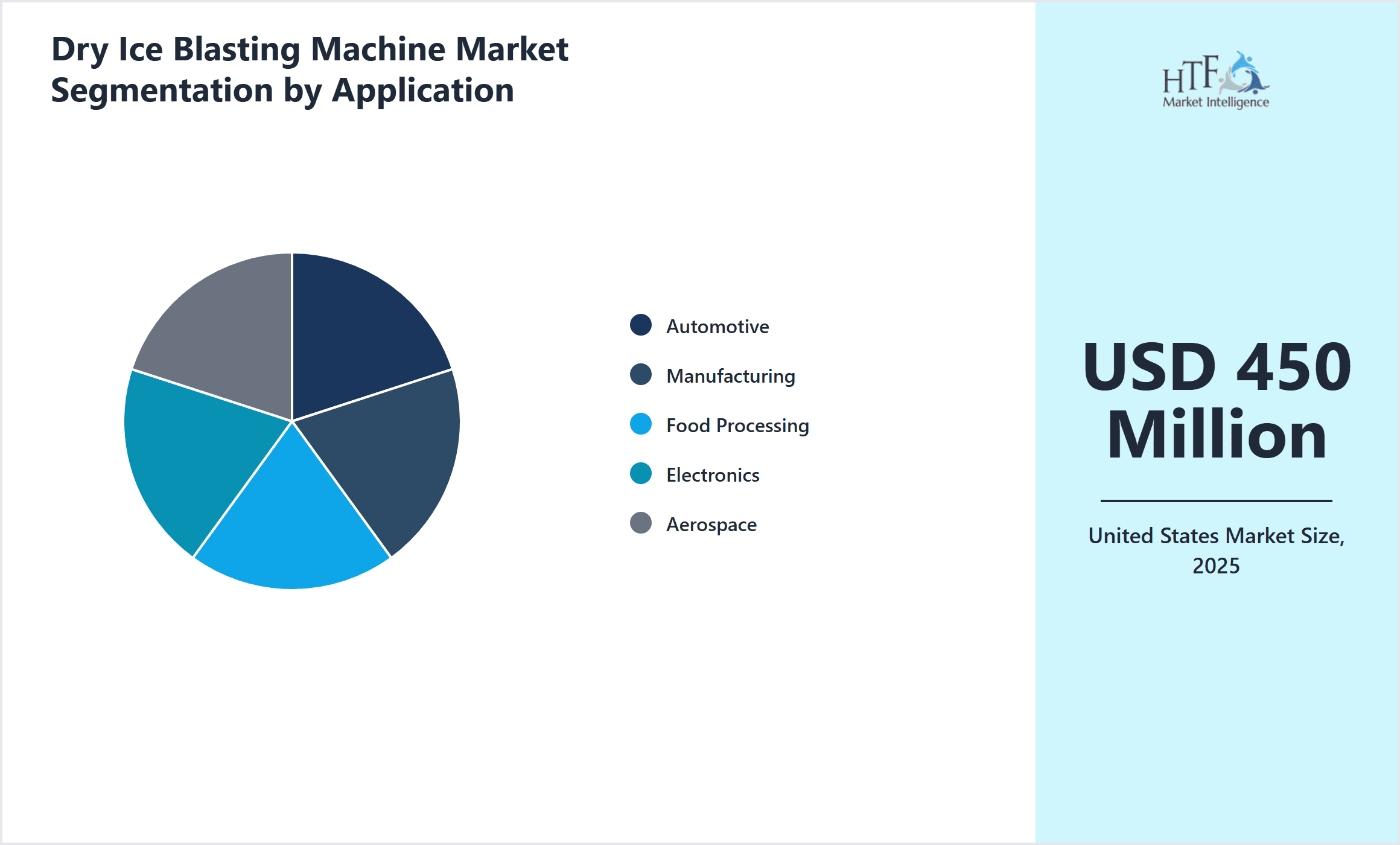
- •By Product Type
- ◦Portable Dry Ice Blasting Machines
- ◦Stationary Dry Ice Blasting Machines
- ◦Automated Dry Ice Blasting Systems
- ◦Custom Dry Ice Blasting Machines
- ◦Other Types
- •By Application
- ◦Automotive
- ◦Manufacturing
- ◦Food Processing
- ◦Electronics
- ◦Aerospace
- •By End-Use Industry
- ◦Automotive Industry
- ◦Industrial Manufacturing
- ◦Food & Beverage Processing
- ◦Electronics & Semiconductor
- •By Distribution Channel
- ◦Direct Sales
- ◦Authorized Dealers
- ◦Online Platforms
Growth Dynamics
- •Increasing industrial automation in manufacturing and automotive sectors is driving demand for advanced dry ice blasting machines that provide efficient, non-abrasive cleaning with minimal downtime, enhancing operational productivity.
- •Stringent environmental regulations in the United States promoting sustainable cleaning technologies have accelerated the adoption of dry ice blasting, which generates no secondary waste and reduces chemical usage.
- •Rising maintenance and refurbishment activities in aerospace and electronics industries require precise, residue-free cleaning solutions, boosting the market for automated dry ice blasting systems.
- •Growth in the food processing industry with heightened hygiene standards is increasing demand for dry ice blasting machines that comply with food safety regulations and enable efficient cleaning.
- •Investment in R&D by manufacturers to develop portable and user-friendly equipment is expanding applications to small and medium enterprises, further propelling market growth.
- •Government incentives promoting green technologies and industrial modernization encourage end-users to adopt dry ice blasting, enhancing market penetration.
- •Expanding infrastructure and industrial base in Southeast US regions is fostering rapid regional market growth, creating new opportunities for equipment suppliers.

Market Trends
- •There is a growing trend towards integrating IoT and smart sensors in dry ice blasting machines to enable predictive maintenance and optimize cleaning cycles, improving operational efficiency.
- •Manufacturers are increasingly offering automated and robotic dry ice blasting systems to meet the demand for precision cleaning in high-tech industries such as electronics and aerospace.
- •The shift towards portable dry ice blasting machines is enhancing accessibility for on-site cleaning applications across diverse industries, supporting flexible operational requirements.
- •Sustainability-focused initiatives by companies are driving adoption of dry ice blasting as a chemical-free and environmentally responsible cleaning method, aligning with corporate social responsibility goals.
- •Collaborations between equipment manufacturers and carbon dioxide suppliers are improving supply chain efficiency, ensuring steady availability of raw materials for machine operation.
- •The emergence of service-based business models, including equipment leasing and maintenance contracts, is expanding market reach and customer base.
- •Advances in dry ice pellet production technology are enhancing blasting performance and reducing operational costs, strengthening market competitiveness.
Market Opportunities
- •Untapped potential exists in expanding dry ice blasting applications in the pharmaceutical and healthcare sectors, driven by stringent cleanliness and contamination control requirements.
- •Emerging demand for customized and automated dry ice blasting solutions tailored to specific industry needs offers significant innovation and market penetration opportunities.
- •Geographical expansion within underdeveloped US regions, including the Midwest and Southwest, presents growth avenues supported by increasing industrial activities.
- •Investment in research to develop energy-efficient and compact dry ice blasting machines can attract small and medium enterprises seeking cost-effective cleaning solutions.
- •Strategic partnerships between equipment manufacturers and service providers can enhance after-sales support and customer satisfaction, fostering market loyalty.
- •Integration of digital platforms for machine monitoring and remote troubleshooting can create value-added services, differentiating offerings in a competitive market.
- •Growing emphasis on eco-friendly cleaning in food processing and electronics manufacturing can drive wider adoption and regulatory support for dry ice blasting technology.
Market Challenges
- •High initial investment costs for advanced dry ice blasting machines limit accessibility for small enterprises and may slow adoption rates in certain segments.
- •Limited awareness and technical expertise regarding dry ice blasting technology among potential end-users pose challenges for market expansion.
- •Dependence on consistent supply of carbon dioxide pellets can be a bottleneck, especially in regions with supply chain disruptions or regulatory constraints.
- •Compliance with evolving environmental and safety regulations requires manufacturers to continuously upgrade equipment design, increasing R&D expenses.
- •Competition from alternative cleaning technologies such as laser cleaning and water blasting may impact market growth and pricing strategies.
- •Operational challenges including noise levels and specialized training requirements can limit adoption in sensitive industrial environments.
- •Economic fluctuations affecting capital expenditure budgets in key industries may lead to delayed or reduced investments in new cleaning equipment.
Regulatory Framework
- •The Clean Air Act amendments enacted between 2020 and 2025 have imposed stricter emission standards on industrial cleaning operations, promoting the adoption of dry ice blasting machines that do not emit volatile organic compounds.
- •OSHA regulations updated in 2022 require enhanced safety protocols for operators of dry ice blasting equipment, including mandatory training and protective gear, impacting machine design and usage.
- •Environmental Protection Agency (EPA) guidelines introduced in 2023 emphasize the reduction of chemical waste in cleaning processes, favoring dry ice blasting as an eco-friendly alternative in manufacturing industries.
- •State-level mandates, particularly in California and New York, enacted between 2021 and 2024, target sustainable industrial practices, incentivizing companies to invest in green cleaning technologies such as dry ice blasting.
- •Federal grants and incentives launched in 2024 support research and deployment of environmentally sustainable industrial equipment, including dry ice blasting machines, enhancing market growth potential.
Market Intelligence
- •15th January 2025, Cold Jet LLC launched the 'EcoBlast Pro X' portable dry ice blasting machine designed for enhanced energy efficiency and reduced operational noise. Targeting automotive and aerospace sectors, this product integrates advanced IoT sensors for real-time performance monitoring and predictive maintenance, aiming to reduce downtime and maintenance costs. The launch aligns with increasing demand for environmentally sustainable cleaning technologies and expanding applications in precision industries. The product features customizable blasting parameters suitable for delicate surfaces, supporting compliance with stringent industry standards. Source: Cold Jet LLC Official Press Release
- •12th March 2025, Clemco Industries Corp. introduced an automated dry ice blasting system equipped with robotic arms and AI-based cleaning path optimization. This innovation targets electronics and semiconductor manufacturers requiring high-precision cleaning with minimal human intervention. The system significantly improves cleaning consistency, reduces labor costs, and enhances safety by minimizing operator exposure. Clemco's strategic initiative reflects growing market trends toward automation and smart manufacturing, aiming to capture a larger share in the US industrial cleaning equipment market. Source: Clemco Industries Corp. Corporate Announcement
- •30th May 2024, Praxair Technology Inc. announced a partnership with regional distributors to expand dry ice pellet supply infrastructure across the Southeast United States. This strategic move addresses supply chain challenges, ensuring steady availability of raw materials essential for dry ice blasting machine operation. The initiative supports the growing demand in emerging industrial hubs and mitigates risks associated with pellet shortages, thus facilitating uninterrupted production processes for end-users. Source: Industry Weekly Journal
- •8th November 2024, CO2Clean Technologies Inc. completed the acquisition of a smaller regional dry ice blasting equipment manufacturer to strengthen its product portfolio and enhance after-sales service capabilities in the Midwest and Southwest regions. The merger is expected to consolidate market share, accelerate innovation through combined R&D efforts, and improve distribution efficiency. This move reflects broader consolidation trends in the United States market as companies seek competitive advantages through scale and service excellence. Source: CO2Clean Technologies Inc. Press Release
Regional Outlook
The West Coast currently holds a significant share of the market, primarily due to several key factors: increasing consumption rates, a burgeoning population, and robust economic momentum. These elements collectively drive demand, positioning this region as a leader in the market. On the other hand, Southeast is rapidly emerging as the fastest-growing area within the industry. This remarkable growth can be attributed to swift infrastructure development, the expansion of various industrial sectors, and a marked increase in consumer demand. These dynamics make this region a crucial player in shaping future market growth.
In our report, we cover a comprehensive analysis of the following regions and countries:
- Northeast
- Southwest
- The South
- The Midwest
| Feature | Details |
|---|---|
| Base Year Market Size | USD 450 Million |
| Forecast Year Market Size | USD 920 Million |
| CAGR | 8.3% |
| Forecast Period | 2026 to 2033 |
| YoY Growth | 8.2% |
| Scope of Report | Market is segmented by Product Type (Portable Dry Ice Blasting Machines, Stationary Dry Ice Blasting Machines, Automated Dry Ice Blasting Systems, Custom Dry Ice Blasting Machines, Other Types), Application (Automotive, Manufacturing, Food Processing, Electronics, Aerospace), End-Use Industry (Automotive Industry, Industrial Manufacturing, Food & Beverage Processing, Electronics & Semiconductor), Distribution Channel (Direct Sales, Authorized Dealers, Online Platforms) |
| Regions Covered | Northeast, Southwest, The South, The Midwest |
| Key Companies | Cold Jet LLC (United States), BlastOne International Ltd. (United Kingdom), CryoClean GmbH (Germany), Clemco Industries Corp. (United States), ASCO Carbon Dioxide Ltd. (United Kingdom), ICEsonic AB (Sweden), Wagner Group GmbH (Germany), Gema Switzerland GmbH (Switzerland), Aero Technologies Inc. (United States), KMT Waterjet Systems Inc. (United States), Dry Ice Tech (Canada), Praxair Technology Inc. (United States), Cryo Snow (France), IceTech Oy (Finland), CO2Clean Technologies Inc. (United States), Hollingsworth & Vose Company (United States), Airblast Equipments Pvt. Ltd. (India), Cryo Dynamics Inc. (United States), Thermo Fisher Scientific (United States), Linde plc (Ireland), Aqua Jet Systems GmbH (Germany), Powdertech Group (United Kingdom), Kärcher GmbH & Co. KG (Germany), Sani-Tech West Inc. (United States), CryoBlast Ltd. (United Kingdom) |
United States Dry Ice Blasting Machine Market Size, Growth & Revenue 2025-2034 - Table of Contents
Research enthusiast focused on transforming data uncovering into actionable insights through data-driven decision-making.
Frequently Asked Questions (FAQ):
The Compact Track Loaders market is expected to see value worth 5.3 Billion in 2025.
North America currently leads the market with approximately 45% market share, followed by Europe at 28% and Asia-Pacific at 22%. The remaining regions account for 5% of the global market.
Key growth drivers include increasing construction activities, rising demand for versatile equipment in agriculture, technological advancements in track loader design, and growing preference for compact equipment in urban construction projects.