
Global Trimethylolpropane Market - Outlook 2025-2034
Global Trimethylolpropane Market is segmented by Product Type (Industrial Grade Trimethylolpropane, Pharmaceutical Grade Trimethylolpropane, Food Grade Trimethylolpropane, Cosmetic Grade Trimethylolpropane, Others), Application (Coatings & Paints, Polyurethane Foams, Adhesives & Sealants, Lubricants, Plasticizers), End-Use Industry (Automotive, Construction, Pharmaceuticals, Personal Care & Cosmetics), Distribution Channel (Direct Sales, Distributors, Online Sales), and Geography (North America, LATAM, West Europe, Central & Eastern Europe, Northern Europe, Southern Europe, East Asia, Southeast Asia, South Asia, Central Asia, Oceania, MEA)
Pricing
Report Overview
Executive Summary
- •The global Trimethylolpropane (TMP) market is a dynamic segment within the chemical industry, focusing on the production and application of TMP, a versatile tri-functional alcohol widely utilized in polyurethane foam manufacturing, coatings, adhesives, lubricants, and plasticizers. TMP's role as an intermediate in resin and polyester synthesis underpins its significance across various industrial and consumer applications. The market spans multiple grades including industrial, pharmaceutical, food, and cosmetic, each serving distinct sectors such as automotive, construction, pharmaceuticals, and personal care. Technological innovations and stringent regulatory frameworks worldwide shape the market's development trajectory. Demand growth is driven by end-user industries seeking enhanced material performance and sustainability. The market's global nature is reflected in its diverse regional contributions, with North America currently dominating and Asia-Pacific showing rapid expansion. Strategic investments, product innovation, and evolving applications collectively define the competitive and growth landscape of the TMP market.
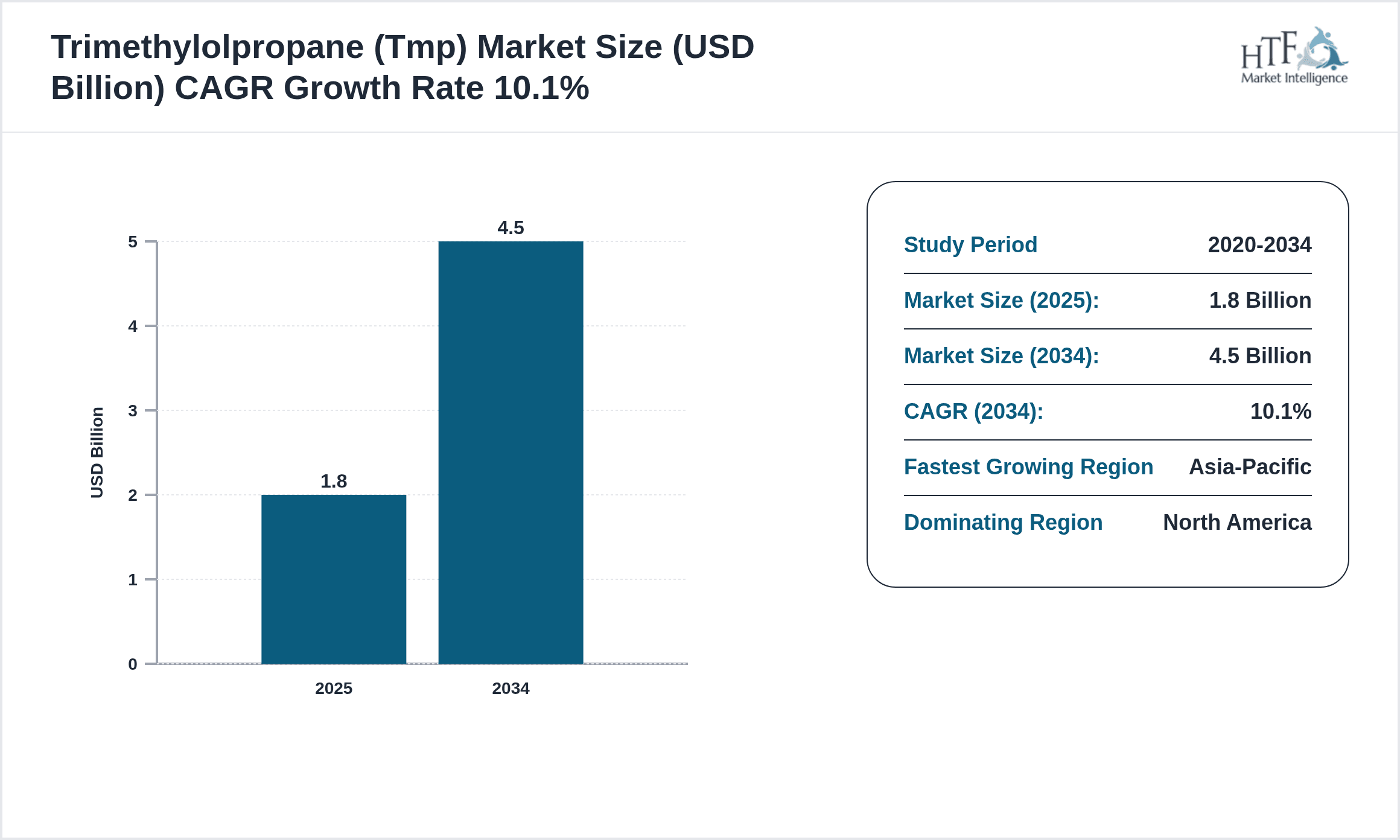
- •Key market highlights include a base market size of USD 1.8 Billion in 2025, projected to reach USD 4.5 Billion by 2034, with a robust CAGR of 10.1%. North America leads the market in size, while Asia-Pacific is the fastest-growing region driven by industrial expansion and increasing demand in pharmaceuticals and coatings. Industrial grade TMP holds the largest market share, but pharmaceutical grade TMP is poised for the fastest growth due to rising healthcare applications. The coatings and paints segment dominates applications, closely followed by polyurethane foams. Market indicators suggest sustained growth fueled by technological advancements and emerging end-use industries.
- •The value proposition of the TMP market lies in its multifaceted applications across critical industries such as automotive, construction, pharmaceuticals, and personal care. TMP enhances product durability, flexibility, and chemical resistance, providing stakeholders with opportunities for innovation and market penetration. The market's strategic importance is underscored by its role in sustainable product development and the growing emphasis on environmentally friendly processes. For manufacturers, investors, and end-users, the TMP market offers avenues for growth through product diversification, regional expansion, and alignment with global regulatory standards, making it a vital component of the specialty chemicals landscape.
Competitive Landscape
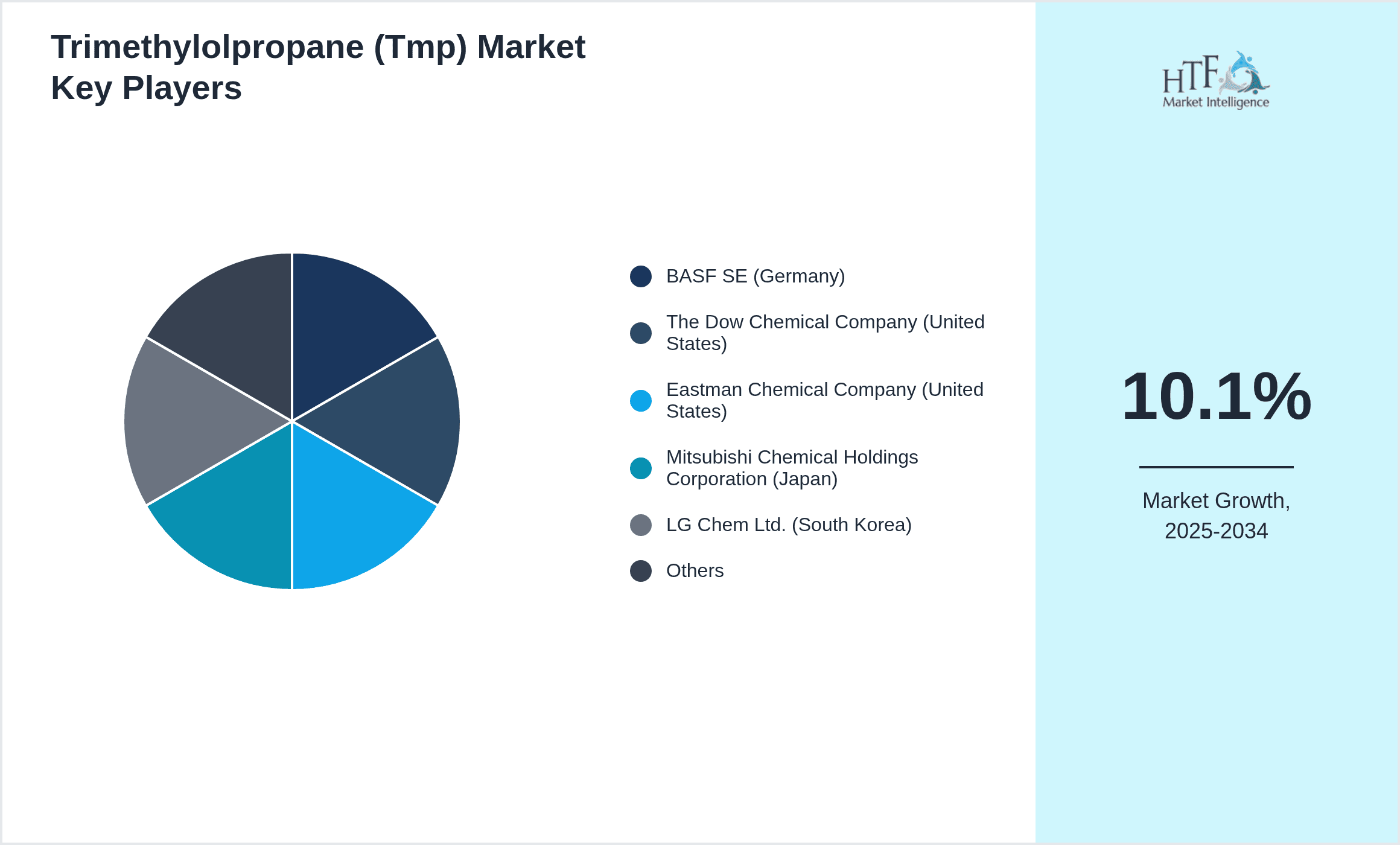
The global Trimethylolpropane market exhibits a highly competitive environment characterized by the presence of diversified players ranging from multinational chemical giants to specialized regional manufacturers. Market competition is driven by continuous innovation in product quality, cost-effective production methods, and expanding application portfolios. Companies invest heavily in R&D to develop sustainable and bio-based TMP variants, aiming to meet evolving regulatory requirements and consumer preferences. Strategic partnerships, mergers and acquisitions, and geographic expansion are common tactics to enhance market positioning and distribution networks. Pricing strategies, supply chain optimization, and differentiated product offerings further intensify competition. The rivalry fosters technological advancements and broadens application scopes, ensuring dynamic market evolution. Barriers to entry include high capital requirements and stringent regulatory compliances, which favor established players. Future trends indicate increased collaboration and digital transformation to maintain competitive advantages and address global demand efficiently.
Leading Companies in Trimethylolpropane Market
- •BASF SE (Germany)
- •The Dow Chemical Company (United States)
- •Eastman Chemical Company (United States)
- •Mitsubishi Chemical Holdings Corporation (Japan)
- •LG Chem Ltd. (South Korea)
- •Huntsman Corporation (United States)
- •Wanhua Chemical Group Co., Ltd. (China)
- •Covestro AG (Germany)
- •Evonik Industries AG (Germany)
- •Shell Chemicals (Netherlands)
- •Celanese Corporation (United States)
- •Trinseo (United States)
- •AkzoNobel N.V. (Netherlands)
- •Sinopec Corporation (China)
- •SABIC (Saudi Arabia)
- •INEOS Group (United Kingdom)
- •Mitsui Chemicals, Inc. (Japan)
- •Eastman Kodak Company (United States)
- •Clariant AG (Switzerland)
- •LyondellBasell Industries (Netherlands)
- •Sumitomo Chemical Co., Ltd. (Japan)
- •Westlake Chemical Corporation (United States)
- •Jiangsu Sanmu Group Co., Ltd. (China)
- •MGC Chemicals (Japan)
- •Nouryon (Netherlands)

Market Breakdown
- •By Product Type
- ◦Industrial Grade Trimethylolpropane
- ◦Pharmaceutical Grade Trimethylolpropane
- ◦Food Grade Trimethylolpropane
- ◦Cosmetic Grade Trimethylolpropane
- ◦Others
- •By Application
- ◦Coatings & Paints
- ◦Polyurethane Foams
- ◦Adhesives & Sealants
- ◦Lubricants
- ◦Plasticizers
- •By End-Use Industry
- ◦Automotive
- ◦Construction
- ◦Pharmaceuticals
- ◦Personal Care & Cosmetics
- •By Distribution Channel
- ◦Direct Sales
- ◦Distributors
- ◦Online Sales
Growth Dynamics
- •Rising demand from the automotive and construction sectors is a significant growth driver, with TMP being a key component in polyurethane foams and coatings that enhance product durability and safety. Increasing urbanization and infrastructure development in emerging economies fuel this trend.
- •Technological advancements in bio-based TMP production methods are enabling manufacturers to offer more sustainable and eco-friendly products, aligning with global environmental regulations and consumer preferences for green chemicals.
- •The pharmaceutical industry's expanding use of TMP as an intermediate in drug synthesis and formulation is driving demand, particularly for pharmaceutical grade TMP, which requires high purity standards and specialized production techniques.
- •Government initiatives promoting chemical safety and environmental sustainability are stimulating innovation and investments in TMP production, thus supporting market expansion across various regions.
- •Emerging applications in personal care and cosmetics, leveraging TMP's multifunctional properties, present new avenues for market growth, with increasing consumer awareness and regulatory acceptance boosting demand.

Market Trends
- •The market is witnessing a shift towards bio-based and renewable raw materials for TMP production, driven by sustainability goals and regulatory pressures, with several companies investing in green chemistry innovations.
- •Integration of digital technologies and automation in manufacturing processes is enhancing production efficiency, quality control, and supply chain transparency within the TMP industry.
- •Collaborations and strategic partnerships among chemical producers and end-users are becoming prevalent, aiming to co-develop customized TMP formulations to meet specific application needs and regulatory standards.
- •Increasing emphasis on circular economy principles is encouraging recycling and reuse practices of TMP-based products, contributing to reduced environmental footprint and cost savings.
- •Rising demand in emerging markets, particularly in Asia-Pacific and Latin America, is reshaping global supply chains and prompting capacity expansions by major producers to capture growth opportunities.
Market Opportunities
- •Expanding pharmaceutical applications offer lucrative opportunities for high-purity pharmaceutical grade TMP, with increasing investment in drug development and personalized medicine driving demand.
- •Geographical expansion into untapped emerging markets, especially in Asia-Pacific and Latin America, presents growth prospects due to rising industrialization and consumer markets.
- •Development of novel TMP-based polymers and resins with enhanced performance characteristics can open new application areas and improve competitive positioning.
- •Strategic partnerships and joint ventures aimed at technology sharing and capacity enhancement can accelerate market penetration and innovation.
- •Investment in sustainable and bio-based production technologies aligns with global trends and regulatory mandates, providing differentiation and long-term growth potential.
Market Challenges
- •High production costs associated with specialized grades of TMP, particularly pharmaceutical and cosmetic grades, limit market accessibility and price competitiveness in certain regions.
- •Stringent regulatory requirements concerning chemical safety, environmental impact, and product purity impose compliance costs and operational challenges for manufacturers.
- •Fluctuations in raw material prices, especially petrochemical feedstocks, create volatility in production costs and impact profit margins across the market.
- •Supply chain disruptions due to geopolitical tensions, logistic constraints, or natural disasters can hinder timely delivery and increase operational risks.
- •Competition from alternative chemicals and evolving material technologies may reduce TMP demand in certain applications, necessitating continuous innovation.
Regulatory Framework
- •Between 2020 and 2025, global regulatory bodies have intensified focus on chemical safety standards, mandating rigorous testing and certification for TMP products to ensure compliance with environmental and health guidelines.
- •The implementation of REACH (Registration, Evaluation, Authorization and Restriction of Chemicals) in Europe has required manufacturers to meet strict data submission and safety assessment protocols, impacting market entry and product development.
- •Environmental regulations targeting volatile organic compounds (VOCs) have influenced TMP usage in coatings and paints, promoting development of low-VOC formulations with TMP derivatives.
- •In North America, EPA regulations enforcing sustainable chemical production and waste management have driven investment in greener TMP manufacturing processes and emission control technologies.
- •Government incentives for sustainable chemical production in Asia-Pacific, including subsidies and tax benefits, have encouraged adoption of bio-based TMP production methods, accelerating market growth.
Market Intelligence
- •15th February 2025, BASF SE announced the launch of a new bio-based trimethylolpropane product line designed to reduce carbon footprint and meet increasing demand for sustainable raw materials in the coatings industry. This product features improved performance characteristics and complies with stringent environmental regulations, positioning BASF as a leader in green chemical innovation. The launch is aimed at expanding BASF's portfolio of eco-friendly intermediates and supporting clients in achieving sustainability targets. Source: BASF Official Press Release
- •10th April 2025, Eastman Chemical Company unveiled an advanced purification technology for pharmaceutical grade TMP, enhancing product purity and enabling expanded applications in high-end drug formulations. This technology reduces production costs and environmental impact, reinforcing Eastman’s commitment to innovation and quality. The initiative supports growing pharmaceutical demand and addresses regulatory compliance challenges faced by manufacturers worldwide. Source: Eastman Chemical Newsroom
- •22nd January 2025, Wanhua Chemical Group Co., Ltd. entered into a strategic partnership with a leading Asian polyurethane manufacturer to co-develop customized TMP-based resins for next-generation foam products. This collaboration aims to leverage Wanhua’s chemical expertise and the partner's market reach to accelerate new product commercialization and enhance supply chain efficiency. The partnership reflects the industry trend towards co-innovation and tailored solutions. Source: Wanhua Corporate Communications
- •5th March 2025, Covestro AG completed the expansion of its TMP production facility in Europe, increasing capacity by 30% to meet rising demand in automotive and construction sectors. The upgraded plant incorporates state-of-the-art technology to improve yield and reduce emissions, aligning with Covestro’s sustainability goals. This move strengthens Covestro’s market position in the TMP segment and supports regional supply chain resilience. Source: Covestro Press Release
Regional Outlook
The North America currently holds a significant share of the market, primarily due to several key factors: increasing consumption rates, a burgeoning population, and robust economic momentum. These elements collectively drive demand, positioning this region as a leader in the market. On the other hand, Asia-Pacific is rapidly emerging as the fastest-growing area within the industry. This remarkable growth can be attributed to swift infrastructure development, the expansion of various industrial sectors, and a marked increase in consumer demand. These dynamics make this region a crucial player in shaping future market growth.
In our report, we cover a comprehensive analysis of the following regions and countries:
- North America
- LATAM
- West Europe
- Central & Eastern Europe
- Northern Europe
- Southern Europe
- East Asia
- Southeast Asia
- South Asia
- Central Asia
- Oceania
- MEA
| Feature | Details |
|---|---|
| Base Year Market Size | USD 1.8 Billion |
| Forecast Year Market Size | USD 4.5 Billion |
| CAGR | 10.1% |
| Forecast Period | 2026 to 2033 |
| YoY Growth | 9.7% |
| Scope of Report | Market is segmented by Product Type (Industrial Grade Trimethylolpropane, Pharmaceutical Grade Trimethylolpropane, Food Grade Trimethylolpropane, Cosmetic Grade Trimethylolpropane, Others), Application (Coatings & Paints, Polyurethane Foams, Adhesives & Sealants, Lubricants, Plasticizers), End-Use Industry (Automotive, Construction, Pharmaceuticals, Personal Care & Cosmetics), Distribution Channel (Direct Sales, Distributors, Online Sales) |
| Regions Covered | North America, LATAM, West Europe, Central & Eastern Europe, Northern Europe, Southern Europe, East Asia, Southeast Asia, South Asia, Central Asia, Oceania, MEA |
| Key Companies | BASF SE (Germany), The Dow Chemical Company (United States), Eastman Chemical Company (United States), Mitsubishi Chemical Holdings Corporation (Japan), LG Chem Ltd. (South Korea), Huntsman Corporation (United States), Wanhua Chemical Group Co., Ltd. (China), Covestro AG (Germany), Evonik Industries AG (Germany), Shell Chemicals (Netherlands), Celanese Corporation (United States), Trinseo (United States), AkzoNobel N.V. (Netherlands), Sinopec Corporation (China), SABIC (Saudi Arabia), INEOS Group (United Kingdom), Mitsui Chemicals, Inc. (Japan), Eastman Kodak Company (United States), Clariant AG (Switzerland), LyondellBasell Industries (Netherlands), Sumitomo Chemical Co., Ltd. (Japan), Westlake Chemical Corporation (United States), Jiangsu Sanmu Group Co., Ltd. (China), MGC Chemicals (Japan), Nouryon (Netherlands) |
Global Trimethylolpropane Market - Outlook 2025-2034 - Table of Contents
Frequently Asked Questions (FAQ):
The Compact Track Loaders market is projected to grow at a CAGR of 6.8% from 2025 to 2030, driven by increasing demand in construction and agricultural sectors.
North America currently leads the market with approximately 45% market share, followed by Europe at 28% and Asia-Pacific at 22%. The remaining regions account for 5% of the global market.
Key growth drivers include increasing construction activities, rising demand for versatile equipment in agriculture, technological advancements in track loader design, and growing preference for compact equipment in urban construction projects.