
Europe Caustic Soda Prills 99% Market Size, Growth & Revenue 2024-2034
Europe Caustic Soda Prills 99% Market is segmented by Product Type (Solid Prills, Flakes, Liquid Caustic Soda, Micro Pearls, Dense Prills), Application (Chemical Manufacturing, Pulp & Paper, Water Treatment, Soap & Detergents, Textile Processing), End-Use Industry (Industrial Chemicals, Water Treatment Plants, Textile Mills, Consumer Goods Manufacturing), Distribution Channel (Direct Sales, Distributors, Online Platforms), and Geography (Germany, France, The United Kingdom, BeNeLux, Spain, Italy, NORDIC, CEE, Others)
Pricing
Report Overview
Executive Summary
- •The Europe Caustic Soda Prills 99% market constitutes a critical segment within the broader chemical manufacturing industry, focusing on the supply and demand of caustic soda in its prilled form with a purity of 99%. This product serves as a fundamental raw material in multiple industrial verticals including chemical synthesis, water treatment, pulp and paper manufacturing, soap and detergent production, and textile processing. The market's scope extends across key European countries such as Germany, France, the United Kingdom, BeNeLux, Spain, Italy, Nordic countries, and Central & Eastern Europe, reflecting a geographically diverse demand base. Market participants include manufacturers, distributors, and end-users, with product forms ranging from solid prills and flakes to liquid caustic soda and micro pearls. The market dynamics are driven by industrial growth, technological advancements, and stringent environmental regulations that foster demand for high-purity and efficient caustic soda products. The increasing industrialization and emphasis on sustainable chemical processing further propel market expansion through 2034.
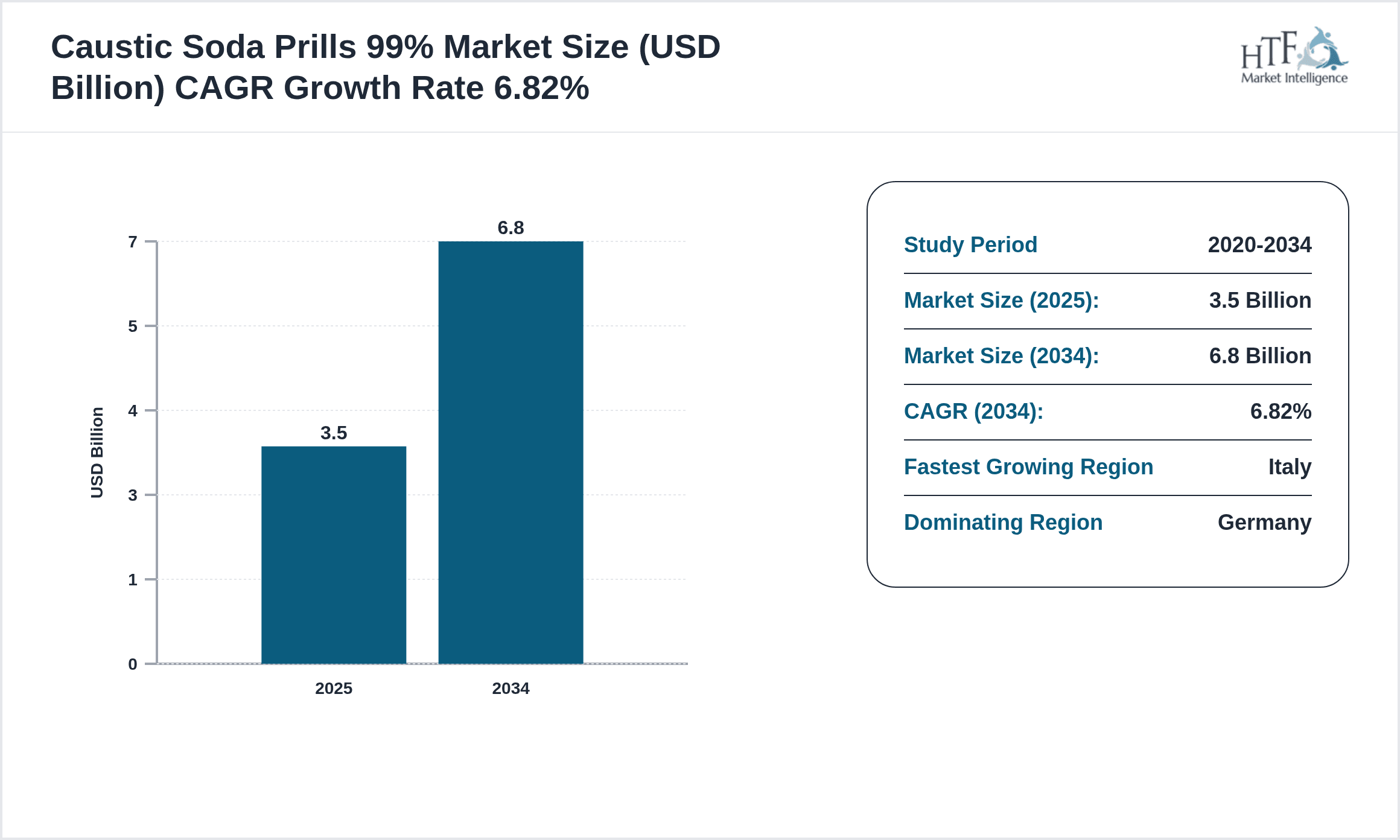
- •Key market highlights include a projected CAGR of 6.82% from 2024 to 2034, with the market size expected to grow from USD 3.5 Billion in 2024 to USD 6.8 Billion by 2034. Germany leads the market in terms of dominance due to its strong chemical manufacturing base, while Italy is identified as the fastest-growing country driven by rising industrial investments and modernization of production facilities. Solid prills remain the leading product type, favored for ease of handling and storage, whereas the micro pearls segment is poised for rapid growth due to their enhanced solubility and application versatility. Chemical manufacturing remains the largest application, supported by pulp & paper and water treatment sectors, highlighting the diverse end-use landscape that sustains the market's robustness. Year-on-year growth averages 6.6%, signaling steady market expansion with incremental adoption of innovative product forms and environmentally sound processes.
- •The value proposition of the Europe Caustic Soda Prills 99% market lies in its strategic role as a raw material that underpins multiple critical industries, contributing substantially to economic output and industrial sustainability. Its high purity ensures compatibility with stringent quality requirements across chemical synthesis and environmental applications. For stakeholders including manufacturers, distributors, and industrial end-users, this market represents significant opportunities for growth through product innovation, regional expansion, and regulatory compliance leadership. The market's importance is further amplified by the increasing push towards eco-friendly production technologies and circular economy practices in Europe, positioning caustic soda prills as an indispensable chemical feedstock in the continent's industrial ecosystem.
Competitive Landscape
The Europe Caustic Soda Prills 99% market is characterized by intense competition among leading chemical manufacturers and regional suppliers striving to secure market share through innovation, operational excellence, and strategic partnerships. Market players focus on product differentiation by enhancing purity levels, particle size distribution, and solubility to meet specific application requirements. Competitive strategies include expanding production capacities aligned with environmental sustainability standards, investing in R&D for next-generation caustic soda formulations, and optimizing supply chains for cost efficiency. The rivalry is heightened by the presence of multinational corporations with strong brand equity and local firms leveraging regional expertise. Additionally, technological advancements such as automated manufacturing and digital monitoring systems provide competitive advantages. Market entry barriers are significant due to capital intensity and strict regulatory compliance, which tend to favor established players. Strategic collaborations, joint ventures, and mergers & acquisitions are common to consolidate market position and expand geographic footprint. Overall, the competitive landscape is dynamic, driven by innovation, quality, and sustainability imperatives.
Leading Companies in Caustic Soda Prills 99% Market
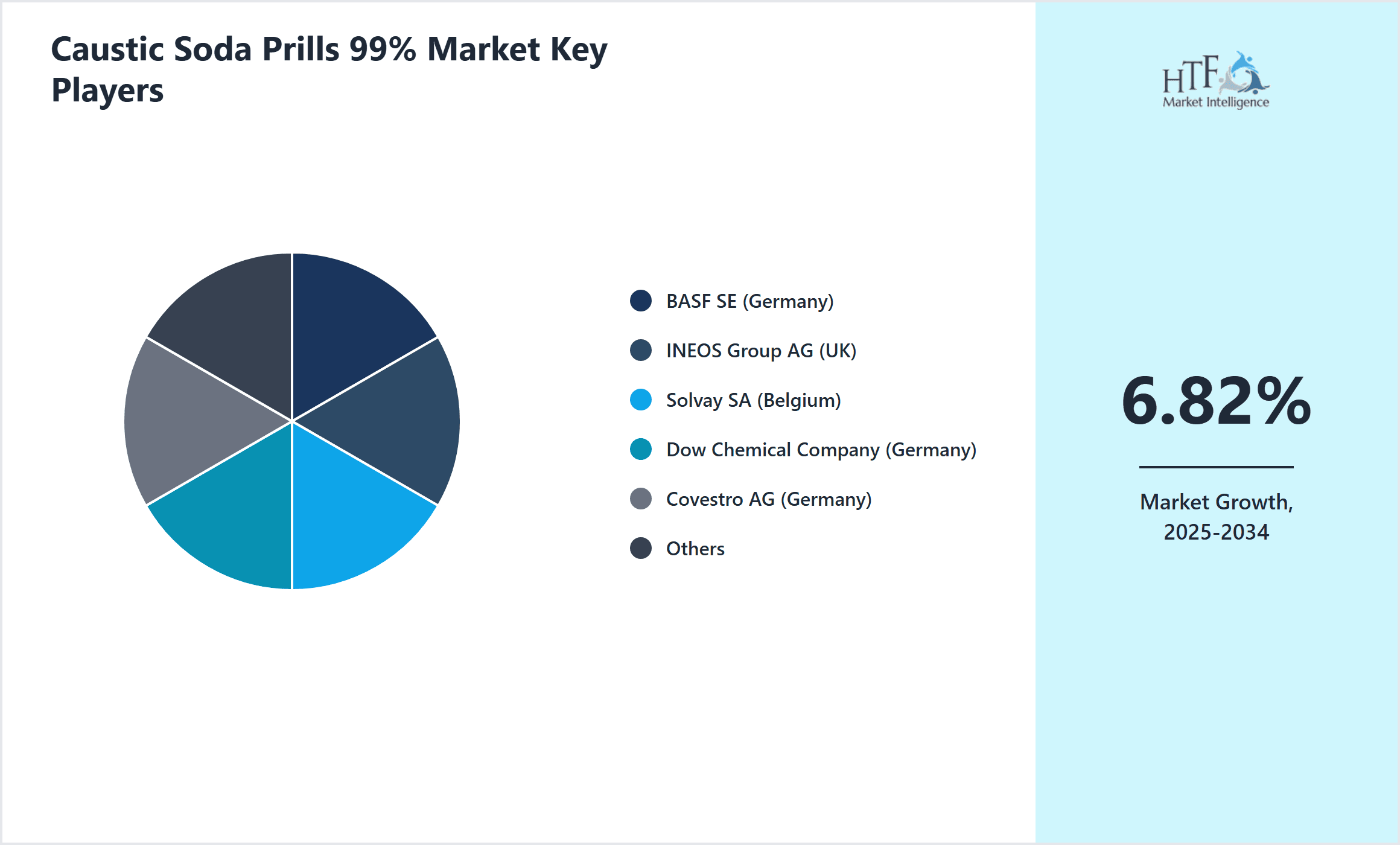
- •BASF SE (Germany)
- •INEOS Group AG (UK)
- •Solvay SA (Belgium)
- •Dow Chemical Company (Germany)
- •Covestro AG (Germany)
- •Nouryon (Netherlands)
- •AkzoNobel N.V. (Netherlands)
- •Brunner GmbH (Germany)
- •Vynova Group (Belgium)
- •Tessenderlo Group (Belgium)
- •Lanxess AG (Germany)
- •Solvionic (France)
- •LyondellBasell Industries (Netherlands)
- •Kemira Oyj (Finland)
- •SABIC Europe (Netherlands)
- •Mitsubishi Chemical Europe (Germany)
- •Ercros SA (Spain)
- •Synthomer plc (UK)
- •Axiall Europe (Belgium)
- •SGL Carbon SE (Germany)
- •Olin Europe (Netherlands)
- •Ciech Group (Poland)
- •Solvay Fluor (France)
- •Linde plc (Germany)
- •Yara International ASA (Norway)

Market Breakdown
- •By Product Type
- ◦Solid Prills
- ◦Flakes
- ◦Liquid Caustic Soda
- ◦Micro Pearls
- ◦Dense Prills
- •By Application
- ◦Chemical Manufacturing
- ◦Pulp & Paper
- ◦Water Treatment
- ◦Soap & Detergents
- ◦Textile Processing
- •By End-Use Industry
- ◦Industrial Chemicals
- ◦Water Treatment Plants
- ◦Textile Mills
- ◦Consumer Goods Manufacturing
- •By Distribution Channel
- ◦Direct Sales
- ◦Distributors
- ◦Online Platforms
Growth Dynamics
- •The Europe Caustic Soda Prills 99% market is propelled by increasing demand from the chemical manufacturing sector where caustic soda is a key feedstock for producing a variety of industrial chemicals. Additionally, the pulp and paper industry’s modernization and regulatory emphasis on eco-efficient processes have increased the need for high-purity caustic soda prills. Growth is also driven by the expanding water treatment market across Europe, where caustic soda aids pH regulation and contaminant removal. The rising consumption in soap and detergent manufacturing fueled by hygiene awareness further boosts demand. Moreover, ongoing technological advancements in prill production enhance product quality and operational efficiency, supporting market expansion. The growth trend is underpinned by stringent environmental regulations encouraging the use of prills with minimal impurities, fostering sustainable industrial practices across European countries.
- •Emerging market trends include the adoption of micro pearl caustic soda due to its superior solubility and ease of handling, which is gaining traction in chemical and water treatment applications. There is a clear shift towards eco-friendly production technologies that reduce carbon footprint and waste generation, aligning with Europe’s stringent environmental policies. Digitalization and automation in manufacturing processes improve consistency and reduce operational costs. Strategic collaborations between chemical manufacturers and end-user industries are increasingly common to develop customized caustic soda grades tailored for specific applications. The market also observes diversification of distribution channels, including increased utilization of online platforms for faster procurement, enhancing accessibility for smaller industrial players. Sustainability and circular economy integration remain central to market evolution, guiding product innovation and regulatory compliance.
- •Market restraints primarily stem from the volatile raw material prices, particularly electricity and salt, which constitute significant production costs for caustic soda prills. Regulatory compliance with environmental and safety standards imposes operational challenges and increases capital expenditure, especially for smaller producers. The corrosive nature of caustic soda necessitates stringent handling and storage protocols, limiting market penetration in some segments. Additionally, competition from alternative chemical substitutes and liquid caustic soda forms may constrain growth in specific applications. Economic uncertainties and fluctuating demand from downstream industries can also hamper market stability. Furthermore, supply chain disruptions and logistical complexities within Europe’s diverse regulatory environment present ongoing challenges that require strategic mitigation by industry players.
- •Market opportunities lie in expanding applications of caustic soda prills in emerging sectors such as bio-based chemical production and advanced water treatment technologies, including desalination and wastewater recycling. Geographic expansion into underpenetrated markets in Eastern and Southern Europe offers significant growth potential due to rising industrialization and infrastructure development. Product innovations targeting improved purity, reduced environmental impact, and enhanced safety profiles will cater to evolving customer requirements. Strategic investments in capacity expansion and technology upgrades can unlock efficiencies and cost advantages. The growing emphasis on circular economy initiatives and green chemistry opens avenues for sustainable product offerings and partnerships. Additionally, digital transformation in supply chain and sales processes can enhance market reach and customer engagement, providing competitive differentiation.
- •Key challenges include managing the balance between cost competitiveness and compliance with increasingly stringent European environmental regulations. The capital-intensive nature of production facilities and the need for continuous innovation to meet quality standards pose barriers to entry and expansion. Fluctuations in raw material availability and energy costs affect pricing stability. Market fragmentation with numerous regional players complicates consolidation efforts. Additionally, geopolitical factors and trade policies may impact cross-border supply chains. The handling hazards associated with caustic soda require rigorous safety training and infrastructure investments. Addressing these challenges requires strategic foresight, technological adoption, and robust risk management frameworks to sustain growth and profitability.

Market Trends
- •A prominent trend in the Europe Caustic Soda Prills 99% market is the increased utilization of micro pearl prills, which offer enhanced solubility and reduced dust generation, improving safety and processing efficiency. This trend is particularly evident in water treatment and specialty chemical applications, where precise dosing and purity are critical. The adoption of eco-friendly manufacturing processes using renewable energy sources aligns with Europe's sustainability goals and regulatory mandates. Furthermore, digital monitoring and automation technologies are increasingly integrated into production lines to optimize quality control and reduce operational costs. Collaborative innovation between chemical producers and end-users to develop customized formulations tailored for specific industrial applications is gaining momentum, reflecting heightened customer-centric approaches. Lastly, the expansion of online sales channels improves accessibility and supply chain responsiveness, catering to a diverse customer base across the continent.
- •The market also witnesses a shift towards greener supply chains with a focus on reducing carbon footprints and waste generation, driven by both regulatory pressure and corporate social responsibility initiatives. Increasing investments in research for alternative feedstocks and recycling technologies for caustic soda production are emerging trends. Integration of circular economy principles, including reuse of by-products and waste minimization, is being adopted by leading manufacturers. Strategic partnerships and mergers are shaping the competitive landscape, enabling resource sharing and technological synergies. Additionally, there is growing consumer awareness about sustainability in personal care and detergent products, indirectly influencing demand for high-quality caustic soda prills in these sectors. These trends collectively contribute to a more resilient and environmentally conscious market ecosystem in Europe.
- •Innovations in packaging and logistics are also notable, with companies adopting bulk handling solutions that reduce transportation costs and environmental impact. The use of advanced analytics and AI in demand forecasting and supply chain management is enhancing operational agility. Regional diversification strategies are being implemented to mitigate risks associated with localized disruptions. Furthermore, compliance with new European Union chemical regulations such as REACH (Registration, Evaluation, Authorization, and Restriction of Chemicals) influences product development and market access. The growing emphasis on safety and health standards leads to better workplace practices within the caustic soda supply chain. These evolving market trends collectively drive growth while addressing sustainability and regulatory compliance challenges.
- •Digital transformation initiatives, such as blockchain for supply chain transparency and traceability, are beginning to surface within the industry, promising improved accountability and efficiency. The emergence of specialty grades of caustic soda prills tailored for niche applications in pharmaceuticals, food processing, and electronics is expanding market scope. Companies are increasingly investing in energy-efficient technologies like membrane cell electrolysis to reduce production costs and environmental impact. Cross-sector collaborations for developing innovative chemical solutions enhance the market’s technological profile. The incorporation of IoT-enabled sensors for real-time monitoring of storage and handling conditions further improves safety and operational control. These trends indicate a technologically progressive market adapting to evolving industrial and environmental demands.
- •Sustainability certifications and eco-labeling of caustic soda products are gaining importance as end-users seek suppliers aligned with global environmental standards. The market is also influenced by the rising demand for biodegradable detergents and textiles, which require specialized caustic soda formulations. Efforts to reduce water usage and waste in production processes are being implemented to comply with stringent European environmental policies. Strategic focus on developing circular economy frameworks, including chemical recycling and waste valorization, is shaping long-term market trajectories. Finally, increased consumer and regulatory scrutiny on chemical safety is driving transparency and innovation in product formulations and supply chain practices, ensuring safer and more sustainable industrial ecosystems.
- •The integration of advanced manufacturing techniques such as continuous processing and modular plants is improving scalability and responsiveness to market demand fluctuations. Companies are exploring diversification into adjacent chemical products to leverage existing infrastructure and customer relationships. Market players are also enhancing corporate social responsibility initiatives to improve community relations and brand reputation. Growing emphasis on employee training and safety awareness reduces operational risks associated with handling caustic soda prills. The adoption of multi-modal transportation networks optimizes logistics efficiency and reduces environmental impact. Lastly, the incorporation of predictive maintenance and AI-driven analytics is enhancing plant reliability and reducing downtime, contributing to overall cost competitiveness and market resilience.
- •The Europe Caustic Soda Prills 99% market is increasingly shaped by geopolitical factors influencing trade policies, tariffs, and supply chain resilience strategies. Companies are developing contingency plans and sourcing diversification to mitigate risks from global disruptions. The evolving regulatory landscape, including chemical safety and environmental directives, requires agile compliance frameworks. Investment in sustainable innovation is prioritized to meet long-term market demands and corporate sustainability goals. Collaboration with research institutions and technology providers accelerates product development and process optimization. These multifaceted trends underscore the market’s adaptation to dynamic industrial, environmental, and geopolitical challenges, ensuring continued growth and competitiveness.
Market Opportunities
- •The Europe Caustic Soda Prills 99% market presents strategic growth opportunities in expanding production capacities focused on specialty prill grades such as micro pearls that cater to high-value applications requiring superior solubility and purity. Emerging industrial sectors like biofuels and advanced materials offer untapped demand for caustic soda derivatives, providing avenues for product diversification and innovation. Geographic penetration into underdeveloped Eastern and Southern European markets, where industrial infrastructure is expanding, represents a significant opportunity to increase market share. Additionally, investment in green manufacturing technologies aligns with stringent European environmental standards, offering competitive advantages and potential government incentives. Digitalization of supply chain and sales channels can enhance customer engagement and operational efficiency. Collaborations with end-users for customized solutions strengthen client relationships and foster long-term contracts, ensuring steady revenue streams and market resilience.
- •The growing emphasis on circular economy principles across Europe creates opportunities to develop chemical recycling processes and waste valorization techniques that integrate caustic soda products, enhancing sustainability and reducing environmental impact. Innovation in eco-friendly packaging and logistics solutions can optimize cost structures and appeal to environmentally conscious customers. Expansion of water treatment infrastructure driven by urbanization and regulatory mandates offers robust demand prospects. Furthermore, partnerships with technology providers to develop advanced electrolysis and membrane technologies can reduce production costs and carbon footprint, positioning companies as leaders in sustainable chemical manufacturing. Leveraging government incentives for clean energy and industrial modernization programs can accelerate growth and market penetration, particularly in emerging European economies.
- •Increasing consumer demand for sustainable personal care and detergent products opens avenues for specialized caustic soda prills tailored to biodegradable and hypoallergenic formulations. Expanding digital marketing and e-commerce platforms enhance distribution reach and customer accessibility, particularly for small and medium-sized enterprises. The integration of IoT and AI in production and supply chain management enables predictive maintenance, demand forecasting, and quality assurance, improving operational efficiency. Strategic acquisitions and joint ventures facilitate access to new technologies, markets, and customer segments, strengthening competitive positioning. Additionally, rising investments in infrastructure and industrial automation across Europe support increasing consumption of caustic soda in manufacturing processes. These opportunities collectively position market participants to capitalize on evolving industrial and consumer trends while enhancing sustainability and profitability.
- •The alignment of product development with evolving European Union chemical regulations and sustainability frameworks provides opportunities for differentiation and market entry. Development of premium caustic soda prills with enhanced purity and safety features caters to high-end industrial applications, expanding market scope. The increasing importance of health and safety compliance offers prospects for consultancy, training, and value-added service offerings linked to caustic soda handling and usage. Expansion into adjacent chemical markets, leveraging existing manufacturing capabilities, can diversify revenue streams and mitigate risks. Furthermore, the deployment of renewable energy sources in production plants aligns with corporate sustainability goals and reduces operational costs, enhancing competitiveness. These multifaceted opportunities support sustained growth and innovation in the Europe Caustic Soda Prills 99% market.
- •Advancements in supply chain transparency and traceability technologies such as blockchain create opportunities for enhanced customer trust and regulatory compliance. The development of collaborative platforms among industry stakeholders fosters innovation, knowledge sharing, and resource optimization. Emerging applications in pharmaceuticals, electronics, and food processing sectors, requiring high-purity caustic soda prills, offer niche market expansion potential. Increasing urbanization and environmental awareness drive demand for improved water treatment solutions utilizing caustic soda, supporting market growth. Additionally, investments in workforce training and safety infrastructure improve operational reliability and reduce incident-related costs. These opportunities contribute to building a resilient, diversified, and future-ready market landscape.
- •The Europe Caustic Soda Prills 99% market also benefits from potential export opportunities driven by competitive production costs and high product quality. Emerging digital tools for customer engagement and supply chain management promote efficiency and market responsiveness. Government incentives promoting green chemistry and circular economy initiatives provide financial and regulatory support for innovative projects. The growing focus on reducing greenhouse gas emissions encourages adoption of energy-efficient production methods and renewable energy integration. Partnerships with academic and research institutions facilitate development of next-generation caustic soda products and application technologies. These opportunities position market participants to lead in both regional and global markets through sustainable growth and technological leadership.
- •Finally, the diversification into customized caustic soda prill formulations addressing specific end-user requirements, such as enhanced dissolution rates or reduced dust emissions, enhances value proposition and customer loyalty. Market players can leverage data analytics and AI to optimize pricing strategies and inventory management, improving profitability. The rising trend of consolidation through mergers and acquisitions offers pathways to expand market presence and operational capabilities. Engagement in policy dialogues and industry associations enables proactive adaptation to regulatory changes and sustainability standards. These strategic opportunities ensure the Europe Caustic Soda Prills 99% market remains dynamic, competitive, and aligned with evolving industrial and environmental imperatives.
Market Challenges
- •One of the primary challenges faced by the Europe Caustic Soda Prills 99% market is the volatility in raw material and energy prices, which significantly affect production costs and pricing strategies. The capital-intensive nature of manufacturing plants limits new entrants and constrains capacity expansions. Stringent environmental regulations require substantial investments in pollution control and waste management, increasing operational complexity and expenses. Handling and storage of caustic soda prills pose safety risks due to their corrosive properties, necessitating rigorous training and infrastructure, particularly for smaller players. Market fragmentation with numerous regional suppliers creates pricing pressures and hinders economies of scale. Additionally, competition from alternative chemical forms such as liquid caustic soda and emerging substitutes could limit market growth in specific applications. Geopolitical uncertainties and trade policy fluctuations further complicate supply chain stability and market predictability.
- •Regulatory compliance challenges arise from the evolving European Union chemical safety and environmental directives, demanding continuous adaptation of production processes and product formulations. Disparities in regulations across European countries may create operational inefficiencies and increase administrative burdens for manufacturers operating pan-regionally. The need for sustainable manufacturing practices to meet carbon neutrality goals compels companies to invest heavily in technology upgrades and renewable energy integration. Workforce skill shortages in chemical manufacturing and safety management impede operational efficiency and innovation adoption. Market players also face challenges in maintaining high product quality and consistency amid fluctuating raw material quality. The complexity of logistics and distribution across diverse European markets adds to cost pressures and delivery risks. Addressing these multifaceted challenges requires coordinated strategies encompassing technological, regulatory, and human resource dimensions.
- •The corrosive nature of caustic soda prills necessitates specialized packaging and handling equipment, increasing supply chain costs and limiting market penetration in less developed regions. Environmental concerns related to chemical spills and emissions lead to heightened scrutiny and potential liability risks. Price competition from low-cost producers outside Europe poses threats to domestic manufacturers, pressuring profit margins. Economic fluctuations impacting downstream industries such as pulp & paper and textiles affect overall demand and market stability. The increasing complexity of customer requirements demands continuous product innovation and customization, stretching research and development resources. Intellectual property protection challenges and rapid technological changes require vigilant competitive intelligence and innovation management. These challenges collectively impact market growth, profitability, and sustainability.
- •The complexity of integrating circular economy principles and waste valorization processes into existing production facilities presents technical and financial hurdles. Limited availability of sustainable feedstocks and renewable energy sources in certain European regions constrains green manufacturing adoption. Supply chain disruptions due to geopolitical tensions, pandemics, or natural disasters expose vulnerability in raw material sourcing and product delivery. The evolving digital landscape demands continuous investments in cybersecurity and data management to safeguard operational integrity. Resistance to change in traditional manufacturing cultures slows the adoption of innovative technologies and practices. Balancing cost reduction with environmental and safety compliance requires strategic trade-offs that challenge management decisions. Overcoming these intertwined challenges is essential for long-term market competitiveness and regulatory alignment.
- •Lastly, the need to harmonize product standards and certification across diverse European markets complicates market entry and expansion for new players. Variability in consumer awareness and demand for sustainable products creates market segmentation challenges. The high cost and complexity of achieving sustainability certifications may deter smaller manufacturers. Maintaining continuous innovation pipelines amid tight profit margins strains research and development efforts. The dynamic competitive landscape requires agile strategic planning and resource allocation. Addressing these challenges demands collaborative efforts among industry stakeholders, regulatory bodies, and technology partners to foster a resilient and forward-looking market ecosystem.
Regulatory Framework
- •Between 2019 and 2024, the Europe Caustic Soda Prills 99% market has been significantly influenced by the European Union’s REACH regulation updates, mandating rigorous chemical registration, evaluation, and authorization processes. These require manufacturers to ensure product safety, environmental compliance, and transparency across the supply chain, impacting production and marketing strategies. The Industrial Emissions Directive (IED) enforced stricter emission limits for chemical plants, prompting investments in advanced pollution control technologies. The Classification, Labeling, and Packaging (CLP) regulation revisions mandated updated hazard communication standards, enhancing worker and consumer safety. Additionally, the EU Green Deal initiatives introduced ambitious targets for carbon neutrality and circular economy adoption, compelling market players to innovate in sustainable manufacturing and waste management. National regulations in key countries such as Germany and France further impose specific safety and environmental standards, necessitating localized compliance measures. These regulatory developments collectively shape operational frameworks, cost structures, and strategic priorities within the market.
- •Enforcement mechanisms include regular audits, reporting obligations, and penalties for non-compliance, driving companies to adopt robust compliance programs. Stakeholder engagement initiatives foster collaboration between regulators, industry, and research institutions to facilitate smooth adaptation. Emerging regulations on chemical recycling and waste valorization are being introduced to support circular economy goals, requiring technological innovation and process redesign. The European Chemicals Agency (ECHA) continues to update guidance documents and risk assessment methodologies, promoting best practices. Government incentives and funding programs support green technology adoption and capacity expansion aligned with regulatory expectations. These evolving policies and frameworks reinforce the market’s transition towards sustainable, safe, and efficient caustic soda production and application across Europe.
Market Intelligence
- •15th September 2023, BASF SE announced the launch of a new range of micro pearl caustic soda prills at its Ludwigshafen facility, designed to improve solubility and reduce dust emissions for water treatment applications. This product aims to enhance operational safety and processing efficiency for industrial clients while aligning with stringent European environmental standards. The launch includes a strategic collaboration with key water treatment companies to optimize product integration and customer support services, positioning BASF as a leader in sustainable chemical solutions. This initiative forms part of BASF’s broader commitment to innovation and environmental stewardship within the European chemical industry. Source: BASF Official Press Release
- •22nd March 2024, INEOS Group AG announced the expansion of its European production capacity for solid caustic soda prills by 15% through the modernization of its Antwerp plant. The upgrade incorporates energy-efficient electrolysis technology and advanced automation systems to reduce carbon emissions and operational costs. This investment responds to growing demand from the pulp & paper and textile sectors while supporting INEOS’s sustainability targets. The expansion also includes enhanced safety infrastructure to comply with updated EU chemical regulations. This strategic move reinforces INEOS’s position as a leading caustic soda supplier in Europe and enables better service to regional customers. Source: INEOS Corporate Announcement
- •8th November 2023, Solvay SA initiated a joint research partnership with a consortium of European universities and technology firms to develop next-generation caustic soda prills with improved environmental profiles. The collaboration focuses on reducing energy consumption in production and enhancing biodegradability for downstream applications in detergents and textiles. The program is funded partially by the EU Horizon Europe initiative, emphasizing sustainable chemical manufacturing and circular economy principles. Solvay aims to commercialize pilot products by 2026, supporting the transition towards greener industrial chemicals across Europe. This project underlines the growing importance of innovation-driven sustainability in the caustic soda market. Source: Solvay Innovation News
- •30th April 2024, Nouryon announced a strategic partnership with a major European water treatment equipment manufacturer to supply customized caustic soda prills tailored for advanced pH regulation and contaminant removal processes. This collaboration includes joint development of logistics solutions to optimize supply chain efficiency and reduce carbon footprint. The partnership aims to address increasing regulatory and consumer demands for sustainable water treatment solutions across the continent. Nouryon’s product customization capabilities enhance client-specific process performance, reinforcing its competitive advantage in the Europe market. This initiative reflects broader industry trends towards integrated, sustainable chemical solutions. Source: Nouryon Press Release
Regional Outlook
The Germany currently holds a significant share of the market, primarily due to several key factors: increasing consumption rates, a burgeoning population, and robust economic momentum. These elements collectively drive demand, positioning this region as a leader in the market. On the other hand, Italy is rapidly emerging as the fastest-growing area within the industry. This remarkable growth can be attributed to swift infrastructure development, the expansion of various industrial sectors, and a marked increase in consumer demand. These dynamics make this region a crucial player in shaping future market growth.
In our report, we cover a comprehensive analysis of the following regions and countries:
- Germany
- France
- The United Kingdom
- BeNeLux
- Spain
- Italy
- NORDIC
- CEE
- Others
| Feature | Details |
|---|---|
| Base Year Market Size | USD 3.5 Billion |
| Forecast Year Market Size | USD 6.8 Billion |
| CAGR | 6.82% |
| Forecast Period | 2026 to 2033 |
| YoY Growth | 6.6% |
| Scope of Report | Market is segmented by Product Type (Solid Prills, Flakes, Liquid Caustic Soda, Micro Pearls, Dense Prills), Application (Chemical Manufacturing, Pulp & Paper, Water Treatment, Soap & Detergents, Textile Processing), End-Use Industry (Industrial Chemicals, Water Treatment Plants, Textile Mills, Consumer Goods Manufacturing), Distribution Channel (Direct Sales, Distributors, Online Platforms) |
| Regions Covered | Germany, France, The United Kingdom, BeNeLux, Spain, Italy, NORDIC, CEE, Others |
| Key Companies | BASF SE (Germany), INEOS Group AG (UK), Solvay SA (Belgium), Dow Chemical Company (Germany), Covestro AG (Germany), Nouryon (Netherlands), AkzoNobel N.V. (Netherlands), Brunner GmbH (Germany), Vynova Group (Belgium), Tessenderlo Group (Belgium), Lanxess AG (Germany), Solvionic (France), LyondellBasell Industries (Netherlands), Kemira Oyj (Finland), SABIC Europe (Netherlands), Mitsubishi Chemical Europe (Germany), Ercros SA (Spain), Synthomer plc (UK), Axiall Europe (Belgium), SGL Carbon SE (Germany), Olin Europe (Netherlands), Ciech Group (Poland), Solvay Fluor (France), Linde plc (Germany), Yara International ASA (Norway) |
Europe Caustic Soda Prills 99% Market Size, Growth & Revenue 2024-2034 - Table of Contents
Frequently Asked Questions (FAQ):
The Compact Track Loaders market is expected to see value worth 5.3 Billion in 2025.
North America currently leads the market with approximately 45% market share, followed by Europe at 28% and Asia-Pacific at 22%. The remaining regions account for 5% of the global market.
Key growth drivers include increasing construction activities, rising demand for versatile equipment in agriculture, technological advancements in track loader design, and growing preference for compact equipment in urban construction projects.