
Global Teeth Cleaning Machine Market Size, Growth & Revenue 2024-2034
Global Teeth Cleaning Machine Market is segmented by Type (Ultrasonic Teeth Cleaning Machines, Sonic Teeth Cleaning Machines, Manual Teeth Cleaning Devices, Air Polishing Machines, Laser Teeth Cleaning Machines), Application (Dental Clinics, Hospitals, Home Care, Cosmetic Dentistry, Orthodontics), End-Use Industry (Dental Healthcare Providers, Personal Care, Cosmetic Dentistry Centers, Orthodontic Practices), Distribution Channel (Direct Sales, Distributors and Dealers, Online Retail), and Geography (North America, LATAM, West Europe, Central & Eastern Europe, Northern Europe, Southern Europe, East Asia, Southeast Asia, South Asia, Central Asia, Oceania, MEA)
Pricing
Report Overview
Executive Summary
- •The global Teeth Cleaning Machine Market represents a critical segment within the dental equipment industry, focusing on devices designed to maintain and improve oral hygiene through advanced cleaning technologies. This market includes ultrasonic, sonic, manual, air polishing, and laser-based machines, which cater to various applications such as dental clinics, hospitals, home care, cosmetic dentistry, and orthodontics. The market boundaries extend to cover product innovation, technological upgrades, and integration with dental healthcare practices worldwide. Key industry drivers include rising dental health awareness, increased prevalence of periodontal diseases, advancements in dental technology, and expanding cosmetic dentistry demand. Additionally, the market's scope incorporates the supply chain from manufacturers to end-users, including distributors and healthcare providers. The continuous evolution in materials and digital dental solutions further broadens the market reach and enhances device efficiency and patient comfort across global regions, establishing a robust growth trajectory for the forecast period.
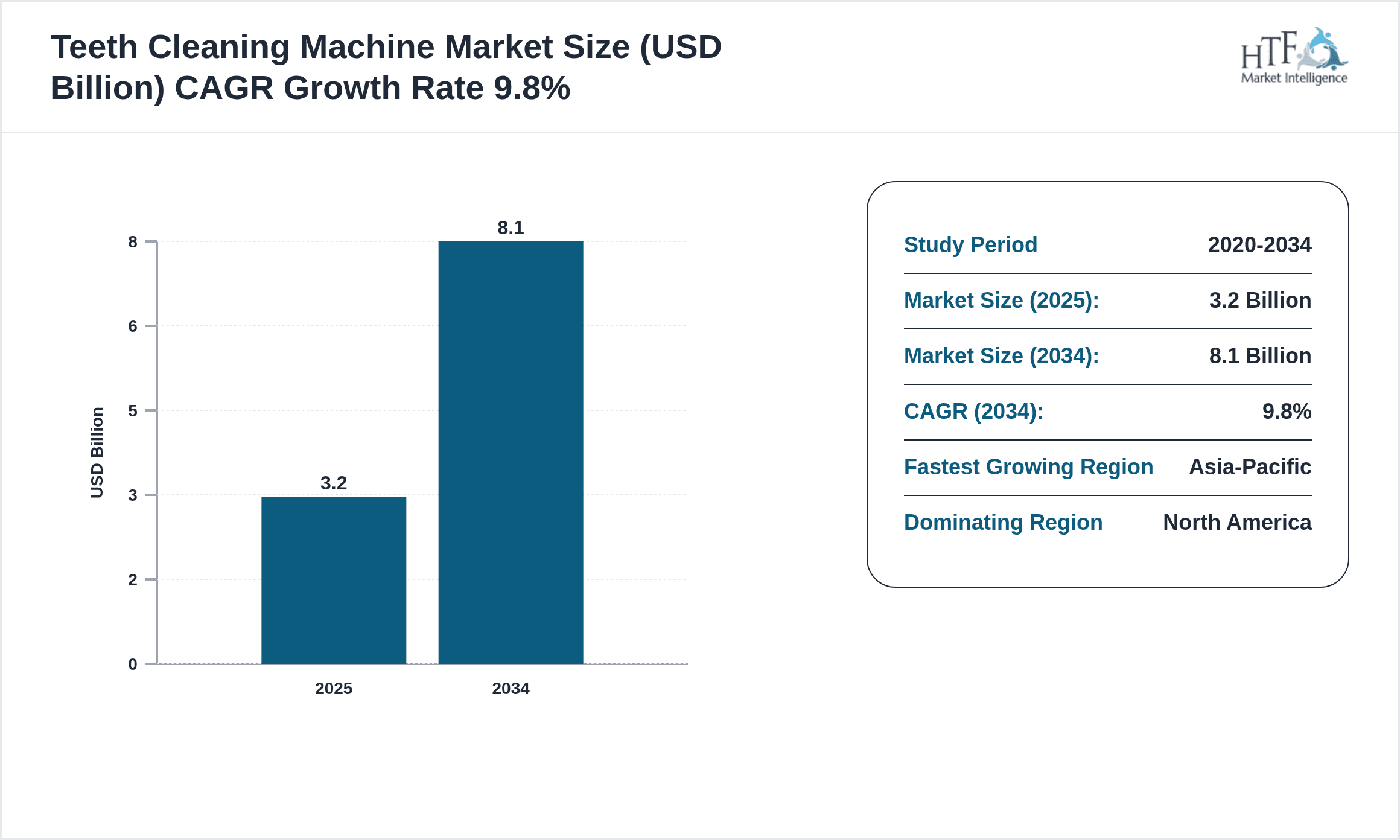
- •The market is witnessing significant growth, reflected in a base market size of USD 3.2 billion in 2024 with a projected CAGR of 9.8% through 2034, reaching USD 8.1 billion. North America currently dominates the market due to advanced healthcare infrastructure and high adoption rates, while Asia-Pacific is identified as the fastest-growing region driven by increasing dental awareness and improving healthcare access. Ultrasonic teeth cleaning machines lead the product segment, benefiting from their efficacy and widespread clinical use, whereas laser teeth cleaning machines are emerging rapidly owing to technological advancements and patient preference for minimally invasive procedures. Applications in dental clinics maintain the largest share, supported by growing dental care expenditure and increasing accessibility to professional dental services globally.
- •This market offers substantial value proposition to dental practitioners, healthcare institutions, manufacturers, and patients by delivering efficient, safe, and innovative oral hygiene solutions. The strategic importance lies in addressing unmet needs for effective plaque and tartar removal, enhancing patient comfort, and supporting preventive and cosmetic dental procedures. The evolving technology landscape, coupled with rising consumer awareness, drives continuous product development and competitive differentiation, making the Teeth Cleaning Machine Market a crucial segment in advancing global dental healthcare standards.
Competitive Landscape
The global Teeth Cleaning Machine Market exhibits a highly competitive environment characterized by the presence of several multinational corporations and regional players innovating to secure market share. Companies compete through continuous product development focusing on enhancing efficacy, user-friendliness, and patient safety. Strategic partnerships and technological collaborations are common to leverage expertise in ultrasonic and laser technologies. Market rivalry is intensified by aggressive pricing strategies and expanding distribution networks to penetrate emerging markets. Innovation approaches include integrating smart technology, improving ergonomics, and offering multifunctional devices. Competitive positioning often centers on brand reputation, product performance, and after-sales support. Entry barriers include significant R&D investment and regulatory compliance complexities. Regional competition varies, with North American and European firms leading in innovation, while Asia-Pacific players focus on cost-effective solutions and rapid market expansion. Future competition will likely revolve around digital dentistry integration and sustainability-focused product development.
Key Participants in Teeth Cleaning Machine Market
- •Dentsply Sirona Inc. (United States)
- •Hu-Friedy Mfg. Co., LLC (United States)
- •KaVo Kerr (United States)
- •Planmeca Oy (Finland)
- •A-dec Inc. (United States)
- •Satelec (France)
- •EMS Electro Medical Systems (Switzerland)
- •W&H Dentalwerk Bürmoos GmbH (Austria)
- •NSK Ltd. (Japan)
- •Sirona Dental Systems GmbH (Germany)
- •DentalEZ Group (United States)
- •Bien-Air Dental SA (Switzerland)
- •Mectron S.p.A. (Italy)
- •Morita Corporation (Japan)
- •Vatech Co., Ltd. (South Korea)
- •Dabi Atlante (Brazil)
- •Garrison Dental Solutions (United States)
- •Septodont (France)
- •Acteon Group (France)
- •Dental Wings (Canada)
- •Coxo Dental Instruments Co., Ltd. (China)
- •Carestream Health (United States)
- •B. Braun Melsungen AG (Germany)
- •Coltene Holding AG (Switzerland)
- •Ivoclar Vivadent AG (Liechtenstein)
Market Breakdown
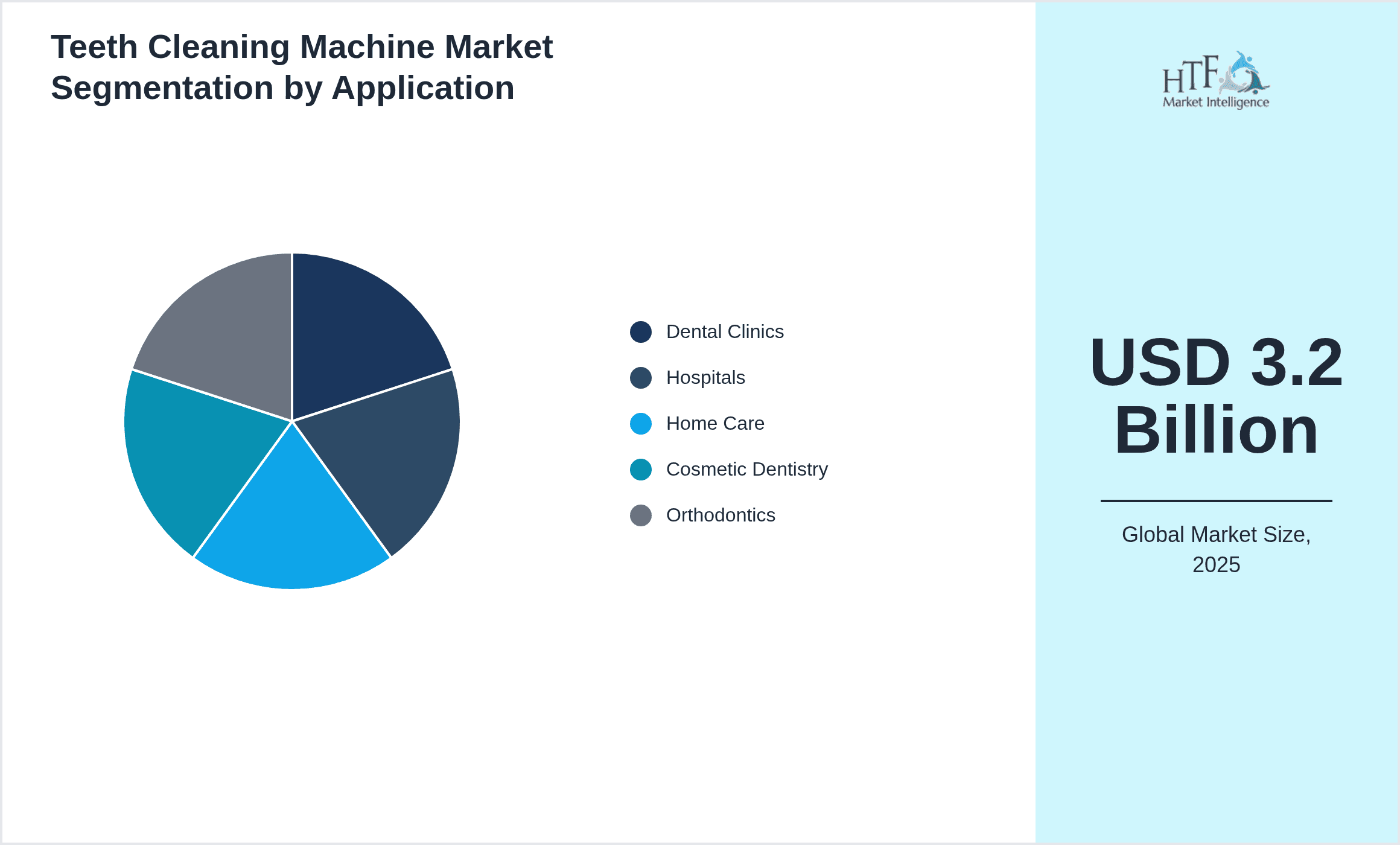
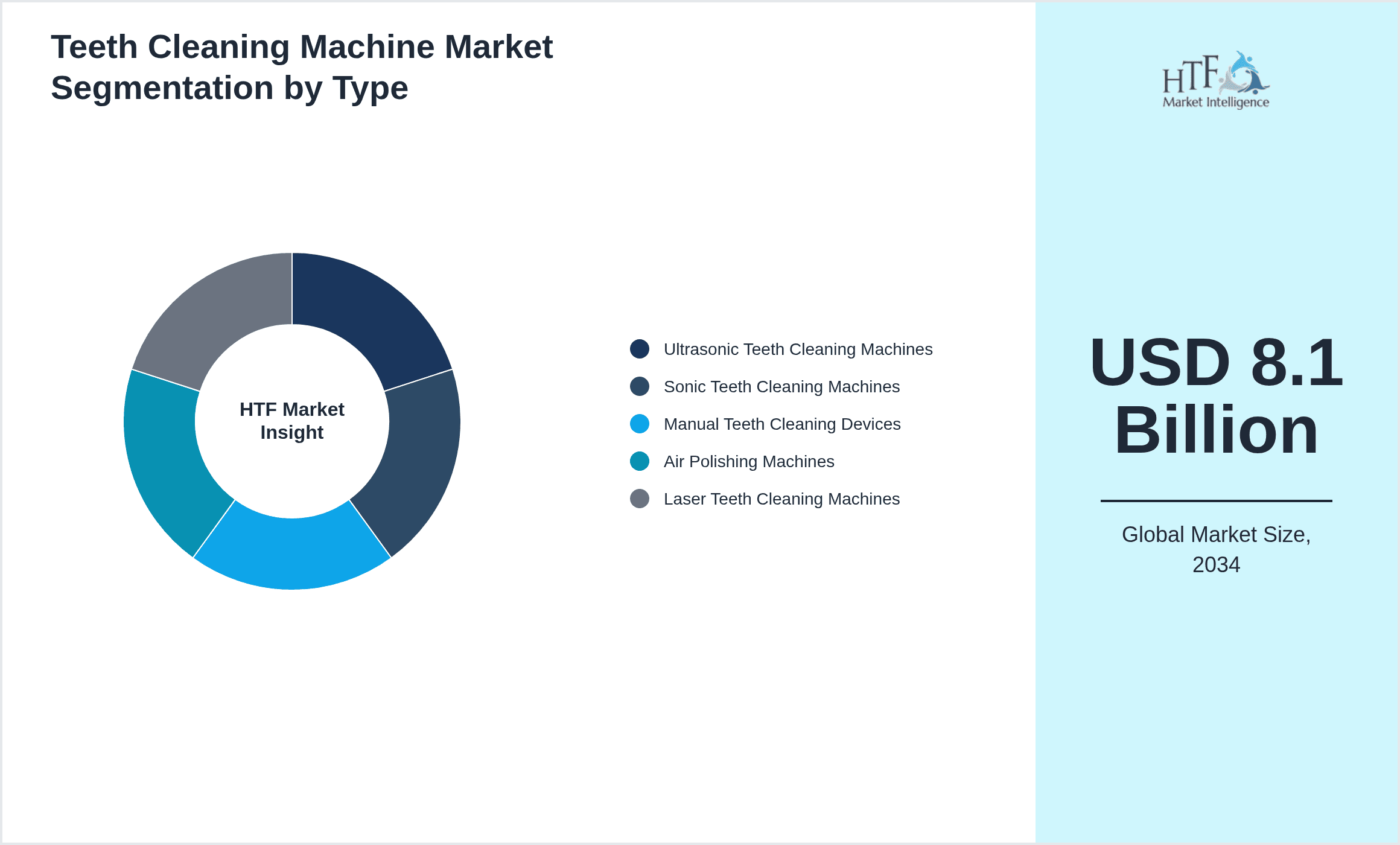
- •By Type
- ◦Ultrasonic Teeth Cleaning Machines
- ◦Sonic Teeth Cleaning Machines
- ◦Manual Teeth Cleaning Devices
- ◦Air Polishing Machines
- ◦Laser Teeth Cleaning Machines
- •By Application
- ◦Dental Clinics
- ◦Hospitals
- ◦Home Care
- ◦Cosmetic Dentistry
- ◦Orthodontics
- •By End-Use Industry
- ◦Dental Healthcare Providers
- ◦Personal Care
- ◦Cosmetic Dentistry Centers
- ◦Orthodontic Practices
- •By Distribution Channel
- ◦Direct Sales
- ◦Distributors and Dealers
- ◦Online Retail
Growth Dynamics
- •Rising awareness about oral health and increasing prevalence of periodontal diseases globally are primary growth drivers, prompting higher demand for effective teeth cleaning machines in both clinical and home-care settings.
- •Technological advancements such as integration of laser and ultrasonic technologies have enhanced device efficacy and patient comfort, driving adoption among dental professionals and consumers alike.
- •The expansion of cosmetic dentistry and orthodontics worldwide fuels the market, as teeth cleaning machines play a critical role in pre- and post-procedure care, boosting demand in specialized applications.
- •Increasing investments in dental healthcare infrastructure, especially in emerging economies across Asia-Pacific and Latin America, are accelerating market growth by improving access to advanced dental equipment.
- •Consumer preference for minimally invasive and pain-free dental cleaning solutions is driving interest in laser and air polishing technologies, contributing to growth in premium product segments.
- •Government initiatives promoting oral health awareness and preventive dental care programs in various regions support market expansion by encouraging the adoption of modern teeth cleaning technologies.
- •Strategic collaborations between dental equipment manufacturers and healthcare providers enhance product availability and after-sales services, further stimulating market demand globally.
Market Trends
- •The market is witnessing a growing trend toward smart dental cleaning machines equipped with IoT and AI capabilities, enabling real-time monitoring and personalized treatment plans for patients.
- •Sustainability and eco-friendly product designs are gaining traction, with manufacturers focusing on reducing environmental impact through recyclable materials and energy-efficient devices.
- •Emerging markets are increasingly adopting cost-effective teeth cleaning solutions, driven by rising disposable incomes and expanding dental healthcare infrastructure.
- •The shift toward home-use teeth cleaning devices is accelerating, supported by improved product ergonomics and consumer interest in self-care oral hygiene technologies.
- •Collaborations between technology providers and dental professionals are fostering innovation in multi-functional devices that combine cleaning, whitening, and diagnostic features.
- •Digital dentistry integration is influencing product development, with devices designed to seamlessly connect with electronic health records and digital imaging systems.
- •Increasing focus on patient comfort and reduced procedure time is shaping product design trends, particularly in high-end ultrasonic and laser cleaning machines.
Market Opportunities
- •Expanding dental insurance coverage globally presents a significant opportunity for increased adoption of advanced teeth cleaning machines in private and public healthcare settings.
- •Untapped markets in developing regions, such as parts of Africa and South America, offer growth potential due to rising awareness and improving healthcare infrastructure.
- •Innovations in laser and air polishing technologies present avenues for product differentiation and premium pricing strategies, attracting discerning dental professionals.
- •The rising trend of tele-dentistry and remote patient monitoring could foster the development of connected home-care teeth cleaning devices with professional oversight features.
- •Strategic partnerships with cosmetic dental centers and orthodontic clinics can open new revenue streams by catering to specialized treatment needs and bundled service offerings.
- •Increasing demand for portable and cordless devices creates opportunities for manufacturers to innovate compact, user-friendly teeth cleaning machines for both clinical and personal use.
- •Adoption of sustainable manufacturing practices and eco-friendly product lines can enhance brand reputation and meet growing consumer demand for responsible dental products.
Market Challenges
- •High initial costs of advanced teeth cleaning machines, especially laser-based devices, limit adoption in cost-sensitive markets and smaller dental practices.
- •Stringent regulatory requirements across different regions pose challenges in product approvals, leading to extended time-to-market and increased compliance costs.
- •Lack of skilled professionals trained to operate sophisticated dental cleaning equipment restricts market growth in emerging regions with limited dental education infrastructure.
- •Intense competition and price wars among manufacturers can lead to margin pressures and reduced profitability for market participants.
- •Concerns regarding device sterilization and cross-contamination necessitate stringent maintenance protocols, increasing operational complexity for dental practitioners.
- •Consumer hesitation toward adopting new technology for home use due to lack of awareness and perceived complexity hinders market penetration in the personal care segment.
- •Supply chain disruptions, including shortages of key components and raw materials, can delay product manufacturing and distribution, affecting market availability.
Regulatory Framework
- •Between 2019 and 2024, several regions updated medical device regulations impacting teeth cleaning machines, including stricter safety and efficacy standards to ensure patient protection and product reliability.
- •The European Union implemented the Medical Device Regulation (MDR) in 2021, requiring enhanced clinical evaluation and post-market surveillance for dental devices, affecting manufacturers' compliance efforts.
- •In the United States, the FDA refined guidance on ultrasonic and laser dental devices, emphasizing performance testing and labeling accuracy to prevent misuse and enhance clinical outcomes.
- •Asia-Pacific countries such as Japan and India introduced region-specific certification processes mandating local clinical trials and quality management system adherence for dental equipment imports.
- •Government initiatives promoting oral health awareness often include regulatory support for innovative dental technologies, facilitating faster approvals for devices demonstrating clear clinical benefits.
Market Intelligence
- •15th January 2025, Dentsply Sirona Inc. launched the new 'AquaCare Ultra' ultrasonic teeth cleaning machine, featuring enhanced noise reduction technology and AI-powered cleaning optimization. Targeted at dental clinics globally, this device offers improved patient comfort and reduced procedure times, aiming to strengthen the company's market position in premium segments. The launch reflects growing demand for efficient, patient-friendly equipment in dental practices worldwide. Source: Company website
- •10th March 2025, EMS Electro Medical Systems introduced the 'AirFlow Prophylaxis Master' air polishing machine with advanced powder delivery system, designed to minimize aerosol generation and enhance cleaning precision. This innovation addresses rising infection control concerns in dental care settings and supports environmental sustainability goals. The product rollout is expected to boost EMS's presence in Europe and Asia-Pacific markets. Source: Industry publication
- •22nd February 2025, Planmeca Oy announced a strategic partnership with a leading AI software developer to integrate smart diagnostic features with their ultrasonic teeth cleaning machines. This collaboration aims to deliver real-time oral health assessments during cleaning procedures, enhancing preventive care capabilities for dental professionals globally. The initiative is part of Planmeca's digital dentistry expansion strategy. Source: Press release
- •5th April 2025, KaVo Kerr expanded its distribution network in Latin America by signing agreements with regional dental equipment distributors. This move is designed to increase accessibility of their sonic and ultrasonic teeth cleaning machines in emerging markets, capitalizing on rising dental care investments. The expansion supports KaVo Kerr's global growth ambitions and competitive positioning. Source: Company announcement
Regional Outlook
The North America currently holds a significant share of the market, primarily due to several key factors: increasing consumption rates, a burgeoning population, and robust economic momentum. These elements collectively drive demand, positioning this region as a leader in the market. On the other hand, Asia-Pacific is rapidly emerging as the fastest-growing area within the industry. This remarkable growth can be attributed to swift infrastructure development, the expansion of various industrial sectors, and a marked increase in consumer demand. These dynamics make this region a crucial player in shaping future market growth.
In our report, we cover a comprehensive analysis of the following regions and countries:
- North America
- LATAM
- West Europe
- Central & Eastern Europe
- Northern Europe
- Southern Europe
- East Asia
- Southeast Asia
- South Asia
- Central Asia
- Oceania
- MEA
| Feature | Details |
|---|---|
| Base Year Market Size | USD 3.2 Billion |
| Forecast Year Market Size | USD 8.1 Billion |
| CAGR | 9.8% |
| Forecast Period | 2026 to 2033 |
| YoY Growth | 9.4% |
| Scope of Report | Market is segmented by Type (Ultrasonic Teeth Cleaning Machines, Sonic Teeth Cleaning Machines, Manual Teeth Cleaning Devices, Air Polishing Machines, Laser Teeth Cleaning Machines), Application (Dental Clinics, Hospitals, Home Care, Cosmetic Dentistry, Orthodontics), End-Use Industry (Dental Healthcare Providers, Personal Care, Cosmetic Dentistry Centers, Orthodontic Practices), Distribution Channel (Direct Sales, Distributors and Dealers, Online Retail) |
| Regions Covered | North America, LATAM, West Europe, Central & Eastern Europe, Northern Europe, Southern Europe, East Asia, Southeast Asia, South Asia, Central Asia, Oceania, MEA |
| Key Companies | Expanding dental insurance coverage globally presents a significant opportunity for increased adoption of advanced teeth cleaning machines in private and public healthcare settings., Untapped markets in developing regions, such as parts of Africa and South America, offer growth potential due to rising awareness and improving healthcare infrastructure., Innovations in laser and air polishing technologies present avenues for product differentiation and premium pricing strategies, attracting discerning dental professionals., The rising trend of tele-dentistry and remote patient monitoring could foster the development of connected home-care teeth cleaning devices with professional oversight features., Strategic partnerships with cosmetic dental centers and orthodontic clinics can open new revenue streams by catering to specialized treatment needs and bundled service offerings., Increasing demand for portable and cordless devices creates opportunities for manufacturers to innovate compact, user-friendly teeth cleaning machines for both clinical and personal use., Adoption of sustainable manufacturing practices and eco-friendly product lines can enhance brand reputation and meet growing consumer demand for responsible dental products. |
Global Teeth Cleaning Machine Market Size, Growth & Revenue 2024-2034 - Table of Contents
Multidisciplinary researcher with 10+ years of experience uncovering insights across diverse domains focused on uncovering insights that drive informed decisions.
Frequently Asked Questions (FAQ):
The Compact Track Loaders market is expected to see value worth 5.3 Billion in 2025.
North America currently leads the market with approximately 45% market share, followed by Europe at 28% and Asia-Pacific at 22%. The remaining regions account for 5% of the global market.
Key growth drivers include increasing construction activities, rising demand for versatile equipment in agriculture, technological advancements in track loader design, and growing preference for compact equipment in urban construction projects.