
Global Mini Washing Machine Market Size, Growth & Revenue 2024-2034
Global Mini Washing Machine Market is segmented by Product Type (Portable Mini Washing Machines, Semi-Automatic Mini Washing Machines, Fully Automatic Mini Washing Machines, Twin Tub Mini Washing Machines, Compact Mini Washing Machines), Application (Household, Commercial, Travel, Student Housing, Others), End-Use Industry (Residential, Hospitality, Healthcare, Education), Distribution Channel (Offline Retail, Online Retail, Direct Sales), and Geography (North America, LATAM, West Europe, Central & Eastern Europe, Northern Europe, Southern Europe, East Asia, Southeast Asia, South Asia, Central Asia, Oceania, MEA)
Pricing
Report Overview
Executive Summary
- •The global Mini Washing Machine market is defined by compact, space-saving washing appliances designed for use in restricted living spaces, including apartments, dormitories, and travel accommodations. These machines range from portable and semi-automatic models to fully automatic and twin tub variants, offering consumers efficient laundry solutions with reduced water and energy consumption. The market caters to household, commercial, student housing, and travel applications, reflecting diverse end-user demands across regions. Advancements in technology, such as automation, eco-friendly operation, and smart connectivity, are transforming product offerings and enhancing user convenience. Urbanization trends, increasing single-person households, and rising awareness of water and energy conservation are key drivers shaping market growth. Geographically, Asia-Pacific dominates due to dense urban populations and rapid adoption, while Latin America and Middle East & Africa represent emerging growth hubs. Competitive landscapes feature innovation, strategic partnerships, and regional market penetration as critical success factors, positioning the mini washing machine market for sustained expansion through 2034.
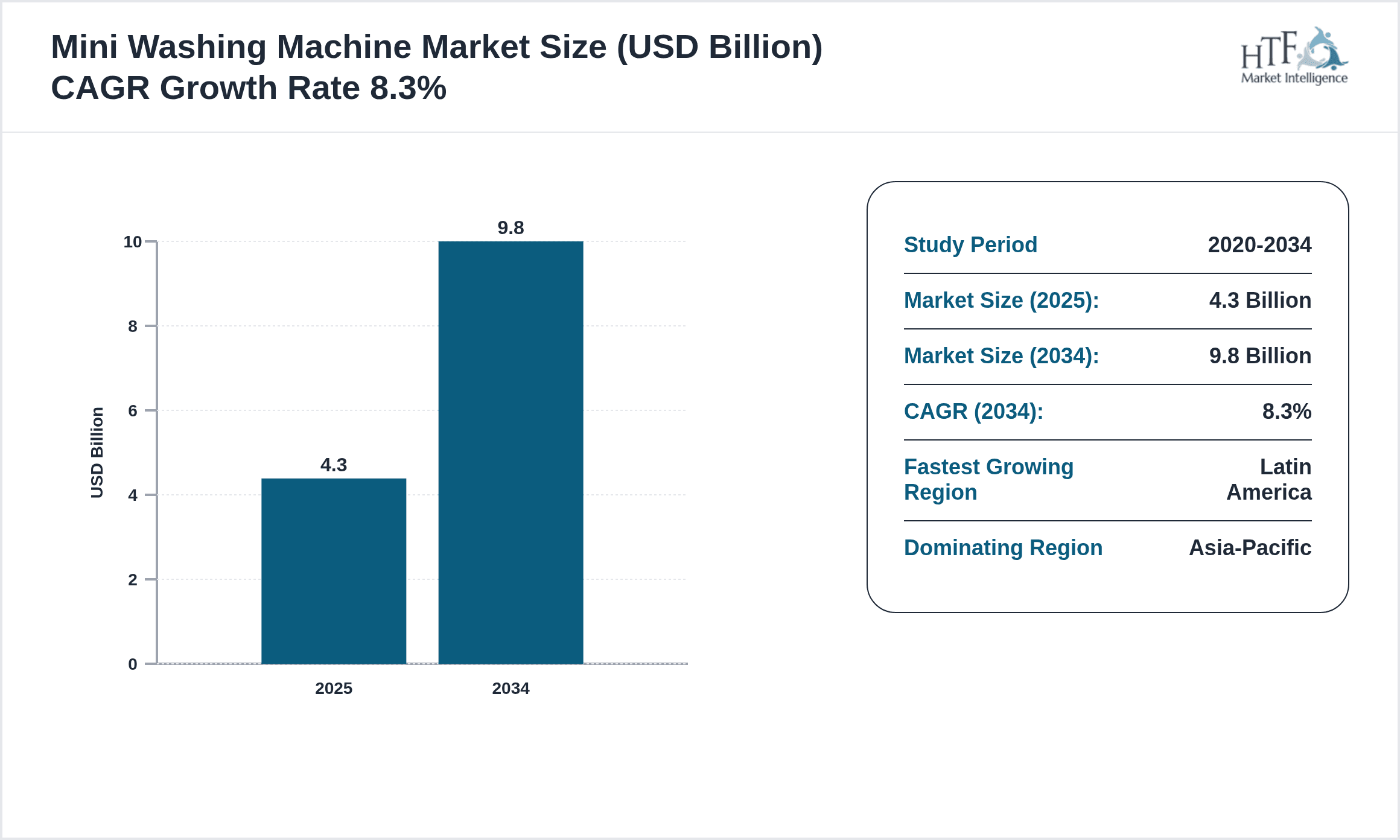
- •Key market highlights include a current global market size valued at USD 4.3 billion in 2024, forecasted to reach USD 9.8 billion by 2034, reflecting a robust CAGR of 8.3%. Portable mini washing machines hold the leading product segment share, while fully automatic variants are the fastest growing due to increasing consumer demand for convenience and advanced features. Household applications dominate market usage, but commercial and travel-related segments are expanding rapidly. Asia-Pacific leads regional consumption, driven by urban density and technological adoption, whereas Latin America exhibits the highest growth rates attributed to rising disposable incomes and evolving lifestyle preferences. Year-over-year growth is estimated at 7.9%, underscoring steady market momentum supported by innovation and evolving consumer behavior.
- •The mini washing machine market offers significant value propositions, providing compact, energy-efficient laundry solutions ideal for space-constrained environments globally. Industry stakeholders, including manufacturers, retailers, and end-users, benefit from the market’s focus on sustainability, portability, and user-centric designs. The strategic importance lies in addressing modern urban living challenges, reducing environmental impact, and fostering technological integration. This market also encourages innovation in smart home appliances, enhancing user experience through connectivity and automation. Overall, mini washing machines contribute to transforming household and commercial laundry practices worldwide by combining convenience, efficiency, and adaptability.
Competitive Landscape
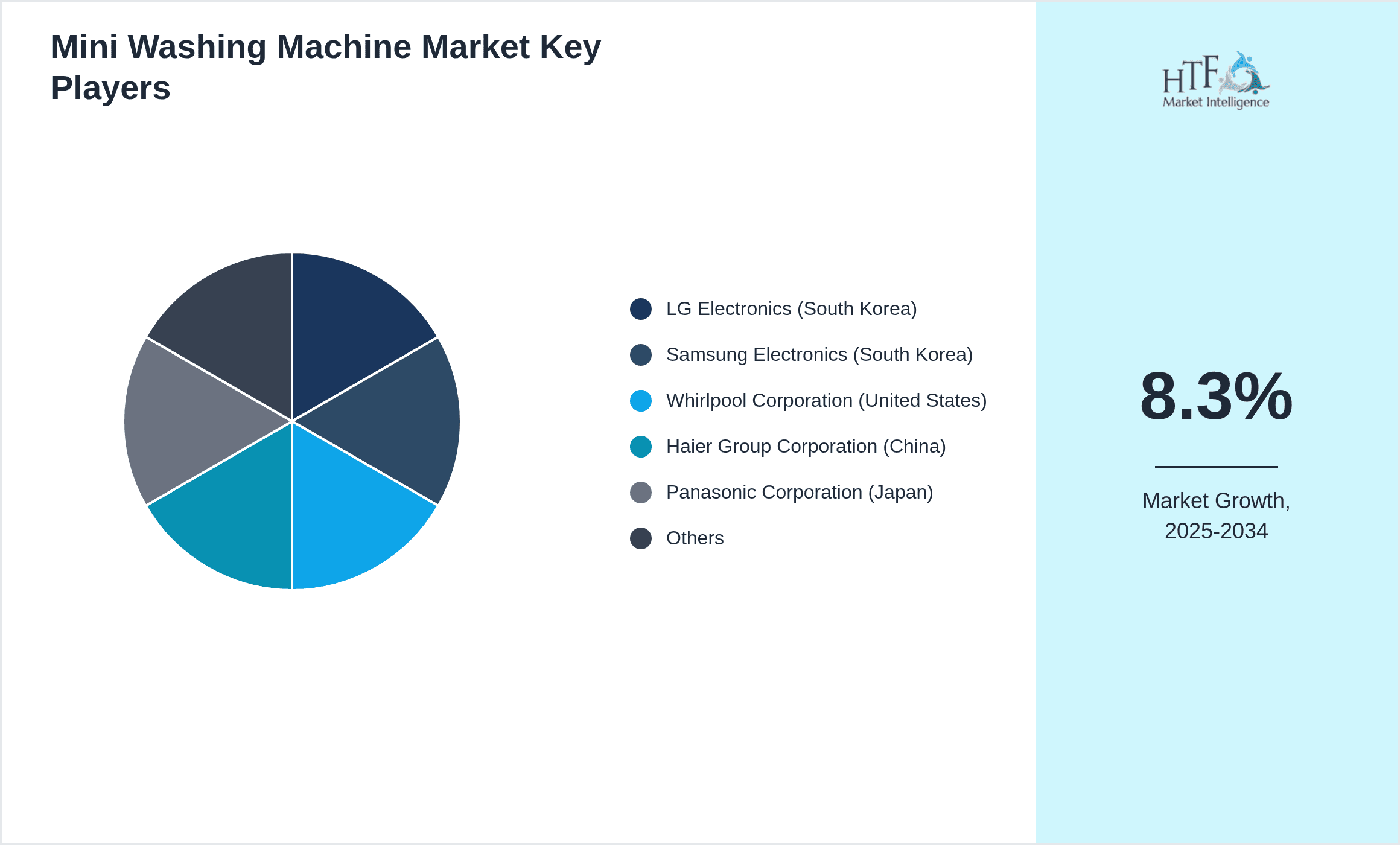
The global mini washing machine market is characterized by intense competition driven by technological innovation, product differentiation, and strategic market positioning. Companies focus on developing energy-efficient, compact, and user-friendly machines that cater to diverse consumer needs. Competitive strategies include investment in research and development to introduce smart features such as IoT connectivity, eco-friendly wash cycles, and noise reduction technologies. Market rivalry is heightened by the presence of both established multinational corporations and agile regional players seeking to capture niche segments. Distribution channels are diversified through online retail, specialty stores, and traditional outlets, enhancing market reach. Additionally, collaborations, partnerships, and mergers serve as mechanisms for expanding product portfolios and geographic footprint. Pricing strategies balance affordability with quality to appeal to budget-conscious consumers without compromising performance. Overall, the competitive landscape emphasizes innovation, customer-centric solutions, and strategic alliances to sustain growth and market leadership.
Leading Companies in Mini Washing Machine Market
- •LG Electronics (South Korea)
- •Samsung Electronics (South Korea)
- •Whirlpool Corporation (United States)
- •Haier Group Corporation (China)
- •Panasonic Corporation (Japan)
- •Bosch Home Appliances (Germany)
- •Midea Group (China)
- •Electrolux AB (Sweden)
- •Sharp Corporation (Japan)
- •GE Appliances (United States)
- •Toshiba Corporation (Japan)
- •Fisher & Paykel Appliances (New Zealand)
- •Beko (Turkey)
- •Hisense Group (China)
- •Smeg S.p.A. (Italy)
- •Viking Range LLC (United States)
- •Indesit Company (Italy)
- •Miele & Cie. KG (Germany)
- •Arçelik A.Ş. (Turkey)
- •Sharp Electronics Corporation (Japan)
- •Hitachi Appliances (Japan)
- •GEA Group (Germany)
- •Blomberg (Germany)
- •Daewoo Electronics (South Korea)
- •Royal Appliances (India)
Market Breakdown
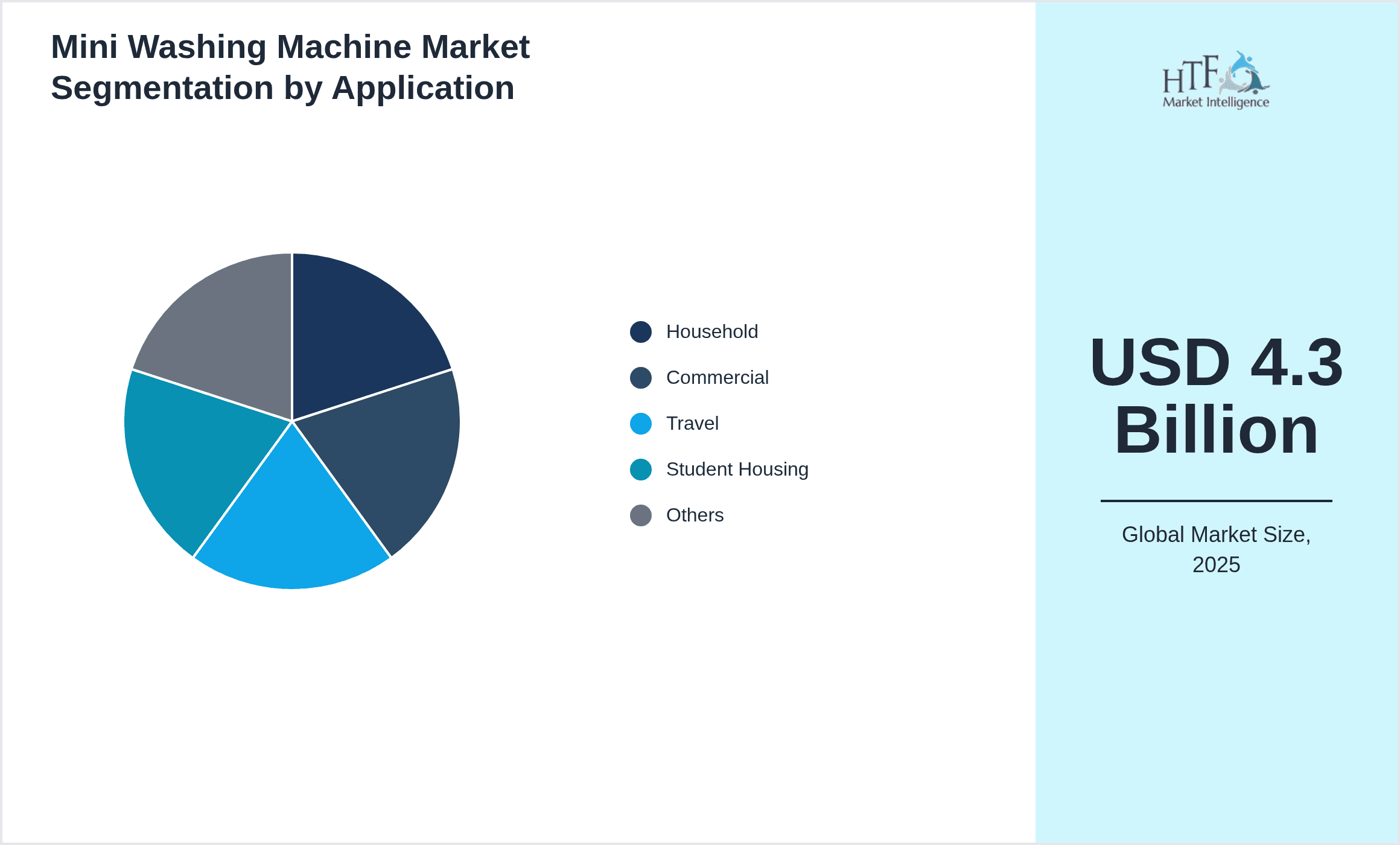
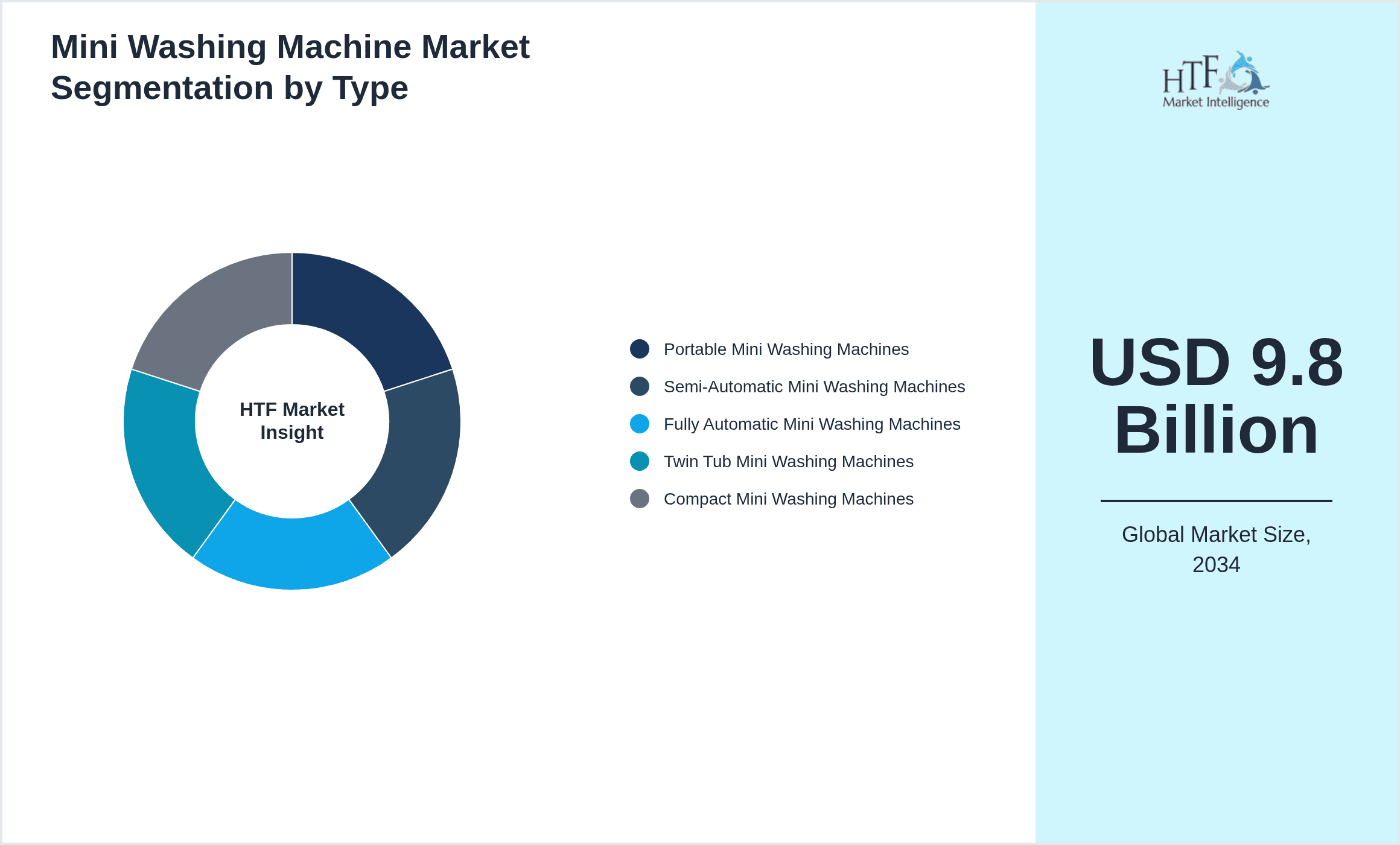
- •By Product Type
- ◦Portable Mini Washing Machines
- ◦Semi-Automatic Mini Washing Machines
- ◦Fully Automatic Mini Washing Machines
- ◦Twin Tub Mini Washing Machines
- ◦Compact Mini Washing Machines
- •By Application
- ◦Household
- ◦Commercial
- ◦Travel
- ◦Student Housing
- ◦Others
- •By End-Use Industry
- ◦Residential
- ◦Hospitality
- ◦Healthcare
- ◦Education
- •By Distribution Channel
- ◦Offline Retail
- ◦Online Retail
- ◦Direct Sales
Growth Dynamics
- •Rising urbanization and the proliferation of small living spaces globally drive demand for compact and space-saving mini washing machines. Consumers in metropolitan areas seek appliances that fit limited environments without compromising functionality, fostering market growth.
- •Technological advancements such as smart connectivity, automated wash cycles, and energy-efficient designs enhance product appeal, encouraging adoption among tech-savvy and eco-conscious consumers.
- •Increasing preference for portable and travel-friendly washing solutions bolsters demand in niche markets including students, travelers, and military personnel, expanding the market footprint.
- •Government initiatives promoting water and energy conservation create favorable regulatory environments that incentivize consumers and manufacturers to adopt mini washing machines with eco-friendly features.
- •Rising disposable income levels in emerging economies enable wider consumer access to innovative washing appliances, driving market penetration and accelerating growth trajectories.
- •Investment in e-commerce platforms and distribution networks facilitates seamless product availability and customer reach, enabling market expansion across diverse geographies.
- •Increasing collaborations between manufacturers and technology firms promote continuous product innovation, enhancing functionality and customer satisfaction in the mini washing machine segment.
Market Trends
- •The integration of IoT and smart home technologies in mini washing machines is transforming user interaction, enabling remote control, diagnostics, and energy management, which enhance convenience and efficiency.
- •Sustainability trends have led to the development of machines with reduced water consumption, biodegradable materials, and energy-saving modes, aligning with global environmental goals.
- •Compact and multi-functional designs incorporating drying and sterilization features are gaining traction, offering enhanced value propositions for space-constrained consumers.
- •The rise of online retail channels and direct-to-consumer sales models is reshaping distribution, providing greater accessibility and personalized shopping experiences.
- •Collaborations between appliance manufacturers and tech startups foster innovation ecosystems, accelerating the introduction of cutting-edge mini washing machine models.
- •Consumers increasingly demand quiet operation and vibration reduction features to accommodate urban living environments, influencing product development priorities.
- •Subscription-based models and rental services for mini washing machines are emerging, offering flexible ownership and maintenance solutions, particularly in commercial and student housing sectors.
Market Opportunities
- •Expanding urban populations in emerging markets present significant opportunities for mini washing machine adoption, with tailored marketing and affordable product lines addressing localized needs.
- •Innovation in battery-operated and solar-powered mini washers offers potential for off-grid and eco-conscious consumers, opening new market segments.
- •Partnerships with hospitality and educational institutions can drive bulk procurement and customized solutions, strengthening commercial application penetration.
- •Development of smart appliance ecosystems integrating laundry with other home automation devices provides avenues for cross-selling and enhanced user engagement.
- •Growth in rental and subscription services for mini washing machines can attract cost-conscious and transient users, increasing recurring revenue streams for manufacturers.
- •Geographical expansion into underpenetrated regions such as Latin America and Middle East & Africa offers growth potential through localized product adaptation and distribution strategies.
- •Investments in sustainable manufacturing and circular economy initiatives can improve brand reputation and compliance, appealing to environmentally aware consumers.
Market Challenges
- •High initial costs of advanced mini washing machines with smart features may deter price-sensitive consumers, limiting market penetration in developing regions.
- •Limited consumer awareness and misconceptions about the performance capabilities of mini washing machines hinder widespread adoption, especially in traditional markets.
- •Technical challenges related to balancing compact design with washing efficiency and durability require continuous R&D investment.
- •Supply chain disruptions and raw material price volatility impact manufacturing costs and product availability, affecting profitability and delivery timelines.
- •Stringent regulations on electrical appliances and environmental standards necessitate compliance efforts that may increase operational expenses.
- •Intense competition from established washing machine manufacturers and emerging low-cost regional players pressures pricing and market share.
- •Challenges in after-sales service and maintenance infrastructure in remote or developing regions affect consumer confidence and product lifecycle management.
Regulatory Framework
- •From 2019 to 2024, global regulatory bodies have increasingly enforced energy efficiency standards mandating minimum performance levels for washing machines, compelling manufacturers to innovate energy-saving technologies and eco-friendly designs.
- •Safety regulations concerning electrical appliance certifications and water usage restrictions have become more stringent, ensuring consumer protection and environmental sustainability across key markets.
- •Regions such as the European Union have introduced directives limiting hazardous substances in appliance manufacturing, driving compliance with RoHS and REACH requirements.
- •Mandatory labeling schemes, including energy rating and water efficiency disclosures, have been implemented globally to enhance consumer awareness and promote responsible purchasing decisions.
- •Government incentives and rebates for purchasing energy-efficient appliances in North America and Asia-Pacific encourage market growth while supporting environmental policy objectives.
Market Intelligence
- •15th January 2025, LG Electronics launched its latest portable mini washing machine model featuring smart Wi-Fi connectivity, AI-driven wash cycle optimization, and a compact design suitable for urban apartments. This innovation aims to capture the growing demand for efficient, space-saving laundry solutions among young professionals and students globally. The product’s energy-saving features align with LG’s sustainability commitments and enhance user convenience through mobile app controls. Strategic marketing campaigns target metropolitan regions with high urban density, leveraging e-commerce channels to maximize reach and consumer engagement. This launch reinforces LG’s leadership in the mini washing machine segment by integrating advanced technology with practical design considerations. Source: Official LG Electronics Press Release
- •22nd March 2025, Whirlpool Corporation introduced a fully automatic mini washing machine equipped with an ultra-quiet motor, eco-friendly detergent dispensing system, and compatibility with smart home assistants. This product targets environmentally conscious consumers seeking high performance in limited spaces. Whirlpool’s innovation focuses on reducing water and energy consumption while maintaining superior cleaning efficiency. The launch supports the company’s strategy to expand its portfolio in emerging markets, especially in Asia-Pacific and Latin America, where urbanization trends drive demand for compact appliances. The new model’s connectivity features facilitate remote monitoring and maintenance alerts, enhancing user experience and product longevity. Source: Whirlpool Corporate News
- •10th February 2025, Haier Group Corporation announced a strategic partnership with a leading technology startup to co-develop solar-powered mini washing machines aimed at off-grid and eco-conscious consumers. This collaboration combines Haier’s manufacturing expertise with innovative renewable energy solutions to address sustainability challenges in emerging markets. The partnership plans to pilot products in select regions of Latin America and Africa, with ambitions to scale globally. This initiative aligns with Haier’s commitment to green technology and expanding its product reach beyond traditional urban centers, tapping into new customer segments. The co-developed appliances are expected to reduce carbon footprints significantly while ensuring reliable washing performance. Source: Haier Group Official Announcement
- •5th April 2025, Panasonic Corporation completed the acquisition of a niche mini washing machine manufacturer specializing in compact, travel-friendly models. This acquisition strengthens Panasonic’s product portfolio and market presence in the student and traveler segments. The newly integrated technologies allow Panasonic to offer lightweight, battery-operated washers tailored for mobility and convenience. This strategic move supports Panasonic’s growth ambitions in North America and Europe, where demand for portable laundry solutions is steadily increasing. The acquisition also provides Panasonic with proprietary designs and enhanced R&D capabilities to accelerate innovation in mini washing appliances. Source: Panasonic Corporate Communications
- •Recent market developments and strategic initiatives are continuously tracked through industry publications, company announcements, and regulatory filings. For the most current information, stakeholders are advised to monitor official corporate communications and recognized market intelligence platforms.
Regional Outlook
The Asia-Pacific currently holds a significant share of the market, primarily due to several key factors: increasing consumption rates, a burgeoning population, and robust economic momentum. These elements collectively drive demand, positioning this region as a leader in the market. On the other hand, Latin America is rapidly emerging as the fastest-growing area within the industry. This remarkable growth can be attributed to swift infrastructure development, the expansion of various industrial sectors, and a marked increase in consumer demand. These dynamics make this region a crucial player in shaping future market growth.
In our report, we cover a comprehensive analysis of the following regions and countries:
- North America
- LATAM
- West Europe
- Central & Eastern Europe
- Northern Europe
- Southern Europe
- East Asia
- Southeast Asia
- South Asia
- Central Asia
- Oceania
- MEA
| Feature | Details |
|---|---|
| Base Year Market Size | USD 4.3 Billion |
| Forecast Year Market Size | USD 9.8 Billion |
| CAGR | 8.3% |
| Forecast Period | 2026 to 2033 |
| YoY Growth | 7.9% |
| Scope of Report | Market is segmented by Product Type (Portable Mini Washing Machines, Semi-Automatic Mini Washing Machines, Fully Automatic Mini Washing Machines, Twin Tub Mini Washing Machines, Compact Mini Washing Machines), Application (Household, Commercial, Travel, Student Housing, Others), End-Use Industry (Residential, Hospitality, Healthcare, Education), Distribution Channel (Offline Retail, Online Retail, Direct Sales) |
| Regions Covered | North America, LATAM, West Europe, Central & Eastern Europe, Northern Europe, Southern Europe, East Asia, Southeast Asia, South Asia, Central Asia, Oceania, MEA |
| Key Companies | LG Electronics (South Korea), Samsung Electronics (South Korea), Whirlpool Corporation (United States), Haier Group Corporation (China), Panasonic Corporation (Japan), Bosch Home Appliances (Germany), Midea Group (China), Electrolux AB (Sweden), Sharp Corporation (Japan), GE Appliances (United States), Toshiba Corporation (Japan), Fisher & Paykel Appliances (New Zealand), Beko (Turkey), Hisense Group (China), Smeg S.p.A. (Italy), Viking Range LLC (United States), Indesit Company (Italy), Miele & Cie. KG (Germany), Arçelik A.Ş. (Turkey), Sharp Electronics Corporation (Japan), Hitachi Appliances (Japan), GEA Group (Germany), Blomberg (Germany), Daewoo Electronics (South Korea), Royal Appliances (India) |
Global Mini Washing Machine Market Size, Growth & Revenue 2024-2034 - Table of Contents
Research enthusiast focused on transforming data uncovering into actionable insights through data-driven decision-making.
Frequently Asked Questions (FAQ):
The Market market is projected to grow at a steady CAGR from 2025 to 2030, driven by increasing demand and expansion in various applications.
North America currently leads the market, followed by Europe and Asia-Pacific.
Key growth drivers include increasing activities, rising demand for innovative solutions, technological advancements, and growing preference for efficient products.