
Global Gelatin Raw Material Market Size, Growth & Revenue 2024-2034
Global Gelatin Raw Material Market is segmented by Product Type (Bone Gelatin, Pigskin Gelatin, Hide Gelatin, Fish Gelatin, Others), Application (Food & Beverage, Pharmaceuticals, Cosmetics, Photography, Technical Applications), End-Use Industry (Food Processing, Healthcare, Personal Care, Industrial), Distribution Channel (Direct Sales, Distributors, Online Retail), and Geography (North America, LATAM, West Europe, Central & Eastern Europe, Northern Europe, Southern Europe, East Asia, Southeast Asia, South Asia, Central Asia, Oceania, MEA)
Pricing
Report Overview
Executive Summary
- •The global gelatin raw material market is a vital sector within the broader biochemical and food ingredient industries, focusing on gelatin derived from animal collagen sources such as bones, pigskin, hides, and fish. This market serves multiple end-use industries including food & beverage, pharmaceuticals, cosmetics, photography, and technical applications, leveraging gelatin's unique gelling, emulsifying, and stabilizing properties. The scope of this market includes the extraction, processing, and distribution of different gelatin types, with increasing innovation around fish gelatin to meet dietary and religious requirements. The market's dynamics are shaped by rising health awareness, expanding pharmaceutical applications, and evolving consumer preferences for natural and sustainable ingredients. Geographically, the market is driven by the mature demand in North America and Europe, alongside rapid growth in Asia-Pacific due to increasing industrialization and urbanization. Regulatory frameworks and technological advancements also play a crucial role in shaping the competitive landscape and growth trajectory over the forecast period.
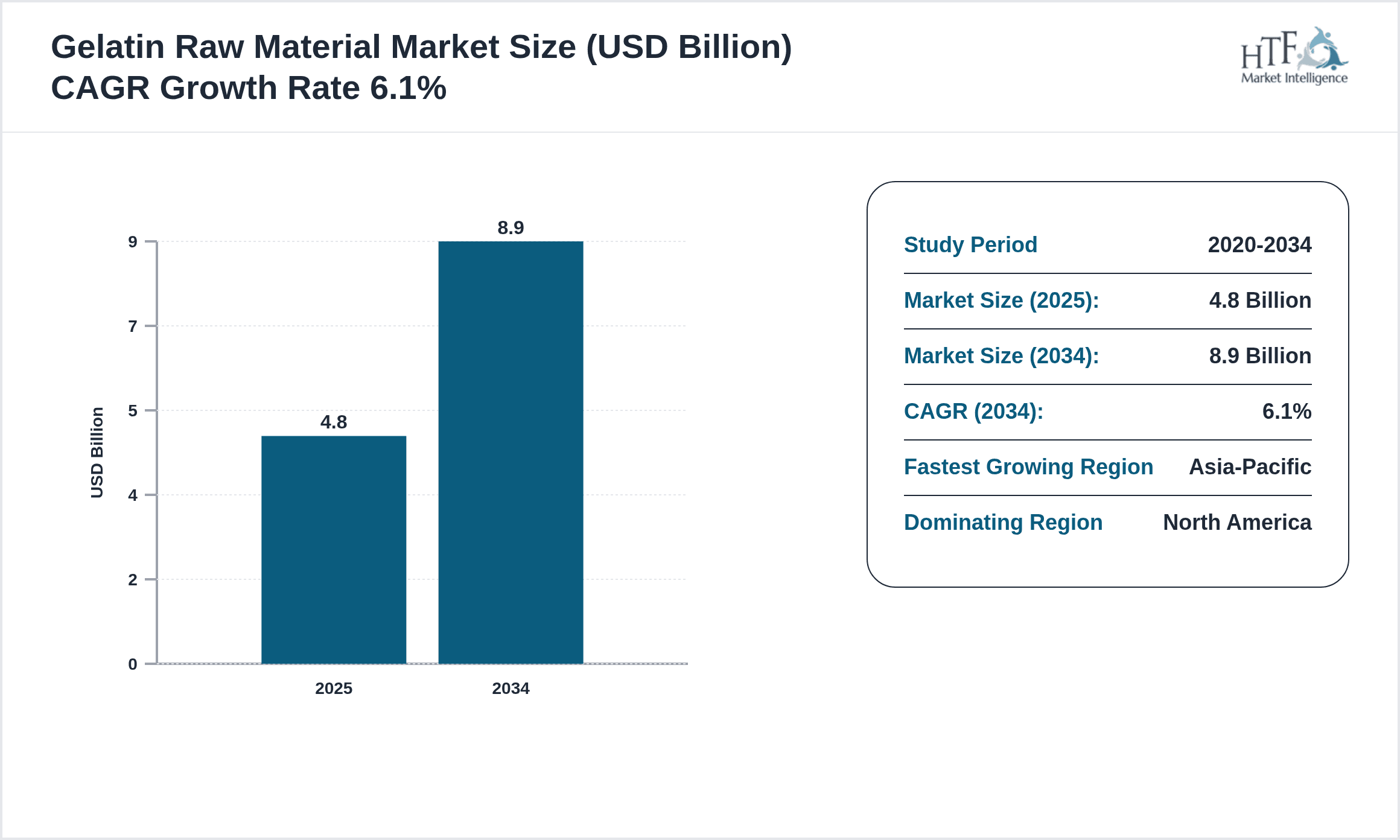
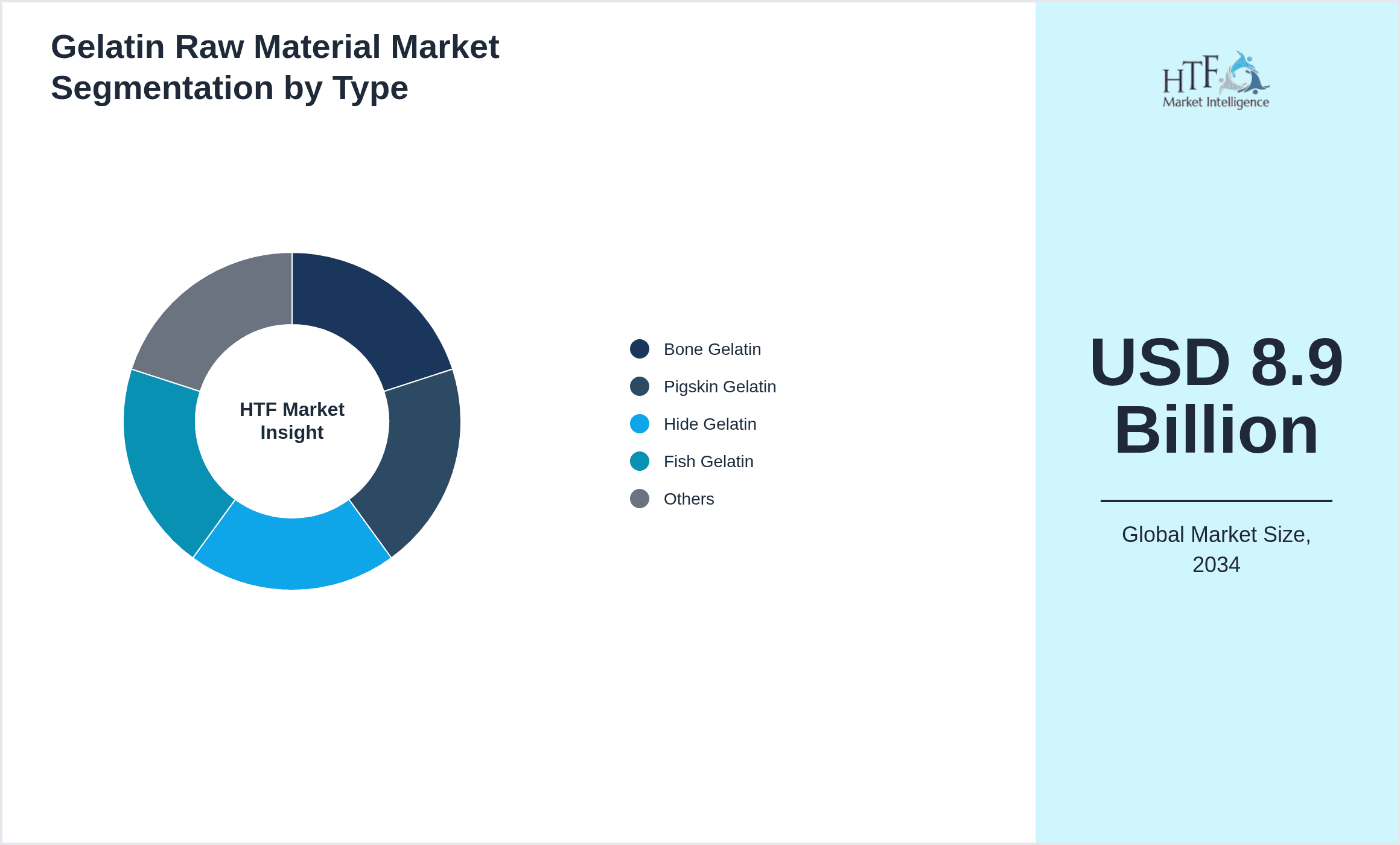
- •Key highlights of the global gelatin raw material market include a base market size of USD 4.8 Billion in 2024, projected to reach USD 8.9 Billion by 2034, reflecting a CAGR of 6.1%. Bone gelatin remains the largest product segment, while fish gelatin is identified as the fastest-growing type due to its growing acceptance in halal, kosher, and vegetarian markets. The food & beverage sector dominates applications, followed by pharmaceuticals and cosmetics. North America holds the largest regional market share, with Asia-Pacific exhibiting the highest growth rate driven by rising demand in emerging economies. Year-over-year growth is steady at approximately 6.0%, indicating robust market expansion fueled by increasing consumer health consciousness and technological innovation in gelatin extraction and processing.
- •The gelatin raw material market offers strategic value to industries such as food processing, pharmaceuticals, and personal care, providing essential ingredients that enhance product quality and functionality. Stakeholders including manufacturers, suppliers, and end-users benefit from ongoing research into sustainable sourcing and novel gelatin applications. The market's growth is underpinned by rising demand for natural additives, increasing pharmaceutical consumption, and expanding cosmetic product portfolios. Companies investing in advanced extraction technologies and diversification of gelatin sources are positioned to capitalize on emerging opportunities globally. The industry's importance is further amplified by its role in delivering high-quality gelatin that meets stringent regulatory standards and consumer expectations, ensuring sustained relevance and market penetration across diverse sectors.
Competitive Landscape
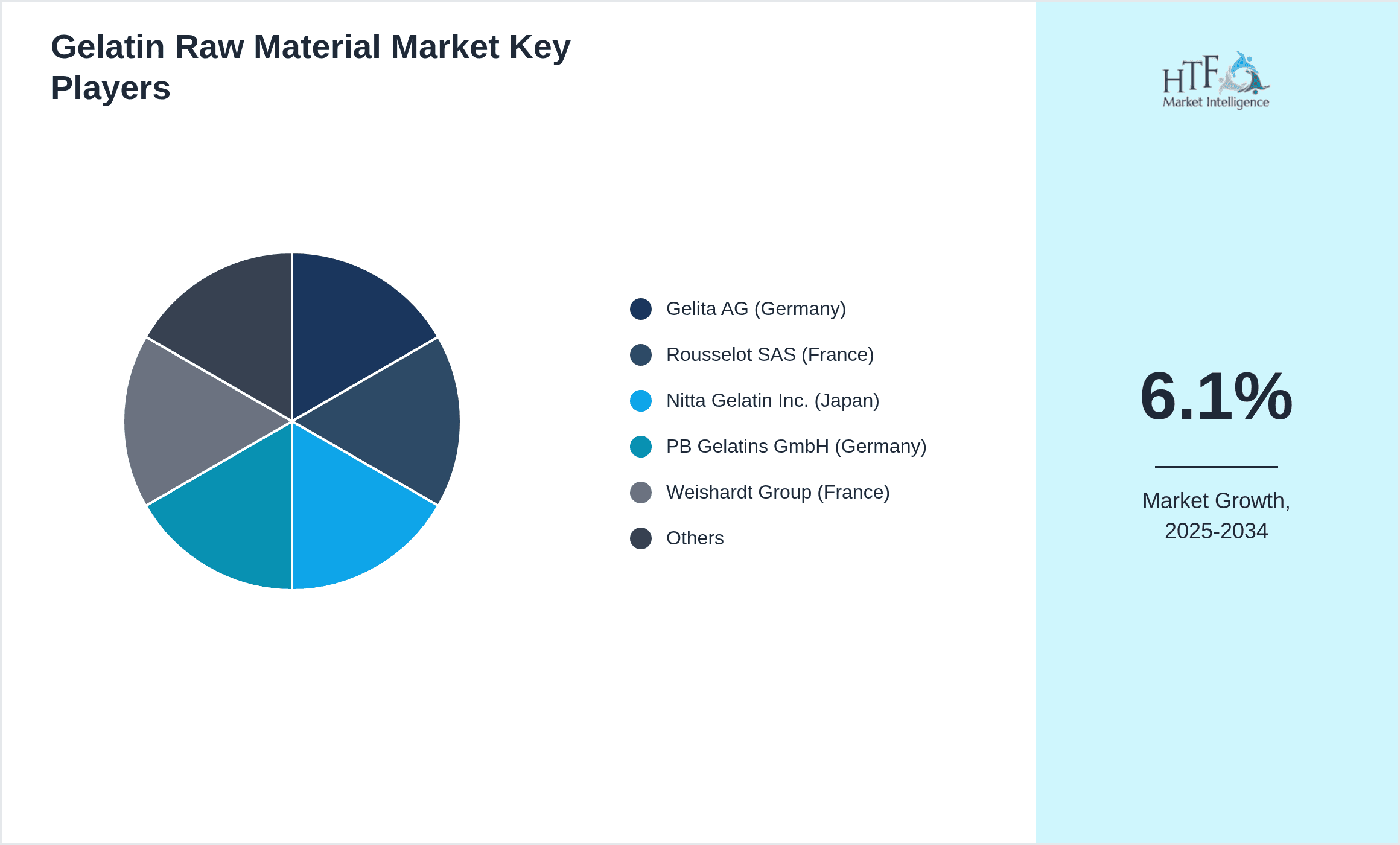
The global gelatin raw material market is characterized by a competitive environment where key players focus on product innovation, strategic partnerships, and geographic expansion to strengthen their market positions. Competition is intense among established multinational corporations and regional manufacturers, with an emphasis on diversification of gelatin sources to cater to various dietary preferences and regulatory requirements. Companies are investing in advanced extraction and purification technologies to enhance product quality and reduce production costs. Strategic collaborations and mergers have been instrumental in expanding product portfolios and distribution networks, enabling market leaders to maintain dominance. Additionally, innovation in specialty gelatin products for pharmaceutical and cosmetic applications distinguishes competitive players. Pricing strategies and supply chain optimization are critical, as companies strive to balance cost efficiency with quality assurance. The presence of stringent quality and safety standards further shapes competitive dynamics, compelling firms to continuously invest in compliance and certification processes while exploring emerging markets for growth.
Leading Companies in Gelatin Raw Material Market
- •Gelita AG (Germany)
- •Rousselot SAS (France)
- •Nitta Gelatin Inc. (Japan)
- •PB Gelatins GmbH (Germany)
- •Weishardt Group (France)
- •Capsugel (United States)
- •Weishardt USA Inc. (United States)
- •Collagen Solutions (United Kingdom)
- •Darling Ingredients Inc. (United States)
- •Nippon Ham Co. Ltd. (Japan)
- •PB Leiner S.A. (Belgium)
- •Tessenderlo Group (Belgium)
- •Kerry Group plc (Ireland)
- •Nitta Casings Inc. (United States)
- •Dohler Group (Germany)
- •Hangzhou Orient Gelatin Co., Ltd. (China)
- •Yantai Oriental Gelatin Co., Ltd. (China)
- •Jinan Haidebei Gelatin Co., Ltd. (China)
- •Weichuan Gelatin Co., Ltd. (China)
- •Northeast Gelatin Co., Ltd. (China)
- •Ajinomoto Co., Inc. (Japan)
- •Sigma-Aldrich Corporation (United States)
- •Geltech (India)
- •Tianjin Gelatin Co., Ltd. (China)
- •Ewald-Gelatine GmbH & Co. KG (Germany)

Market Breakdown
- •By Product Type
- ◦Bone Gelatin
- ◦Pigskin Gelatin
- ◦Hide Gelatin
- ◦Fish Gelatin
- ◦Others
- •By Application
- ◦Food & Beverage
- ◦Pharmaceuticals
- ◦Cosmetics
- ◦Photography
- ◦Technical Applications
- •By End-Use Industry
- ◦Food Processing
- ◦Healthcare
- ◦Personal Care
- ◦Industrial
- •By Distribution Channel
- ◦Direct Sales
- ◦Distributors
- ◦Online Retail
Growth Dynamics
- •The global gelatin raw material market is propelled by increasing demand in the pharmaceutical sector, where gelatin is essential for capsule production due to its biocompatibility and digestibility. Additionally, the expanding food and beverage industry drives growth as gelatin is widely used in confectionery, dairy, and bakery products for texture and stabilization. Rising consumer preference for natural and clean-label ingredients further fuels market expansion. Technological advancements in gelatin extraction and processing improve product quality and reduce environmental impact, attracting more manufacturers. Moreover, growing health awareness encourages the development of functional foods incorporating gelatin as a protein source. These combined factors create substantial opportunities for market players to innovate and expand their product portfolios, accelerating overall market growth worldwide.
- •Emerging trends in the gelatin raw material market include the growing adoption of fish gelatin as a halal and kosher alternative to traditional bovine and porcine sources, addressing religious and dietary restrictions. Sustainable sourcing practices are gaining traction, with companies focusing on byproduct utilization from meat processing to minimize waste. The cosmetic industry's increasing incorporation of gelatin for skin and hair care formulations reflects a diversification in application areas. Digitalization and automation in gelatin manufacturing enhance efficiency and product consistency. Additionally, research into gelatin-based biomaterials for medical applications such as tissue engineering and wound dressings is expanding, highlighting innovation-driven market transformation.
- •Market restraints arise from concerns regarding animal-borne diseases such as bovine spongiform encephalopathy (BSE), which impact consumer confidence and regulatory scrutiny in gelatin sourcing. Variability in raw material availability due to livestock industry fluctuations poses supply chain challenges. High production costs associated with advanced extraction techniques limit accessibility for small-scale manufacturers. Moreover, stringent regulatory requirements for food safety and pharmaceutical-grade gelatin increase compliance costs. Environmental concerns related to waste management in gelatin production also constrain market growth. These challenges necessitate continuous innovation and strict quality control to maintain market stability.
- •Opportunities in the gelatin raw material market are abundant due to expanding applications in emerging sectors such as nutraceuticals and biomedical engineering. The rising popularity of functional foods and dietary supplements creates demand for gelatin as a protein-rich ingredient. Geographic expansion, especially into Asia-Pacific and Latin America, offers significant growth potential driven by increasing industrialization and consumer awareness. Collaborations between gelatin producers and pharmaceutical companies to develop novel drug delivery systems present lucrative prospects. Additionally, investment in sustainable and alternative gelatin sources, including plant-based substitutes, can diversify portfolios and attract new customer segments.
- •Challenges in the gelatin raw material market include navigating complex regulatory landscapes across different regions, which can delay product approvals and market entry. Supply chain disruptions caused by geopolitical tensions or pandemics impact raw material availability and pricing. Market fragmentation with numerous small players leads to intense price competition, affecting profitability. Consumer concerns over animal welfare and preferences for vegetarian or vegan alternatives may reduce demand for traditional gelatin. Furthermore, technological limitations in scaling up innovative gelatin extraction methods hinder rapid commercialization. Addressing these issues requires strategic planning, investment in R&D, and proactive stakeholder engagement.
Market Trends
- •A significant trend in the gelatin raw material market is the increasing use of fish gelatin, driven by its acceptance in halal and kosher diets, which expands the consumer base globally. This trend aligns with rising demand for diverse protein sources and sustainable marine byproducts. Companies are investing in research to improve the functional properties of fish gelatin to match conventional types. Additionally, the integration of gelatin in advanced pharmaceutical applications such as controlled drug delivery systems and tissue engineering is reshaping market dynamics. Sustainability initiatives focusing on waste reduction and eco-friendly processing methods are gaining momentum, influencing industry standards and consumer perception.
- •Innovations in gelatin extraction technologies, including enzymatic processes and membrane filtration, represent another market trend, enhancing purity and yield while minimizing environmental impact. The cosmetics sector is increasingly utilizing gelatin for its collagen content, supporting anti-aging and skin repair products. Digital transformation in supply chain management improves traceability and quality assurance, responding to growing regulatory demands. Moreover, collaborations between gelatin producers and biotech firms are fostering the development of gelatin-based biomaterials, illustrating the market's shift towards high-value applications. Consumer trends favoring clean-label and natural ingredients further drive product reformulation across industries.
- •Strategic partnerships and mergers among key market players are becoming prevalent, aimed at consolidating market share and expanding geographic reach. The rise of online sales channels for specialty gelatin products is shaping distribution strategies, improving accessibility for niche markets. Regulatory emphasis on product safety and labeling transparency influences manufacturing protocols and marketing approaches. Market segmentation by application is becoming more granular, reflecting specialized demand in sectors such as personalized nutrition and regenerative medicine. These trends collectively contribute to a dynamic and evolving gelatin raw material landscape.
- •Environmental sustainability is a growing trend impacting gelatin production practices, with companies adopting circular economy principles by utilizing animal byproducts effectively. The increasing demand for halal, kosher, and vegetarian-friendly gelatin variants responds to diverse consumer demographics and religious considerations. Furthermore, the rise of functional foods and dietary supplements incorporating gelatin enhances health and wellness market intersections. Technological advancements in biopolymer research facilitate the development of gelatin-based composites and hydrogels, opening new application avenues. These trends emphasize innovation, inclusivity, and sustainability as key market drivers.
- •Globalization of the gelatin supply chain has led to diversified sourcing strategies and risk mitigation practices. Industry players are leveraging data analytics and AI to optimize production and forecast demand accurately. The cosmetic industry's increasing focus on natural ingredients elevates gelatin's prominence as a bioactive component. Regulatory harmonization efforts among major regions aim to streamline market access and compliance, benefiting international trade. Lastly, consumer awareness campaigns about gelatin's health benefits are shaping purchasing behavior, reinforcing market growth.
- •The gelatin raw material market is witnessing an upsurge in demand for pharmaceutical-grade gelatin, driven by expanding healthcare infrastructure and rising chronic disease prevalence globally. Manufacturers are responding by enhancing quality control and certification processes. Emerging applications in 3D bioprinting and regenerative medicine are attracting research investments, positioning gelatin as a critical biomaterial. The food industry's shift towards protein fortification supports sustained gelatin consumption. These developments underscore the market's evolution towards high-value, specialized applications.
- •Regional market dynamics show Asia-Pacific's rapid industrialization fueling gelatin demand in food processing and pharmaceuticals. Meanwhile, Europe and North America emphasize innovation and sustainability, influencing product development. Latin America and the Middle East & Africa present growth opportunities through expanding consumer bases and improving supply chains. These regional trends reflect varied market maturity levels and strategic focus areas, shaping the global competitive landscape.
Market Opportunities
- •Expanding the use of fish gelatin presents a significant growth opportunity, particularly in regions with stringent dietary laws and increasing seafood industry byproduct availability. Developing cost-effective extraction processes and enhancing functional properties can unlock new application areas. Additionally, genetic engineering and enzymatic modification offer prospects for tailored gelatin with improved characteristics. Market penetration in emerging economies through localized manufacturing and distribution networks can drive volume growth. The rising trend of personalized nutrition and functional foods offers pathways for innovative gelatin-based formulations tailored to health-conscious consumers. Collaborations between gelatin producers and pharmaceutical firms to create novel drug delivery systems also represent lucrative avenues. Furthermore, investing in sustainable production aligns with global environmental goals and consumer preferences, enhancing brand value and market acceptance. Leveraging digital technologies to improve supply chain transparency and operational efficiency can further strengthen competitive positioning.
- •The cosmetics industry’s increasing demand for collagen and bioactive ingredients creates new avenues for gelatin application in skincare and hair care product lines. Developing hydrolyzed gelatin and peptide-based products can cater to this market segment. The growth of 3D bioprinting and regenerative medicine expands the demand for high-purity gelatin biomaterials, enabling entry into advanced healthcare markets. Geographic expansion into Latin America and the Middle East & Africa offers untapped potential supported by rising disposable incomes and improving infrastructure. Strategic acquisitions and partnerships can facilitate rapid market entry and portfolio diversification. Finally, increasing consumer awareness about gelatin’s health benefits can be leveraged through targeted marketing campaigns to stimulate demand across multiple sectors.
- •Technological advancements in processing, such as membrane filtration and enzymatic hydrolysis, present opportunities to enhance gelatin quality and reduce environmental impact. These innovations can help manufacturers comply with evolving regulations and meet premium product demands. Developing vegetarian or plant-based gelatin alternatives through biotechnological research offers a promising opportunity to capture health-conscious and ethical consumer segments. Expanding online sales channels and digital marketing strategies can increase market reach and consumer engagement. Additionally, integrating circular economy models by utilizing all byproducts from animal processing can improve sustainability credentials and reduce costs. These opportunities position the gelatin raw material market for resilient and diversified growth.
- •Investing in research and development to create specialized gelatin formulations for niche applications such as wound healing and tissue scaffolding can open high-margin markets. Partnerships with academic institutions and biotech companies can accelerate innovation and commercialization. Enhancing product traceability and certification through blockchain and other digital tools can build consumer trust and facilitate regulatory compliance. Expanding educational initiatives to inform consumers and industries about gelatin benefits can increase adoption rates. Finally, developing flexible packaging and storage solutions to maintain gelatin stability during transportation and storage can improve supply chain efficiency and reduce wastage.
- •The increasing demand for clean-label ingredients in the food and beverage industry provides an opportunity to market gelatin as a natural and multifunctional additive. Collaborating with food manufacturers to develop new product formulations can stimulate demand. Expanding presence in emerging markets through tailored strategies addressing local preferences and regulatory environments can foster sustained growth. Additionally, exploring co-product development from gelatin processing, such as collagen peptides and amino acids, can diversify revenue streams. These strategies collectively support long-term market expansion and competitiveness.
- •Adopting green manufacturing practices and investing in renewable energy sources for gelatin production facilities can reduce environmental footprint and operational costs. This approach aligns with increasing regulatory pressures and consumer expectations for sustainable products. Developing certification and eco-labeling schemes can enhance product appeal in environmentally conscious markets. Furthermore, exploring biotechnological innovations to produce gelatin via microbial fermentation could revolutionize the market by offering scalable and ethical alternatives. These opportunities highlight the intersection of sustainability and technological advancement as key growth drivers.
- •Expanding direct-to-consumer sales channels via e-commerce platforms enables manufacturers to reach niche markets and gather consumer insights for product development. Utilizing data analytics to understand consumption patterns and preferences supports targeted marketing and innovation. Collaborating with healthcare providers and nutritionists to promote gelatin’s benefits may increase acceptance in pharmaceutical and nutraceutical sectors. Finally, developing multi-functional gelatin products combining health, cosmetic, and food applications can maximize product utility and market appeal.
Market Challenges
- •One of the primary challenges in the gelatin raw material market is the risk of contamination and transmission of animal-borne diseases such as BSE, which necessitates rigorous sourcing controls and regulatory compliance. This increases production costs and complicates supply chain management. Additionally, fluctuations in livestock populations and raw material availability can cause supply instability and price volatility. The growing preference for vegetarian and vegan alternatives limits potential market expansion for traditional gelatin. High capital investment required for advanced extraction technologies and compliance with stringent quality standards also pose barriers for new entrants and smaller players. Moreover, environmental concerns related to waste management and the carbon footprint of gelatin production require ongoing attention and innovation. These challenges necessitate continuous improvement in manufacturing processes and strategic planning to maintain competitiveness and market presence.
- •Complex and varying regulatory frameworks across different regions complicate product registration and market entry, leading to delays and increased compliance costs. Intellectual property issues and patent expirations can affect innovation incentives and market dynamics. Price competition from low-cost gelatin producers, especially in emerging markets, pressures profit margins of established companies. Consumer perceptions and misinformation about animal-derived products may impact demand negatively. Furthermore, logistical challenges in cold chain management and transportation affect product quality and shelf life. Addressing these multifaceted challenges requires coordinated efforts among industry stakeholders, investments in R&D, and effective communication strategies.
- •Environmental sustainability concerns present ongoing challenges, as gelatin production generates significant waste and consumes substantial water and energy resources. Managing effluents and byproducts in compliance with environmental regulations requires investment in treatment technologies. The market also faces challenges in scaling up novel gelatin alternatives to meet commercial demand. Supply chain disruptions due to geopolitical tensions, pandemics, or trade restrictions impact raw material sourcing and distribution. Additionally, talent shortages in specialized technical roles hinder innovation and operational efficiency. These factors collectively constrain market growth and necessitate strategic risk management.
- •Market fragmentation with numerous small and regional players intensifies competition and complicates market consolidation efforts. The need for continuous product innovation to meet evolving customer requirements demands significant R&D expenditure. Maintaining consistent product quality across diverse geographic markets is challenging due to variability in raw material sources and processing standards. Balancing cost competitiveness with compliance to strict regulatory and quality standards requires operational excellence. Lastly, shifting consumer trends toward plant-based and synthetic alternatives compel traditional gelatin manufacturers to innovate or diversify, posing strategic challenges.
- •The gelatin raw material market also faces challenges related to intellectual property protection, as open innovation and collaboration increase the risk of knowledge leakage. Ensuring cybersecurity and data integrity in digitalized supply chains is critical but resource-intensive. Addressing consumer concerns related to allergenicity and product transparency requires robust labeling and marketing practices. Finally, adapting to rapid technological changes and integrating new manufacturing techniques without disrupting existing operations demands agility and foresight from market participants.
Regulatory Framework
- •Between 2023 and 2024, the global gelatin raw material market has seen enhanced regulatory scrutiny focusing on traceability and safety standards, particularly in North America and Europe. Regulations such as the FDA’s expanded guidelines on gelatin used in pharmaceuticals and food products require stringent quality controls and documentation. The European Union introduced updated hygiene and labeling requirements mandating disclosure of gelatin sources to inform consumers better. Additionally, environmental regulations targeting waste management and emissions from gelatin manufacturing have been tightened, pushing companies to adopt cleaner production technologies. In Asia-Pacific, harmonization of regional standards for gelatin quality and safety aims to facilitate cross-border trade and ensure consumer protection. Government incentives promoting sustainable sourcing and innovation in alternative gelatin products have also emerged, influencing industry investment strategies and compliance approaches globally.
- •Enforcement mechanisms include regular audits, certification mandates, and penalties for non-compliance, compelling manufacturers to maintain rigorous quality assurance systems. Stakeholders are adapting by enhancing supplier qualification processes and investing in technology to ensure real-time monitoring and control. These regulatory developments impact product formulation, marketing claims, and distribution practices, shaping competitive dynamics and operational priorities within the gelatin raw material market.
- •Safety standards focusing on allergen control and microbial contamination have been updated to align with international benchmarks, affecting ingredient sourcing and processing. Environmental norms encourage the adoption of circular economy practices, incentivizing waste valorization and energy efficiency. Operational guidelines for handling animal byproducts have been refined to reduce biohazard risks, influencing supply chain management. These regulations are evolving rapidly, requiring continuous vigilance and adaptation from market participants.
- •Specific country mandates, such as China’s tightened food additive regulations and India’s pharmaceutical excipient standards, have introduced new testing and certification requirements. Implementation timelines vary but generally fall within the 2023-2025 period, necessitating proactive compliance planning. These regional regulatory shifts contribute to increased market complexity but also drive quality enhancements and global market integration.
- •Government initiatives supporting research in sustainable gelatin production and alternative biomaterials provide funding and tax incentives. These programs encourage collaboration between academia and industry, fostering innovation ecosystems. Support frameworks also include training and capacity building to enhance workforce skills aligned with emerging regulatory demands, strengthening the market’s resilience and growth prospects.
Market Intelligence
- •15th January 2024, Gelita AG announced the launch of a novel fish gelatin product designed specifically for halal and kosher markets, featuring enhanced gel strength and purity. This product leverages advanced enzymatic extraction technology to improve functionality and sustainability by utilizing fish byproducts more efficiently. The launch aims to capture growing demand in Asia-Pacific and Middle East regions, where dietary restrictions drive gelatin preferences. Gelita’s strategic focus on innovation and market expansion reinforces its leadership position globally, supporting diversified applications in food, pharmaceuticals, and cosmetics. The company emphasized its commitment to sustainable sourcing and reduced environmental impact through this initiative, aligning with global trends towards eco-friendly production.
- •10th November 2023, Rousselot SAS introduced a hydrolyzed gelatin peptide product tailored for advanced cosmetic formulations targeting anti-aging and skin regeneration. Utilizing proprietary membrane filtration technology, the product offers superior bioavailability and stability, meeting stringent cosmetic industry standards. This innovation expands Rousselot’s portfolio in the personal care segment and responds to increasing consumer demand for natural, effective ingredients. The company highlighted partnerships with leading cosmetic brands to accelerate adoption and co-development of customized solutions. This launch underscores Rousselot’s strategic emphasis on high-value applications and technological leadership within the gelatin raw material market.
- •5th July 2024, Nitta Gelatin Inc. announced a strategic collaboration with a biotechnology firm to develop gelatin-based biomaterials for 3D bioprinting applications. This partnership focuses on creating customizable scaffolds for tissue engineering, leveraging Nitta’s expertise in high-purity gelatin production. The initiative aims to address critical challenges in regenerative medicine, including biocompatibility and mechanical properties of biomaterials. This collaboration positions Nitta at the forefront of biomedical innovation and opens new revenue streams beyond traditional markets. The companies plan to conduct joint research and clinical trials, targeting commercialization within the next five years.
- •20th March 2024, Darling Ingredients Inc. completed the acquisition of a regional gelatin producer in Asia, expanding its footprint in high-growth markets and enhancing supply chain capabilities. The acquisition includes state-of-the-art processing facilities and a diversified product portfolio catering to food and pharmaceutical industries. Darling Ingredients aims to leverage synergies to optimize production efficiency and broaden customer base across Asia-Pacific. This strategic move aligns with the company’s growth objectives and responds to increasing demand for sustainable gelatin products. Integration efforts focus on quality enhancement, regulatory compliance, and innovation acceleration to consolidate market leadership.
- •Source: Official press releases from Gelita AG, Rousselot SAS, Nitta Gelatin Inc., and Darling Ingredients Inc.
Regional Outlook
The North America currently holds a significant share of the market, primarily due to several key factors: increasing consumption rates, a burgeoning population, and robust economic momentum. These elements collectively drive demand, positioning this region as a leader in the market. On the other hand, Asia-Pacific is rapidly emerging as the fastest-growing area within the industry. This remarkable growth can be attributed to swift infrastructure development, the expansion of various industrial sectors, and a marked increase in consumer demand. These dynamics make this region a crucial player in shaping future market growth.
In our report, we cover a comprehensive analysis of the following regions and countries:
- North America
- LATAM
- West Europe
- Central & Eastern Europe
- Northern Europe
- Southern Europe
- East Asia
- Southeast Asia
- South Asia
- Central Asia
- Oceania
- MEA
| Feature | Details |
|---|---|
| Base Year Market Size | USD 4.8 Billion |
| Forecast Year Market Size | USD 8.9 Billion |
| CAGR | 6.1% |
| Forecast Period | 2026 to 2033 |
| YoY Growth | 6% |
| Scope of Report | Market is segmented by Product Type (Bone Gelatin, Pigskin Gelatin, Hide Gelatin, Fish Gelatin, Others), Application (Food & Beverage, Pharmaceuticals, Cosmetics, Photography, Technical Applications), End-Use Industry (Food Processing, Healthcare, Personal Care, Industrial), Distribution Channel (Direct Sales, Distributors, Online Retail) |
| Regions Covered | North America, LATAM, West Europe, Central & Eastern Europe, Northern Europe, Southern Europe, East Asia, Southeast Asia, South Asia, Central Asia, Oceania, MEA |
| Key Companies | Gelita AG (Germany), Rousselot SAS (France), Nitta Gelatin Inc. (Japan), PB Gelatins GmbH (Germany), Weishardt Group (France), Capsugel (United States), Weishardt USA Inc. (United States), Collagen Solutions (United Kingdom), Darling Ingredients Inc. (United States), Nippon Ham Co. Ltd. (Japan), PB Leiner S.A. (Belgium), Tessenderlo Group (Belgium), Kerry Group plc (Ireland), Nitta Casings Inc. (United States), Dohler Group (Germany), Hangzhou Orient Gelatin Co., Ltd. (China), Yantai Oriental Gelatin Co., Ltd. (China), Jinan Haidebei Gelatin Co., Ltd. (China), Weichuan Gelatin Co., Ltd. (China), Northeast Gelatin Co., Ltd. (China), Ajinomoto Co., Inc. (Japan), Sigma-Aldrich Corporation (United States), Geltech (India), Tianjin Gelatin Co., Ltd. (China), Ewald-Gelatine GmbH & Co. KG (Germany) |
Global Gelatin Raw Material Market Size, Growth & Revenue 2024-2034 - Table of Contents
Frequently Asked Questions (FAQ):
The Compact Track Loaders market is expected to see value worth 5.3 Billion in 2025.
North America currently leads the market with approximately 45% market share, followed by Europe at 28% and Asia-Pacific at 22%. The remaining regions account for 5% of the global market.
Key growth drivers include increasing construction activities, rising demand for versatile equipment in agriculture, technological advancements in track loader design, and growing preference for compact equipment in urban construction projects.