
United States Concrete Precast Market - Outlook 2025-2034
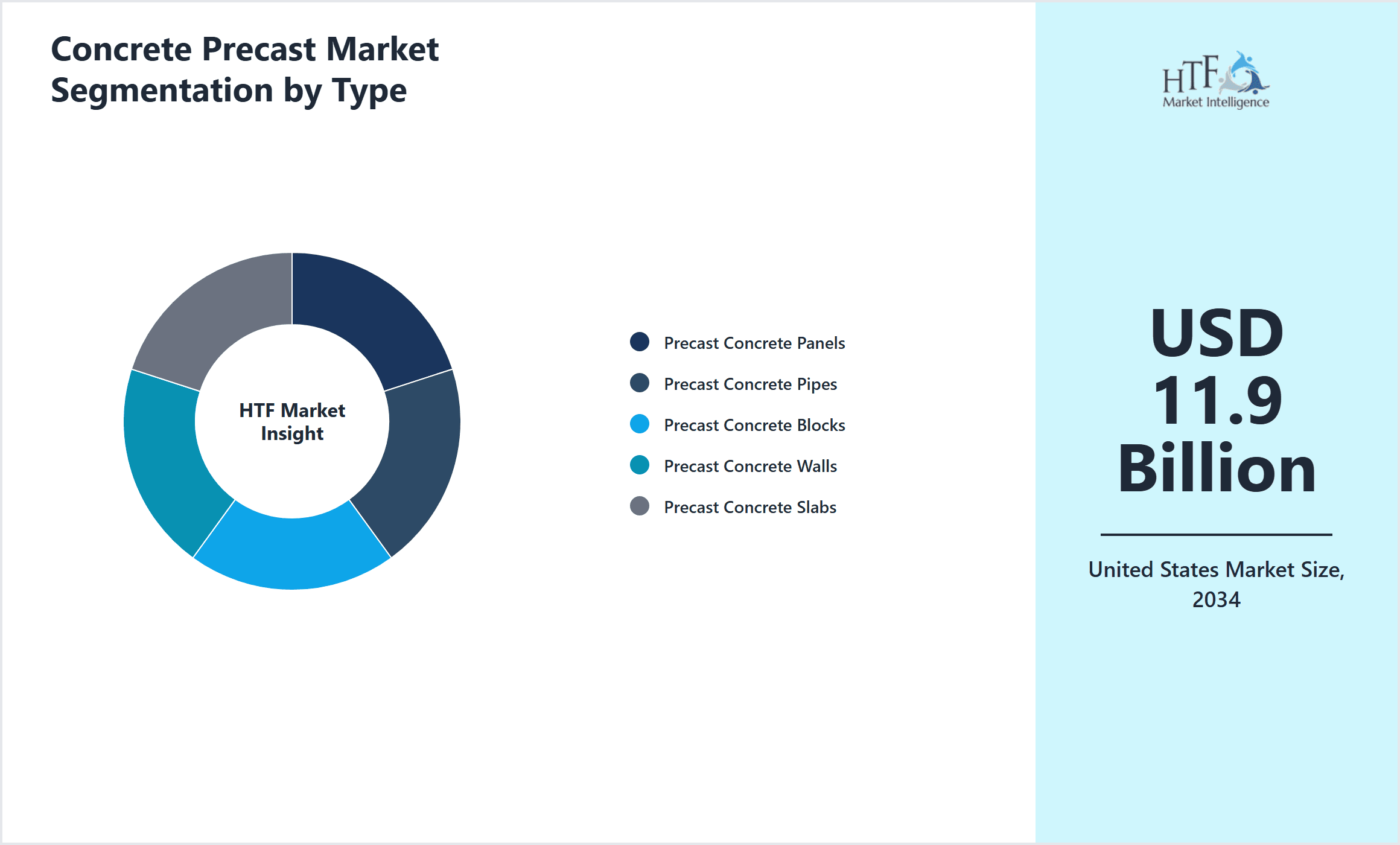
United States Concrete Precast Market is segmented by Product Type (Precast Concrete Panels, Precast Concrete Pipes, Precast Concrete Blocks, Precast Concrete Walls, Precast Concrete Slabs), Application (Building & Construction, Infrastructure, Transportation, Industrial, Landscaping), End-Use Industry (Residential, Commercial, Industrial, Public Infrastructure), Distribution Channel (Direct Sales, Distributors and Dealers, Online Sales), and Geography (Northeast, Southwest, The South, The Midwest)
Pricing
Report Overview
Executive Summary
- •The United States Concrete Precast Market is a critical sector within the construction industry, involving the production and use of precast concrete products such as panels, pipes, blocks, walls, and slabs. These products are fabricated off-site in controlled environments, ensuring superior quality and faster project completion compared to traditional cast-in-place concrete. The market serves diverse applications including building and construction, transportation infrastructure, industrial facilities, and landscaping projects. With increasing infrastructure investments, urban development, and a shift towards sustainable and efficient construction practices, the market is witnessing robust growth. Technological advancements, such as automation and eco-friendly materials, further propel market expansion. The industry's scope includes material procurement, manufacturing, distribution, and integration with construction activities, reflecting a dynamic ecosystem influenced by regulatory standards, economic factors, and environmental considerations. Stakeholders ranging from manufacturers to end-users benefit from the durability, cost efficiency, and design flexibility offered by precast solutions, underscoring the market's strategic importance in the US construction landscape.
- •Key market highlights reveal a base market size of USD 5.8 Billion in 2025, projected to nearly double by 2034, reaching USD 11.9 Billion with a CAGR of 8.1%. The West Coast region dominates market share owing to significant urban construction and infrastructure projects, while the Southeast is identified as the fastest-growing region driven by expanding industrial and transport infrastructure. Precast concrete panels remain the leading product type due to their versatility and widespread adoption, whereas precast concrete pipes show the fastest growth, supported by rising demand in water management and utility sectors. Application-wise, building and construction hold the largest market share, followed by infrastructure development, reflecting ongoing investments in residential and commercial real estate as well as public works. These trends underscore the market's resilience and growth potential amid evolving construction industry dynamics.
- •The value proposition of the precast concrete market in the US is anchored in its ability to deliver quality, speed, and sustainability in construction projects. This market supports various stakeholders including manufacturers, contractors, architects, and government bodies by providing reliable building materials that reduce on-site labor, minimize waste, and enhance structural integrity. Strategic importance is heightened by increasing regulatory emphasis on green building practices and infrastructure modernization, which favor precast solutions. Furthermore, innovations in production technologies and materials science continue to expand application scopes and performance parameters. Consequently, the market is positioned as a pivotal enabler of construction efficiency, cost-effectiveness, and environmental compliance, driving long-term growth in the US construction sector.

Competitive Landscape
The United States Concrete Precast Market exhibits a highly competitive environment characterized by numerous regional and national players competing on innovation, quality, and service delivery. Market leaders invest heavily in advanced manufacturing technologies such as automation, 3D modeling, and sustainable material integration to differentiate their product offerings and meet evolving customer demands. Competitive strategies include strategic partnerships, mergers and acquisitions, and expansion of production capacities to enhance market presence. Pricing strategies balance cost competitiveness with quality assurance, while companies also focus on improving distribution networks and customer service for greater market penetration. Innovation in product design and customization is prevalent, enabling firms to cater to complex infrastructure and building requirements. Market rivalry is intensified by new entrants adopting modern precast technologies and by established players leveraging scale and experience. Regional competition is influenced by local construction activity levels, regulatory frameworks, and availability of raw materials, shaping a dynamic competitive landscape with continuous evolution expected over the forecast period.
Leading Companies in United States Concrete Precast Market
- •Oldcastle Infrastructure (United States)
- •Coreslab Structures (United States)
- •High Concrete Group LLC (United States)
- •Wausau Tile Inc. (United States)
- •Gate Precast Company (United States)
- •Metromont Corporation (United States)
- •Forterra Inc. (United States)
- •Spancrete (United States)
- •Argos USA LLC (United States)
- •Rinker Materials Corporation (United States)
- •Wilbert Precast (United States)
- •Preferred Materials (United States)
- •Oldcastle APG (United States)
- •Clark Pacific (United States)
- •Cemex USA (United States)
- •Boral Limited (United States)
- •Tindall Corporation (United States)
- •Concrete Industries Inc. (United States)
- •Dura-Stress Inc. (United States)
- •Standard Concrete Products (United States)
- •Superior Concrete Products (United States)
- •Hanson Building Materials (United States)
- •CalPortland Company (United States)
- •Rinker Materials (United States)
- •Concrete Pipe & Precast Inc. (United States)

Market Breakdown
- •By Product Type
- ◦Precast Concrete Panels
- ◦Precast Concrete Pipes
- ◦Precast Concrete Blocks
- ◦Precast Concrete Walls
- ◦Precast Concrete Slabs
- •By Application
- ◦Building & Construction
- ◦Infrastructure
- ◦Transportation
- ◦Industrial
- ◦Landscaping
- •By End-Use Industry
- ◦Residential
- ◦Commercial
- ◦Industrial
- ◦Public Infrastructure
- •By Distribution Channel
- ◦Direct Sales
- ◦Distributors and Dealers
- ◦Online Sales
Growth Dynamics
- •Increasing urbanization and infrastructural development in metropolitan areas drive high demand for precast concrete panels and pipes, facilitating rapid construction with improved durability and cost-efficiency. Large-scale projects such as highways, bridges, and commercial complexes benefit significantly from precast solutions, stimulating market growth.
- •Technological advancements in manufacturing processes, including automation and high-strength concrete formulations, enhance product quality and reduce production lead times, attracting more stakeholders to adopt precast concrete in various construction applications.
- •Government initiatives promoting sustainable construction practices and infrastructure modernization provide incentives and regulatory support, encouraging the use of precast products that minimize environmental impact and improve energy efficiency in the construction lifecycle.
- •Rising renovation and replacement of aging infrastructure in the US create continuous demand for precast concrete solutions, especially in water management and transportation sectors, where durability and installation speed are critical.
- •Growing awareness among architects and contractors regarding the benefits of precast concrete, such as design flexibility and reduced on-site labor, is expanding its application scope across residential, commercial, and industrial construction projects.
- •Investment by key market players in expanding production capacities and distribution channels ensures greater market penetration and customer reach, fueling sustained market growth over the forecast period.
- •The increasing integration of digital technologies such as Building Information Modeling (BIM) with precast concrete manufacturing streamlines project planning and execution, boosting adoption rates in complex construction projects.
Market Trends
- •Adoption of eco-friendly and sustainable precast concrete materials is gaining traction, as manufacturers innovate with recycled aggregates and low-carbon cement alternatives to meet environmental regulations and consumer demand.
- •Modular construction using precast concrete components is becoming increasingly popular due to its time-saving attributes and scalability, particularly in residential and commercial building sectors seeking rapid deployment.
- •Integration of smart technologies in precast products, such as embedded sensors for structural health monitoring, is emerging as a trend that enhances maintenance and safety protocols in infrastructure projects.
- •Collaborative partnerships between precast manufacturers and construction firms are expanding, enabling end-to-end solutions that improve project efficiency and reduce costs through streamlined supply chains.
- •Increasing investment in research and development within the precast concrete industry is driving innovation in product durability, aesthetics, and installation techniques, supporting market expansion.
- •The rise of off-site construction and prefabrication aligns with the precast concrete market’s growth, as stakeholders seek to minimize on-site disruptions and labor shortages.
- •Enhanced regulatory focus on building codes and safety standards ensures higher quality and performance expectations for precast concrete products, influencing manufacturing practices.

Market Opportunities
- •Expansion into emerging sub-regions such as the Southeast and Midwest offers significant growth potential due to increasing infrastructure investments and urban development projects, representing untapped market segments.
- •Developing customized precast solutions for specialized applications like seismic-resistant structures and green building certifications can open new market niches and enhance competitive positioning.
- •Leveraging digitalization and Industry 4.0 technologies to optimize manufacturing efficiency and product traceability presents opportunities for cost reduction and quality enhancement.
- •Strategic acquisitions and partnerships with regional construction firms can facilitate market expansion and access to new customer bases, strengthening market presence.
- •Growing demand for sustainable construction materials driven by stricter environmental regulations encourages the development of low-carbon precast concrete products, creating avenues for innovation and differentiation.
- •Increasing use of precast concrete in infrastructure renovation projects, particularly in water and transportation sectors, provides steady demand and growth opportunities.
- •Enhanced distribution networks and online sales channels can broaden market reach, especially among small- and medium-sized contractors seeking convenient procurement options.
Market Challenges
- •High initial capital investment required for precast concrete manufacturing facilities and advanced machinery poses a barrier for new entrants and limits market expansion in smaller regions.
- •Stringent regulatory compliance related to environmental standards and building codes increases operational complexity and costs for manufacturers, affecting profitability margins.
- •Competition from alternative construction materials such as steel and traditional cast-in-place concrete continues to challenge precast concrete’s market share, especially in cost-sensitive projects.
- •Supply chain disruptions, including raw material shortages and transportation delays, impact production schedules and product availability, hindering market growth.
- •Limited skilled labor and technical expertise for precast concrete installation at some regional levels slow adoption rates and project execution timelines.
- •Market fluctuations in construction activity due to economic downturns or policy changes create demand uncertainty, affecting investment decisions and capacity utilization.
- •Fragmentation of the market with many small regional players results in inconsistent product quality and challenges in establishing standardized industry practices.
Regulatory Framework
- •Between 2020 and 2025, the US Environmental Protection Agency (EPA) strengthened regulations on construction materials' carbon footprints, requiring precast concrete manufacturers to adopt low-emission production processes and report sustainability metrics, impacting operational practices significantly.
- •Occupational Safety and Health Administration (OSHA) revised workplace safety standards for precast concrete facilities in 2023, mandating enhanced worker training and stricter machinery operation protocols to reduce accidents and improve compliance.
- •Building codes updated in 2022 by the International Code Council (ICC) incorporated new seismic design requirements for precast concrete structures, necessitating manufacturers and engineers to implement advanced reinforcement and design techniques.
- •State-level mandates in California and New York introduced from 2021 to 2024 require higher recycling content in precast concrete products and promote the use of sustainable materials, influencing regional manufacturing standards and market demand.
- •Federal infrastructure funding initiatives launched in 2021 included incentives for using precast concrete in public works projects, encouraging manufacturers to scale production and align with government sustainability goals.
Market Intelligence
- •15th February 2025, Oldcastle Infrastructure unveiled a new line of high-performance precast concrete panels designed for rapid installation in urban construction projects. These panels incorporate advanced fiber-reinforced concrete technology, enhancing durability and reducing weight by 15% compared to traditional products. Targeted primarily at high-rise residential and commercial developments, this innovation aims to decrease construction timelines and improve energy efficiency. The strategic launch positions Oldcastle to capitalize on increasing demand for sustainable, quick-build solutions in densely populated regions. Source: Official Company Website
- •10th April 2025, Coreslab Structures announced the expansion of its manufacturing facility in the Southeast US to meet growing orders for precast concrete pipes used in water infrastructure projects. The expansion includes state-of-the-art automation and environmental controls, increasing production capacity by 30%. This move aligns with federal infrastructure investments and aims to address regional demand spikes driven by aging municipal systems. The initiative also emphasizes sustainability with enhanced waste recycling programs integrated into operations. Source: Industry Publication
- •5th January 2025, High Concrete Group LLC launched an innovative precast concrete block system featuring integrated insulation and eco-friendly materials, targeting the residential construction sector. This product reduces energy consumption in buildings and complies with the latest green building standards. The launch follows strategic collaboration with material science experts and supports the company’s commitment to sustainable growth. It is expected to drive adoption among eco-conscious builders and developers. Source: Official Press Release
- •20th March 2025, Spancrete entered a strategic partnership with a leading technology firm to develop smart precast concrete solutions embedded with structural health monitoring sensors. This collaboration aims to enhance infrastructure safety and maintenance efficiency across transportation projects. The technology integration is anticipated to provide real-time data analytics, facilitating predictive maintenance and reducing lifecycle costs. The partnership strengthens Spancrete’s market position in innovation-driven precast applications. Source: Company Announcement
Regional Outlook
The West Coast currently holds a significant share of the market, primarily due to several key factors: increasing consumption rates, a burgeoning population, and robust economic momentum. These elements collectively drive demand, positioning this region as a leader in the market. On the other hand, Southeast is rapidly emerging as the fastest-growing area within the industry. This remarkable growth can be attributed to swift infrastructure development, the expansion of various industrial sectors, and a marked increase in consumer demand. These dynamics make this region a crucial player in shaping future market growth.
In our report, we cover a comprehensive analysis of the following regions and countries:
- Northeast
- Southwest
- The South
- The Midwest
| Feature | Details |
|---|---|
| Base Year Market Size | USD 5.8 Billion |
| Forecast Year Market Size | USD 11.9 Billion |
| CAGR | 8.1% |
| Forecast Period | 2026 to 2033 |
| YoY Growth | 7.9% |
| Scope of Report | Market is segmented by Product Type (Precast Concrete Panels, Precast Concrete Pipes, Precast Concrete Blocks, Precast Concrete Walls, Precast Concrete Slabs), Application (Building & Construction, Infrastructure, Transportation, Industrial, Landscaping), End-Use Industry (Residential, Commercial, Industrial, Public Infrastructure), Distribution Channel (Direct Sales, Distributors and Dealers, Online Sales) |
| Regions Covered | Northeast, Southwest, The South, The Midwest |
| Key Companies | Oldcastle Infrastructure (United States), Coreslab Structures (United States), High Concrete Group LLC (United States), Wausau Tile Inc. (United States), Gate Precast Company (United States) |
United States Concrete Precast Market - Outlook 2025-2034 - Table of Contents
Frequently Asked Questions (FAQ):
The Compact Track Loaders market is expected to see value worth 5.3 Billion in 2025.
North America currently leads the market with approximately 45% market share, followed by Europe at 28% and Asia-Pacific at 22%. The remaining regions account for 5% of the global market.
Key growth drivers include increasing construction activities, rising demand for versatile equipment in agriculture, technological advancements in track loader design, and growing preference for compact equipment in urban construction projects.