
Global Vaccine Adjuvant Technologies Market Size, Growth & Revenue 2025-2034
Global Vaccine Adjuvant Technologies Market is segmented by Product Type (Alum (Aluminum-based Adjuvants), Oil-in-Water Emulsions, Saponins, Toll-Like Receptor Agonists, Others (Liposomes, Cytokines)), Application (Infectious Diseases, Oncology, Autoimmune Disorders, Allergies, Others (Veterinary, Emerging Diseases)), End-Use Industry (Pharmaceutical Companies, Biotechnology Firms, Research Institutes, Contract Manufacturing Organizations), Distribution Channel (Direct Sales, Distributors, Online Channels), and Geography (North America, LATAM, West Europe, Central & Eastern Europe, Northern Europe, Southern Europe, East Asia, Southeast Asia, South Asia, Central Asia, Oceania, MEA)
Pricing
Report Overview
Executive Summary
- •The global Vaccine Adjuvant Technologies Market refers to the sector focused on the development and application of substances that enhance the immune response to vaccines, thereby improving their efficacy and duration of protection. This market includes various adjuvant types such as Alum, oil-in-water emulsions, saponins, and Toll-Like Receptor agonists, which find applications across infectious diseases, oncology, autoimmune disorders, allergies, and other therapeutic areas. Key market activities involve research, innovation, and manufacturing of these adjuvants, which play a critical role in the success of both prophylactic and therapeutic vaccines. The market is characterized by rapid technological advancement, regulatory oversight, and increasing investment driven by the growing global demand for improved vaccines. Major regions contributing to market growth include North America, Europe, and Asia-Pacific, each reflecting unique healthcare priorities and adoption trends. This market is pivotal for public health initiatives worldwide, as vaccine adjuvants enable more effective immunization strategies and help combat emerging infectious diseases and chronic conditions.
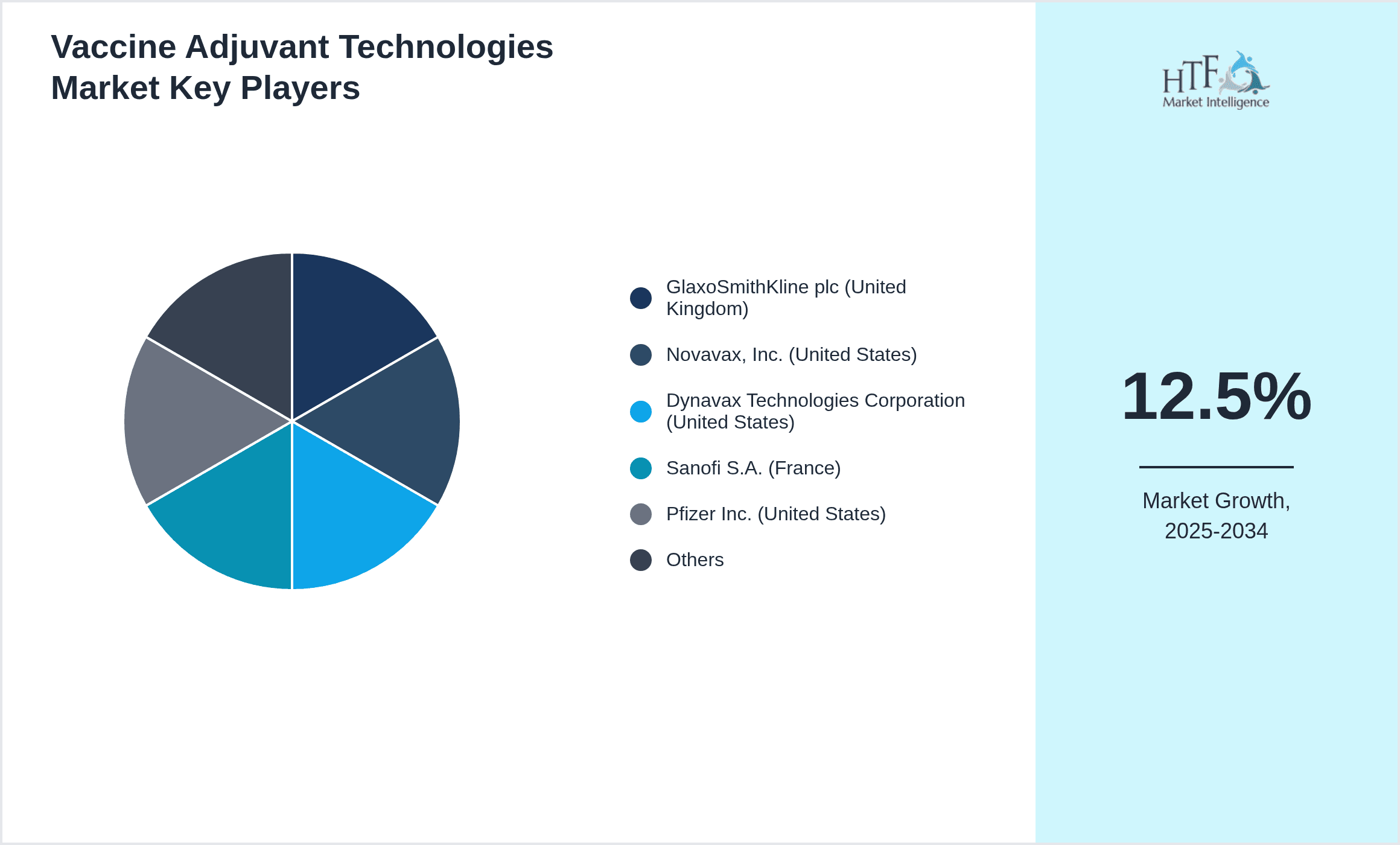
- •The global Vaccine Adjuvant Technologies Market is projected to grow significantly with a CAGR of approximately 12.5% from 2025 to 2034, reaching a market size of USD 14.8 Billion by 2034 from USD 5.2 Billion in 2025. This robust growth is driven by increasing vaccine R&D activities, rising prevalence of infectious and chronic diseases, and expanding government support for immunization programs. Innovations in novel adjuvant formulations and the growing acceptance of newer adjuvant types like Toll-Like Receptor agonists further fuel the market expansion. North America currently dominates the market due to advanced healthcare infrastructure and strong biopharmaceutical presence, while Asia-Pacific is emerging as the fastest-growing region owing to rising healthcare investments and increasing vaccine adoption.
- •The Vaccine Adjuvant Technologies Market offers significant strategic value by enhancing vaccine efficacy, safety, and immunogenicity, thereby benefiting vaccine manufacturers, healthcare providers, and patients globally. It enables the development of vaccines capable of eliciting stronger and longer-lasting immune responses, particularly important for diseases with high morbidity and mortality. The market supports critical public health goals by addressing vaccine hesitancy through improved formulations and by facilitating rapid response to pandemics and emerging infections. Key stakeholders benefit from technological advancements, regulatory incentives, and expanding market opportunities across diverse therapeutic areas. Overall, the market plays a crucial role in strengthening global immunization frameworks and advancing personalized medicine approaches.

Competitive Landscape
The global Vaccine Adjuvant Technologies Market features intense competition among established pharmaceutical and biotechnology companies, characterized by continuous innovation and strategic collaborations. Market players emphasize R&D to develop novel adjuvant platforms that improve vaccine efficacy and safety profiles, thus differentiating their product offerings. Competitive strategies include mergers and acquisitions, licensing agreements, and partnerships with vaccine manufacturers to expand technology portfolios and geographic reach. Companies also focus on achieving regulatory approvals and complying with stringent safety standards to gain market credibility. Pricing strategies and product differentiation through proprietary formulations further intensify rivalry. Regional competition varies, with North America and Europe dominated by well-established firms, while Asia-Pacific sees emerging players leveraging cost advantages and increasing investments. Future competition will likely revolve around next-generation adjuvants and personalized vaccine solutions, driving innovation and market consolidation.
Prominent Players in Vaccine Adjuvant Technologies Market
- •GlaxoSmithKline plc (United Kingdom)
- •Novavax, Inc. (United States)
- •Dynavax Technologies Corporation (United States)
- •Sanofi S.A. (France)
- •Pfizer Inc. (United States)
- •BASF SE (Germany)
- •Becton, Dickinson and Company (United States)
- •Seqirus (Australia)
- •Biontech SE (Germany)
- •Merck & Co., Inc. (United States)
- •Cytiva (Sweden)
- •Janssen Pharmaceuticals (Belgium)
- •Corixa Corporation (United States)
- •Valneva SE (France)
- •Medicago Inc. (Canada)
- •Shionogi & Co., Ltd. (Japan)
- •Adjuvance Technologies LLC (United States)
- •Vaxine Pty Ltd (Australia)
- •Ligand Pharmaceuticals (United States)
- •EpiVax, Inc. (United States)
- •Emergent BioSolutions Inc. (United States)
- •ImmunoQure AG (Switzerland)
- •PharmaJet (United States)
- •Vical Incorporated (United States)
- •Wacker Chemie AG (Germany)

Market Breakdown
- •By Product Type
- ◦Alum (Aluminum-based Adjuvants)
- ◦Oil-in-Water Emulsions
- ◦Saponins
- ◦Toll-Like Receptor Agonists
- ◦Others (Liposomes, Cytokines)
- •By Application
- ◦Infectious Diseases
- ◦Oncology
- ◦Autoimmune Disorders
- ◦Allergies
- ◦Others (Veterinary, Emerging Diseases)
- •By End-Use Industry
- ◦Pharmaceutical Companies
- ◦Biotechnology Firms
- ◦Research Institutes
- ◦Contract Manufacturing Organizations
- •By Distribution Channel
- ◦Direct Sales
- ◦Distributors
- ◦Online Channels
Growth Dynamics
The global Vaccine Adjuvant Technologies Market is propelled by increasing investments in vaccine research and development, driven by the urgent need for more efficacious vaccines against emerging infectious diseases and chronic conditions. Rising government initiatives and funding to support immunization programs worldwide have expanded the demand for advanced adjuvant solutions. Additionally, advancements in molecular biology and immunology have enabled the creation of novel adjuvants tailored for specific immune responses, attracting attention from pharmaceutical and biotechnology companies. The growing prevalence of infectious diseases such as influenza, COVID-19, and HPV, alongside rising oncology vaccine developments, further fuel market expansion. Increasing public awareness and acceptance of vaccination programs globally contribute to higher adoption rates. The market also benefits from expanded manufacturing capabilities and improvements in regulatory frameworks facilitating faster approvals. Collectively, these factors create a robust environment fostering sustained market growth through the forecast period.

Market Trends
A prominent trend in the Vaccine Adjuvant Technologies Market is the shift towards next-generation adjuvants such as Toll-Like Receptor agonists and nanoparticle-based formulations that offer enhanced immunogenicity with improved safety profiles. Companies are increasingly investing in combination adjuvants to stimulate multiple immune pathways simultaneously, thereby enhancing vaccine efficacy. Digital transformation and artificial intelligence are also being leveraged to accelerate adjuvant discovery and optimize vaccine design. There is a growing focus on personalized vaccines and adjuvants tailored to specific patient populations, particularly in oncology and autoimmune disorders. Sustainability and green chemistry principles are influencing adjuvant development to minimize environmental impact. Furthermore, collaborations between academia, biotech startups, and large pharmaceutical firms are intensifying to drive innovation and rapid commercialization. These trends indicate a dynamic market evolving towards sophisticated, safer, and more effective vaccine adjuvants.
Market Opportunities
The Vaccine Adjuvant Technologies Market presents significant opportunities in emerging regions such as Asia-Pacific and Latin America, where increasing healthcare infrastructure investments and rising immunization awareness are driving demand. There is untapped potential in developing adjuvants for novel vaccine platforms including mRNA and viral vector vaccines, which require optimized immune potentiators. Expanding applications beyond infectious diseases into oncology and autoimmune therapeutics open new growth avenues. Strategic partnerships and licensing agreements can facilitate technology access and geographic expansion for market players. Growing interest in pediatric and elderly vaccination programs offers further scope for customized adjuvant development. Moreover, advancements in biomarker research enable precision adjuvant design, creating niche opportunities. The integration of adjuvants with digital health solutions for vaccine monitoring and efficacy enhancement also presents innovative growth pathways for stakeholders.
Market Challenges
Despite promising growth, the Vaccine Adjuvant Technologies Market faces challenges including stringent regulatory requirements that prolong product development timelines and increase costs. Safety concerns related to adjuvant-induced adverse effects necessitate extensive clinical testing, which can delay market entry and limit adoption. Manufacturing complexities and high production costs of novel adjuvants pose barriers for smaller companies. Market fragmentation and intellectual property disputes may hinder collaboration and technology dissemination. Furthermore, vaccine hesitancy driven by misinformation impacts demand for adjuvanted vaccines in certain regions. Limited reimbursement policies and pricing pressures constrain profitability. Variability in regional regulatory frameworks complicates global commercialization strategies. Addressing these challenges requires coordinated efforts among stakeholders to streamline approvals, ensure safety, and enhance public trust.
Regulatory Framework
Between 2020 and 2025, regulatory bodies globally have implemented stringent guidelines to enhance the safety and efficacy evaluation of vaccine adjuvants. Key regulations include the EMA’s 2020 updated guidance on adjuvant characterization requiring detailed immunogenicity and toxicology data, and the FDA’s 2021 revised recommendations on adjuvant-containing vaccine development emphasizing robust clinical trial designs. Additionally, the WHO released standardized protocols in 2022 for preclinical and clinical assessment of novel adjuvants to harmonize international regulatory approaches. These frameworks mandate comprehensive safety profiling and post-marketing surveillance, impacting market entry timelines but ensuring higher product standards. Country-specific mandates in North America and Europe require alignment with Good Manufacturing Practices (GMP) and Quality by Design (QbD) principles. Government incentives and accelerated pathways for pandemic-related vaccines have also influenced market dynamics. Overall, evolving regulatory landscapes shape R&D strategies and commercialization plans for vaccine adjuvant manufacturers.
Market Intelligence
- •15th January 2025, GlaxoSmithKline plc launched a novel Toll-Like Receptor agonist-based adjuvant designed to enhance mRNA vaccine efficacy targeting infectious diseases. This adjuvant features a proprietary formulation enabling targeted immune activation with reduced reactogenicity, aimed at next-generation vaccines. The product launch aligns with growing demand for improved vaccine platforms and offers strategic advantages in competitive vaccine markets. GSK’s innovation supports accelerated vaccine development timelines and broadens therapeutic applications, positioning the company as a market leader in adjuvant technologies. Source: Official company press release.
- •10th March 2025, Dynavax Technologies Corporation introduced an advanced oil-in-water emulsion adjuvant with enhanced stability and immunogenicity for use in oncology vaccines. The adjuvant incorporates novel lipid components to stimulate both cellular and humoral immune responses effectively. This innovation addresses unmet needs in cancer immunotherapy vaccines and is expected to expand Dynavax’s market share in specialty vaccine adjuvants. The company’s strategic focus on oncology applications complements existing infectious disease portfolios and supports pipeline diversification. Source: Industry publication.
- •22nd February 2025, Novavax, Inc. announced a strategic partnership with a leading biotechnology firm to co-develop saponin-based adjuvants for global vaccine programs targeting emerging infectious diseases. This collaboration aims to leverage combined expertise in adjuvant science and vaccine formulation to accelerate product development and regulatory approvals. The alliance strengthens Novavax’s position in the adjuvant market and enhances supply chain resilience for global immunization efforts. Joint R&D activities focus on optimizing safety and efficacy profiles to meet diverse regional requirements. Source: Official press release.
- •5th April 2025, Pfizer Inc. completed acquisition of a specialized adjuvant technology company to expand its vaccine portfolio with proprietary alum-based and novel adjuvant platforms. The acquisition provides Pfizer access to cutting-edge adjuvant formulations and manufacturing capabilities, accelerating innovation pipelines. This strategic move aims to enhance Pfizer’s competitive edge in vaccine development and address growing market demand for improved immunogenicity. The integration is expected to streamline R&D and commercial operations while fostering product diversification across multiple therapeutic areas. Source: Industry news.
Regional Outlook
The North America currently holds a significant share of the market, primarily due to several key factors: increasing consumption rates, a burgeoning population, and robust economic momentum. These elements collectively drive demand, positioning this region as a leader in the market. On the other hand, Asia-Pacific is rapidly emerging as the fastest-growing area within the industry. This remarkable growth can be attributed to swift infrastructure development, the expansion of various industrial sectors, and a marked increase in consumer demand. These dynamics make this region a crucial player in shaping future market growth.
In our report, we cover a comprehensive analysis of the following regions and countries:
- North America
- LATAM
- West Europe
- Central & Eastern Europe
- Northern Europe
- Southern Europe
- East Asia
- Southeast Asia
- South Asia
- Central Asia
- Oceania
- MEA
| Feature | Details |
|---|---|
| Base Year Market Size | USD 5.2 Billion |
| Forecast Year Market Size | USD 14.8 Billion |
| CAGR | 12.5% |
| Forecast Period | 2026 to 2033 |
| YoY Growth | 12.5% |
| Scope of Report | Market is segmented by Product Type (Alum (Aluminum-based Adjuvants), Oil-in-Water Emulsions, Saponins, Toll-Like Receptor Agonists, Others (Liposomes, Cytokines)), Application (Infectious Diseases, Oncology, Autoimmune Disorders, Allergies, Others (Veterinary, Emerging Diseases)), End-Use Industry (Pharmaceutical Companies, Biotechnology Firms, Research Institutes, Contract Manufacturing Organizations), Distribution Channel (Direct Sales, Distributors, Online Channels) |
| Regions Covered | North America, LATAM, West Europe, Central & Eastern Europe, Northern Europe, Southern Europe, East Asia, Southeast Asia, South Asia, Central Asia, Oceania, MEA |
| Key Companies | GlaxoSmithKline plc (United Kingdom), Novavax, Inc. (United States), Dynavax Technologies Corporation (United States), Sanofi S.A. (France), Pfizer Inc. (United States), BASF SE (Germany), Becton, Dickinson and Company (United States), Seqirus (Australia), Biontech SE (Germany), Merck & Co., Inc. (United States), Cytiva (Sweden), Janssen Pharmaceuticals (Belgium), Corixa Corporation (United States), Valneva SE (France), Medicago Inc. (Canada), Shionogi & Co., Ltd. (Japan), Adjuvance Technologies LLC (United States), Vaxine Pty Ltd (Australia), Ligand Pharmaceuticals (United States), EpiVax, Inc. (United States), Emergent BioSolutions Inc. (United States), ImmunoQure AG (Switzerland), PharmaJet (United States), Vical Incorporated (United States), Wacker Chemie AG (Germany) |
Global Vaccine Adjuvant Technologies Market Size, Growth & Revenue 2025-2034 - Table of Contents
Frequently Asked Questions (FAQ):
The Compact Track Loaders market is projected to grow at a CAGR of 6.8% from 2025 to 2030, driven by increasing demand in construction and agricultural sectors.
North America currently leads the market with approximately 45% market share, followed by Europe at 28% and Asia-Pacific at 22%. The remaining regions account for 5% of the global market.
Key growth drivers include increasing construction activities, rising demand for versatile equipment in agriculture, technological advancements in track loader design, and growing preference for compact equipment in urban construction projects.