
Global Smart Backpacks Market Size, Growth & Revenue 2024-2034
Global Smart Backpacks Market is segmented by Product Type (Built-in Battery Smart Backpacks, Solar Powered Smart Backpacks, Wireless Charging Smart Backpacks, GPS Enabled Smart Backpacks, Anti-Theft Smart Backpacks), Application (Education, Outdoor & Sports, Corporate & Business, Travel, Healthcare), End-User (Students, Professionals, Athletes, Travelers), Distribution Channel (Online Retail, Specialty Stores, Mass Merchandisers), and Geography (North America, LATAM, West Europe, Central & Eastern Europe, Northern Europe, Southern Europe, East Asia, Southeast Asia, South Asia, Central Asia, Oceania, MEA)
Pricing
Report Overview
Executive Summary
- •The global smart backpacks market integrates innovative electronic features into traditional backpacks to enhance user convenience, security, and connectivity. These backpacks are equipped with technologies such as built-in batteries for device charging, solar panels for renewable energy, wireless charging pads, GPS tracking for anti-theft protection, and anti-theft locking systems. The market spans multiple applications including education, outdoor and sports activities, corporate and business use, travel, and healthcare. With increasing adoption of smart devices and the growing emphasis on seamless mobility and security, smart backpacks are becoming essential accessories worldwide. The market is defined by rapid technological advancements, rising consumer awareness, and expanding product portfolios catering to diverse end users ranging from students and professionals to athletes and travelers. Furthermore, integration of IoT and sustainable energy sources drives the market’s innovation and adoption across regions.
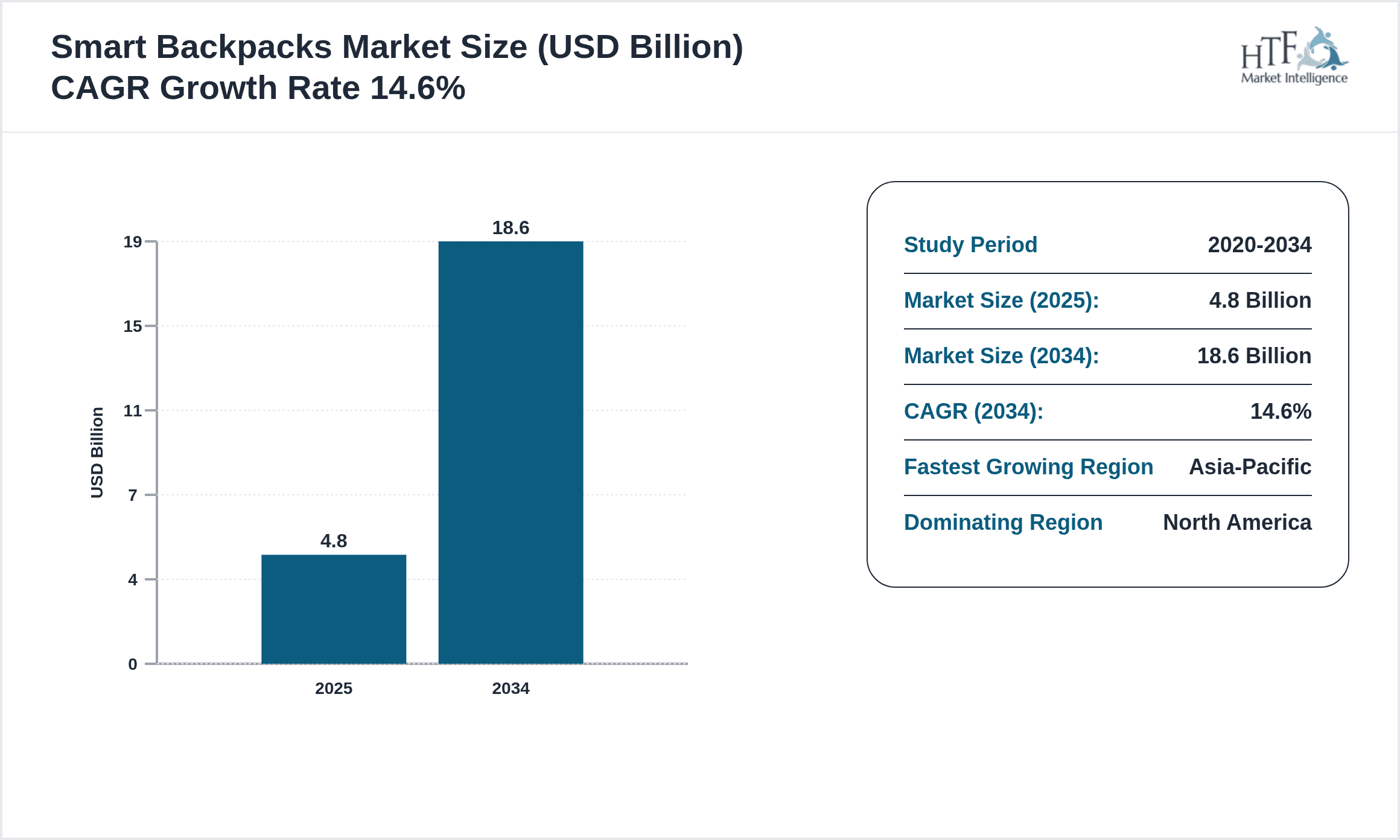
- •Key market highlights include a base valuation of USD 4.8 Billion in 2024 and an anticipated growth to USD 18.6 Billion by 2034, reflecting a robust CAGR of approximately 14.6%. North America currently dominates the market driven by high consumer tech adoption and strong retail presence, while Asia-Pacific is the fastest-growing region propelled by increasing urbanization and rising disposable incomes. Built-in battery backpacks remain the leading product type due to their convenience, but solar powered backpacks are gaining rapid traction fueled by sustainability trends. Education and outdoor applications represent the largest market segments, supported by increasing demand for smart accessories among students and sports enthusiasts globally.
- •The smart backpacks market holds strategic importance across industries such as education, retail, technology, and outdoor equipment manufacturing. For stakeholders, it offers opportunities to leverage technological integration, meet evolving consumer preferences, and capitalize on sustainability mandates. The value proposition lies in delivering enhanced functionality combining power supply, connectivity, and security within a portable framework. Manufacturers focus on innovation and partnerships to expand product ranges and geographic reach. Investors and retailers benefit from the growing market awareness and demand for smart lifestyle products. Regulatory compliance and material sustainability also shape industry strategies, making the smart backpacks market an evolving and dynamic sector with considerable growth potential worldwide.
Competitive Landscape
The global smart backpacks market exhibits intense competition characterized by continuous innovation, technological advancements, and strategic partnerships. Market players differentiate through product features such as battery capacity, solar integration, design ergonomics, and security technologies. Companies focus on expanding their product portfolios by integrating IoT capabilities and eco-friendly materials to meet consumer expectations and regulatory demands. Pricing strategies vary from premium offerings targeting tech-savvy consumers to affordable options for mass markets. Distribution channels include online platforms, specialty stores, and large retail chains, enabling broad market penetration. Mergers and acquisitions have played a significant role in consolidating market positions and expanding technological capabilities. Regional players often focus on localized customization and cost leadership, while global players drive innovation and brand recognition. The competitive environment fosters rapid product development cycles and adoption of emerging technologies, ensuring sustained market growth and diversity.
Leading Companies in Smart Backpacks Market
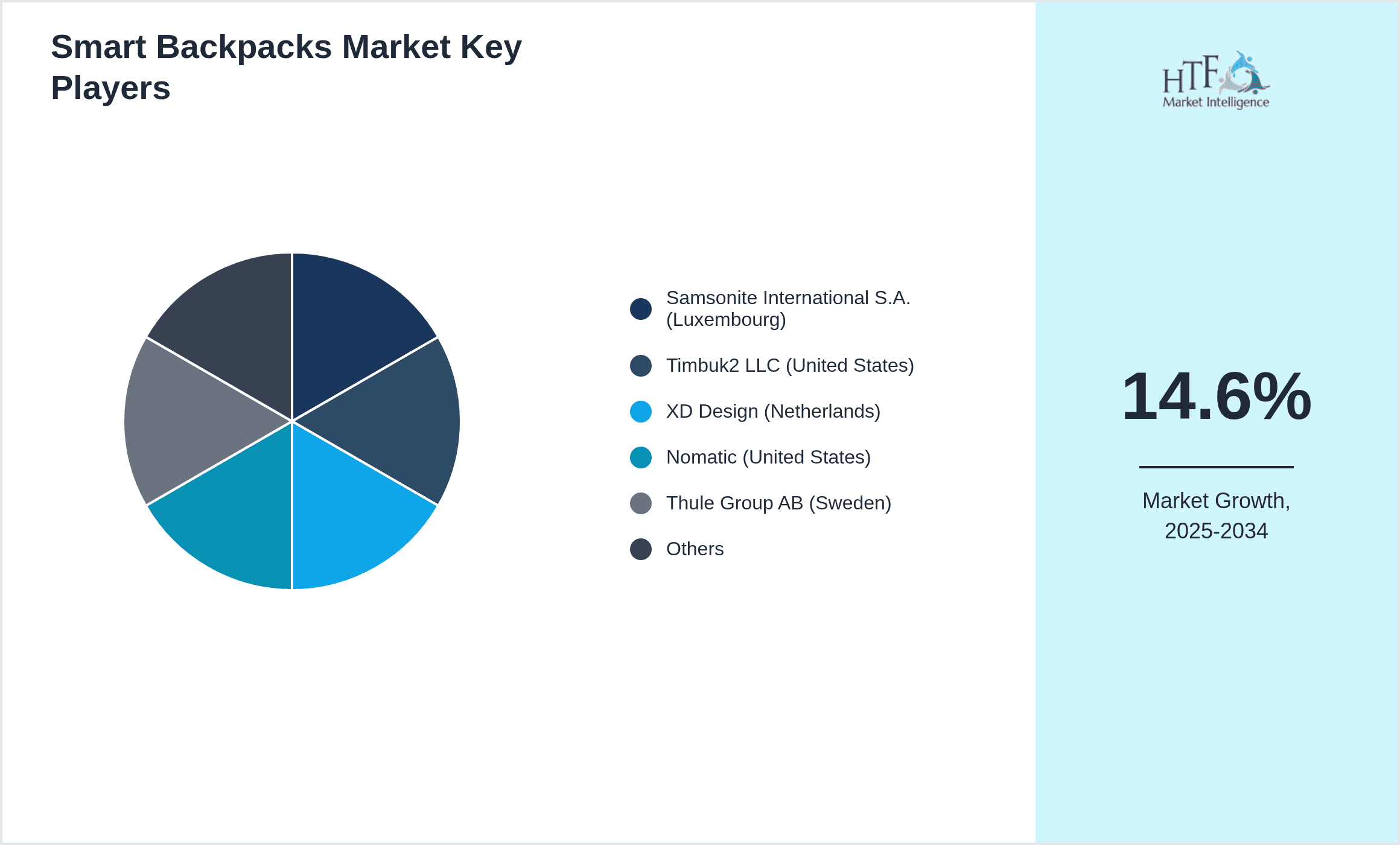
- •Samsonite International S.A. (Luxembourg)
- •Timbuk2 LLC (United States)
- •XD Design (Netherlands)
- •Nomatic (United States)
- •Thule Group AB (Sweden)
- •AmeriBag LLC (United States)
- •XD Design (Netherlands)
- •Matein (United States)
- •Voltaic Systems (United States)
- •Baubax (United States)
- •Incase Designs Corporation (United States)
- •Cote&Ciel (France)
- •Hex (United States)
- •Nomad Lane (United States)
- •Rains (Denmark)
- •Bellroy (Australia)
- •Crumpler (Australia)
- •Pacsafe (New Zealand)
- •Bobby (Netherlands)
- •XD Design (Netherlands)
- •Ogio International (United States)
- •Gatorade (United States)
- •Dakine (United States)
- •Hedgren (Belgium)
- •Osprey Packs (United States)
Market Breakdown
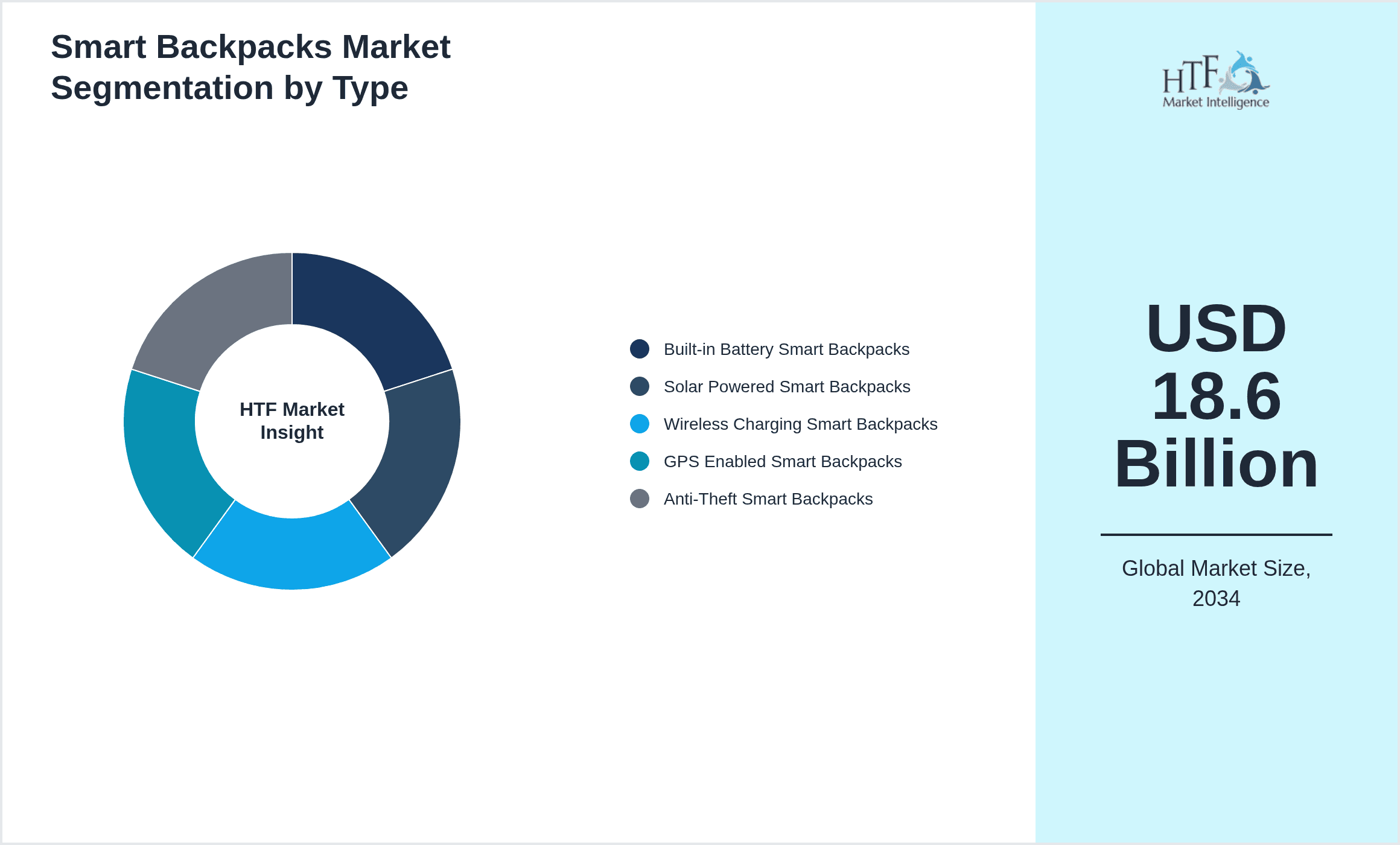
- •By Product Type
- ◦Built-in Battery Smart Backpacks
- ◦Solar Powered Smart Backpacks
- ◦Wireless Charging Smart Backpacks
- ◦GPS Enabled Smart Backpacks
- ◦Anti-Theft Smart Backpacks
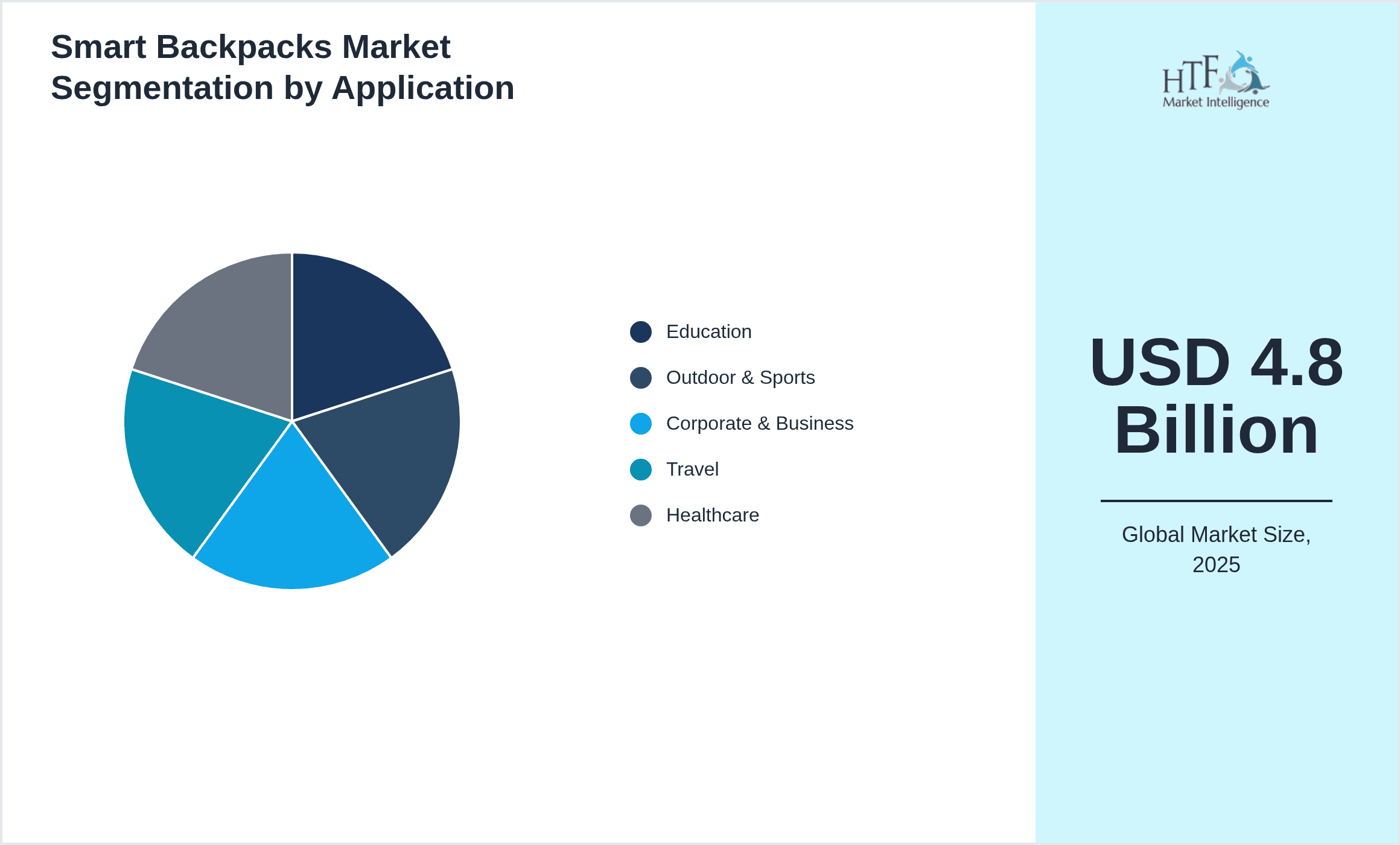
- •By Application
- ◦Education
- ◦Outdoor & Sports
- ◦Corporate & Business
- ◦Travel
- ◦Healthcare
- •By End-User
- ◦Students
- ◦Professionals
- ◦Athletes
- ◦Travelers
- •By Distribution Channel
- ◦Online Retail
- ◦Specialty Stores
- ◦Mass Merchandisers
Growth Dynamics
- •Rising adoption of portable electronic devices fuels demand for smart backpacks equipped with charging capabilities, enabling users to power smartphones, tablets, and laptops on the go. This trend has accelerated the integration of built-in batteries and wireless charging technologies, particularly among students and business travelers.
- •Increasing environmental awareness and sustainability concerns drive the popularity of solar powered smart backpacks, which provide renewable energy solutions and reduce reliance on conventional power sources. This trend aligns with global initiatives promoting green technology adoption.
- •Technological advancements in IoT and GPS enable enhanced security features like real-time tracking and anti-theft alarms, increasing consumer confidence and adoption in urban and outdoor environments. These innovations cater to safety-conscious users and outdoor enthusiasts.
- •Growth in e-commerce and online retail platforms has expanded accessibility and product visibility, allowing manufacturers to reach a wider global audience and tailor offerings to diverse customer preferences. This distribution evolution supports rapid market growth.
- •The increasing trend of digital education and remote learning boosts demand for smart backpacks designed for students, integrating device charging and connectivity features to support learning activities outside traditional classrooms.
- •Investment in R&D by key players to develop lightweight, durable, and multifunctional smart backpacks enhances product appeal and market penetration across various user segments.
- •Government initiatives promoting technology adoption and smart product innovation provide favorable conditions for market expansion, particularly in emerging economies within Asia-Pacific and Latin America.
Market Trends
- •Integration of wireless charging pads within backpacks has become a significant trend, allowing seamless charging without cables and appealing to tech-savvy consumers seeking convenience and portability.
- •Smart backpacks with modular designs supporting customizable compartments and detachable electronic components are gaining traction, catering to diverse user needs and enhancing product versatility.
- •Increased focus on eco-friendly materials such as recycled fabrics and biodegradable components aligns with consumer demand for sustainable products, influencing purchasing decisions and brand loyalty.
- •Rising collaboration between backpack manufacturers and technology firms accelerates innovation cycles and integration of advanced features like biometric locks and AI-powered tracking systems.
- •Adoption of augmented reality (AR) and smart displays embedded in backpacks is emerging, offering interactive user experiences and new avenues for product differentiation.
- •Growth in urban outdoor activities and sports drives demand for backpacks with enhanced durability, weather resistance, and integrated smart features tailored for active lifestyles.
- •Expansion of smart backpack applications into healthcare for patient monitoring and medical professional use indicates broadening market potential beyond traditional segments.
Market Opportunities
- •Untapped markets in emerging regions like Latin America and Middle East & Africa present substantial growth opportunities due to rising smartphone penetration and increasing urbanization.
- •Development of smart backpacks with integrated health monitoring sensors offers new application avenues in healthcare and fitness, addressing growing consumer wellness trends.
- •Expansion into corporate gifting and promotional merchandise markets provides manufacturers with additional revenue streams and brand visibility opportunities.
- •Partnerships with educational institutions to supply smart backpacks for students enhance market reach and foster early brand adoption among younger demographics.
- •Investment in AI and machine learning technologies for advanced theft detection and user behavior analytics can differentiate products and improve customer experience.
- •Customization and personalization trends offer opportunities to create niche products tailored to individual user preferences and lifestyle requirements.
- •Integration of renewable energy features beyond solar, such as kinetic energy harvesting, could open new technological frontiers and competitive advantages.
Market Challenges
- •High manufacturing costs associated with integrating advanced electronic components increase retail prices, limiting adoption among price-sensitive consumers in emerging markets.
- •Technical challenges related to battery life, charging efficiency, and waterproofing of electronic modules can affect product reliability and customer satisfaction.
- •Concerns over data privacy and security for GPS tracking and IoT-enabled backpacks may hinder user acceptance and require stringent compliance measures.
- •Intense competition and rapid technological changes demand continuous innovation and significant R&D investment, posing challenges for smaller manufacturers.
- •Supply chain disruptions affecting electronic components and raw materials can delay production and increase operational costs.
- •Limited consumer awareness in certain regions restricts market penetration and necessitates extensive marketing and educational campaigns.
- •Regulatory compliance across diverse international markets requires complex certification processes, increasing time-to-market and compliance costs.
Regulatory Framework
- •Between 2019 and 2024, regulations such as the European Union’s Restriction of Hazardous Substances (RoHS) directive have mandated the use of environmentally safe materials in smart backpacks, impacting manufacturing processes globally.
- •The implementation of the General Data Protection Regulation (GDPR) in 2018 has influenced smart backpack manufacturers to enforce strict data privacy and security measures, especially concerning GPS and IoT-enabled features.
- •Safety standards for lithium-ion batteries, including UN 38.3 transport regulations and IEC 62133 certification requirements, have become critical for smart backpack producers to ensure compliance and user safety.
- •Regional mandates such as the U.S. Federal Communications Commission (FCC) regulations governing wireless communication devices have influenced product design and certification timelines in North America.
- •Government initiatives promoting sustainability and green technology adoption, particularly in Asia-Pacific and Europe, have encouraged manufacturers to integrate renewable energy features and eco-friendly materials into smart backpacks.
Market Intelligence
- •15th January 2025, Samsonite International S.A. launched its latest smart backpack model featuring an advanced solar panel integrated charging system capable of powering multiple devices simultaneously. The product targets outdoor enthusiasts and frequent travelers, combining durability with sustainability. This launch emphasizes Samsonite’s commitment to eco-friendly innovation and expanding its smart wearable product line globally. The backpack also incorporates GPS tracking and anti-theft capabilities, enhancing user security and convenience. This strategic release positions Samsonite to capitalize on rising consumer demand for multifunctional smart accessories. Source: Samsonite Official Press Release
- •10th March 2025, Timbuk2 LLC introduced a wireless charging enabled smart backpack designed specifically for urban professionals. Equipped with Qi-certified charging pads and ergonomic design, the backpack supports seamless device charging during commutes. Timbuk2’s innovation addresses the growing need for integrated technology in daily carry solutions, enhancing productivity and connectivity. The launch was accompanied by partnerships with major tech retailers to broaden distribution channels across North America and Europe. This initiative reflects the company’s strategic focus on blending technology with lifestyle products. Source: Timbuk2 Corporate Announcement
- •22nd May 2024, XD Design announced a collaboration with a leading solar technology firm to develop next-generation solar powered smart backpacks featuring flexible photovoltaic cells. This partnership aims to improve energy efficiency and reduce weight, targeting the outdoor and education sectors. The initiative is expected to accelerate product development and market penetration across Asia-Pacific and Europe. XD Design’s strategic alliance enhances its technological capabilities and strengthens its competitive edge in the smart backpacks market. Source: XD Design Press Release
- •30th September 2024, Nomatic expanded its product portfolio with a GPS-enabled smart backpack tailored for business travelers, integrating real-time tracking and remote locking features. This product launch supports Nomatic’s strategy to address security concerns and enhance user convenience through IoT technology. The backpack’s sleek design and advanced functionalities received positive market reception, reinforcing the company’s position in the premium segment. Nomatic’s focus on innovation and customer-centric features drives its growth trajectory in the global smart backpacks market. Source: Nomatic Website
Regional Outlook
The North America currently holds a significant share of the market, primarily due to several key factors: increasing consumption rates, a burgeoning population, and robust economic momentum. These elements collectively drive demand, positioning this region as a leader in the market. On the other hand, Asia-Pacific is rapidly emerging as the fastest-growing area within the industry. This remarkable growth can be attributed to swift infrastructure development, the expansion of various industrial sectors, and a marked increase in consumer demand. These dynamics make this region a crucial player in shaping future market growth.
In our report, we cover a comprehensive analysis of the following regions and countries:
- North America
- LATAM
- West Europe
- Central & Eastern Europe
- Northern Europe
- Southern Europe
- East Asia
- Southeast Asia
- South Asia
- Central Asia
- Oceania
- MEA
| Feature | Details |
|---|---|
| Base Year Market Size | USD 4.8 Billion |
| Forecast Year Market Size | USD 18.6 Billion |
| CAGR | 14.6% |
| Forecast Period | 2026 to 2033 |
| YoY Growth | 14.6% |
| Scope of Report | Market is segmented by Product Type (Built-in Battery Smart Backpacks, Solar Powered Smart Backpacks, Wireless Charging Smart Backpacks, GPS Enabled Smart Backpacks, Anti-Theft Smart Backpacks), Application (Education, Outdoor & Sports, Corporate & Business, Travel, Healthcare), End-User (Students, Professionals, Athletes, Travelers), Distribution Channel (Online Retail, Specialty Stores, Mass Merchandisers) |
| Regions Covered | North America, LATAM, West Europe, Central & Eastern Europe, Northern Europe, Southern Europe, East Asia, Southeast Asia, South Asia, Central Asia, Oceania, MEA |
| Key Companies | Samsonite International S.A. (Luxembourg), Timbuk2 LLC (United States), XD Design (Netherlands), Nomatic (United States), Thule Group AB (Sweden), AmeriBag LLC (United States), XD Design (Netherlands), Matein (United States), Voltaic Systems (United States), Baubax (United States), Incase Designs Corporation (United States), Cote&Ciel (France), Hex (United States), Nomad Lane (United States), Rains (Denmark), Bellroy (Australia), Crumpler (Australia), Pacsafe (New Zealand), Bobby (Netherlands), XD Design (Netherlands), Ogio International (United States), Gatorade (United States), Dakine (United States), Hedgren (Belgium), Osprey Packs (United States) |
Global Smart Backpacks Market Size, Growth & Revenue 2024-2034 - Table of Contents
Multidisciplinary researcher with 10+ years of experience uncovering insights across diverse domains focused on uncovering insights that drive informed decisions.
Frequently Asked Questions (FAQ):
The Market market is projected to grow at a steady CAGR from 2025 to 2030, driven by increasing demand and expansion in various applications.
North America currently leads the market, followed by Europe and Asia-Pacific.
Key growth drivers include increasing activities, rising demand for innovative solutions, technological advancements, and growing preference for efficient products.