
Global Advanced Mineral Processing Market Size, Growth & Revenue 2024-2034
Global Advanced Mineral Processing Market is segmented by Product Type (Flotation Devices, Magnetic Separators, Gravity Concentrators, Thickening Equipment, Filtration Systems), Application (Ore Beneficiation, Tailings Management, Resource Recovery, Waste Treatment, Process Automation), End-Use Industry (Mining, Metallurgy, Environmental Management, Chemical Processing), Distribution Channel (Direct Sales, Distributors, Aftermarket Services), and Geography (North America, LATAM, West Europe, Central & Eastern Europe, Northern Europe, Southern Europe, East Asia, Southeast Asia, South Asia, Central Asia, Oceania, MEA)
Pricing
Report Overview
Executive Summary
- •The Advanced Mineral Processing Market globally focuses on the development and deployment of sophisticated technologies and equipment designed to maximize mineral recovery and processing efficiency. This market spans a diverse array of products including flotation devices, magnetic separators, gravity concentrators, thickening equipment, and filtration systems, which collectively serve to extract, separate, and treat minerals in mining operations. Its applications are extensive, covering ore beneficiation, tailings management, resource recovery, waste treatment, and process automation, enabling mining companies to optimize yields while adhering to environmental and regulatory standards. The market is driven by increasing global demand for metals and minerals, technological advancements, and the need for sustainable mining practices. It encompasses upstream extraction processes and downstream mineral processing, integrating innovative approaches to handle complex ores and reduce operational costs. Key stakeholders include equipment manufacturers, mining companies, technology providers, and regulatory bodies, all contributing to a dynamic and evolving industry landscape.
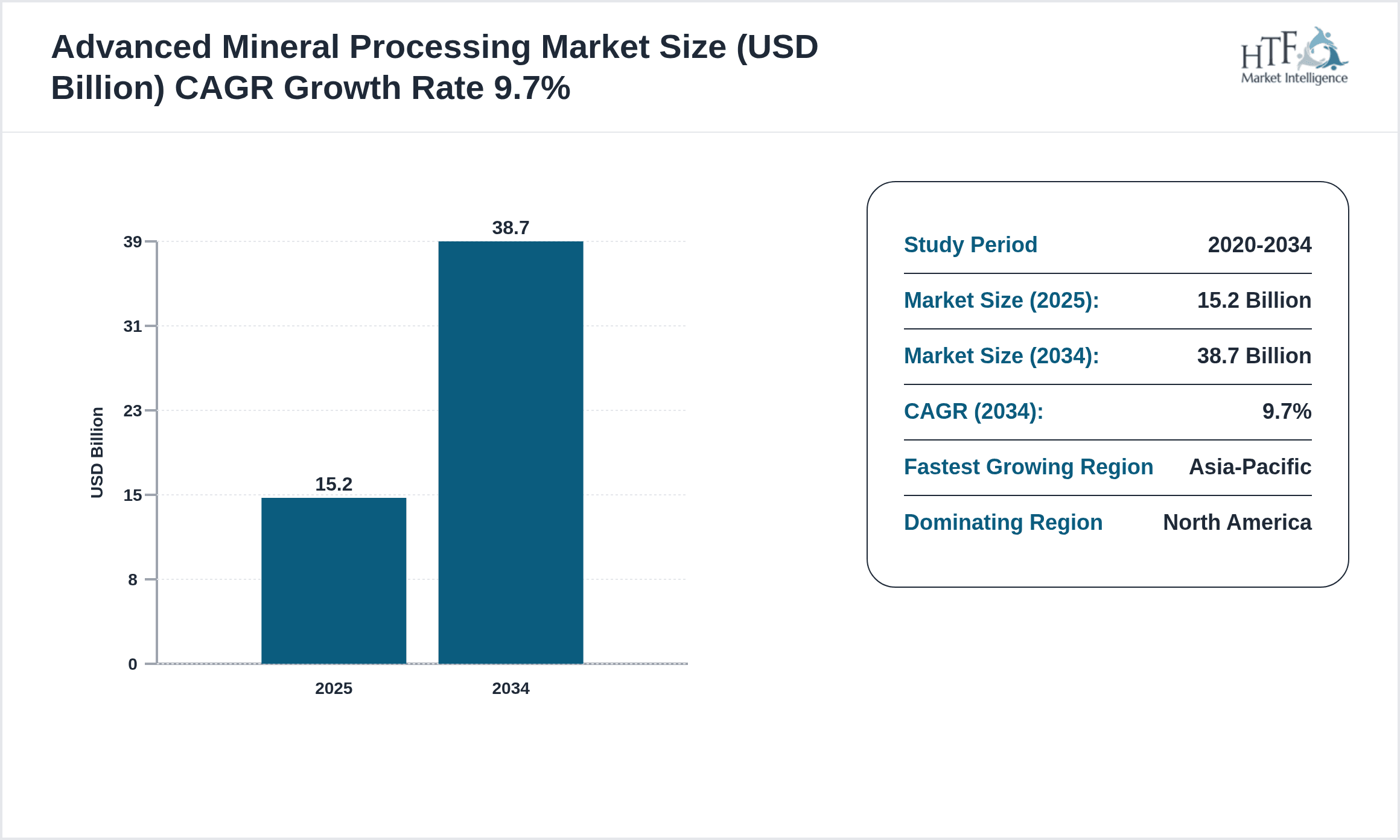
- •The market is poised for substantial growth, with a base valuation of USD 15.2 Billion in 2024 projected to reach USD 38.7 Billion by 2034, reflecting a CAGR of 9.7%. Key growth drivers include the adoption of automation and advanced sensor technologies, increasing demand for high-purity minerals, and expanding mining operations in emerging economies. The flotation devices segment currently dominates the product landscape, while gravity concentrators are witnessing the fastest growth due to their efficiency in processing low-grade ores. North America leads in market size, supported by significant investments in mining technology, whereas Asia-Pacific is the fastest growing region driven by rapid industrialization and resource exploration. Market dynamics are influenced by regulatory frameworks promoting sustainable practices and technological innovation that improves operational efficiency and environmental compliance.
- •The Advanced Mineral Processing Market offers significant value propositions across various industries by enhancing mineral yield, reducing waste, and lowering energy consumption. Its strategic importance is underscored in sectors such as mining, metallurgy, and environmental management, where efficient processing translates to cost savings and regulatory adherence. The integration of digitalization and real-time monitoring tools empowers stakeholders to make data-driven decisions, optimizing operations and minimizing environmental footprint. As global demand for critical minerals intensifies, advanced processing technologies become pivotal in ensuring resource sustainability and supporting emerging technologies like electric vehicles and renewable energy infrastructure. Consequently, this market represents a focal point for innovation, investment, and industrial growth globally.
Competitive Landscape
The global Advanced Mineral Processing Market features intense competition characterized by innovation-driven product development, strategic partnerships, and regional expansion initiatives. Market players focus on enhancing technology capabilities, such as automation and AI integration, to differentiate themselves and meet evolving customer demands. Companies compete on the basis of product efficiency, environmental compliance, and cost-effectiveness, often engaging in R&D collaborations to develop proprietary solutions. The competitive environment also involves mergers and acquisitions aimed at expanding product portfolios and geographic presence. Distribution channels and after-sales services play critical roles in market positioning, with leading firms investing heavily in customer support and training. Barriers to entry include high capital requirements and stringent regulatory standards, which favor established players with significant technological expertise. Future competition is expected to intensify as emerging markets expand their mining activities and demand advanced processing solutions.
Prominent Players in Advanced Mineral Processing Market
- •FLSmidth & Co. A/S (Denmark)
- •Outotec Oyj (Finland)
- •Metso Corporation (Finland)
- •Evoqua Water Technologies LLC (United States)
- •Multotec Group (South Africa)
- •Tenova S.p.A. (Italy)
- •Weir Group PLC (United Kingdom)
- •Knelson Concentrators (Canada)
- •Eriez Manufacturing Co. (United States)
- •Magotteaux International SA (Belgium)
- •Xinhai Mining Group (China)
- •TOMRA Systems ASA (Norway)
- •Schurco Slurry (United States)
- •ALS Limited (Australia)
- •Outotec Metso Minerals (Finland)
- •Prairie Technologies Inc. (Canada)
- •Svedala Industri AB (Sweden)
- •Andritz AG (Austria)
- •FLSmidth Minerals (Denmark)
- •Boll & Kirch Filterbau GmbH (Germany)
- •JX Nippon Mining & Metals Corporation (Japan)
- •CDE Global (Ireland)
- •Mintek (South Africa)
- •Kwatani (South Africa)
- •Derrick Corporation (United States)
Market Breakdown
- •By Product Type
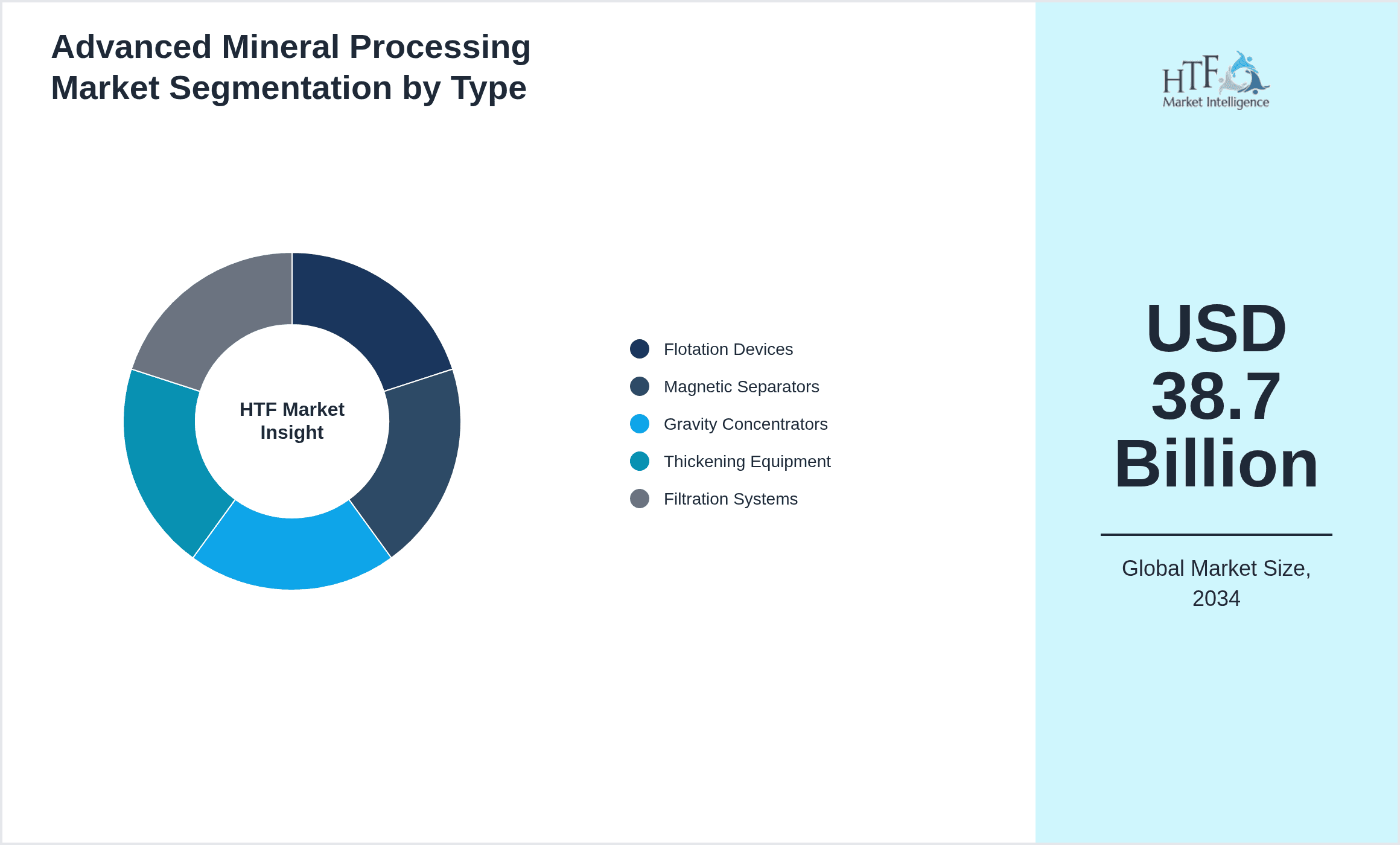
- ◦Flotation Devices
- ◦Magnetic Separators
- ◦Gravity Concentrators
- ◦Thickening Equipment
- ◦Filtration Systems
- •By Application
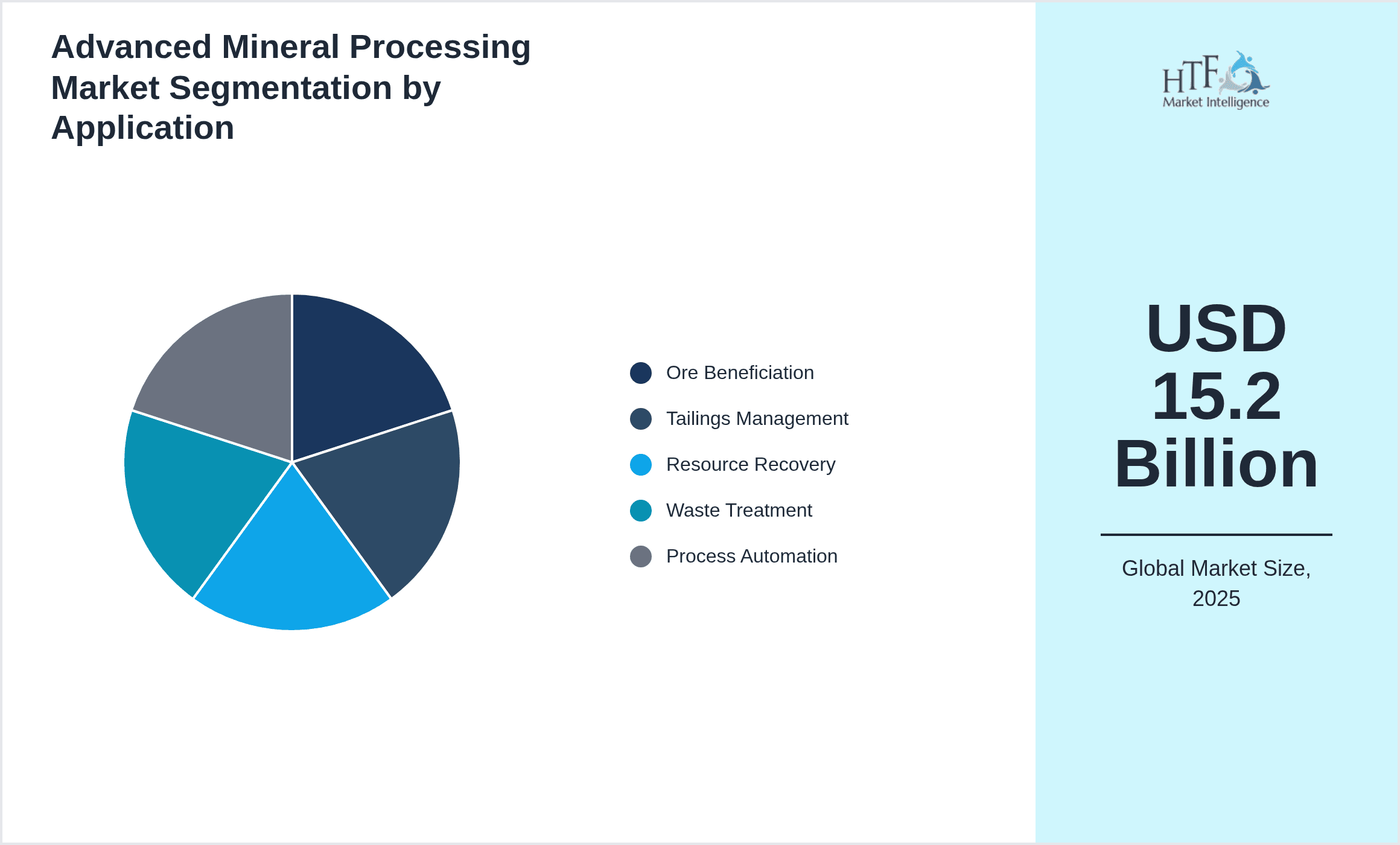
- ◦Ore Beneficiation
- ◦Tailings Management
- ◦Resource Recovery
- ◦Waste Treatment
- ◦Process Automation
- •By End-Use Industry
- ◦Mining
- ◦Metallurgy
- ◦Environmental Management
- ◦Chemical Processing
- •By Distribution Channel
- ◦Direct Sales
- ◦Distributors
- ◦Aftermarket Services
Growth Dynamics
- •The rising demand for high-grade minerals to support the electric vehicle and renewable energy sectors is a primary growth driver, prompting adoption of advanced processing technologies that maximize recovery rates and improve resource efficiency.
- •Technological advancements such as AI-powered process automation and sensor-based sorting are revolutionizing mineral processing, enabling real-time monitoring and optimization that reduce operational costs and environmental impact.
- •Expansion of mining activities in emerging regions like Asia-Pacific and Latin America is fueling market growth by increasing demand for advanced mineral processing equipment to handle complex and lower-grade ores.
- •Stringent environmental regulations globally are pushing mining companies to adopt sustainable mineral processing solutions that minimize waste and water consumption, thus driving innovation and market expansion.
- •Investment in research and development by key players to enhance equipment efficiency and develop eco-friendly technologies supports sustained growth and competitiveness in the advanced mineral processing market.
Market Trends
- •Integration of digital twin technology in mineral processing plants is enabling predictive maintenance and operational efficiency, representing a transformative trend that enhances production reliability and cost control.
- •There is growing adoption of dry processing techniques to reduce water usage, reflecting a shift towards sustainable resource management amid increasing water scarcity concerns worldwide.
- •Collaborative partnerships between equipment manufacturers and mining companies are increasing to co-develop customized solutions that address specific ore characteristics and processing challenges.
- •The market is witnessing increased focus on circular economy principles, with technologies aimed at maximizing resource recovery from tailings and mining waste gaining traction.
- •Emerging economies are rapidly adopting advanced mineral processing technologies, driven by government initiatives to boost domestic mining capabilities and reduce import dependency.
Market Opportunities
- •The rising need for processing of low-grade and complex ores opens opportunities for innovative gravity concentrators and sensor-based sorting technologies that improve recovery efficiency and cost-effectiveness.
- •Expansion into untapped markets in Africa and Latin America presents significant growth potential for mineral processing equipment manufacturers due to increasing exploration activities.
- •Development of eco-friendly and energy-efficient processing solutions aligned with global sustainability goals offers a strategic opportunity to differentiate product offerings and capture market share.
- •Digital transformation initiatives, including AI and IoT integration, provide avenues for companies to enhance product capabilities and deliver value-added services such as remote monitoring and predictive maintenance.
- •Collaborations with academic and research institutions to innovate next-generation mineral processing technologies can accelerate time-to-market and strengthen competitive advantage.
Market Challenges
- •High capital expenditure and operational costs associated with advanced mineral processing equipment can limit adoption, especially among small to medium-sized mining operators.
- •Complexity in processing diverse and low-grade ores requires continuous technological advancements, posing challenges in equipment design and operational efficiency.
- •Supply chain disruptions and raw material shortages for manufacturing processing equipment can delay project timelines and increase costs.
- •Regulatory uncertainties and stringent environmental compliance requirements vary across regions, complicating market entry and operational consistency.
- •Shortage of skilled labor and technical expertise in emerging markets hinders optimal utilization and maintenance of sophisticated mineral processing technologies.
Regulatory Framework
- •Between 2019 and 2024, the implementation of stricter environmental regulations such as the EU Mining Waste Directive and the U.S. Clean Water Act amendments required mining companies to enhance tailings management and reduce water contamination, driving demand for advanced processing solutions.
- •New safety standards introduced in 2021 mandated improved equipment reliability and operator safety features, leading manufacturers to innovate safer and more automated mineral processing technologies.
- •Emerging regulations focused on carbon emissions reduction have incentivized the adoption of energy-efficient mineral processing equipment and renewable energy integration in mining operations.
- •Regional mandates, such as those in Asia-Pacific countries, have established stringent guidelines on waste disposal and resource recovery, encouraging the use of circular economy principles in mineral processing.
- •Government initiatives and subsidies supporting sustainable mining practices and technology upgrades have played a significant role in accelerating market growth across multiple regions.
Market Intelligence
- •15th January 2025, FLSmidth & Co. A/S launched an advanced flotation cell system featuring AI-driven process control aimed at optimizing mineral recovery rates and reducing energy consumption by up to 20%. This innovative product targets large-scale mining operations seeking to enhance operational efficiency while complying with environmental regulations. The system integrates real-time data analytics and remote monitoring capabilities, enabling predictive maintenance and minimizing downtime. This launch strengthens FLSmidth’s market position as a leader in sustainable mineral processing technology and is expected to drive adoption in North America and Asia-Pacific regions. Source: Official FLSmidth press release
- •10th March 2025, Metso Corporation introduced a new line of gravity concentrators designed for processing low-grade ores with improved recovery efficiency and reduced water usage. The technology employs advanced sensor-based sorting and modular design to facilitate easy installation and scalability. This product addresses the growing demand for eco-friendly mineral processing solutions in emerging markets such as Latin America and Africa. Metso’s innovation is projected to capture significant market share by enabling cost-effective processing while supporting sustainability goals. Source: Metso Corporation official announcement
- •22nd July 2025, Weir Group PLC announced a strategic partnership with a leading AI software provider to integrate machine learning algorithms into its mineral processing equipment portfolio. This collaboration aims to develop smart processing plants capable of autonomous operation and optimized resource utilization. The initiative will target mining companies globally, focusing on enhancing process automation and reducing environmental footprint. This strategic move positions Weir Group at the forefront of digital transformation in mineral processing, aligning with market trends towards Industry 4.0 adoption. Source: Weir Group official statement
- •5th November 2025, Tenova S.p.A. completed the acquisition of a specialized filtration technology firm to expand its product offerings in tailings management and waste treatment solutions. This acquisition enhances Tenova’s capabilities in providing integrated mineral processing systems that comply with stringent environmental standards. The move is expected to strengthen Tenova’s presence in Europe and Asia-Pacific markets by delivering comprehensive, sustainable processing solutions. This strategic expansion supports the growing demand for advanced filtration and tailings management technologies. Source: Tenova corporate release
Regional Outlook
The North America currently holds a significant share of the market, primarily due to several key factors: increasing consumption rates, a burgeoning population, and robust economic momentum. These elements collectively drive demand, positioning this region as a leader in the market. On the other hand, Asia-Pacific is rapidly emerging as the fastest-growing area within the industry. This remarkable growth can be attributed to swift infrastructure development, the expansion of various industrial sectors, and a marked increase in consumer demand. These dynamics make this region a crucial player in shaping future market growth.
In our report, we cover a comprehensive analysis of the following regions and countries:
- North America
- LATAM
- West Europe
- Central & Eastern Europe
- Northern Europe
- Southern Europe
- East Asia
- Southeast Asia
- South Asia
- Central Asia
- Oceania
- MEA
| Feature | Details |
|---|---|
| Base Year Market Size | USD 15.2 Billion |
| Forecast Year Market Size | USD 38.7 Billion |
| CAGR | 9.7% |
| Forecast Period | 2026 to 2033 |
| YoY Growth | 9.3% |
| Scope of Report | Market is segmented by Product Type (Flotation Devices, Magnetic Separators, Gravity Concentrators, Thickening Equipment, Filtration Systems), Application (Ore Beneficiation, Tailings Management, Resource Recovery, Waste Treatment, Process Automation), End-Use Industry (Mining, Metallurgy, Environmental Management, Chemical Processing), Distribution Channel (Direct Sales, Distributors, Aftermarket Services) |
| Regions Covered | North America, LATAM, West Europe, Central & Eastern Europe, Northern Europe, Southern Europe, East Asia, Southeast Asia, South Asia, Central Asia, Oceania, MEA |
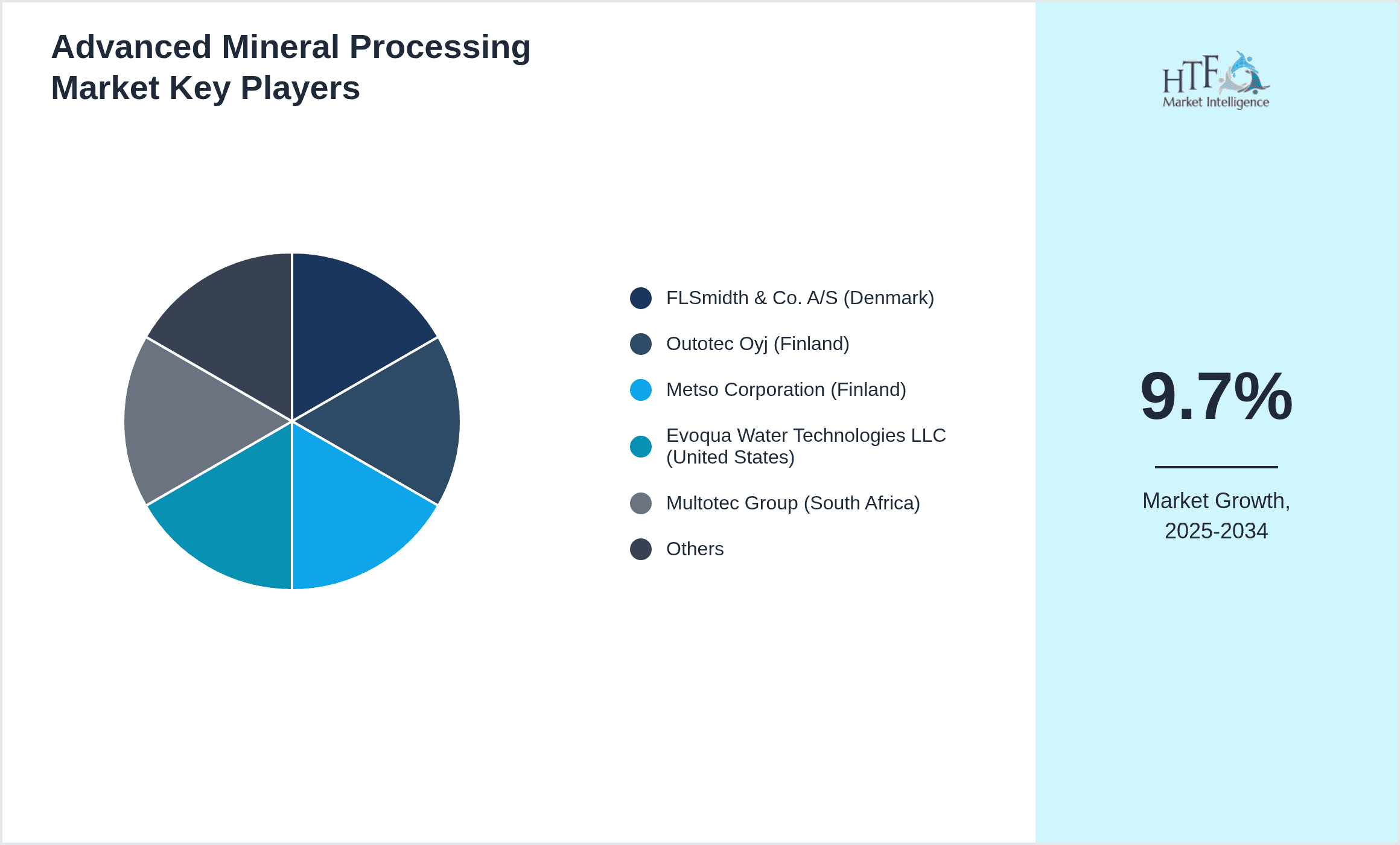
| Key Companies | FLSmidth & Co. A/S (Denmark), Outotec Oyj (Finland), Metso Corporation (Finland), Evoqua Water Technologies LLC (United States), Multotec Group (South Africa) |
Global Advanced Mineral Processing Market Size, Growth & Revenue 2024-2034 - Table of Contents
Frequently Asked Questions (FAQ):
The Compact Track Loaders market is expected to see value worth 5.3 Billion in 2025.
North America currently leads the market with approximately 45% market share, followed by Europe at 28% and Asia-Pacific at 22%. The remaining regions account for 5% of the global market.
Key growth drivers include increasing construction activities, rising demand for versatile equipment in agriculture, technological advancements in track loader design, and growing preference for compact equipment in urban construction projects.