
Global Wear-Resistant Mining Components Market - Outlook 2024-2034
Global Wear-Resistant Mining Components Market is segmented by Product Type (Ceramic Components, Metal Components, Composite Components, Polymer Components, Carbide Components), Application (Excavation, Crushing, Screening, Drilling, Material Handling), End-Use Industry (Coal Mining, Metal Ore Mining, Non-metallic Mineral Mining, Quarrying), Distribution Channel (Direct Sales, Distributors, Aftermarket Service Providers), and Geography (North America, LATAM, West Europe, Central & Eastern Europe, Northern Europe, Southern Europe, East Asia, Southeast Asia, South Asia, Central Asia, Oceania, MEA)
Pricing
Report Overview
Executive Summary
- •The global Wear-Resistant Mining Components market comprises a range of engineered materials and parts designed to mitigate wear and tear in mining machinery, ensuring prolonged durability and enhanced productivity. These components, including ceramic, metal, composite, polymer, and carbide types, are integral to operations such as excavation, crushing, screening, drilling, and material handling. With mining activities spanning diverse mineral extractions worldwide, the market addresses the demand for components that can withstand harsh abrasive environments, extreme mechanical stresses, and corrosive conditions. Innovations in material science and manufacturing technologies have expanded the scope and application of these components, empowering mining companies to optimize maintenance cycles and reduce operational costs. Globally, rising demand from developing regions alongside technological advancements in wear resistance fuels market expansion. Strategic importance is underscored by the components’ role in minimizing downtime and extending equipment lifecycles across the mining value chain, making this market critical for mining operations and equipment manufacturers alike.
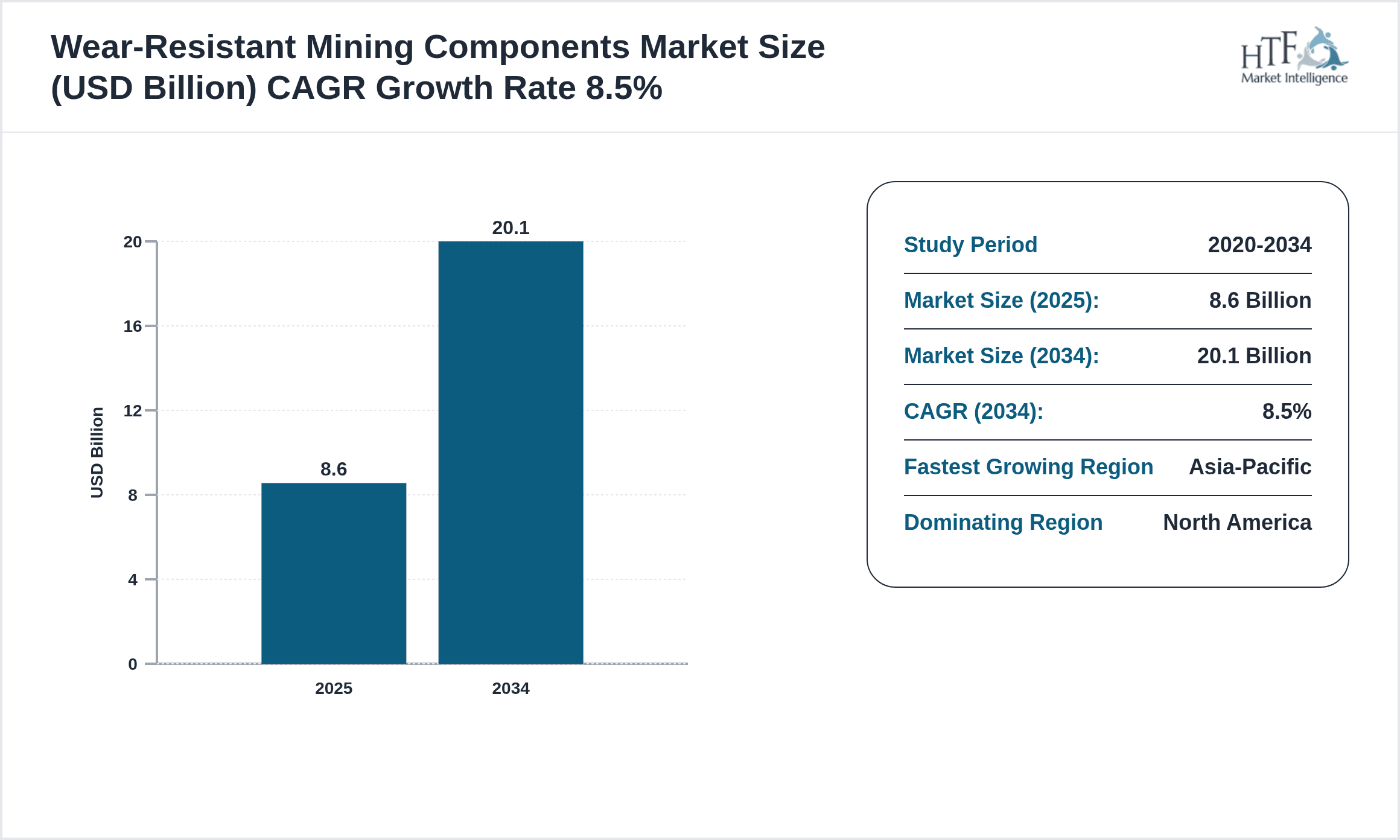
- •The market demonstrates robust growth, with a forecast CAGR of 8.5% from 2024 to 2034, driven by rapid industrialization and increasing mineral demand globally. North America currently dominates the market, supported by mature mining infrastructure and high adoption of advanced wear-resistant technologies. Asia-Pacific is the fastest-growing region due to expanding mining activities in countries like Australia and China. Metal components lead the product segment, accounting for significant revenue share, while composite components exhibit the highest growth rate, leveraging material innovations. Application sectors such as excavation and crushing continue to absorb the bulk of market demand, propelled by large-scale mining projects. The expanding mining equipment market and emphasis on operational efficiency further highlight the Wear-Resistant Mining Components market’s growth potential worldwide.
- •Wear-resistance in mining components significantly contributes to cost savings and operational reliability, offering a compelling value proposition to mining companies, equipment manufacturers, and maintenance service providers. The strategic importance of these components lies in reducing equipment downtime, enhancing safety, and enabling sustainable mining practices. As the mining industry faces increasing pressure to optimize resource extraction and reduce environmental impact, wear-resistant technologies become pivotal in achieving these goals. Stakeholders benefit from improved product lifespan, lower replacement frequency, and enhanced productivity. Consequently, the market is witnessing increased investments and collaboration among material scientists, OEMs, and mining operators to develop customized solutions tailored to specific mining challenges globally.
Competitive Landscape
The global Wear-Resistant Mining Components market is highly competitive with intense rivalry among established multinational corporations and emerging regional players. Market participants focus on innovation-driven strategies, including research and development of advanced materials such as composite alloys and ceramic-metal hybrids to enhance wear resistance and reduce operational costs. Companies leverage strategic partnerships, joint ventures, and mergers to expand their geographic footprint and product portfolios. Pricing strategies are balanced with quality improvements to maintain market shares while addressing cost-sensitive segments. Distribution channels are diversified, incorporating direct sales and partnerships with mining equipment manufacturers and aftermarket service providers. Technological adoption, including automation and predictive maintenance integration, further differentiates competitors. Barriers to entry remain high due to the need for specialized manufacturing capabilities and certifications, but growing demand from emerging markets fuels new entrants. The competitive landscape is shaped by continuous product innovation, customer-centric customization, and sustainability initiatives, forecasting dynamic market evolution over the coming decade.
Companies Shaping the Wear-Resistant Mining Components Market
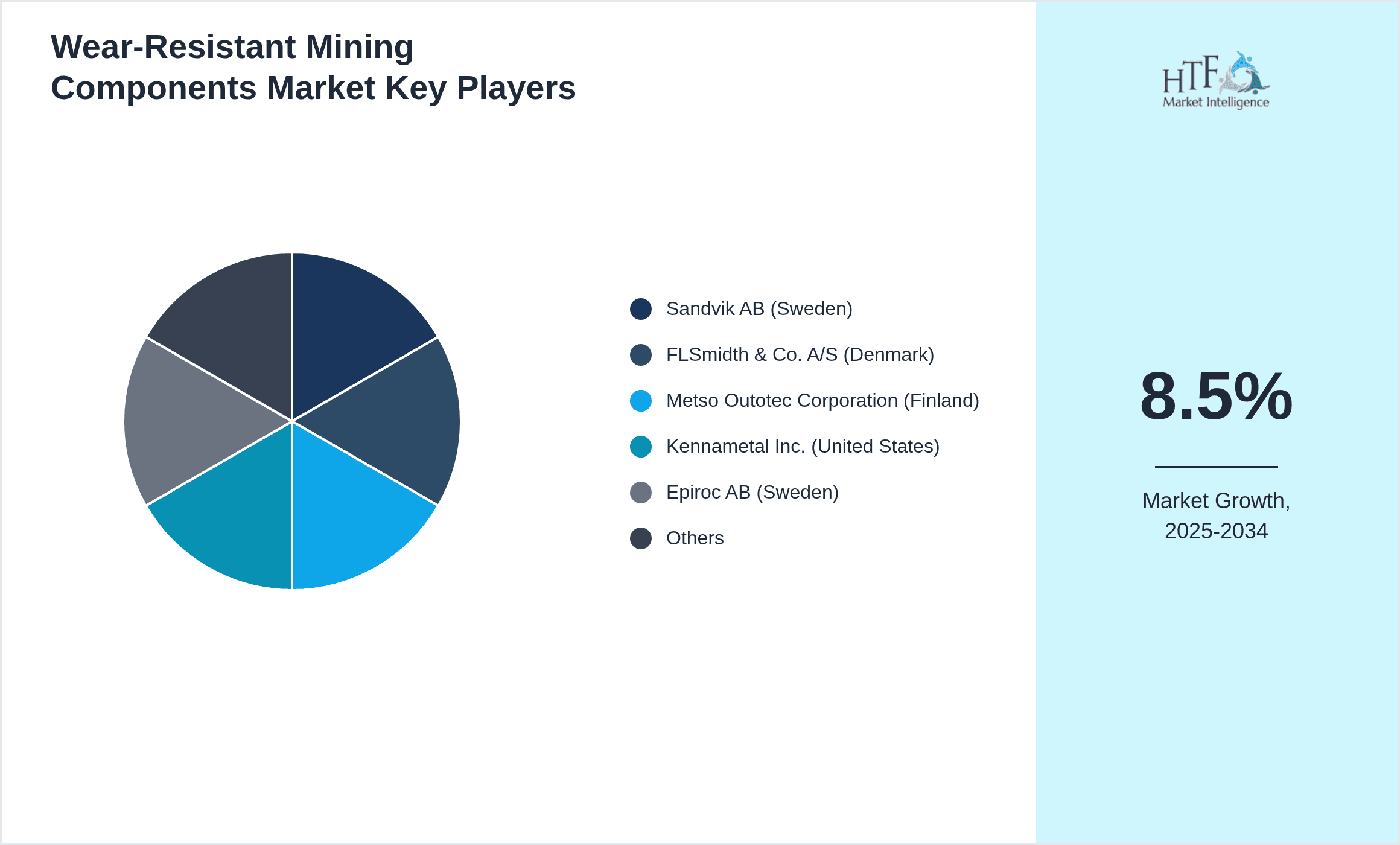
- •Sandvik AB (Sweden)
- •FLSmidth & Co. A/S (Denmark)
- •Metso Outotec Corporation (Finland)
- •Kennametal Inc. (United States)
- •Epiroc AB (Sweden)
- •Weir Group PLC (United Kingdom)
- •Valmont Industries, Inc. (United States)
- •Castolin Eutectic Corporation (Switzerland)
- •China Minmetals Corporation (China)
- •Komatsu Ltd. (Japan)
- •Outotec Oyj (Finland)
- •Thyssenkrupp AG (Germany)
- •Voestalpine AG (Austria)
- •Mitsubishi Materials Corporation (Japan)
- •Hitachi Construction Machinery Co., Ltd. (Japan)
- •FAG Bearings Corporation (Germany)
- •Sandvik Materials Technology (Sweden)
- •Atlas Copco AB (Sweden)
- •Bekaert Corporation (Belgium)
- •Norton Abrasives (United States)
- •Alro Steel Corporation (United States)
- •ArcelorMittal S.A. (Luxembourg)
- •Hawkeye Industries (United States)
- •Dynabrade, Inc. (United States)
- •Gerdau S.A. (Brazil)
Market Breakdown
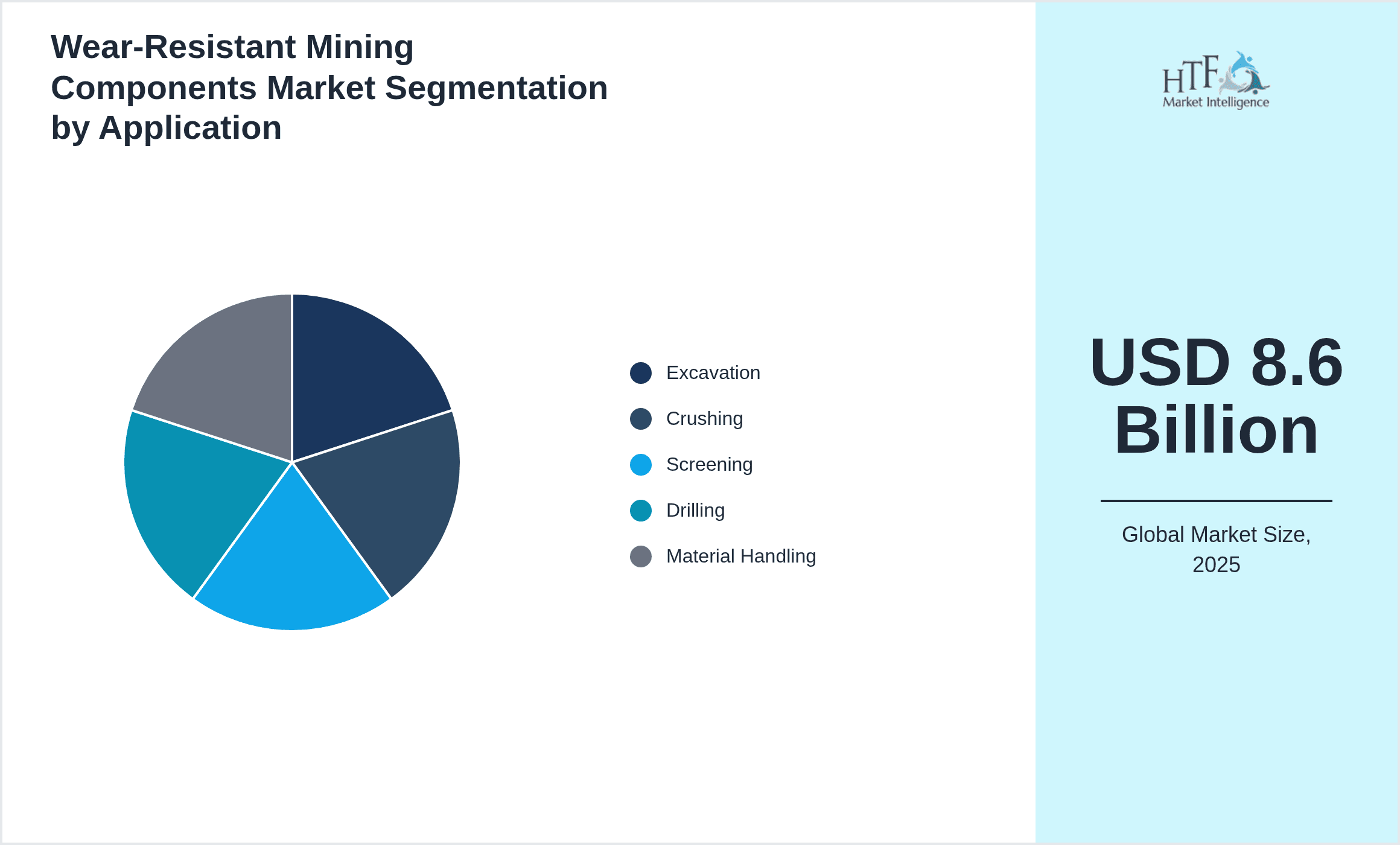
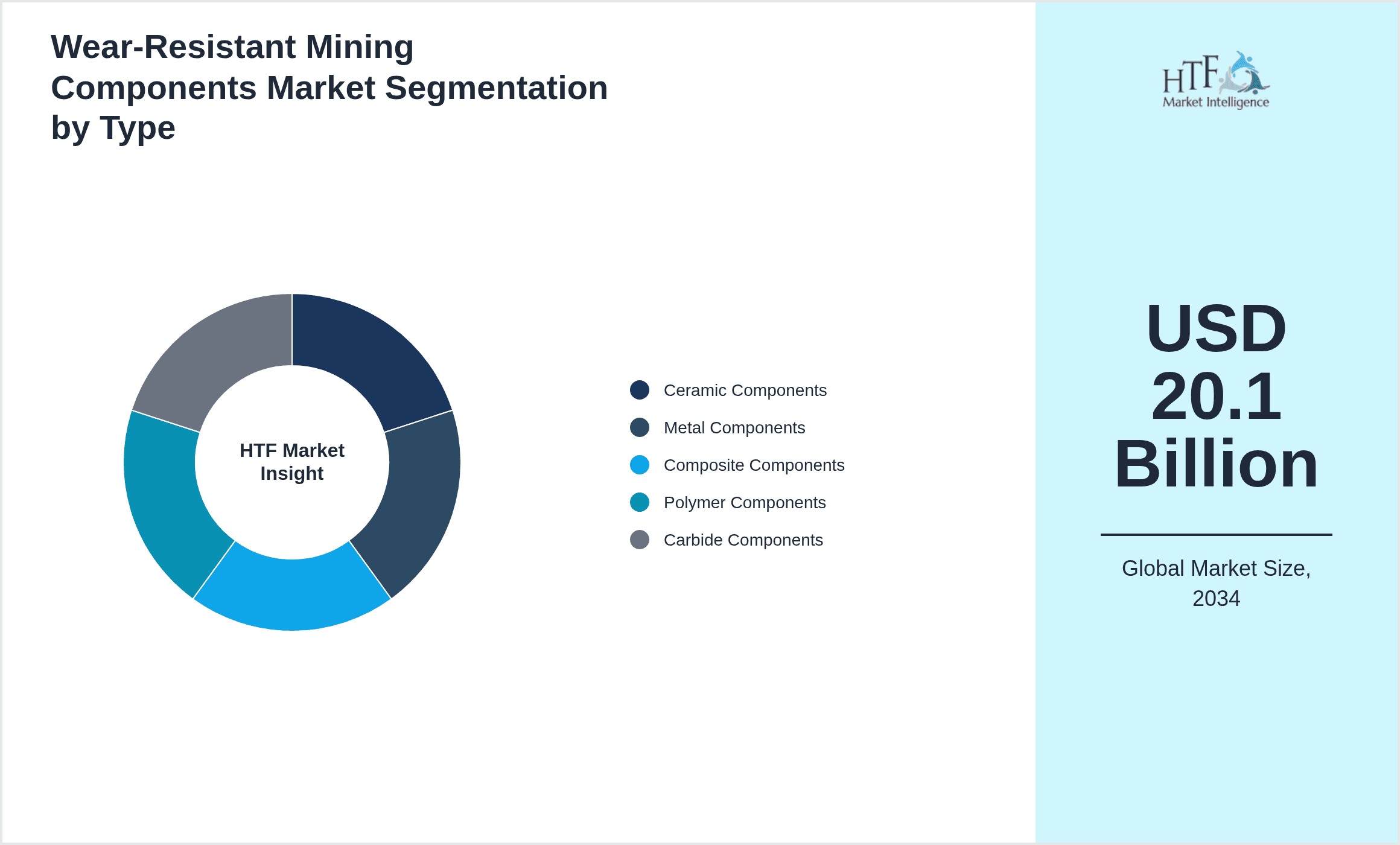
- •By Product Type
- ◦Ceramic Components
- ◦Metal Components
- ◦Composite Components
- ◦Polymer Components
- ◦Carbide Components
- •By Application
- ◦Excavation
- ◦Crushing
- ◦Screening
- ◦Drilling
- ◦Material Handling
- •By End-Use Industry
- ◦Coal Mining
- ◦Metal Ore Mining
- ◦Non-metallic Mineral Mining
- ◦Quarrying
- •By Distribution Channel
- ◦Direct Sales
- ◦Distributors
- ◦Aftermarket Service Providers
Growth Dynamics
- •Rising global demand for minerals, metals, and coal is driving the need for durable mining components, stimulating investments in wear-resistant technologies to optimize equipment uptime and operational efficiency across mining sites.
- •Technological advancements in composite material development and surface coating techniques enable longer component lifespans, reducing replacement frequency and maintenance costs, which encourages adoption in both mature and emerging mining regions.
- •Increasing mechanization and automation in mining operations create demand for robust wear-resistant components capable of withstanding high operational loads and abrasive environments, fueling innovation and customized product offerings.
- •Government initiatives promoting sustainable mining and stricter environmental regulations incentivize the use of high-performance wear-resistant components that reduce waste and energy consumption during mining processes.
- •Growth in the mining sector in Asia-Pacific, particularly driven by infrastructure development and urbanization, is expanding the market for wear-resistant components in the region, presenting ample growth opportunities.
Market Trends
- •Adoption of smart wear-resistant components embedded with sensors for real-time monitoring of wear and performance is gaining prominence, enabling predictive maintenance and enhanced operational safety in mining equipment.
- •Sustainability is shaping product development with increased use of environmentally friendly materials and recycling practices within the wear-resistant components manufacturing ecosystem.
- •Strategic collaborations between mining equipment OEMs and material technology firms are accelerating innovation cycles, resulting in hybrid components combining multiple material advantages for superior wear resistance.
- •The rise of digital twin technology and simulation modeling is influencing design improvements of wear-resistant parts, allowing better customization and performance predictions under various mining conditions.
- •Shifts towards aftermarket service models with component refurbishment and remanufacturing services are increasing, offering cost-effective solutions for mining operators while extending product lifecycles.
Market Opportunities
- •Emerging mining economies in Latin America and Africa present untapped markets for wear-resistant components, providing opportunities for manufacturers to expand through localized production and distribution networks.
- •Integration of nanomaterial coatings and additive manufacturing techniques can revolutionize product performance and customization, presenting significant innovation and market penetration opportunities.
- •Increasing investments in renewable energy minerals such as lithium and cobalt mining create new demand segments for specialized wear-resistant components tailored to these resource extraction challenges.
- •Growth in the aftermarket refurbishment segment offers potential for companies to establish circular economy practices, reduce costs, and improve customer retention in the wear-resistant mining components market.
- •Collaborative R&D initiatives between academic institutions, material scientists, and mining corporations can accelerate development of next-generation wear-resistant technologies, driving long-term market growth.
Market Challenges
- •High capital expenditure associated with advanced wear-resistant materials and manufacturing processes limits adoption among smaller mining operations and cost-sensitive markets, restricting market penetration.
- •Complexity in material selection and customization requirements for varying mining conditions poses technical challenges for manufacturers, potentially increasing lead times and costs.
- •Fluctuations in raw material prices, particularly for metals and carbide, impact manufacturing costs and pricing stability of wear-resistant mining components, affecting market dynamics.
- •Stringent regulatory compliance and certification processes across different regions can delay product launches and increase operational costs for manufacturers targeting global markets.
- •Competition from low-cost regional manufacturers offering substandard wear-resistant components risks market fragmentation and quality concerns, challenging established players’ market shares.
Regulatory Framework
- •Between 2019 and 2024, the global mining sector saw implementation of enhanced safety and environmental regulations mandating the use of durable, wear-resistant components to reduce equipment failure and minimize environmental impact.
- •In North America and Europe, stricter emissions and waste disposal laws have led manufacturers to innovate with eco-friendly materials and sustainable production processes for wear-resistant mining components.
- •Asia-Pacific mining regulations increasingly emphasize product quality certifications and compliance with international standards, driving manufacturers to ensure higher reliability and safety in wear-resistant components.
- •Regulatory mandates in Latin America focus on responsible mining practices, encouraging adoption of components that reduce operational risks and downtime, thus supporting regulatory compliance.
- •Government incentives and policies supporting modernization of mining infrastructure globally have indirectly accelerated demand for advanced wear-resistant components, fostering innovation and market growth.
Market Intelligence
- •15th January 2025, Sandvik AB launched a new line of ceramic wear-resistant components designed specifically for high-impact mining applications. These products feature enhanced toughness and abrasion resistance, enabling mining operators to reduce component replacement frequency and improve operational uptime. The launch aims to address growing demands in Asia-Pacific and Latin America, with tailored solutions for challenging mining environments. Sandvik’s strategic investment in R&D has accelerated the development of these innovative materials, positioning the company as a leader in advanced mining component technologies. Source: Sandvik Official Press Release
- •22nd March 2025, Kennametal Inc. introduced its latest composite wear-resistant components incorporating nanotechnology coatings to significantly extend service life in crushing and screening equipment. This innovation reduces maintenance costs and improves energy efficiency, aligning with industry trends towards sustainability. The product launch strengthens Kennametal’s market presence in North America and Europe, targeting large-scale mining operations requiring durable and cost-effective solutions. The company plans to expand production capabilities to meet anticipated demand growth. Source: Kennametal Corporate News
- •10th May 2024, Metso Outotec Corporation announced a strategic partnership with leading material science research institutes to co-develop next-generation metal and carbide wear-resistant components. The collaboration focuses on enhancing material properties and manufacturing processes to meet future mining challenges. This initiative is expected to drive innovation cycles and accelerate the commercialization of cutting-edge products, reinforcing Metso Outotec’s position as an industry pioneer. The partnership underscores the importance of collaborative innovation in the competitive mining components market. Source: Metso Outotec Press Release
- •5th August 2024, Weir Group PLC completed expansion of its global manufacturing facilities for polymer-based wear-resistant mining components. This expansion supports growing demand from emerging markets in Asia-Pacific and Latin America, enhancing supply chain efficiency and reducing lead times. The investment reflects Weir’s commitment to sustainability by incorporating eco-friendly materials and energy-efficient processes in production. The enhanced capacity positions the company to capitalize on rising mining sector investments worldwide. Source: Weir Group Official Statement
Regional Outlook
The North America currently holds a significant share of the market, primarily due to several key factors: increasing consumption rates, a burgeoning population, and robust economic momentum. These elements collectively drive demand, positioning this region as a leader in the market. On the other hand, Asia-Pacific is rapidly emerging as the fastest-growing area within the industry. This remarkable growth can be attributed to swift infrastructure development, the expansion of various industrial sectors, and a marked increase in consumer demand. These dynamics make this region a crucial player in shaping future market growth.
In our report, we cover a comprehensive analysis of the following regions and countries:
- North America
- LATAM
- West Europe
- Central & Eastern Europe
- Northern Europe
- Southern Europe
- East Asia
- Southeast Asia
- South Asia
- Central Asia
- Oceania
- MEA
| Feature | Details |
|---|---|
| Base Year Market Size | USD 8.6 Billion |
| Forecast Year Market Size | USD 20.1 Billion |
| CAGR | 8.5% |
| Forecast Period | 2026 to 2033 |
| YoY Growth | 8.2% |
| Scope of Report | Market is segmented by Product Type (Ceramic Components, Metal Components, Composite Components, Polymer Components, Carbide Components), Application (Excavation, Crushing, Screening, Drilling, Material Handling), End-Use Industry (Coal Mining, Metal Ore Mining, Non-metallic Mineral Mining, Quarrying), Distribution Channel (Direct Sales, Distributors, Aftermarket Service Providers) |
| Regions Covered | North America, LATAM, West Europe, Central & Eastern Europe, Northern Europe, Southern Europe, East Asia, Southeast Asia, South Asia, Central Asia, Oceania, MEA |
| Key Companies | Sandvik AB (Sweden), FLSmidth & Co. A/S (Denmark), Metso Outotec Corporation (Finland), Kennametal Inc. (United States), Epiroc AB (Sweden), Weir Group PLC (United Kingdom), Valmont Industries, Inc. (United States), Castolin Eutectic Corporation (Switzerland), China Minmetals Corporation (China), Komatsu Ltd. (Japan), Outotec Oyj (Finland), Thyssenkrupp AG (Germany), Voestalpine AG (Austria), Mitsubishi Materials Corporation (Japan), Hitachi Construction Machinery Co., Ltd. (Japan), FAG Bearings Corporation (Germany), Sandvik Materials Technology (Sweden), Atlas Copco AB (Sweden), Bekaert Corporation (Belgium), Norton Abrasives (United States), Alro Steel Corporation (United States), ArcelorMittal S.A. (Luxembourg), Hawkeye Industries (United States), Dynabrade, Inc. (United States), Gerdau S.A. (Brazil) |
Global Wear-Resistant Mining Components Market - Outlook 2024-2034 - Table of Contents
Research enthusiast focused on transforming data uncovering into actionable insights through data-driven decision-making.
Frequently Asked Questions (FAQ):
The Market market is projected to grow at a steady CAGR from 2025 to 2030, driven by increasing demand and expansion in various applications.
North America currently leads the market, followed by Europe and Asia-Pacific.
Key growth drivers include increasing activities, rising demand for innovative solutions, technological advancements, and growing preference for efficient products.