
Global Cashmere Products Market Size, Growth & Revenue 2025-2034
Global Cashmere Products Market is segmented by Product Type (Raw Cashmere, Cashmere Yarn, Cashmere Fabric, Finished Products, Blended Cashmere), Application (Apparel, Accessories, Home Textiles, Luxury Goods, Others), End-Use Industry (Fashion & Apparel, Home Furnishing, Luxury Retail, Sportswear), Distribution Channel (Specialty Stores, Online Retail, Department Stores), and Geography (North America, LATAM, West Europe, Central & Eastern Europe, Northern Europe, Southern Europe, East Asia, Southeast Asia, South Asia, Central Asia, Oceania, MEA)
Pricing
Report Overview
Executive Summary
- •The global cashmere products market represents the premium segment of the textile industry, focusing on luxury fibers and finished goods derived from cashmere goats. This market covers a broad spectrum of products ranging from raw cashmere fibers and yarns to fabrics and finished apparel, including sweaters, scarves, coats, and accessories. Cashmere is prized for its softness, warmth, and exclusivity, making it a preferred choice in high-end fashion and home textile applications. The market is characterized by complex supply chains involving fiber collection, processing, and distribution across diverse geographies. Key players invest heavily in sustainable sourcing and innovative blending technologies to enhance product quality and meet rising consumer expectations for ethical luxury. Major markets include Europe, North America, and Asia-Pacific, which exhibit distinct consumption behaviors driven by cultural preferences and economic factors. Between 2020 and 2025, the market experienced steady growth due to increasing disposable incomes, fashion trends, and expanded retail channels, including e-commerce. Looking ahead to 2034, the market is projected to grow robustly, driven by continued demand for premium and sustainable cashmere products, technological advances in processing, and emerging markets in Asia-Pacific and Latin America. Despite challenges such as raw material scarcity and price fluctuations, the market holds strong potential through innovation and regional expansion strategies.
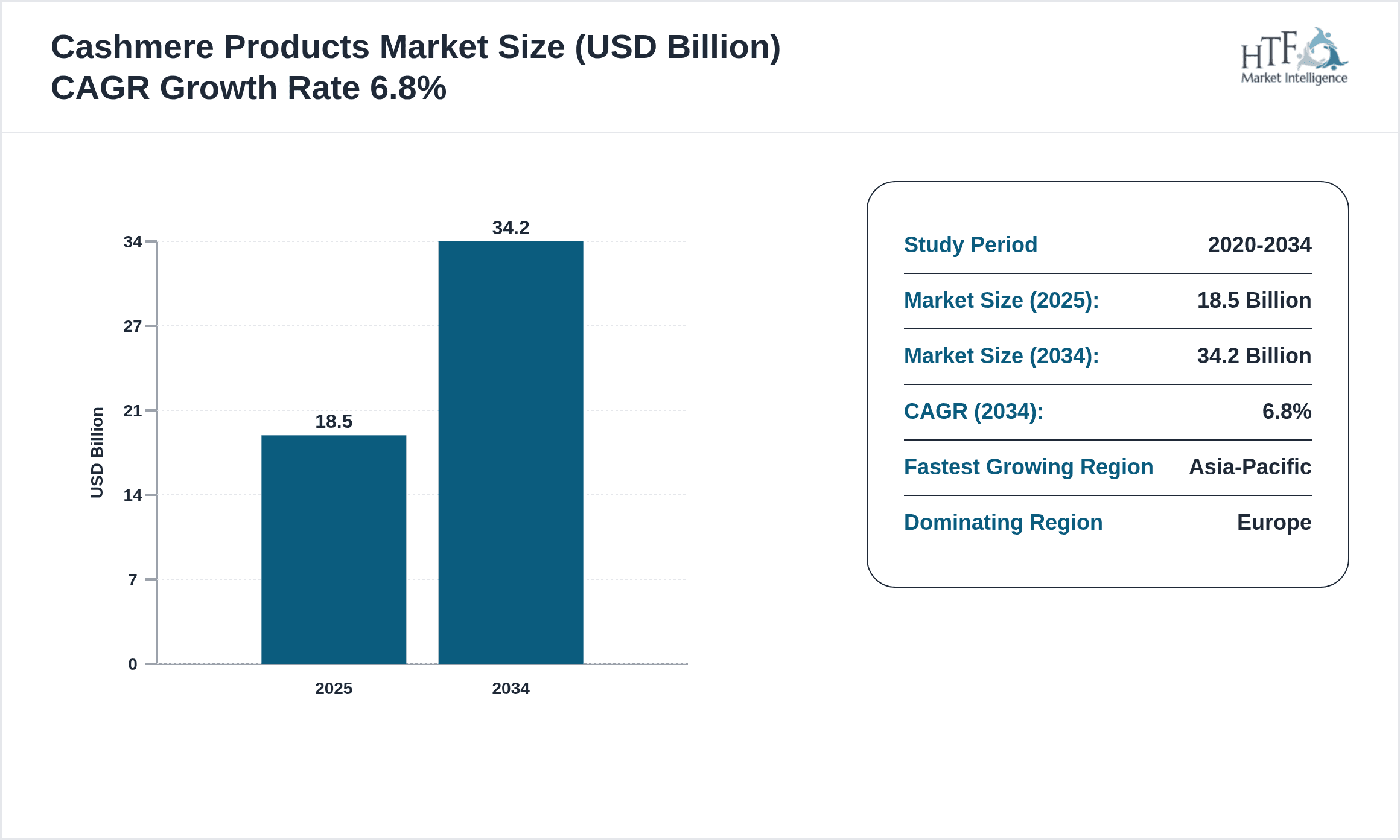
- •Key highlights include a global market size of USD 18.5 billion in 2025, expected to reach USD 34.2 billion by 2034, reflecting a CAGR of 6.8%. Europe dominates the market due to its established luxury fashion industry and consumer base, while Asia-Pacific is the fastest growing region fueled by rising affluence and increasing demand for high-end textiles. The finished products segment leads product types, accounting for the largest revenue share, whereas blended cashmere is the fastest growing type owing to cost advantages and enhanced durability. The apparel application segment remains the primary revenue generator, supported by growing fashion consciousness worldwide. The market is influenced by sustainability trends, technological innovations in fiber processing, and evolving consumer preferences for authenticity and quality.
- •This market holds strategic importance for luxury fashion brands, textile manufacturers, and retailers seeking to capitalize on premium consumer segments. Investments in sustainable sourcing, product innovation, and regional market development are key value propositions. Industry stakeholders benefit from insights into shifting demand patterns, competitive dynamics, and regulatory frameworks, enabling informed decision-making and long-term growth planning. The global cashmere products market is positioned at the intersection of tradition and innovation, offering opportunities to leverage heritage craftsmanship alongside modern technology for differentiated market offerings that appeal to discerning consumers globally.
Competitive Landscape
The global cashmere products market operates within a competitive environment marked by a blend of established luxury textile manufacturers, artisanal producers, and emerging players focusing on sustainable and blended cashmere products. Market dynamics are shaped by companies’ efforts to differentiate via quality, innovation, and ethical sourcing. Competitive strategies include vertical integration of supply chains to secure raw materials, investments in advanced spinning and dyeing technologies, and collaborations with fashion brands to enhance market reach. Product differentiation through blends and eco-friendly certifications serves as a key competitive advantage, while pricing strategies balance exclusivity with market accessibility. Distribution channels range from traditional luxury retail outlets to expanding e-commerce platforms, further intensifying market competition. Mergers and acquisitions, although limited, have been strategically employed to consolidate market share and access new geographies. Regional competition varies, with Europe hosting legacy luxury brands, North America focusing on premium casual wear, and Asia-Pacific emphasizing growth through expanding middle-class consumers and domestic production. Future competitive trends are expected to center on digitalization of supply chains, customization, and sustainability-driven innovation, positioning companies to capture evolving consumer preferences while navigating raw material supply constraints and regulatory compliance challenges.
Leading Companies in Cashmere Products Market
- •Loro Piana (Italy)
- •Brunello Cucinelli (Italy)
- •Kerry Group (Ireland)
- •Johnstons of Elgin (United Kingdom)
- •The N. Peal Company (United Kingdom)
- •Hermès International S.A. (France)
- •Lambs & Ivy (United States)
- •Falke KGaA (Germany)
- •Naadam (United States)
- •Ermenegildo Zegna (Italy)
- •Pringle of Scotland (United Kingdom)
- •J.Crew Group (United States)
- •Uniqlo Co., Ltd. (Japan)
- •Mongolian Cashmere Company (Mongolia)
- •Shang Xia (China)
- •Deborah Rhodes (United Kingdom)
- •Alpaca Collections (Peru)
- •Woolmark Company (Australia)
- •Cashmere & Silk Company (United States)
- •Peter Hahn (Germany)
- •Shetland Woollen Co. (United Kingdom)
- •Lambswool Ltd. (New Zealand)
- •Desa Nata (Turkey)
- •Cashmere Boutique (United States)
- •Brora Cashmere (United Kingdom)
Market Breakdown
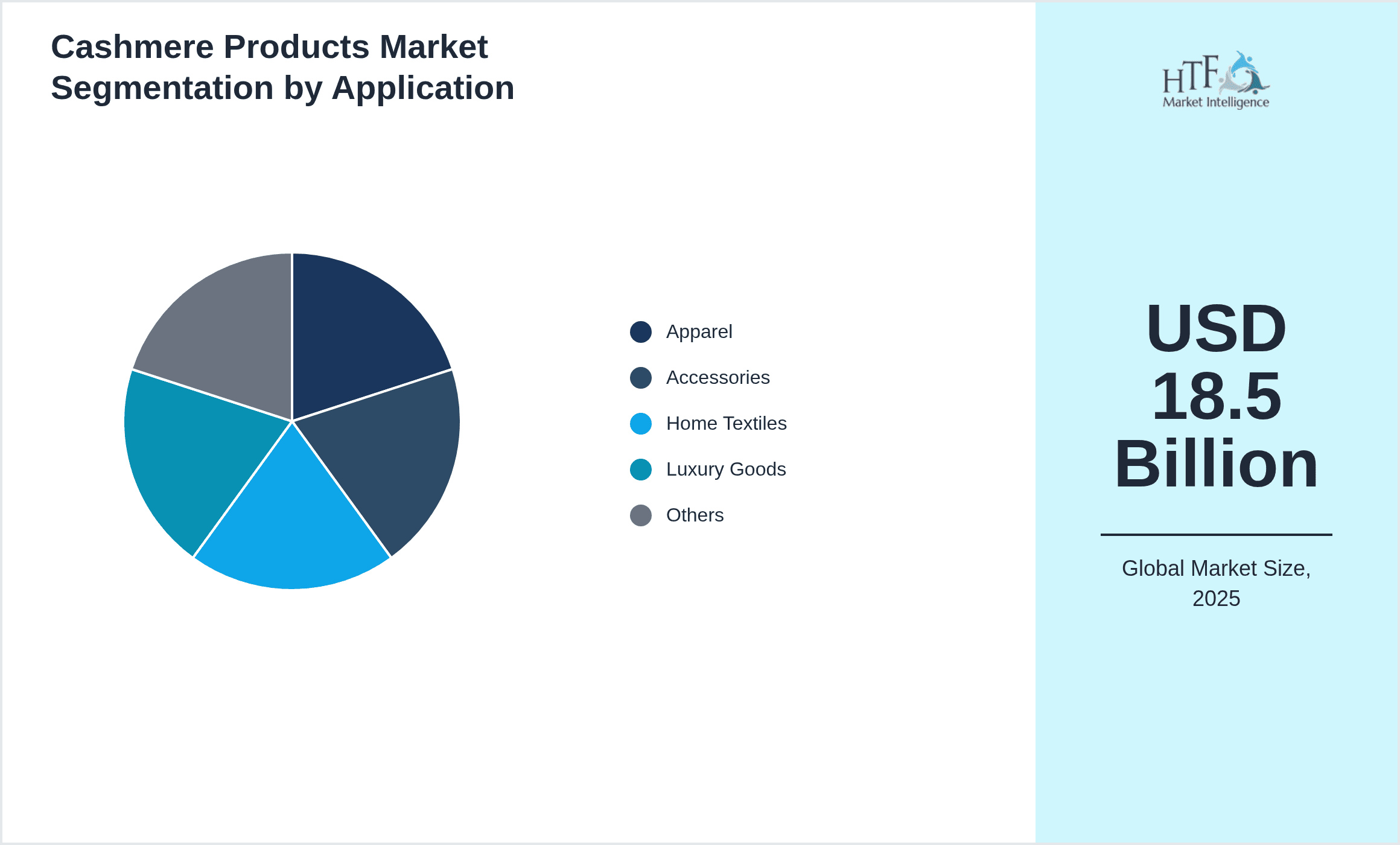
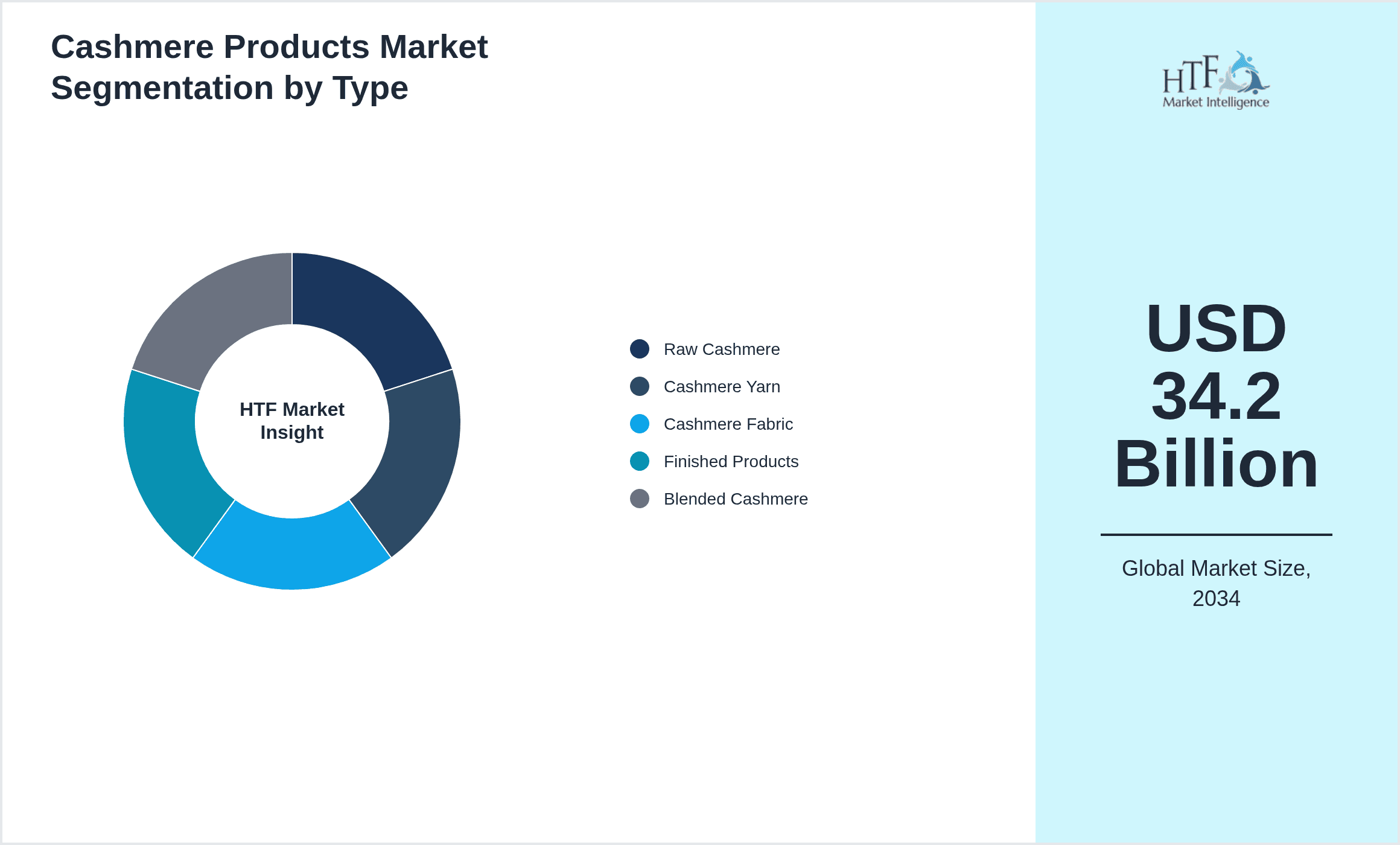
- •By Product Type
- ◦Raw Cashmere
- ◦Cashmere Yarn
- ◦Cashmere Fabric
- ◦Finished Products
- ◦Blended Cashmere
- •By Application
- ◦Apparel
- ◦Accessories
- ◦Home Textiles
- ◦Luxury Goods
- ◦Others
- •By End-Use Industry
- ◦Fashion & Apparel
- ◦Home Furnishing
- ◦Luxury Retail
- ◦Sportswear
- •By Distribution Channel
- ◦Specialty Stores
- ◦Online Retail
- ◦Department Stores
Growth Dynamics
The global cashmere products market is propelled by a combination of rising disposable incomes and increasing consumer preference for luxury and premium textiles. The growth is further enhanced by evolving fashion trends that emphasize sustainable and ethically sourced materials, driving demand for responsibly produced cashmere. Technological advancements in fiber processing and blending techniques have improved product durability and affordability, expanding the consumer base beyond traditional luxury buyers. Additionally, the rise of e-commerce platforms has facilitated wider market penetration, enabling brands to reach new demographics and emerging markets. These growth drivers collectively support a robust expansion trajectory for the market through 2034, despite challenges related to raw material supply and price volatility.
Market Trends
Sustainability is a prominent trend within the cashmere market, with companies adopting eco-friendly farming and processing methods to reduce environmental impact. Consumers increasingly demand traceability and certifications that ensure ethical sourcing. Another significant trend is the growing popularity of blended cashmere products, which combine natural fibers with synthetics to enhance durability and reduce costs, appealing to a broader audience. The integration of digital technologies in retail, including virtual try-ons and personalized shopping experiences, is reshaping consumer engagement. Moreover, collaborations between luxury brands and local producers are fostering innovation and regional authenticity, strengthening brand narratives and market differentiation.
Market Opportunities
Emerging markets in Asia-Pacific and Latin America present significant growth opportunities due to rising middle-class populations and increasing demand for luxury textiles. There is considerable potential in expanding product portfolios to include blended cashmere and sustainable collections targeted at environmentally conscious consumers. Innovations in fiber processing and product customization can unlock new segments, while expansion of e-commerce channels offers cost-effective market access. Additionally, partnerships with fashion designers and influencers can enhance brand visibility and consumer appeal. The development of certifications and traceability initiatives also provides an opportunity to build consumer trust and command premium pricing.
Market Challenges
The cashmere products market faces challenges including raw material scarcity due to limited cashmere goat populations and environmental constraints affecting fiber quality. Price volatility driven by supply-demand imbalances impacts profitability for manufacturers and retailers. Ethical sourcing concerns and animal welfare issues require companies to implement transparent and sustainable practices, which can increase operational costs. Additionally, competition from synthetic alternatives and blended products poses a threat to pure cashmere market segments. Market fragmentation and lack of standardization in quality and certifications further complicate consumer trust and industry regulation compliance. Navigating these challenges is critical for sustained growth and market credibility.
Regulatory Framework
Between 2020 and 2025, several regulations emerged globally to promote sustainable and ethical practices within the cashmere products market. The European Union introduced the Textile Regulation (EU) 2020/1149, mandating transparency in fiber origin and environmental impact disclosures. Similarly, the United States strengthened the Wool Products Labeling Act to include stricter labeling requirements for fiber content, enhancing consumer protection. China implemented new environmental standards for textile manufacturing, focusing on reducing chemical usage and wastewater discharge. Additionally, voluntary certification programs such as the Responsible Cashmere Standard (RCS) gained prominence, encouraging adherence to animal welfare and sustainable grazing practices. These regulatory developments have compelled companies to adopt traceability systems and invest in eco-friendly technologies, impacting product development and marketing strategies. Compliance with these frameworks poses both challenges and opportunities, driving innovation and market differentiation while ensuring consumer confidence and regulatory alignment.
Market Intelligence
- •15th January 2025, Loro Piana launched a new sustainable cashmere collection featuring fibers sourced exclusively from eco-certified farms, targeting eco-conscious luxury consumers in Europe and Asia-Pacific. The collection includes sweaters, scarves, and accessories utilizing advanced blending technology that enhances durability without compromising softness. This strategic initiative aligns with growing sustainability trends and aims to strengthen Loro Piana’s market leadership by appealing to younger demographics seeking ethical luxury. The launch was supported by digital marketing campaigns and expanded e-commerce presence to maximize reach. Source: Loro Piana Official Press Release.
- •10th March 2025, Naadam introduced an innovative blended cashmere line combining Mongolian cashmere with recycled fibers to offer affordable luxury products targeting North American and European markets. The initiative focuses on circular economy principles and reducing environmental footprint, enhancing brand positioning among sustainability-focused consumers. The company partnered with local herders and invested in traceability technologies to certify fiber origin. This development is expected to drive market penetration and set a new standard for ethical cashmere production. Source: Naadam Corporate Announcement.
- •20th July 2024, Hermès International announced a strategic partnership with Mongolian pastoral communities to establish sustainable cashmere supply chains, ensuring animal welfare and environmental conservation. The collaboration includes investment in eco-friendly farming techniques and digital traceability systems to authenticate raw material sources. This initiative reflects Hermès’ commitment to responsible luxury and aims to secure long-term fiber quality and supply stability. The partnership is anticipated to enhance brand reputation and foster consumer trust in premium cashmere products. Source: Hermès Sustainability Report 2024.
- •5th November 2023, Johnstons of Elgin completed the acquisition of a specialized cashmere yarn manufacturer in Mongolia to vertically integrate supply chains and improve control over raw material quality. The acquisition supports Johnstons’ growth strategy focused on premium product differentiation and sustainability. Enhanced production capabilities and supply security are expected to improve operational efficiency and profitability. This move underscores increasing consolidation trends within the cashmere products market. Source: Johnstons of Elgin Corporate News.
Regional Outlook
The Europe currently holds a significant share of the market, primarily due to several key factors: increasing consumption rates, a burgeoning population, and robust economic momentum. These elements collectively drive demand, positioning this region as a leader in the market. On the other hand, Asia-Pacific is rapidly emerging as the fastest-growing area within the industry. This remarkable growth can be attributed to swift infrastructure development, the expansion of various industrial sectors, and a marked increase in consumer demand. These dynamics make this region a crucial player in shaping future market growth.
In our report, we cover a comprehensive analysis of the following regions and countries:
- North America
- LATAM
- West Europe
- Central & Eastern Europe
- Northern Europe
- Southern Europe
- East Asia
- Southeast Asia
- South Asia
- Central Asia
- Oceania
- MEA
| Feature | Details |
|---|---|
| Base Year Market Size | USD 18.5 Billion |
| Forecast Year Market Size | USD 34.2 Billion |
| CAGR | 6.8% |
| Forecast Period | 2026 to 2033 |
| YoY Growth | 6.5% |
| Scope of Report | Market is segmented by Product Type (Raw Cashmere, Cashmere Yarn, Cashmere Fabric, Finished Products, Blended Cashmere), Application (Apparel, Accessories, Home Textiles, Luxury Goods, Others), End-Use Industry (Fashion & Apparel, Home Furnishing, Luxury Retail, Sportswear), Distribution Channel (Specialty Stores, Online Retail, Department Stores) |
| Regions Covered | North America, LATAM, West Europe, Central & Eastern Europe, Northern Europe, Southern Europe, East Asia, Southeast Asia, South Asia, Central Asia, Oceania, MEA |
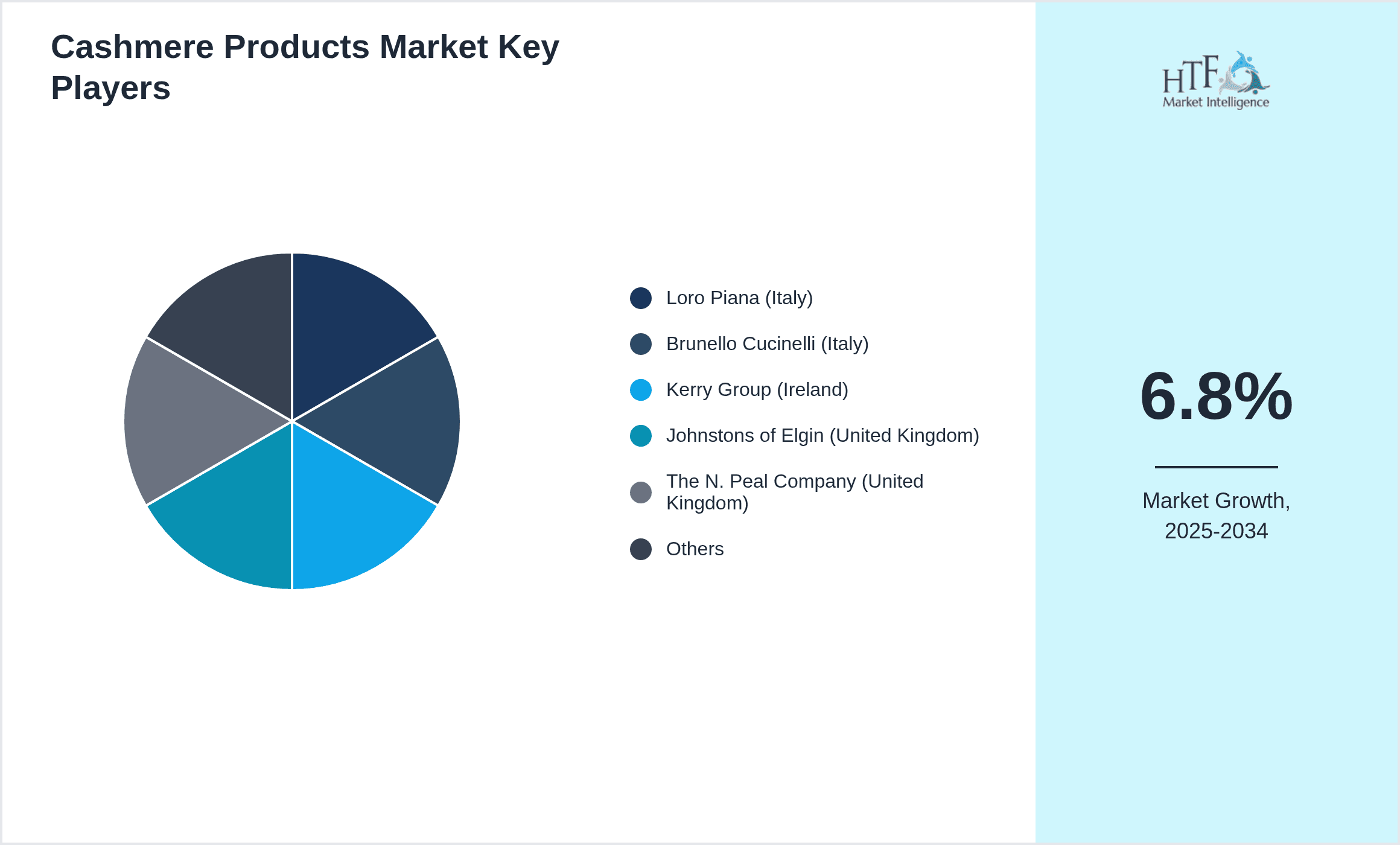
| Key Companies | Loro Piana (Italy), Brunello Cucinelli (Italy), Kerry Group (Ireland), Johnstons of Elgin (United Kingdom), The N. Peal Company (United Kingdom) |
Global Cashmere Products Market Size, Growth & Revenue 2025-2034 - Table of Contents
Research enthusiast focused on transforming data uncovering into actionable insights through data-driven decision-making.
Frequently Asked Questions (FAQ):
The Compact Track Loaders market is projected to grow at a CAGR of 6.8% from 2025 to 2030, driven by increasing demand in construction and agricultural sectors.
North America currently leads the market with approximately 45% market share, followed by Europe at 28% and Asia-Pacific at 22%. The remaining regions account for 5% of the global market.
Key growth drivers include increasing construction activities, rising demand for versatile equipment in agriculture, technological advancements in track loader design, and growing preference for compact equipment in urban construction projects.