
Global Extended Stay Hotel Market Size, Growth & Revenue 2025-2034
Global Extended Stay Hotel Market is segmented by Product Type (Serviced Apartments, Aparthotels, Extended Stay Suites, Corporate Housing, Others), Application (Business Travelers, Leisure Travelers, Relocation, Medical Tourism, Others), End-Use Industry (Corporate Sector, Healthcare, Tourism and Hospitality, Government and Defense), Distribution Channel (Direct Bookings, Online Travel Agencies, Corporate Contracts), and Geography (North America, LATAM, West Europe, Central & Eastern Europe, Northern Europe, Southern Europe, East Asia, Southeast Asia, South Asia, Central Asia, Oceania, MEA)
Pricing
Report Overview
Executive Summary
- •The Global Extended Stay Hotel Market represents a dynamic segment of the hospitality industry focused on providing lodging solutions for guests requiring accommodations for extended durations beyond standard short-term stays. This market includes multiple property types such as serviced apartments, aparthotels, extended stay suites, and corporate housing, tailored to diverse end users including business travelers, leisure tourists, relocating employees, and medical tourists seeking comfort, flexibility, and home-like amenities. The value chain integrates property developers, hotel operators, travel agencies, and corporate clients, all contributing to service delivery and market expansion. Key characteristics include amenities such as kitchen facilities, work areas, and laundry services, meeting the unique needs of long-stay guests. Driving factors involve increasing global business travel, urbanization, and the rising trend of remote work necessitating flexible accommodation options. Technological integration, including online booking platforms and smart hotel management systems, enhances guest experience and operational efficiency. The strategic importance of this market lies in its capacity to offer cost-effective, convenient, and customizable lodging alternatives, making it a critical component for hospitality stakeholders, investors, and urban developers worldwide.
- •The market witnessed significant growth from 2020 to 2025 with a base market size of USD 45.8 Billion, forecasted to reach USD 98.6 Billion by 2034, reflecting a robust CAGR of 8.7%. North America currently dominates due to mature hospitality infrastructure and high corporate travel demand, while Asia-Pacific is identified as the fastest-growing region driven by rising urbanization and increasing business activities. Serviced apartments lead the product segment, but corporate housing is registering the fastest growth propelled by expanding multinational operations and relocation trends. The market is characterized by evolving guest expectations and technological advancements, resulting in new business models and enhanced service delivery.
- •Extended stay hotels offer strategic value to industries such as corporate enterprises, healthcare, and tourism by providing flexible, cost-efficient lodging solutions that improve employee satisfaction and traveler comfort. For investors and developers, this market presents lucrative opportunities due to rising demand for long-term accommodations, supported by favorable regulatory frameworks and technological innovations. Stakeholders benefit from growing partnerships between hotel operators and corporate clients, enabling scalable growth and diversified revenue streams across multiple regions globally.

Competitive Landscape
The Global Extended Stay Hotel Market is highly competitive and fragmented, featuring a blend of multinational hotel chains, regional operators, and emerging players. Market dynamics are shaped by strategic collaborations, mergers and acquisitions, and continuous innovation in service offerings to meet evolving guest preferences. Leading players focus on differentiating through amenities, technology integration such as mobile check-in and AI-driven customer service, and loyalty programs. Pricing strategies balance affordability with premium service in key urban and suburban markets. Distribution channels leverage direct bookings, online travel agencies, and corporate contracts to maximize occupancy and revenue. Market entry barriers include high capital investment and regulatory compliance, while regional competition intensifies as emerging economies develop hospitality infrastructure. The competitive landscape is further influenced by sustainability initiatives and digital transformation, which are becoming critical for market positioning and growth. Future trends indicate consolidation and specialization as operators seek to capture niche segments and enhance customer experience in an increasingly digital and customer-centric environment.
Leading Companies in Extended Stay Hotel Market
- •Marriott International (United States)
- •Hilton Worldwide Holdings Inc. (United States)
- •InterContinental Hotels Group (United Kingdom)
- •Hyatt Hotels Corporation (United States)
- •Accor S.A. (France)
- •Extended Stay America, Inc. (United States)
- •Aimbridge Hospitality (United States)
- •Frasers Hospitality (Singapore)
- •Ascott Limited (Singapore)
- •Selina Hospitality (Panama)
- •OYO Hotels & Homes (India)
- •The Ascott Limited (Singapore)
- •Sunstone Hotels (United States)
- •G6 Hospitality LLC (United States)
- •Red Lion Hotels Corporation (United States)
- •The Apartment Service (Japan)
- •Lyric Hospitality (United States)
- •Oakwood Worldwide (United States)
- •Candlewood Suites (United States)
- •Staybridge Suites (United States)
- •Oakwood Asia Pacific (Singapore)
- •Native (United Kingdom)
- •Sonder (United States)
- •The Collective (United Kingdom)
- •Lyric Hospitality LLC (United States)
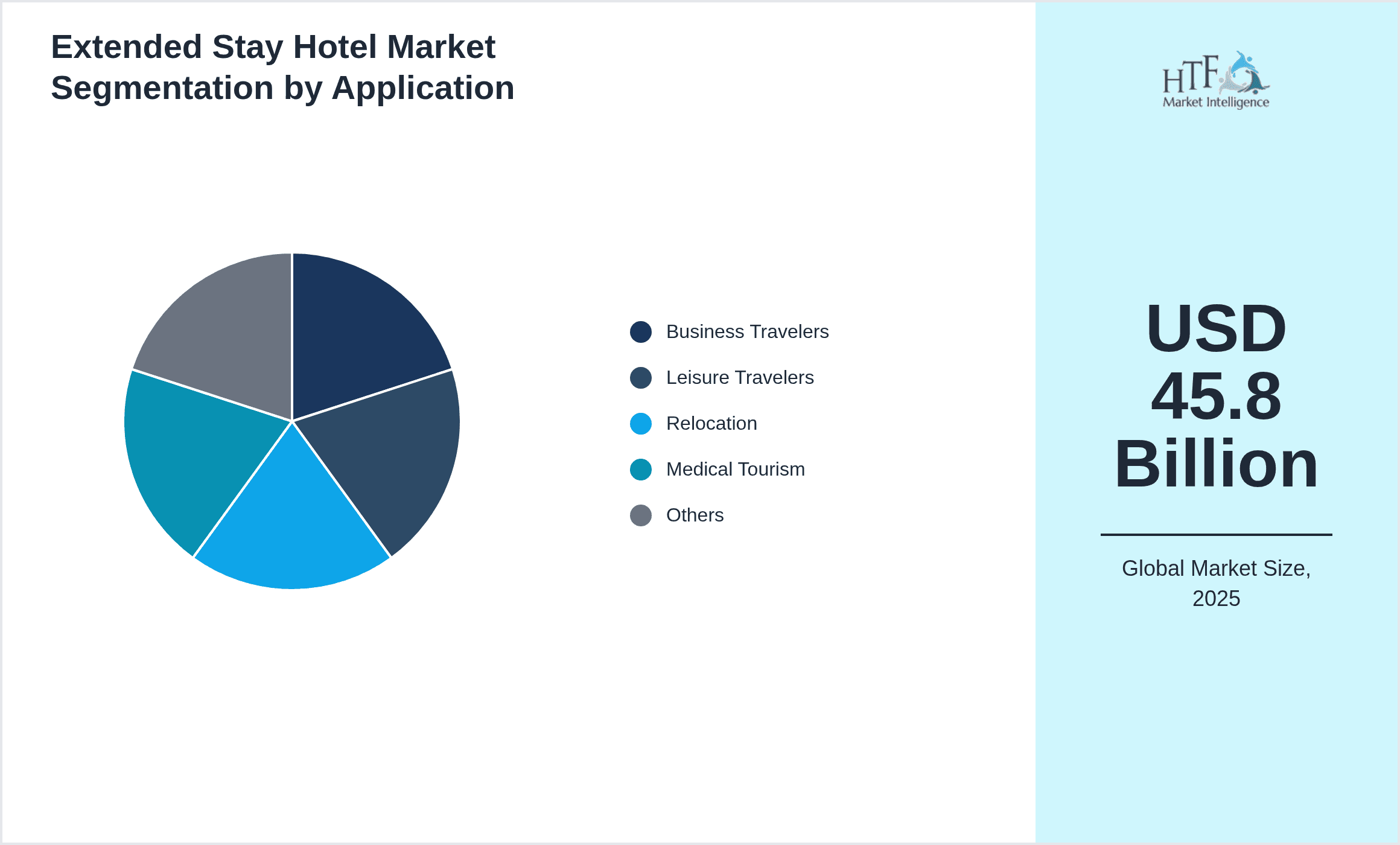
Market Breakdown
- •By Product Type
- ◦Serviced Apartments
- ◦Aparthotels
- ◦Extended Stay Suites
- ◦Corporate Housing
- ◦Others
- •By Application
- ◦Business Travelers
- ◦Leisure Travelers
- ◦Relocation
- ◦Medical Tourism
- ◦Others
- •By End-Use Industry
- ◦Corporate Sector
- ◦Healthcare
- ◦Tourism and Hospitality
- ◦Government and Defense
- •By Distribution Channel
- ◦Direct Bookings
- ◦Online Travel Agencies
- ◦Corporate Contracts
Growth Dynamics
- •The increasing globalization of businesses has amplified the demand for long-term corporate housing solutions, driving growth in the extended stay hotel market. Companies expanding operations internationally require flexible accommodations for relocating employees and consultants, stimulating demand for extended stay properties equipped with home-like amenities.
- •Technological advancements in online booking platforms and customer relationship management systems have streamlined the reservation process and enhanced guest experiences, contributing to market expansion. The adoption of mobile apps and AI-powered services facilitates personalized offerings and operational efficiency.
- •Rising urbanization and the growth of secondary cities have led to increased demand for affordable, flexible lodging options in suburban and peri-urban locations, which extended stay hotels effectively address. This trend supports geographic diversification and market penetration beyond traditional metropolitan hubs.
- •The growing trend of medical tourism has created new applications for extended stay hotels, as patients and their families seek comfortable accommodations near healthcare facilities for prolonged treatment durations. This has resulted in partnerships between hospitality providers and healthcare institutions.
- •Government initiatives supporting infrastructure development and tourism promotion in emerging markets have positively influenced investment in extended stay hotels, creating conducive environments for market growth. Incentives and regulatory support enhance the feasibility of new projects.
- •The rise of remote work and digital nomadism has increased demand for long-term flexible stay options with integrated workspaces and connectivity, positioning extended stay hotels as attractive alternatives to traditional rentals. This shift in consumer behavior is expected to sustain growth momentum.
- •Sustainability concerns and the adoption of green building practices have become important growth factors, with operators investing in energy-efficient designs and eco-friendly operations to attract environmentally conscious travelers and comply with regulations.

Market Trends
- •The rise of hybrid lodging models combining hotel services with apartment-style living is reshaping the extended stay hotel market, offering guests enhanced flexibility and comfort. Leading brands are investing in such concepts to differentiate their offerings and capture broader market segments.
- •Digital transformation is driving innovation in guest engagement, with technologies such as contactless check-in, smart room controls, and AI chatbots becoming standard features in extended stay hotels, improving operational efficiency and customer satisfaction.
- •The integration of wellness amenities, including fitness centers, spa services, and healthy dining options, is gaining traction as guests prioritize health and wellbeing during extended stays. Hotels are increasingly tailoring services to meet these evolving expectations.
- •Collaborations between extended stay hotel operators and co-working space providers are emerging to cater to the needs of remote workers and business travelers seeking integrated living and working environments, enhancing value propositions.
- •Sustainability initiatives, such as reducing single-use plastics and implementing energy-saving technologies, are becoming key differentiators in marketing extended stay properties, aligning with growing consumer awareness and regulatory pressures.
- •The expansion of loyalty programs tailored specifically for long-stay guests is fostering customer retention and repeat business, with rewards structured around duration of stay and service utilization.
- •Market segmentation is becoming more refined, with operators developing specialized offerings for niche groups such as pet owners, families, and senior travelers to capture diverse consumer needs and preferences.

Market Opportunities
- •The growing middle-class population in emerging markets presents significant opportunities to expand extended stay hotel offerings tailored to cost-conscious travelers seeking quality and flexibility, enabling market penetration in untapped regions.
- •Technological innovation offers opportunities to develop integrated platforms combining accommodation booking with ancillary services such as local experiences and transportation, enhancing guest convenience and revenue streams.
- •Strategic partnerships with corporate clients, healthcare providers, and educational institutions can unlock new customer segments and create steady demand pipelines for extended stay accommodations.
- •Expansion into secondary cities and suburban areas allows operators to capitalize on lower real estate costs and growing demand from remote workers and relocating professionals, diversifying geographic revenue sources.
- •Investment in sustainable building certifications and eco-friendly operations can attract environmentally conscious guests and meet increasing regulatory requirements, positioning properties as preferred choices.
- •Customization of services through data analytics and AI can improve guest satisfaction and operational efficiency, providing competitive advantages in a crowded market.
- •Development of branded extended stay properties with integrated amenities such as co-working spaces and wellness centers can enhance market appeal and command premium pricing.
Market Challenges
- •High capital investment and operational costs pose significant barriers for new entrants and expansion of extended stay hotel properties, limiting market accessibility and growth pace.
- •Regulatory complexities and varying local compliance requirements across regions increase operational challenges and necessitate adaptable business models and legal expertise.
- •Intense competition from alternative accommodation providers such as serviced apartments, rental platforms, and traditional hotels pressures pricing and profit margins within the extended stay segment.
- •Fluctuations in global travel demand due to economic downturns, pandemics, or geopolitical tensions create market volatility and occupancy uncertainties for extended stay operators.
- •Talent acquisition and retention challenges in hospitality staff impact service quality and operational efficiency, necessitating investments in training and employee engagement.
- •Technology integration and cybersecurity concerns require continuous investment and pose risks related to data privacy and operational disruptions.
- •Maintaining consistent service quality across geographically dispersed properties remains a challenge amidst rapid expansion and franchise models.
Regulatory Framework
- •Between 2020 and 2025, various regions implemented health and safety regulations for extended stay hotels, including enhanced sanitation protocols and occupancy limits, to address pandemic-related concerns. These measures required operators to invest in compliance systems and staff training, impacting operational costs and guest confidence.
- •Data protection laws such as GDPR in Europe and CCPA in North America have mandated stringent guest data management and privacy policies, compelling extended stay hotel operators to adopt robust cybersecurity frameworks and transparent data handling practices.
- •Environmental regulations introduced during this period emphasized energy efficiency, waste reduction, and sustainable construction practices. Compliance with green building standards such as LEED certification has become increasingly relevant for new developments and renovations in the sector.
- •Zoning and land use regulations vary significantly across global regions, impacting the development of extended stay properties. Some urban areas have introduced mixed-use zoning policies facilitating hotel-residential hybrids, while others impose restrictions aimed at preserving housing stock.
- •Government incentives and subsidies aimed at promoting tourism infrastructure have been enacted in several emerging markets, including tax breaks and development grants, providing financial support that encourages investment in the extended stay hotel segment.
Market Intelligence
- •15th January 2025, Marriott International announced the launch of its new extended stay brand 'Marriott Stay+ Suites', featuring enhanced in-room workspaces and wellness amenities tailored for remote workers and long-stay guests. The brand aims to capture the growing demand from digital nomads and corporate clients seeking flexible and comfortable accommodations in urban and suburban locations worldwide. This strategic initiative includes investments in technology-enabled services such as contactless check-in and AI-driven personalized guest experiences designed to improve operational efficiency and customer satisfaction. Marriott expects this expansion to contribute significantly to its extended stay portfolio growth over the next decade. Source: Marriott International Official Press Release
- •10th March 2025, Hilton Worldwide Holdings Inc. introduced an innovative loyalty program enhancement for its extended stay properties, offering tiered rewards based on length of stay and service utilization. This program aims to increase guest retention and attract long-term travelers by providing personalized benefits including discounted rates, complimentary services, and exclusive access to co-working spaces. The initiative leverages data analytics to tailor offerings and improve customer engagement, positioning Hilton competitively in the expanding extended stay market segment. Early adoption of the program has shown positive impacts on occupancy rates and revenue per available room in key markets. Source: Hilton Worldwide Press Announcement
- •20th May 2025, Accor S.A. completed the acquisition of a leading regional aparthotel operator in Asia-Pacific, expanding its footprint in the fast-growing extended stay market. This strategic acquisition enables Accor to capitalize on rising demand from business travelers and relocating professionals in emerging urban centers. The deal includes plans to renovate properties with eco-friendly designs and integrate smart technology solutions to enhance guest experience and operational sustainability. Accor expects significant synergies from this transaction, strengthening its competitive position and accelerating growth in the corporate housing sector across Asia-Pacific. Source: Accor Group Official Release
- •5th September 2024, OYO Hotels & Homes announced a partnership with a global co-working space provider to integrate flexible office solutions within its extended stay properties. This collaboration addresses the needs of remote workers and entrepreneurs seeking combined living and working environments. The initiative includes investments in high-speed internet infrastructure, ergonomic workstations, and community engagement programs designed to enhance guest productivity and satisfaction. OYO aims to roll out this model across major urban markets by 2026, leveraging its extensive network and technology platform to differentiate its offerings. Source: OYO Corporate Announcement
Regional Outlook
The North America currently holds a significant share of the market, primarily due to several key factors: increasing consumption rates, a burgeoning population, and robust economic momentum. These elements collectively drive demand, positioning this region as a leader in the market. On the other hand, Asia-Pacific is rapidly emerging as the fastest-growing area within the industry. This remarkable growth can be attributed to swift infrastructure development, the expansion of various industrial sectors, and a marked increase in consumer demand. These dynamics make this region a crucial player in shaping future market growth.
In our report, we cover a comprehensive analysis of the following regions and countries:
- North America
- LATAM
- West Europe
- Central & Eastern Europe
- Northern Europe
- Southern Europe
- East Asia
- Southeast Asia
- South Asia
- Central Asia
- Oceania
- MEA
| Feature | Details |
|---|---|
| Base Year Market Size | USD 45.8 Billion |
| Forecast Year Market Size | USD 98.6 Billion |
| CAGR | 8.7% |
| Forecast Period | 2026 to 2033 |
| YoY Growth | 8.37% |
| Scope of Report | Market is segmented by Product Type (Serviced Apartments, Aparthotels, Extended Stay Suites, Corporate Housing, Others), Application (Business Travelers, Leisure Travelers, Relocation, Medical Tourism, Others), End-Use Industry (Corporate Sector, Healthcare, Tourism and Hospitality, Government and Defense), Distribution Channel (Direct Bookings, Online Travel Agencies, Corporate Contracts) |
| Regions Covered | North America, LATAM, West Europe, Central & Eastern Europe, Northern Europe, Southern Europe, East Asia, Southeast Asia, South Asia, Central Asia, Oceania, MEA |
| Key Companies | Marriott International (United States), Hilton Worldwide Holdings Inc. (United States), InterContinental Hotels Group (United Kingdom), Hyatt Hotels Corporation (United States), Accor S.A. (France), Extended Stay America, Inc. (United States), Aimbridge Hospitality (United States), Frasers Hospitality (Singapore), Ascott Limited (Singapore), Selina Hospitality (Panama), OYO Hotels & Homes (India), The Ascott Limited (Singapore), Sunstone Hotels (United States), G6 Hospitality LLC (United States), Red Lion Hotels Corporation (United States), The Apartment Service (Japan), Lyric Hospitality (United States), Oakwood Worldwide (United States), Candlewood Suites (United States), Staybridge Suites (United States), Oakwood Asia Pacific (Singapore), Native (United Kingdom), Sonder (United States), The Collective (United Kingdom), Lyric Hospitality LLC (United States) |
Global Extended Stay Hotel Market Size, Growth & Revenue 2025-2034 - Table of Contents
Frequently Asked Questions (FAQ):
The Compact Track Loaders market is expected to see value worth 5.3 Billion in 2025.
North America currently leads the market with approximately 45% market share, followed by Europe at 28% and Asia-Pacific at 22%. The remaining regions account for 5% of the global market.
Key growth drivers include increasing construction activities, rising demand for versatile equipment in agriculture, technological advancements in track loader design, and growing preference for compact equipment in urban construction projects.