
Global Water Bed Market Size, Growth & Revenue 2024-2034
Global Water Bed Market is segmented by Product Type (Soft Water Beds, Hard Water Beds, Air Water Beds, Wave Water Beds, Semi-Wave Water Beds), Application (Therapeutic Use, Home Furniture, Medical, Hospitality, Sports), End-Use Industry (Healthcare, Residential, Hospitality, Sports & Fitness), Distribution Channel (Offline Retail, Online Retail, Direct Sales), and Geography (North America, LATAM, West Europe, Central & Eastern Europe, Northern Europe, Southern Europe, East Asia, Southeast Asia, South Asia, Central Asia, Oceania, MEA)
Pricing
Report Overview
Executive Summary
- •The global Water Bed market is defined by its focus on beds that utilize water as a support mechanism, replacing traditional mattress materials to offer enhanced comfort, therapeutic benefits, and temperature regulation. This market includes a diverse range of water bed types such as soft, hard, air, wave, and semi-wave models, catering to applications spanning therapeutic use, home furniture, medical environments, hospitality, and sports recovery. The industry is characterized by ongoing innovations in materials technology, ergonomic design, and integration with smart home systems, targeting both consumer and commercial segments. The rising demand for pressure relief mattresses and increased awareness of health benefits have significantly expanded the market scope, supported by growth in healthcare facilities and the hospitality sector worldwide. Geographically, North America currently dominates due to high adoption rates, while Asia-Pacific is emerging rapidly as a key growth region fueled by rising disposable incomes and expanding healthcare infrastructure. The market’s evolving dynamics are influenced by technological advancements, changing consumer preferences, and regulatory developments, shaping a robust growth trajectory through 2034.
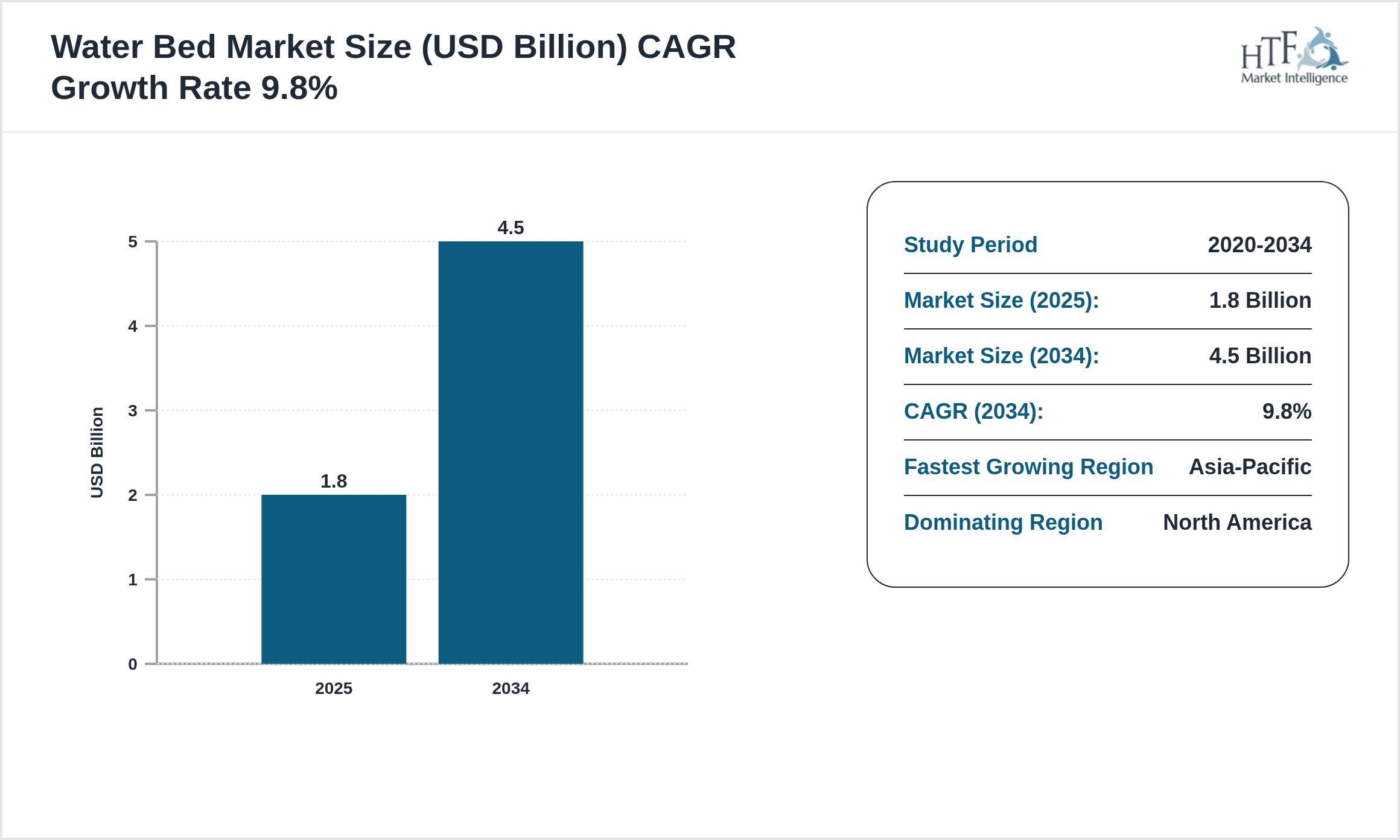
- •Key highlights include a projected CAGR of 9.8% from 2024 to 2034, with the market expected to grow from USD 1.8 Billion in 2024 to USD 4.5 Billion by 2034. Soft water beds remain the leading product type, commanding the largest market share due to their comfort and affordability, while wave water beds represent the fastest-growing segment driven by innovative therapeutic features. Therapeutic use and home furniture applications dominate the market, reflecting strong consumer and medical sector demand. North America leads in market share owing to established distribution networks and consumer awareness, whereas Asia-Pacific exhibits the highest growth rate supported by urbanization and healthcare expansion. These factors collectively underscore the lucrative opportunities and strategic importance of the global water bed market across diverse industries.
- •The Water Bed market offers substantial value propositions to manufacturers, healthcare providers, hospitality businesses, and consumers by delivering advanced comfort solutions and therapeutic benefits. For stakeholders, the market presents avenues to innovate through material science, smart integration, and customization options. Additionally, expanding global healthcare infrastructure and increasing wellness trends enhance the strategic importance of water beds as a non-invasive treatment alternative. The evolving competitive landscape, marked by collaborations and technological advancements, further empowers participants to tap into emerging regional markets and diversify product portfolios, thereby driving sustainable growth and long-term value creation across the water bed industry.
Competitive Landscape
The global Water Bed market exhibits a moderately fragmented competitive landscape characterized by the presence of several established multinational corporations alongside innovative regional players. Competition revolves around product innovation, quality enhancements, and expanding distribution networks to capture diverse customer segments. Leading companies focus heavily on R&D to introduce advanced water bed technologies such as wave and semi-wave designs that offer improved therapeutic benefits and ergonomic comfort. Strategic partnerships and collaborations with healthcare institutions and hospitality chains are common to enhance market penetration and brand visibility. Pricing strategies vary by region and product type, with premium models commanding higher margins. Additionally, companies are increasingly adopting sustainable materials and smart integration features to differentiate their offerings. The market entry barriers include technological expertise, certification compliance, and capital investment, while the rivalry intensifies due to product differentiation efforts and regional expansion strategies. Future competition is expected to shift toward digitalization and customization, fostering innovation-driven growth.
Leading Companies in Water Bed Market
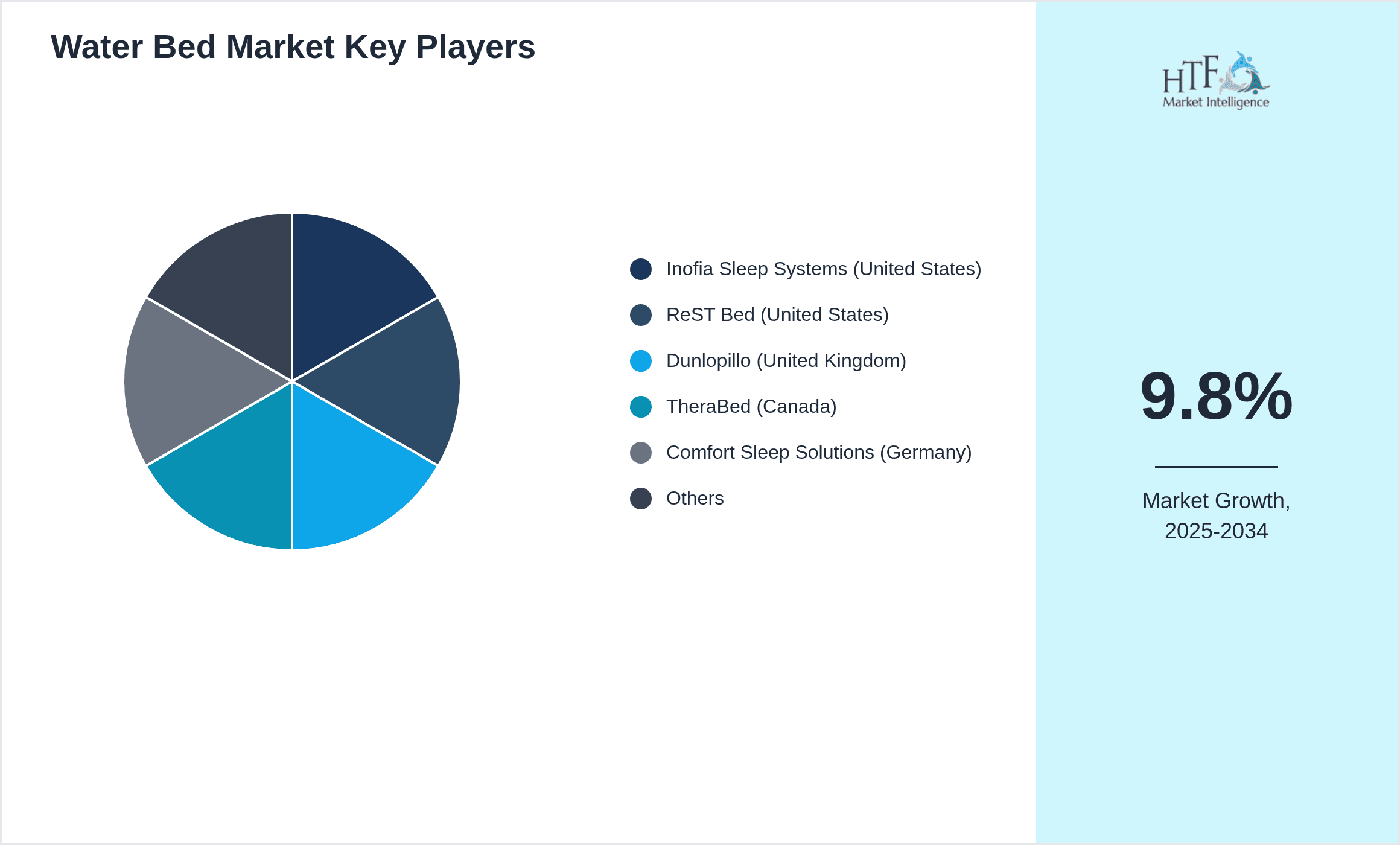
- •Inofia Sleep Systems (United States)
- •ReST Bed (United States)
- •Dunlopillo (United Kingdom)
- •TheraBed (Canada)
- •Comfort Sleep Solutions (Germany)
- •HydroRest Beds (Australia)
- •AquaSleep Technologies (Japan)
- •SleepWell Industries (France)
- •WaterComfort Inc. (Sweden)
- •PureSleep Systems (South Korea)
- •SoftWave Beds Ltd. (Netherlands)
- •SleepTech Solutions (China)
- •HydroFlex Beds (Italy)
- •DreamWave Innovations (Brazil)
- •AquaComfort Ltd. (Singapore)
- •SleepStream Technologies (India)
- •WaveRest Corp. (Mexico)
- •EcoSleep Solutions (Norway)
- •TheraWave Beds (Denmark)
- •WaterDream Inc. (Russia)
- •HydroEase Beds (South Africa)
- •ComfortWave Technologies (New Zealand)
- •SleepAqua Corp. (United Arab Emirates)
- •AquaTherapy Beds (Saudi Arabia)
- •BlueWave Sleep Systems (Poland)
Market Breakdown
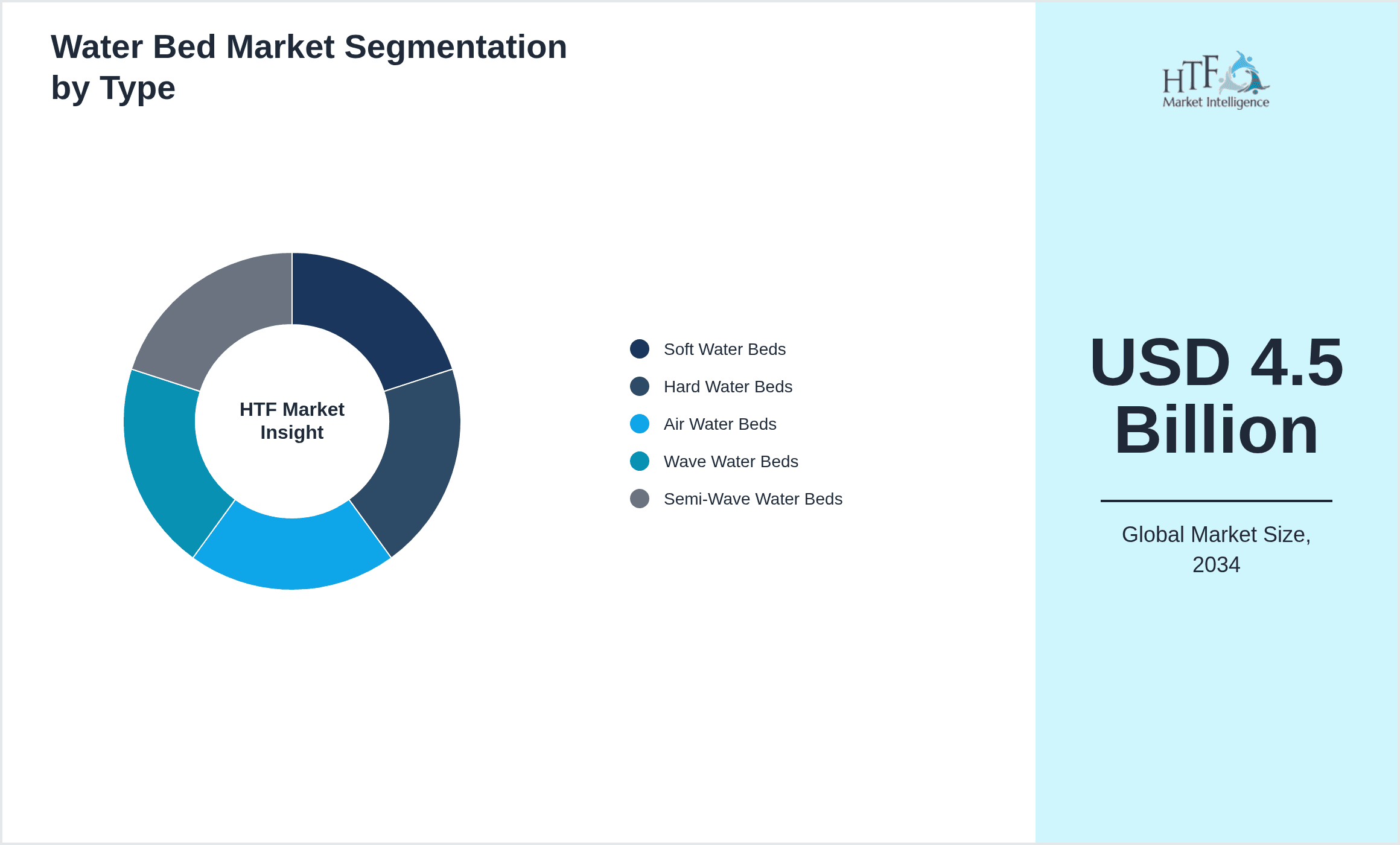
- •By Product Type
- ◦Soft Water Beds
- ◦Hard Water Beds
- ◦Air Water Beds
- ◦Wave Water Beds
- ◦Semi-Wave Water Beds
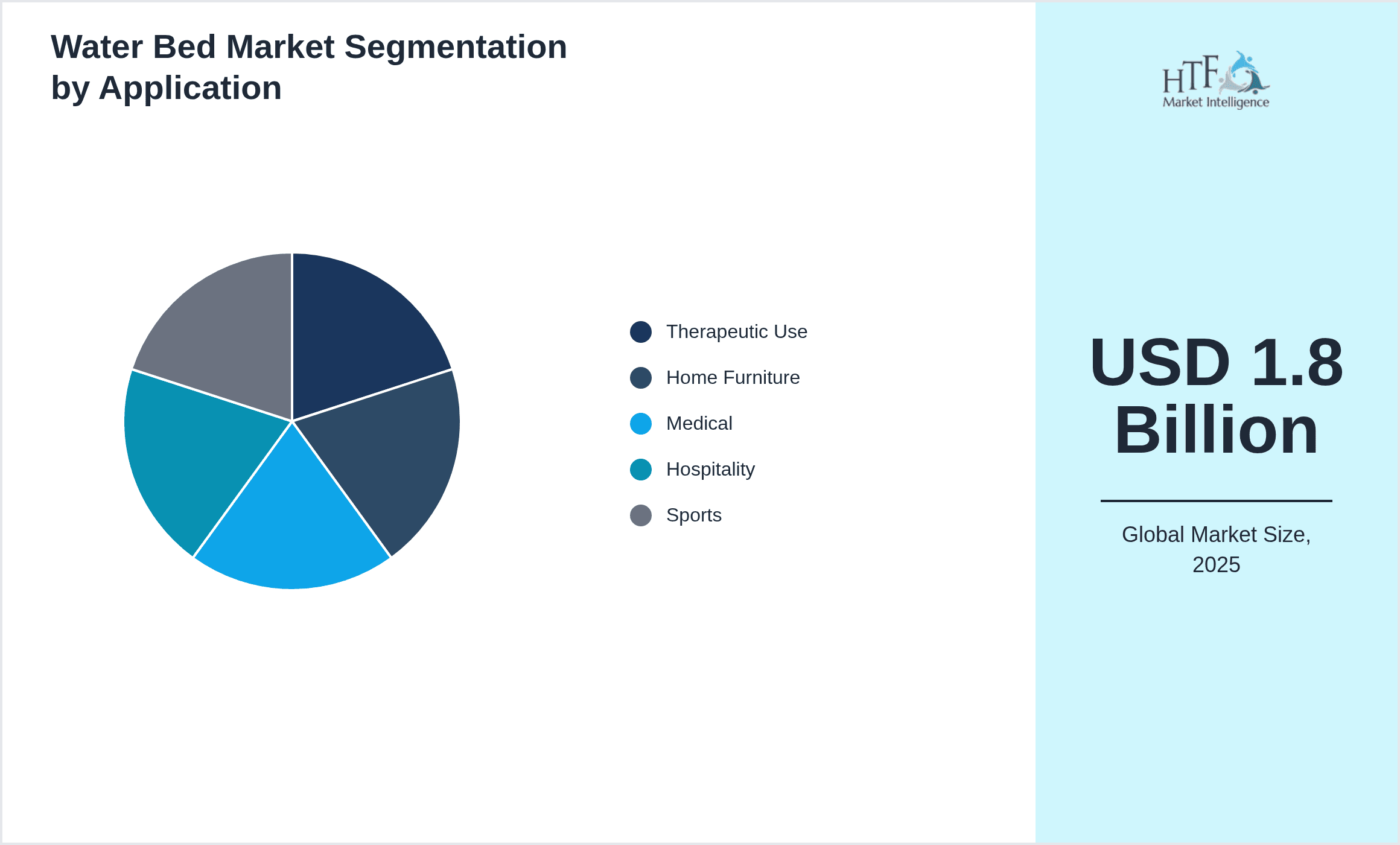
- •By Application
- ◦Therapeutic Use
- ◦Home Furniture
- ◦Medical
- ◦Hospitality
- ◦Sports
- •By End-Use Industry
- ◦Healthcare
- ◦Residential
- ◦Hospitality
- ◦Sports & Fitness
- •By Distribution Channel
- ◦Offline Retail
- ◦Online Retail
- ◦Direct Sales
Growth Dynamics
- •Rising awareness about health and wellness has significantly driven demand for therapeutic water beds that aid in pressure relief and pain management, particularly among elderly and patients with chronic conditions. This trend is supported by healthcare providers integrating water beds into treatment regimens, leading to increased adoption.
- •Technological advancements in water bed designs, such as wave and semi-wave models offering enhanced motion and temperature control, have broadened the market appeal and attracted premium consumer segments seeking luxury and therapeutic benefits.
- •Expansion of the global hospitality sector, especially luxury hotels and resorts, has fueled demand for water beds as part of premium guest amenities, thereby opening new revenue streams for manufacturers and distributors.
- •Increasing disposable incomes and urbanization in emerging markets like Asia-Pacific and Latin America have accelerated water bed adoption, contributing to the fastest growth rates observed in these regions.
- •Growing investments in smart home technologies have encouraged integration of digital features into water beds, such as sleep monitoring and automated temperature regulation, enhancing user experience and market differentiation.
- •Strategic government initiatives promoting health and wellness products, alongside rising demand for non-invasive medical devices, have created favorable policy environments stimulating market growth globally.
- •Collaborations between water bed manufacturers and healthcare institutions have fostered product innovations tailored to clinical needs, enabling expansion into specialized therapeutic applications.
Market Trends
- •The market is witnessing a shift towards eco-friendly and sustainable materials in water bed manufacturing, driven by consumer preference for environmentally responsible products and regulatory pressures.
- •Increasing penetration of e-commerce platforms has transformed the distribution landscape, making water beds more accessible to a broad consumer base and enabling direct-to-consumer sales models.
- •Innovations in sleep technology, such as integration of IoT-enabled sensors in water beds, are enhancing personalized comfort and health monitoring, positioning water beds as smart wellness products.
- •The rise of urban luxury living and wellness-focused lifestyles has elevated demand for premium water bed models that combine therapeutic benefits with aesthetic appeal.
- •Collaborations between mattress manufacturers and healthcare providers are increasing, facilitating development of customized water bed solutions for specific patient needs such as pressure ulcer prevention.
- •Emerging markets are witnessing rapid adoption due to growing awareness campaigns and affordability of mid-range water bed models, expanding the consumer base.
- •Sustainability trends have encouraged manufacturers to develop recyclable and biodegradable water bed components, aligning with global environmental goals.
Market Opportunities
- •Untapped emerging markets in Asia-Pacific and Latin America offer significant growth opportunities owing to rising disposable incomes, urbanization, and increasing healthcare infrastructure development.
- •Innovative product development focusing on smart water beds with integrated biometric sensors presents opportunities to capture tech-savvy consumers and medical institutions.
- •Expansion into hospitality and premium residential segments by offering customized water bed solutions can drive additional revenue streams and brand loyalty.
- •Collaborations with healthcare providers for clinical trials and endorsements can boost credibility and adoption in therapeutic applications, expanding market reach.
- •Sustainability-focused innovations, including biodegradable materials and energy-efficient manufacturing, can attract environmentally conscious consumers and comply with evolving regulations.
- •Online direct-to-consumer sales channels offer cost advantages and data-driven marketing insights, enabling personalized offerings and enhanced customer engagement.
- •Developing modular and customizable water bed systems tailored to regional preferences can improve market penetration and customer satisfaction.
Market Challenges
- •High initial investment costs and maintenance requirements for advanced water bed systems limit adoption among price-sensitive consumer segments, especially in developing regions.
- •Technical complexities related to durability, leakage prevention, and temperature control pose significant design and manufacturing challenges requiring continuous innovation.
- •Competition from alternative mattress technologies such as memory foam and air mattresses restricts water bed market share and necessitates differentiation through innovation.
- •Regulatory compliance and safety certifications vary across regions, complicating market entry strategies and increasing operational costs for manufacturers.
- •Lack of widespread consumer awareness regarding therapeutic benefits of water beds in certain regions hampers demand generation and market penetration.
- •Supply chain disruptions and raw material price volatility impact production costs and delivery timelines, affecting overall profitability and market stability.
- •Growing environmental regulations require manufacturers to adapt quickly to sustainable practices, which may increase operational expenses in the short term.
Regulatory Framework
- •Between 2019 and 2024, multiple international standards for mattress safety and fire retardancy have been updated, requiring water bed manufacturers to comply with enhanced material flammability tests and certification protocols, thereby elevating product safety levels globally.
- •New regulations in key markets mandate the use of non-toxic and hypoallergenic materials in therapeutic mattresses, including water beds, to reduce health risks and improve patient safety, influencing product design and raw material sourcing.
- •Environmental legislation targeting reduction of plastic waste has prompted manufacturers to adopt recyclable and biodegradable materials in water bed construction, with phased compliance deadlines between 2021 and 2024 in major regions such as Europe and North America.
- •Quality management system certifications, including ISO 9001 and ISO 13485 for medical devices, have become prerequisites for water beds used in clinical settings, driving manufacturers to enhance production processes and documentation.
- •Government incentives and subsidies for health and wellness products in regions like Asia-Pacific have encouraged investment in innovative water bed technologies, fostering market growth through policy support and funding programs.
Market Intelligence
- •15th January 2025, Inofia Sleep Systems launched their latest Wave Water Bed model featuring integrated temperature regulation and Bluetooth-enabled sleep tracking, targeting both therapeutic and luxury home furniture segments. This product aims to enhance user comfort through real-time biometric feedback, positioning the company as an innovator in smart bedding solutions globally. The launch is anticipated to bolster the company’s market share in North America and Asia-Pacific by attracting health-conscious consumers seeking advanced sleep technologies. Source: Company press release
- •20th March 2025, TheraBed announced a strategic partnership with leading healthcare providers in Europe to develop customized water beds designed specifically for pressure ulcer prevention in clinical environments. This collaboration leverages TheraBed’s proprietary semi-wave technology to improve patient outcomes, aligning with rising demand for specialized medical mattresses. The initiative is expected to accelerate adoption rates across hospital and rehabilitation centers, strengthening TheraBed’s foothold in the therapeutic segment. Source: Industry publication
- •10th May 2025, SleepTech Solutions expanded its manufacturing capabilities in Southeast Asia by inaugurating a new production facility dedicated to eco-friendly water beds. This expansion supports increasing demand in emerging markets and aligns with the company’s sustainability goals to reduce environmental impact through innovative material use. The facility is equipped with state-of-the-art automation technologies, enhancing production efficiency and quality control. Source: Official corporate announcement
- •5th February 2025, AquaSleep Technologies introduced a direct-to-consumer online platform featuring customizable water bed options with virtual design consultations. This digital transformation aims to increase accessibility and personalization, catering to a digitally savvy customer base primarily in Europe and North America. The platform integrates augmented reality tools to allow customers to visualize products in their homes before purchase, enhancing buying confidence and reducing return rates. Source: Company website
Regional Outlook
The North America currently holds a significant share of the market, primarily due to several key factors: increasing consumption rates, a burgeoning population, and robust economic momentum. These elements collectively drive demand, positioning this region as a leader in the market. On the other hand, Asia-Pacific is rapidly emerging as the fastest-growing area within the industry. This remarkable growth can be attributed to swift infrastructure development, the expansion of various industrial sectors, and a marked increase in consumer demand. These dynamics make this region a crucial player in shaping future market growth.
In our report, we cover a comprehensive analysis of the following regions and countries:
- North America
- LATAM
- West Europe
- Central & Eastern Europe
- Northern Europe
- Southern Europe
- East Asia
- Southeast Asia
- South Asia
- Central Asia
- Oceania
- MEA
| Feature | Details |
|---|---|
| Base Year Market Size | USD 1.8 Billion |
| Forecast Year Market Size | USD 4.5 Billion |
| CAGR | 9.8% |
| Forecast Period | 2026 to 2033 |
| YoY Growth | 9.4% |
| Scope of Report | Market is segmented by Product Type (Soft Water Beds, Hard Water Beds, Air Water Beds, Wave Water Beds, Semi-Wave Water Beds), Application (Therapeutic Use, Home Furniture, Medical, Hospitality, Sports), End-Use Industry (Healthcare, Residential, Hospitality, Sports & Fitness), Distribution Channel (Offline Retail, Online Retail, Direct Sales) |
| Regions Covered | North America, LATAM, West Europe, Central & Eastern Europe, Northern Europe, Southern Europe, East Asia, Southeast Asia, South Asia, Central Asia, Oceania, MEA |
| Key Companies | Inofia Sleep Systems (United States), ReST Bed (United States), Dunlopillo (United Kingdom), TheraBed (Canada), Comfort Sleep Solutions (Germany), HydroRest Beds (Australia), AquaSleep Technologies (Japan), SleepWell Industries (France), WaterComfort Inc. (Sweden), PureSleep Systems (South Korea), SoftWave Beds Ltd. (Netherlands), SleepTech Solutions (China), HydroFlex Beds (Italy), DreamWave Innovations (Brazil), AquaComfort Ltd. (Singapore), SleepStream Technologies (India), WaveRest Corp. (Mexico), EcoSleep Solutions (Norway), TheraWave Beds (Denmark), WaterDream Inc. (Russia), HydroEase Beds (South Africa), ComfortWave Technologies (New Zealand), SleepAqua Corp. (United Arab Emirates), AquaTherapy Beds (Saudi Arabia), BlueWave Sleep Systems (Poland) |
Global Water Bed Market Size, Growth & Revenue 2024-2034 - Table of Contents
Multidisciplinary researcher with 10+ years of experience uncovering insights across diverse domains focused on uncovering insights that drive informed decisions.
Frequently Asked Questions (FAQ):
The Compact Track Loaders market is expected to see value worth 5.3 Billion in 2025.
North America currently leads the market with approximately 45% market share, followed by Europe at 28% and Asia-Pacific at 22%. The remaining regions account for 5% of the global market.
Key growth drivers include increasing construction activities, rising demand for versatile equipment in agriculture, technological advancements in track loader design, and growing preference for compact equipment in urban construction projects.