
Global Skincare Market Size, Growth & Revenue 2024-2034
Global Skincare Market is segmented by Product Type (Creams & Lotions, Serums, Cleansers, Toners, Masks), Application (Facial Care, Body Care, Sun Care, Anti-Aging, Others), End-Use Industry (Beauty & Personal Care, Dermatology Clinics, Spas & Salons, Retail & E-commerce), Distribution Channel (Supermarkets/Hypermarkets, Specialty Stores, Online Retail, Pharmacies & Drugstores), and Geography (North America, LATAM, West Europe, Central & Eastern Europe, Northern Europe, Southern Europe, East Asia, Southeast Asia, South Asia, Central Asia, Oceania, MEA)
Pricing
Report Overview
Executive Summary
- •The global skincare market is a dynamic and rapidly evolving sector encompassing diverse product categories such as creams, serums, cleansers, toners, masks, and sun care products aimed at enhancing skin health and aesthetics. The market serves a broad spectrum of applications including facial and body care, anti-aging solutions, and sun protection, addressing the growing consumer demand for personalized and effective skincare regimens. Driven by increasing awareness of skin health, rising disposable income, and technological advancements in product formulations, the industry has witnessed substantial growth globally. Innovation focusing on natural and organic ingredients, as well as sustainable packaging, are reshaping consumer preferences and market offerings. Distribution channels have expanded beyond traditional retail to include digital platforms, enabling greater accessibility and consumer engagement. Key regions such as North America, Europe, and Asia-Pacific dominate the market, with Asia-Pacific emerging as the fastest-growing region due to rising urbanization and increasing skincare consciousness. Overall, the skincare market presents significant opportunities for manufacturers and stakeholders through continuous innovation and expansion into emerging markets.
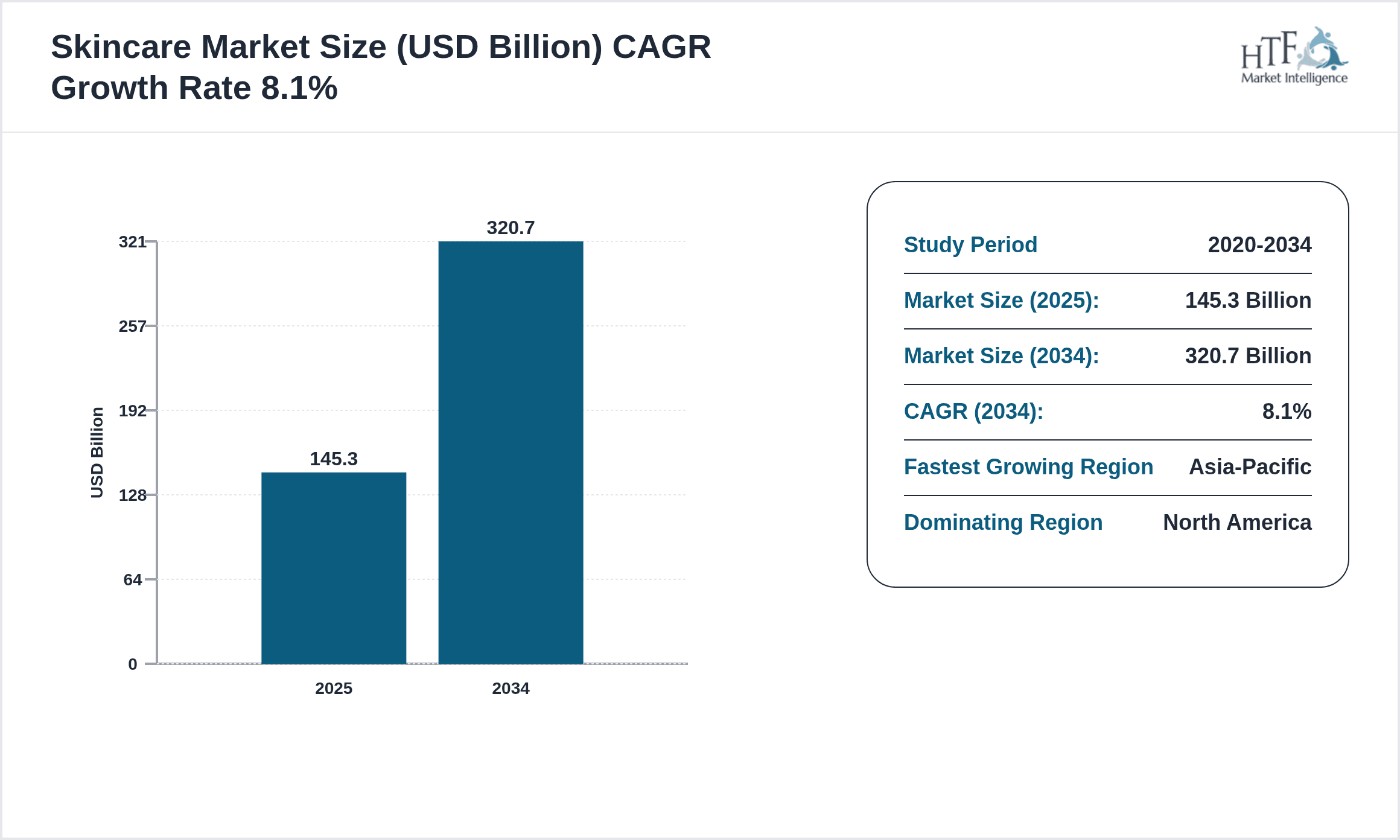
- •Key highlights of the global skincare market include a base market size of USD 145.3 Billion in 2024, projected to reach USD 320.7 Billion by 2034, reflecting a robust CAGR of 8.1%. North America currently leads in market share due to high consumer expenditure on premium skincare products, while Asia-Pacific is the fastest-growing region propelled by increasing urban populations and rising middle-class incomes. Creams and lotions dominate product types, supported by expanding consumer preferences for serums, which are the fastest-growing segment due to their potent formulations and targeted benefits. Facial care remains the leading application segment, followed closely by body care and sun care products. The market is characterized by intense competition, rapid innovation cycles, and evolving consumer demands for clean and sustainable products. Strategic collaborations and digital transformation in distribution channels are further strengthening market growth trajectories worldwide.
- •The global skincare market offers strategic value for industries ranging from cosmetics and personal care to healthcare and wellness. Its significance lies in addressing diverse consumer needs related to skin health, beauty, and protection, thereby impacting lifestyle and self-care trends globally. For stakeholders, the market presents avenues for innovation in product development, leveraging natural ingredients, biotechnology, and advanced delivery systems. Additionally, the rise of e-commerce and digital marketing has transformed consumer engagement and expanded geographic reach. The industry's focus on sustainability and ethical sourcing aligns with broader societal values, enhancing brand loyalty and consumer trust. Investors and manufacturers benefit from the market's resilience and growth potential driven by demographic shifts, increasing awareness, and technological advancements. Overall, the skincare market encapsulates a convergence of science, consumer preferences, and market expansion strategies, making it integral to the global personal care landscape.
Competitive Landscape
The global skincare market is highly competitive, with a diverse mix of multinational corporations and emerging niche players vying for market share. Competition centers on product innovation, brand differentiation, and consumer engagement strategies. Market leaders focus extensively on research and development to introduce advanced formulations incorporating natural, organic, and sustainable ingredients that meet evolving consumer expectations. Strategic partnerships, acquisitions, and collaborations are common approaches to enhance product portfolios and geographic reach. Companies invest heavily in marketing and digital channels to build strong brand presence and loyalty. Pricing strategies vary across premium, mid-range, and mass-market segments, catering to different consumer demographics. Regional competition also plays a key role, with companies tailoring products to local preferences and regulatory requirements. Overall, the competitive environment fosters rapid innovation and continuous improvement, with sustainability and efficacy emerging as critical factors for long-term success in the skincare space.
Companies Shaping the Skincare Market
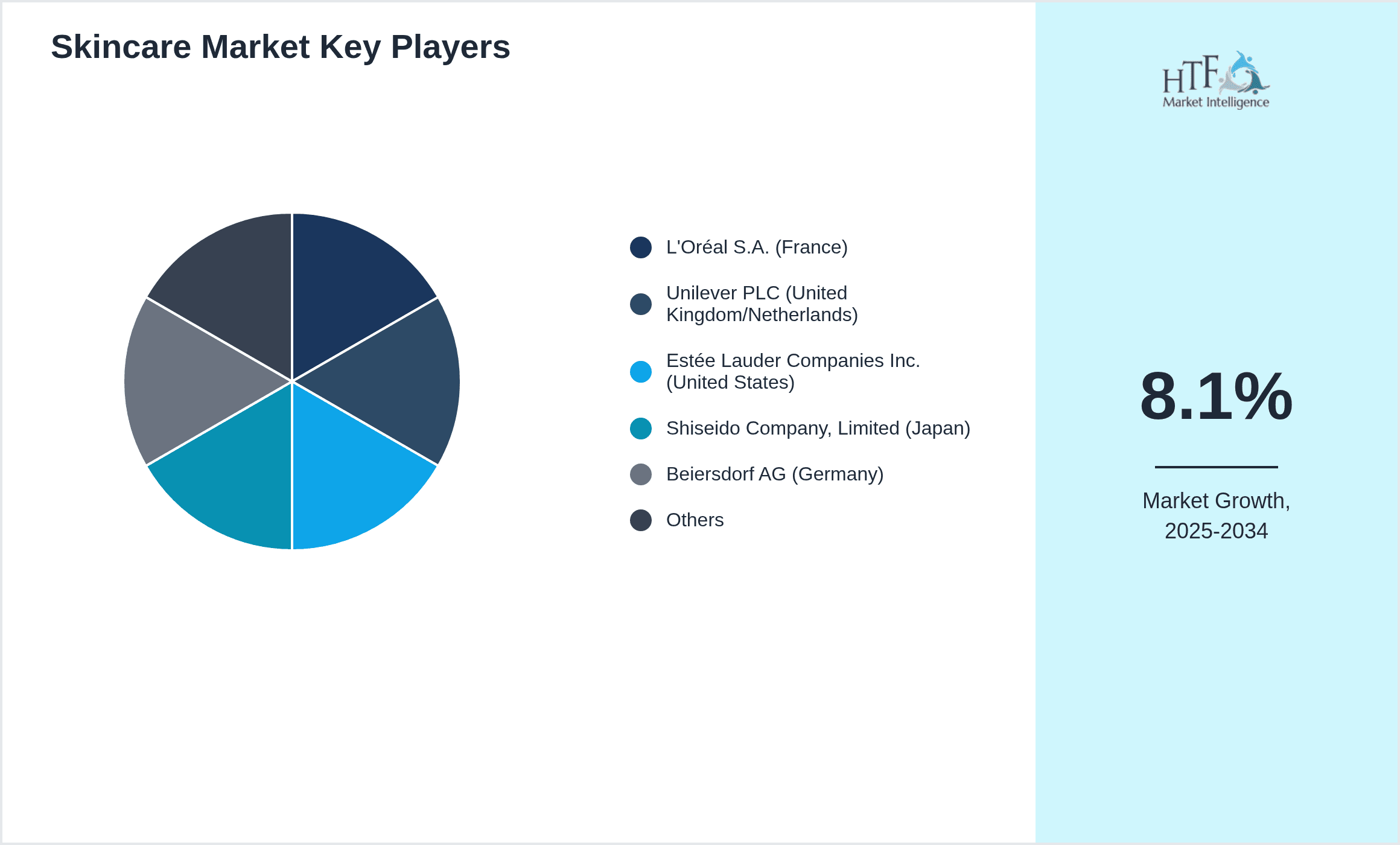
- •L'Oréal S.A. (France)
- •Unilever PLC (United Kingdom/Netherlands)
- •Estée Lauder Companies Inc. (United States)
- •Shiseido Company, Limited (Japan)
- •Beiersdorf AG (Germany)
- •Procter & Gamble Co. (United States)
- •Coty Inc. (United States)
- •Amorepacific Corporation (South Korea)
- •Johnson & Johnson Consumer Inc. (United States)
- •LVMH Moët Hennessy Louis Vuitton (France)
- •Kao Corporation (Japan)
- •Unicharm Corporation (Japan)
- •GlaxoSmithKline Consumer Healthcare (United Kingdom)
- •Edgewell Personal Care Company (United States)
- •Herbalife Nutrition Ltd. (United States)
- •L’Occitane en Provence (France)
- •Revlon, Inc. (United States)
- •The Inkey List (United Kingdom)
- •Dr. Reddy’s Laboratories Ltd. (India)
- •Nu Skin Enterprises, Inc. (United States)
- •The Proactiv Company (United States)
- •Oriflame Cosmetics SA (Sweden)
- •Mary Kay Inc. (United States)
- •Pierre Fabre Group (France)
- •Lush Fresh Handmade Cosmetics (United Kingdom)
Market Breakdown
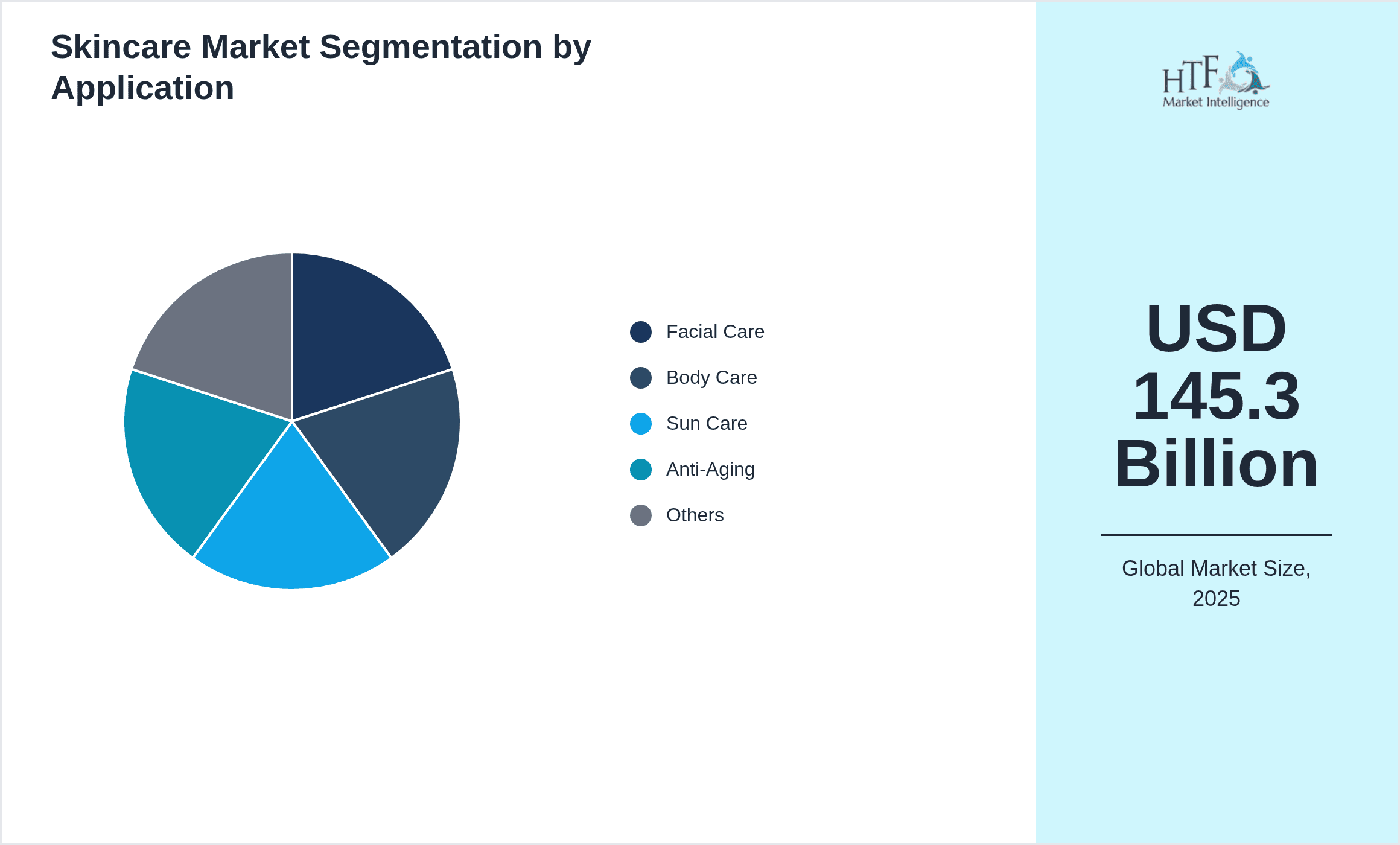
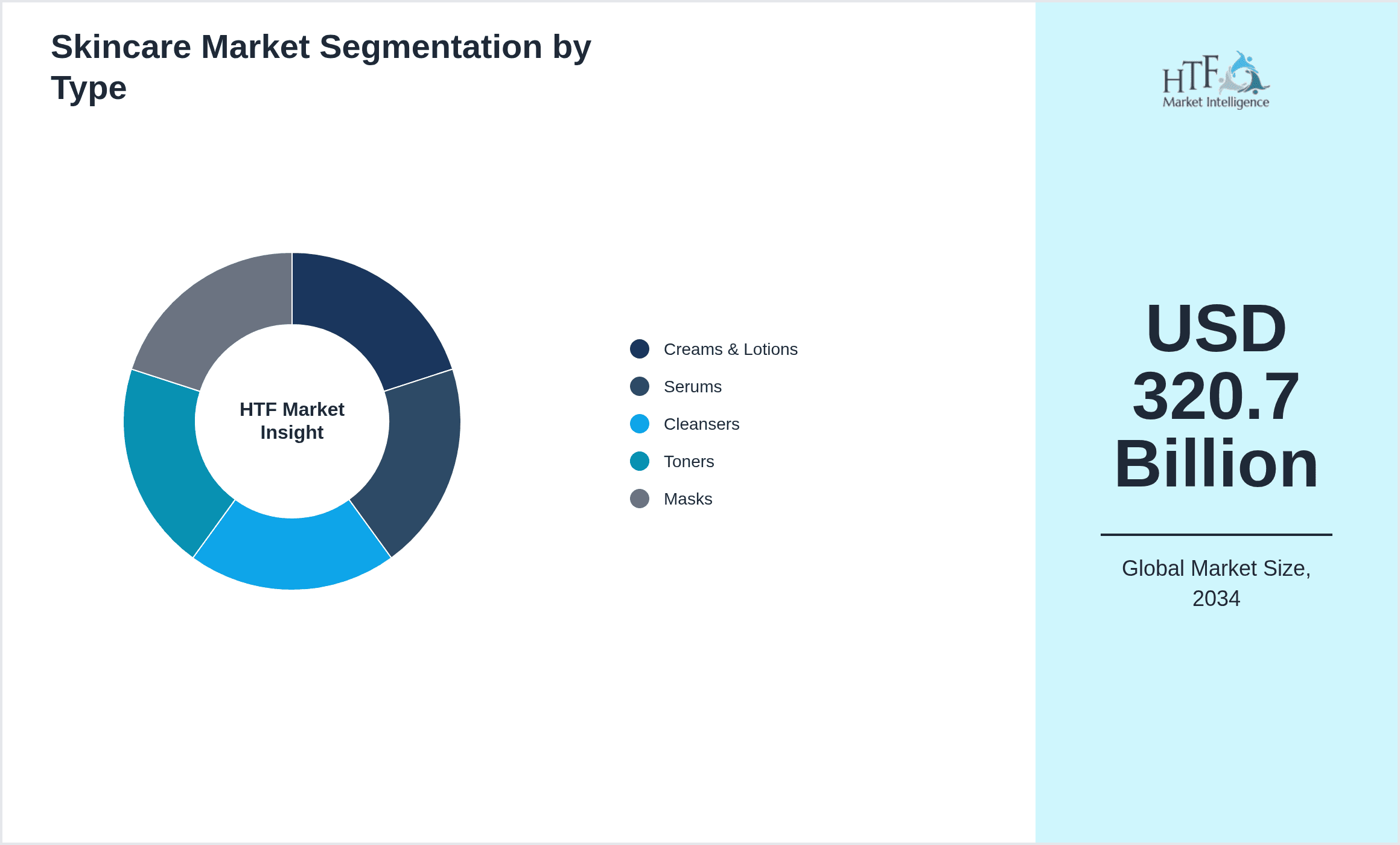
- •By Product Type
- ◦Creams & Lotions
- ◦Serums
- ◦Cleansers
- ◦Toners
- ◦Masks
- •By Application
- ◦Facial Care
- ◦Body Care
- ◦Sun Care
- ◦Anti-Aging
- ◦Others
- •By End-Use Industry
- ◦Beauty & Personal Care
- ◦Dermatology Clinics
- ◦Spas & Salons
- ◦Retail & E-commerce
- •By Distribution Channel
- ◦Supermarkets/Hypermarkets
- ◦Specialty Stores
- ◦Online Retail
- ◦Pharmacies & Drugstores
Growth Dynamics
The global skincare market's growth is primarily driven by increasing consumer awareness about skin health and appearance, with rising disposable incomes enabling expenditure on premium products. Technological advancements in formulation science have introduced innovative products such as serums and anti-aging creams that offer targeted benefits, thus attracting a broader consumer base. The surge in e-commerce and digital marketing has expanded accessibility and personalized consumer engagement, facilitating market expansion globally. Additionally, the demand for natural and organic skincare products is reshaping product development strategies, aligning with consumer preferences for clean beauty. Urbanization and changing lifestyles, particularly in emerging markets, contribute to increased adoption of skincare routines. Regulatory support for product safety and the growing male grooming segment further fuel market growth. These factors collectively create a robust environment for sustained expansion, with the Asia-Pacific region showing significant potential due to demographic and economic trends.
Market Trends
A dominant trend in the skincare market is the growing preference for natural and organic ingredients, with consumers increasingly seeking products free from harmful chemicals. Companies are responding by investing in botanical extracts and sustainable sourcing. Another significant trend is the rise of personalized skincare, utilizing AI and data analytics to offer customized product recommendations and formulations, enhancing consumer satisfaction. Digital transformation via social media and influencer marketing is shaping brand visibility and purchasing decisions. Additionally, multifunctional products combining skincare with sun protection or anti-aging benefits are gaining traction. Sustainability extends beyond ingredients to packaging innovations, with biodegradable and refillable options becoming industry standards. These trends reflect a consumer shift towards holistic wellness and environmental responsibility, driving innovation and competitive differentiation across the global skincare landscape.
Market Opportunities
Emerging markets in Asia-Pacific and Latin America present vast growth opportunities due to increasing urbanization, rising middle-class populations, and heightened awareness of skincare benefits. The growing male grooming segment remains underpenetrated, offering potential for tailored product development and marketing. Advances in biotechnology and ingredient research enable the creation of novel efficacious formulations, opening avenues for premium and specialized products. Expansion of e-commerce platforms facilitates direct consumer access and personalized shopping experiences, enhancing market reach. Collaborations between skincare companies and tech firms to develop AI-driven diagnostics and product recommendations represent a promising frontier. Additionally, sustainability-focused product lines and packaging innovations align with shifting consumer values, presenting opportunities for differentiation and brand loyalty. These factors collectively create a conducive environment for companies to innovate and expand their market presence globally.
Market Challenges
The skincare market faces challenges including regulatory complexities across different regions, requiring compliance with varying safety and labeling standards, which can delay product launches and increase costs. High competition intensifies pressure on pricing and margins, especially in mature markets dominated by established players. Consumer skepticism regarding product efficacy and safety, fueled by misinformation and negative publicity, poses risks to brand reputation. Supply chain disruptions and raw material shortages, particularly for natural ingredients, impact production and availability. Additionally, counterfeit products and unregulated online sales channels challenge market integrity. Environmental concerns related to packaging waste and carbon footprint require significant investment in sustainable practices. These challenges necessitate strategic agility, robust compliance frameworks, and transparent communication to maintain consumer trust and competitive advantage in the evolving global skincare landscape.
Regulatory Framework
Between 2020 and 2024, global regulatory agencies have intensified standards governing skincare products, emphasizing safety, ingredient transparency, and environmental impact. The European Union updated its Cosmetics Regulation to restrict certain chemicals and mandate clear labeling of allergens. The U.S. FDA enhanced oversight on product claims and introduced guidelines for clean beauty certification. In Asia-Pacific, countries like Japan and South Korea have implemented stricter approvals for novel ingredients, aligning with international safety benchmarks. Additionally, regulations promoting sustainable packaging and waste reduction have gained traction, influencing product development and supply chains. Governments are also encouraging responsible marketing practices to prevent misleading claims. These evolving regulatory landscapes require manufacturers to maintain rigorous compliance and adapt swiftly to ensure market access and consumer safety globally.
Market Intelligence
- •15th January 2024, L'Oréal S.A. unveiled a new line of sustainable serums featuring bio-based ingredients and recyclable packaging, targeting eco-conscious consumers globally. The product launch integrates advanced skin hydration technology and leverages AI for personalized skincare recommendations, aiming to strengthen L'Oréal's position in the premium segment while aligning with sustainability goals. This initiative reflects the growing demand for green beauty products and digital engagement within the skincare market. The strategic focus on innovation and environmental responsibility is expected to drive revenue growth and enhance brand loyalty across multiple regions.
- •22nd October 2023, Estée Lauder Companies Inc. introduced a breakthrough anti-aging cream formulated with cutting-edge peptides and antioxidants, designed to improve skin elasticity and reduce wrinkles. The product launch included a digital campaign utilizing augmented reality to allow consumers to visualize results, enhancing user experience and engagement. This innovation caters to the expanding anti-aging segment and demonstrates the company's commitment to leveraging technology in product development and marketing. The move is anticipated to boost market share in North America and Asia-Pacific, tapping into rising consumer interest in premium skincare solutions.
- •3rd June 2023, Shiseido Company, Limited announced a strategic partnership with a leading biotech firm to develop next-generation skincare ingredients derived from marine sources. This collaboration aims to create highly effective and sustainable formulations that address skin aging and environmental stressors. The alliance is expected to accelerate Shiseido's innovation pipeline and enhance its competitive edge in Asia-Pacific and global markets. The partnership underscores the industry's trend towards biotechnology integration and sustainability-driven product innovation.
- •Market Intelligence: Recent developments and industry insights are being continuously monitored. For the most current information, stakeholders are advised to consult official company announcements and recognized market intelligence platforms.
Regional Outlook
The North America currently holds a significant share of the market, primarily due to several key factors: increasing consumption rates, a burgeoning population, and robust economic momentum. These elements collectively drive demand, positioning this region as a leader in the market. On the other hand, Asia-Pacific is rapidly emerging as the fastest-growing area within the industry. This remarkable growth can be attributed to swift infrastructure development, the expansion of various industrial sectors, and a marked increase in consumer demand. These dynamics make this region a crucial player in shaping future market growth.
In our report, we cover a comprehensive analysis of the following regions and countries:
- North America
- LATAM
- West Europe
- Central & Eastern Europe
- Northern Europe
- Southern Europe
- East Asia
- Southeast Asia
- South Asia
- Central Asia
- Oceania
- MEA
| Feature | Details |
|---|---|
| Base Year Market Size | USD 145.3 Billion |
| Forecast Year Market Size | USD 320.7 Billion |
| CAGR | 8.1% |
| Forecast Period | 2026 to 2033 |
| YoY Growth | 7.8% |
| Scope of Report | Market is segmented by Product Type (Creams & Lotions, Serums, Cleansers, Toners, Masks), Application (Facial Care, Body Care, Sun Care, Anti-Aging, Others), End-Use Industry (Beauty & Personal Care, Dermatology Clinics, Spas & Salons, Retail & E-commerce), Distribution Channel (Supermarkets/Hypermarkets, Specialty Stores, Online Retail, Pharmacies & Drugstores) |
| Regions Covered | North America, LATAM, West Europe, Central & Eastern Europe, Northern Europe, Southern Europe, East Asia, Southeast Asia, South Asia, Central Asia, Oceania, MEA |
| Key Companies | L'Oréal S.A. (France), Unilever PLC (United Kingdom/Netherlands), Estée Lauder Companies Inc. (United States), Shiseido Company, Limited (Japan), Beiersdorf AG (Germany) |
Global Skincare Market Size, Growth & Revenue 2024-2034 - Table of Contents
Research enthusiast focused on transforming data uncovering into actionable insights through data-driven decision-making.
Frequently Asked Questions (FAQ):
The Market market is expected to see significant growth and value in 2025.
North America currently leads the market, followed by Europe and Asia-Pacific.
Key growth drivers include increasing activities, rising demand for innovative solutions, technological advancements, and growing preference for efficient products.