
Global Swimsuits and Lingerie Market Size, Growth & Revenue 2024-2034
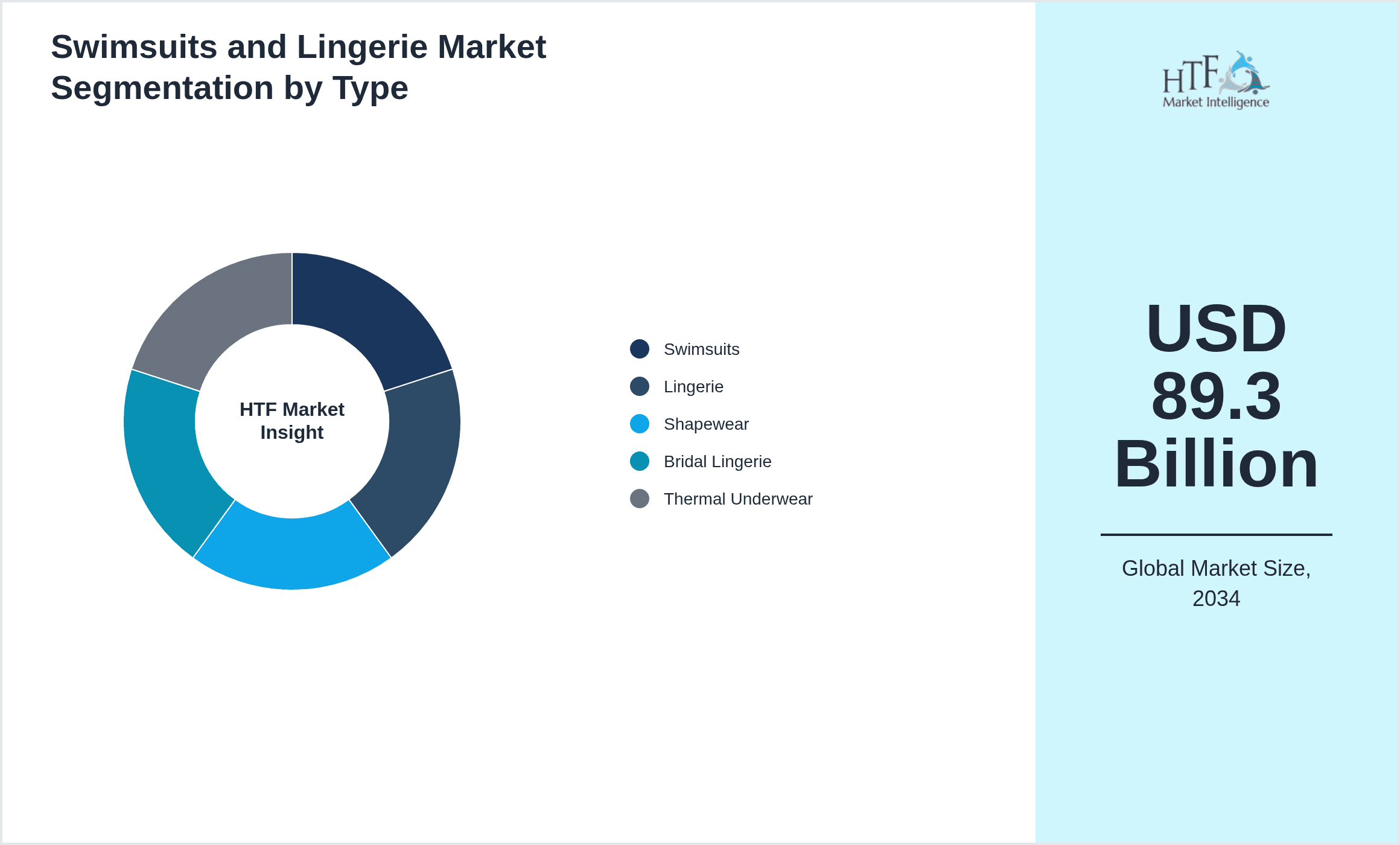
Global Swimsuits and Lingerie Market is segmented by Product Type (Swimsuits, Lingerie, Shapewear, Bridal Lingerie, Thermal Underwear), Application (Beachwear, Intimate Apparel, Sportswear, Nightwear, Maternity), End-Use Industry (Retail Chains, E-commerce, Specialty Stores, Department Stores), Distribution Channel (Online Retail, Offline Retail, Direct Sales), and Geography (North America, LATAM, West Europe, Central & Eastern Europe, Northern Europe, Southern Europe, East Asia, Southeast Asia, South Asia, Central Asia, Oceania, MEA)
Pricing
Report Overview
Executive Summary
- •The global swimsuits and lingerie market is a dynamic sector within the apparel industry, encompassing a wide variety of products including swimsuits, lingerie, shapewear, bridal lingerie, and thermal underwear. This market serves diverse applications such as beachwear, intimate apparel, sportswear, nightwear, and maternity wear, targeting consumers worldwide. The market’s scope extends across various distribution channels including retail stores, online platforms, and specialty boutiques, reflecting significant geographical and cultural diversity. Driven by evolving fashion trends, technological fabric innovations, and increasing consumer focus on comfort, aesthetics, and sustainability, the industry has witnessed robust growth. Key market drivers include rising health consciousness, expanding e-commerce penetration, and increasing disposable incomes, particularly in emerging economies. The competitive landscape is characterized by innovation, brand differentiation, and strategic partnerships, positioning the market for continued expansion through 2034. This report provides comprehensive insights into segmentation, key players, growth dynamics, regulatory environment, and emerging opportunities.
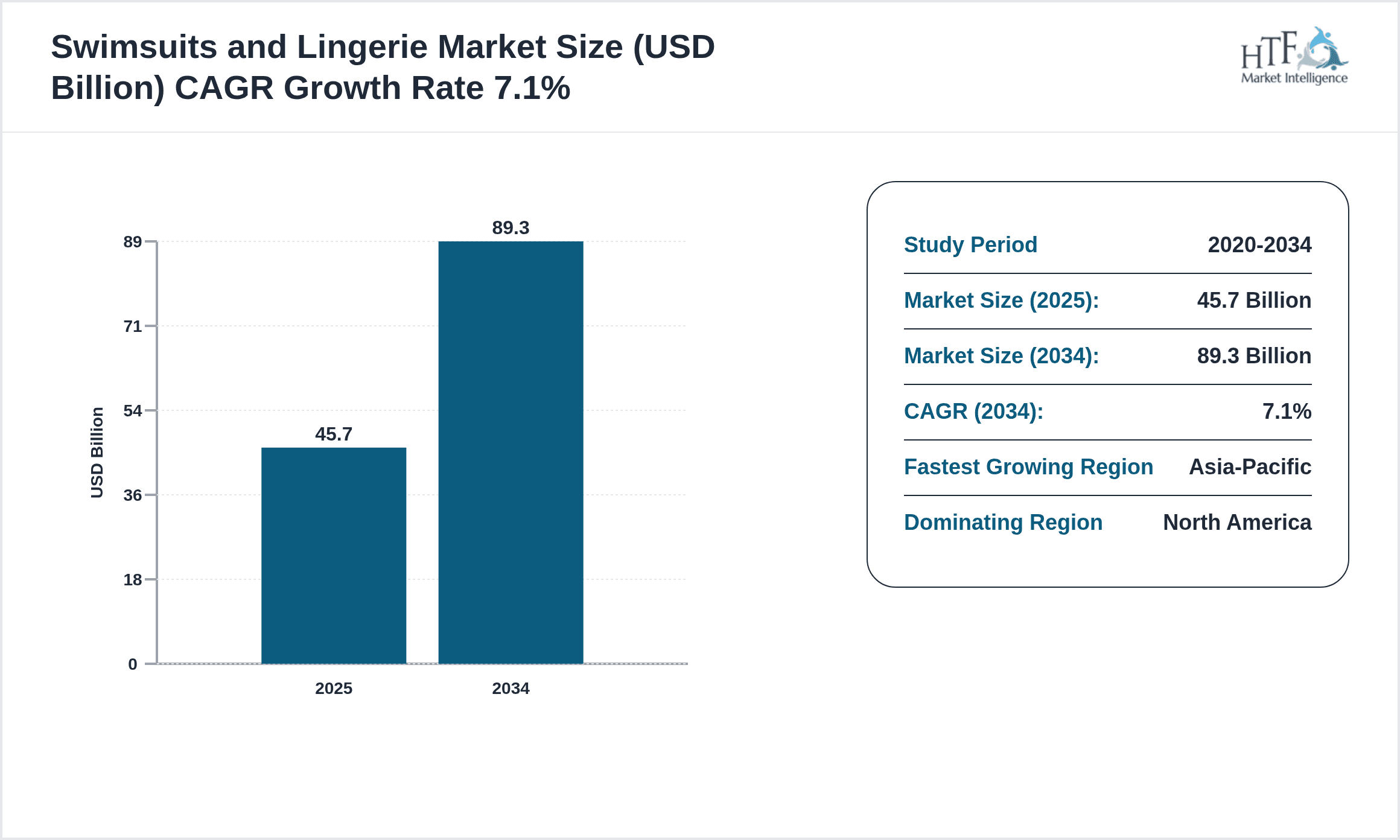
- •Market highlights indicate a base market size of USD 45.7 billion in 2024, projected to reach USD 89.3 billion by 2034, reflecting a compound annual growth rate (CAGR) of 7.1%. The lingerie segment dominates product types, driven by high consumer demand for comfort and fashion-forward designs, while shapewear is identified as the fastest growing category due to increasing body positivity and wellness trends. Beachwear leads applications, supported by rising leisure and travel activities globally. North America remains the dominating region in market revenue, with Asia-Pacific emerging as the fastest growing region thanks to rapid urbanization and growing middle-class populations. Year-over-year growth averages around 6.9%, fueled by digital marketing strategies and expanding product portfolios. These trends and data underscore the market’s strategic importance across fashion, retail, and textile sectors worldwide.
- •The swimsuits and lingerie market offers significant value propositions to manufacturers, retailers, and consumers alike. For industries, it represents a lucrative segment with strong prospects for innovation in materials, design, and customer engagement. Stakeholders benefit from expanding global demand for personalized and sustainable products, advancing omni-channel retail strategies, and evolving consumer lifestyles emphasizing wellness and self-expression. For consumers, the market delivers diverse choices combining style, functionality, and comfort, enhanced by technological fabric advancements and eco-conscious production. The strategic importance of this market extends to emerging economies where growing disposable incomes and fashion awareness drive adoption. Overall, the market is poised to continue its trajectory of robust growth supported by innovation, market penetration, and evolving demographic trends.
Competitive Landscape
The global swimsuits and lingerie market features a highly competitive environment characterized by intense rivalry among established multinational brands and emerging niche players. Market leaders focus on innovation in fabric technology, design aesthetics, and sustainable manufacturing to differentiate their offerings and capture evolving consumer preferences. Strategic partnerships, collaborations, and acquisitions are common as companies seek to expand geographic reach and product portfolios. Pricing strategies vary from premium luxury segments to affordable mass-market lines, enabling broad market coverage. Digital transformation and omni-channel presence are pivotal for competitive positioning, driving enhanced customer engagement and data-driven marketing. Regional players leverage local cultural nuances and fashion trends to build loyal consumer bases. Barriers to entry include brand recognition, supply chain complexities, and compliance with diverse regulatory standards. The future competitive landscape will emphasize sustainability, customization, and technological integration as key differentiators shaping market leadership.
Key Players in Swimsuits and Lingerie Market
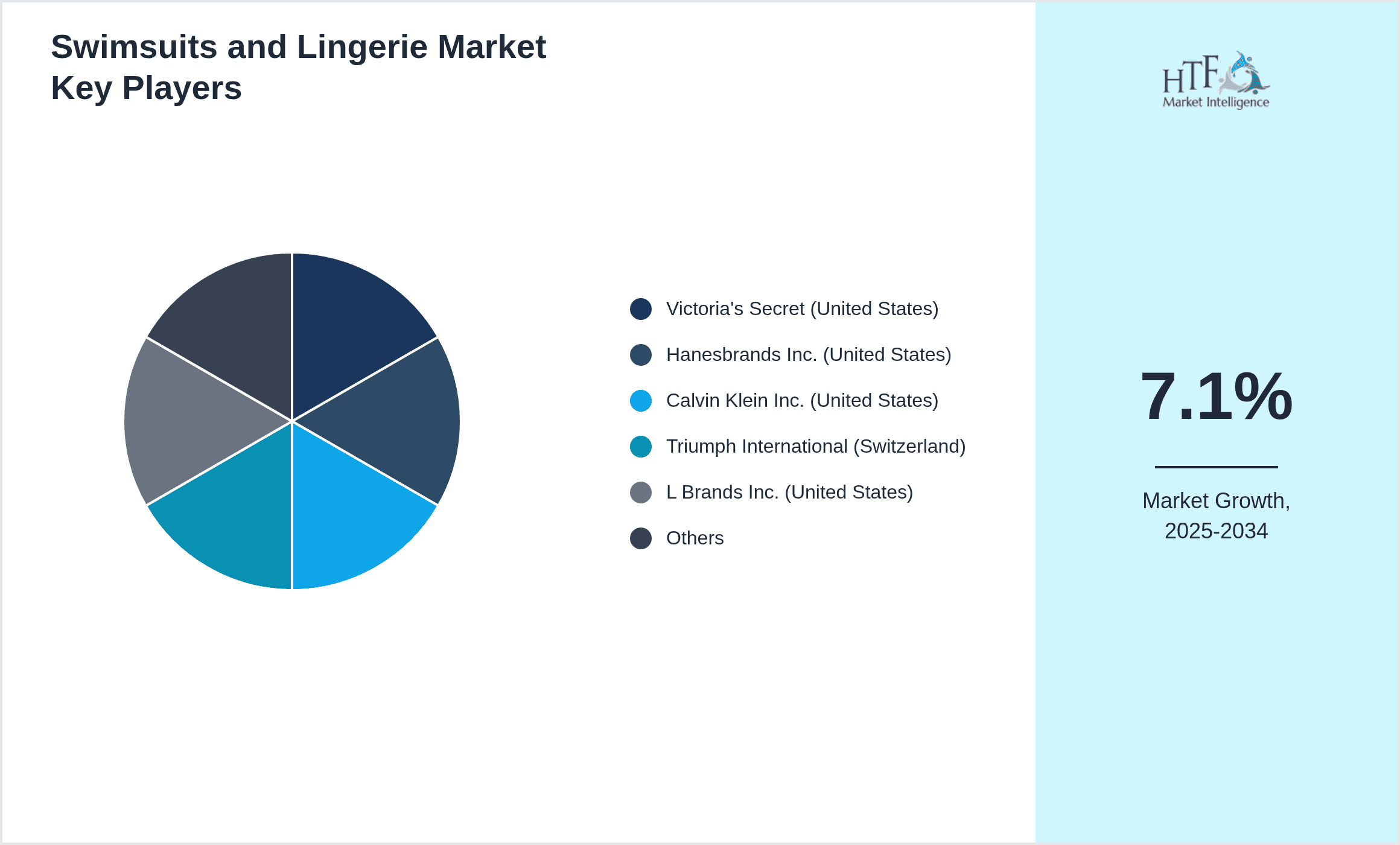
- •Victoria's Secret (United States)
- •Hanesbrands Inc. (United States)
- •Calvin Klein Inc. (United States)
- •Triumph International (Switzerland)
- •L Brands Inc. (United States)
- •Adidas AG (Germany)
- •H&M Group (Sweden)
- •Chantelle Group (France)
- •Aerie (United States)
- •Spanx Inc. (United States)
- •La Perla (Italy)
- •Oysho (Spain)
- •Calzedonia Group (Italy)
- •Wacoal Holdings Corp. (Japan)
- •Marks & Spencer (United Kingdom)
- •Jockey International, Inc. (United States)
- •Intimissimi (Italy)
- •Sloggi (Switzerland)
- •Forever 21 (United States)
- •M&S plc (United Kingdom)
- •Agent Provocateur (United Kingdom)
- •Lululemon Athletica (Canada)
- •Eres (France)
- •American Eagle Outfitters (United States)
- •Under Armour, Inc. (United States)

Market Breakdown
- •By Product Type
- ◦Swimsuits
- ◦Lingerie
- ◦Shapewear
- ◦Bridal Lingerie
- ◦Thermal Underwear
- •By Application
- ◦Beachwear
- ◦Intimate Apparel
- ◦Sportswear
- ◦Nightwear
- ◦Maternity
- •By End-Use Industry
- ◦Retail Chains
- ◦E-commerce
- ◦Specialty Stores
- ◦Department Stores
- •By Distribution Channel
- ◦Online Retail
- ◦Offline Retail
- ◦Direct Sales
Growth Dynamics
- •The increasing consumer preference for fashionable yet comfortable intimate apparel is driving growth in the global swimsuits and lingerie market. The rise in athleisure and body positivity movements fuels demand for shapewear and versatile lingerie products that combine aesthetics with functionality.
- •Technological innovations in sustainable and breathable fabrics are enhancing product offerings, attracting environmentally conscious consumers. Brands investing in eco-friendly material sourcing and production processes benefit from heightened brand loyalty and market expansion.
- •The rapid growth of e-commerce platforms globally facilitates wider accessibility of swimsuits and lingerie products, particularly in emerging markets. Digital marketing strategies and influencer collaborations amplify brand visibility and consumer engagement.
- •Expanding disposable incomes in Asia-Pacific and Latin America are catalyzing demand, supporting regional market growth. Urbanization and increasing participation of women in the workforce also contribute to higher consumption of intimate apparel.
- •Seasonal fashion trends and increased leisure activities, including travel and beach vacations, drive demand for swimwear, impacting overall market growth. The integration of customization options further enhances consumer appeal and repeat purchases.
- •Collaborations between fashion designers and lingerie brands introduce unique collections that stimulate market interest and differentiate product lines. Such strategic partnerships enhance innovation and broaden customer bases.
- •Government initiatives promoting textile industry modernization and exports in key manufacturing countries strengthen supply chains and product quality, promoting global market growth.
Market Trends
- •Sustainability has become a central trend, with brands adopting organic fabrics, recycled materials, and environmentally friendly dyes to appeal to eco-conscious consumers. This shift influences product design and brand positioning globally.
- •The rise of inclusive sizing and gender-neutral lingerie lines reflects growing consumer demand for diversity and inclusivity in fashion, reshaping product portfolios and marketing approaches.
- •Increasing adoption of digital fitting technologies and virtual try-on features improves customer experience and reduces return rates, enhancing online sales efficiency.
- •Collaborative capsule collections between celebrity influencers and lingerie brands generate buzz and drive sales through social media engagement and limited-edition exclusivity.
- •Integration of smart textiles and wearable technology in sports lingerie and swimwear is emerging, offering enhanced comfort, performance tracking, and health benefits.
- •Direct-to-consumer (DTC) sales channels continue to expand, enabling brands to build stronger customer relationships and collect valuable data for product development.
- •Customization and personalization trends allow consumers to design bespoke lingerie pieces, fostering brand loyalty and higher profit margins.
Market Opportunities
- •Expanding into emerging markets with tailored product offerings presents significant growth opportunities, particularly in Asia-Pacific and Latin America where disposable incomes and fashion awareness are rising.
- •Investment in sustainable product lines and circular economy initiatives aligns with consumer preferences and regulatory trends, enhancing brand equity and market share.
- •Leveraging advancements in fabric technology to develop multifunctional and performance-enhancing lingerie and swimwear addresses growing demand for active and wellness-oriented apparel.
- •Strategic partnerships with fashion designers, influencers, and technology providers can lead to innovative product launches and expanded customer bases.
- •Enhancing omni-channel retail strategies, including augmented reality and AI-driven personalization, offers opportunities to improve customer engagement and sales conversion.
- •Development of gender-neutral and inclusive sizing product lines taps into evolving social trends, attracting broader demographics and fostering brand differentiation.
- •Expansion of direct-to-consumer channels provides opportunities for brands to collect consumer data, improve offerings, and increase profitability.
Market Challenges
- •Intense competition from established global brands and emerging local players creates pricing pressure and challenges for market entrants to gain visibility and market share.
- •Complex global supply chains expose manufacturers to risks including raw material price volatility, geopolitical tensions, and logistical disruptions, impacting production costs and timelines.
- •Regulatory compliance across multiple regions, particularly regarding product safety, labeling, and environmental standards, creates operational challenges and cost burdens for manufacturers and distributors.
- •Rapidly changing fashion trends require agile product development and inventory management, increasing the risk of unsold stock and markdowns.
- •Consumer concerns about privacy and data security in digital sales channels necessitate robust cybersecurity measures and transparent policies.
- •Sustainability demands may increase production costs initially, posing challenges for balancing affordability with eco-friendly practices.
- •Seasonality in swimwear demand causes revenue fluctuations, requiring effective marketing and diversification strategies to maintain year-round sales.
Regulatory Framework
- •Between 2019 and 2024, several regions implemented stricter regulations on chemical usage and dye safety in textile manufacturing to ensure consumer safety and environmental protection, necessitating compliance by apparel companies worldwide.
- •The European Union enforced the REACH (Registration, Evaluation, Authorization and Restriction of Chemicals) regulation more rigorously, impacting fabric sourcing and manufacturing processes for lingerie and swimwear producers selling in European markets.
- •North American regulatory bodies introduced enhanced labeling requirements focused on fiber content disclosure and care instructions, aiming to increase transparency and consumer awareness.
- •Emerging sustainability mandates in Asia-Pacific countries require companies to adopt eco-friendly materials and reduce carbon footprints, influencing product design and supply chain decisions.
- •Government initiatives offering incentives and subsidies for sustainable textile production and circular economy practices have been introduced in various regions, encouraging industry players to innovate and improve environmental performance.
Market Intelligence
- •15th January 2025, Victoria's Secret launched a new sustainable lingerie collection featuring biodegradable fabrics and eco-friendly packaging aimed at environmentally conscious consumers. This innovative product line integrates advanced moisture-wicking technology while maintaining high aesthetic appeal, targeting millennials and Gen Z demographics globally. The launch is part of the company’s broader sustainability strategy to reduce environmental impact and enhance brand loyalty. Market analysts expect this initiative to strengthen Victoria's Secret’s leadership position in the competitive lingerie market and stimulate growth in the sustainable apparel segment. Source: Official Victoria’s Secret Press Release
- •3rd March 2025, Spanx Inc. introduced a technologically advanced shapewear line incorporating smart textiles capable of temperature regulation and muscle support. The product aims to combine comfort with wellness benefits, appealing to active consumers and fitness enthusiasts. This launch represents Spanx’s strategic move towards integrating wearable technology within intimate apparel, potentially opening new avenues in smart clothing markets. Early consumer feedback highlights improved wearability and performance, positioning Spanx for competitive advantage amid evolving market trends. Source: Spanx Corporate Announcement
- •20th February 2025, L Brands Inc. announced a global partnership with a leading fabric innovator to co-develop sustainable swimwear materials utilizing recycled ocean plastics. This collaboration aims to reduce environmental footprint while delivering high-quality, durable products. The initiative aligns with rising consumer demand for eco-conscious fashion and supports L Brands’ commitment to circular economy principles. Market experts view this partnership as a significant step toward industry-wide sustainability transformation, potentially influencing competitors to adopt similar eco-friendly practices. Source: L Brands Official News
- •10th April 2025, Calvin Klein Inc. completed the acquisition of a niche lingerie startup specializing in inclusive sizing and gender-neutral products. This strategic move expands Calvin Klein’s product portfolio and strengthens its presence in underserved market segments. The acquisition is expected to accelerate innovation and brand diversification, addressing evolving social trends and consumer expectations. Financial projections indicate positive synergy effects and enhanced market penetration capabilities, reinforcing Calvin Klein’s competitive positioning globally. Source: Calvin Klein Corporate Communications
Regional Outlook
The North America currently holds a significant share of the market, primarily due to several key factors: increasing consumption rates, a burgeoning population, and robust economic momentum. These elements collectively drive demand, positioning this region as a leader in the market. On the other hand, Asia-Pacific is rapidly emerging as the fastest-growing area within the industry. This remarkable growth can be attributed to swift infrastructure development, the expansion of various industrial sectors, and a marked increase in consumer demand. These dynamics make this region a crucial player in shaping future market growth.
In our report, we cover a comprehensive analysis of the following regions and countries:
- North America
- LATAM
- West Europe
- Central & Eastern Europe
- Northern Europe
- Southern Europe
- East Asia
- Southeast Asia
- South Asia
- Central Asia
- Oceania
- MEA
| Feature | Details |
|---|---|
| Base Year Market Size | USD 45.7 Billion |
| Forecast Year Market Size | USD 89.3 Billion |
| CAGR | 7.1% |
| Forecast Period | 2026 to 2033 |
| YoY Growth | 6.9% |
| Scope of Report | Market is segmented by Product Type (Swimsuits, Lingerie, Shapewear, Bridal Lingerie, Thermal Underwear), Application (Beachwear, Intimate Apparel, Sportswear, Nightwear, Maternity), End-Use Industry (Retail Chains, E-commerce, Specialty Stores, Department Stores), Distribution Channel (Online Retail, Offline Retail, Direct Sales) |
| Regions Covered | North America, LATAM, West Europe, Central & Eastern Europe, Northern Europe, Southern Europe, East Asia, Southeast Asia, South Asia, Central Asia, Oceania, MEA |
| Key Companies | Victoria's Secret (United States), Hanesbrands Inc. (United States), Calvin Klein Inc. (United States), Triumph International (Switzerland), L Brands Inc. (United States), Adidas AG (Germany), H&M Group (Sweden), Chantelle Group (France), Aerie (United States), Spanx Inc. (United States), La Perla (Italy), Oysho (Spain), Calzedonia Group (Italy), Wacoal Holdings Corp. (Japan), Marks & Spencer (United Kingdom), Jockey International, Inc. (United States), Intimissimi (Italy), Sloggi (Switzerland), Forever 21 (United States), M&S plc (United Kingdom), Agent Provocateur (United Kingdom), Lululemon Athletica (Canada), Eres (France), American Eagle Outfitters (United States), Under Armour, Inc. (United States) |
Global Swimsuits and Lingerie Market Size, Growth & Revenue 2024-2034 - Table of Contents
Frequently Asked Questions (FAQ):
The Compact Track Loaders market is expected to see value worth 5.3 Billion in 2025.
North America currently leads the market with approximately 45% market share, followed by Europe at 28% and Asia-Pacific at 22%. The remaining regions account for 5% of the global market.
Key growth drivers include increasing construction activities, rising demand for versatile equipment in agriculture, technological advancements in track loader design, and growing preference for compact equipment in urban construction projects.