
Global Luxury Fragrance Market Size, Growth & Revenue 2024-2034
Global Luxury Fragrance Market is segmented by Product Type (Eau de Parfum, Eau de Toilette, Eau de Cologne, Perfume Oil, Solid Perfume), Application (Personal Use, Gift, Home Fragrance, Corporate Gifting, Events), End-Use Industry (Luxury Retail, E-Commerce, Department Stores, Specialty Boutiques), Distribution Channel (Online Retailers, Offline Stores, Duty-Free Shops), and Geography (North America, LATAM, West Europe, Central & Eastern Europe, Northern Europe, Southern Europe, East Asia, Southeast Asia, South Asia, Central Asia, Oceania, MEA)
Pricing
Report Overview
Executive Summary
- •The Global Luxury Fragrance market is a dynamic and evolving industry segment that caters to the premium segment of personal care and gifting products. It comprises a broad range of fragrance types including Eau de Parfum, Eau de Toilette, Eau de Cologne, Perfume Oils, and Solid Perfumes, each characterized by distinct concentration levels and scent longevity. The market serves diverse applications such as personal use, gifting, home fragrance, corporate gifting, and special events, reflecting sophisticated consumer lifestyles and preferences worldwide. Driven by rising disposable incomes, increasing urbanization, and growing demand for premium and niche scents, the market maintains strong growth momentum. Additionally, the industry is witnessing a surge in digital marketing and e-commerce adoption, facilitating direct consumer engagement and personalized experiences. Sustainability and natural ingredients are becoming significant factors influencing product development and consumer choice. Overall, the market operates within a complex regulatory environment focused on safety and environmental standards, with major global regions contributing variably to market demand and innovation.
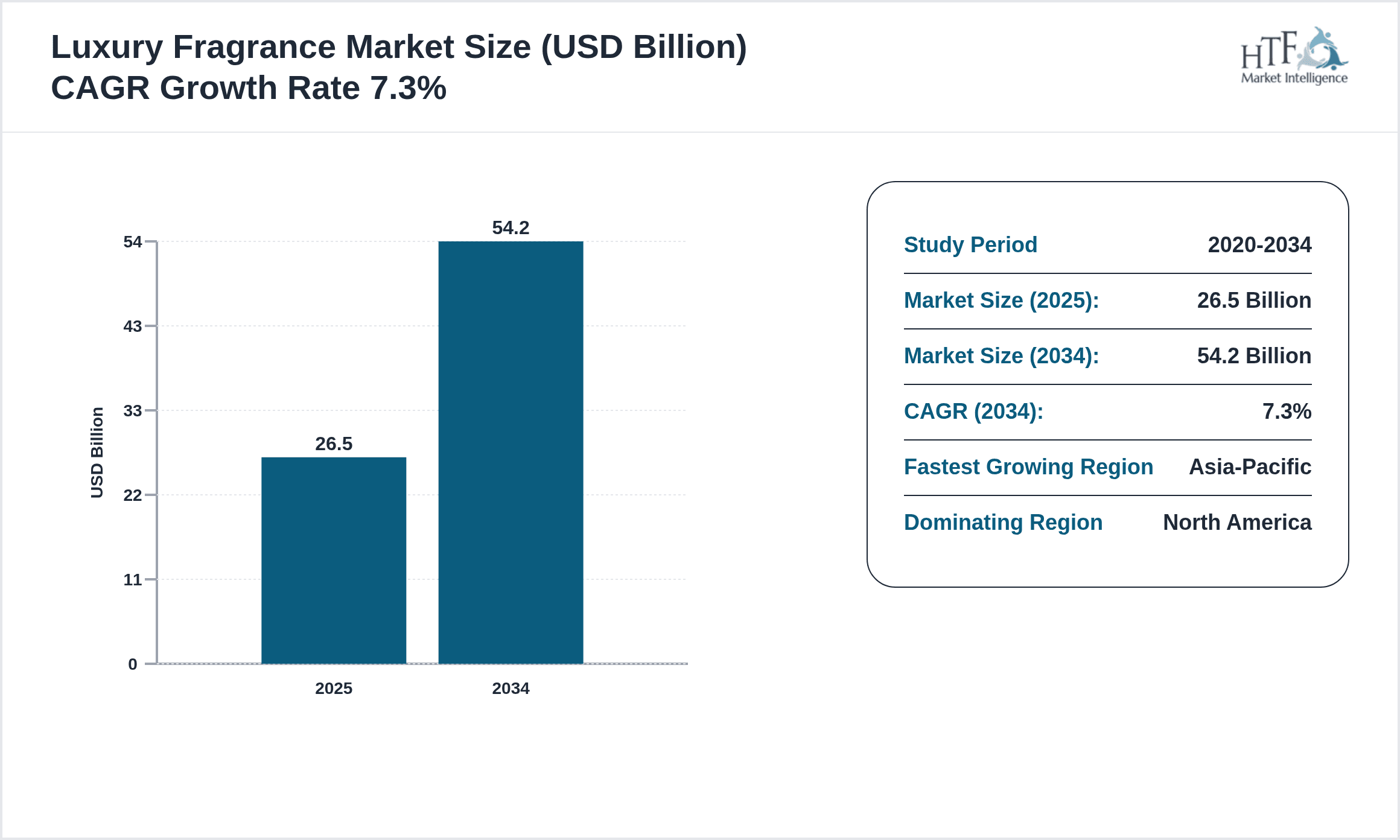
- •Key market highlights include a projected CAGR of 7.3% from 2024 to 2034, with the market size expected to reach USD 54.2 Billion by 2034, up from USD 26.5 Billion in 2024. North America currently dominates the market with the largest revenue share, while Asia-Pacific is anticipated to exhibit the fastest growth due to rising luxury consumption and expanding middle-class populations. Eau de Parfum remains the leading product type owing to its balanced scent concentration and consumer preference, whereas Perfume Oils are emerging as the fastest growing segment driven by niche demand for natural and long-lasting fragrances. Personal use applications account for the majority of sales, followed by gifting, which is bolstered by increasing occasions and premiumization trends. These highlights illustrate a robust market with diverse growth drivers and evolving consumer dynamics across regions.
- •The value proposition of the Global Luxury Fragrance market lies in its ability to blend artistry, craftsmanship, and innovation to deliver exclusive sensory experiences. It plays a strategic role in enhancing personal identity, cultural expression, and social status, making it a critical segment within the broader cosmetics and personal care industry. For stakeholders including manufacturers, retailers, and marketers, the market offers opportunities to leverage digital channels, sustainable formulations, and experiential branding to capture discerning consumers. Moreover, the luxury fragrance industry supports ancillary sectors such as raw materials, packaging, and logistics, contributing significantly to economic activity globally. Strategic investments in R&D, market expansion, and collaborations with designers and celebrities further enhance market appeal and competitive positioning, driving long-term value for all participants.
Competitive Landscape
The competitive environment in the Global Luxury Fragrance market is characterized by intense rivalry among established multinational conglomerates, niche artisan brands, and emerging digital-native players. Companies pursue differentiation through innovation in scent formulation, unique branding narratives, and exclusive collaborations with fashion houses and celebrities. Market leaders maintain strong global distribution networks encompassing department stores, specialty boutiques, and e-commerce platforms, ensuring wide accessibility and premium consumer experiences. Pricing strategies are carefully calibrated to reflect brand prestige and quality perceptions while adapting to regional economic conditions. Innovation in sustainable and natural ingredients is becoming a key competitive lever, as consumers increasingly demand eco-friendly products. Strategic partnerships, mergers and acquisitions, and investments in advanced fragrance technology further consolidate market positions. Despite high barriers to entry due to brand loyalty and intellectual property, new entrants leveraging digital marketing and niche positioning are changing market dynamics. Regional competition varies, with North America and Europe witnessing mature market saturation, while Asia-Pacific offers expansive growth opportunities fueled by evolving consumer preferences.
Leading Companies in Luxury Fragrance Market
- •LVMH Moët Hennessy Louis Vuitton (France)
- •Estée Lauder Companies Inc. (United States)
- •Coty Inc. (United States)
- •Chanel S.A. (France)
- •L'Oréal S.A. (France)
- •Shiseido Company, Limited (Japan)
- •Inter Parfums, Inc. (United States)
- •Puig S.L. (Spain)
- •Amorepacific Corporation (South Korea)
- •Elizabeth Arden, Inc. (United States)
- •Hermès International S.A. (France)
- •Givaudan S.A. (Switzerland)
- •Symrise AG (Germany)
- •Firmenich SA (Switzerland)
- •L'Artisan Parfumeur (France)
- •Maison Francis Kurkdjian (France)
- •GlaxoSmithKline plc (United Kingdom)
- •MDCI Parfums (France)
- •Byredo AB (Sweden)
- •Diptyque (France)
- •Comme des Garçons Parfums (Japan)
- •Jo Malone London (United Kingdom)
- •Penhaligon's (United Kingdom)
- •Acqua di Parma (Italy)
- •Tom Ford Beauty (United States)
Market Breakdown
- •By Product Type
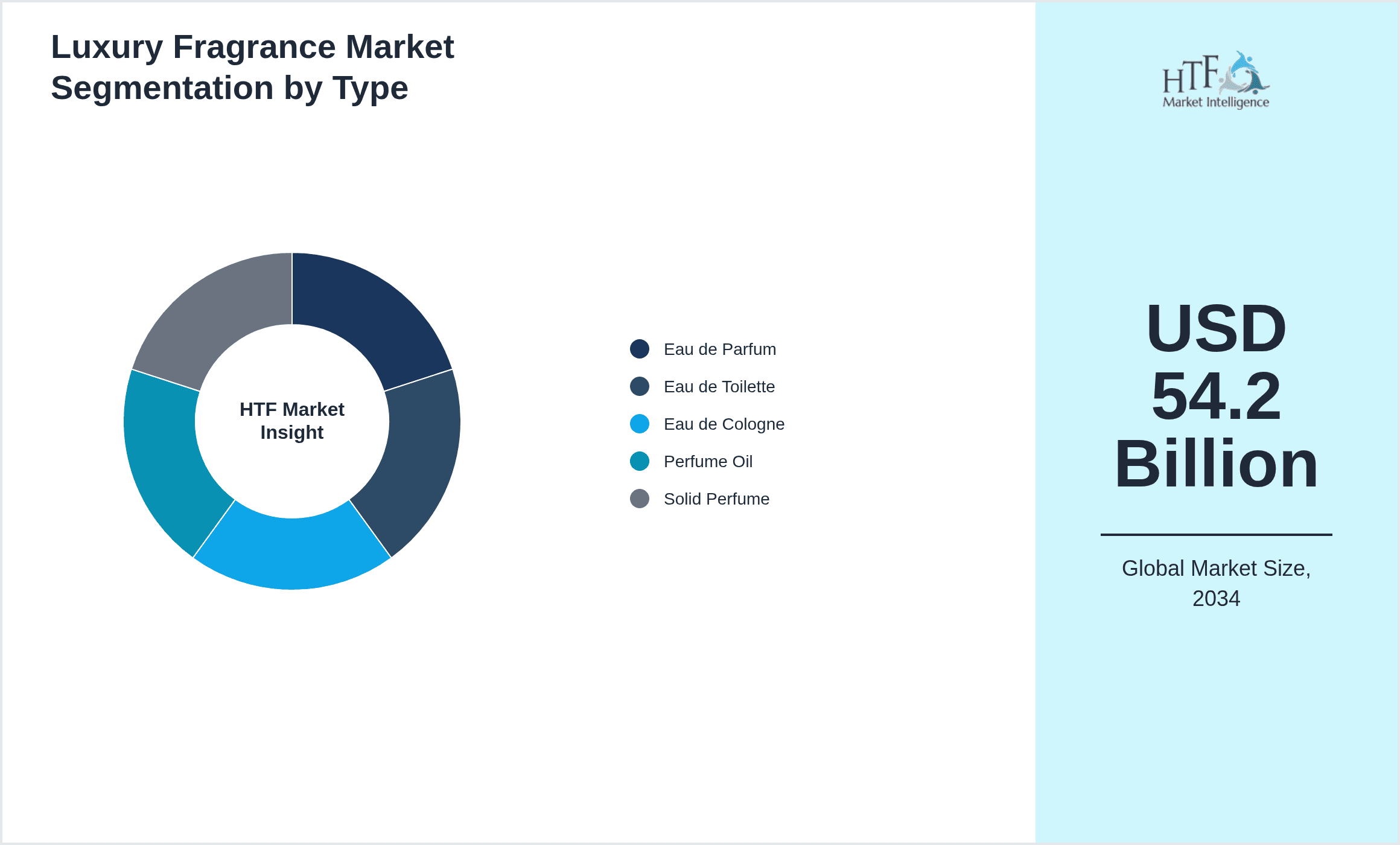
- ◦Eau de Parfum
- ◦Eau de Toilette
- ◦Eau de Cologne
- ◦Perfume Oil
- ◦Solid Perfume
- •By Application
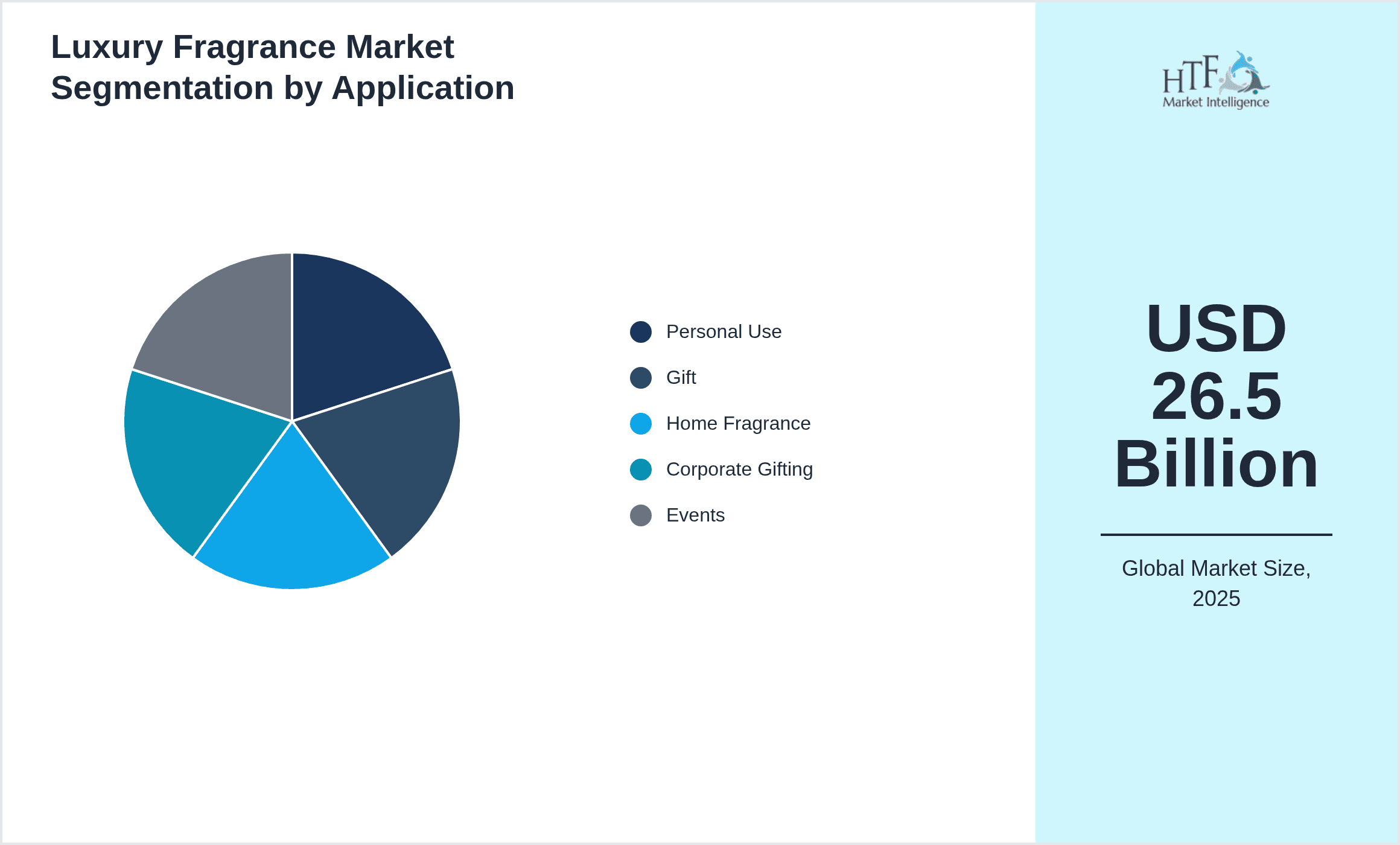
- ◦Personal Use
- ◦Gift
- ◦Home Fragrance
- ◦Corporate Gifting
- ◦Events
- •By End-Use Industry
- ◦Luxury Retail
- ◦E-Commerce
- ◦Department Stores
- ◦Specialty Boutiques
- •By Distribution Channel
- ◦Online Retailers
- ◦Offline Stores
- ◦Duty-Free Shops
Growth Dynamics
The Global Luxury Fragrance market experiences sustained growth driven by rising disposable incomes and urbanization in emerging economies, especially within Asia-Pacific. Increasing consumer inclination towards premium and personalized fragrances fuels demand, supported by extensive marketing campaigns and celebrity endorsements. Digital transformation enables brands to engage consumers via e-commerce and social media, expanding reach and enhancing brand loyalty. Innovation in sustainable and natural ingredients resonates with environmentally-conscious buyers, opening new product development avenues. Additionally, growing gifting culture and premiumization trends across regions contribute to volume and revenue expansion, making the market highly attractive for existing and new entrants.
Market Trends
The luxury fragrance market is witnessing a significant shift towards niche and artisanal brands that offer unique scent experiences beyond traditional offerings. Consumers increasingly seek fragrances that reflect individuality and sustainability, prompting brands to incorporate natural ingredients and ethical sourcing in their formulations. Furthermore, digital innovations such as augmented reality for scent discovery and AI-based personalization are transforming consumer engagement. Collaborations between fragrance houses and fashion designers or celebrities continue to drive buzz and exclusivity. Additionally, the rise of unisex fragrances challenges conventional gendered marketing, reflecting broader societal changes. These trends collectively influence product portfolio strategies and market positioning across global regions.
Market Opportunities
The expanding middle-class population in Asia-Pacific and Latin America presents significant growth opportunities for luxury fragrance brands to tap into new consumer bases. There is rising demand for eco-friendly and cruelty-free products which can be addressed through innovation in sustainable sourcing and green manufacturing. E-commerce and direct-to-consumer models offer potential for enhanced margins and customer insights, enabling tailored marketing. Moreover, collaborations with influencers and expansion into emerging segments such as home fragrance and corporate gifting can diversify revenue streams. The integration of technology for personalized fragrance creation and scent customization represents a frontier for differentiation and consumer loyalty. These opportunities promise robust returns for companies aligning their strategies accordingly.
Market Challenges
High production and raw material costs, especially for natural and rare ingredients, pose profitability challenges for luxury fragrance manufacturers. Regulatory complexities across different regions related to ingredient safety, labeling, and environmental compliance require substantial investment and can delay product launches. Counterfeiting and brand dilution threaten market integrity and consumer trust, necessitating stringent quality control and legal enforcement. Additionally, changing consumer preferences and economic uncertainties impact demand volatility. The intense competition from mass-market and niche artisanal brands pressures pricing and market share. Distribution channel fragmentation and the need for continuous innovation to maintain exclusivity further complicate operational efficiency and strategic planning.
Regulatory Framework
Between 2019 and 2024, global regulatory agencies have intensified scrutiny on cosmetic ingredients used in luxury fragrances, mandating compliance with updated safety evaluations and restricted substance lists. The EU's Cosmetics Regulation (EC) No 1223/2009 has seen amendments requiring greater transparency in ingredient disclosure and animal testing prohibitions, affecting formulations and testing protocols. The U.S. FDA continues to monitor fragrance allergens and labeling practices, pushing for clearer consumer information. Environmental regulations emphasize sustainable sourcing and waste management, compelling manufacturers to innovate eco-friendly production methods. Additionally, new standards for volatile organic compounds (VOCs) aim to reduce environmental impact. These regulatory developments impact product development cycles, market entry strategies, and supply chain management, requiring companies to adapt proactively to maintain compliance and competitive advantage.
Market Intelligence
- •15th January 2024, LVMH Moët Hennessy Louis Vuitton launched a new Eau de Parfum collection emphasizing sustainable ingredients and eco-conscious packaging targeting environmentally aware consumers. The product line incorporates rare natural extracts and biodegradable materials, aligning with rising demand for green luxury products. This initiative reflects LVMH's commitment to innovation and sustainability, aiming to capture market share in the niche luxury fragrance segment. The launch was supported by a global digital marketing campaign leveraging influencer partnerships and immersive online experiences designed to engage younger demographics. This strategic move enhances LVMH's portfolio and strengthens its position as a market leader in luxury fragrances.
- •10th November 2023, Estée Lauder Companies Inc. introduced an AI-driven personalized fragrance service enabling customers to create bespoke scents through an interactive online platform. Utilizing advanced scent profiling algorithms, the service offers tailored recommendations based on individual preferences and lifestyle factors. This innovation marks a significant technological advancement in the luxury fragrance market, enhancing consumer engagement and brand differentiation. The platform’s launch was accompanied by exclusive limited-edition products accessible via direct-to-consumer channels, aiming to boost digital sales and customer loyalty. Estée Lauder’s strategic focus on personalization and technology demonstrates adaptability to evolving market trends and consumer expectations.
- •Recent market developments and strategic initiatives are continuously tracked through industry publications, company announcements, and regulatory filings. For the most current information, stakeholders are advised to monitor official corporate communications and recognized market intelligence platforms.
- •Recent market developments and strategic initiatives are continuously tracked through industry publications, company announcements, and regulatory filings. For the most current information, stakeholders are advised to monitor official corporate communications and recognized market intelligence platforms.
Regional Outlook
The North America currently holds a significant share of the market, primarily due to several key factors: increasing consumption rates, a burgeoning population, and robust economic momentum. These elements collectively drive demand, positioning this region as a leader in the market. On the other hand, Asia-Pacific is rapidly emerging as the fastest-growing area within the industry. This remarkable growth can be attributed to swift infrastructure development, the expansion of various industrial sectors, and a marked increase in consumer demand. These dynamics make this region a crucial player in shaping future market growth.
In our report, we cover a comprehensive analysis of the following regions and countries:
- North America
- LATAM
- West Europe
- Central & Eastern Europe
- Northern Europe
- Southern Europe
- East Asia
- Southeast Asia
- South Asia
- Central Asia
- Oceania
- MEA
| Feature | Details |
|---|---|
| Base Year Market Size | USD 26.5 Billion |
| Forecast Year Market Size | USD 54.2 Billion |
| CAGR | 7.3% |
| Forecast Period | 2026 to 2033 |
| YoY Growth | 7% |
| Scope of Report | Market is segmented by Product Type (Eau de Parfum, Eau de Toilette, Eau de Cologne, Perfume Oil, Solid Perfume), Application (Personal Use, Gift, Home Fragrance, Corporate Gifting, Events), End-Use Industry (Luxury Retail, E-Commerce, Department Stores, Specialty Boutiques), Distribution Channel (Online Retailers, Offline Stores, Duty-Free Shops) |
| Regions Covered | North America, LATAM, West Europe, Central & Eastern Europe, Northern Europe, Southern Europe, East Asia, Southeast Asia, South Asia, Central Asia, Oceania, MEA |
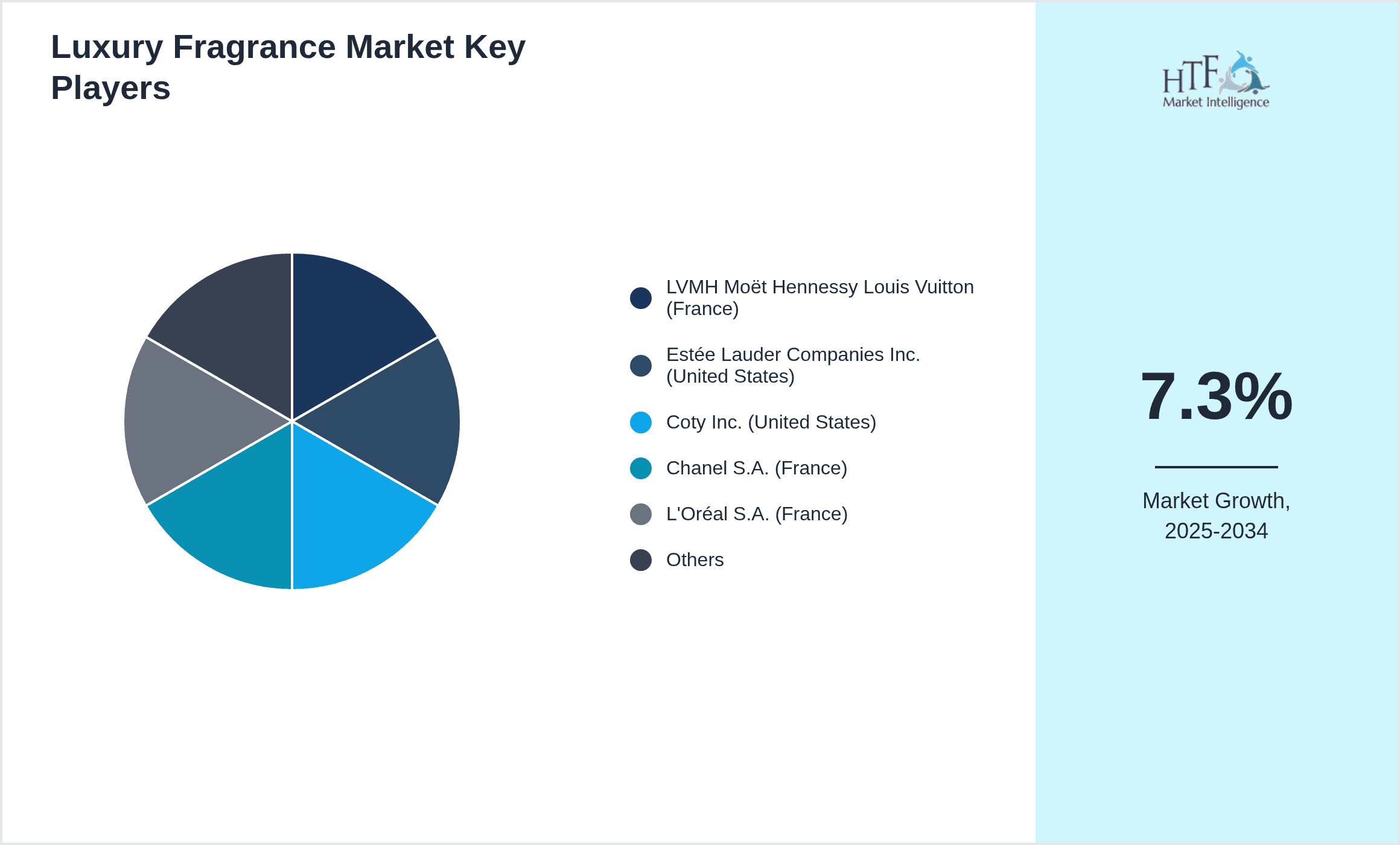
| Key Companies | LVMH Moët Hennessy Louis Vuitton (France), Estée Lauder Companies Inc. (United States), Coty Inc. (United States), Chanel S.A. (France), L'Oréal S.A. (France) |
Global Luxury Fragrance Market Size, Growth & Revenue 2024-2034 - Table of Contents
Research enthusiast focused on transforming data uncovering into actionable insights through data-driven decision-making.
Frequently Asked Questions (FAQ):
The Compact Track Loaders market is expected to see value worth 5.3 Billion in 2025.
North America currently leads the market with approximately 45% market share, followed by Europe at 28% and Asia-Pacific at 22%. The remaining regions account for 5% of the global market.
Key growth drivers include increasing construction activities, rising demand for versatile equipment in agriculture, technological advancements in track loader design, and growing preference for compact equipment in urban construction projects.