
Global Natural and Organic Skin Care Products Market Size, Growth & Revenue 2024-2034
Global Natural and Organic Skin Care Products Market is segmented by Product Type (Natural Skin Care, Organic Skin Care, Herbal Skin Care, Vegan Skin Care, Others), Application (Facial Care, Body Care, Hair Care, Baby Care, Sun Care), End-Use Industry (Personal Care, Beauty Salons & Spas, Retail, E-commerce), Distribution Channel (Supermarkets & Hypermarkets, Specialty Stores, Online Retailers), and Geography (North America, LATAM, West Europe, Central & Eastern Europe, Northern Europe, Southern Europe, East Asia, Southeast Asia, South Asia, Central Asia, Oceania, MEA)
Pricing
Report Overview
Executive Summary
- •The global Natural and Organic Skin Care Products market includes a diverse portfolio of products formulated with naturally derived and certified organic ingredients. This market targets consumers seeking safer, eco-friendly, and effective skincare options such as facial cleansers, moisturizers, body lotions, hair treatments, baby skincare, and sun protection products. The market scope spans formulations free from synthetic chemicals, parabens, and sulfates, emphasizing plant-based and vegan-friendly ingredients. Rapid growth is fueled by rising consumer health awareness, stringent regulations favoring organic certification, and expanding distribution channels including e-commerce and specialty stores. Key use cases range from daily cleansing and hydration to therapeutic applications for sensitive or problem skin types. Technological advancements in natural ingredient extraction and preservation enhance product performance and shelf life. The market also benefits from increased demand for cruelty-free and sustainable packaging, aligning with broader ecological and ethical values globally. This evolving landscape presents significant opportunities for innovation, market penetration, and consumer education across all major regions.
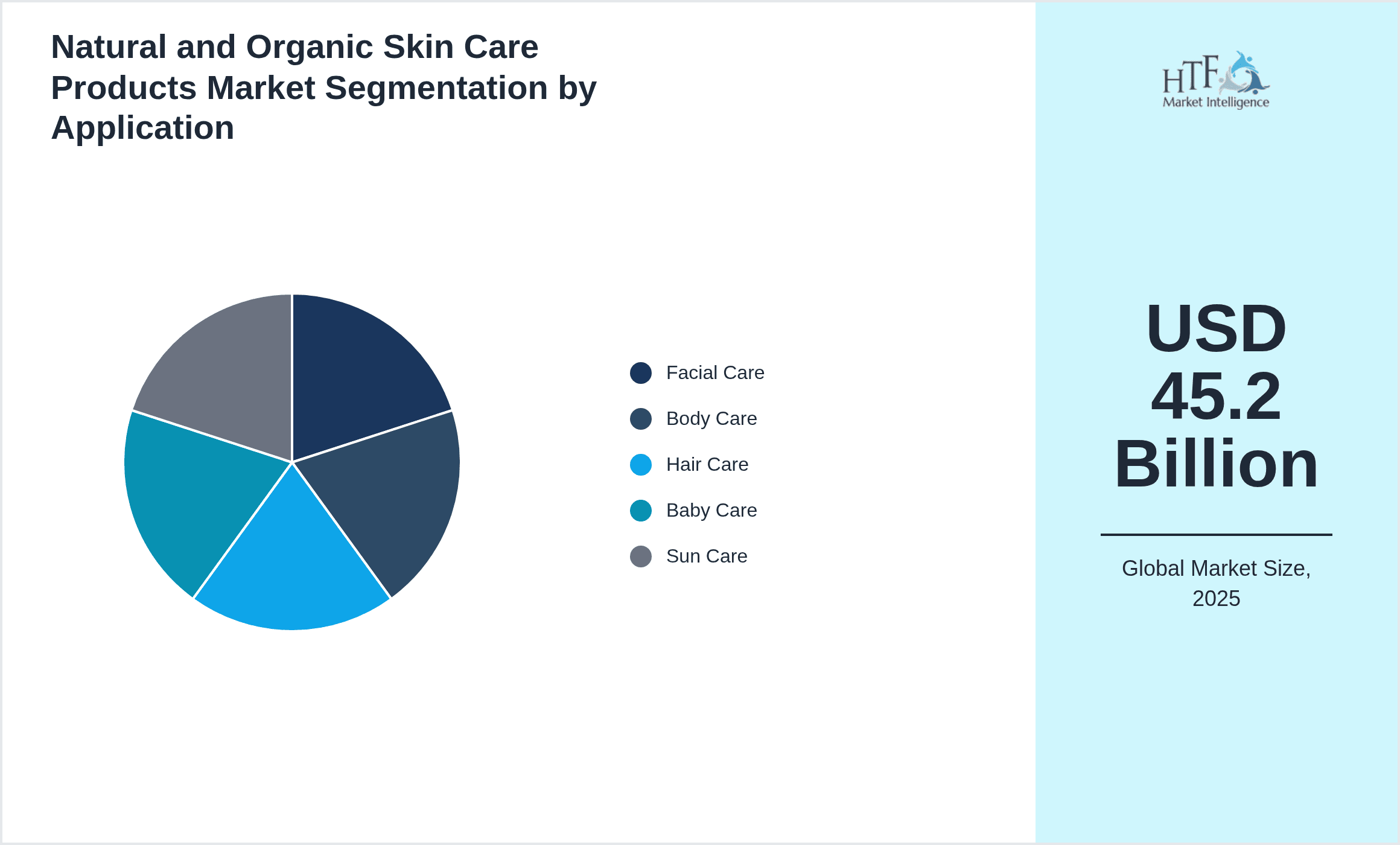
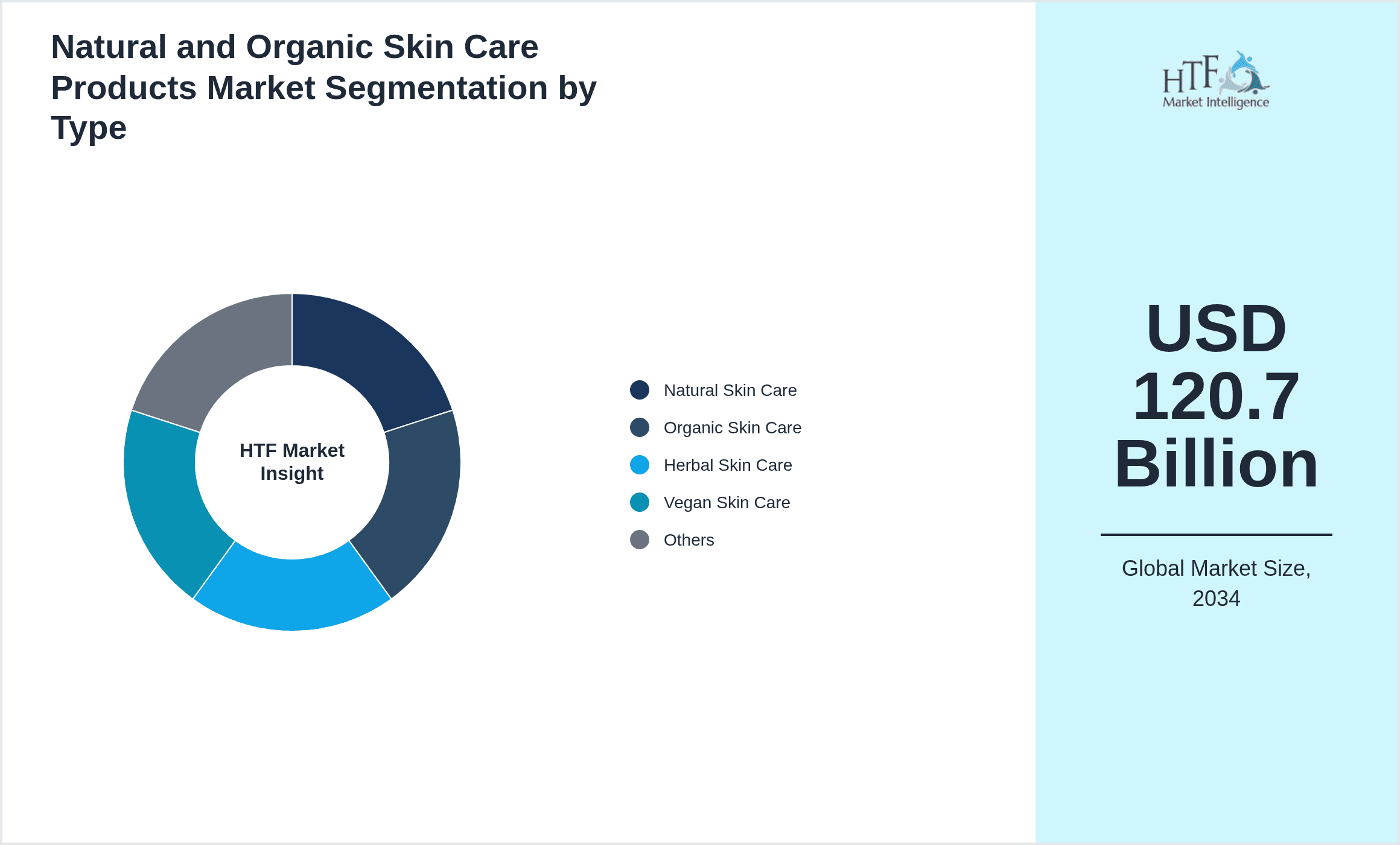
- •Market highlights reveal a base size of USD 45.2 billion in 2024, projected to reach USD 120.7 billion by 2034, representing a CAGR of 10.8%. North America leads with the largest market share, while Asia-Pacific registers the fastest growth rate due to rising urbanization and disposable incomes. Natural Skin Care products dominate the type segment, with Vegan Skin Care emerging as the fastest growing category, driven by evolving consumer preferences. Facial Care remains the leading application segment, closely followed by Body Care. The market’s momentum is supported by increasing retail penetration, innovative product launches, and digital marketing strategies targeting eco-conscious consumers. Notably, regulatory frameworks and certification standards enhance consumer trust and market transparency, serving as critical growth enablers. Market challenges include ingredient sourcing complexities and premium pricing, which are offset by growing consumer advocacy for wellness and sustainability.
- •The value proposition of natural and organic skin care products lies in their ability to combine efficacy with safety and sustainability, catering to a broad demographic including millennials and Gen Z consumers. This market is strategically important for stakeholders ranging from raw material suppliers and manufacturers to retailers and wellness service providers. It supports the shift towards clean beauty and contributes to environmental conservation through responsible sourcing and biodegradable packaging solutions. The continuous innovation in formulations and delivery mechanisms enhances user experience and brand loyalty. Furthermore, the market fosters inclusive growth in developing regions by creating employment and promoting indigenous botanical knowledge. Thus, it represents a dynamic industry segment aligned with global health trends, regulatory advancements, and consumer demand for transparency and ethical practices.

Competitive Landscape
The competitive environment in the global Natural and Organic Skin Care Products market is marked by intense rivalry among multinational corporations and emerging niche brands focused on clean beauty. Companies compete on product innovation, sustainable sourcing, certification, and marketing strategies tailored to the environmentally conscious consumer base. Innovation approaches emphasize botanical ingredient efficacy, cruelty-free testing, and eco-friendly packaging to differentiate offerings. Market positioning leverages brand heritage, transparency, and social responsibility initiatives, fostering consumer trust and loyalty. Strategic partnerships and collaborations with ingredient suppliers and research institutions accelerate product development cycles and expand technological capabilities. Mergers and acquisitions serve as a consolidation strategy to enhance market share and geographic reach. Pricing strategies balance premium positioning with accessibility, while distribution channels increasingly integrate digital platforms to capture evolving consumer purchasing behaviors. Regional competition varies, with North America and Europe hosting established leaders, and Asia-Pacific presenting opportunities for rapid expansion and product localization. Future competitive trends emphasize personalization, biotechnology integration, and circular economy principles, setting the stage for sustained market evolution.
Leading Companies in Natural and Organic Skin Care Products Market
- •The Estée Lauder Companies Inc. (United States)
- •L'Oréal S.A. (France)
- •Unilever PLC (United Kingdom/Netherlands)
- •Shiseido Company, Limited (Japan)
- •Beiersdorf AG (Germany)
- •Amorepacific Corporation (South Korea)
- •Herbalife Nutrition Ltd. (United States)
- •Weleda AG (Switzerland)
- •The Body Shop International Limited (United Kingdom)
- •Dr. Hauschka (Germany)
- •Lush Fresh Handmade Cosmetics (United Kingdom)
- •Juice Beauty (United States)
- •Tata Consumer Products (India)
- •Natura &Co Holding S.A. (Brazil)
- •Kao Corporation (Japan)
- •Clarins Group (France)
- •Burt's Bees (United States)
- •Innisfree Corporation (South Korea)
- •Alba Botanica (United States)
- •Origins (United States)
- •Everyday Minerals (United States)
- •Dr. Bronner's (United States)
- •Pai Skincare (United Kingdom)
- •REN Clean Skincare (United Kingdom)
- •Madara Cosmetics (Latvia)
Market Breakdown
- •By Product Type
- ◦Natural Skin Care
- ◦Organic Skin Care
- ◦Herbal Skin Care
- ◦Vegan Skin Care
- ◦Others
- •By Application
- ◦Facial Care
- ◦Body Care
- ◦Hair Care
- ◦Baby Care
- ◦Sun Care
- •By End-Use Industry
- ◦Personal Care
- ◦Beauty Salons & Spas
- ◦Retail
- ◦E-commerce
- •By Distribution Channel
- ◦Supermarkets & Hypermarkets
- ◦Specialty Stores
- ◦Online Retailers
Growth Dynamics
- •Consumer preferences are shifting towards natural and organic products due to heightened awareness of chemical sensitivities and environmental concerns, driving market expansion globally. This trend is supported by increasing health consciousness and demand for transparency in ingredient sourcing.
- •Technological advancements in natural ingredient extraction and preservation methods enhance product efficacy and shelf-life, enabling companies to innovate and meet diverse consumer needs such as anti-aging and sensitive skin care formulations.
- •The rise of social media influencers and digital marketing campaigns focused on clean beauty significantly boosts consumer engagement and product adoption, particularly among younger demographics seeking ethical and sustainable brands.
- •Expansion of e-commerce platforms and omnichannel retail strategies increase product accessibility and convenience, fostering market growth through wider geographic reach and personalized shopping experiences.
- •Government regulations and certifications promoting organic and natural product standards enhance consumer trust and encourage manufacturers to adopt sustainable practices, positively impacting market dynamics.
- •Growing investment in research and development to introduce vegan and cruelty-free products supports diversification and caters to niche market segments, contributing to accelerated growth rates.
- •Increasing urbanization and rising disposable income in emerging economies, especially in the Asia-Pacific region, provide a fertile ground for market expansion and new customer acquisition.
Market Trends
- •The integration of biotechnology in natural skin care formulations is gaining traction, enabling enhanced ingredient potency and sustainability, as companies seek to differentiate their product lines.
- •Sustainability-focused packaging solutions, including biodegradable and refillable containers, are becoming standard as consumers and brands prioritize environmental responsibility.
- •Customization and personalization trends are driving the development of tailored skin care regimens based on individual skin types and conditions, supported by AI and digital diagnostic tools.
- •The demand for multifunctional products that combine skin care with sun protection or anti-aging benefits is increasing, reflecting consumer preference for convenience and value.
- •Collaborations between natural ingredient suppliers and cosmetic brands foster innovation and authenticity, strengthening supply chains and product credibility.
- •Consumers are increasingly favoring transparency and ethical claims, leading to growth in certifications such as cruelty-free, vegan, and fair trade within product portfolios.
- •Digital-first brand launches and influencer partnerships are reshaping marketing strategies, targeting digitally savvy consumers with immersive storytelling and social proof.

Market Opportunities
- •There is significant growth potential in untapped emerging markets where consumer awareness and access to natural and organic skin care products are still developing, offering blue ocean opportunities.
- •Expansion into male grooming and inclusive beauty segments presents new avenues for product innovation and market penetration, addressing previously underserved demographics.
- •Investment in R&D for novel natural actives and delivery technologies can lead to breakthrough products that command premium pricing and strong brand differentiation.
- •Strategic partnerships with wellness and lifestyle brands can enhance cross-category reach and consumer engagement, leveraging holistic health trends.
- •Leveraging digital platforms for direct-to-consumer sales and personalized marketing can optimize customer acquisition costs and improve retention rates.
- •Adoption of circular economy principles in product design and packaging can create competitive advantages and resonate with eco-conscious consumers.
- •Regulatory developments favoring organic certifications provide opportunities for early movers to establish trusted market positions and brand loyalty.
Market Challenges
- •Sourcing authentic and high-quality natural ingredients remains complex due to supply chain volatility, climate change impacts, and regulatory compliance, potentially disrupting production.
- •Higher production costs and premium pricing of natural and organic products limit accessibility for price-sensitive consumer segments, constraining market penetration in developing regions.
- •Lack of standardized global regulations and certification criteria creates confusion among consumers and manufacturers, impacting trust and market transparency.
- •Market saturation in mature regions intensifies competition, requiring continuous innovation and marketing investments to maintain market share.
- •Counterfeit products and greenwashing practices undermine brand reputation and consumer confidence, posing risks to market integrity.
- •Complexities in balancing product efficacy with natural ingredient limitations challenge formulation scientists and product developers.
- •Distribution challenges, including regulatory restrictions on e-commerce platforms in certain regions, can limit market access and growth potential.
Regulatory Framework
- •Between 2019 and 2024, the European Union implemented the updated Cosmetics Regulation (EC) No 1223/2009, enhancing safety assessments and mandating strict labeling for natural and organic claims, strengthening consumer protection and market transparency.
- •The United States Food and Drug Administration (FDA) increased oversight on ingredient safety and labeling accuracy during 2020-2024, enforcing compliance to prevent misleading natural claims and ensure product integrity.
- •Japan introduced the Pharmaceutical and Medical Device Act amendments in 2019 focusing on natural ingredient verification and certification processes, facilitating safer product innovation and market acceptance.
- •India’s Ministry of AYUSH launched guidelines in 2022 promoting the standardization and certification of herbal and organic cosmetics, encouraging domestic production aligned with traditional knowledge.
- •Global initiatives by organizations like COSMOS and ECOCERT have harmonized organic certification standards since 2019, providing a unified framework that supports international trade and consumer confidence.
Market Intelligence
- •15th January 2025, The Estée Lauder Companies Inc. launched a new vegan-certified facial serum line targeting millennials with sustainably sourced botanicals and biodegradable packaging. This product aims to capitalize on the growing demand for clean beauty and eco-conscious formulations, offering enhanced hydration and anti-aging benefits with natural actives. The launch includes a digital campaign emphasizing transparency and ethical sourcing, reinforcing brand commitment to sustainability and innovation. The initiative is expected to significantly boost market share in North America and Europe by appealing to environmentally aware consumers. Source: Official company press release
- •10th March 2025, L'Oréal S.A. introduced an advanced organic hair care range utilizing bio-fermentation technology to improve ingredient potency and scalp health. This innovation leverages natural microbiome science to deliver personalized care solutions, positioning the company as a leader in biotech-driven natural cosmetics. The product rollout spans Asia-Pacific and Europe, supported by influencer partnerships and extensive e-commerce distribution strategies. Market reception has been positive, signaling strong growth potential in premium segments. Source: Industry publication
- •22nd May 2025, Unilever PLC announced a strategic partnership with a leading botanical extract supplier to expand its natural skin care ingredient portfolio. This collaboration focuses on sustainable sourcing and traceability, enhancing product transparency and meeting rising consumer expectations for ethical beauty. The partnership will accelerate product development cycles and support Unilever’s commitment to achieving net-zero emissions by 2039. This move strengthens Unilever’s position in the global natural and organic skin care market, particularly in emerging Asia-Pacific markets. Source: Company website
- •5th July 2025, Shiseido Company, Limited completed the acquisition of an innovative clean beauty startup specializing in organic formulations and AI-driven personalization. This acquisition aims to bolster Shiseido’s digital transformation and expand its natural product offerings with a focus on enhanced customer experience. The integration of AI technology enables tailored skin care regimens, driving customer loyalty and competitive advantage in Asia-Pacific and North America. This strategic move reflects increasing consolidation and innovation emphasis in the natural and organic skin care sector. Source: Official press release
Regional Outlook
The North America currently holds a significant share of the market, primarily due to several key factors: increasing consumption rates, a burgeoning population, and robust economic momentum. These elements collectively drive demand, positioning this region as a leader in the market. On the other hand, Asia-Pacific is rapidly emerging as the fastest-growing area within the industry. This remarkable growth can be attributed to swift infrastructure development, the expansion of various industrial sectors, and a marked increase in consumer demand. These dynamics make this region a crucial player in shaping future market growth.
In our report, we cover a comprehensive analysis of the following regions and countries:
- North America
- LATAM
- West Europe
- Central & Eastern Europe
- Northern Europe
- Southern Europe
- East Asia
- Southeast Asia
- South Asia
- Central Asia
- Oceania
- MEA
| Feature | Details |
|---|---|
| Base Year Market Size | USD 45.2 Billion |
| Forecast Year Market Size | USD 120.7 Billion |
| CAGR | 10.8% |
| Forecast Period | 2026 to 2033 |
| YoY Growth | 10.3% |
| Scope of Report | Market is segmented by Product Type (Natural Skin Care, Organic Skin Care, Herbal Skin Care, Vegan Skin Care, Others), Application (Facial Care, Body Care, Hair Care, Baby Care, Sun Care), End-Use Industry (Personal Care, Beauty Salons & Spas, Retail, E-commerce), Distribution Channel (Supermarkets & Hypermarkets, Specialty Stores, Online Retailers) |
| Regions Covered | North America, LATAM, West Europe, Central & Eastern Europe, Northern Europe, Southern Europe, East Asia, Southeast Asia, South Asia, Central Asia, Oceania, MEA |
| Key Companies | The Estée Lauder Companies Inc. (United States), L'Oréal S.A. (France), Unilever PLC (United Kingdom/Netherlands), Shiseido Company, Limited (Japan), Beiersdorf AG (Germany), Amorepacific Corporation (South Korea), Herbalife Nutrition Ltd. (United States), Weleda AG (Switzerland), The Body Shop International Limited (United Kingdom), Dr. Hauschka (Germany), Lush Fresh Handmade Cosmetics (United Kingdom), Juice Beauty (United States), Tata Consumer Products (India), Natura &Co Holding S.A. (Brazil), Kao Corporation (Japan), Clarins Group (France), Burt's Bees (United States), Innisfree Corporation (South Korea), Alba Botanica (United States), Origins (United States), Everyday Minerals (United States), Dr. Bronner's (United States), Pai Skincare (United Kingdom), REN Clean Skincare (United Kingdom), Madara Cosmetics (Latvia) |
Global Natural and Organic Skin Care Products Market Size, Growth & Revenue 2024-2034 - Table of Contents
Frequently Asked Questions (FAQ):
The Compact Track Loaders market is expected to see value worth 5.3 Billion in 2025.
North America currently leads the market with approximately 45% market share, followed by Europe at 28% and Asia-Pacific at 22%. The remaining regions account for 5% of the global market.
Key growth drivers include increasing construction activities, rising demand for versatile equipment in agriculture, technological advancements in track loader design, and growing preference for compact equipment in urban construction projects.