
Global Glass Table Market Size, Growth & Revenue 2024-2034
Global Glass Table Market is segmented by Product Type (Tempered Glass Tables, Laminated Glass Tables, Frosted Glass Tables, Clear Glass Tables, Tinted Glass Tables), Application (Residential, Commercial, Hospitality, Office, Outdoor), End-Use Industry (Real Estate, Hospitality & Tourism, Corporate Offices, Retail & Commercial Spaces), Distribution Channel (Specialty Furniture Stores, Online Retail, Direct Sales), and Geography (North America, LATAM, West Europe, Central & Eastern Europe, Northern Europe, Southern Europe, East Asia, Southeast Asia, South Asia, Central Asia, Oceania, MEA)
Pricing
Report Overview
Executive Summary
- •The Global Glass Table Market represents a dynamic segment of the furniture industry, characterized by the use of various glass types such as tempered, laminated, frosted, clear, and tinted glass to create aesthetically pleasing and functional tables. These products are widely employed across residential, commercial, hospitality, office, and outdoor applications, catering to diverse consumer needs. The market is influenced by rising urbanization, growing disposable incomes, and increasing demand for modern interior designs. Technological advancements in glass manufacturing, including enhanced safety features and eco-friendly processes, have facilitated product innovation and customization. Competitive dynamics involve multinational corporations and regional players focusing on design innovation, cost efficiency, and sustainability. The market is poised for significant growth driven by expanding construction activities and evolving consumer preferences for premium and durable furniture solutions globally. Strategic collaborations, mergers, and product launches further fuel market expansion, making it a lucrative industry for investors and manufacturers alike.
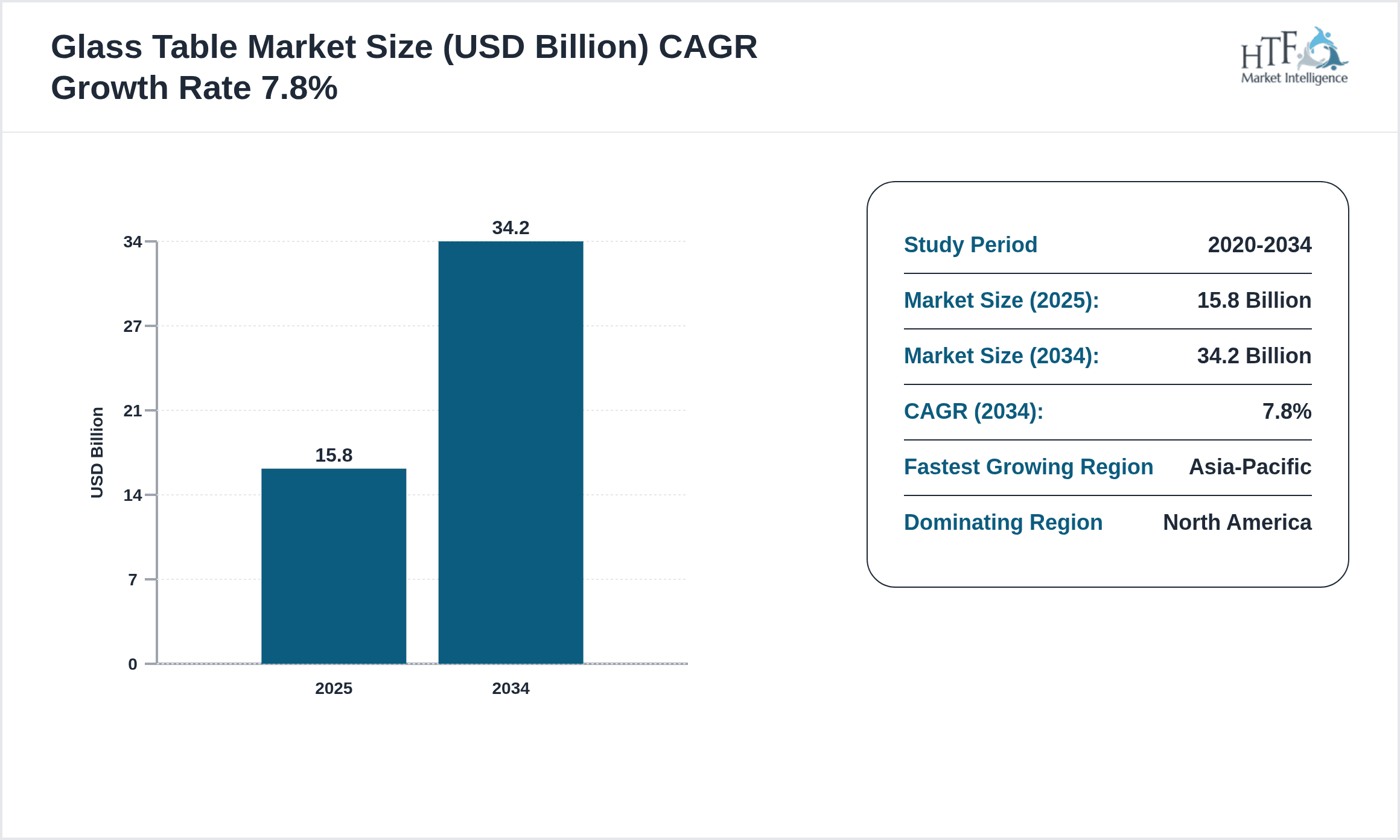
- •Key market highlights include a projected CAGR of 7.8% from 2024 to 2034, with the market expected to grow from USD 15.8 Billion in 2024 to USD 34.2 Billion by 2034. North America currently dominates the market, owing to high demand for luxury furniture and strong retail infrastructure, while Asia-Pacific is the fastest-growing region, driven by rapid urbanization and increasing consumer spending on home décor. Tempered Glass Tables lead the type segment, supported by their durability and safety features, whereas Laminated Glass Tables are emerging swiftly due to enhanced design flexibility and improved impact resistance. Residential applications hold the largest market share, followed closely by commercial and hospitality sectors, reflecting the increasing investment in interior aesthetics and functional furniture.
- •The market offers significant value propositions through its blend of style, durability, and versatility, appealing to a broad consumer base. It plays a crucial role in multiple industries including real estate, hospitality, and office infrastructure development. Stakeholders benefit from innovation-driven product portfolios, expanding distribution networks, and growing e-commerce penetration. The strategic importance of the glass table market is underscored by its alignment with contemporary lifestyle trends focusing on minimalism, transparency, and sustainability. As consumer awareness about eco-friendly furniture rises, manufacturers are investing in green technologies and recycled materials, enhancing market competitiveness and long-term growth prospects.
Competitive Landscape
The competitive landscape of the global Glass Table Market is marked by intense rivalry among established multinational corporations and emerging regional players. Companies emphasize innovation in glass technology, product design, and sustainable manufacturing practices to differentiate their offerings. Strategic partnerships and mergers & acquisitions are common approaches to expand product portfolios and geographic reach. Pricing strategies vary from premium luxury to affordable mass-market products, addressing a wide spectrum of consumer segments. Distribution channels include traditional retailers, specialty furniture stores, and growing online platforms facilitating direct-to-consumer sales. Market entrants face significant barriers due to high capital investment in manufacturing and stringent quality standards. Continuous R&D efforts focus on enhancing glass strength, safety features, and aesthetic appeal, enabling companies to maintain competitive advantages. Regional competition varies with North America and Europe focusing on design innovation, while Asia-Pacific emphasizes cost-effective production and market penetration. Future trends suggest increased consolidation and adoption of smart glass technologies to cater to evolving market demands.
Leading Companies in Glass Table Market
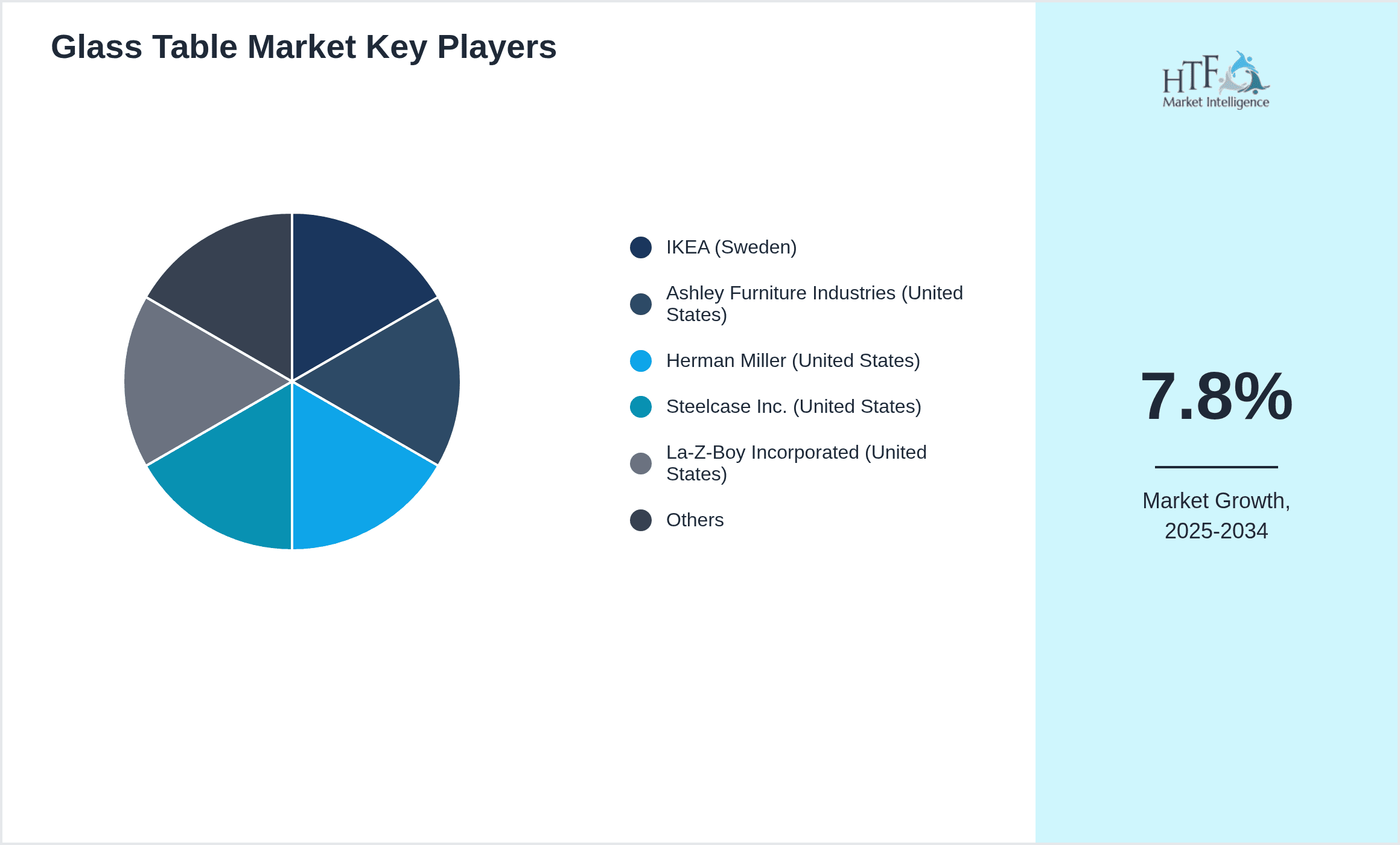
- •IKEA (Sweden)
- •Ashley Furniture Industries (United States)
- •Herman Miller (United States)
- •Steelcase Inc. (United States)
- •La-Z-Boy Incorporated (United States)
- •HNI Corporation (United States)
- •Williams-Sonoma, Inc. (United States)
- •Havertys Furniture Companies Inc. (United States)
- •Natuzzi S.p.A. (Italy)
- •Restoration Hardware Holdings, Inc. (United States)
- •Okamura Corporation (Japan)
- •Kimball International (United States)
- •Foshan Shunde Kuka Home Co., Ltd. (China)
- •La-Z-Boy Canada (Canada)
- •HNI Europe (Germany)
- •Sunpan Modern Home (Canada)
- •B&B Italia (Italy)
- •Kartell S.p.A. (Italy)
- •Driade (Italy)
- •BoConcept (Denmark)
- •Calligaris (Italy)
- •Muji (Japan)
- •Roche Bobois (France)
- •Natuzzi Italia (Italy)
- •Flexform (Italy)
Market Breakdown
- •By Product Type
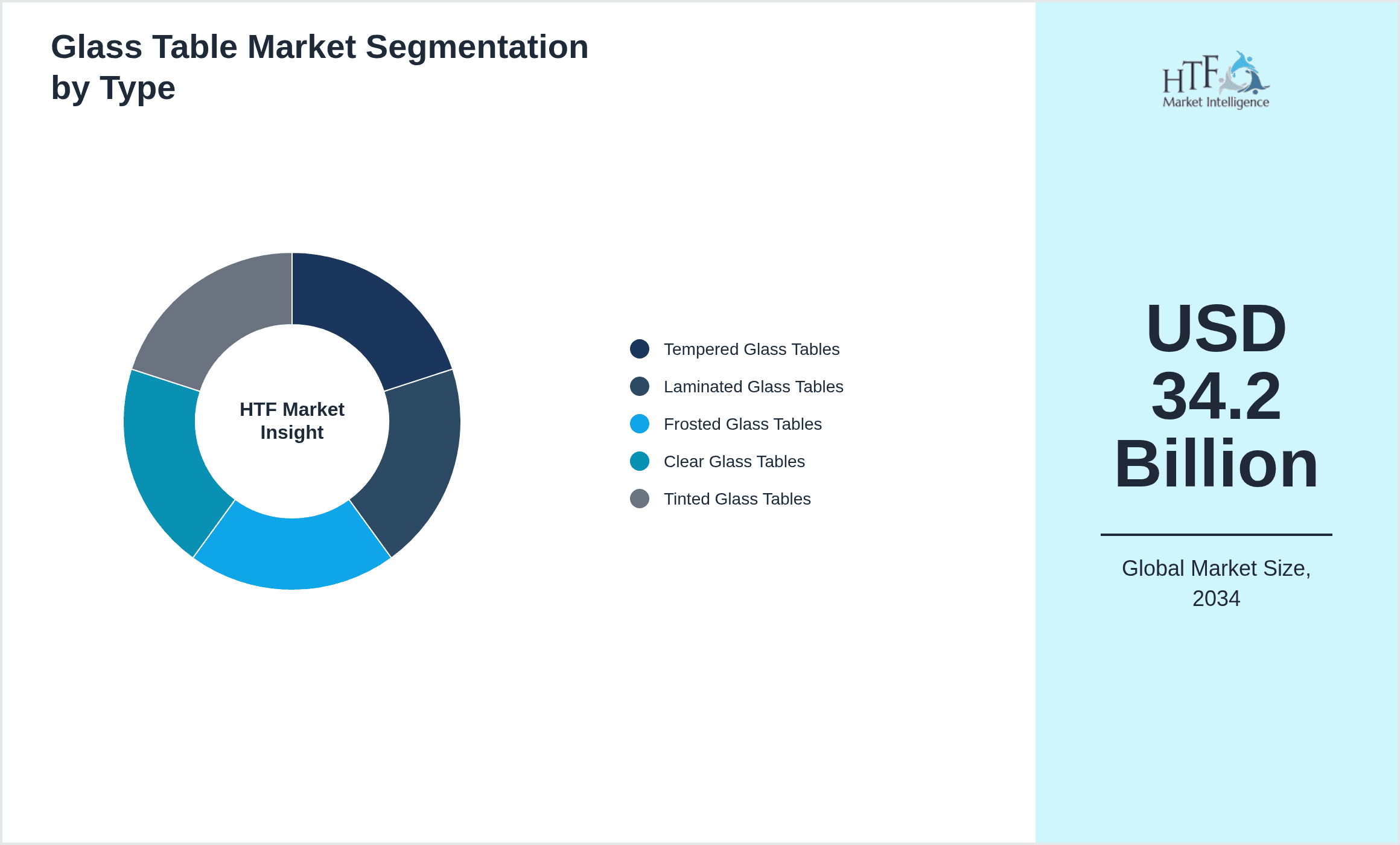
- ◦Tempered Glass Tables
- ◦Laminated Glass Tables
- ◦Frosted Glass Tables
- ◦Clear Glass Tables
- ◦Tinted Glass Tables
- •By Application
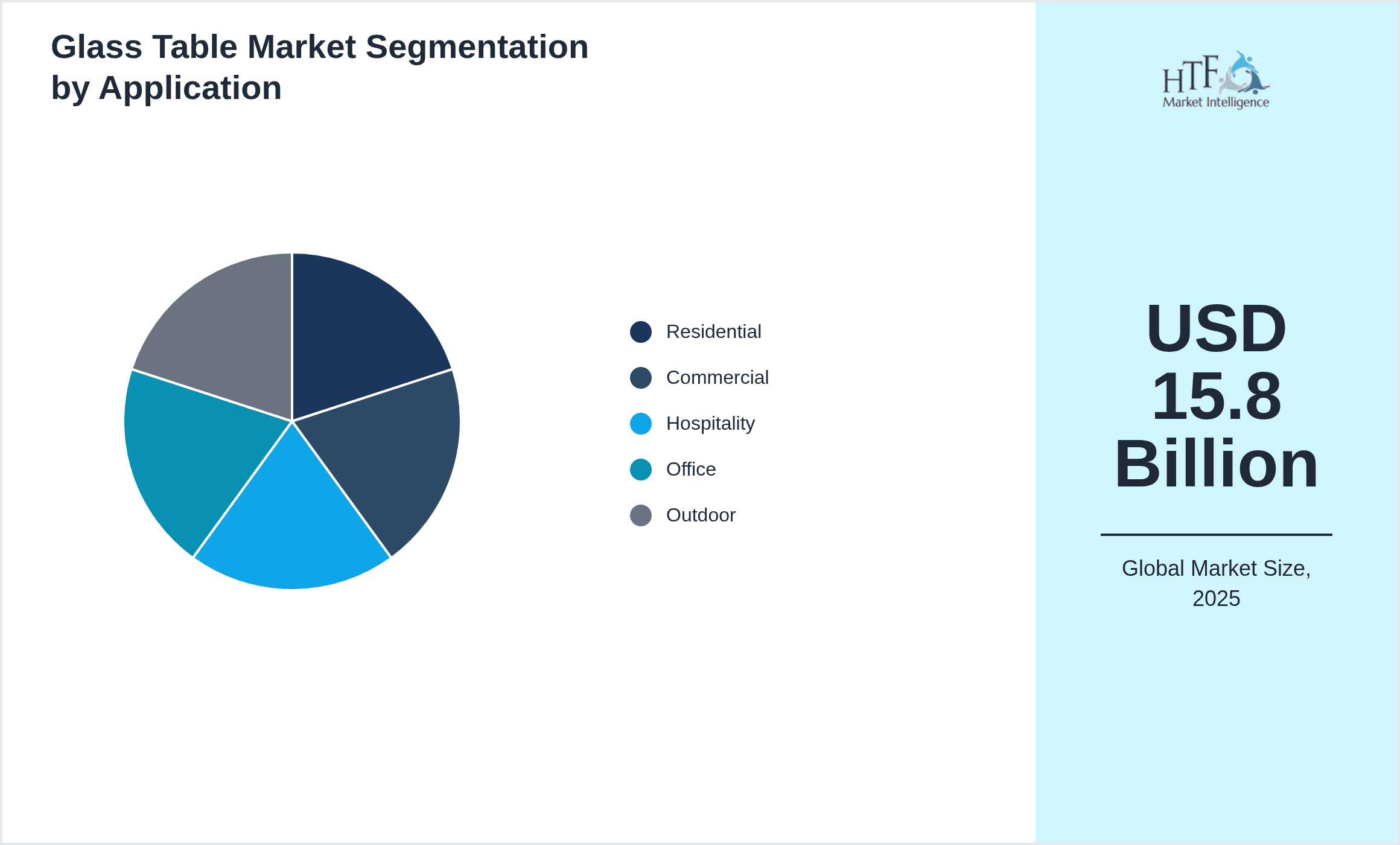
- ◦Residential
- ◦Commercial
- ◦Hospitality
- ◦Office
- ◦Outdoor
- •By End-Use Industry
- ◦Real Estate
- ◦Hospitality & Tourism
- ◦Corporate Offices
- ◦Retail & Commercial Spaces
- •By Distribution Channel
- ◦Specialty Furniture Stores
- ◦Online Retail
- ◦Direct Sales
Growth Dynamics
- •Rising urbanization and increasing disposable incomes in emerging economies significantly propel demand for stylish and functional glass tables, particularly in Asia-Pacific. This demographic shift fosters new residential and commercial construction projects, expanding market opportunities.
- •Advancements in glass manufacturing technology, such as improved safety treatments and eco-friendly production methods, enhance product appeal. These innovations address consumer concerns regarding durability and sustainability, driving adoption across multiple applications.
- •Growing preference for modern interior design trends emphasizing minimalism and transparency boosts demand for glass tables in residential and commercial segments. This trend aligns with consumers’ desire for versatile furniture that complements diverse décor styles.
- •Expansion of e-commerce platforms facilitates wider market reach and convenient purchasing options, allowing manufacturers to tap into previously underserved regions and demographics, accelerating market growth globally.
- •Government initiatives promoting sustainable construction and green building certifications create favorable market conditions for eco-conscious furniture solutions, including glass tables made with recycled or low-emission glass materials.
- •Increasing investment in the hospitality and office sectors, driven by economic recovery and corporate expansions, stimulates demand for premium glass tables that combine aesthetics with robust performance.
- •Collaborations between furniture designers and technology providers introduce smart glass features such as adjustable opacity and integrated lighting, opening new market segments and enhancing product differentiation.
Market Trends
- •The rising adoption of sustainable materials and eco-friendly manufacturing processes is transforming the glass table market, with companies increasingly promoting products made from recycled glass, thereby appealing to environmentally conscious consumers.
- •Integration of smart glass technology allowing adjustable transparency and enhanced user interactivity is an emerging trend, enabling multifunctional furniture solutions suited for modern workspaces and smart homes.
- •Customization and personalization of glass tables, through bespoke designs and finishes, are gaining traction as consumers seek unique furniture pieces that reflect individual style and preferences.
- •The growth of online furniture retail channels is reshaping distribution strategies, with augmented reality tools enhancing the customer experience by allowing virtual placement of glass tables within home and office spaces.
- •Collaborative designs that combine glass with sustainable wood and metal elements are trending, offering hybrid pieces that balance aesthetics, durability, and environmental considerations.
- •Increased focus on lightweight, portable glass tables for outdoor and event use reflects consumer demand for versatile furniture that supports dynamic lifestyles and multifunctional spaces.
- •The market is witnessing a shift towards minimalist and transparent furniture designs, inspired by contemporary architectural styles and the desire to create open, airy interior environments.
Market Opportunities
- •Emerging markets in Asia-Pacific and Latin America present substantial growth potential due to rapid urbanization, increasing middle-class populations, and rising investments in residential and commercial infrastructure.
- •Expansion into smart furniture segments by integrating IoT-enabled glass tables can address evolving consumer preferences for technology-enhanced living and working spaces.
- •Collaborations with interior designers and architects offer opportunities to develop customized glass table solutions for premium real estate and hospitality projects, enhancing brand visibility and market penetration.
- •Growth in e-commerce and digital marketing channels enables manufacturers to reach niche customer segments and offer personalized products at competitive prices, boosting sales volumes and customer loyalty.
- •Increasing environmental regulations and consumer demand for sustainability encourage investment in recycled glass and energy-efficient manufacturing, creating opportunities for product innovation and differentiation.
- •The outdoor furniture segment offers untapped potential through development of weather-resistant glass tables, catering to growing demand for stylish alfresco living solutions.
- •Market expansion through strategic acquisitions and partnerships in emerging regions can provide access to new customer bases and strengthen supply chain networks.
Market Challenges
- •High production costs associated with advanced glass processing and safety treatments can limit pricing flexibility and market accessibility, particularly in price-sensitive emerging markets.
- •Fragility concerns and perceived risk of breakage restrict adoption of glass tables in certain commercial and outdoor applications where durability is critical.
- •Stringent regulatory standards for glass quality, safety, and environmental compliance impose operational challenges and increase time-to-market for new product introductions.
- •Competition from alternative materials such as engineered wood, metal, and plastic furniture segments challenges the growth of glass tables, especially in budget-conscious consumer segments.
- •Supply chain disruptions and fluctuations in raw material prices, including silica and chemicals used in glass production, impact manufacturing costs and product availability.
- •Limited awareness and consumer hesitation regarding maintenance and care requirements of glass furniture can hinder market penetration, necessitating targeted education and marketing efforts.
- •Intense competition and market saturation in mature regions require continuous innovation and brand differentiation to sustain market share and profitability.
Regulatory Framework
- •Between 2019 and 2024, several regions introduced regulations mandating enhanced safety standards for glass furniture, including impact resistance and edge protection measures to minimize injury risks during breakage.
- •Environmental regulations focusing on energy consumption and emissions in glass manufacturing processes have tightened globally, compelling manufacturers to adopt greener technologies and reduce carbon footprints.
- •Specific labeling requirements for recycled content and eco-friendly certifications were established in North America and Europe, affecting market access and consumer trust.
- •Mandatory compliance with international standards such as ISO 12543 for safety glazing and ASTM guidelines in the United States has increased quality assurance and standardized testing protocols across the industry.
- •Government incentives and subsidies promoting sustainable furniture and green building materials have been introduced in Asia-Pacific and Europe, encouraging manufacturers to innovate and enhance eco-friendly product offerings.
Market Intelligence
- •15th January 2025, IKEA launched its latest collection of eco-friendly tempered glass tables featuring 40% recycled glass content and enhanced durability. This product line targets environmentally conscious consumers seeking sustainable furniture options without compromising modern design aesthetics. The initiative aligns with IKEA’s global sustainability goals and is expected to strengthen its market position in Europe and North America by appealing to growing green consumer segments. The collection includes customizable sizes and finishes, enabling greater design flexibility for residential and commercial applications. Source: IKEA Official Press Release
- •10th March 2025, Ashley Furniture Industries introduced an innovative laminated glass table series incorporating smart glass technology with adjustable opacity settings controlled via smartphone application. This breakthrough product caters to office and hospitality sectors aiming to enhance privacy and ambiance without sacrificing transparency. The launch underscores Ashley Furniture’s commitment to integrating advanced technologies and expanding its premium product portfolio. Early market feedback highlights strong interest from corporate clients seeking versatile and interactive furniture solutions. Source: Ashley Furniture Corporate News
- •22nd May 2025, La-Z-Boy Incorporated announced a strategic partnership with a leading glass technology firm to co-develop next-generation frosted glass tables featuring anti-fingerprint and self-cleaning coatings. This collaboration aims to improve user experience and reduce maintenance efforts, particularly in high-traffic commercial environments. The partnership is expected to accelerate product innovation cycles and enhance competitive differentiation for La-Z-Boy’s commercial furniture segment globally. Pilot projects are underway in North American and Asia-Pacific markets with positive initial results. Source: La-Z-Boy Press Statement
- •8th July 2025, Foshan Shunde Kuka Home Co., Ltd. expanded its manufacturing facility in China to increase production capacity of tinted glass tables with enhanced UV protection features. This expansion is driven by rising demand from outdoor furniture markets in Asia-Pacific and Latin America. The company plans to leverage advanced automation technologies to improve efficiency and reduce production costs, strengthening its competitive position in emerging markets. The move also aligns with regional trends favoring durable and weather-resistant glass furniture solutions. Source: Foshan Shunde Kuka Home Official Announcement
Regional Outlook
The North America currently holds a significant share of the market, primarily due to several key factors: increasing consumption rates, a burgeoning population, and robust economic momentum. These elements collectively drive demand, positioning this region as a leader in the market. On the other hand, Asia-Pacific is rapidly emerging as the fastest-growing area within the industry. This remarkable growth can be attributed to swift infrastructure development, the expansion of various industrial sectors, and a marked increase in consumer demand. These dynamics make this region a crucial player in shaping future market growth.
In our report, we cover a comprehensive analysis of the following regions and countries:
- North America
- LATAM
- West Europe
- Central & Eastern Europe
- Northern Europe
- Southern Europe
- East Asia
- Southeast Asia
- South Asia
- Central Asia
- Oceania
- MEA
| Feature | Details |
|---|---|
| Base Year Market Size | USD 15.8 Billion |
| Forecast Year Market Size | USD 34.2 Billion |
| CAGR | 7.8% |
| Forecast Period | 2026 to 2033 |
| YoY Growth | 7.1% |
| Scope of Report | Market is segmented by Product Type (Tempered Glass Tables, Laminated Glass Tables, Frosted Glass Tables, Clear Glass Tables, Tinted Glass Tables), Application (Residential, Commercial, Hospitality, Office, Outdoor), End-Use Industry (Real Estate, Hospitality & Tourism, Corporate Offices, Retail & Commercial Spaces), Distribution Channel (Specialty Furniture Stores, Online Retail, Direct Sales) |
| Regions Covered | North America, LATAM, West Europe, Central & Eastern Europe, Northern Europe, Southern Europe, East Asia, Southeast Asia, South Asia, Central Asia, Oceania, MEA |
| Key Companies | IKEA (Sweden), Ashley Furniture Industries (United States), Herman Miller (United States), Steelcase Inc. (United States), La-Z-Boy Incorporated (United States), HNI Corporation (United States), Williams-Sonoma, Inc. (United States), Havertys Furniture Companies Inc. (United States), Natuzzi S.p.A. (Italy), Restoration Hardware Holdings, Inc. (United States), Okamura Corporation (Japan), Kimball International (United States), Foshan Shunde Kuka Home Co., Ltd. (China), La-Z-Boy Canada (Canada), HNI Europe (Germany), Sunpan Modern Home (Canada), B&B Italia (Italy), Kartell S.p.A. (Italy), Driade (Italy), BoConcept (Denmark), Calligaris (Italy), Muji (Japan), Roche Bobois (France), Natuzzi Italia (Italy), Flexform (Italy) |
Global Glass Table Market Size, Growth & Revenue 2024-2034 - Table of Contents
Multidisciplinary researcher with 10+ years of experience uncovering insights across diverse domains focused on uncovering insights that drive informed decisions.
Frequently Asked Questions (FAQ):
The Market market is expected to see significant growth and value in 2025.
North America currently leads the market, followed by Europe and Asia-Pacific.
Key growth drivers include increasing activities, rising demand for innovative solutions, technological advancements, and growing preference for efficient products.