
Global Ski Jackets Market Size, Growth & Revenue 2025-2034
Global Ski Jackets Market is segmented by Product Type (Down Ski Jackets, Synthetic Ski Jackets, Softshell Ski Jackets, Hardshell Ski Jackets, Hybrid Ski Jackets), Application (Recreational Skiing, Competitive Skiing, Snowboarding, Mountaineering, Winter Fashion), End-Use Industry (Sports & Outdoor Retail, E-commerce, Specialty Stores, Department Stores), Distribution Channel (Specialty Sports Retailers, Online Retailers, Brand Owned Stores), and Geography (North America, LATAM, West Europe, Central & Eastern Europe, Northern Europe, Southern Europe, East Asia, Southeast Asia, South Asia, Central Asia, Oceania, MEA)
Pricing
Report Overview
Executive Summary
- •The global ski jackets market is a specialized segment of the outerwear industry focusing on garments engineered to offer protection and thermal insulation for skiing and related winter sports activities. This market includes a variety of ski jackets differentiated by materials such as down, synthetic fibers, softshells, hardshells, and hybrids, each designed to address specific climatic and performance needs. The products cater to multiple applications including recreational skiing, competitive skiing, snowboarding, mountaineering, and winter fashion, thereby serving both functional and aesthetic consumer demands. Over recent years, the market has witnessed significant innovation driven by technological advancements in fabric engineering, such as enhanced waterproofing, breathability, and sustainable material usage. These innovations have aligned with consumer demands for high-performance yet eco-friendly apparel, expanding market penetration across diverse geographic regions. Key regions such as North America and Europe have traditionally dominated the market due to established winter sports culture and high disposable incomes, while Asia-Pacific is emerging rapidly due to growing interest in winter sports and rising urban populations. The market is projected to grow steadily through 2034, supported by increasing participation in winter sports, rising health and fitness awareness, and evolving fashion trends. Overall, the ski jackets market represents a confluence of technical performance, environmental considerations, and consumer lifestyle preferences, making it a dynamic and competitive segment within the global apparel industry.
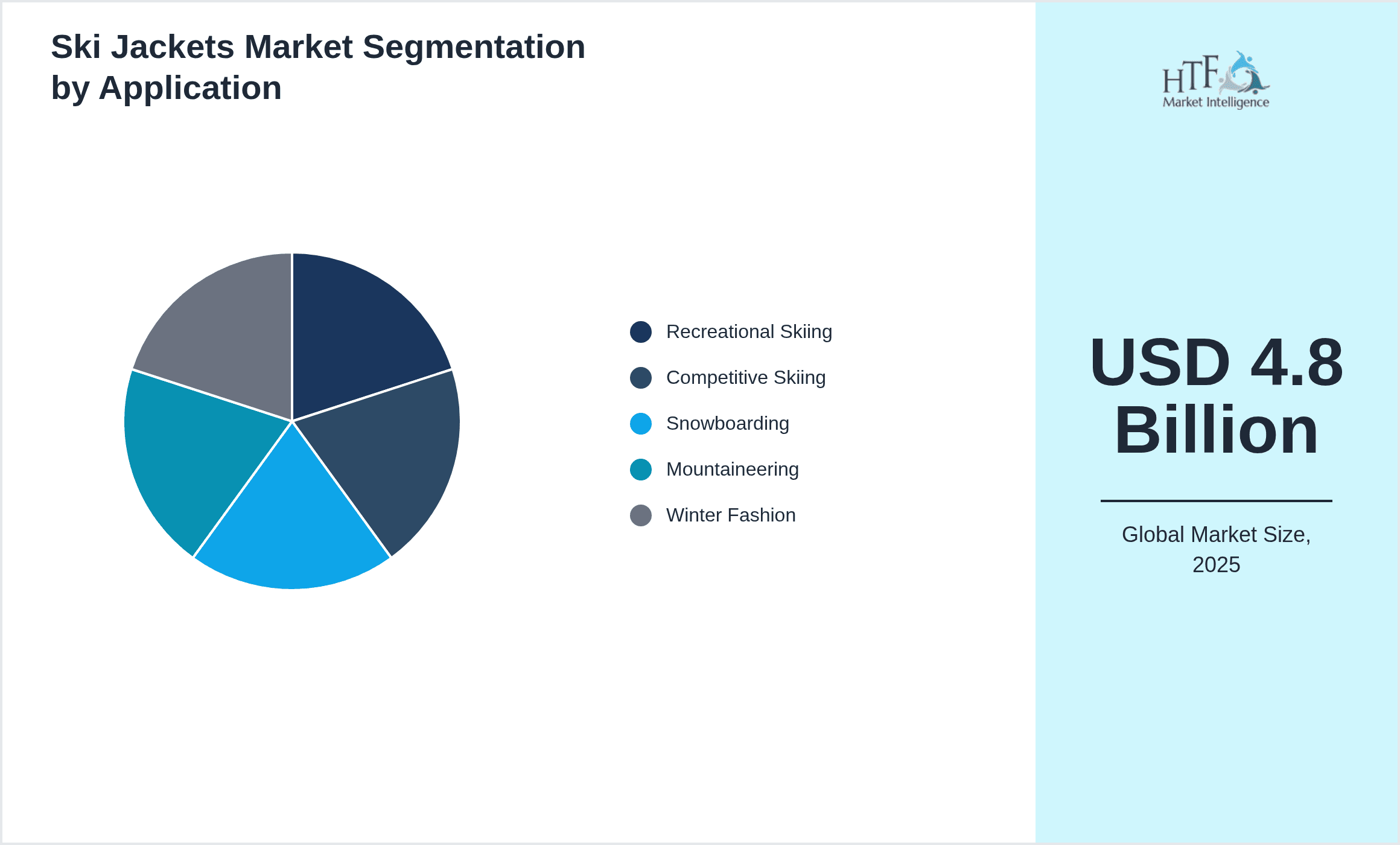
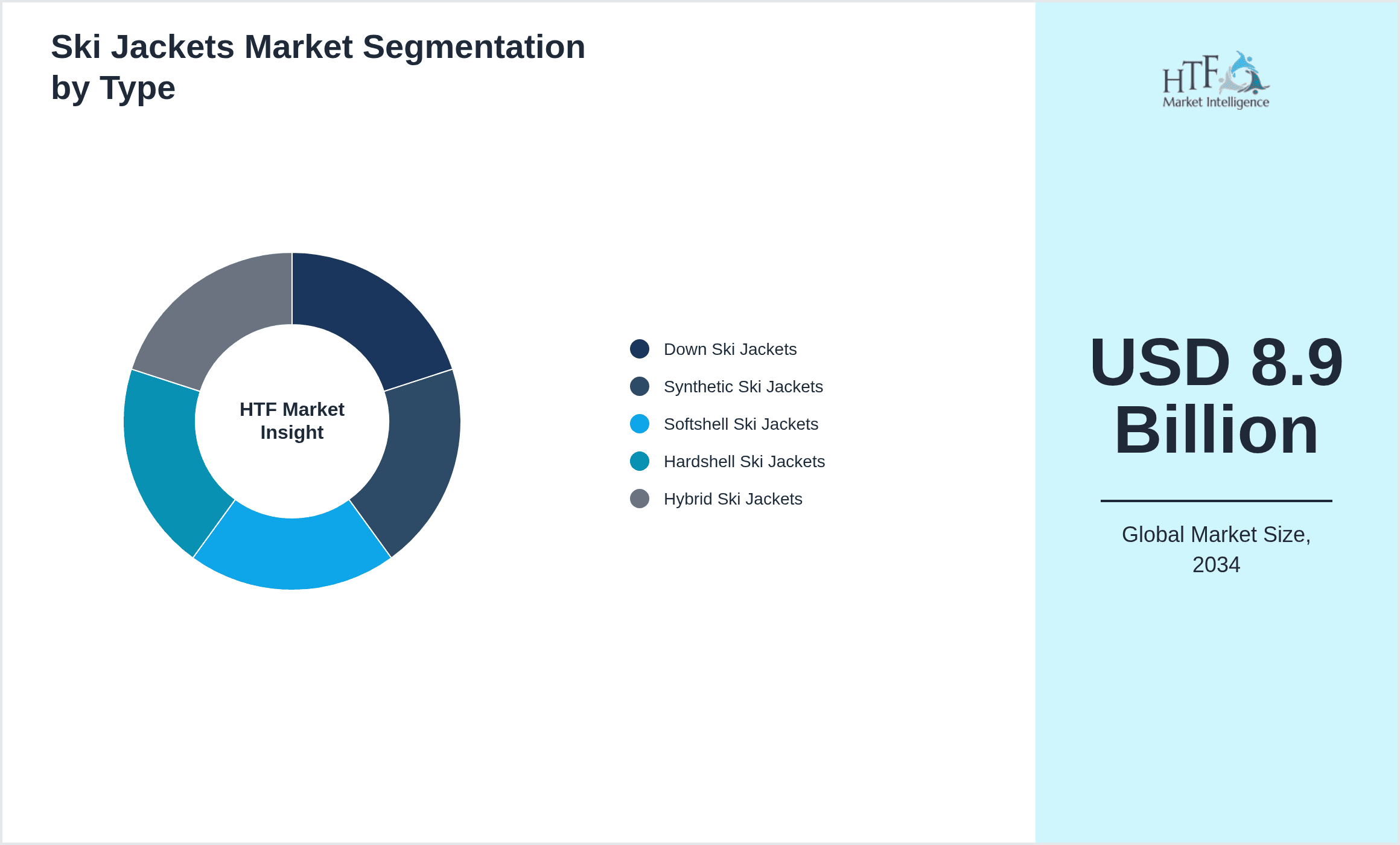
- •Key market highlights include a base market size valued at USD 4.8 Billion in 2025, with a forecast to reach USD 8.9 Billion by 2034, reflecting a compound annual growth rate (CAGR) of 6.8%. Year-on-year growth is estimated at approximately 6.6%, indicative of steady consumer demand and expanding market reach. North America remains the dominating region due to its established winter sports infrastructure and consumer purchasing power, while Asia-Pacific is identified as the fastest-growing region driven by increasing winter sports popularity and infrastructural development. Among product types, down ski jackets continue to lead owing to their superior insulation properties, whereas hybrid ski jackets are emerging as the fastest growing segment given their blend of functionality and versatility. The market’s segmentation by application further reflects diverse consumer needs spanning from recreational to competitive use and fashion-oriented segments. These data points underscore significant opportunities for manufacturers and retailers to tailor product offerings and marketing strategies aligned with evolving consumer behavior and regional preferences.
- •From a strategic perspective, the ski jackets market offers significant value propositions to stakeholders including manufacturers, retailers, and investors. For manufacturers, the integration of cutting-edge textile technologies and sustainable materials provides a competitive edge and addresses eco-conscious consumer segments. Retailers benefit from expanding winter sports markets and rising interest in outdoor activities, enabling diversified product assortments and premium positioning strategies. Investors find robust growth potential bolstered by rising disposable incomes, urbanization trends, and increasing global tourism in winter destinations. Additionally, the market’s strategic importance is heightened by the convergence of performance apparel with lifestyle trends, fostering innovation in design and functionality. This intersection creates fertile ground for collaborations, product differentiation, and brand loyalty development. Consequently, the ski jackets market presents a compelling landscape for sustained growth and innovation, underpinned by evolving consumer needs and global climatic conditions.

Competitive Landscape
The competitive environment of the global ski jackets market is characterized by a diverse array of players ranging from established multinational apparel brands to niche manufacturers specializing in technical winter sportswear. Market dynamics are shaped by intense competition on product innovation, technological advancement, and brand positioning. Companies invest significantly in research and development to enhance fabric performance, such as waterproofing, breathability, and thermal insulation, while also emphasizing sustainability through the use of recycled and eco-friendly materials. Strategic partnerships and collaborations with professional athletes and winter sports organizations are common approaches to bolster product credibility and consumer engagement. Pricing strategies vary with product type and brand prestige, ranging from premium high-performance jackets to more affordable options targeting casual consumers. Distribution channels include specialty sports retailers, e-commerce platforms, and brand-owned stores, facilitating broad market reach. Mergers and acquisitions serve as a consolidation tactic to expand product portfolios and geographic presence. Regional competition is pronounced, with North America and Europe housing many key players, while Asia-Pacific sees growing local and international brand activity. Future competitive trends point to increased digitalization of the customer experience, customization options, and continued emphasis on sustainability as differentiators in a crowded market.
Prominent Players in Ski Jackets Market
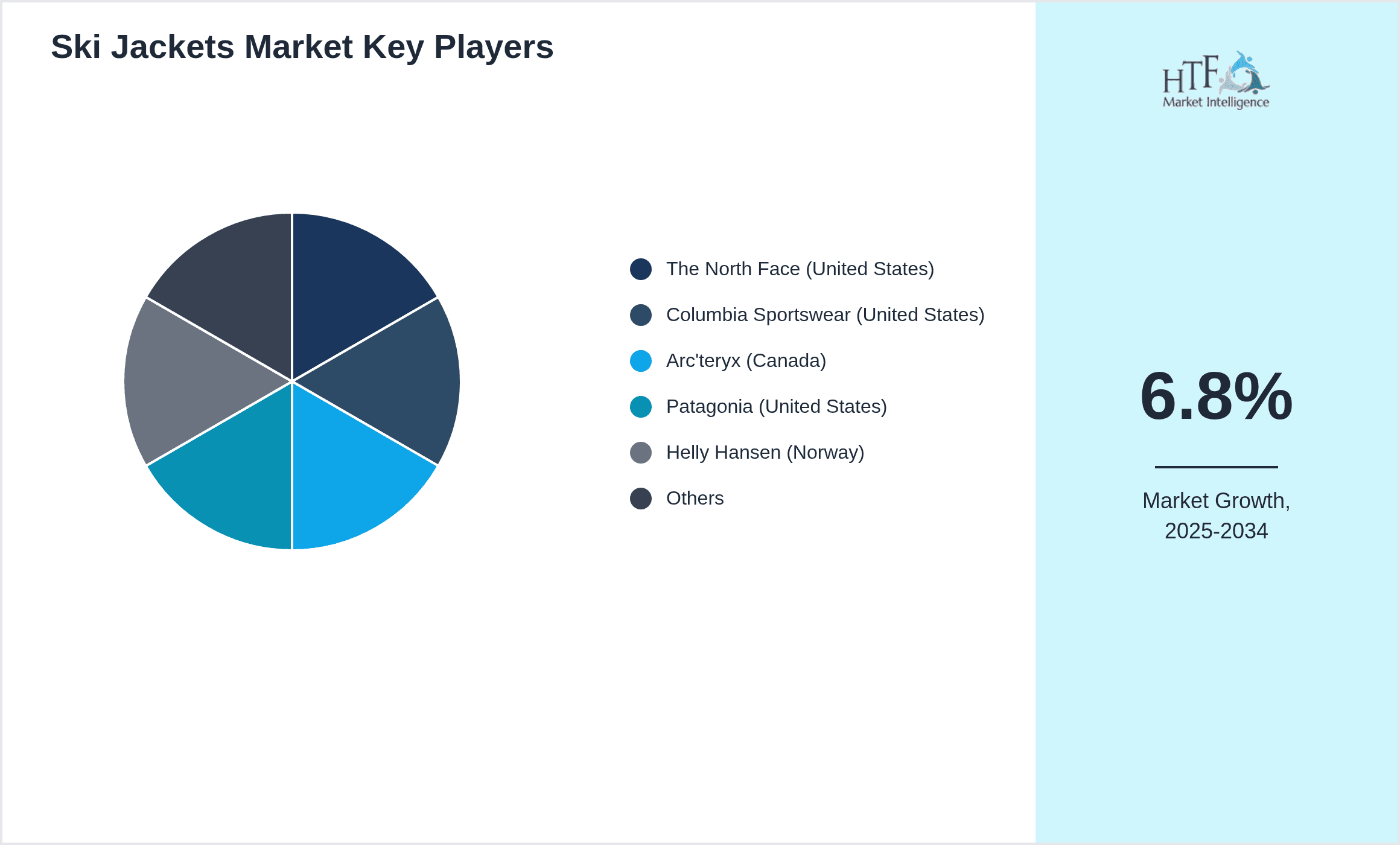
- •The North Face (United States)
- •Columbia Sportswear (United States)
- •Arc'teryx (Canada)
- •Patagonia (United States)
- •Helly Hansen (Norway)
- •Spyder (United States)
- •Salomon Group (France)
- •Marmot (United States)
- •Moncler (Italy)
- •Kjus (Switzerland)
- •Bogner (Germany)
- •Fjällräven (Sweden)
- •Mountain Hardwear (United States)
- •Eider (France)
- •Rossignol (France)
- •Peak Performance (Sweden)
- •L.L.Bean (United States)
- •Norrona (Norway)
- •Oakley (United States)
- •Canada Goose (Canada)
- •Descente (Japan)
- •Jack Wolfskin (Germany)
- •Outdoor Research (United States)
- •Rab (United Kingdom)
- •Berghaus (United Kingdom)
Market Breakdown
- •By Product Type
- ◦Down Ski Jackets
- ◦Synthetic Ski Jackets
- ◦Softshell Ski Jackets
- ◦Hardshell Ski Jackets
- ◦Hybrid Ski Jackets
- •By Application
- ◦Recreational Skiing
- ◦Competitive Skiing
- ◦Snowboarding
- ◦Mountaineering
- ◦Winter Fashion
- •By End-Use Industry
- ◦Sports & Outdoor Retail
- ◦E-commerce
- ◦Specialty Stores
- ◦Department Stores
- •By Distribution Channel
- ◦Specialty Sports Retailers
- ◦Online Retailers
- ◦Brand Owned Stores
Growth Dynamics
The global ski jackets market growth is propelled by rising participation in winter sports and outdoor recreational activities, supported by increasing disposable incomes and consumer interest in health and fitness. Technological advancements in fabric technologies, such as enhanced waterproofing and breathability, have significantly improved product performance, attracting a wider consumer base. Additionally, the growing emphasis on sustainability and eco-friendly materials has opened new market segments catering to environmentally conscious consumers. Expansion of winter tourism across emerging economies is also driving demand, particularly in regions like Asia-Pacific. Furthermore, the integration of smart textiles and wearable technology is expected to enhance user experience and stimulate market growth by offering advanced functionalities such as temperature regulation and activity tracking.
Market Trends
Current market trends include a shift towards sustainable and recycled materials in ski jacket manufacturing, reflecting broader environmental awareness among consumers. Brands are adopting circular economy principles, offering repair services and recycling initiatives to extend product life cycles. Additionally, multifunctional and versatile jacket designs that cater to both performance and casual wear are gaining popularity, blurring the lines between technical apparel and fashion. Digitalization in retail, including virtual fitting rooms and augmented reality apps, is enhancing customer engagement and purchase confidence. Collaborations between outdoor brands and fashion designers are creating premium product lines, appealing to lifestyle-focused consumers. Finally, the rise of e-commerce and direct-to-consumer sales channels is reshaping distribution strategies, making products more accessible globally.
Market Opportunities
Significant opportunities lie in expanding the market in emerging regions like Asia-Pacific and Latin America, where winter sports infrastructure is developing and consumer awareness is growing. The increasing demand for eco-friendly and sustainable ski jackets presents a lucrative avenue for product innovation and brand differentiation. Integration of wearable technology and smart textiles to offer enhanced functionality such as temperature control and biometric monitoring offers new value propositions. Collaborations and partnerships with winter sports events and athletes can amplify brand visibility and credibility. Additionally, growth in online retailing and personalized shopping experiences provide opportunities for market penetration and customer loyalty building.
Market Challenges
The ski jackets market faces challenges including high production costs associated with advanced materials and sustainable manufacturing processes, which can limit affordability for price-sensitive consumers. Seasonal demand fluctuations linked to winter sports seasons create inventory management complexities and impact revenue predictability. The market also contends with intense competition from established brands and new entrants, necessitating continuous innovation and marketing investment. Supply chain disruptions, particularly for specialized technical fabrics, pose risks to timely product availability. Additionally, regulatory compliance related to material sourcing and environmental standards requires ongoing attention, impacting operational costs and complexity.
Regulatory Framework
Between 2020 and 2025, multiple regulations have shaped the ski jackets market landscape, focusing primarily on environmental sustainability and consumer safety. Notably, the EU’s REACH regulation requires strict control on chemical substances used in textile manufacturing, ensuring consumer safety and reducing environmental impact. The U.S. Consumer Product Safety Commission (CPSC) has enforced flammability standards applicable to outerwear, mandating compliance for products sold domestically. Several countries have introduced eco-labeling and certification schemes, such as bluesign® and OEKO-TEX®, promoting sustainable material sourcing and manufacturing transparency. Additionally, import-export regulations increasingly emphasize traceability and compliance with environmental norms, affecting global supply chains. Government incentives in regions like Europe and North America support sustainable textile innovation through grants and tax benefits. Collectively, these regulatory frameworks encourage manufacturers to adopt greener production methods and ensure product safety, influencing market strategies and consumer trust.
Market Intelligence
- •15th January 2025, The North Face launched its latest line of hybrid ski jackets incorporating recycled materials and advanced waterproofing technology aimed at reducing environmental impact while enhancing performance. The new collection targets eco-conscious consumers with improved breathability and thermal regulation features, positioning the brand as a leader in sustainable winter sportswear. The initiative aligns with global trends emphasizing sustainability and innovation, with expected positive reception in North American and European markets. This launch underscores The North Face's commitment to integrating performance with environmental responsibility, anticipated to drive market growth and competitive advantage. Source: The North Face Official Press Release.
- •10th March 2025, Patagonia announced the expansion of its ski jackets range featuring proprietary synthetic insulation made from 100% recycled fibers. The product line aims to combine high insulation efficiency with reduced carbon footprint, appealing to environmentally aware consumers globally. Patagonia also initiated a take-back program encouraging customers to return used jackets for recycling, promoting circular economy principles. This strategic move strengthens Patagonia’s brand image and market position in the sustainable apparel segment. The innovation received industry acclaim for blending technical performance with sustainability, expected to influence competitive dynamics. Source: Patagonia Corporate Communications.
- •21st May 2025, Columbia Sportswear unveiled a smart ski jacket integrated with temperature-responsive technology and Bluetooth connectivity, enabling real-time climate control and activity monitoring. Targeted at tech-savvy winter sports enthusiasts, the product features app-based customization of insulation and ventilation settings. This innovation enhances user experience by adapting to environmental and physiological changes, positioning Columbia Sportswear at the forefront of wearable technology integration in outerwear. The smart jacket launch is anticipated to open new market segments and stimulate consumer interest in multifunctional apparel. Source: Columbia Sportswear Press Release.
- •30th August 2025, Salomon Group completed the acquisition of a niche sustainable textile manufacturer specializing in eco-friendly waterproof fabrics. The strategic acquisition aims to bolster Salomon’s product portfolio with advanced sustainable materials, enhancing its competitive edge in the ski jackets market. This move supports Salomon’s commitment to sustainability and innovation, accelerating product development cycles and reducing environmental footprint. The acquisition is expected to improve supply chain integration and responsiveness to evolving consumer demands for sustainable apparel. Market analysts view this consolidation as a significant step towards market leadership in sustainable winter sportswear. Source: Salomon Group Official Announcement.
Regional Outlook
The North America currently holds a significant share of the market, primarily due to several key factors: increasing consumption rates, a burgeoning population, and robust economic momentum. These elements collectively drive demand, positioning this region as a leader in the market. On the other hand, Asia-Pacific is rapidly emerging as the fastest-growing area within the industry. This remarkable growth can be attributed to swift infrastructure development, the expansion of various industrial sectors, and a marked increase in consumer demand. These dynamics make this region a crucial player in shaping future market growth.
In our report, we cover a comprehensive analysis of the following regions and countries:
- North America
- LATAM
- West Europe
- Central & Eastern Europe
- Northern Europe
- Southern Europe
- East Asia
- Southeast Asia
- South Asia
- Central Asia
- Oceania
- MEA
| Feature | Details |
|---|---|
| Base Year Market Size | USD 4.8 Billion |
| Forecast Year Market Size | USD 8.9 Billion |
| CAGR | 6.8% |
| Forecast Period | 2026 to 2033 |
| YoY Growth | 6.6% |
| Scope of Report | Market is segmented by Product Type (Down Ski Jackets, Synthetic Ski Jackets, Softshell Ski Jackets, Hardshell Ski Jackets, Hybrid Ski Jackets), Application (Recreational Skiing, Competitive Skiing, Snowboarding, Mountaineering, Winter Fashion), End-Use Industry (Sports & Outdoor Retail, E-commerce, Specialty Stores, Department Stores), Distribution Channel (Specialty Sports Retailers, Online Retailers, Brand Owned Stores) |
| Regions Covered | North America, LATAM, West Europe, Central & Eastern Europe, Northern Europe, Southern Europe, East Asia, Southeast Asia, South Asia, Central Asia, Oceania, MEA |
| Key Companies | The North Face (United States), Columbia Sportswear (United States), Arc'teryx (Canada), Patagonia (United States), Helly Hansen (Norway), Spyder (United States), Salomon Group (France), Marmot (United States), Moncler (Italy), Kjus (Switzerland), Bogner (Germany), Fjällräven (Sweden), Mountain Hardwear (United States), Eider (France), Rossignol (France), Peak Performance (Sweden), L.L.Bean (United States), Norrona (Norway), Oakley (United States), Canada Goose (Canada), Descente (Japan), Jack Wolfskin (Germany), Outdoor Research (United States), Rab (United Kingdom), Berghaus (United Kingdom) |
Global Ski Jackets Market Size, Growth & Revenue 2025-2034 - Table of Contents
Research enthusiast focused on transforming data uncovering into actionable insights through data-driven decision-making.
Frequently Asked Questions (FAQ):
The Compact Track Loaders market is expected to see value worth 5.3 Billion in 2025.
North America currently leads the market with approximately 45% market share, followed by Europe at 28% and Asia-Pacific at 22%. The remaining regions account for 5% of the global market.
Key growth drivers include increasing construction activities, rising demand for versatile equipment in agriculture, technological advancements in track loader design, and growing preference for compact equipment in urban construction projects.