
Global Baby Strollers Market Size, Growth & Revenue 2024-2034
Global Baby Strollers Market is segmented by Product Type (Standard Strollers, Jogging Strollers, Travel Systems, Lightweight Strollers, Double Strollers), Application (Travel, Daily Use, Jogging, Double Strollers, Lightweight Strollers), End-Use Industry (Retail Stores, E-Commerce, Specialty Stores, Supermarkets/Hypermarkets), Distribution Channel (Offline Retail, Online Retail, Direct Sales), and Geography (North America, LATAM, West Europe, Central & Eastern Europe, Northern Europe, Southern Europe, East Asia, Southeast Asia, South Asia, Central Asia, Oceania, MEA)
Pricing
Report Overview
Executive Summary
- •The Global Baby Strollers Market is a vital segment within the juvenile products industry, focused on designing and manufacturing versatile mobility solutions for infants and toddlers. This market includes a broad spectrum of stroller types such as standard, jogging, travel systems, lightweight, and double strollers, each catering to unique consumer requirements ranging from daily urban commutes to active outdoor activities. Geographically, the market spans major regions including North America, Europe, Asia-Pacific, Latin America, and the Middle East & Africa, reflecting diverse consumer preferences and economic conditions. The market is shaped by rising birth rates in emerging economies, increasing awareness of child safety, and growing demand for functional, stylish, and ergonomic baby transport products. Distribution channels have evolved with the rise of e-commerce, enhancing accessibility to global consumers. The integration of advanced materials and safety features continues to drive product innovation. With a forecasted CAGR of 7.6% from 2024 to 2034, this market is poised for robust growth fueled by urbanization and changing parental lifestyles worldwide.
- •The Baby Strollers Market is projected to expand from USD 5.8 Billion in 2024 to USD 12.4 Billion by 2034, demonstrating significant revenue growth and strong consumer demand. North America currently dominates the market with the highest share, supported by high disposable incomes and a well-established retail infrastructure. Asia-Pacific is the fastest-growing region due to increasing birth rates, rising urban populations, and expanding e-commerce penetration. Standard strollers hold the largest market share, attributed to their versatility and affordability, while lightweight strollers are gaining traction as the fastest-growing product type due to their portability and convenience. Key applications include travel, daily use, jogging, double stroller configurations, and lightweight options, responding to diverse parental needs. Market innovations focus on enhanced safety features, foldability, and ergonomic designs. Strategic investments and partnerships are intensifying competition, amplifying the market’s dynamic nature.
- •The Baby Strollers Market offers considerable value to manufacturers, retailers, and consumers by addressing the increasing demand for safe, comfortable, and innovative infant mobility solutions. Its strategic importance is underscored by growing global urbanization, rising parental awareness around child safety, and technological advancements in materials and design. The evolving consumer preference for multifunctional and aesthetically appealing strollers drives product development and market expansion. Moreover, the market’s responsiveness to regional demographic shifts and economic growth patterns enables stakeholders to capitalize on emerging opportunities. Retailers benefit from expanding distribution channels including e-commerce, while manufacturers leverage collaborations and mergers to enhance product portfolios and geographic reach. Overall, the Baby Strollers Market serves as a critical enabler of infant mobility and parental convenience, supporting broader industry growth and innovation trends across global juvenile product sectors.

Competitive Landscape
The competitive landscape of the Global Baby Strollers Market is characterized by intense rivalry among established multinational corporations and emerging regional players. Market participants focus heavily on innovation, integrating advanced safety features, ergonomic designs, and lightweight materials to differentiate their product offerings. Strategic alliances, joint ventures, and mergers & acquisitions are common tactics to expand geographic footprint and product portfolios. Pricing strategies are tailored to balance affordability with premium features, targeting diverse consumer segments. Distribution channels have evolved to include omnichannel approaches, combining traditional retail with growing online sales platforms. Companies invest in research and development to stay ahead in regulatory compliance and consumer trends, with sustainability and eco-friendly materials gaining prominence. Market entry barriers remain moderate due to the need for certification and high-quality standards, yet opportunities for niche product specialization exist. Future competitive trends suggest increased focus on digital marketing, customization, and smart stroller technologies to capture evolving customer preferences.
Companies Shaping the Baby Strollers Market
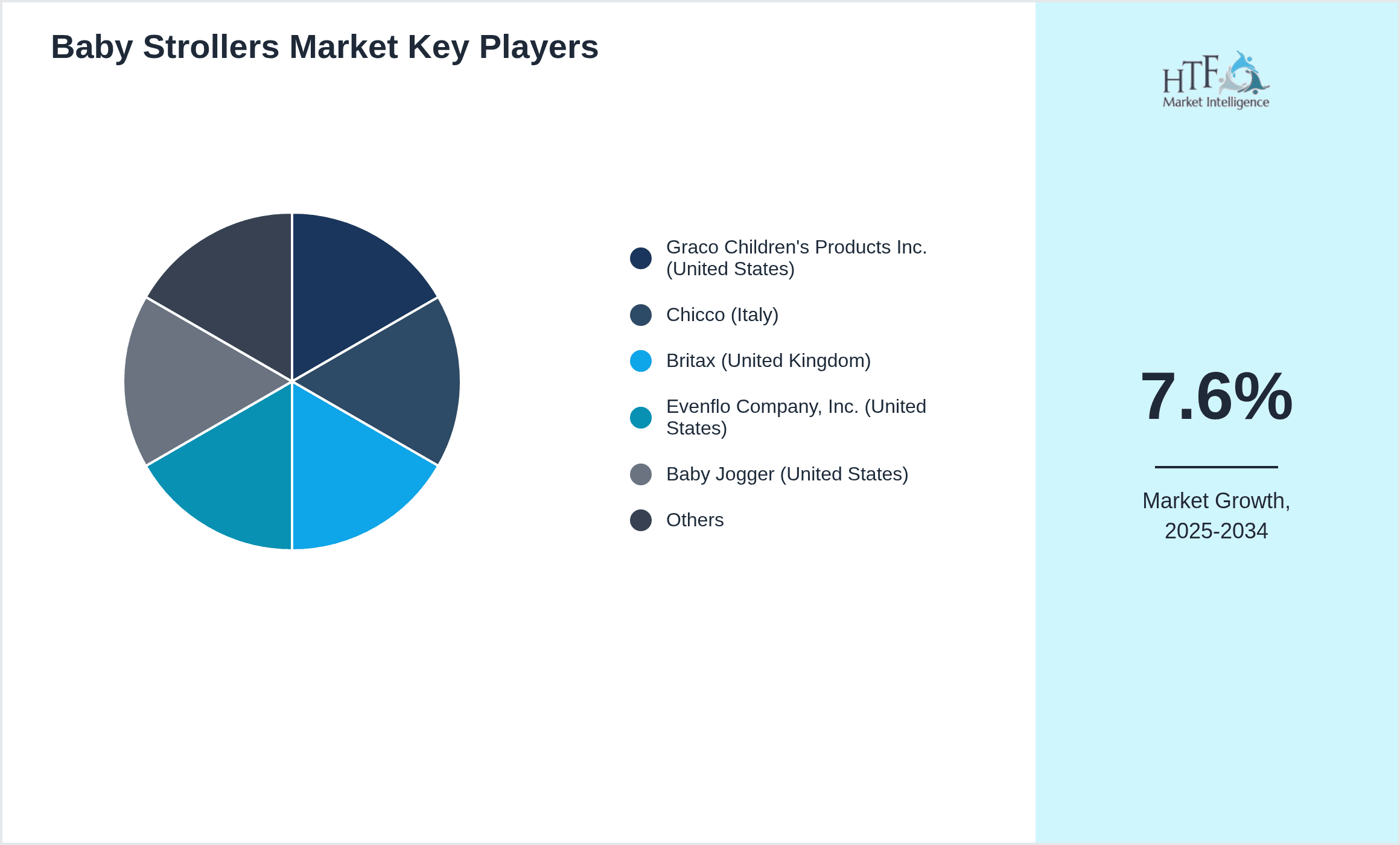
- •Graco Children's Products Inc. (United States)
- •Chicco (Italy)
- •Britax (United Kingdom)
- •Evenflo Company, Inc. (United States)
- •Baby Jogger (United States)
- •UPPAbaby (United States)
- •Bugaboo International B.V. (Netherlands)
- •Maxi-Cosi (Netherlands)
- •Cybex (Germany)
- •Silver Cross (United Kingdom)
- •Joovy (United States)
- •Baby Trend, Inc. (United States)
- •Mountain Buggy (New Zealand)
- •Phil & Teds (New Zealand)
- •Stokke ASA (Norway)
- •Safety 1st (France)
- •Peg Perego (Italy)
- •Hauck GmbH & Co. KG (Germany)
- •Mamas & Papas (United Kingdom)
- •Nuna (Netherlands)
- •Babyzen (France)
- •Joie (United Kingdom)
- •Clek Inc. (Canada)
- •Doona (Israel)
- •Inglesina (Italy)
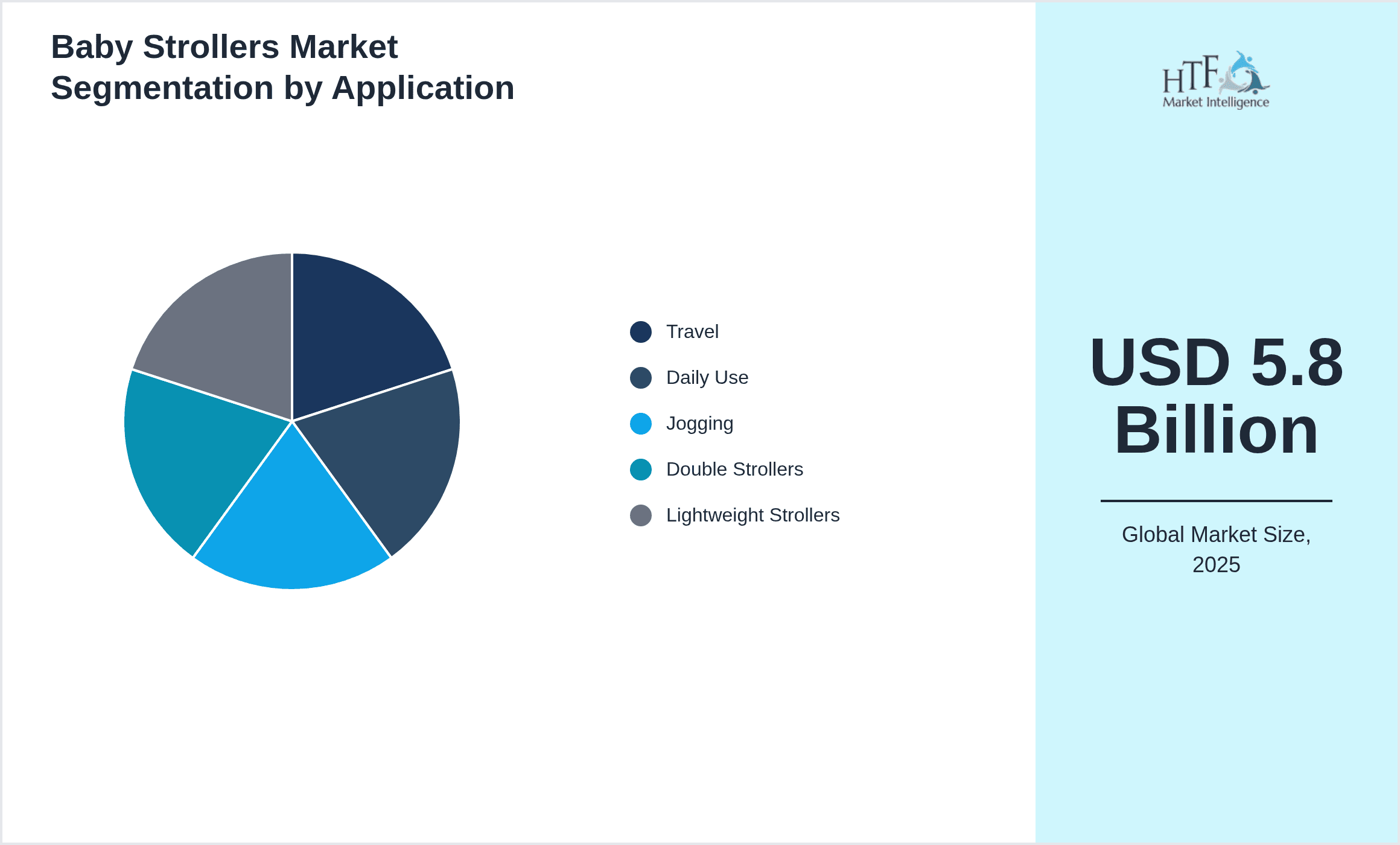
Market Breakdown
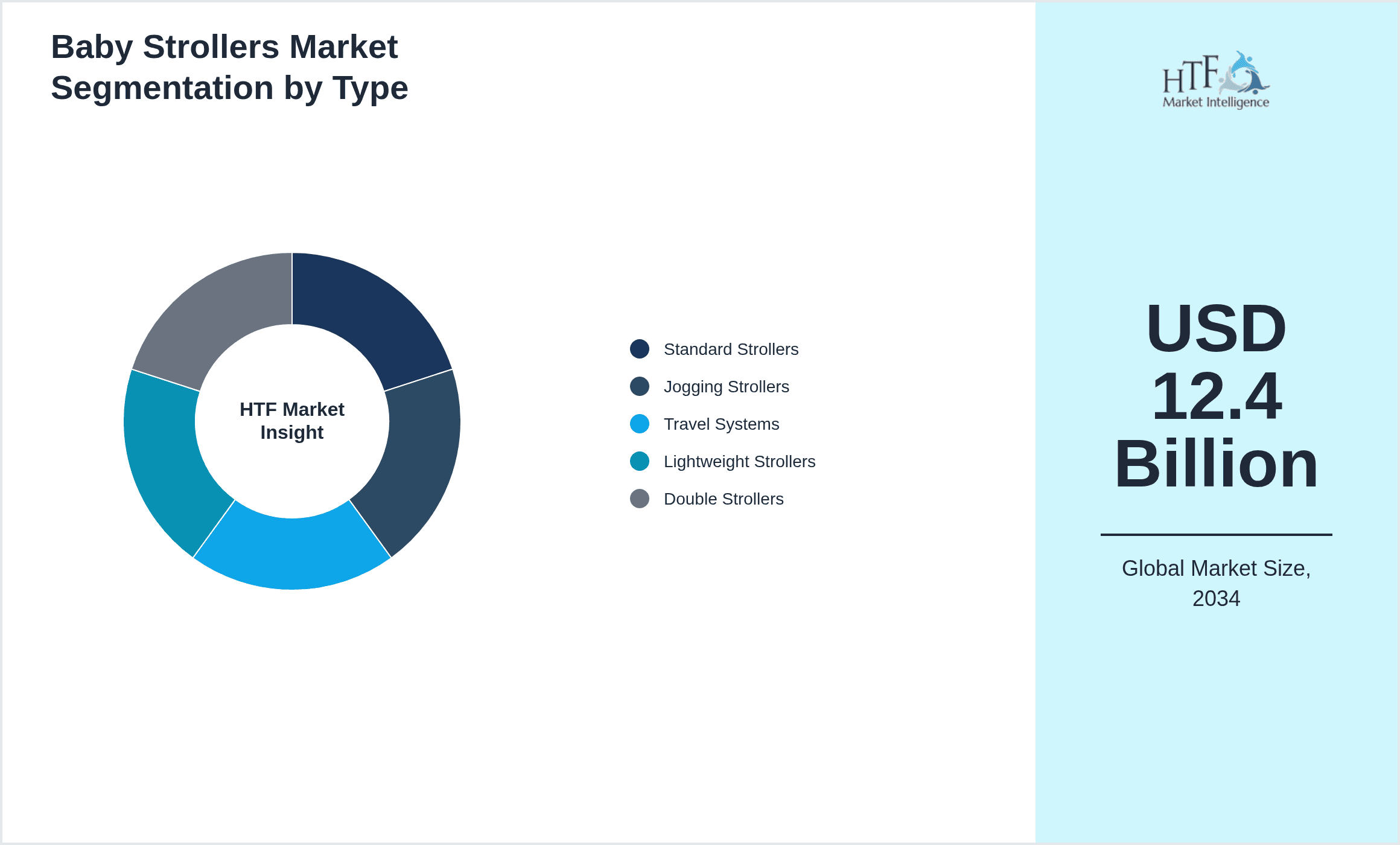
- •By Product Type
- ◦Standard Strollers
- ◦Jogging Strollers
- ◦Travel Systems
- ◦Lightweight Strollers
- ◦Double Strollers
- •By Application
- ◦Travel
- ◦Daily Use
- ◦Jogging
- ◦Double Strollers
- ◦Lightweight Strollers
- •By End-Use Industry
- ◦Retail Stores
- ◦E-Commerce
- ◦Specialty Stores
- ◦Supermarkets/Hypermarkets
- •By Distribution Channel
- ◦Offline Retail
- ◦Online Retail
- ◦Direct Sales
Growth Dynamics
The Baby Strollers Market growth is primarily driven by increasing urbanization and rising birth rates globally, especially in developing economies. Growing awareness of child safety, coupled with higher disposable incomes in emerging markets, encourages parents to invest in premium and multifunctional strollers. Furthermore, advancements in stroller design, such as lightweight materials and foldability, enhance consumer convenience and drive adoption. The expansion of e-commerce platforms has significantly improved product accessibility and variety, facilitating market penetration across diverse geographic regions. Additionally, increasing parental workforce participation fuels demand for innovative and ergonomic baby transport solutions that accommodate busy lifestyles, contributing to sustained market growth.
Market Trends
A significant trend in the Baby Strollers Market is the increasing integration of smart technology, including IoT-enabled features like GPS tracking and automatic folding mechanisms, enhancing user convenience and safety. Sustainability concerns are pushing manufacturers to adopt eco-friendly materials and sustainable production processes, aligning with consumer preferences for green products. The customization trend is also gaining traction, with brands offering personalized colors, accessories, and modular designs to cater to individual tastes. Moreover, the rise of multifunctional strollers that combine car seats and bassinets is reshaping consumer expectations. Lastly, omnichannel retailing, blending online and offline experiences, is revolutionizing how consumers research and purchase baby strollers.
Market Opportunities
Emerging markets in Asia-Pacific and Latin America present substantial growth opportunities due to expanding middle-class populations and increasing awareness of infant safety products. There is significant potential for innovation in lightweight and travel system strollers tailored for urban commuters and frequent travelers. The rising trend of sustainable parenting opens avenues for eco-friendly stroller lines, appealing to environmentally conscious consumers. Additionally, expanding e-commerce penetration allows brands to reach untapped rural and semi-urban areas globally. Collaborations with childcare service providers and maternity hospitals to offer bundled stroller packages represent another lucrative growth avenue, enhancing market reach and consumer trust.
Market Challenges
The Baby Strollers Market faces challenges including stringent safety regulations that require continuous product testing and certification, increasing production costs. High competition from low-cost manufacturers, especially in emerging markets, pressures pricing and margins for premium brands. Additionally, supply chain disruptions and rising raw material costs due to global economic uncertainties pose risks to manufacturing efficiency. Consumer concerns about product durability and the complexity of multifunctional strollers can hinder adoption rates. Moreover, the need to balance innovation with affordability remains a persistent challenge for market players aiming to capture diverse demographic segments worldwide.
Regulatory Framework
Between 2020 and 2024, global regulatory bodies have introduced stringent safety standards for baby strollers, focusing on structural integrity, braking systems, and material safety to prevent hazards. The U.S. Consumer Product Safety Commission updated its mandatory guidelines requiring rigorous crash testing and choke hazard assessments. The European Union enforced enhanced EN 1888 standards, mandating improved testing protocols and labeling requirements to boost consumer transparency. Additionally, regulations emphasize the use of non-toxic, environmentally friendly materials, aligning with sustainability objectives. Manufacturers must comply with country-specific import-export certifications and labeling laws, impacting global trade. Continuous regulatory evolution necessitates that companies maintain robust quality management systems to ensure adherence and market access.
Market Intelligence
- •15th January 2025, Graco Children's Products Inc. launched the 'Graco AeroSport', a lightweight jogging stroller featuring advanced shock absorption and compact foldability, targeting active urban parents. This product incorporates breathable fabrics and enhanced maneuverability, aligning with consumer demand for performance and convenience. The launch aims to strengthen Graco’s presence in the jogging stroller segment while leveraging growing fitness trends among new parents. Strategic marketing campaigns focus on digital platforms to capture the tech-savvy demographic. Source: Official Graco Press Release.
- •3rd March 2025, Chicco unveiled the 'Chicco EcoSmart Travel System' integrating sustainable materials and a modular design that converts easily from stroller to car seat. This innovation addresses the rising trend of eco-conscious parenting and multifunctional convenience. The system also features enhanced safety certifications and is available globally via e-commerce channels. Chicco’s strategic objective is to capture environmentally aware consumers while expanding in developing markets. Source: Chicco Corporate Communications.
- •7th June 2024, UPPAbaby completed a strategic partnership with a leading e-commerce platform to enhance global distribution of its premium stroller line. This collaboration focuses on expanding reach in Asia-Pacific and Europe, leveraging digital marketing and logistics capabilities. The partnership is expected to accelerate sales growth by providing consumers with seamless access to high-end stroller options and after-sales services. Source: UPPAbaby Official Statement.
- •12th September 2024, Bugaboo International B.V. announced the launch of its 'Bugaboo Lynx', an ultra-compact stroller featuring smart folding technology and smartphone connectivity for real-time tracking. This launch targets tech-savvy urban parents seeking convenience and safety. The product's innovative features are designed to set new standards in stroller technology and elevate Bugaboo’s competitive position. Source: Bugaboo Press Release.
Regional Outlook
The North America currently holds a significant share of the market, primarily due to several key factors: increasing consumption rates, a burgeoning population, and robust economic momentum. These elements collectively drive demand, positioning this region as a leader in the market. On the other hand, Asia-Pacific is rapidly emerging as the fastest-growing area within the industry. This remarkable growth can be attributed to swift infrastructure development, the expansion of various industrial sectors, and a marked increase in consumer demand. These dynamics make this region a crucial player in shaping future market growth.
In our report, we cover a comprehensive analysis of the following regions and countries:
- North America
- LATAM
- West Europe
- Central & Eastern Europe
- Northern Europe
- Southern Europe
- East Asia
- Southeast Asia
- South Asia
- Central Asia
- Oceania
- MEA
| Feature | Details |
|---|---|
| Base Year Market Size | USD 5.8 Billion |
| Forecast Year Market Size | USD 12.4 Billion |
| CAGR | 7.6% |
| Forecast Period | 2026 to 2033 |
| YoY Growth | 7.3% |
| Scope of Report | Market is segmented by Product Type (Standard Strollers, Jogging Strollers, Travel Systems, Lightweight Strollers, Double Strollers), Application (Travel, Daily Use, Jogging, Double Strollers, Lightweight Strollers), End-Use Industry (Retail Stores, E-Commerce, Specialty Stores, Supermarkets/Hypermarkets), Distribution Channel (Offline Retail, Online Retail, Direct Sales) |
| Regions Covered | North America, LATAM, West Europe, Central & Eastern Europe, Northern Europe, Southern Europe, East Asia, Southeast Asia, South Asia, Central Asia, Oceania, MEA |
| Key Companies | Graco Children's Products Inc. (United States), Chicco (Italy), Britax (United Kingdom), Evenflo Company, Inc. (United States), Baby Jogger (United States), UPPAbaby (United States), Bugaboo International B.V. (Netherlands), Maxi-Cosi (Netherlands), Cybex (Germany), Silver Cross (United Kingdom), Joovy (United States), Baby Trend, Inc. (United States), Mountain Buggy (New Zealand), Phil & Teds (New Zealand), Stokke ASA (Norway), Safety 1st (France), Peg Perego (Italy), Hauck GmbH & Co. KG (Germany), Mamas & Papas (United Kingdom), Nuna (Netherlands), Babyzen (France), Joie (United Kingdom), Clek Inc. (Canada), Doona (Israel), Inglesina (Italy) |
Global Baby Strollers Market Size, Growth & Revenue 2024-2034 - Table of Contents
Frequently Asked Questions (FAQ):
The Compact Track Loaders market is projected to grow at a CAGR of 6.8% from 2025 to 2030, driven by increasing demand in construction and agricultural sectors.
North America currently leads the market with approximately 45% market share, followed by Europe at 28% and Asia-Pacific at 22%. The remaining regions account for 5% of the global market.
Key growth drivers include increasing construction activities, rising demand for versatile equipment in agriculture, technological advancements in track loader design, and growing preference for compact equipment in urban construction projects.