
Global Home and Office Decorations Market - Outlook 2020-2034
Global Home and Office Decorations Market is segmented by Product Type (Wall Decor, Furniture, Lighting, Decorative Accessories, Flooring), Application (Residential, Commercial, Hospitality, Institutional, Retail), End-Use Industry (Real Estate, Hospitality and Tourism, Corporate Offices, Retail and E-commerce), Distribution Channel (Online Retail, Specialty Stores, Mass Market Retailers), and Geography (North America, LATAM, West Europe, Central & Eastern Europe, Northern Europe, Southern Europe, East Asia, Southeast Asia, South Asia, Central Asia, Oceania, MEA)
Pricing
Report Overview
Executive Summary
- •The Global Home and Office Decorations market comprises a diverse array of products aimed at enhancing the visual and functional appeal of both residential and commercial interiors. This market covers a wide spectrum of decorative items including wall decor, furniture, lighting, decorative accessories, and flooring materials, serving multiple applications such as residential, commercial, hospitality, institutional, and retail segments. The value chain extends from raw material sourcing, manufacturing, distribution, retailing, to end-user consumption, involving stakeholders like designers, architects, and decorators. Market growth is fueled by rising disposable incomes, urbanization, and increasing consumer awareness about interior aesthetics and sustainable design. Technological advancements have introduced smart and customizable decoration solutions, blending traditional craftsmanship with modern innovations. The market remains highly competitive and dynamic, with a strong focus on innovation, sustainability, and meeting evolving consumer preferences globally.
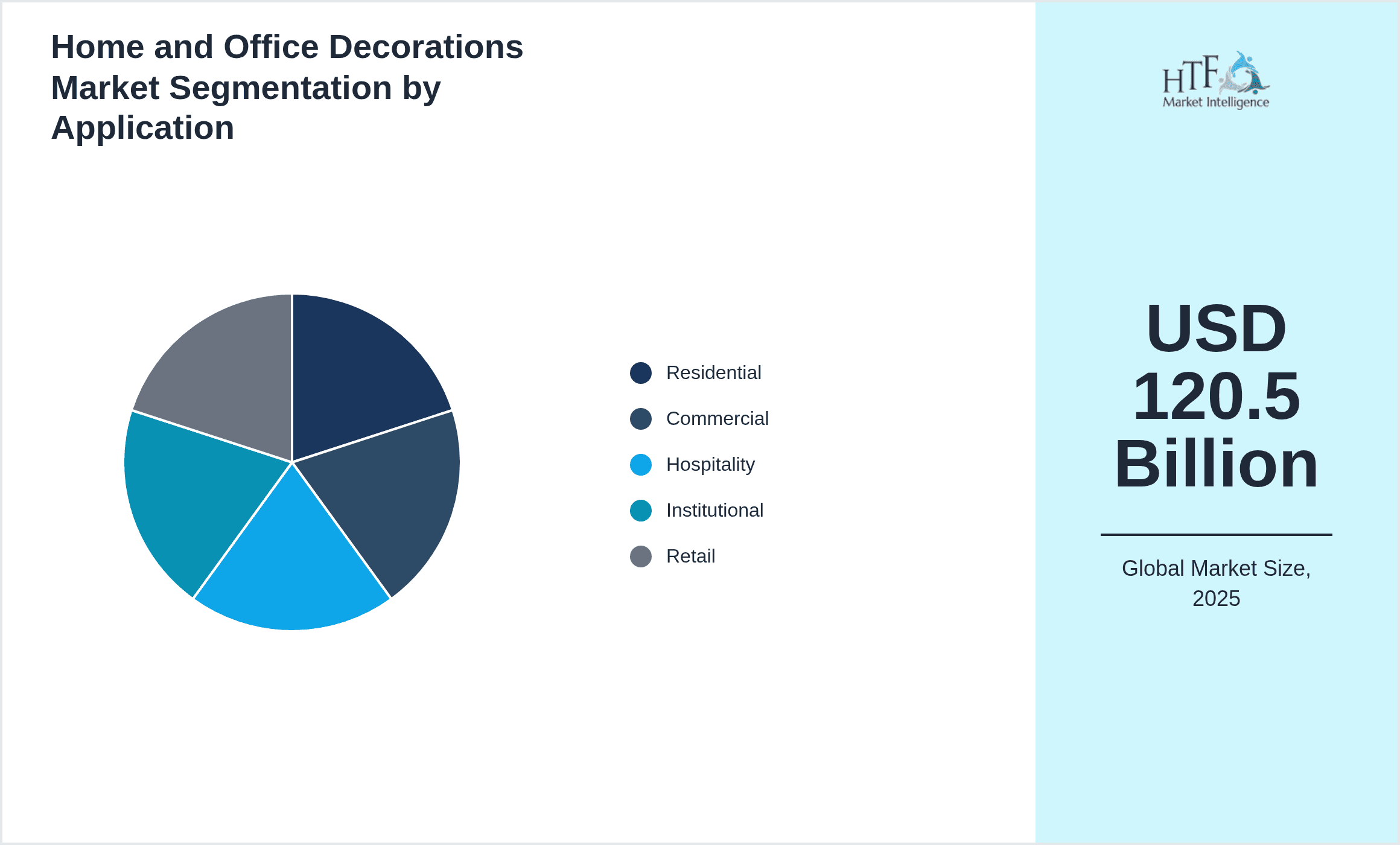
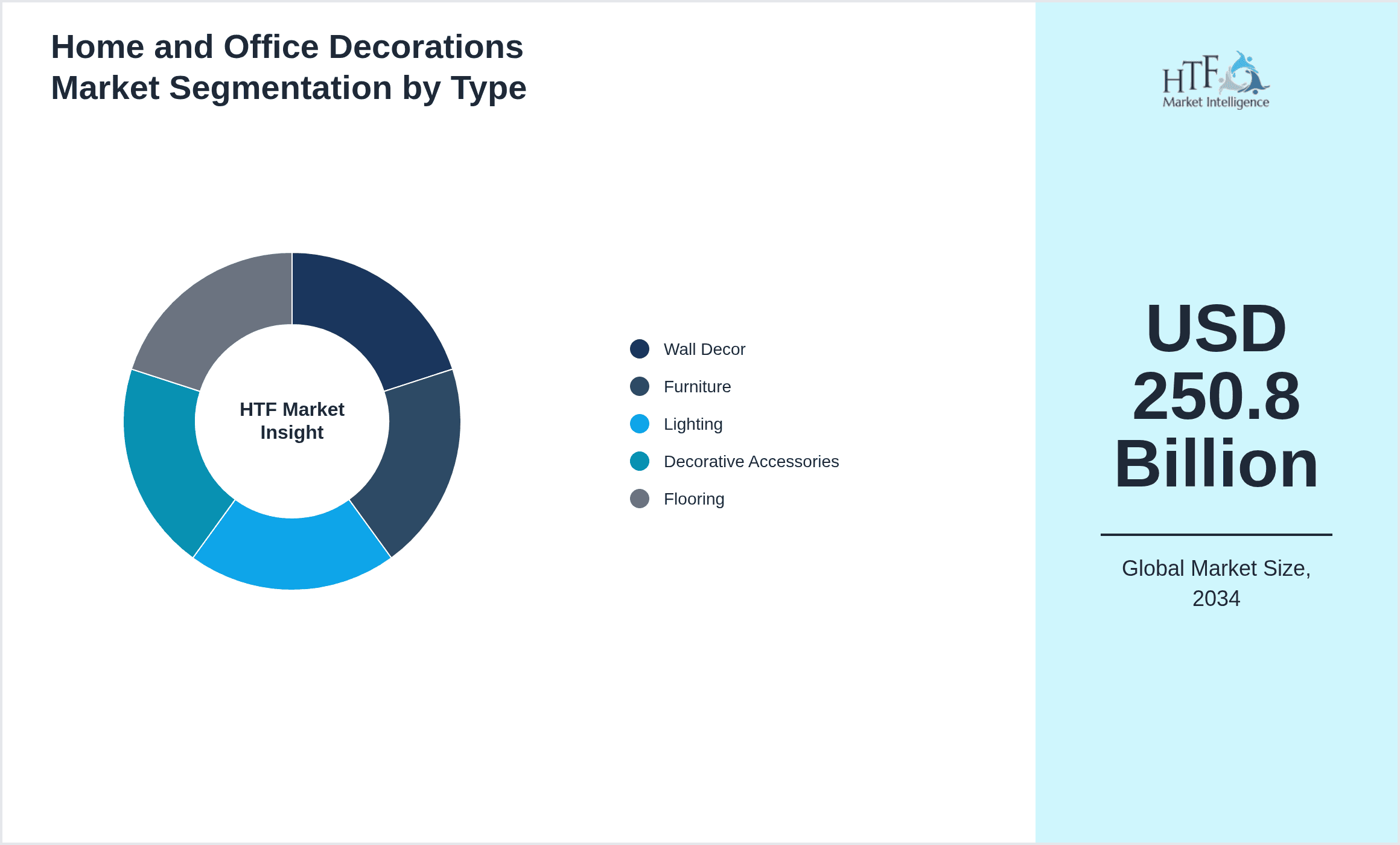
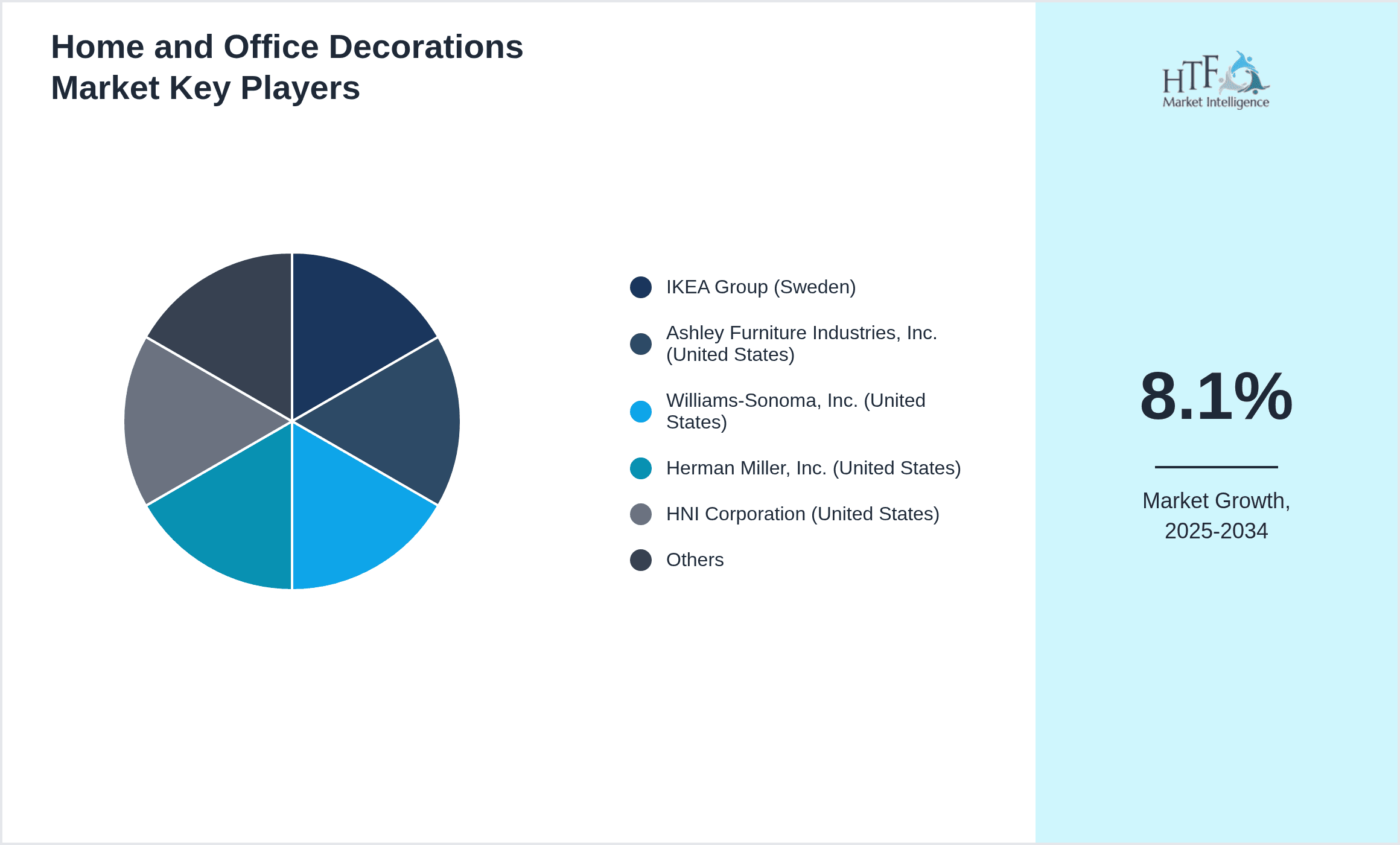
- •Key highlights include a base market size of USD 120.5 Billion in 2025, forecasted to reach USD 250.8 Billion by 2034, reflecting a CAGR of 8.1%. The market’s growth is supported by increasing demand in Asia-Pacific, which is the fastest-growing region, while North America continues to dominate in terms of revenue generation. Furniture remains the leading product type, with decorative accessories emerging as the fastest-growing segment. Year-on-year growth is projected at 8.0%, emphasizing robust expansion prospects across all major global regions. Market dynamics are influenced by technological integration, sustainability trends, and shifting consumer lifestyles.
- •This market holds significant strategic importance for manufacturers, distributors, retailers, and investors due to its direct impact on the construction, real estate, hospitality, and retail industries. The home and office decoration sector provides value through enriching living and working environments, promoting wellbeing, and reflecting cultural and aesthetic trends. As demand for personalized and eco-friendly products rises, companies investing in innovation and sustainability are well-positioned to capitalize on emerging opportunities. The market also offers avenues for collaboration across design, technology, and manufacturing sectors, making it critical for stakeholders aiming to maintain competitive advantage and market leadership globally.

Competitive Landscape
The competitive environment in the global home and office decorations market is characterized by a mix of established multinational manufacturers and emerging regional players, each adopting diverse strategies to capture market share. Key competitive strategies include product innovation, customization capabilities, sustainability initiatives, and aggressive marketing to appeal to evolving consumer preferences. Companies invest heavily in research and development to integrate smart technologies and eco-friendly materials into their product portfolios, enhancing differentiation. Strategic partnerships and collaborations with interior designers, architects, and technology providers further strengthen market positioning. Mergers and acquisitions are also prevalent, enabling companies to expand geographical reach and diversify product offerings. Pricing strategies vary across regions, influenced by local economic conditions and competitive intensity. Distribution channels encompass online platforms, specialty stores, and mass-market retailers, with e-commerce gaining prominence. Innovation in supply chain management and adoption of digital tools improve operational efficiency and customer engagement. Regional competition reflects the dominance of North America and Europe in revenue generation, while Asia-Pacific's rapidly growing market attracts new entrants and investments. Overall, the market’s competitive landscape is dynamic, with continuous shifts driven by consumer trends, technological advancements, and regulatory developments, indicating a highly fragmented yet growth-oriented industry.
Leading Companies in Home and Office Decorations Market
- •IKEA Group (Sweden)
- •Ashley Furniture Industries, Inc. (United States)
- •Williams-Sonoma, Inc. (United States)
- •Herman Miller, Inc. (United States)
- •HNI Corporation (United States)
- •La-Z-Boy Incorporated (United States)
- •Steelcase Inc. (United States)
- •Havwoods International Ltd. (United Kingdom)
- •Restoration Hardware, Inc. (United States)
- •Foshan Nanhai New Century Furniture Co., Ltd. (China)
- •Jysk A/S (Denmark)
- •Mohawk Industries, Inc. (United States)
- •Ligne Roset (France)
- •Knoll, Inc. (United States)
- •Masco Corporation (United States)
- •Crate and Barrel (United States)
- •HNI India Pvt Ltd. (India)
- •B&B Italia S.p.A. (Italy)
- •Culp Inc. (United States)
- •Simmons Bedding Company, LLC (United States)
- •Lovesac (United States)
- •Dorel Home (Canada)
- •Natuzzi S.p.A. (Italy)
- •HNI Canada (Canada)
- •Haverty Furniture Companies, Inc. (United States)
Market Breakdown
- •By Product Type
- ◦Wall Decor
- ◦Furniture
- ◦Lighting
- ◦Decorative Accessories
- ◦Flooring
- •By Application
- ◦Residential
- ◦Commercial
- ◦Hospitality
- ◦Institutional
- ◦Retail
- •By End-Use Industry
- ◦Real Estate
- ◦Hospitality and Tourism
- ◦Corporate Offices
- ◦Retail and E-commerce
- •By Distribution Channel
- ◦Online Retail
- ◦Specialty Stores
- ◦Mass Market Retailers
Growth Dynamics
- •Increasing urbanization and rising disposable incomes globally have propelled demand for innovative and stylish home and office decoration products. Consumers are investing more in interior aesthetics, driving market expansion across all regions.
- •Advances in technology, including smart home integrations and customizable design platforms, are enabling manufacturers to offer tailored decoration solutions that meet specific consumer preferences, enhancing market appeal.
- •Sustainability trends and environmentally friendly materials are becoming crucial growth drivers, as consumer awareness about ecological impact influences purchasing decisions and encourages green product development.
- •The rise of e-commerce and digital marketing has expanded market reach, allowing manufacturers and retailers to tap into emerging markets and offer convenient shopping experiences to a global audience.
- •Collaborations between manufacturers, designers, and technology firms foster innovation and enable the creation of unique product offerings, strengthening competitive positioning and fueling growth.
- •Government initiatives promoting housing development and commercial infrastructure investments in emerging economies contribute to increased demand for home and office decorations, supporting sustained market growth.
- •Consumer preference shifts towards multifunctional and space-saving furniture and decor items are influencing product design trends, opening new avenues for market players to innovate.
Market Trends
- •The integration of smart technologies such as IoT-enabled lighting and furniture with embedded sensors is transforming the home and office decorations landscape, offering enhanced functionality and user convenience.
- •Sustainable and recycled materials are increasingly incorporated into product lines, reflecting consumer demand for eco-conscious options and regulatory pressures on environmental standards.
- •Minimalist and multifunctional design trends are gaining prominence, driven by urban living constraints and consumer desire for versatile, space-efficient decor solutions.
- •The growth of online marketplaces and digital platforms is reshaping distribution channels, enabling direct-to-consumer sales and personalized shopping experiences worldwide.
- •Collaborative design initiatives involving customers through virtual reality and augmented reality tools are enhancing engagement and facilitating bespoke product creation.
- •Increasing demand for luxury and premium decorative items is observed in developed markets, with consumers seeking unique craftsmanship and exclusive designs.
- •Cross-industry collaborations integrating technology, design, and sustainability are driving innovation and competitive differentiation in the market.
Market Opportunities
- •Expansion into emerging markets with rising urban populations and growing middle-class income presents significant opportunities for market players to capture new customer bases.
- •Development of smart and connected decoration products that integrate seamlessly with home automation systems offers vast growth potential in the digital age.
- •Investment in sustainable materials and eco-friendly manufacturing processes can attract environmentally conscious consumers and comply with tightening regulations.
- •Collaborations with technology firms to leverage augmented reality and virtual reality for customer engagement and product visualization can enhance sales and brand loyalty.
- •Diversification of product portfolios to include multifunctional and space-saving designs addresses urban living challenges, opening new market segments.
- •Leveraging e-commerce growth by enhancing online presence and adopting omni-channel strategies can significantly increase market penetration and revenue.
- •Customization and personalization services provide differentiation and meet rising consumer demand for unique home and office decoration solutions.
Market Challenges
- •Fluctuating raw material prices and supply chain disruptions pose significant challenges, affecting production costs and delivery timelines across regions.
- •Intense competition from low-cost manufacturers, especially in emerging markets, exerts pricing pressure and impacts profitability for established players.
- •Compliance with diverse regional regulations and sustainability standards increases operational complexity and requires substantial investment in quality control.
- •Rapid changes in consumer preferences necessitate continuous innovation and agility in product development, challenging manufacturers and retailers alike.
- •Counterfeit products and low-quality imports undermine brand reputation and consumer trust, complicating market dynamics.
- •Logistical challenges in last-mile delivery for bulky decoration products impact customer satisfaction and increase operational costs.
- •Talent shortages in design and technology integration fields may limit innovation capacity and slow market responsiveness.
Regulatory Framework
- •The EU Timber Regulation (2013) enacted between 2020 and 2025 mandates compliance with sustainable sourcing of wood products, significantly impacting manufacturers in Europe and globally by enforcing traceability and legality in timber supply chains.
- •The California Air Resources Board (CARB) formalized regulations on formaldehyde emissions from composite wood products, effective from 2023, imposing strict limits that have driven reformulation and certification efforts among manufacturers across North America.
- •The U.S. Consumer Product Safety Commission (CPSC) updated safety standards for furniture and decorative products from 2021 to 2025, including requirements on stability and flammability, influencing product design and testing protocols.
- •China’s Green Building Evaluation Standard (GBES), revised in 2024, emphasizes the use of eco-friendly and energy-efficient decoration materials in construction and renovation projects, encouraging market shifts towards sustainable products.
- •The International Organization for Standardization (ISO) introduced updated guidelines on environmental management systems (ISO 14001:2015) that have been increasingly adopted worldwide, promoting sustainable practices within the home and office decorations industry.
Market Intelligence
- •15 March 2025, IKEA Group launched a new line of eco-friendly furniture made from 100% recycled materials and sustainable wood sources, targeting environmentally conscious consumers globally. The product range includes modular sofas, tables, and storage solutions designed for small urban spaces, integrating smart features compatible with home automation systems. This initiative aligns with IKEA’s commitment to sustainability and aims to capture the growing demand for green products in both developed and emerging markets. The launch was supported by a global marketing campaign and strategic partnerships with local manufacturers to optimize supply chain efficiency. Source: IKEA Official Press Release
- •10 January 2025, Ashley Furniture Industries, Inc. introduced a technologically advanced smart lighting collection for office environments, featuring AI-driven ambient adjustments and energy-saving capabilities. The innovative product line enhances workplace productivity and wellbeing by adapting lighting conditions based on occupancy and natural light availability. This strategic move positions Ashley Furniture as a leader in integrating smart technology into office decorations, catering to evolving corporate client needs. The company emphasized its focus on research and development to drive innovation and sustainability in its product portfolio. Source: Ashley Furniture Corporate News
- •22 July 2024, Williams-Sonoma, Inc. announced its acquisition of a boutique home decor startup specializing in artisanal, handcrafted decorative accessories. This strategic acquisition aims to expand Williams-Sonoma’s premium product offerings and strengthen its presence in the luxury segment. The integration will leverage the startup’s unique design capabilities and sustainable sourcing practices, aligning with consumer trends towards exclusivity and eco-consciousness. The deal is expected to enhance Williams-Sonoma’s competitive edge in North America and Europe, supporting its growth strategy through product diversification and innovation. Source: Williams-Sonoma Investor Relations
- •5 February 2025, Herman Miller, Inc. completed a collaboration with a leading technology firm to develop next-generation ergonomic office furniture incorporating embedded sensors for posture monitoring and health analytics. This innovation aims to improve employee wellbeing and productivity, addressing the rising demand for smart office solutions in the post-pandemic hybrid work environment. The partnership combines Herman Miller’s design expertise with advanced sensor technology to deliver intelligent products that adapt to user needs in real-time. Market reception has been positive, with pilot deployments in corporate offices across North America and Europe. Source: Herman Miller Press Release
Regional Outlook
The North America currently holds a significant share of the market, primarily due to several key factors: increasing consumption rates, a burgeoning population, and robust economic momentum. These elements collectively drive demand, positioning this region as a leader in the market. On the other hand, Asia-Pacific is rapidly emerging as the fastest-growing area within the industry. This remarkable growth can be attributed to swift infrastructure development, the expansion of various industrial sectors, and a marked increase in consumer demand. These dynamics make this region a crucial player in shaping future market growth.
In our report, we cover a comprehensive analysis of the following regions and countries:
- North America
- LATAM
- West Europe
- Central & Eastern Europe
- Northern Europe
- Southern Europe
- East Asia
- Southeast Asia
- South Asia
- Central Asia
- Oceania
- MEA
| Feature | Details |
|---|---|
| Base Year Market Size | USD 120.5 Billion |
| Forecast Year Market Size | USD 250.8 Billion |
| CAGR | 8.1% |
| Forecast Period | 2026 to 2033 |
| YoY Growth | 8% |
| Scope of Report | Market is segmented by Product Type (Wall Decor, Furniture, Lighting, Decorative Accessories, Flooring), Application (Residential, Commercial, Hospitality, Institutional, Retail), End-Use Industry (Real Estate, Hospitality and Tourism, Corporate Offices, Retail and E-commerce), Distribution Channel (Online Retail, Specialty Stores, Mass Market Retailers) |
| Regions Covered | North America, LATAM, West Europe, Central & Eastern Europe, Northern Europe, Southern Europe, East Asia, Southeast Asia, South Asia, Central Asia, Oceania, MEA |
| Key Companies | IKEA Group (Sweden), Ashley Furniture Industries, Inc. (United States), Williams-Sonoma, Inc. (United States), Herman Miller, Inc. (United States), HNI Corporation (United States), La-Z-Boy Incorporated (United States), Steelcase Inc. (United States), Havwoods International Ltd. (United Kingdom), Restoration Hardware, Inc. (United States), Foshan Nanhai New Century Furniture Co., Ltd. (China), Jysk A/S (Denmark), Mohawk Industries, Inc. (United States), Ligne Roset (France), Knoll, Inc. (United States), Masco Corporation (United States), Crate and Barrel (United States), HNI India Pvt Ltd. (India), B&B Italia S.p.A. (Italy), Culp Inc. (United States), Simmons Bedding Company, LLC (United States), Lovesac (United States), Dorel Home (Canada), Natuzzi S.p.A. (Italy), HNI Canada (Canada), Haverty Furniture Companies, Inc. (United States) |
Global Home and Office Decorations Market - Outlook 2020-2034 - Table of Contents
Frequently Asked Questions (FAQ):
The Compact Track Loaders market is projected to grow at a CAGR of 6.8% from 2025 to 2030, driven by increasing demand in construction and agricultural sectors.
North America currently leads the market with approximately 45% market share, followed by Europe at 28% and Asia-Pacific at 22%. The remaining regions account for 5% of the global market.
Key growth drivers include increasing construction activities, rising demand for versatile equipment in agriculture, technological advancements in track loader design, and growing preference for compact equipment in urban construction projects.