
Global Bacteriophage Market Size, Growth & Revenue 2024-2034
Global Bacteriophage Market is segmented by Product Type (Lytic Phages, Temperate Phages, Filamentous Phages, Jumbo Phages, Other Bacteriophages), Application (Therapeutics, Diagnostics, Agriculture, Food Safety, Environmental), End-Use Industry (Pharmaceuticals, Agriculture & Farming, Food & Beverage, Environmental Services), Distribution Channel (Direct Sales, Distributors, Online Platforms), and Geography (North America, LATAM, West Europe, Central & Eastern Europe, Northern Europe, Southern Europe, East Asia, Southeast Asia, South Asia, Central Asia, Oceania, MEA)
Pricing
Report Overview
Executive Summary
- •The global bacteriophage market represents a rapidly growing segment within biotechnology, focusing on viruses that specifically target bacteria to provide innovative solutions across healthcare, agriculture, food safety, and environmental sectors. This market's scope includes various phage types such as lytic, temperate, filamentous, and jumbo phages, each applied in disease treatment, bacterial diagnostics, crop protection, food contamination prevention, and pollution control. Increasing antibiotic resistance and regulatory endorsements for phage therapy have catalyzed demand globally. Technological advancements in genetic engineering, phage formulation, and delivery platforms have expanded product efficacy and market penetration. Key applications include therapeutic treatments for multidrug-resistant infections, rapid diagnostic tools, sustainable agricultural biocontrol agents, and enhanced food safety protocols. The market is characterized by active research, strategic collaborations, and rising investments from pharmaceutical and biotech firms, supported by favorable policy frameworks. These factors collectively underpin the expected robust growth trajectory of the global bacteriophage market over the forecast period.
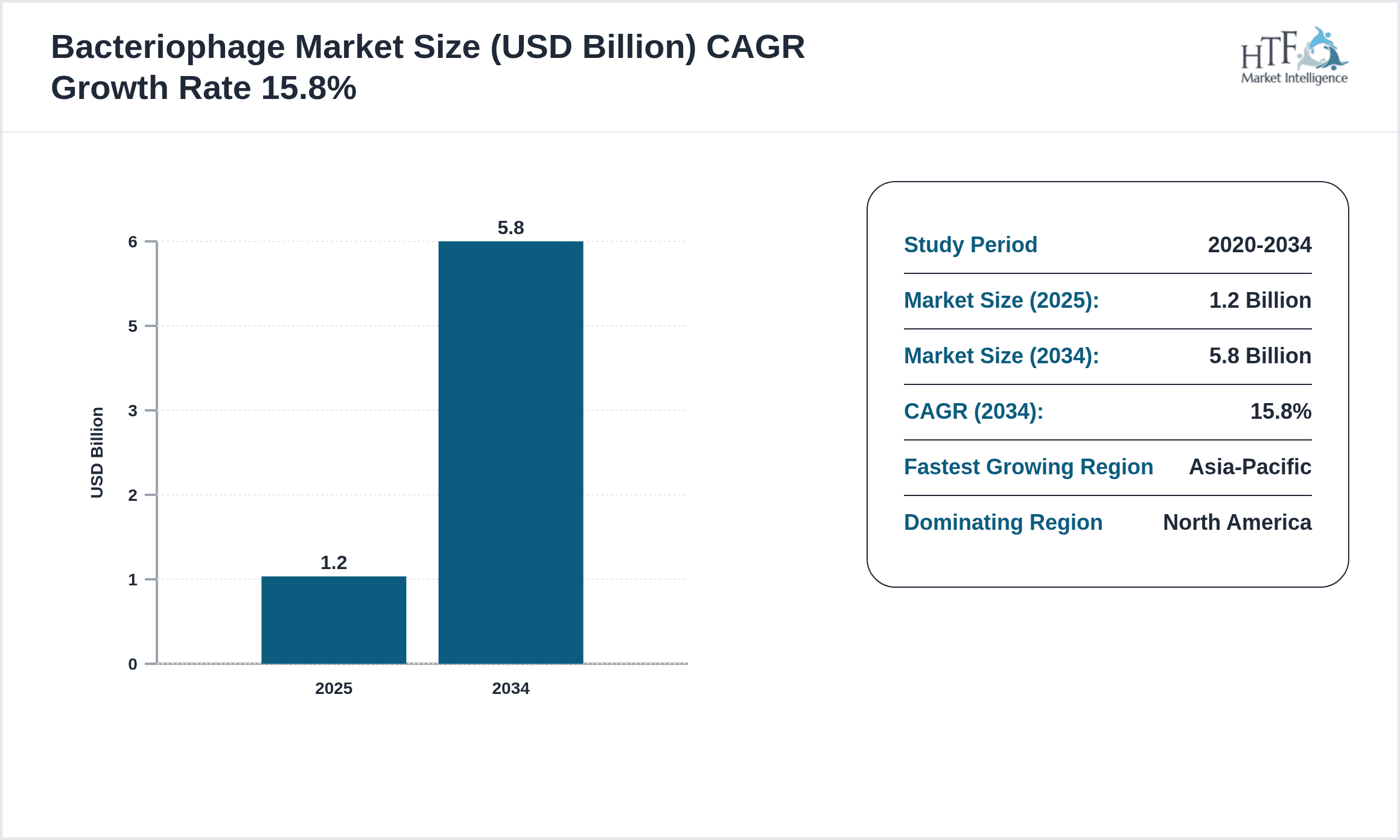
- •Market highlights reveal a base valuation of USD 1.2 Billion in 2024, forecasting expansion to USD 5.8 Billion by 2034, reflecting a CAGR of 15.8%. North America currently dominates the market owing to advanced biotech infrastructure and regulatory support, while Asia-Pacific is anticipated to register the fastest growth driven by increasing healthcare investments and rising prevalence of bacterial infections. Lytic phages lead the product segment due to their effective bactericidal properties, with jumbo phages identified as the fastest-growing type owing to novel therapeutic potentials. Therapeutics remain the primary application, capitalizing on rising antibiotic resistance, whereas diagnostics and agricultural uses exhibit significant growth opportunities. Key strategic initiatives by leading companies, including product innovation and market expansion, bolster competitive positioning. The market’s dynamic nature is further shaped by emerging trends such as phage cocktail formulations and precision medicine integration.
- •The bacteriophage market offers substantial value propositions across industries by providing targeted, eco-friendly, and effective bacterial control solutions. In healthcare, phage therapy emerges as a promising alternative to conventional antibiotics, addressing the urgent need for combating resistant bacterial strains. Agriculture benefits from environmentally sustainable biocontrol agents reducing chemical pesticide dependency. Food safety applications enhance contamination prevention, ensuring consumer health and regulatory compliance. Environmental applications contribute to wastewater treatment and microbial pollution control. Stakeholders including pharmaceutical companies, agricultural firms, diagnostic providers, and regulatory bodies recognize the strategic importance of bacteriophages in innovation pipelines and public health agendas. The market’s growth is supported by technological advances, increasing R&D activities, and expanding global awareness of phage potential, positioning it as a critical element in next-generation microbial management and therapeutic development.
Competitive Landscape
The global bacteriophage market is marked by a highly competitive environment characterized by intense rivalry among established biotechnology firms, emerging startups, and pharmaceutical companies. Market participants leverage innovation as a primary competitive strategy, focusing on phage engineering, formulation technologies, and novel delivery systems to enhance efficacy and safety profiles. Strategic partnerships, collaborations, and licensing agreements are prevalent to accelerate product development and expand geographical reach. Companies compete on product differentiation, regulatory compliance, and intellectual property portfolios to secure market share. Pricing strategies are influenced by production complexities and regulatory requirements, with emphasis on cost-effectiveness to facilitate market adoption. Distribution channels vary from direct sales to partnerships with healthcare providers and agricultural entities. Market entry barriers include stringent regulatory landscapes, technological expertise requirements, and high R&D investment costs. Looking ahead, competitive dynamics are expected to intensify with increasing investments in phage therapy research, digital health integration, and personalized medicine approaches, fostering innovation-led growth and consolidation trends.
Leading Companies in Bacteriophage Market
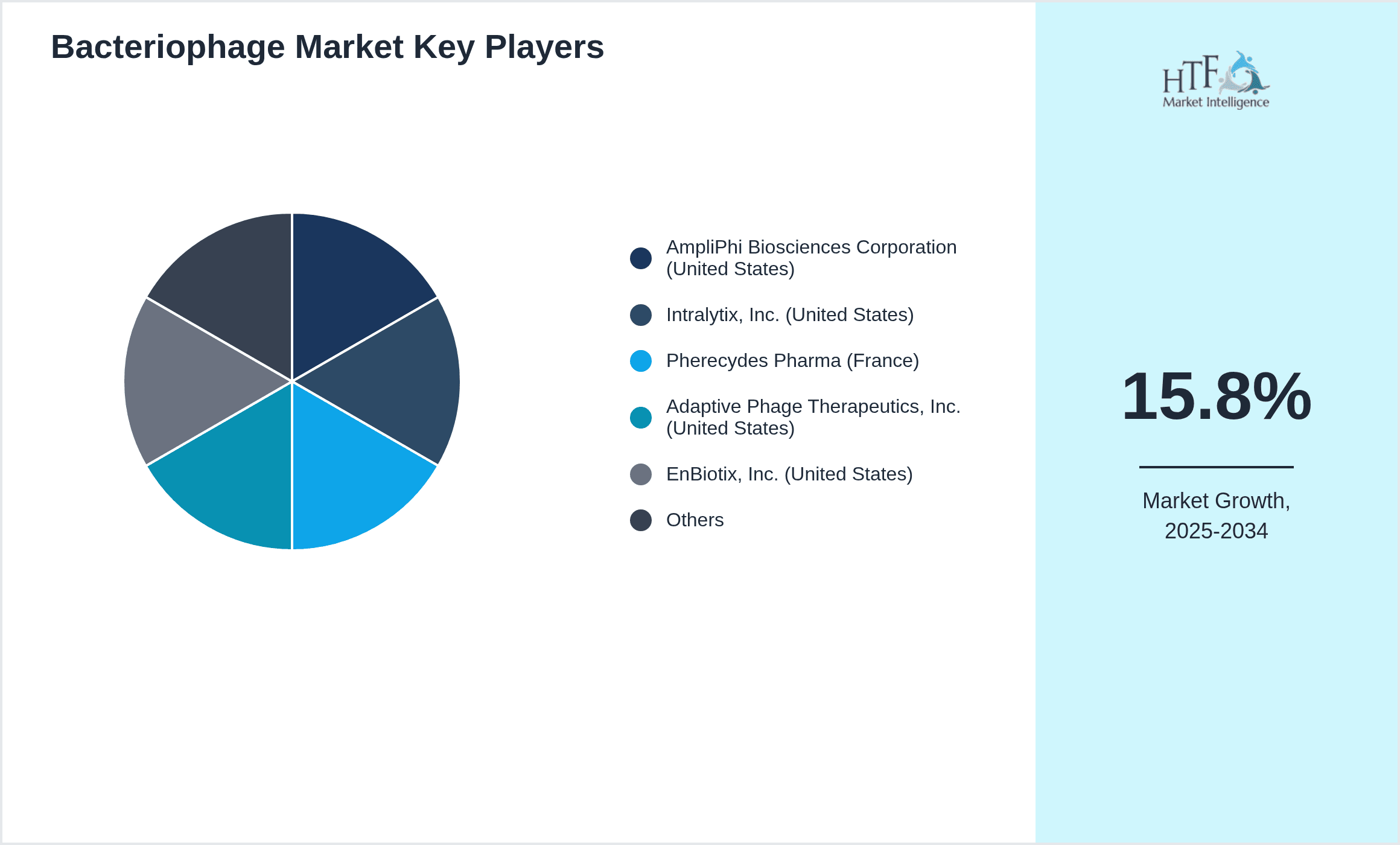
- •AmpliPhi Biosciences Corporation (United States)
- •Intralytix, Inc. (United States)
- •Pherecydes Pharma (France)
- •Adaptive Phage Therapeutics, Inc. (United States)
- •EnBiotix, Inc. (United States)
- •Locus Biosciences, Inc. (United States)
- •Biophage Pharma (Poland)
- •Phage International (United States)
- •Phagelux (Germany)
- •Microgen (Russia)
- •Eligo Bioscience (France)
- •PhagePro (South Korea)
- •Novolytics (United Kingdom)
- •Fixed Phage (United States)
- •Biocontrol Ltd. (Israel)
- •PhageGuard (Denmark)
- •Phage Therapy Center (Georgia)
- •Entheos Therapeutics (United States)
- •Phagomed (Austria)
- •Proteon Pharmaceuticals (Poland)
- •PhageTech (India)
- •Metabiomics (United States)
- •PhageX (China)
- •Adaptive Biotechnologies (United States)
- •PhageNova (Canada)

Market Breakdown
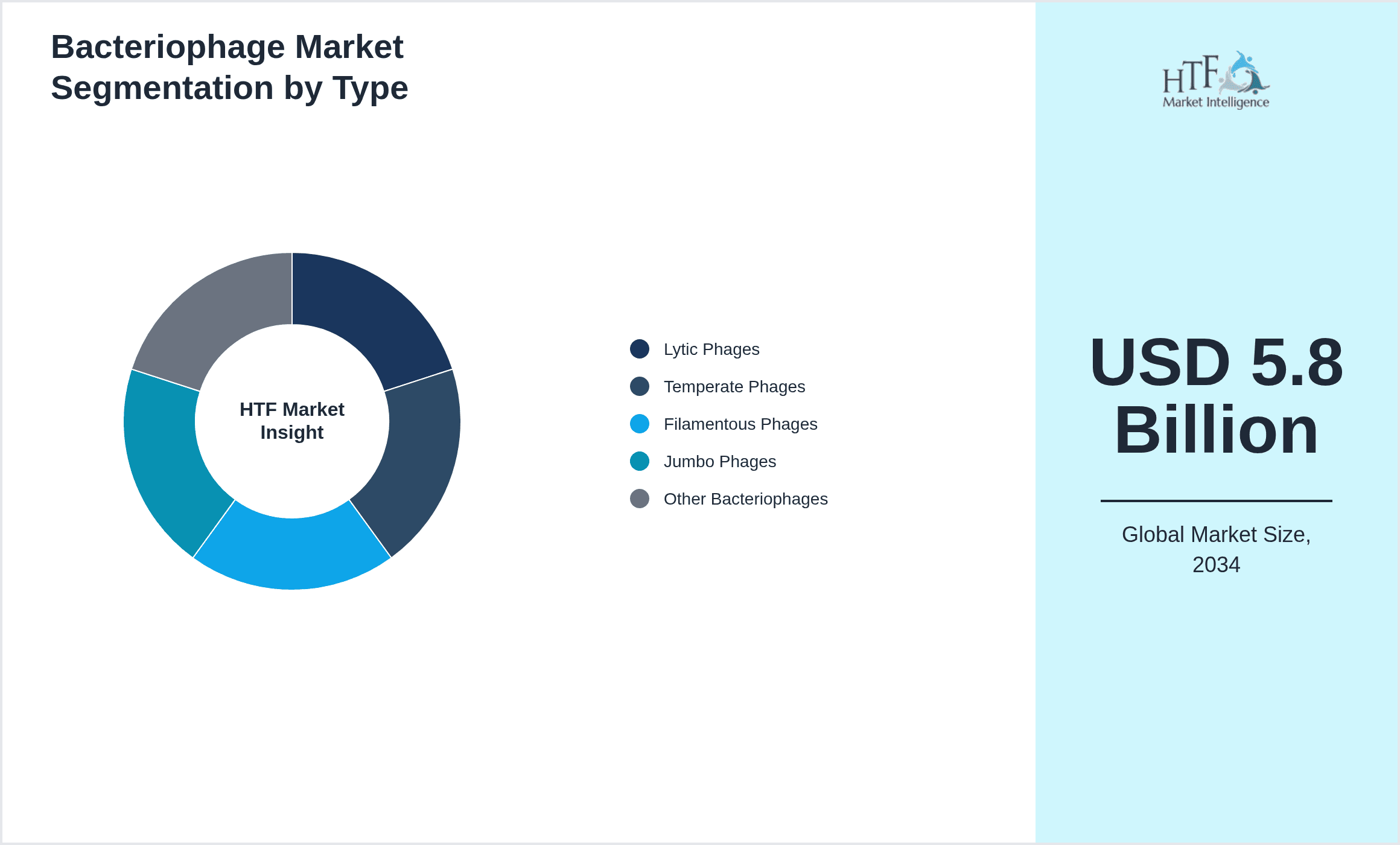
- •By Product Type
- ◦Lytic Phages
- ◦Temperate Phages
- ◦Filamentous Phages
- ◦Jumbo Phages
- ◦Other Bacteriophages
- •By Application
- ◦Therapeutics
- ◦Diagnostics
- ◦Agriculture
- ◦Food Safety
- ◦Environmental
- •By End-Use Industry
- ◦Pharmaceuticals
- ◦Agriculture & Farming
- ◦Food & Beverage
- ◦Environmental Services
- •By Distribution Channel
- ◦Direct Sales
- ◦Distributors
- ◦Online Platforms
Growth Dynamics
- •The global bacteriophage market growth is primarily driven by increasing antibiotic resistance worldwide, prompting healthcare providers to seek alternative antibacterial therapies. This has elevated demand for phage therapeutics, supported by ongoing clinical trials and regulatory approvals. Additionally, advancements in genetic engineering have enabled development of highly specific and efficacious phage formulations, enhancing treatment outcomes. Rising awareness among clinicians and patients about phage benefits further stimulates adoption. Expansion into agriculture and food safety sectors, where sustainable microbial control is critical, also contributes to market growth. Furthermore, government initiatives and funding aimed at combating antimicrobial resistance foster research and commercialization activities, providing a favorable ecosystem for market expansion.
- •Technological innovations such as CRISPR-based phage modification, phage cocktail development, and improved delivery mechanisms have revolutionized bacteriophage applications. Integration of digital health tools for personalized phage therapy and diagnostics is emerging as a notable trend. The market is witnessing increased collaborations between biotech firms and academic institutions, accelerating R&D pipelines. Growing investments in phage biomanufacturing infrastructure are enhancing production scalability and cost efficiency. Additionally, the expansion of phage libraries and bioinformatics platforms facilitates rapid identification of effective phages against resistant bacteria, driving market dynamism.
- •Despite promising growth, the bacteriophage market faces restraints including complex regulatory pathways that vary significantly across regions, delaying approvals and market entry. Limited awareness and acceptance among some healthcare professionals impede widespread adoption. Challenges in phage stability, delivery, and potential bacterial resistance development necessitate further research. Production costs remain relatively high due to intricate manufacturing processes. Moreover, intellectual property and patent issues related to naturally occurring biological agents create market uncertainties. These factors collectively restrain market expansion in some areas.
- •Significant opportunities exist in expanding bacteriophage applications beyond therapeutics into fields such as agriculture, food safety, and environmental remediation. Emerging markets in Asia-Pacific and Latin America present untapped potential due to rising bacterial disease burdens and increasing healthcare infrastructure investments. Innovations in phage engineering and combination therapies offer avenues for differentiated products. Strategic partnerships and licensing agreements can accelerate market penetration. Additionally, growing consumer demand for natural and sustainable alternatives in agriculture and food industries fosters new application domains, enabling market diversification and revenue growth.
- •The bacteriophage market encounters challenges including stringent quality control and standardization requirements that complicate product development and commercialization. Variability in phage-bacteria interactions necessitates customized solutions, increasing time and cost. Supply chain complexities and limited manufacturing capacities affect timely delivery. Regulatory uncertainties and lack of harmonized global guidelines create barriers. Furthermore, competition from established antibacterial agents and skepticism regarding efficacy and safety slow adoption. Addressing these challenges requires focused R&D, regulatory engagement, and educational initiatives to build confidence among stakeholders.
Market Trends
- •The bacteriophage market is witnessing a trend towards personalized phage therapy, where phage preparations are tailored to individual patient bacterial profiles, enhancing treatment efficacy and minimizing resistance. This approach is supported by advances in rapid bacterial diagnostics and genomic sequencing technologies. Companies are investing in phage banks and bioinformatics platforms to enable swift matching of phages to bacterial infections. Such precision medicine paradigms are gaining traction both in developed and emerging markets, reshaping therapeutic strategies.
- •Integration of bacteriophage therapy with conventional antibiotics, known as phage-antibiotic synergy, is an emerging trend to overcome antibiotic resistance and improve clinical outcomes. Research indicates that combined treatments can reduce bacterial load more effectively than monotherapies. This has led to clinical trials and product pipelines focusing on combination regimens. The trend is encouraging collaborative efforts between pharmaceutical and biotech sectors, aiming to develop novel integrated therapies.
- •Sustainability considerations are driving adoption of bacteriophage-based biocontrol agents in agriculture and food safety. Regulatory agencies increasingly promote reduced chemical pesticide use, favoring phage applications that are environmentally friendly and target-specific. Companies are developing phage products to protect crops from bacterial pathogens and to prevent contamination in food processing. This strategic alignment with global sustainability goals is influencing market expansion and innovation.
- •Digital transformation is impacting bacteriophage market operations, with use of AI and machine learning to predict phage-host interactions and optimize phage cocktail compositions. These technologies facilitate faster R&D cycles and improved product efficacy. Additionally, digital platforms enable better supply chain management and stakeholder communication, enhancing market responsiveness and service delivery.
- •Collaborative ecosystems involving academia, industry, and government are strengthening, promoting knowledge sharing and resource pooling in bacteriophage research. Public-private partnerships fund clinical trials and technology development, accelerating commercialization pathways. This collaborative trend fosters innovation, reduces market entry risks, and enhances regulatory compliance capabilities, supporting market growth.
Market Opportunities
- •Expanding bacteriophage applications into veterinary medicine offers significant growth potential. Increasing incidence of bacterial infections in livestock and companion animals, coupled with rising antibiotic resistance, creates demand for alternative treatments. Phage therapies tailored for veterinary use can reduce antibiotic residues in food chains and promote animal health. This untapped segment presents lucrative opportunities for product development and market entry.
- •Emerging markets in Asia-Pacific and Latin America provide fertile grounds for bacteriophage market expansion due to growing healthcare awareness, improving infrastructure, and increasing government support. Localized bacterial infection burdens and regulatory reforms favor adoption of phage-based products. Targeted marketing and strategic collaborations with regional players can facilitate penetration and revenue growth.
- •Technological advancements in phage encapsulation and delivery systems improve stability and targeted release, addressing previous limitations. These innovations open avenues for novel therapeutic formulations and extended applications. Companies investing in R&D for such technologies can gain competitive advantages and expand product portfolios.
- •Integration of bacteriophage diagnostics with point-of-care testing devices enables rapid, accurate bacterial detection, enhancing clinical decision-making. This synergy enhances market appeal among healthcare providers and patients. Developing user-friendly, cost-effective diagnostic kits represents a promising opportunity.
- •Strategic partnerships between biotech firms and pharmaceutical companies facilitate resource sharing, risk mitigation, and accelerated market access. Collaborative ventures focusing on clinical trials, regulatory approvals, and distribution networks amplify growth prospects. Such alliances can drive innovation and global scaling of bacteriophage products.
Market Challenges
- •The lack of standardized regulatory frameworks across different countries poses a significant challenge for the global bacteriophage market. Diverse approval processes, clinical trial requirements, and quality standards create complexity and delay market entry, increasing costs and uncertainty for manufacturers. Harmonization efforts are ongoing but remain limited, necessitating strategic regulatory navigation.
- •Phage therapy’s inherent biological variability and specificity demand customized treatment approaches, complicating manufacturing and scalability. Ensuring consistent product quality and efficacy requires advanced quality control measures and robust production facilities, which can be cost-intensive and technically challenging.
- •Limited awareness and skepticism among physicians, patients, and regulatory bodies regarding bacteriophage therapy hinder widespread acceptance and adoption. Educational initiatives and clinical evidence generation are essential to build confidence and market credibility, but these require time and investment.
- •Competition from well-established antibiotics and antimicrobial agents presents a barrier, as these treatments are often preferred due to familiarity, cost-effectiveness, and regulatory clarity. Overcoming entrenched market preferences demands compelling clinical data and strategic marketing efforts.
- •Manufacturing challenges including phage stability, contamination risks, and complex purification processes impact production costs and supply reliability. Addressing these operational issues is critical for ensuring product availability and maintaining competitive pricing within the market.
Regulatory Framework
- •Between 2020 and 2024, regulatory bodies worldwide have progressively developed guidelines to accommodate bacteriophage-based products, recognizing their unique biological nature. The U.S. FDA and EMA have initiated frameworks to evaluate phage therapy safety and efficacy, emphasizing clinical trial requirements and quality standards. These regulations facilitate accelerated approvals for compassionate use and experimental therapies, fostering innovation while ensuring patient safety.
- •In Europe, the EMA’s Committee for Advanced Therapies (CAT) established specific pathways for phage medicinal products, including adaptive licensing and conditional approvals, allowing faster market access. National agencies in countries like France and Belgium have issued compassionate use authorizations to expand phage therapy availability.
- •Regulations addressing manufacturing quality, such as Good Manufacturing Practices (GMP) adapted for phage production, have been codified to ensure product consistency and safety. These standards cover phage characterization, purity, and potency testing, aligning with conventional biopharmaceutical requirements but tailored to phage attributes.
- •Country-specific mandates in Asia-Pacific, including Japan and Australia, have evolved to support phage research and clinical application through regulatory incentives, funding, and fast-track approval schemes, promoting regional market growth and innovation.
- •Government initiatives globally encourage antimicrobial resistance mitigation through support for phage technology development, including grants, public-private partnerships, and policy advocacy. These efforts create a favorable regulatory environment and stimulate market expansion opportunities.
Market Intelligence
- •15th January 2024, Adaptive Phage Therapeutics, Inc. announced the launch of a novel personalized phage therapy platform designed to treat multidrug-resistant bacterial infections. The platform utilizes rapid bacterial genomic sequencing combined with a proprietary phage library to tailor treatments for individual patients. This innovative approach aims to improve clinical outcomes and reduce treatment times. The launch represents a significant advancement in precision bacteriophage therapeutics, positioning the company at the forefront of personalized medicine in infectious diseases. Strategic objectives include expanding clinical trial programs and forming partnerships with healthcare providers globally. Source: Adaptive Phage Therapeutics Official Press Release
- •20th September 2023, Intralytix, Inc. introduced an advanced bacteriophage cocktail for food safety applications targeting Listeria monocytogenes contamination in ready-to-eat products. The product features enhanced stability and broad-spectrum efficacy, meeting stringent FDA and USDA standards. This launch addresses growing consumer and regulatory demands for natural, chemical-free food preservation methods. The innovation is expected to reduce foodborne illness incidences and extend shelf life, supporting industry adoption. Strategic market positioning targets North American and European food processing sectors with plans for geographic expansion. Source: Intralytix Company Website
- •5th June 2024, AmpliPhi Biosciences Corporation announced a strategic partnership with a leading pharmaceutical company to co-develop phage-antibiotic combination therapies. The collaboration aims to accelerate clinical trials and regulatory submissions for treating resistant bacterial infections. This initiative leverages complementary expertise to enhance product pipelines and market reach. The partnership reflects growing industry recognition of phage synergy with conventional antibiotics as a transformative therapeutic approach. Planned activities include joint R&D investments, shared manufacturing resources, and coordinated commercialization strategies. Source: AmpliPhi Biosciences Press Release
- •12th November 2023, Pherecydes Pharma completed a $50 million series C funding round to expand R&D capabilities and scale production facilities. The investment will support clinical development of its phage therapy candidates targeting cystic fibrosis-associated infections. The funding underscores investor confidence in phage therapeutics and facilitates accelerated market entry. Expansion plans include enhancing GMP-compliant manufacturing and broadening global clinical trial networks. This milestone strengthens the company's competitive positioning and fosters innovation in personalized bacteriophage treatments. Source: Pherecydes Pharma Official Announcement
Regional Outlook
The North America currently holds a significant share of the market, primarily due to several key factors: increasing consumption rates, a burgeoning population, and robust economic momentum. These elements collectively drive demand, positioning this region as a leader in the market. On the other hand, Asia-Pacific is rapidly emerging as the fastest-growing area within the industry. This remarkable growth can be attributed to swift infrastructure development, the expansion of various industrial sectors, and a marked increase in consumer demand. These dynamics make this region a crucial player in shaping future market growth.
In our report, we cover a comprehensive analysis of the following regions and countries:
- North America
- LATAM
- West Europe
- Central & Eastern Europe
- Northern Europe
- Southern Europe
- East Asia
- Southeast Asia
- South Asia
- Central Asia
- Oceania
- MEA
| Feature | Details |
|---|---|
| Base Year Market Size | USD 1.2 Billion |
| Forecast Year Market Size | USD 5.8 Billion |
| CAGR | 15.8% |
| Forecast Period | 2026 to 2033 |
| YoY Growth | 15.4% |
| Scope of Report | Market is segmented by Product Type (Lytic Phages, Temperate Phages, Filamentous Phages, Jumbo Phages, Other Bacteriophages), Application (Therapeutics, Diagnostics, Agriculture, Food Safety, Environmental), End-Use Industry (Pharmaceuticals, Agriculture & Farming, Food & Beverage, Environmental Services), Distribution Channel (Direct Sales, Distributors, Online Platforms) |
| Regions Covered | North America, LATAM, West Europe, Central & Eastern Europe, Northern Europe, Southern Europe, East Asia, Southeast Asia, South Asia, Central Asia, Oceania, MEA |
| Key Companies | AmpliPhi Biosciences Corporation (United States), Intralytix, Inc. (United States), Pherecydes Pharma (France), Adaptive Phage Therapeutics, Inc. (United States), EnBiotix, Inc. (United States), Locus Biosciences, Inc. (United States), Biophage Pharma (Poland), Phage International (United States), Phagelux (Germany), Microgen (Russia), Eligo Bioscience (France), PhagePro (South Korea), Novolytics (United Kingdom), Fixed Phage (United States), Biocontrol Ltd. (Israel), PhageGuard (Denmark), Phage Therapy Center (Georgia), Entheos Therapeutics (United States), Phagomed (Austria), Proteon Pharmaceuticals (Poland), PhageTech (India), Metabiomics (United States), PhageX (China), Adaptive Biotechnologies (United States), PhageNova (Canada) |
Global Bacteriophage Market Size, Growth & Revenue 2024-2034 - Table of Contents
Frequently Asked Questions (FAQ):
The Compact Track Loaders market is projected to grow at a CAGR of 6.8% from 2025 to 2030, driven by increasing demand in construction and agricultural sectors.
North America currently leads the market with approximately 45% market share, followed by Europe at 28% and Asia-Pacific at 22%. The remaining regions account for 5% of the global market.
Key growth drivers include increasing construction activities, rising demand for versatile equipment in agriculture, technological advancements in track loader design, and growing preference for compact equipment in urban construction projects.