
Global Risperidone Market Size, Growth & Revenue 2024-2034
Global Risperidone Market is segmented by Product Type (Oral Tablets, Oral Solution, Injectable, Disintegrating Tablets, Others), Application (Schizophrenia, Bipolar Disorder, Autism Spectrum Disorder, Major Depressive Disorder, Others), End-Use Industry (Hospitals, Clinics, Home Healthcare, Pharmacies), Distribution Channel (Hospital Pharmacies, Retail Pharmacies, Online Pharmacies), and Geography (North America, LATAM, West Europe, Central & Eastern Europe, Northern Europe, Southern Europe, East Asia, Southeast Asia, South Asia, Central Asia, Oceania, MEA)
Pricing
Report Overview
Executive Summary
- •The global Risperidone market comprises a dynamic pharmaceutical segment focused on the development and provision of Risperidone formulations used to manage psychiatric disorders including schizophrenia, bipolar disorder, autism spectrum disorder, and major depressive disorder. This market spans multiple product types such as oral tablets, oral solutions, injectable forms, and disintegrating tablets, each designed to meet specific patient compliance and therapeutic requirements. With an expanding patient base driven by rising mental health awareness and diagnosis rates worldwide, the market demonstrates robust growth potential. Geographically, the market is segmented into North America, Europe, Asia-Pacific, Latin America, and Middle East & Africa, reflecting diverse healthcare infrastructures and regulatory regimes. Innovations in drug delivery mechanisms and patent expirations influence competitive dynamics, while strategic collaborations among pharmaceutical companies enhance market penetration. The sector’s importance is underscored by its contribution to improving quality of life and managing chronic psychiatric conditions globally.
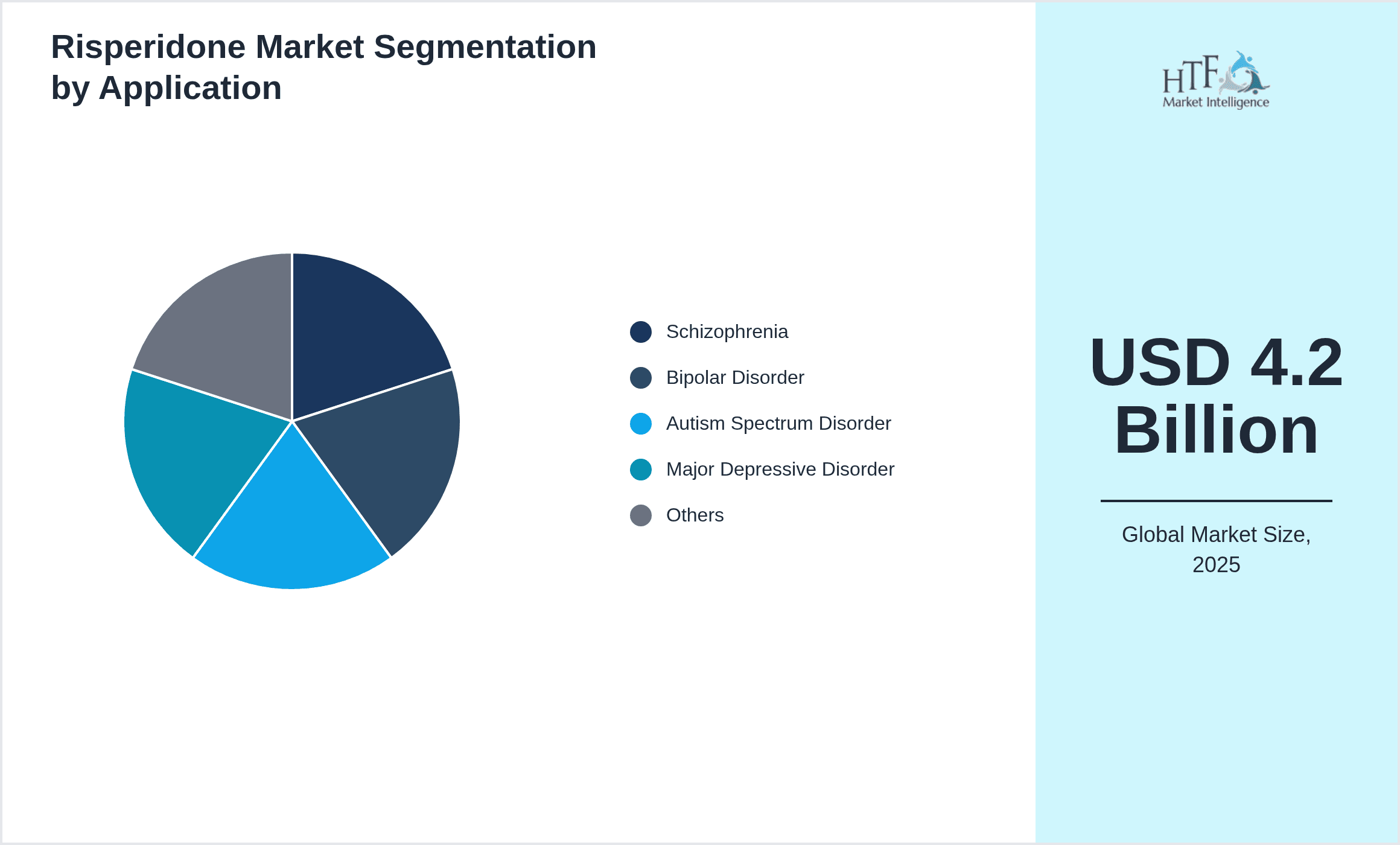
- •Key market highlights include a base market valuation of USD 4.2 Billion in 2024 with a projected CAGR of 6.3% through 2034, reaching an estimated USD 7.9 Billion. North America currently dominates the market due to advanced healthcare facilities and high adoption rates, whereas Asia-Pacific is emerging as the fastest-growing region propelled by expanding healthcare access and increasing prevalence of psychiatric disorders. Oral tablets remain the leading product type, accounting for the largest revenue share, while injectable Risperidone forms are witnessing the fastest growth due to enhanced patient compliance and acute care applicability. The schizophrenia application segment holds the largest share, followed closely by bipolar disorder treatment. These dynamics highlight evolving patient needs and technological advancements shaping the market landscape.
- •The Risperidone market offers significant value propositions for pharmaceutical companies, healthcare providers, and patients by addressing critical unmet medical needs in psychiatric care. Its strategic importance is amplified by growing government initiatives supporting mental health, increasing R&D investments, and expanding distribution networks. For stakeholders, this market represents opportunities to innovate formulations, optimize therapy adherence, and leverage emerging markets with rising demand. The integration of digital health tools and telemedicine further complements Risperidone therapy management, enhancing outcomes and market reach. Overall, the market embodies a critical segment within the global pharmaceutical industry with sustained growth backed by demographic trends, technological evolution, and regulatory support.

Competitive Landscape
The global Risperidone market is characterized by intense competition among multinational pharmaceutical companies and specialized generics manufacturers, driving innovation and strategic positioning. Market dynamics revolve around product differentiation through novel formulations such as long-acting injectables and orally disintegrating tablets, which enhance patient adherence and therapeutic efficacy. Leading players focus on robust R&D pipelines, patent protection strategies, and portfolio diversification to maintain competitive advantages. Additionally, partnerships, licensing agreements, and mergers and acquisitions are prevalent, enabling companies to consolidate market share and expand geographical reach. Pricing strategies are influenced by patent expirations and generic entrants, impacting profitability and market penetration. The competitive environment also reflects regional regulatory variations, with companies tailoring approaches to comply with differing approval processes and reimbursement policies, creating a complex landscape of rivalry and collaboration. Future trends point towards biologics integration and personalized medicine, further intensifying competition and innovation.
Companies Shaping the Risperidone Market
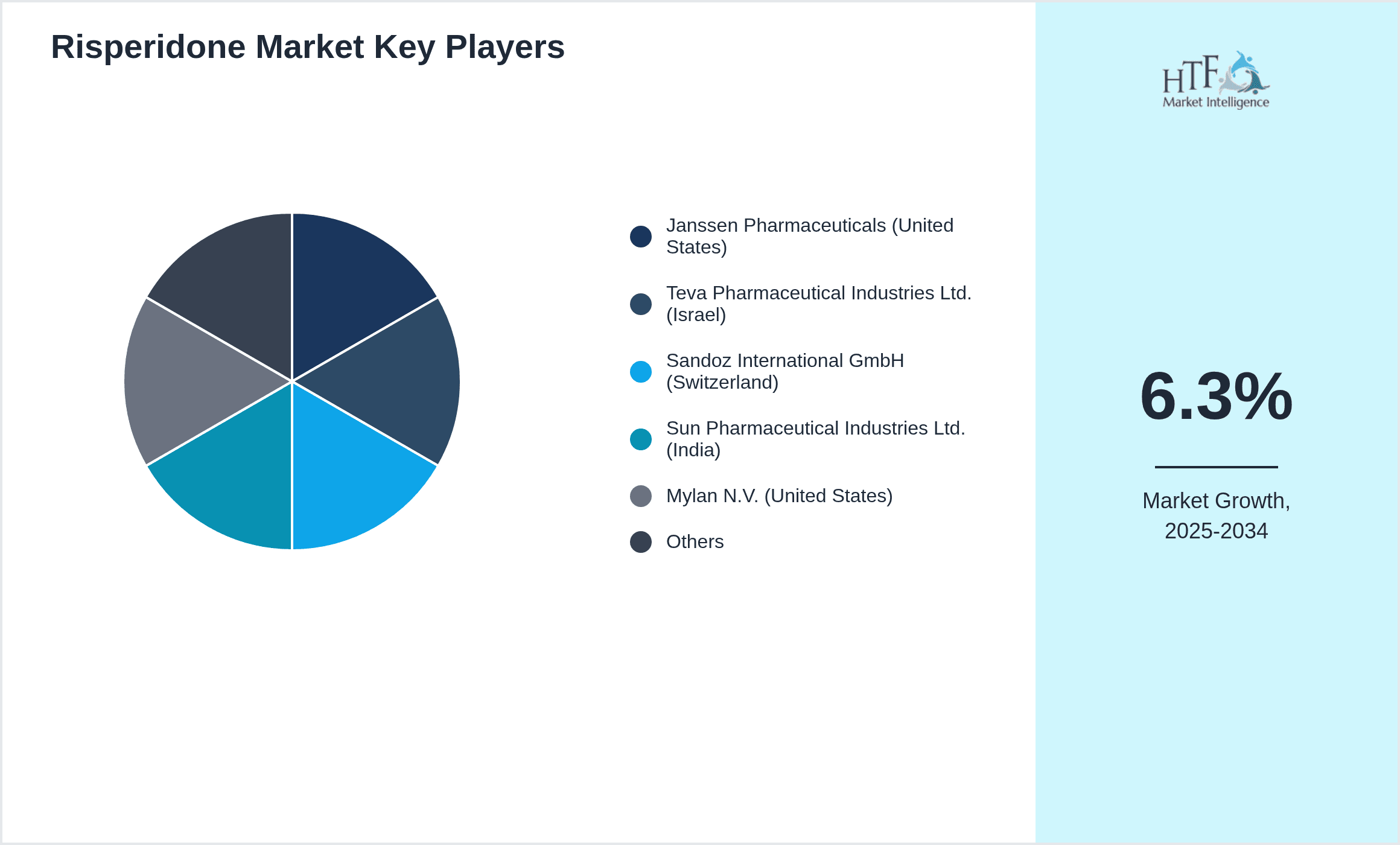
- •Janssen Pharmaceuticals (United States)
- •Teva Pharmaceutical Industries Ltd. (Israel)
- •Sandoz International GmbH (Switzerland)
- •Sun Pharmaceutical Industries Ltd. (India)
- •Mylan N.V. (United States)
- •Cipla Limited (India)
- •Lupin Limited (India)
- •Dr. Reddy’s Laboratories Ltd. (India)
- •Hetero Labs Limited (India)
- •Zydus Cadila (India)
- •Sunovion Pharmaceuticals Inc. (United States)
- •Aurobindo Pharma Limited (India)
- •Alembic Pharmaceuticals Ltd. (India)
- •Macleods Pharmaceuticals Ltd. (India)
- •Torrent Pharmaceuticals Ltd. (India)
- •Sawai Pharmaceutical Co., Ltd. (Japan)
- •Aspen Pharmacare Holdings Limited (South Africa)
- •Biocon Limited (India)
- •Hikma Pharmaceuticals PLC (United Kingdom)
- •Fresenius Kabi AG (Germany)
- •Meda AB (Sweden)
- •Alkem Laboratories Ltd. (India)
- •Cadila Healthcare Ltd. (India)
- •Nicholas Piramal India Limited (India)
- •Sun Pharmaceutical Industries Europe B.V. (Netherlands)
Market Breakdown
- •By Product Type
- ◦Oral Tablets
- ◦Oral Solution
- ◦Injectable
- ◦Disintegrating Tablets
- ◦Others
- •By Application
- ◦Schizophrenia
- ◦Bipolar Disorder
- ◦Autism Spectrum Disorder
- ◦Major Depressive Disorder
- ◦Others
- •By End-Use Industry
- ◦Hospitals
- ◦Clinics
- ◦Home Healthcare
- ◦Pharmacies
- •By Distribution Channel
- ◦Hospital Pharmacies
- ◦Retail Pharmacies
- ◦Online Pharmacies
Growth Dynamics
The global Risperidone market growth is primarily driven by increasing prevalence and diagnosis of psychiatric disorders such as schizophrenia and bipolar disorder worldwide. Rising mental health awareness and reduced stigma facilitate higher treatment adoption rates, expanding the patient pool. Advancements in drug formulations, particularly long-acting injectables, improve patient compliance and therapeutic outcomes, fueling market demand. Additionally, expanding healthcare infrastructure in emerging regions, notably Asia-Pacific, supports broader access to psychiatric medications. Government initiatives promoting mental health programs and increasing R&D investments in novel antipsychotic therapies further stimulate market expansion. The growing geriatric population with a higher propensity for psychiatric conditions also contributes significantly. Coupled with patent expirations enabling generic availability, these factors collectively propel sustained market growth globally.

Market Trends
A key trend shaping the Risperidone market is the shift towards personalized medicine and targeted drug delivery systems, enabling tailored treatment regimens that optimize efficacy and minimize side effects. The uptake of long-acting injectable formulations is gaining momentum due to improved patient adherence and reduced relapse rates. Digital health integration, including telepsychiatry and mobile adherence apps, complements traditional therapy, driving better outcomes. There is also a notable trend of increasing availability of generic Risperidone products, enhancing affordability and accessibility, especially in developing regions. Furthermore, strategic collaborations between pharmaceutical companies and technology firms are fostering innovation in drug development, manufacturing, and patient support programs. These trends collectively enhance the competitive landscape and patient-centric care approaches in the market.
Market Opportunities
Emerging markets in Asia-Pacific, Latin America, and the Middle East & Africa present significant growth opportunities due to rising healthcare expenditure, expanding mental health infrastructure, and increasing diagnosis rates. There is also potential for innovation in pediatric and geriatric formulations addressing specific population needs. Development of combination therapies and novel delivery methods, such as transdermal patches and implants, offer avenues for differentiation and market expansion. Increasing partnerships between pharmaceutical companies and healthcare providers can improve distribution and patient education, driving adherence. Additionally, growing emphasis on mental health policies and insurance coverage worldwide creates a supportive environment for market growth. These factors collectively offer promising prospects for stakeholders to capitalize on unmet medical needs and broaden their market footprints globally.
Market Challenges
The Risperidone market faces challenges such as stringent regulatory approval processes varying by region, which can delay product launches and increase development costs. Patent expirations have led to heightened generic competition, exerting downward pricing pressure and impacting profitability. Safety concerns and side effects associated with Risperidone, including metabolic and cardiovascular risks, may limit physician prescribing preferences and patient adherence. Additionally, limited awareness and stigma around mental health in certain regions hinder diagnosis and treatment uptake. Supply chain complexities and manufacturing scalability also pose obstacles. Addressing these challenges requires strategic investment in R&D, patient education, and regulatory compliance to sustain growth and market relevance.
Regulatory Framework
Between 2019 and 2024, regulatory bodies such as the FDA, EMA, and PMDA have enhanced guidelines focusing on the safety and efficacy evaluation of antipsychotic drugs including Risperidone. Requirements for post-marketing surveillance and risk management plans have intensified to monitor adverse effects and ensure patient safety. Regulatory agencies have also streamlined approval pathways for generic Risperidone formulations, increasing market accessibility. Regional mandates emphasize compliance with Good Manufacturing Practices (GMP) and pharmacovigilance standards, impacting production and market entry strategies. Additionally, mental health policy reforms globally have facilitated improved access to psychiatric medications. These evolving regulations shape market dynamics by balancing innovation, safety, and affordability, requiring manufacturers to maintain rigorous quality standards and adaptive regulatory strategies.
Market Intelligence
- •15th March 2024, Janssen Pharmaceuticals launched an extended-release injectable formulation of Risperidone designed to improve patient compliance and reduce dosing frequency. This product targets patients with schizophrenia and bipolar disorder requiring long-term maintenance therapy, offering a novel delivery system that sustains therapeutic drug levels over several weeks. The launch aims to capture significant market share in North America and Europe, where adherence challenges remain critical. Janssen’s initiative underscores its commitment to innovation and patient-centric solutions, positioning it competitively against generic entrants and alternative therapies. Strategic marketing campaigns and collaborations with healthcare providers support the product rollout, enhancing market penetration and treatment outcomes. Source: Official Janssen Pharmaceuticals press release.
- •10th October 2023, Sun Pharmaceutical Industries announced the commercial launch of a generic oral solution of Risperidone in the Asia-Pacific market. This product addresses the pediatric and geriatric patient segments requiring flexible dosing options and ease of administration. The launch leverages Sun Pharma’s extensive distribution network and aims to increase affordability and access in emerging economies. This move strengthens the company’s portfolio in psychiatric medications and counters patent-protected counterparts. The product received favorable regulatory approvals across multiple countries, reflecting growing demand for alternative formulations. Sun Pharma’s strategic expansion into liquid dosage forms represents a significant step in meeting diverse patient needs and expanding its global footprint. Source: Sun Pharmaceutical official announcement.
- •Recent market developments and strategic initiatives are continuously tracked through industry publications, company announcements, and regulatory filings. For the most current information, stakeholders are advised to monitor official corporate communications and recognized market intelligence platforms.
- •Recent market developments and strategic initiatives are continuously tracked through industry publications, company announcements, and regulatory filings. For the most current information, stakeholders are advised to monitor official corporate communications and recognized market intelligence platforms.
Regional Outlook
The North America currently holds a significant share of the market, primarily due to several key factors: increasing consumption rates, a burgeoning population, and robust economic momentum. These elements collectively drive demand, positioning this region as a leader in the market. On the other hand, Asia-Pacific is rapidly emerging as the fastest-growing area within the industry. This remarkable growth can be attributed to swift infrastructure development, the expansion of various industrial sectors, and a marked increase in consumer demand. These dynamics make this region a crucial player in shaping future market growth.
In our report, we cover a comprehensive analysis of the following regions and countries:
- North America
- LATAM
- West Europe
- Central & Eastern Europe
- Northern Europe
- Southern Europe
- East Asia
- Southeast Asia
- South Asia
- Central Asia
- Oceania
- MEA
| Feature | Details |
|---|---|
| Base Year Market Size | USD 4.2 Billion |
| Forecast Year Market Size | USD 7.9 Billion |
| CAGR | 6.3% |
| Forecast Period | 2026 to 2033 |
| YoY Growth | 6.1% |
| Scope of Report | Market is segmented by Product Type (Oral Tablets, Oral Solution, Injectable, Disintegrating Tablets, Others), Application (Schizophrenia, Bipolar Disorder, Autism Spectrum Disorder, Major Depressive Disorder, Others), End-Use Industry (Hospitals, Clinics, Home Healthcare, Pharmacies), Distribution Channel (Hospital Pharmacies, Retail Pharmacies, Online Pharmacies) |
| Regions Covered | North America, LATAM, West Europe, Central & Eastern Europe, Northern Europe, Southern Europe, East Asia, Southeast Asia, South Asia, Central Asia, Oceania, MEA |
| Key Companies | Janssen Pharmaceuticals (United States), Teva Pharmaceutical Industries Ltd. (Israel), Sandoz International GmbH (Switzerland), Sun Pharmaceutical Industries Ltd. (India), Mylan N.V. (United States) |
Global Risperidone Market Size, Growth & Revenue 2024-2034 - Table of Contents
Frequently Asked Questions (FAQ):
The Compact Track Loaders market is projected to grow at a CAGR of 6.8% from 2025 to 2030, driven by increasing demand in construction and agricultural sectors.
North America currently leads the market with approximately 45% market share, followed by Europe at 28% and Asia-Pacific at 22%. The remaining regions account for 5% of the global market.
Key growth drivers include increasing construction activities, rising demand for versatile equipment in agriculture, technological advancements in track loader design, and growing preference for compact equipment in urban construction projects.