
Global Rugby Ball Market Size, Growth & Revenue 2025-2034
Global Rugby Ball Market is segmented by Product Type (Leather Rugby Balls, Synthetic Rugby Balls, Hybrid Rugby Balls, Training Rugby Balls, Match Rugby Balls), Application (Professional Rugby, Amateur Rugby, Training, Recreational, School Sports), End-Use Industry (Sports Clubs, Educational Institutions, Professional Leagues, Recreational Centers), Distribution Channel (Sports Retailers, E-Commerce, Direct Sales), and Geography (North America, LATAM, West Europe, Central & Eastern Europe, Northern Europe, Southern Europe, East Asia, Southeast Asia, South Asia, Central Asia, Oceania, MEA)
Pricing
Report Overview
Executive Summary
- •The global Rugby Ball market comprises the production and distribution of rugby balls used across a spectrum of applications including professional leagues, amateur competitions, training sessions, recreational activities, and school sports programs. The market features various product types such as leather, synthetic, and hybrid balls designed to meet diverse performance and durability requirements. The value chain extends from raw material sourcing through to manufacturing using advanced technologies and subsequent distribution to retail and institutional buyers worldwide. Rugby's rising global popularity, driven by expanding fan bases and increased participation at grassroots levels, fuels demand for high-quality, innovative rugby balls. Technological advancements focusing on enhanced grip, lightweight materials, and weather resistance have further propelled market growth. End-users span professional teams, amateur clubs, educational institutions, and recreational players, reflecting a broad market scope. This growth is underscored by investments in sports infrastructure and international tournaments that heighten visibility and adoption. Regional dynamics show North America dominating due to strong sports culture and infrastructure, while Asia-Pacific emerges as the fastest-growing region owing to rising interest and development programs. The market outlook anticipates continued expansion driven by evolving consumer preferences, product innovations, and increasing commercialization of rugby worldwide.
- •Key highlights include a base market size of USD 1.2 Billion in 2025, projected to reach USD 2.8 Billion by 2034, signifying a robust CAGR of approximately 10.19%. The year-on-year growth rate averages near 9.77%, indicating sustained market momentum. Synthetic rugby balls lead the product segment due to their cost-effectiveness and superior performance attributes, while hybrid rugby balls are the fastest growing, fueled by technological innovations combining leather and synthetic materials. North America holds the largest market share driven by established rugby leagues and commercialization, whereas Asia-Pacific demonstrates rapid growth propelled by increasing grassroots initiatives and expanding sports infrastructure. The competitive landscape is marked by aggressive product development, strategic partnerships, and regional expansion by key players. Market trends reflect a shift towards eco-friendly materials and digital integration for product customization.
- •The global Rugby Ball market offers significant value propositions to sports equipment manufacturers, professional sports franchises, training academies, and retail chains. For manufacturers, the market presents opportunities to leverage technological advancements and tap into emerging regions to drive revenue growth. Professional teams benefit from high-performance balls that enhance game quality, while training institutions rely on durable, cost-effective options to develop player skills. Retailers and distributors gain from the growing consumer base and increasing sports participation worldwide. Strategic importance is underscored by the rising global profile of rugby through international tournaments and media coverage, which stimulates demand across consumer segments. The market’s dynamic nature necessitates continuous innovation and adaptation to regional preferences, positioning stakeholders to capitalize on evolving trends and expanding user demographics.

Competitive Landscape
The global Rugby Ball market presents a highly competitive environment characterized by the presence of established multinational corporations alongside specialized regional manufacturers. Market participants engage in continuous innovation to enhance product performance, focusing on material technology, durability, and player comfort. Competitive strategies include product differentiation through patented designs, collaborations with professional leagues for official ball status, and leveraging brand reputation to capture market share. Pricing strategies balance premium high-performance balls with affordable options for amateur and recreational segments. Distribution channels are diversified, encompassing direct sales to sports organizations, e-commerce platforms, and traditional retail outlets to maximize market penetration. Strategic partnerships and sponsorships of prominent rugby events serve as critical tools for brand visibility and consumer engagement. Mergers and acquisitions, while limited, are selectively employed to consolidate market presence and expand technological capabilities. Barriers to entry include high R&D costs, stringent quality standards, and established brand loyalty, which collectively maintain competitive intensity. Regional competition varies, with North America exhibiting mature market dynamics and Asia-Pacific characterized by rapid growth and emerging local competitors. Future trends indicate a shift towards sustainable materials and digital customization, which will redefine competitive advantages and market positioning.
Leading Companies in Rugby Ball Market
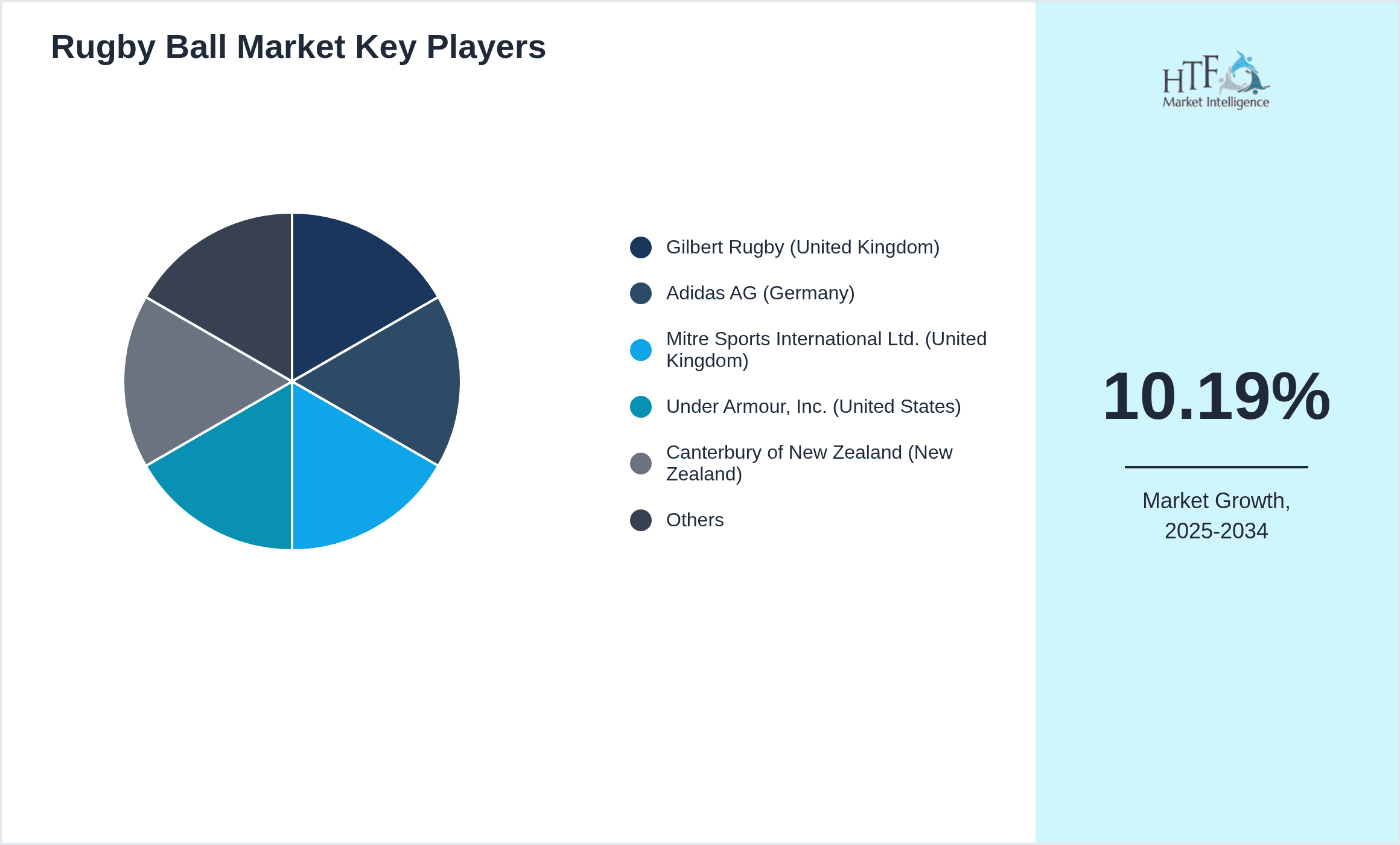
- •Gilbert Rugby (United Kingdom)
- •Adidas AG (Germany)
- •Mitre Sports International Ltd. (United Kingdom)
- •Under Armour, Inc. (United States)
- •Canterbury of New Zealand (New Zealand)
- •Nike, Inc. (United States)
- •Puma SE (Germany)
- •Rhino Rugby (United Kingdom)
- •Surridge Sport (United Kingdom)
- •Wilson Sporting Goods Co. (United States)
- •Molten Corporation (Japan)
- •Tachikara Co., Ltd. (Japan)
- •Spalding Sports Worldwide, Inc. (United States)
- •Macron S.p.A. (Italy)
- •Kookaburra Sport (Australia)
- •Asics Corporation (Japan)
- •Decathlon S.A. (France)
- •Tru-Rugby (United Kingdom)
- •Rhino Sports (United Kingdom)
- •Mizuno Corporation (Japan)
- •Eastbay (United States)
- •Under Armour Europe B.V. (Netherlands)
- •Sporting Goods International (Australia)
- •Baden Sports (United States)
- •Gilbert Asia-Pacific (Singapore)

Market Breakdown
- •By Product Type
- ◦Leather Rugby Balls
- ◦Synthetic Rugby Balls
- ◦Hybrid Rugby Balls
- ◦Training Rugby Balls
- ◦Match Rugby Balls
- •By Application
- ◦Professional Rugby
- ◦Amateur Rugby
- ◦Training
- ◦Recreational
- ◦School Sports
- •By End-Use Industry
- ◦Sports Clubs
- ◦Educational Institutions
- ◦Professional Leagues
- ◦Recreational Centers
- •By Distribution Channel
- ◦Sports Retailers
- ◦E-Commerce
- ◦Direct Sales
Growth Dynamics
- •The increasing global popularity of rugby, fueled by international tournaments such as the Rugby World Cup and the Six Nations Championship, significantly drives demand for high-quality rugby balls. These events raise the sport's profile, encouraging grassroots participation and expanding consumer bases worldwide.
- •Technological advancements in materials, such as the development of synthetic and hybrid rugby balls, enhance durability, grip, and weather resistance, making them preferred choices among professionals and amateurs alike, thereby stimulating market growth.
- •Expanding investments in youth and amateur rugby programs in emerging markets, particularly within Asia-Pacific, create new demand streams. Government and private sector support for sports infrastructure development further accelerates market expansion in these regions.
- •The rise of e-commerce platforms facilitates wider accessibility and distribution of rugby balls, enabling manufacturers to reach diverse consumer segments globally while offering customization options that cater to specific player preferences.
- •Collaborations between rugby ball manufacturers and professional sports teams for official match ball endorsements enhance brand visibility and credibility, positively influencing consumer trust and driving sales volumes.
- •Growing consumer awareness about sustainable sports equipment prompts manufacturers to innovate eco-friendly rugby balls, aligning with environmental trends and attracting environmentally conscious buyers.
- •The increasing commercialization of rugby, including sponsorship deals and media rights, fuels the demand for premium rugby balls, as stakeholders seek to enhance the spectator experience and professionalize the sport.

Market Trends
- •There is a noticeable trend towards the adoption of hybrid rugby balls that combine leather and synthetic materials, offering enhanced durability and superior playability, which is gaining traction among professional and amateur players alike.
- •Manufacturers are increasingly integrating digital technologies such as QR codes and NFC tags into rugby balls to provide authenticity verification, product information, and interactive consumer engagement, reflecting a shift towards smart sports equipment.
- •Sustainability is becoming a core market trend, with companies developing environmentally friendly rugby balls using recycled materials and biodegradable components to meet growing regulatory and consumer demands for green products.
- •Customization and personalization options are on the rise, enabling teams and individual players to order rugby balls with specific colors, logos, and designs, enhancing user experience and brand loyalty.
- •The expansion of e-commerce sales channels accelerates market growth by providing consumers worldwide with easy access to a wide range of rugby balls, including niche and premium products that were previously difficult to obtain.
- •Collaborations between rugby ball manufacturers and major sporting events have intensified, with exclusive ball designs and limited editions becoming popular, driving consumer interest and boosting sales during tournament seasons.
- •There is a growing emphasis on enhancing the ergonomic design of rugby balls to improve grip and control, especially under adverse weather conditions, which has led to innovations in surface textures and materials.
Market Opportunities
- •Emerging markets in Asia-Pacific and Latin America present significant growth opportunities due to increasing rugby participation and government initiatives promoting sports development, offering untapped potential for market expansion.
- •The development of eco-friendly rugby balls addresses rising consumer demand for sustainable products, allowing manufacturers to differentiate themselves and capture environmentally conscious market segments.
- •Technological integration, such as embedding sensors for performance tracking, opens new avenues for innovation, creating value-added products that appeal to professional teams and training academies seeking data-driven insights.
- •Strategic partnerships with educational and sports institutions enable manufacturers to establish brand loyalty early, expanding their presence in the amateur and youth rugby segments.
- •Customization services provide an opportunity for revenue diversification, as personalized rugby balls cater to niche markets including corporate gifting, fan merchandise, and commemorative editions.
- •The rising popularity of women's rugby globally offers new market segments for specialized rugby balls tailored to female athletes' preferences and requirements.
- •Expansion of digital sales platforms allows companies to reach remote and underserved regions, increasing market penetration and consumer accessibility.
Market Challenges
- •High production costs associated with premium materials and advanced manufacturing techniques pose challenges for pricing rugby balls competitively, particularly in price-sensitive emerging markets.
- •The presence of counterfeit and low-quality rugby balls in the market undermines brand reputation and consumer trust, complicating efforts to maintain market share and quality standards.
- •Stringent regulatory requirements and standards for rugby balls, especially those used in professional leagues, impose compliance challenges that may limit rapid product innovation or market entry.
- •Supply chain disruptions, including raw material shortages and logistics constraints, affect production schedules and product availability, impacting overall market growth.
- •Competitive pressure from alternative sports and recreational activities limits the growth potential of the rugby ball market, necessitating continuous marketing and engagement efforts to sustain interest.
- •Technological complexities involved in integrating smart features into rugby balls require significant R&D investment, which may be a barrier for smaller manufacturers.
- •Market fragmentation with numerous regional players creates challenges in achieving economies of scale and consistent quality across global markets.
Regulatory Framework
- •Between 2020 and 2025, international rugby governing bodies such as World Rugby established stringent standards for ball size, weight, and material composition to ensure safety and fairness in professional competitions. Compliance with these standards is mandatory for balls used in sanctioned events, influencing manufacturing processes and quality control.
- •Safety regulations enacted in major markets require manufacturers to adhere to eco-friendly material usage and chemical safety guidelines, promoting the adoption of sustainable production methods and reducing environmental impact.
- •Several regions have implemented import-export regulations affecting the supply chain of sports equipment, including rugby balls, necessitating compliance with customs documentation and tariffs that impact pricing and distribution strategies.
- •In response to counterfeit product concerns, trademark and patent enforcement has intensified globally, with legal frameworks supporting brand protection and consumer awareness campaigns to combat illicit trade in substandard rugby balls.
- •Government initiatives promoting sports participation, such as funding for school sports programs and infrastructure development, often include regulatory frameworks that encourage procurement of certified sports equipment, thereby influencing market demand and standards adherence.
Market Intelligence
- •15th February 2025, Gilbert Rugby launched an advanced synthetic rugby ball featuring enhanced grip technology and improved water resistance designed for professional league matches. The new product aims to deliver superior performance in varying weather conditions and includes a proprietary surface texture that reduces ball slippage. Gilbert’s strategic objective is to solidify its position as the official ball supplier for international rugby tournaments while expanding its presence in emerging markets by offering a premium yet durable product. This launch is anticipated to stimulate demand and set new industry benchmarks for rugby ball performance. Source: Official Gilbert Rugby Press Release
- •22nd July 2025, Adidas AG introduced a hybrid rugby ball combining leather and synthetic materials engineered for enhanced durability and optimal weight balance. Targeting both professional and amateur segments, the ball incorporates sustainable materials aligned with Adidas’s commitment to environmentally conscious manufacturing. The innovation leverages Adidas’s expertise in sports technology and aims to capture market share by addressing consumer demands for high-quality, eco-friendly equipment. Market analysts expect this product to accelerate growth in Asia-Pacific and Europe, where sustainability is becoming a key purchase driver. Source: Adidas Corporate Newsroom
- •10th October 2025, Mitre Sports International Ltd. announced a strategic partnership with a leading online sports retailer to expand digital sales channels globally. The initiative includes exclusive rugby ball designs with customization features accessible through the retailer’s platform. This collaboration is designed to tap into the growing e-commerce market, enhance consumer engagement, and improve accessibility in geographically diverse regions. The move aligns with evolving consumer preferences for personalized sports equipment and is expected to drive significant revenue growth in the coming years. Source: Mitre Sports Official Announcement
- •5th March 2024, Decathlon S.A. completed the acquisition of a regional rugby equipment manufacturer to strengthen its product portfolio and expand its footprint in the Asia-Pacific market. The acquisition enhances Decathlon’s capabilities in delivering affordable, high-quality rugby balls tailored to emerging market needs. This strategic consolidation supports Decathlon’s growth strategy by leveraging local market expertise and economies of scale. Industry observers view this move as a significant step towards market consolidation and increased competitive pressure among global players. Source: Decathlon Press Release
Regional Outlook
The North America currently holds a significant share of the market, primarily due to several key factors: increasing consumption rates, a burgeoning population, and robust economic momentum. These elements collectively drive demand, positioning this region as a leader in the market. On the other hand, Asia-Pacific is rapidly emerging as the fastest-growing area within the industry. This remarkable growth can be attributed to swift infrastructure development, the expansion of various industrial sectors, and a marked increase in consumer demand. These dynamics make this region a crucial player in shaping future market growth.
In our report, we cover a comprehensive analysis of the following regions and countries:
- North America
- LATAM
- West Europe
- Central & Eastern Europe
- Northern Europe
- Southern Europe
- East Asia
- Southeast Asia
- South Asia
- Central Asia
- Oceania
- MEA
| Feature | Details |
|---|---|
| Base Year Market Size | USD 1.2 Billion |
| Forecast Year Market Size | USD 2.8 Billion |
| CAGR | 10.19% |
| Forecast Period | 2026 to 2033 |
| YoY Growth | 9.77% |
| Scope of Report | Market is segmented by Product Type (Leather Rugby Balls, Synthetic Rugby Balls, Hybrid Rugby Balls, Training Rugby Balls, Match Rugby Balls), Application (Professional Rugby, Amateur Rugby, Training, Recreational, School Sports), End-Use Industry (Sports Clubs, Educational Institutions, Professional Leagues, Recreational Centers), Distribution Channel (Sports Retailers, E-Commerce, Direct Sales) |
| Regions Covered | North America, LATAM, West Europe, Central & Eastern Europe, Northern Europe, Southern Europe, East Asia, Southeast Asia, South Asia, Central Asia, Oceania, MEA |
| Key Companies | Gilbert Rugby (United Kingdom), Adidas AG (Germany), Mitre Sports International Ltd. (United Kingdom), Under Armour, Inc. (United States), Canterbury of New Zealand (New Zealand) |
Global Rugby Ball Market Size, Growth & Revenue 2025-2034 - Table of Contents
Frequently Asked Questions (FAQ):
The Compact Track Loaders market is projected to grow at a CAGR of 6.8% from 2025 to 2030, driven by increasing demand in construction and agricultural sectors.
North America currently leads the market with approximately 45% market share, followed by Europe at 28% and Asia-Pacific at 22%. The remaining regions account for 5% of the global market.
Key growth drivers include increasing construction activities, rising demand for versatile equipment in agriculture, technological advancements in track loader design, and growing preference for compact equipment in urban construction projects.