
Global Consume Grade Potato Starch Market Size, Growth & Revenue 2024-2034
Global Consume Grade Potato Starch Market is segmented by Product Type (Native Potato Starch, Modified Potato Starch, Potato Starch Derivatives, Thin Boiling Starch, Resistant Starch), Application (Food Processing, Pharmaceuticals, Paper Industry, Textile Industry, Adhesives), End-Use Industry (Baking and Confectionery, Pharmaceutical Formulation, Packaging and Paper Products, Textile Manufacturing), Distribution Channel (Direct Sales, Distributors and Wholesalers, Online Retail), and Geography (North America, LATAM, West Europe, Central & Eastern Europe, Northern Europe, Southern Europe, East Asia, Southeast Asia, South Asia, Central Asia, Oceania, MEA)
Pricing
Report Overview
Executive Summary
- •The Global Consume Grade Potato Starch Market represents a critical segment within the starch industry, focusing on high-quality potato starch intended for direct consumption and industrial applications. This market includes a variety of starch types such as native, modified, thin boiling, resistant, and derivative starches, each serving specific functional roles in food processing, pharmaceuticals, paper production, textile manufacturing, and adhesives. The industry is characterized by advanced processing technologies that ensure purity, consistency, and tailored functional properties, meeting stringent food safety regulations worldwide. Increasing consumer awareness regarding clean-label ingredients and demand for natural, gluten-free starches are driving market expansion. Additionally, the market's geographical breadth covers key regions such as North America, Europe, Asia-Pacific, Latin America, and the Middle East & Africa, each exhibiting unique growth patterns influenced by regional agricultural practices, regulatory standards, and industrial demand. The market is expected to witness significant growth, supported by innovations in starch modification and expanding end-use industries, positioning it as an essential component in global food and industrial supply chains.
- •The market is poised for robust expansion with a projected CAGR of 7.9% from 2024 to 2034, expanding from USD 4.5 billion in 2024 to an estimated USD 9.8 billion by 2034. Key growth drivers include rising demand in food and pharmaceutical sectors, technological advancements in starch modification, and growing health-conscious consumer trends favoring gluten-free and natural ingredients. North America currently dominates the market, attributed to established food processing industries and stringent quality standards, while Asia-Pacific is the fastest-growing region, propelled by increasing industrialization and expanding consumer bases. Native potato starch remains the leading product type due to its versatility, but modified potato starch is rapidly gaining traction for specialized applications requiring enhanced functional properties. The food processing segment dominates in application, driven by its extensive use as a thickener, stabilizer, and texture enhancer. Strategic initiatives by market leaders, including product innovation and regional expansions, are shaping competitive dynamics and facilitating market penetration across emerging economies.
- •Consume grade potato starch presents significant value propositions for food manufacturers, pharmaceutical formulators, and industrial processors by offering a natural, versatile, and functional ingredient that enhances product quality and consumer appeal. Its clean-label status aligns with increasing regulatory demands and consumer preferences for transparency and healthful ingredients. The market's strategic importance is heightened by the growing emphasis on sustainable agricultural sourcing and processing innovations that reduce environmental impact. For stakeholders, including raw material suppliers, processors, and end-users, the evolving landscape offers opportunities to capitalize on emerging trends such as resistant starch for health benefits and modified starches for specialized applications. The competitive environment encourages innovation, efficiency improvements, and collaborative ventures, fostering a resilient and dynamic market poised for sustained growth over the next decade.

Competitive Landscape
The competitive landscape of the Global Consume Grade Potato Starch Market is characterized by intense rivalry among established multinational corporations and emerging regional players. Companies compete primarily through product innovation, quality enhancement, and geographic expansion to capture diverse end-use markets. Innovation strategies focus on developing modified starches with tailored functionalities, such as improved viscosity, thermal stability, and digestibility, to meet evolving customer demands across food, pharmaceutical, textile, and paper sectors. Pricing strategies are influenced by raw material availability and processing efficiencies, with companies striving to optimize cost structures without compromising quality. Strategic partnerships, joint ventures, and mergers and acquisitions serve as vital tools for market consolidation and capability expansion. Distribution channels are diversified, including direct sales, distributors, and online platforms, enhancing market reach. Regional competition is marked by local players leveraging proximity to raw material sources and cost advantages, particularly in Asia-Pacific and Latin America. Looking ahead, companies are expected to invest heavily in R&D and sustainability initiatives to differentiate themselves and address regulatory and consumer expectations, thereby shaping the future competitive dynamics of this rapidly evolving market.
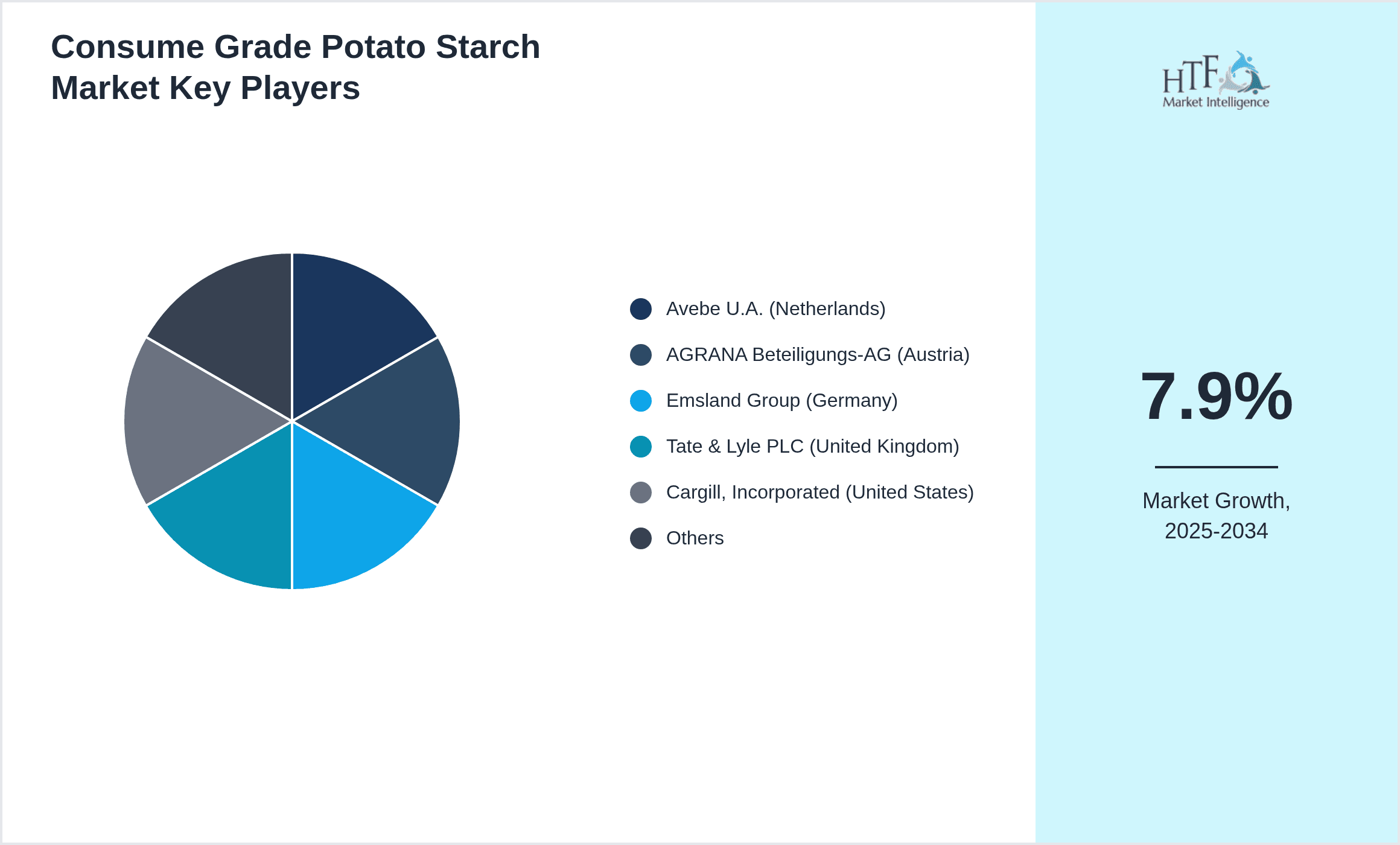
Prominent Players in Consume Grade Potato Starch Market
- •Avebe U.A. (Netherlands)
- •AGRANA Beteiligungs-AG (Austria)
- •Emsland Group (Germany)
- •Tate & Lyle PLC (United Kingdom)
- •Cargill, Incorporated (United States)
- •Roquette Frères S.A. (France)
- •Lyckeby Starch AB (Sweden)
- •KMC (Denmark)
- •Tereos S.A. (France)
- •Ingredion Incorporated (United States)
- •Penford Corporation (United States)
- •BASF SE (Germany)
- •MGP Ingredients, Inc. (United States)
- •Emsland-Stärke GmbH (Germany)
- •Shandong Jincheng Food Co., Ltd. (China)
- •Meelunie B.V. (Netherlands)
- •Südzucker AG (Germany)
- •Hubei Yangxin Jingyu Starch Co., Ltd. (China)
- •CPI Corporation (United States)
- •Roquette America, Inc. (United States)
- •Simplot Australia Pty Ltd (Australia)
- •Emsland-Stärke GmbH (Germany)
- •Shandong Vland Biotech Group Co., Ltd. (China)
- •Tate & Lyle Ingredients Americas LLC (United States)
- •Avebe Potato Processing B.V. (Netherlands)
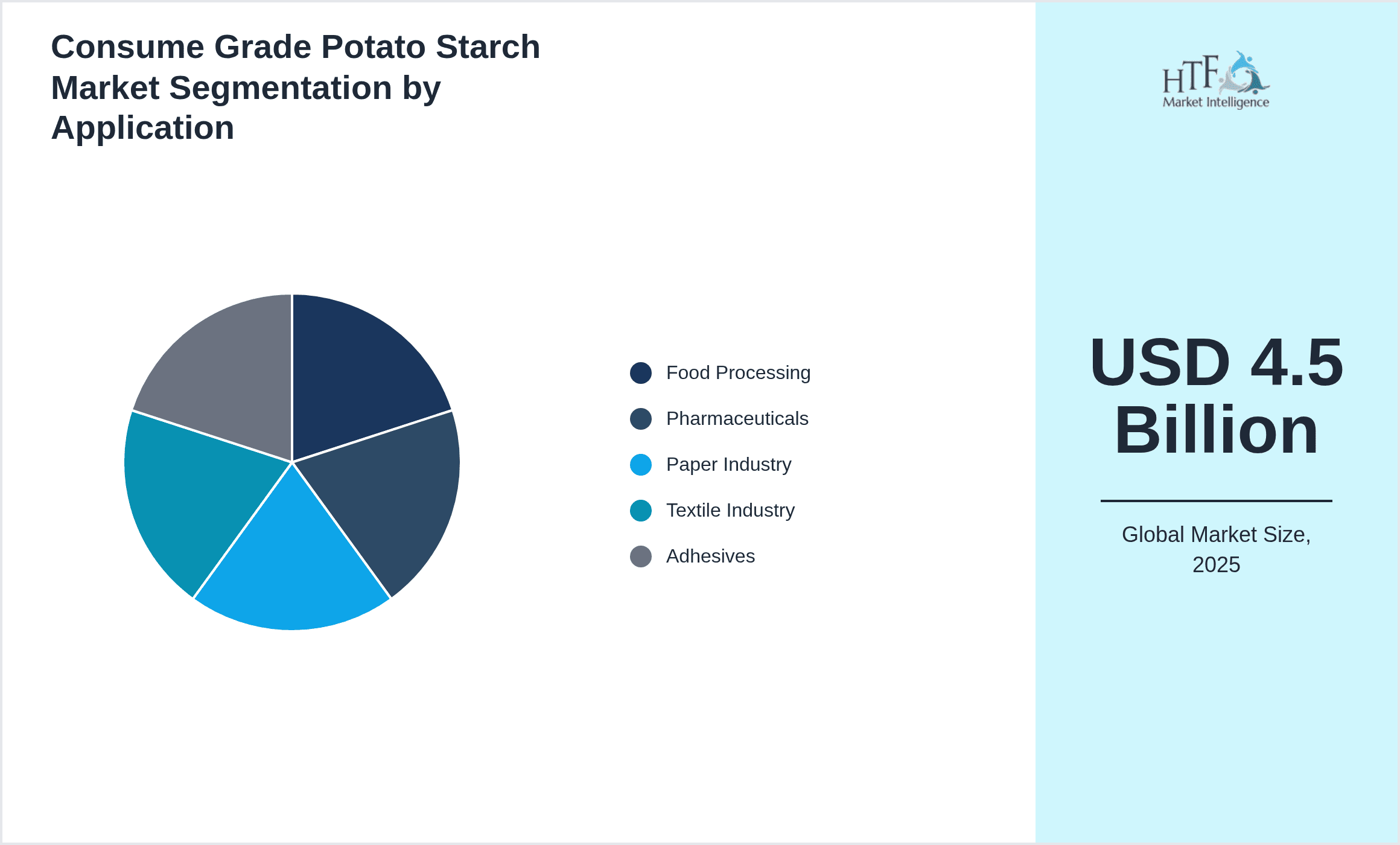
Market Breakdown
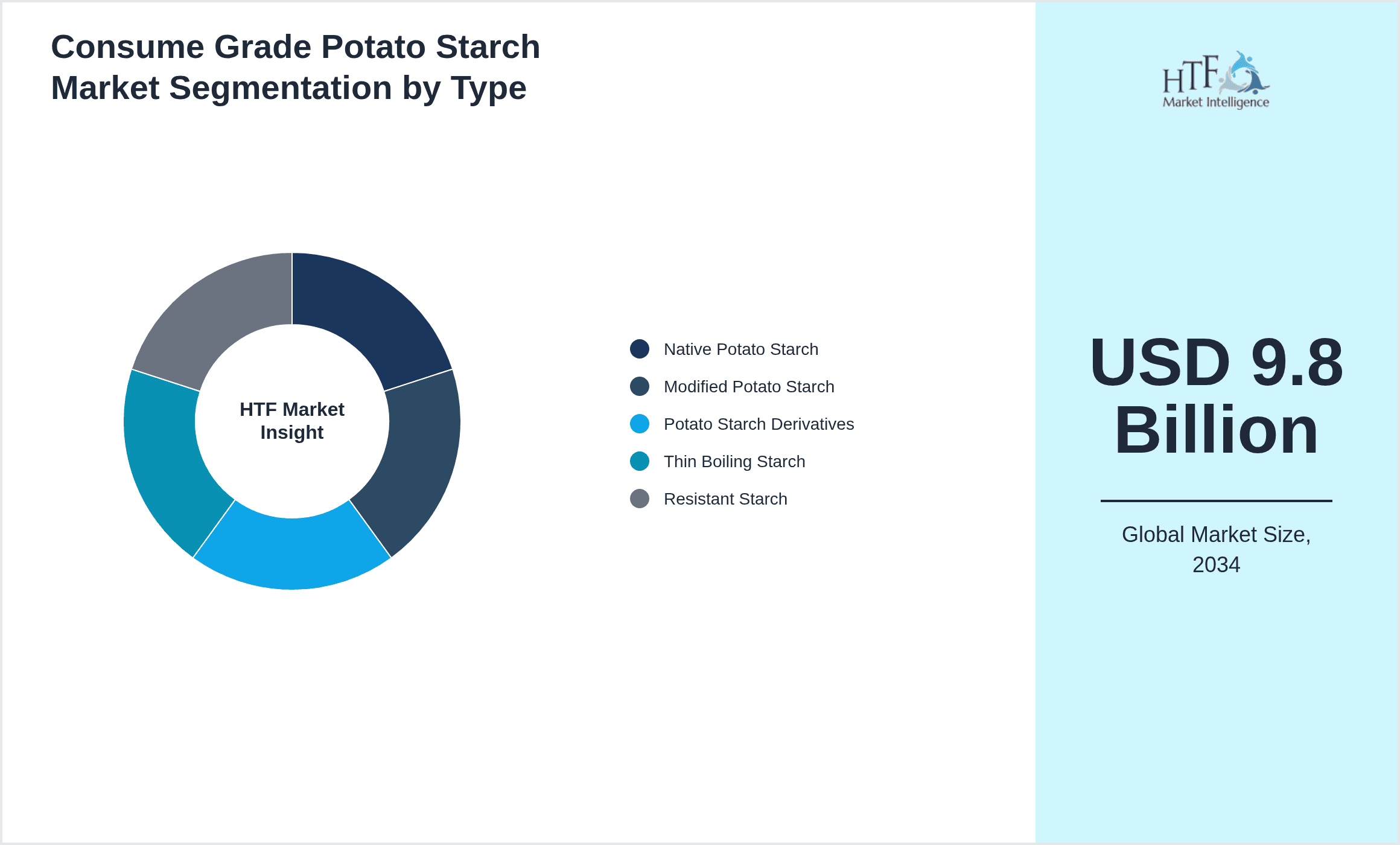
- •By Product Type
- ◦Native Potato Starch
- ◦Modified Potato Starch
- ◦Potato Starch Derivatives
- ◦Thin Boiling Starch
- ◦Resistant Starch
- •By Application
- ◦Food Processing
- ◦Pharmaceuticals
- ◦Paper Industry
- ◦Textile Industry
- ◦Adhesives
- •By End-Use Industry
- ◦Baking and Confectionery
- ◦Pharmaceutical Formulation
- ◦Packaging and Paper Products
- ◦Textile Manufacturing
- •By Distribution Channel
- ◦Direct Sales
- ◦Distributors and Wholesalers
- ◦Online Retail
Growth Dynamics
The Global Consume Grade Potato Starch Market is propelled by increasing demand in food processing industries seeking natural, gluten-free thickening and stabilizing agents. Growing consumer preference for clean-label and health-conscious products drives adoption of native and modified potato starches, which enhance texture and shelf life without artificial additives. Additionally, pharmaceutical applications are expanding as potato starch derivatives serve as excipients and binding agents in drug formulations, presenting steady growth opportunities. Technological advancements in enzymatic modification and functionalization improve starch performance, addressing diverse industrial needs. Moreover, rising industrialization in emerging economies, especially in Asia-Pacific, fuels market expansion through increased food and non-food processing activities. Environmental sustainability initiatives encourage the use of biodegradable and renewable starch-based products, further stimulating demand. These dynamics collectively underpin a robust CAGR, highlighting the market's resilience amid evolving consumer trends and industrial requirements.
Market Trends
The market is witnessing a notable trend toward the development and commercialization of resistant starches, which offer health benefits such as improved gut health and glycemic control, responding to rising consumer health awareness. Concurrently, there is growing integration of modified starches with enhanced functional properties tailored for specific industrial applications, including improved viscosity and thermal stability. Sustainability is becoming a central theme, with companies investing in eco-friendly production methods and biodegradable starch solutions. Digitalization and automation in starch processing are improving efficiency and quality control. Furthermore, collaborations between starch manufacturers and food technology firms are accelerating innovation pipelines, enabling rapid product development. These trends collectively shape the competitive landscape and influence market trajectories globally.
Market Opportunities
Significant opportunities exist in expanding applications of consume grade potato starch in emerging markets, driven by rising urbanization and disposable incomes fueling demand for processed and convenience foods. Innovations in modifying starch to enhance nutritional profiles, such as high-fiber resistant starch, open new avenues in health-focused food products. The pharmaceutical sector offers growth potential through new excipient formulations improving drug delivery and stability. Geographic expansion into underpenetrated regions like Latin America and Middle East & Africa presents strategic market entry points. Additionally, increasing demand for sustainable and biodegradable starch-based adhesives and packaging materials aligns with global environmental policies, presenting lucrative prospects for manufacturers. Strategic partnerships and investments in R&D can leverage these opportunities to gain competitive advantages.
Market Challenges
Challenges in the Global Consume Grade Potato Starch Market include fluctuations in raw material availability and prices due to agricultural dependency on potato crop yields and climatic conditions. Stringent regulatory requirements regarding food safety and quality standards across different regions add complexity and cost to market entry and product development. Technical difficulties in achieving consistent modification and functionalization of starch to meet diverse end-use specifications can hinder scalability. Competition from alternative starch sources such as corn and tapioca starches creates pricing pressures and limits market share expansion. Additionally, the need for significant capital investment in advanced processing technologies and sustainability initiatives poses barriers for small and medium enterprises. Addressing supply chain disruptions and ensuring sustainable sourcing remain ongoing challenges that impact operational efficiency and profitability.
Regulatory Framework
Between 2019 and 2024, the Global Consume Grade Potato Starch Market has been increasingly influenced by tightened food safety regulations such as the Food Safety Modernization Act (FSMA) in the United States and the European Food Safety Authority (EFSA) standards in Europe, mandating rigorous testing and traceability for starch products. Mandatory labeling requirements for allergen information and GMO content have become prevalent, impacting product formulation and marketing strategies. Environmental regulations promoting sustainable agricultural practices and waste reduction in processing have also intensified, encouraging manufacturers to adopt eco-friendly technologies. Additionally, international standards like Codex Alimentarius have harmonized quality benchmarks, facilitating global trade. Compliance with these multi-jurisdictional regulations necessitates continuous monitoring and adaptation by industry players to maintain market access and consumer trust. Governments are concurrently offering incentives for sustainable production methods, supporting innovation in biodegradable and clean-label starch products, thereby shaping the regulatory landscape significantly.
Market Intelligence
- •15th January 2025, Roquette Frères S.A. launched an innovative line of modified potato starch designed to enhance viscosity and thermal stability for high-performance food applications. This product targets bakery and dairy sectors, enabling manufacturers to improve texture and shelf life while maintaining clean-label status. The development reflects Roquette's strategic focus on sustainable and health-oriented ingredients, addressing growing consumer demand for natural additives. The launch is expected to strengthen the company’s market position globally and cater to emerging markets with rising processed food consumption. Source: Official company press release
- •22nd March 2025, Cargill, Incorporated introduced a proprietary resistant potato starch variant aimed at functional food and pharmaceutical industries. The product offers prebiotic benefits and improved digestibility, aligning with health and wellness trends. This innovation supports formulation of dietary supplements and gut health products, expanding Cargill’s portfolio in the consume grade starch segment. The company plans to scale production capacity across North America and Asia-Pacific to meet anticipated demand growth. Source: Industry publication
- •10th June 2024, AGRANA Beteiligungs-AG announced a strategic partnership with a leading food technology firm to co-develop sustainable starch-based adhesives for packaging applications. This collaboration focuses on reducing environmental impact while maintaining adhesive performance, addressing regulatory pressures and consumer preferences for green packaging solutions. The initiative is expected to open new markets in Europe and Asia, reinforcing AGRANA’s commitment to innovation and sustainability in the consume grade potato starch market. Source: Company website
- •5th September 2024, Tate & Lyle PLC completed expansion of its potato starch processing facility in the United States, increasing capacity by 30%. The upgrade incorporates advanced enzymatic modification technology to produce customized starch derivatives for pharmaceutical and food industries. This enhancement supports growing demand for specialized starch products and improves operational efficiency. Tate & Lyle’s investment underscores the strategic importance of the consume grade potato starch segment within its global portfolio. Source: Official press release
Regional Outlook
The North America currently holds a significant share of the market, primarily due to several key factors: increasing consumption rates, a burgeoning population, and robust economic momentum. These elements collectively drive demand, positioning this region as a leader in the market. On the other hand, Asia-Pacific is rapidly emerging as the fastest-growing area within the industry. This remarkable growth can be attributed to swift infrastructure development, the expansion of various industrial sectors, and a marked increase in consumer demand. These dynamics make this region a crucial player in shaping future market growth.
In our report, we cover a comprehensive analysis of the following regions and countries:
- North America
- LATAM
- West Europe
- Central & Eastern Europe
- Northern Europe
- Southern Europe
- East Asia
- Southeast Asia
- South Asia
- Central Asia
- Oceania
- MEA
| Feature | Details |
|---|---|
| Base Year Market Size | USD 4.5 Billion |
| Forecast Year Market Size | USD 9.8 Billion |
| CAGR | 7.9% |
| Forecast Period | 2026 to 2033 |
| YoY Growth | 7.6% |
| Scope of Report | Market is segmented by Product Type (Native Potato Starch, Modified Potato Starch, Potato Starch Derivatives, Thin Boiling Starch, Resistant Starch), Application (Food Processing, Pharmaceuticals, Paper Industry, Textile Industry, Adhesives), End-Use Industry (Baking and Confectionery, Pharmaceutical Formulation, Packaging and Paper Products, Textile Manufacturing), Distribution Channel (Direct Sales, Distributors and Wholesalers, Online Retail) |
| Regions Covered | North America, LATAM, West Europe, Central & Eastern Europe, Northern Europe, Southern Europe, East Asia, Southeast Asia, South Asia, Central Asia, Oceania, MEA |
| Key Companies | Avebe U.A. (Netherlands), AGRANA Beteiligungs-AG (Austria), Emsland Group (Germany), Tate & Lyle PLC (United Kingdom), Cargill, Incorporated (United States), Roquette Frères S.A. (France), Lyckeby Starch AB (Sweden), KMC (Denmark), Tereos S.A. (France), Ingredion Incorporated (United States), Penford Corporation (United States), BASF SE (Germany), MGP Ingredients, Inc. (United States), Emsland-Stärke GmbH (Germany), Shandong Jincheng Food Co., Ltd. (China), Meelunie B.V. (Netherlands), Südzucker AG (Germany), Hubei Yangxin Jingyu Starch Co., Ltd. (China), CPI Corporation (United States), Roquette America, Inc. (United States), Simplot Australia Pty Ltd (Australia), Emsland-Stärke GmbH (Germany), Shandong Vland Biotech Group Co., Ltd. (China), Tate & Lyle Ingredients Americas LLC (United States), Avebe Potato Processing B.V. (Netherlands) |
Global Consume Grade Potato Starch Market Size, Growth & Revenue 2024-2034 - Table of Contents
Multidisciplinary researcher with 10+ years of experience uncovering insights across diverse domains focused on uncovering insights that drive informed decisions.
Frequently Asked Questions (FAQ):
The Compact Track Loaders market is projected to grow at a CAGR of 6.8% from 2025 to 2030, driven by increasing demand in construction and agricultural sectors.
North America currently leads the market with approximately 45% market share, followed by Europe at 28% and Asia-Pacific at 22%. The remaining regions account for 5% of the global market.
Key growth drivers include increasing construction activities, rising demand for versatile equipment in agriculture, technological advancements in track loader design, and growing preference for compact equipment in urban construction projects.