
Global Food Storage Bags Market - Outlook 2024-2034
Global Food Storage Bags Market is segmented by Product Type (Plastic Bags, Biodegradable Bags, Reusable Bags, Vacuum Bags, Foil Bags), Application (Household, Commercial, Industrial, Food Packaging, Others), End-Use Industry (Food Retail, Food Service, Food Processing, Others), Distribution Channel (Supermarkets/Hypermarkets, Online Retail, Specialty Stores), and Geography (North America, LATAM, West Europe, Central & Eastern Europe, Northern Europe, Southern Europe, East Asia, Southeast Asia, South Asia, Central Asia, Oceania, MEA)
Pricing
Report Overview
Executive Summary
- •The global food storage bags market is a critical segment within the food packaging industry, encompassing a variety of flexible packaging solutions designed to preserve food quality, enhance shelf life, and facilitate safe storage and transportation. This market includes various product types such as plastic bags, biodegradable bags, reusable bags, vacuum bags, and foil bags, catering to a broad spectrum of applications including household, commercial, industrial, food packaging, and other specialized uses. The market boundaries cover material innovations, environmental considerations, and regulatory compliance across different regions worldwide. Increasing consumer demand for convenience, food safety, and sustainability, coupled with technological advancements in packaging materials and functionalities, drive the market's growth. Key use cases span from everyday household food storage to large-scale food processing and distribution. The market is shaped by evolving consumer behavior, stringent environmental regulations, and the rising popularity of eco-friendly alternatives, positioning it as a dynamic and vital sector in global food packaging.
- •Key highlights of the global food storage bags market include a base market size of USD 12.5 Billion in 2024, projected to reach USD 25.8 Billion by 2034, with a robust CAGR of 7.3%. The market demonstrates a steady year-over-year growth rate of 7.1%, fueled primarily by increased consumer awareness regarding food safety and environmental impact. Plastic bags currently dominate the product type segment, while biodegradable bags are emerging rapidly as the fastest growing segment due to sustainability trends. North America leads the market in terms of size, supported by high consumer spending and regulatory frameworks, whereas Asia-Pacific is witnessing the fastest growth driven by urbanization and expanding food retail sectors. The market is marked by significant innovation, strategic partnerships, and expanding distribution channels aimed at enhancing product offerings and geographic reach.
- •The food storage bags market offers substantial value to stakeholders including manufacturers, retailers, and end-users through enhanced food preservation, waste reduction, and compliance with environmental standards. The industry's strategic importance lies in addressing global challenges such as food spoilage, plastic pollution, and consumer demand for sustainable packaging. Innovations in biodegradable and reusable materials align with increasing regulatory pressures and consumer preferences, promoting long-term market sustainability. Furthermore, advancements in vacuum and foil bag technologies improve food freshness and safety, driving adoption across commercial and industrial sectors. This market also supports economic growth by enabling efficient food supply chains and reducing losses. Overall, the food storage bags market is poised to deliver significant growth opportunities while contributing to environmental stewardship and consumer convenience.

Competitive Landscape
The global food storage bags market exhibits a highly competitive environment characterized by the presence of numerous multinational corporations and regional players striving for market share through innovation, product differentiation, and strategic alliances. Companies focus on developing eco-friendly and biodegradable materials to cater to the growing demand for sustainable packaging solutions, which is reshaping competitive dynamics. Innovation strategies include enhancing barrier properties, improving resealability, and integrating smart packaging features to increase consumer convenience and product shelf life. Competitive positioning is also influenced by pricing strategies, supply chain efficiency, and geographic expansion efforts, especially in emerging markets. Mergers and acquisitions are common strategic moves to consolidate market presence and access new technologies or distribution channels. The rivalry encourages continuous investment in R&D and marketing, fostering an environment of rapid product evolution and heightened customer focus. Overall, competition drives market growth by pushing players to anticipate consumer needs and regulatory trends proactively.
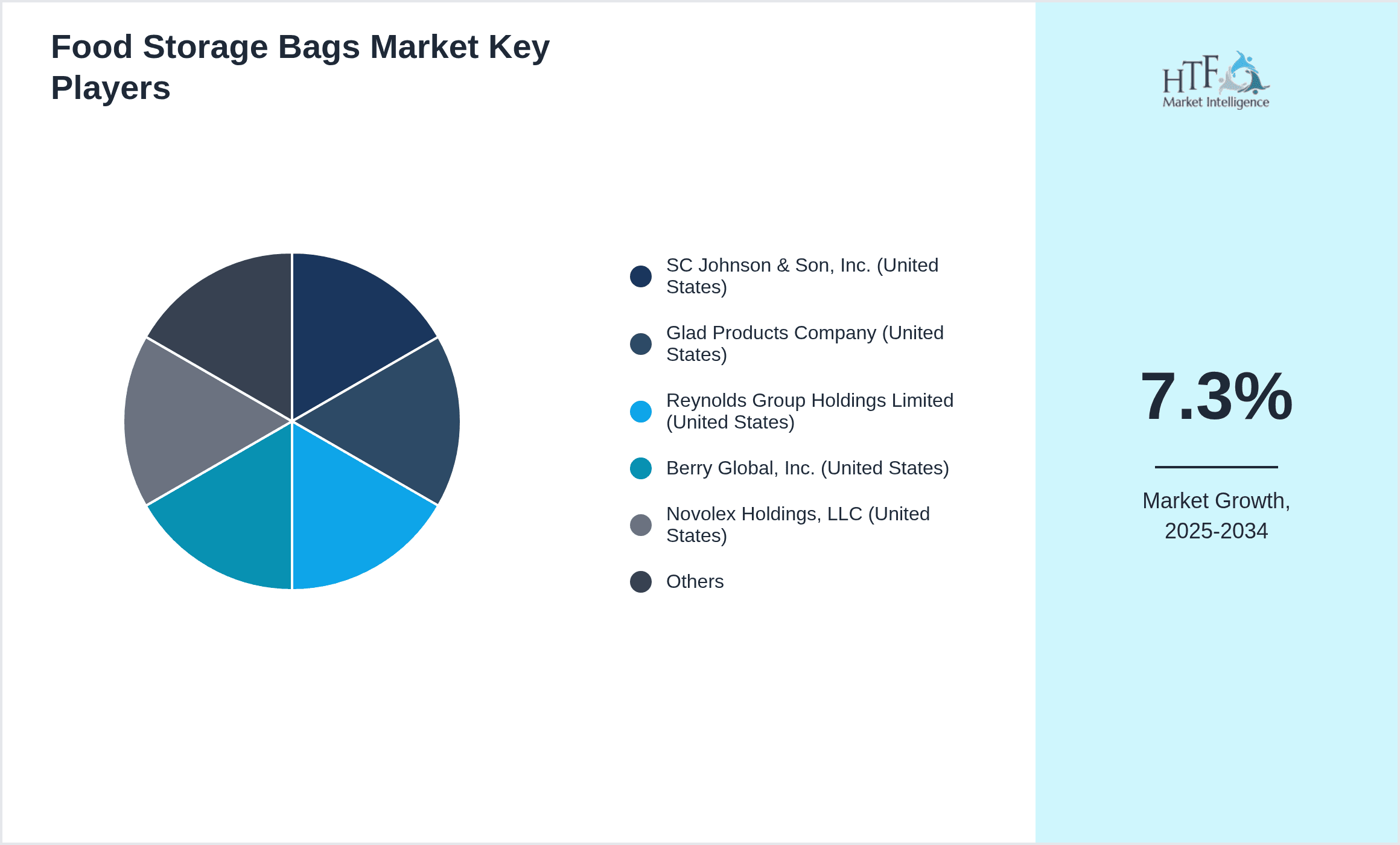
Prominent Players in Food Storage Bags Market
- •SC Johnson & Son, Inc. (United States)
- •Glad Products Company (United States)
- •Reynolds Group Holdings Limited (United States)
- •Berry Global, Inc. (United States)
- •Novolex Holdings, LLC (United States)
- •Amcor plc (Australia)
- •Huhtamaki Oyj (Finland)
- •Sealed Air Corporation (United States)
- •Winpak Ltd. (Canada)
- •Bemis Company, Inc. (United States)
- •Mondi Group (United Kingdom)
- •Sigma Plastics Group (United States)
- •Smurfit Kappa Group (Ireland)
- •Placon Corporation (United States)
- •Kureha Corporation (Japan)
- •Sonoco Products Company (United States)
- •Clondalkin Group Holdings BV (Netherlands)
- •Coveris Holdings S.A. (Luxembourg)
- •CleanPak, Inc. (United States)
- •BioBag Americas, Inc. (Norway)
- •Earthwise Products LLC (United States)
- •Inteplast Group (United States)
- •Genpak, LLC (United States)
- •Superbag S.A. (Argentina)
- •Huhtamaki India Pvt. Ltd. (India)
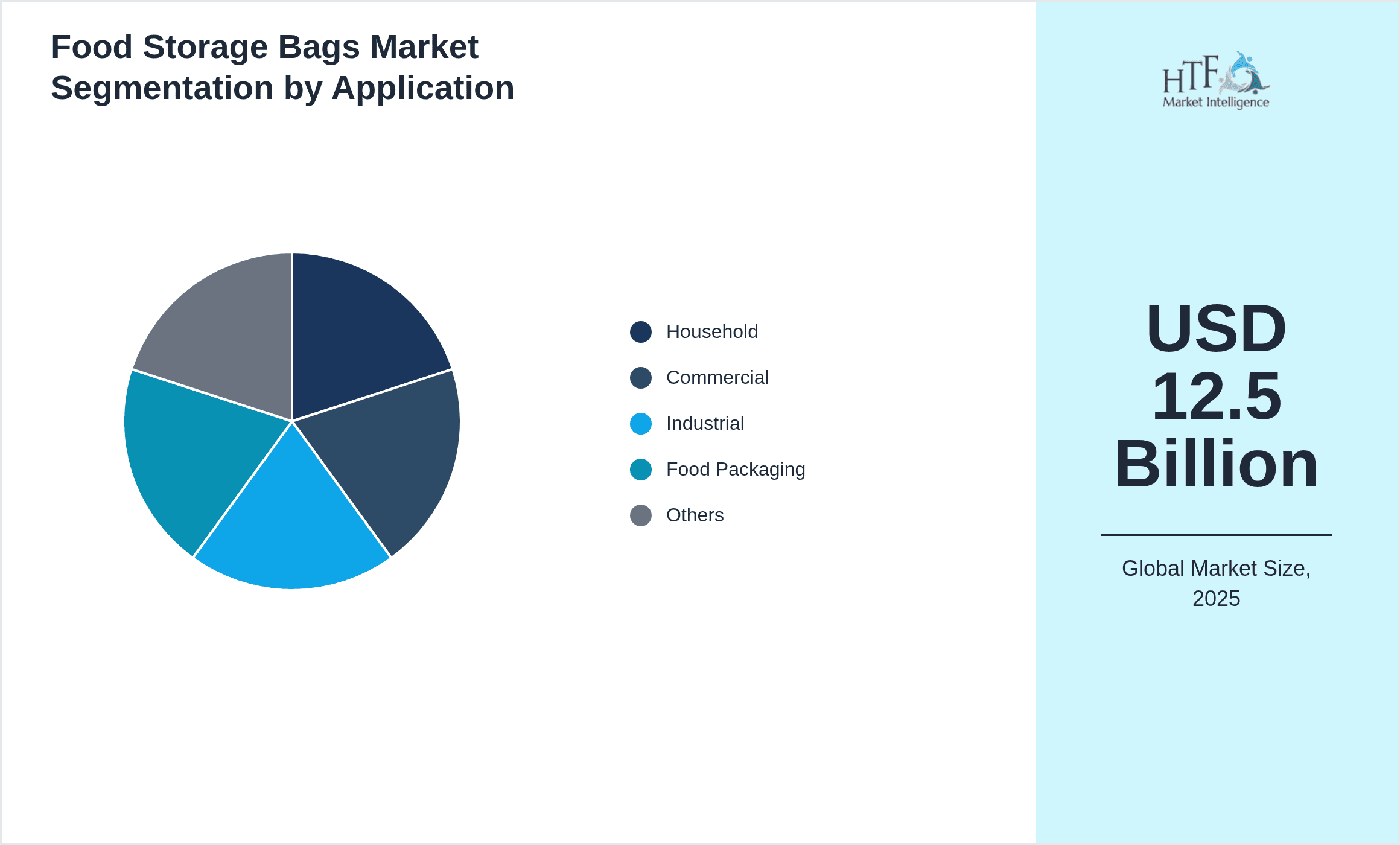
Market Breakdown
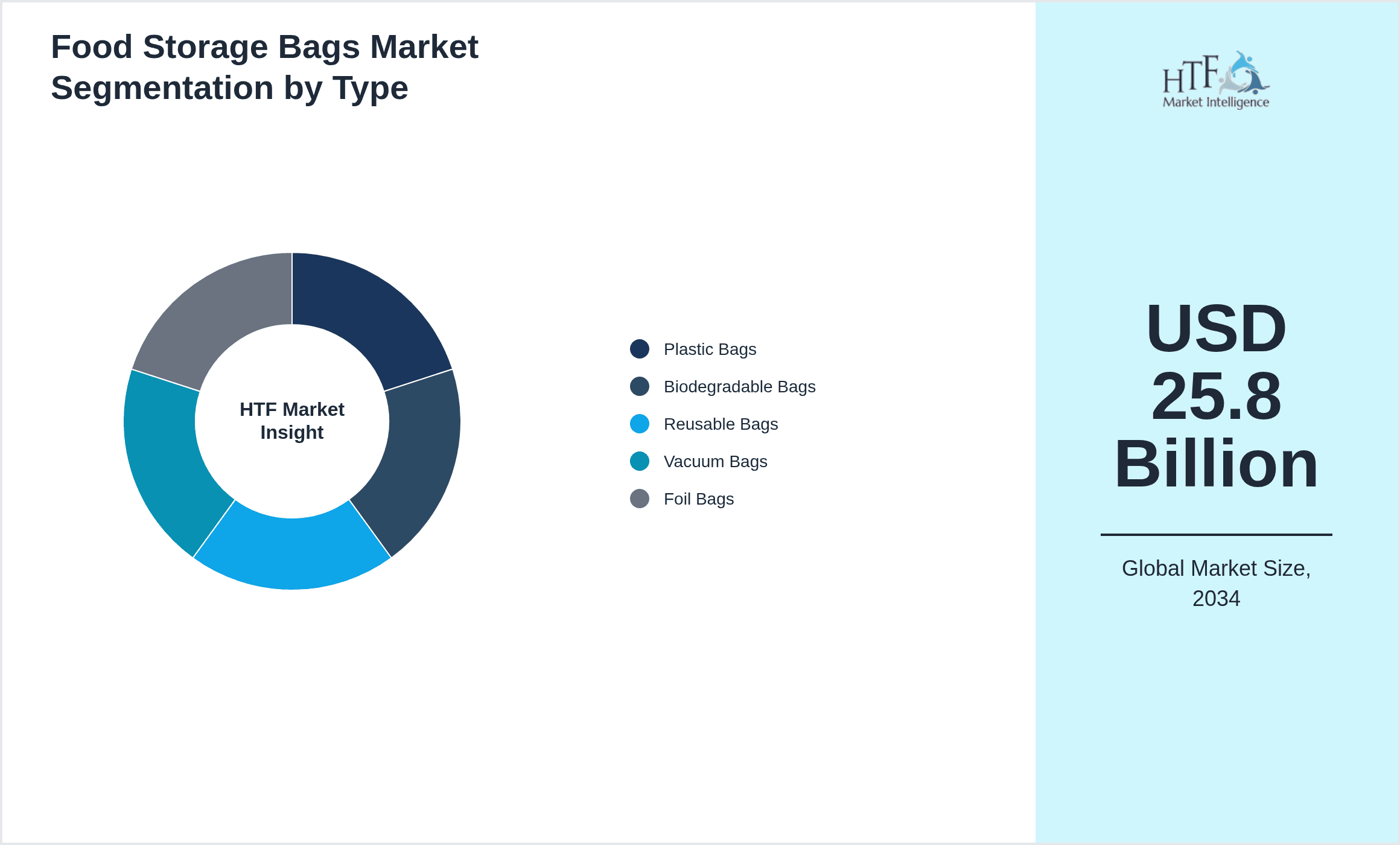
- •By Product Type
- ◦Plastic Bags
- ◦Biodegradable Bags
- ◦Reusable Bags
- ◦Vacuum Bags
- ◦Foil Bags
- •By Application
- ◦Household
- ◦Commercial
- ◦Industrial
- ◦Food Packaging
- ◦Others
- •By End-Use Industry
- ◦Food Retail
- ◦Food Service
- ◦Food Processing
- ◦Others
- •By Distribution Channel
- ◦Supermarkets/Hypermarkets
- ◦Online Retail
- ◦Specialty Stores
Growth Dynamics
The global food storage bags market is propelled by increasing consumer demand for convenient and hygienic food storage solutions, especially amid rising awareness of food safety and shelf life extension. Growing urbanization and busy lifestyles have contributed to the widespread adoption of ready-to-use packaging options. Furthermore, stringent environmental regulations worldwide are encouraging manufacturers to develop biodegradable and reusable options, driving innovation and market expansion. The food retail and hospitality sectors' growth, particularly in emerging economies, supports increased demand for industrial and commercial applications. Additionally, the rise of e-commerce and online grocery shopping has accelerated the need for advanced packaging solutions that ensure product integrity during transit. These factors collectively fuel steady market growth, with stakeholders focusing on sustainability, product functionality, and consumer convenience to capture expanding opportunities globally.
Market Trends
A significant trend in the food storage bags market is the shift towards sustainable and eco-friendly materials, including biodegradable plastics and compostable films, driven by environmental concerns and regulatory pressures. Companies are investing in research to enhance the durability and barrier properties of these materials to match traditional plastics. Another trend is the integration of smart packaging technologies, such as antimicrobial coatings and freshness indicators, which add value by improving food safety and consumer trust. The growing preference for vacuum and foil bags that extend shelf life is noticeable, especially in commercial and industrial segments. Additionally, digital transformation is influencing distribution channels, with online retail becoming a dominant platform for food storage bag sales, providing convenience and wider product accessibility.
Market Opportunities
The food storage bags market presents opportunities in developing innovative biodegradable and reusable products that address plastic pollution concerns while meeting consumer demand for sustainability. Emerging markets in Asia-Pacific and Latin America offer significant growth potential due to increasing urban populations and expanding food retail sectors. Investment in smart packaging technologies that can monitor food freshness and enhance safety represents another promising area. Additionally, collaborations between manufacturers and retailers to develop customized packaging solutions can create competitive advantages. The rising trend of meal prepping and home cooking also opens avenues for household-oriented product lines with enhanced convenience features. Strategic geographic expansion and penetration into untapped markets through e-commerce platforms further amplify growth prospects.
Market Challenges
Despite growth prospects, the food storage bags market faces challenges including the high cost of biodegradable materials compared to conventional plastics, which can limit adoption among price-sensitive consumers and commercial buyers. Regulatory complexities across different regions create compliance challenges for manufacturers, especially regarding environmental standards and labeling requirements. Additionally, the performance limitations of eco-friendly bags, such as reduced durability or barrier properties, may hinder their widespread acceptance. The abundance of counterfeit or low-quality products in some markets also impacts brand reputation and consumer trust. Supply chain disruptions and raw material price volatility present further obstacles. Addressing these challenges requires continuous innovation, cost optimization, and effective regulatory navigation to sustain long-term market growth.
Regulatory Framework
Between 2020 and 2024, several regions implemented stringent regulations targeting single-use plastics, compelling the food storage bags market to pivot towards sustainable alternatives. The European Union's Single-Use Plastics Directive enforced in 2021 mandates reduction and substitution of conventional plastic bags with biodegradable options. North America introduced extended producer responsibility (EPR) programs encouraging manufacturers to manage lifecycle impacts. Regulations around labeling requirements for compostability and recyclability have been standardized to improve consumer awareness globally. Additionally, countries in Asia-Pacific, including India and China, have reinforced bans on certain plastic products and incentivized bio-based materials. These regulatory developments drive innovation, compliance costs, and industry realignment, fostering a market environment increasingly focused on eco-friendly and safe packaging solutions.
Market Intelligence
- •15th March 2024, Berry Global, Inc. launched a new line of biodegradable food storage bags made from plant-based materials targeting environmentally conscious consumers. This product features enhanced durability and sealing technology designed to maintain food freshness for longer durations, marking a significant innovation in sustainable packaging. The launch aims to capture growing market demand in North America and Europe while aligning with global regulatory trends toward plastic reduction. Berry Global's strategic initiative includes expanding manufacturing capabilities to meet anticipated demand and collaborating with retail partners to increase product visibility and accessibility. This development reinforces the company's commitment to sustainability and innovation in the food storage segment.
- •22nd August 2023, SC Johnson & Son, Inc. introduced a reusable silicone food storage bag designed for multi-use household applications, combining durability with eco-friendly attributes. The product supports the reduction of single-use plastic consumption and is dishwasher safe, microwaveable, and freezer friendly, appealing to health-conscious and environmentally aware consumers. SC Johnson's launch strategy focuses on digital marketing campaigns and partnerships with sustainable lifestyle brands. This innovation enhances the company's portfolio by providing alternatives to traditional plastic bags, addressing both consumer demand and regulatory pressures globally. The product rollout targets key markets in North America, Europe, and Asia-Pacific, anticipating strong adoption driven by rising sustainability awareness.
- •Market Intelligence: Recent developments and industry insights are being monitored. For the latest updates, consult official company announcements and industry publications.
- •Market Intelligence: Recent developments and industry insights are being monitored. For the latest updates, consult official company announcements and industry publications.
Regional Outlook
The North America currently holds a significant share of the market, primarily due to several key factors: increasing consumption rates, a burgeoning population, and robust economic momentum. These elements collectively drive demand, positioning this region as a leader in the market. On the other hand, Asia-Pacific is rapidly emerging as the fastest-growing area within the industry. This remarkable growth can be attributed to swift infrastructure development, the expansion of various industrial sectors, and a marked increase in consumer demand. These dynamics make this region a crucial player in shaping future market growth.
In our report, we cover a comprehensive analysis of the following regions and countries:
- North America
- LATAM
- West Europe
- Central & Eastern Europe
- Northern Europe
- Southern Europe
- East Asia
- Southeast Asia
- South Asia
- Central Asia
- Oceania
- MEA
| Feature | Details |
|---|---|
| Base Year Market Size | USD 12.5 Billion |
| Forecast Year Market Size | USD 25.8 Billion |
| CAGR | 7.3% |
| Forecast Period | 2026 to 2033 |
| YoY Growth | 7.1% |
| Scope of Report | Market is segmented by Product Type (Plastic Bags, Biodegradable Bags, Reusable Bags, Vacuum Bags, Foil Bags), Application (Household, Commercial, Industrial, Food Packaging, Others), End-Use Industry (Food Retail, Food Service, Food Processing, Others), Distribution Channel (Supermarkets/Hypermarkets, Online Retail, Specialty Stores) |
| Regions Covered | North America, LATAM, West Europe, Central & Eastern Europe, Northern Europe, Southern Europe, East Asia, Southeast Asia, South Asia, Central Asia, Oceania, MEA |
| Key Companies | SC Johnson & Son, Inc. (United States), Glad Products Company (United States), Reynolds Group Holdings Limited (United States), Berry Global, Inc. (United States), Novolex Holdings, LLC (United States), Amcor plc (Australia), Huhtamaki Oyj (Finland), Sealed Air Corporation (United States), Winpak Ltd. (Canada), Bemis Company, Inc. (United States), Mondi Group (United Kingdom), Sigma Plastics Group (United States), Smurfit Kappa Group (Ireland), Placon Corporation (United States), Kureha Corporation (Japan), Sonoco Products Company (United States), Clondalkin Group Holdings BV (Netherlands), Coveris Holdings S.A. (Luxembourg), CleanPak, Inc. (United States), BioBag Americas, Inc. (Norway), Earthwise Products LLC (United States), Inteplast Group (United States), Genpak, LLC (United States), Superbag S.A. (Argentina), Huhtamaki India Pvt. Ltd. (India) |
Global Food Storage Bags Market - Outlook 2024-2034 - Table of Contents
Research enthusiast focused on transforming data uncovering into actionable insights through data-driven decision-making.
Frequently Asked Questions (FAQ):
The Compact Track Loaders market is projected to grow at a CAGR of 6.8% from 2025 to 2030, driven by increasing demand in construction and agricultural sectors.
North America currently leads the market with approximately 45% market share, followed by Europe at 28% and Asia-Pacific at 22%. The remaining regions account for 5% of the global market.
Key growth drivers include increasing construction activities, rising demand for versatile equipment in agriculture, technological advancements in track loader design, and growing preference for compact equipment in urban construction projects.