
Herbal Shampoo Market - Europe Size & Outlook 2025-2034
Europe Herbal Shampoo Market is segmented by Product Type (Organic Herbal Shampoos, Ayurvedic Herbal Shampoos, Essential Oil-Based Shampoos, Fruit and Plant Extract-Based Shampoos, Other Herbal Shampoos), Application (Daily Hair Care, Anti-Dandruff, Hair Growth, Color Protection, Scalp Treatment), End-Use Industry (Retail Consumers, Professional Salons, Hotels & Spas, E-commerce Platforms), Distribution Channel (Supermarkets & Hypermarkets, Specialty Stores, Pharmacies & Drugstores, Online Retailers), and Geography (Germany, France, The United Kingdom, BeNeLux, Spain, Italy, NORDIC, CEE, Others)
Pricing
Report Overview
Executive Summary
- •The Europe Herbal Shampoo Market is a rapidly evolving segment within the personal care industry, emphasizing the rising consumer demand for natural and sustainable hair care solutions. This market comprises shampoos made primarily from herbal extracts, organic ingredients, and traditional Ayurvedic formulations aimed at delivering a chemical-free alternative to conventional shampoos. Its scope includes multiple product types such as organic, Ayurvedic, essential oil-based, and fruit and plant extract-based shampoos, catering to various hair care applications including daily cleansing, anti-dandruff, hair growth stimulation, color protection, and scalp treatment. The market is characterized by increasing awareness about health and wellness, stringent environmental regulations, and the proliferation of e-commerce channels facilitating broader product reach. Consumers across Europe are shifting towards eco-friendly, cruelty-free, and paraben-free products, driving innovation and product diversification. This evolving market landscape is supported by significant investments in R&D, strategic collaborations, and marketing initiatives that target the health-conscious demographic, positioning herbal shampoos as a sustainable alternative with promising growth prospects.
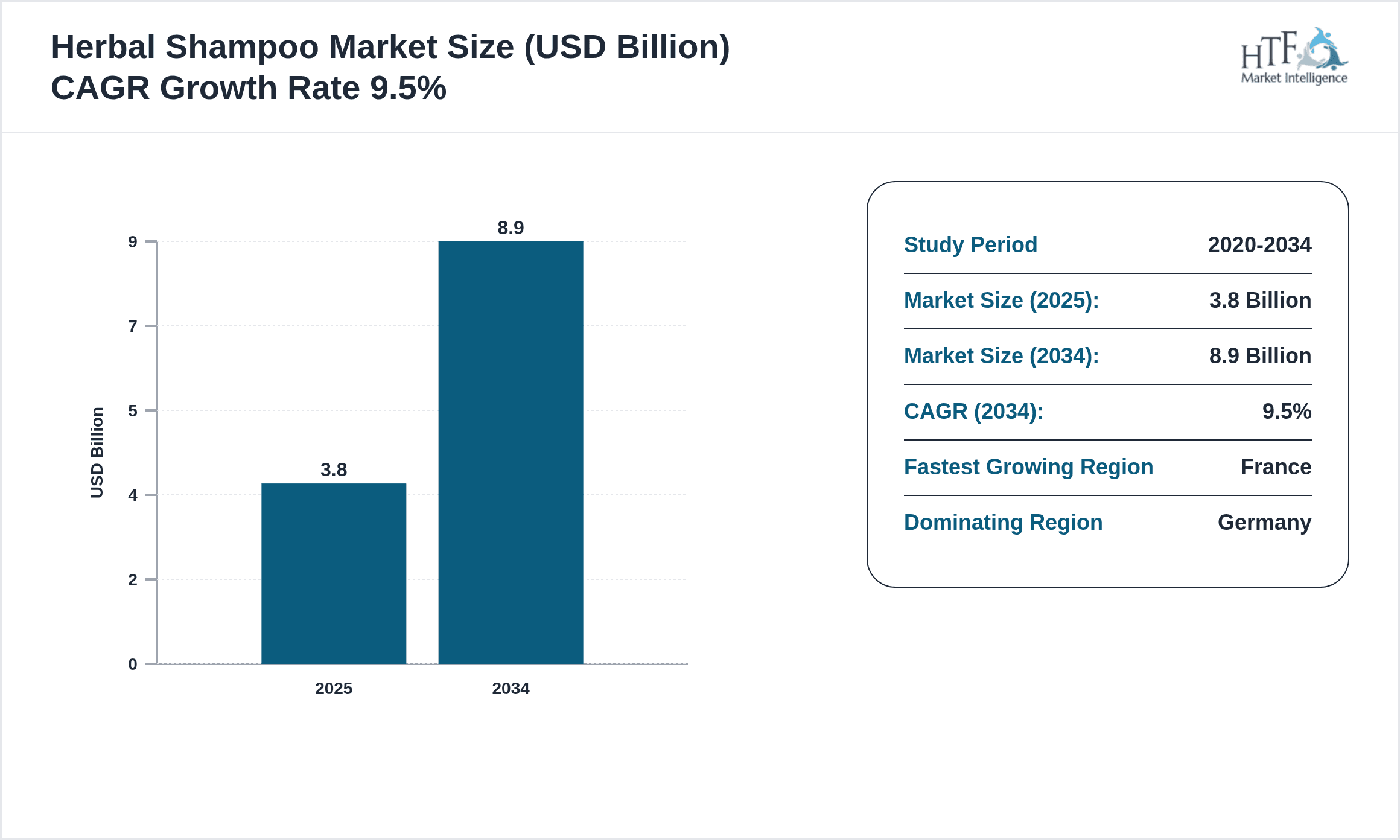
- •Key market highlights include a projected compound annual growth rate (CAGR) of approximately 9.5% between 2025 and 2034, with the market valued at USD 3.8 billion in 2025 and expected to reach USD 8.9 billion by 2034. Germany currently dominates the market due to strong consumer preference and well-established distribution networks, while France is identified as the fastest-growing country driven by rising demand for organic and essential oil-based products. Organic herbal shampoos lead the product type segment, followed closely by Ayurvedic formulations, reflecting consumer inclination toward certified natural products. Among applications, daily hair care remains dominant, with anti-dandruff and hair growth categories showing robust growth. The market benefits from increasing green beauty initiatives, the expansion of online retail, and growing investments in sustainable packaging and product innovation. However, challenges such as regulatory compliance complexities and the high cost of natural ingredients persist as notable constraints.
- •The Europe Herbal Shampoo Market holds substantial strategic importance for manufacturers, retailers, and consumers due to its alignment with the global sustainability movement and rising health consciousness. The value proposition lies in offering effective hair care solutions that minimize chemical exposure while supporting environmental stewardship. This market appeals to diverse consumer segments including millennials, eco-conscious buyers, and individuals with sensitive scalps or allergies to synthetic chemicals. Industry stakeholders benefit from leveraging innovative botanical formulations, certifications such as ECOCERT and COSMOS, and targeted marketing strategies to capture niche segments and drive brand loyalty. The market's trajectory is expected to influence adjacent personal care categories, encouraging holistic wellness approaches and fostering collaboration across raw material suppliers, formulators, and distribution partners. In summary, the European herbal shampoo market represents a vibrant and growing sector driven by evolving consumer preferences, technological advancements, and regulatory frameworks promoting natural product adoption.
Competitive Landscape
The competition within the Europe Herbal Shampoo Market is robust and dynamic, dominated by both global personal care giants and specialized natural product manufacturers. Market participants focus heavily on innovation, particularly in botanical ingredient development, formulation efficacy, and sustainable packaging solutions to differentiate their offerings. Intense rivalry drives continuous product launches and marketing campaigns emphasizing organic certifications and cruelty-free credentials. Strategic partnerships, mergers, and acquisitions are common approaches to consolidate market share and expand geographic reach. Companies adopt multi-channel distribution strategies encompassing brick-and-mortar retail, online platforms, and direct-to-consumer models to maximize consumer accessibility. Price competition remains moderate due to the premium nature of herbal products, yet companies invest in brand positioning to justify pricing. The competitive environment also reflects varying consumer preferences across European countries, requiring localized product adaptations. Emerging players leverage digital marketing and influencer collaborations, while established companies focus on large-scale R&D investments, underscoring a market landscape marked by innovation, strategic agility, and consumer-centric approaches.
Leading Companies in Herbal Shampoo Market
- •L'Oréal S.A. (France)
- •Henkel AG & Co. KGaA (Germany)
- •Unilever PLC (United Kingdom/Netherlands)
- •The Body Shop International Limited (United Kingdom)
- •Weleda AG (Switzerland)
- •Dr. Hauschka Kosmetik GmbH & Co. KG (Germany)
- •Khadi Natural (India - European Operations)
- •Logona Naturkosmetik AG (Germany)
- •Alba Botanica (United Kingdom)
- •Faith in Nature Limited (United Kingdom)
- •Garnier (France)
- •Burt's Bees Europe (United Kingdom)
- •Herbal Essences (United States - European Market)
- •Aveda Corporation (United States - European Operations)
- •Jason Natural Products (United States - European Distribution)
- •Sukin Naturals (Australia - European Market)
- •Natura Siberica (Russia)
- •Neal's Yard Remedies (United Kingdom)
- •Yves Rocher (France)
- •Madara Cosmetics (Latvia)
- •Juice Beauty (United States - European Market)
- •Phytospecific (France)
- •Mádara Cosmetics (Latvia)
- •Kneipp GmbH (Germany)
- •Alverde Naturkosmetik (Germany)
Market Breakdown
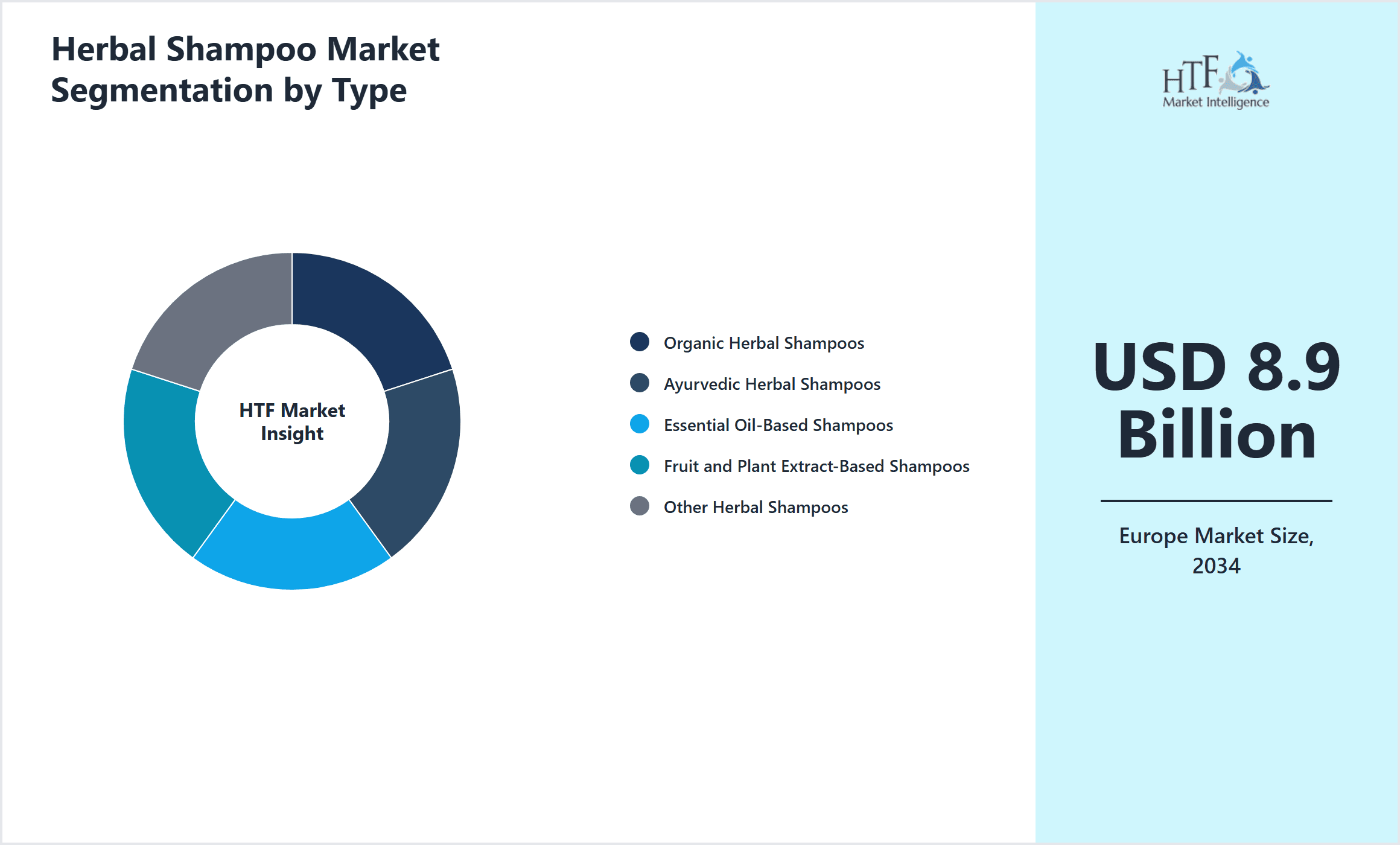
- •By Product Type
- ◦Organic Herbal Shampoos
- ◦Ayurvedic Herbal Shampoos
- ◦Essential Oil-Based Shampoos
- ◦Fruit and Plant Extract-Based Shampoos
- ◦Other Herbal Shampoos
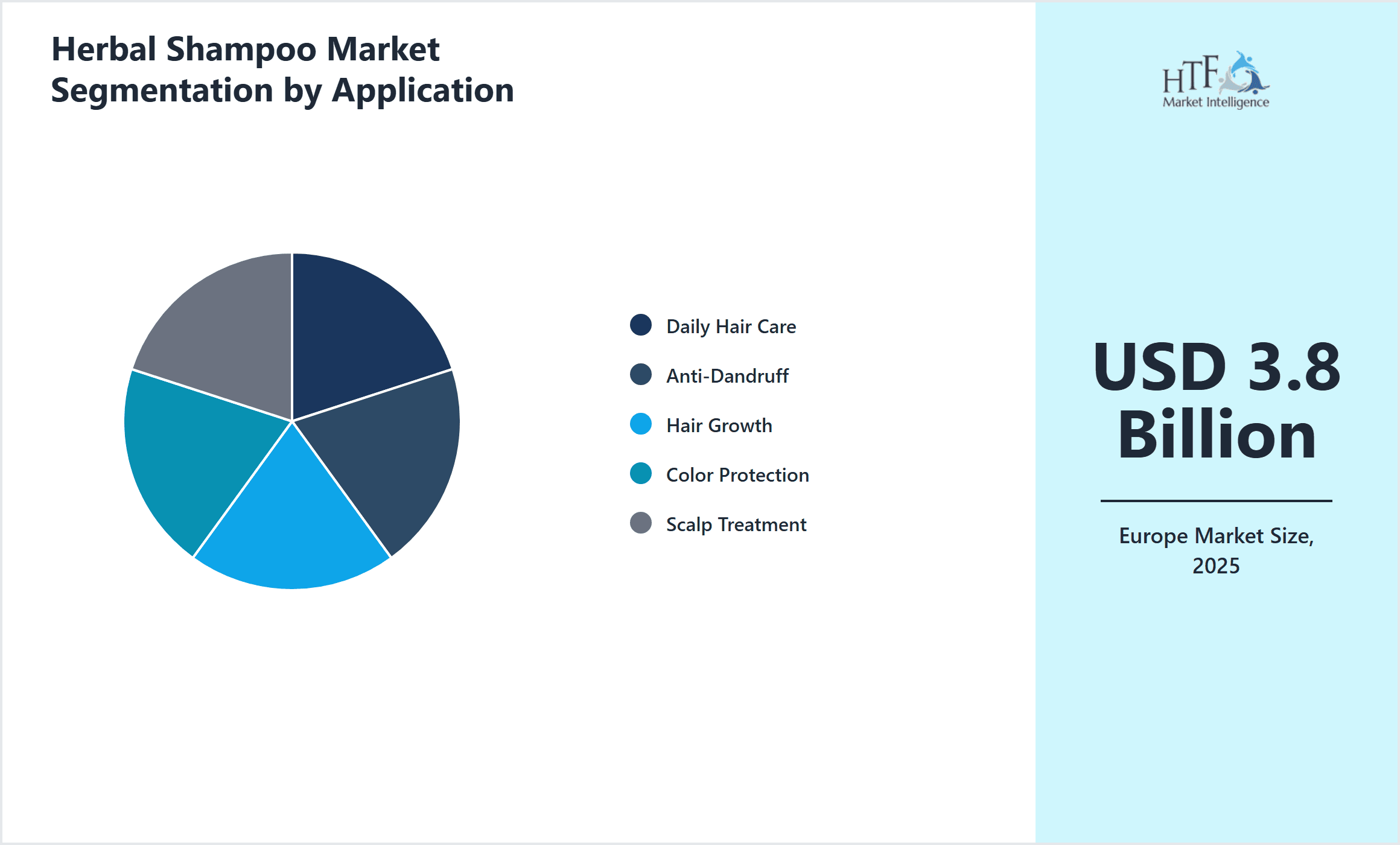
- •By Application
- ◦Daily Hair Care
- ◦Anti-Dandruff
- ◦Hair Growth
- ◦Color Protection
- ◦Scalp Treatment
- •By End-Use Industry
- ◦Retail Consumers
- ◦Professional Salons
- ◦Hotels & Spas
- ◦E-commerce Platforms
- •By Distribution Channel
- ◦Supermarkets & Hypermarkets
- ◦Specialty Stores
- ◦Pharmacies & Drugstores
- ◦Online Retailers
Growth Dynamics
- •Rising consumer preference for natural and chemical-free hair care products is a primary growth driver in the Europe Herbal Shampoo Market. This shift is driven by health-conscious demographics demanding safer, eco-friendly alternatives to conventional shampoos that contain sulfates and parabens.
- •Increasing environmental awareness and stringent European regulations promoting sustainable and biodegradable ingredients are accelerating market growth. Companies are investing in organic certifications and adopting green manufacturing processes to align with regulatory frameworks and consumer expectations.
- •The proliferation of online retail platforms and social media marketing has expanded market accessibility and consumer education, enabling wider reach of niche herbal shampoo brands. Digital channels facilitate direct consumer engagement and personalized product recommendations.
- •Innovative product formulations incorporating traditional Ayurvedic knowledge and modern botanical science are enhancing product efficacy and appeal. This fusion attracts a broad customer base seeking both authenticity and proven performance in hair care.
- •Growing incidences of hair and scalp issues such as dandruff, hair thinning, and sensitivity promote demand for specialized herbal shampoos targeting these conditions. Products offering multifunctional benefits are increasingly preferred by consumers.
Market Trends
- •A notable trend is the rising use of essential oils like rosemary, tea tree, and lavender in shampoo formulations, which provide therapeutic benefits and appeal to aromatherapy enthusiasts. This trend supports differentiation and premium pricing strategies.
- •Sustainability is shaping product development, with brands adopting refillable packaging, biodegradable bottles, and zero-waste initiatives to align with European green consumer values and regulatory mandates.
- •Collaborations between herbal product manufacturers and dermatologists or trichologists are increasing, enhancing product credibility and consumer trust through science-backed claims and certifications.
- •Customization and personalization of herbal shampoos based on hair type, scalp condition, and lifestyle factors are gaining traction, enabled by AI-driven online platforms and consumer data analytics.
- •Rising consumer interest in cruelty-free and vegan-certified herbal shampoos is influencing market offerings, with companies prominently displaying certifications and ingredient transparency.

Market Opportunities
- •Expanding untapped markets within Eastern Europe presents significant growth potential, driven by increasing disposable incomes and growing awareness of natural personal care products.
- •Development of multifunctional herbal shampoos combining scalp treatment with hair nourishment could capture a broader consumer base seeking convenience and efficacy in single products.
- •Integration of advanced natural ingredients sourced from indigenous European flora offers opportunities for product differentiation and storytelling to attract premium consumers.
- •Strategic partnerships between herbal shampoo manufacturers and online beauty subscription services can enhance market penetration and consumer trial rates.
- •Growing demand for male grooming products provides a niche for herbal shampoos formulated specifically for men's hair and scalp care needs.
Market Challenges
- •High production costs associated with sourcing certified organic and rare botanical ingredients constrain pricing flexibility and profit margins for herbal shampoo manufacturers.
- •Complex and evolving regulatory requirements across European countries pose compliance challenges particularly related to ingredient approvals and labeling standards.
- •Consumer skepticism regarding the efficacy of herbal shampoos compared to conventional products necessitates substantial investment in education and marketing to build trust.
- •Intense competition from well-established multinational brands and emerging indie players creates pressure on market share and necessitates continuous innovation.
- •Supply chain disruptions impacting availability of natural raw materials, exacerbated by climatic and geopolitical factors, introduce operational risks for manufacturers.
Regulatory Framework
- •The EU Cosmetics Regulation (EC) No 1223/2009, updated between 2019 and 2025, imposes stringent safety assessments, ingredient restrictions, and labeling requirements, ensuring consumer protection and product transparency for herbal shampoos.
- •The REACH Regulation requires pre-registration and evaluation of chemical substances used in herbal shampoos, promoting safer ingredient usage and environmental sustainability across Europe.
- •Several European countries have introduced national regulations mandating cruelty-free certifications and banning animal testing, affecting product formulation and marketing practices.
- •New guidelines on organic certification such as COSMOS and ECOCERT have been refined to standardize claims and labeling for herbal and natural cosmetic products, enhancing consumer confidence.
- •Packaging waste directives enforce the use of recyclable and biodegradable materials, compelling companies to innovate in sustainable packaging solutions for herbal shampoo products.
Market Intelligence
- •15th January 2025, L'Oréal S.A. launched a new line of organic herbal shampoos under its Garnier brand, integrating sustainably sourced rosemary and chamomile extracts. This product targets environmentally conscious consumers seeking effective yet gentle hair care solutions. The launch includes refillable packaging options aligning with the company's commitment to reducing plastic waste and enhancing sustainability. The initiative aims to capture the growing market segment favoring certified organic personal care products across European countries, leveraging digital marketing and influencer collaborations to maximize reach. The product line received positive early reviews highlighting its natural fragrance and scalp soothing properties. Source: Official L'Oréal press release.
- •10th March 2025, Henkel AG & Co. KGaA unveiled an innovative essential oil-based herbal shampoo formulation featuring tea tree and peppermint oils targeting anti-dandruff treatment. The product launch emphasizes dermatological testing and eco-friendly ingredients, catering to consumers with sensitive scalps. Henkel's strategic objective includes expanding its market share in Northern and Western Europe by promoting this new product through online platforms and specialty stores. The company also announced partnerships with European dermatology clinics to validate product efficacy and enhance credibility. This move reflects the growing trend of integrating traditional herbal ingredients with scientific validation in the herbal shampoo market. Source: Henkel Corporate Communications.
- •20th February 2025, The Body Shop International Limited expanded its herbal shampoo portfolio by introducing a vegan-certified fruit and plant extract-based shampoo range. This launch aligns with the brand's commitment to cruelty-free and ethical sourcing practices. The new products are marketed heavily through e-commerce channels and selected retail outlets across Europe, targeting millennials and Gen Z consumers. The initiative is part of a broader company sustainability strategy aiming for 100% recyclable packaging by 2027. Early market feedback indicates strong acceptance, positioning the brand competitively within the natural personal care segment. Source: The Body Shop Official Website.
- •5th April 2025, Weleda AG announced a strategic partnership with an organic herb supplier to enhance the traceability and quality of ingredients used in its Ayurvedic herbal shampoo line. The partnership includes joint research on novel botanical extracts and sustainable cultivation practices. This collaboration is expected to strengthen product authenticity and appeal to consumers demanding transparency and traceability in natural products. The initiative supports Weleda's positioning as a market leader in certified natural cosmetics and reinforces its competitive edge amid increasing demand for Ayurvedic formulations in Europe. Source: Weleda Corporate News.
Regional Outlook
The Germany currently holds a significant share of the market, primarily due to several key factors: increasing consumption rates, a burgeoning population, and robust economic momentum. These elements collectively drive demand, positioning this region as a leader in the market. On the other hand, France is rapidly emerging as the fastest-growing area within the industry. This remarkable growth can be attributed to swift infrastructure development, the expansion of various industrial sectors, and a marked increase in consumer demand. These dynamics make this region a crucial player in shaping future market growth.
In our report, we cover a comprehensive analysis of the following regions and countries:
- Germany
- France
- The United Kingdom
- BeNeLux
- Spain
- Italy
- NORDIC
- CEE
- Others
| Feature | Details |
|---|---|
| Base Year Market Size | USD 3.8 Billion |
| Forecast Year Market Size | USD 8.9 Billion |
| CAGR | 9.5% |
| Forecast Period | 2026 to 2033 |
| YoY Growth | 9.1% |
| Scope of Report | Market is segmented by Product Type (Organic Herbal Shampoos, Ayurvedic Herbal Shampoos, Essential Oil-Based Shampoos, Fruit and Plant Extract-Based Shampoos, Other Herbal Shampoos), Application (Daily Hair Care, Anti-Dandruff, Hair Growth, Color Protection, Scalp Treatment), End-Use Industry (Retail Consumers, Professional Salons, Hotels & Spas, E-commerce Platforms), Distribution Channel (Supermarkets & Hypermarkets, Specialty Stores, Pharmacies & Drugstores, Online Retailers) |
| Regions Covered | Germany, France, The United Kingdom, BeNeLux, Spain, Italy, NORDIC, CEE, Others |
| Key Companies | L'Oréal S.A. (France), Henkel AG & Co. KGaA (Germany), Unilever PLC (United Kingdom/Netherlands), The Body Shop International Limited (United Kingdom), Weleda AG (Switzerland), Dr. Hauschka Kosmetik GmbH & Co. KG (Germany), Khadi Natural (India - European Operations), Logona Naturkosmetik AG (Germany), Alba Botanica (United Kingdom), Faith in Nature Limited (United Kingdom), Garnier (France), Burt's Bees Europe (United Kingdom), Herbal Essences (United States - European Market), Aveda Corporation (United States - European Operations), Jason Natural Products (United States - European Distribution), Sukin Naturals (Australia - European Market), Natura Siberica (Russia), Neal's Yard Remedies (United Kingdom), Yves Rocher (France), Madara Cosmetics (Latvia), Juice Beauty (United States - European Market), Phytospecific (France), Mádara Cosmetics (Latvia), Kneipp GmbH (Germany), Alverde Naturkosmetik (Germany) |
Herbal Shampoo Market - Europe Size & Outlook 2025-2034 - Table of Contents
Frequently Asked Questions (FAQ):
The Compact Track Loaders market is projected to grow at a CAGR of 6.8% from 2025 to 2030, driven by increasing demand in construction and agricultural sectors.
North America currently leads the market with approximately 45% market share, followed by Europe at 28% and Asia-Pacific at 22%. The remaining regions account for 5% of the global market.
Key growth drivers include increasing construction activities, rising demand for versatile equipment in agriculture, technological advancements in track loader design, and growing preference for compact equipment in urban construction projects.