
North America Board Game and Card Game Market Size, Growth & Revenue 2025-2034
North America Board Game and Card Game Market is segmented by Product Type (Board Games, Card Games, Strategy Games, Party Games, Role-Playing Games), Application (Family Entertainment, Competitive Play, Educational Use, Casual Gaming, Collector's Items), End-Use Industry (Retail and Specialty Stores, Educational Institutions, Entertainment and Leisure Venues, Online and Digital Platforms), Distribution Channel (Specialty Retailers, Online Marketplaces, Direct-to-Consumer Sales), and Geography (United States, Canada, Mexico)
Pricing
Report Overview
Executive Summary
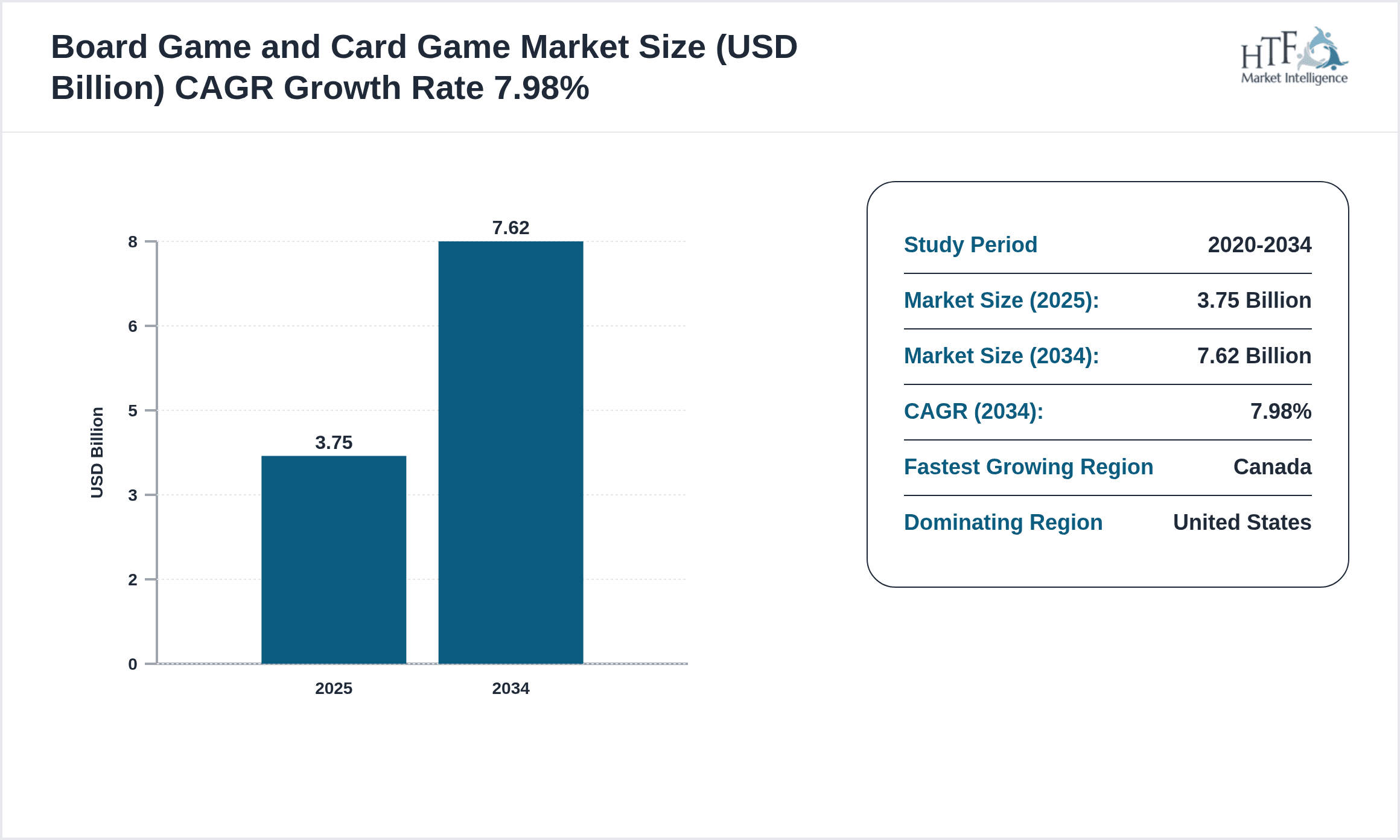
- •The North America Board Game and Card Game market represents a dynamic segment within the entertainment industry, characterized by a wide product portfolio including board games, card games, strategy games, party games, and role-playing games. This market caters to diverse consumer groups ranging from families seeking leisure activities to competitive gamers engaging in tournaments and enthusiasts collecting rare editions. The market’s growth is fueled by increasing consumer interest in offline social entertainment, nostalgia-driven demand for classic games, and the integration of technology such as digital apps and augmented reality enhancing traditional gameplay. The industry also benefits from the rise of educational games used in academic settings to foster cognitive skills and teamwork. Key applications include family entertainment, competitive play, educational use, casual gaming, and collector's items. Market players span manufacturers, distributors, and digital platform providers primarily operating in the United States, Canada, and Mexico. The market witnessed steady expansion from 2020 to 2025 with a base size of USD 3.75 billion and is forecasted to grow at a CAGR of 7.98% to reach USD 7.62 billion by 2034. This growth trajectory is supported by evolving consumer behavior favoring social and interactive leisure activities, pandemic-driven resurgence in home entertainment, and increasing investments in product innovation and marketing. The sector is poised for continued expansion driven by technological advancements, demographic shifts, and rising disposable incomes across key North American countries.
- •Key highlights of the North America Board Game and Card Game market include a robust CAGR of 7.98% between 2025 and 2034, signaling strong demand and adoption across all product types. The United States dominates the market in terms of share and revenue generation, supported by a well-established retail infrastructure and high consumer spending on leisure products. Canada is identified as the fastest-growing country within the region due to rising interest in niche and strategy-based games and increasing participation in gaming communities. Strategy games are the fastest-growing product segment driven by consumer preference for intellectually stimulating content and competitive gameplay. The market also benefits from expanding applications in education and casual gaming segments. Year-on-year growth averages at 7.38%, reflecting steady market momentum fueled by innovation, digital engagement, and community events such as board game cafes and tournaments.
- •The North America Board Game and Card Game market offers significant value propositions for manufacturers, retailers, and investors by combining traditional gameplay with modern technology to enhance user engagement. This market provides strategic importance to industries such as entertainment, education, and retail by fostering social interaction, cognitive development, and cultural engagement. Stakeholders benefit from diversified revenue streams including physical game sales, digital adaptations, licensing, and merchandising. The strategic importance is further underscored by the rise of hybrid gaming experiences blending offline and online elements, expanding market reach and customer base. Investment in innovative formats, customizable game content, and sustainable materials further strengthens competitive positioning. Overall, the market is well-positioned to capitalize on shifting consumer preferences toward interactive and group leisure activities, supporting long-term growth and profitability in the North American region.
Competitive Landscape
The North America Board Game and Card Game market is characterized by intense competition among established manufacturers, innovative startups, and digital platform providers. Leading companies employ diverse competitive strategies including product innovation, licensing popular intellectual properties, strategic partnerships, and expansion of retail and online distribution channels. Market players focus on differentiating through unique game mechanics, high-quality components, and enhanced user experience integrating digital technologies such as companion apps and augmented reality. Competitive pricing and frequent product launches maintain consumer interest and market penetration. Mergers and acquisitions facilitate consolidation and expansion of product portfolios, while licensing agreements enable access to popular entertainment franchises, enhancing brand appeal. Distribution strategies include partnerships with specialty retailers, online marketplaces, and direct-to-consumer sales, optimizing reach across North America. The competitive environment also encourages community-building initiatives such as tournaments, conventions, and board game cafes, fostering brand loyalty and user engagement. Regional competition is driven by consumer preferences and demographic factors influencing product adoption. Emerging trends include sustainability in game manufacturing and diversification into educational and digital hybrid formats, positioning competitors to capture evolving market segments. Future competitive trends point towards increased digital integration, personalized gameplay options, and expansion into untapped consumer niches.
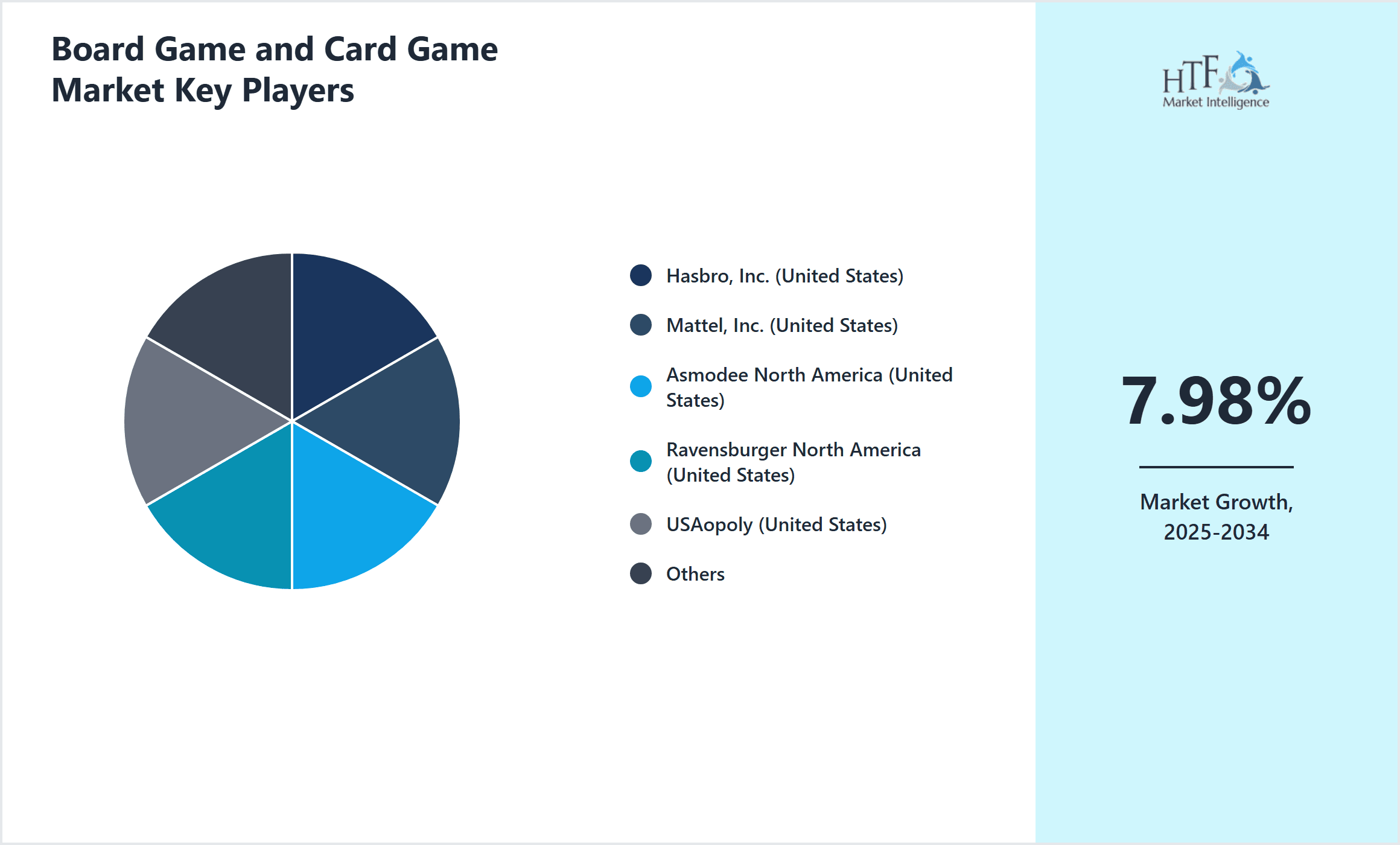
Key Players in Board Game and Card Game Market
- •Hasbro, Inc. (United States)
- •Mattel, Inc. (United States)
- •Asmodee North America (United States)
- •Ravensburger North America (United States)
- •USAopoly (United States)
- •Gibsons Games (Canada)
- •Fantasy Flight Games (United States)
- •Days of Wonder (United States)
- •Plaid Hat Games (United States)
- •Blue Orange Games (United States)
- •Renegade Game Studios (United States)
- •Cryptozoic Entertainment (United States)
- •Bezier Games (United States)
- •IELLO (United States)
- •Z-Man Games (United States)
- •Breaking Games (United States)
- •Calliope Games (United States)
- •Jumbo Games (Canada)
- •North Star Games (United States)
- •Plan B Games (United States)
- •Eagle-Gryphon Games (United States)
- •Stonemaier Games (United States)
- •Greater Than Games (United States)
- •F2Z Entertainment (United States)
- •Blue Panther LLC (United States)
Market Breakdown
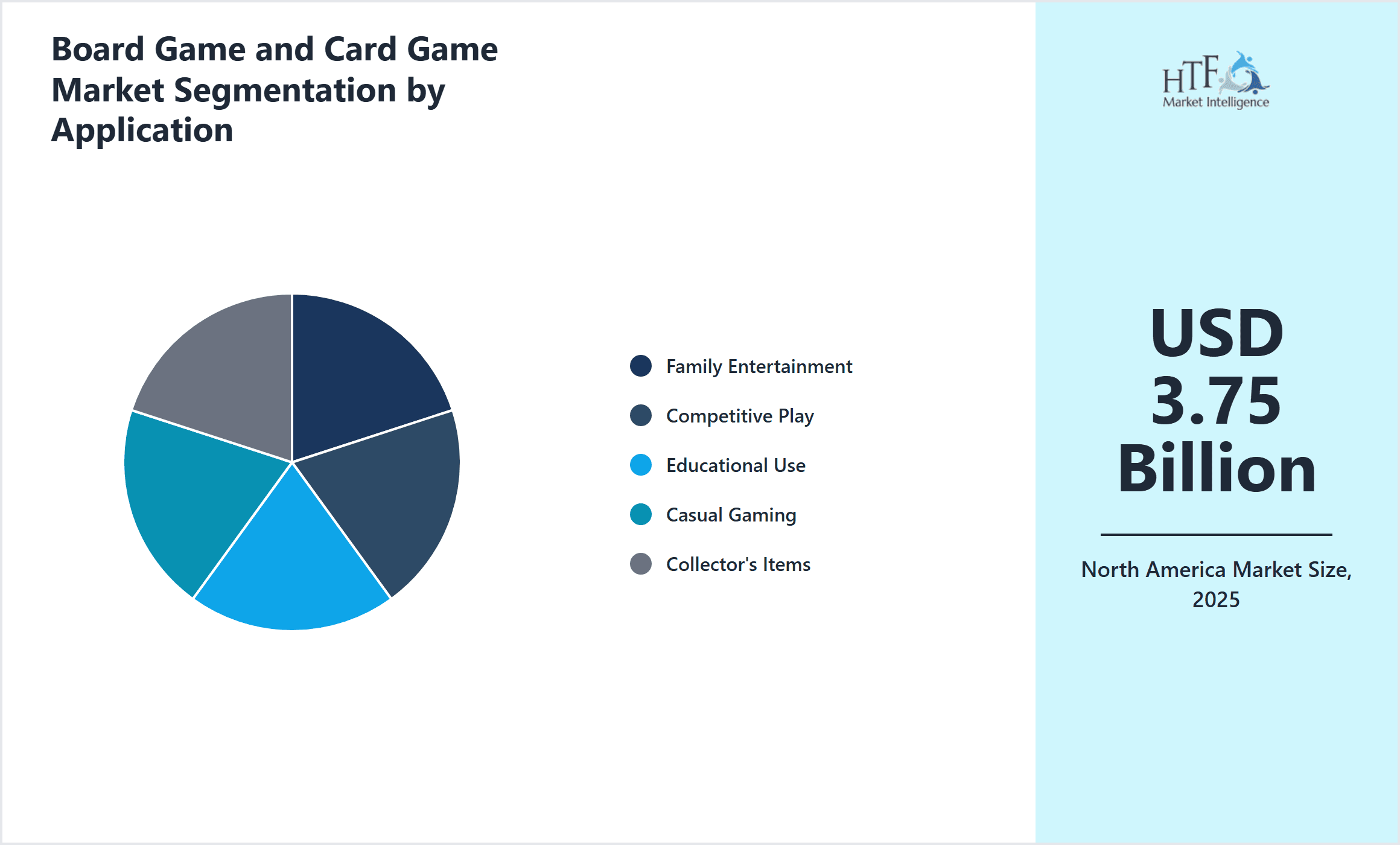
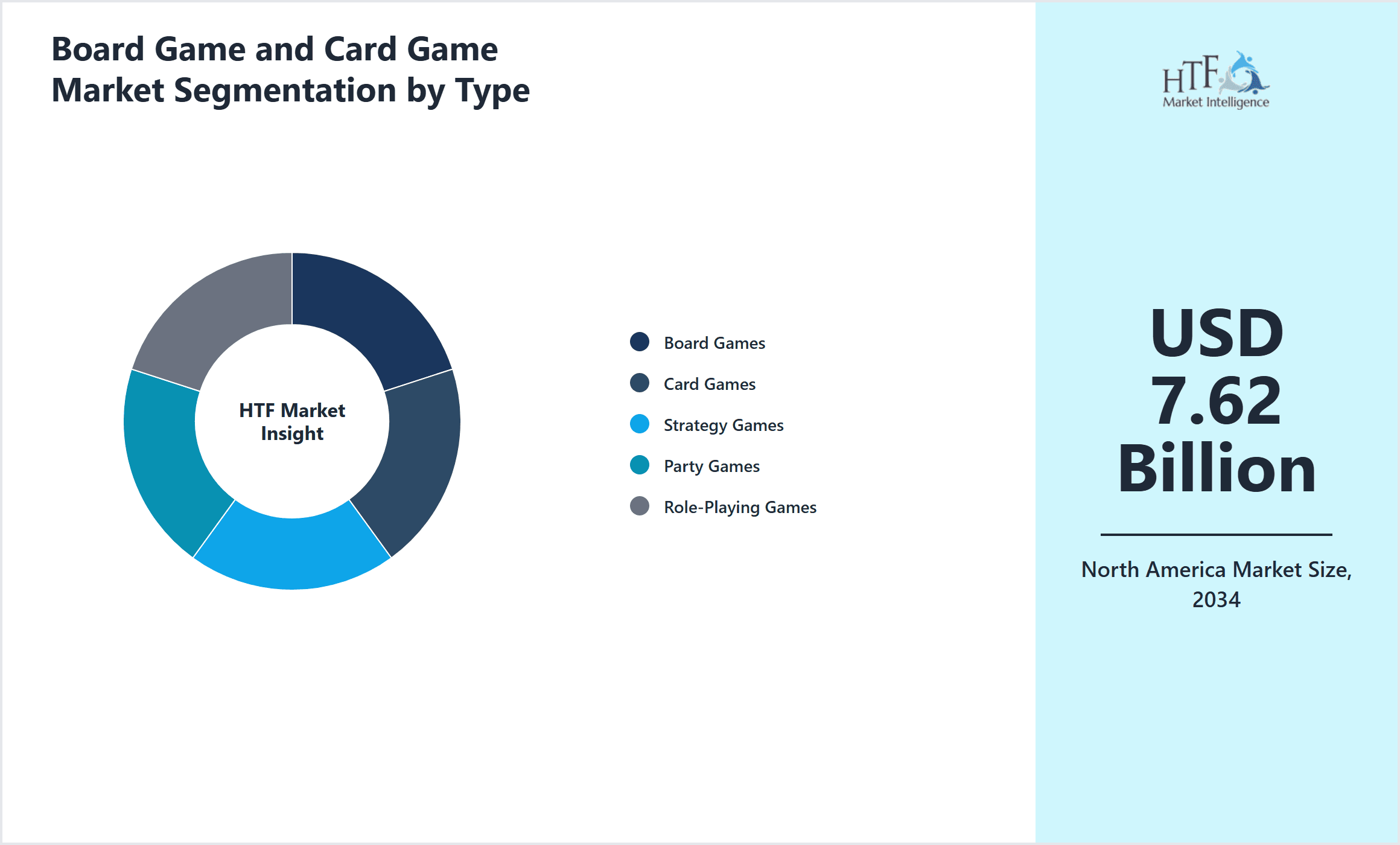
- •By Product Type
- ◦Board Games
- ◦Card Games
- ◦Strategy Games
- ◦Party Games
- ◦Role-Playing Games
- •By Application
- ◦Family Entertainment
- ◦Competitive Play
- ◦Educational Use
- ◦Casual Gaming
- ◦Collector's Items
- •By End-Use Industry
- ◦Retail and Specialty Stores
- ◦Educational Institutions
- ◦Entertainment and Leisure Venues
- ◦Online and Digital Platforms
- •By Distribution Channel
- ◦Specialty Retailers
- ◦Online Marketplaces
- ◦Direct-to-Consumer Sales
Growth Dynamics
The North America Board Game and Card Game market is driven by multiple growth factors including increasing consumer demand for social and family-oriented entertainment options, which has been amplified by the global pandemic encouraging home-based leisure activities. The rise of digital companion apps and augmented reality features enriches traditional gameplay, attracting tech-savvy players and expanding market penetration. The growing interest in strategy and competitive games fosters community engagement through tournaments and online forums, stimulating sales and product innovation. Additionally, educational institutions adopting board games as learning tools for cognitive and social skills bolster demand in the academic segment. Investment in sustainable and eco-friendly materials also resonates with environmentally conscious consumers, enhancing brand value. The presence of strong retail and e-commerce channels ensures wide accessibility. Moreover, licensing popular entertainment franchises creates new revenue streams and broadens consumer appeal. These dynamics collectively position the market for robust long-term expansion with innovation and consumer engagement at the core.
Market Trends
The North America Board Game and Card Game market is witnessing a significant trend towards hybridization, where traditional physical games are complemented by digital platforms including apps and online multiplayer modes. This trend enhances user interaction, accessibility, and engagement, appealing to younger demographics and tech-oriented consumers. There is a growing emphasis on sustainable production practices, with companies adopting eco-friendly materials and packaging to meet consumer expectations for environmental responsibility. Nostalgia-driven demand for classic and vintage games continues to fuel reissues and special editions, catering to collectors and older demographics. Additionally, the rise of board game cafes and community events creates experiential trends that deepen consumer loyalty and broaden market reach. Customization and modular game designs are gaining popularity, providing personalized gameplay experiences. The market is also influenced by increased cross-industry collaborations with entertainment franchises, boosting licensing opportunities and expanding thematic diversity.
Market Opportunities
The North America Board Game and Card Game market presents significant opportunities in expanding digital integrations such as augmented reality and app-based game companions that enhance traditional gameplay and engagement. Untapped segments include educational and therapeutic applications where games support learning and cognitive development, offering potential for partnerships with academic and healthcare institutions. Geographic expansion within Canada and Mexico offers growth prospects through localized content and distribution strategies. Innovation in sustainable and biodegradable game components aligns with rising consumer environmental awareness, creating competitive differentiation. Additionally, the collector’s market for limited edition and niche games provides premium pricing opportunities. Partnerships with popular media franchises can leverage brand equity to attract diverse consumer bases. The market can also capitalize on increasing demand for inclusive and diverse game themes that reflect broader social values, appealing to wider audiences. These opportunities, combined with evolving consumer preferences, position the market for sustained revenue growth.
Market Challenges
Key challenges facing the North America Board Game and Card Game market include intense competition leading to pricing pressures and the need for continuous product innovation to maintain consumer interest. Supply chain disruptions and rising raw material costs affect production timelines and profitability. The increasing prevalence of digital entertainment alternatives such as video games and mobile apps competes for consumer attention and spending, particularly among younger demographics. Intellectual property issues and licensing complexities pose risks in product development and marketing. Additionally, distribution challenges in reaching niche consumer segments and maintaining retail presence amid shifting purchasing behaviors require strategic adjustments. Regulatory compliance related to safety standards and environmental regulations necessitates operational vigilance. The seasonal nature of board game sales and the dependency on holiday periods also create revenue fluctuations. Addressing these challenges demands agility, investment in R&D, and effective market positioning.
Regulatory Framework
Between 2020 and 2025, the North America Board Game and Card Game market has been influenced by evolving regulatory standards focused on product safety, consumer protection, and environmental sustainability. The Consumer Product Safety Improvement Act (CPSIA) mandates strict compliance on material safety and labeling, ensuring games are safe for children and other users. Environmental regulations encourage the use of recyclable and biodegradable materials in game components and packaging, impacting manufacturing processes and material sourcing. Additionally, intellectual property laws govern licensing agreements and protect against infringement, crucial for games incorporating popular culture themes. Regional regulations in the United States, Canada, and Mexico impose specific compliance requirements on import/export, labeling, and chemical usage in materials. Enforcement mechanisms include periodic inspections and mandatory certifications, compelling manufacturers to adhere to quality and safety benchmarks. The regulatory landscape also supports initiatives promoting educational content and accessibility, facilitating market diversification. Government incentives for sustainable manufacturing practices further influence industry standards. Overall, regulatory compliance ensures product integrity, consumer confidence, and alignment with environmental and social governance priorities within the North American market.
Market Intelligence
- •15th February 2025, Hasbro, Inc. launched an innovative augmented reality-enhanced board game that integrates smartphone app features to provide an immersive gameplay experience targeting tech-savvy consumers in North America. This product combines classic board game mechanics with digital overlays, enabling dynamic interaction and personalized game scenarios. The launch aims to capture younger demographics and expand the company’s digital footprint while leveraging its extensive intellectual property portfolio. Strategic marketing campaigns and partnerships with popular influencers are planned to drive adoption. This initiative positions Hasbro as a leader in hybrid gaming experiences, aligning with evolving consumer preferences and strengthening its market share. Source: Hasbro Official Press Release.
- •10th July 2024, Asmodee North America announced a strategic partnership with a leading digital gaming platform to develop online versions of its popular tabletop games. This collaboration focuses on enhancing accessibility and fostering online multiplayer communities amid rising demand for social gaming experiences. The initiative is expected to boost revenue streams through digital subscriptions and in-app purchases, complementing physical game sales. It also addresses the growing trend of hybrid gameplay combining physical and digital elements. The partnership underscores Asmodee’s commitment to innovation and market expansion in the North American region. Source: Industry Publication - Board Game News.
- •22nd March 2025, Mattel, Inc. announced a sustainability initiative to transition its board game manufacturing to 100% recyclable and eco-friendly materials by 2030. This commitment responds to increasing consumer demand for environmentally responsible products and aligns with global sustainability goals. The initiative includes redesigning game components and packaging to minimize environmental impact while maintaining product quality and user experience. Mattel plans to collaborate with suppliers and certification bodies to ensure compliance and transparency throughout its supply chain. This move is expected to enhance brand reputation and appeal to environmentally conscious consumers, setting industry standards in North America. Source: Mattel Corporate Sustainability Report.
- •Recent market developments and strategic initiatives are continuously tracked through industry publications, company announcements, and regulatory filings. For the most current information, stakeholders are advised to monitor official corporate communications and recognized market intelligence platforms.
Regional Outlook
The United States currently holds a significant share of the market, primarily due to several key factors: increasing consumption rates, a burgeoning population, and robust economic momentum. These elements collectively drive demand, positioning this region as a leader in the market. On the other hand, Canada is rapidly emerging as the fastest-growing area within the industry. This remarkable growth can be attributed to swift infrastructure development, the expansion of various industrial sectors, and a marked increase in consumer demand. These dynamics make this region a crucial player in shaping future market growth.
In our report, we cover a comprehensive analysis of the following regions and countries:
- United States
- Canada
- Mexico
| Feature | Details |
|---|---|
| Base Year Market Size | USD 3.75 Billion |
| Forecast Year Market Size | USD 7.62 Billion |
| CAGR | 7.98% |
| Forecast Period | 2026 to 2033 |
| YoY Growth | 7.38% |
| Scope of Report | Market is segmented by Product Type (Board Games, Card Games, Strategy Games, Party Games, Role-Playing Games), Application (Family Entertainment, Competitive Play, Educational Use, Casual Gaming, Collector's Items), End-Use Industry (Retail and Specialty Stores, Educational Institutions, Entertainment and Leisure Venues, Online and Digital Platforms), Distribution Channel (Specialty Retailers, Online Marketplaces, Direct-to-Consumer Sales) |
| Regions Covered | United States, Canada, Mexico |
| Key Companies | Hasbro, Inc. (United States), Mattel, Inc. (United States), Asmodee North America (United States), Ravensburger North America (United States), USAopoly (United States), Gibsons Games (Canada), Fantasy Flight Games (United States), Days of Wonder (United States), Plaid Hat Games (United States), Blue Orange Games (United States), Renegade Game Studios (United States), Cryptozoic Entertainment (United States), Bezier Games (United States), IELLO (United States), Z-Man Games (United States), Breaking Games (United States), Calliope Games (United States), Jumbo Games (Canada), North Star Games (United States), Plan B Games (United States), Eagle-Gryphon Games (United States), Stonemaier Games (United States), Greater Than Games (United States), F2Z Entertainment (United States), Blue Panther LLC (United States) |
North America Board Game and Card Game Market Size, Growth & Revenue 2025-2034 - Table of Contents
Frequently Asked Questions (FAQ):
The Compact Track Loaders market is projected to grow at a CAGR of 6.8% from 2025 to 2030, driven by increasing demand in construction and agricultural sectors.
North America currently leads the market with approximately 45% market share, followed by Europe at 28% and Asia-Pacific at 22%. The remaining regions account for 5% of the global market.
Key growth drivers include increasing construction activities, rising demand for versatile equipment in agriculture, technological advancements in track loader design, and growing preference for compact equipment in urban construction projects.