
Global Digital Piano Market Size, Growth & Revenue 2024-2034
Global Digital Piano Market is segmented by Product Type (Stage Digital Piano, Portable Digital Piano, Console Digital Piano, Hybrid Digital Piano, Silent Digital Piano), Application (Professional Use, Educational Use, Home Use, Studio Use, Entertainment), End-User (Musicians, Music Schools, Home Consumers, Recording Studios), Distribution Channel (Retail Stores, Online Sales, Music Institutions), and Geography (North America, LATAM, West Europe, Central & Eastern Europe, Northern Europe, Southern Europe, East Asia, Southeast Asia, South Asia, Central Asia, Oceania, MEA)
Pricing
Report Overview
Executive Summary
- •The global digital piano market represents a dynamic sector within the musical instruments industry, focusing on electronic pianos that replicate acoustic piano experiences through digital technology. This market spans a diverse range of product types including stage, portable, console, hybrid, and silent digital pianos, addressing multiple user segments such as professional musicians, educators, home users, and recording studios. The market is characterized by continuous technological innovation enhancing sound quality, playability, and connectivity, fostering broader adoption. Geographically, the market covers major regions including North America, Europe, Asia-Pacific, Latin America, and the Middle East & Africa, reflecting varied consumer preferences and economic development. Growth is propelled by the rising popularity of music education, increased home entertainment demand, and integration with digital music production. Competitive landscape includes global manufacturers investing in R&D and expanding distribution to capture emerging markets. This comprehensive analysis captures market size, segmentation, key players, trends, challenges, and future outlook through 2034.
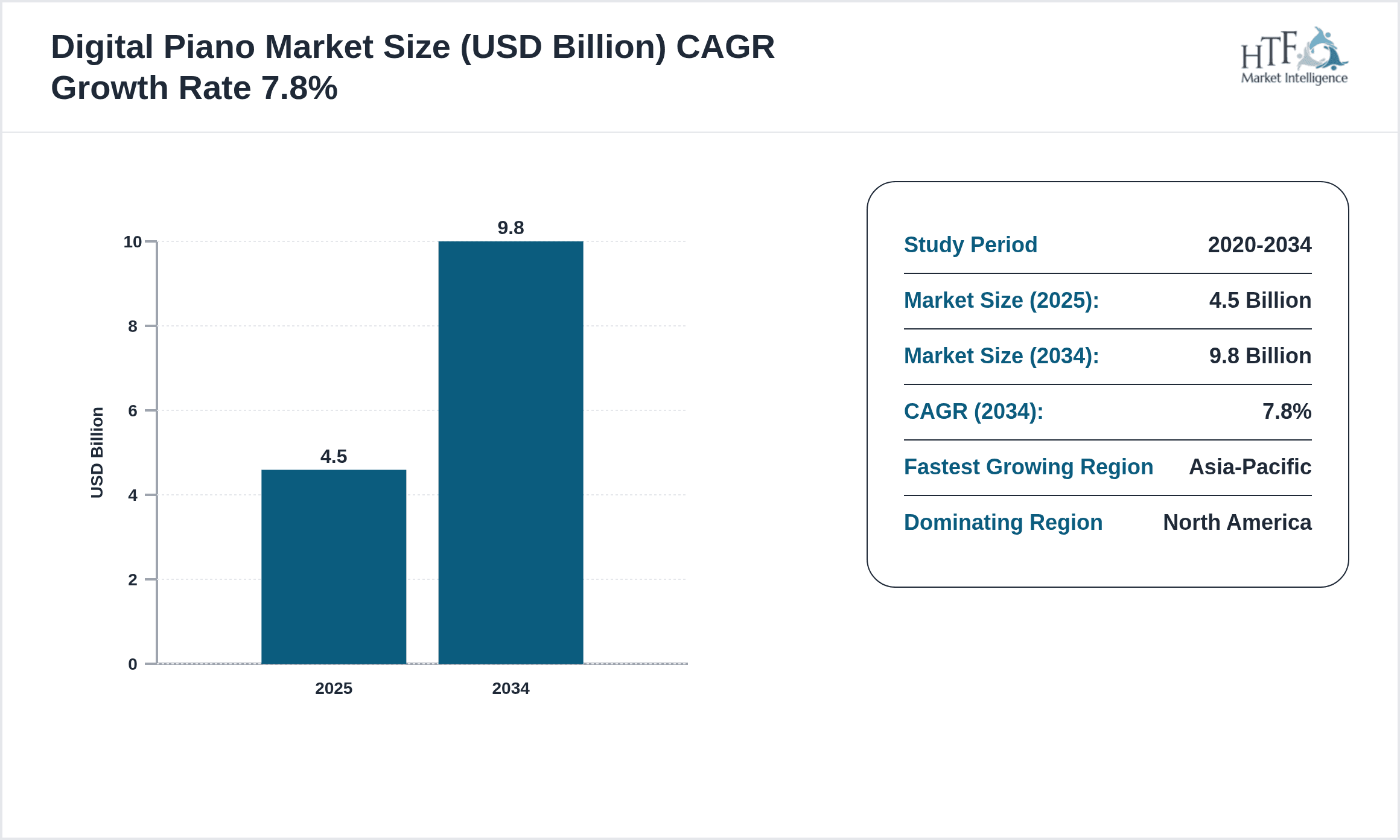
- •Key highlights include a 7.8% CAGR forecasted from 2024 to 2034, with market value expected to reach USD 9.8 Billion by 2034, up from USD 4.5 Billion in 2024. North America currently dominates the market, while Asia-Pacific is the fastest growing region due to rising consumer income and expanding music education initiatives. Stage digital pianos lead product types owing to their professional utility, whereas portable digital pianos are the fastest growing due to convenience and technological advancements. Application-wise, professional use remains dominant, followed by educational use driven by increasing adoption in schools and institutions worldwide. The market’s value proposition lies in offering versatile, innovative, and user-friendly instruments that cater to evolving consumer needs across diverse demographics and geographies.
- •The strategic importance of the global digital piano market extends across music education, entertainment, and professional performance industries. Stakeholders including manufacturers, distributors, educators, and end-users benefit from continuous technological evolution, enhancing musical expression and accessibility. The market’s growth potential is underpinned by lifestyle shifts favoring digital music creation and consumption, making digital pianos integral to modern music ecosystems. Furthermore, expanding online sales channels and product customization options enrich consumer experiences and foster competitive differentiation, positioning the market for sustained expansion and innovation.
Competitive Landscape
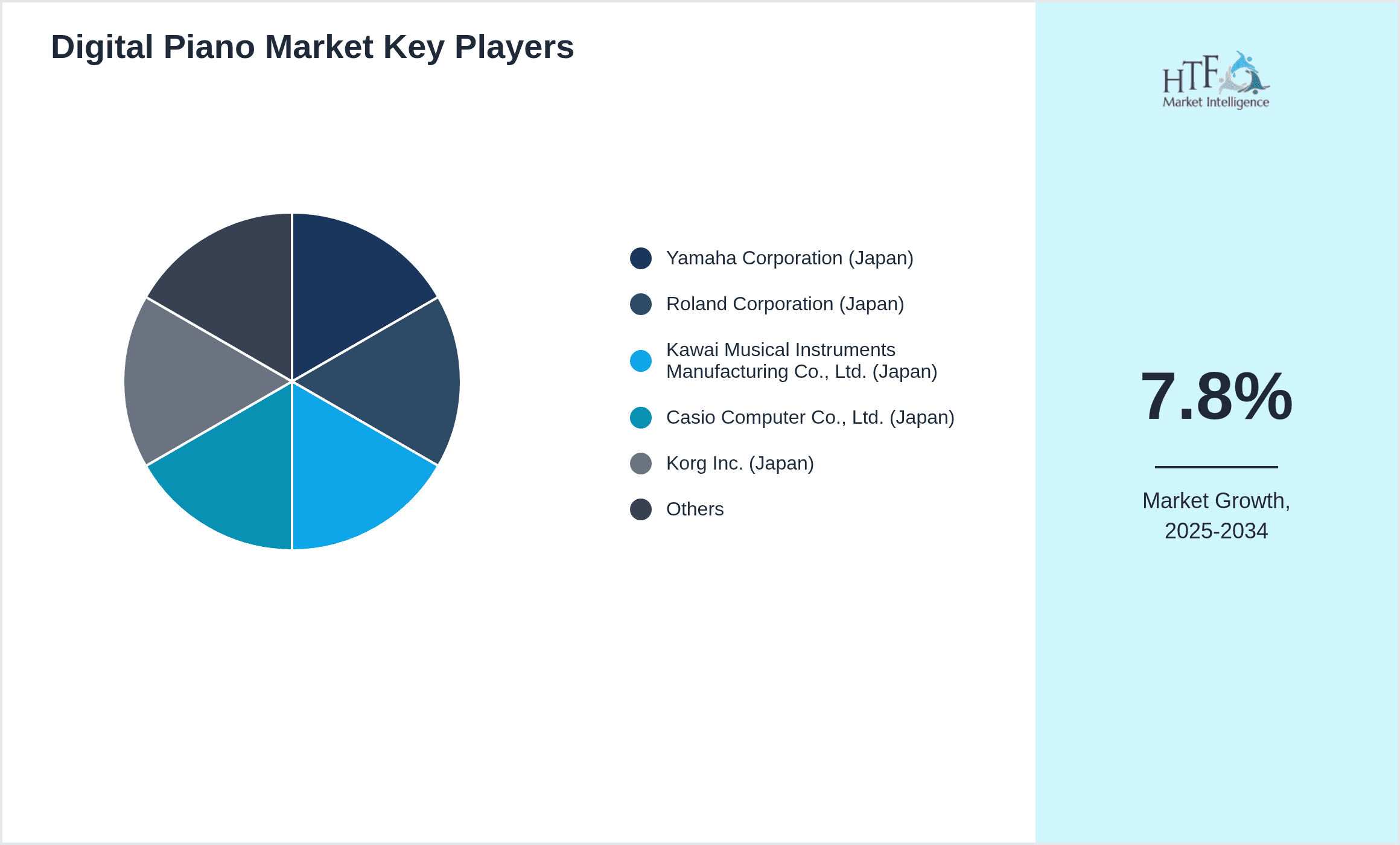
The global digital piano market is highly competitive with numerous players vying for market share through innovation, strategic partnerships, and geographic expansion. Companies differentiate themselves by investing heavily in R&D to enhance sound realism, tactile response, and integration with digital platforms. Competitive strategies also include offering diverse product portfolios catering to varied user segments such as professionals, educators, and hobbyists. Market rivalry is intensified by pricing strategies, quality enhancements, and after-sales services. Distribution channels encompass traditional retail, e-commerce, and music education institutions, facilitating broad market penetration. Mergers and acquisitions remain pivotal for consolidating technological capabilities and expanding global footprints. Regional competition varies, with North America and Europe focusing on premium instruments, while Asia-Pacific exhibits rapid growth driven by affordability and innovation. Future trends indicate increasing collaboration between technology firms and instrument manufacturers, fostering disruptive product development and new market entries.
Leading Companies in Digital Piano Market
- •Yamaha Corporation (Japan)
- •Roland Corporation (Japan)
- •Kawai Musical Instruments Manufacturing Co., Ltd. (Japan)
- •Casio Computer Co., Ltd. (Japan)
- •Korg Inc. (Japan)
- •Dexibell S.r.l. (Italy)
- •Kurzweil Music Systems (United States)
- •Nord Keyboards by Clavia Digital Musical Instruments AB (Sweden)
- •Alesis (United States)
- •Kurzweil Music Systems (United States)
- •Medeli Electronics Ltd. (Hong Kong)
- •Dexibell S.r.l. (Italy)
- •Arturia (France)
- •Studiologic (Italy)
- •Casio Computer Co., Ltd. (Japan)
- •Williams Music (United States)
- •Korg Inc. (Japan)
- •Suzuki Musical Instrument Corporation (Japan)
- •Hohner Musikinstrumente GmbH & Co. KG (Germany)
- •Dexibell S.r.l. (Italy)
- •Roland Corporation (Japan)
- •Yamaha Corporation (Japan)
- •Medeli Electronics Ltd. (Hong Kong)
- •Casio Computer Co., Ltd. (Japan)
- •Alesis (United States)
Market Breakdown
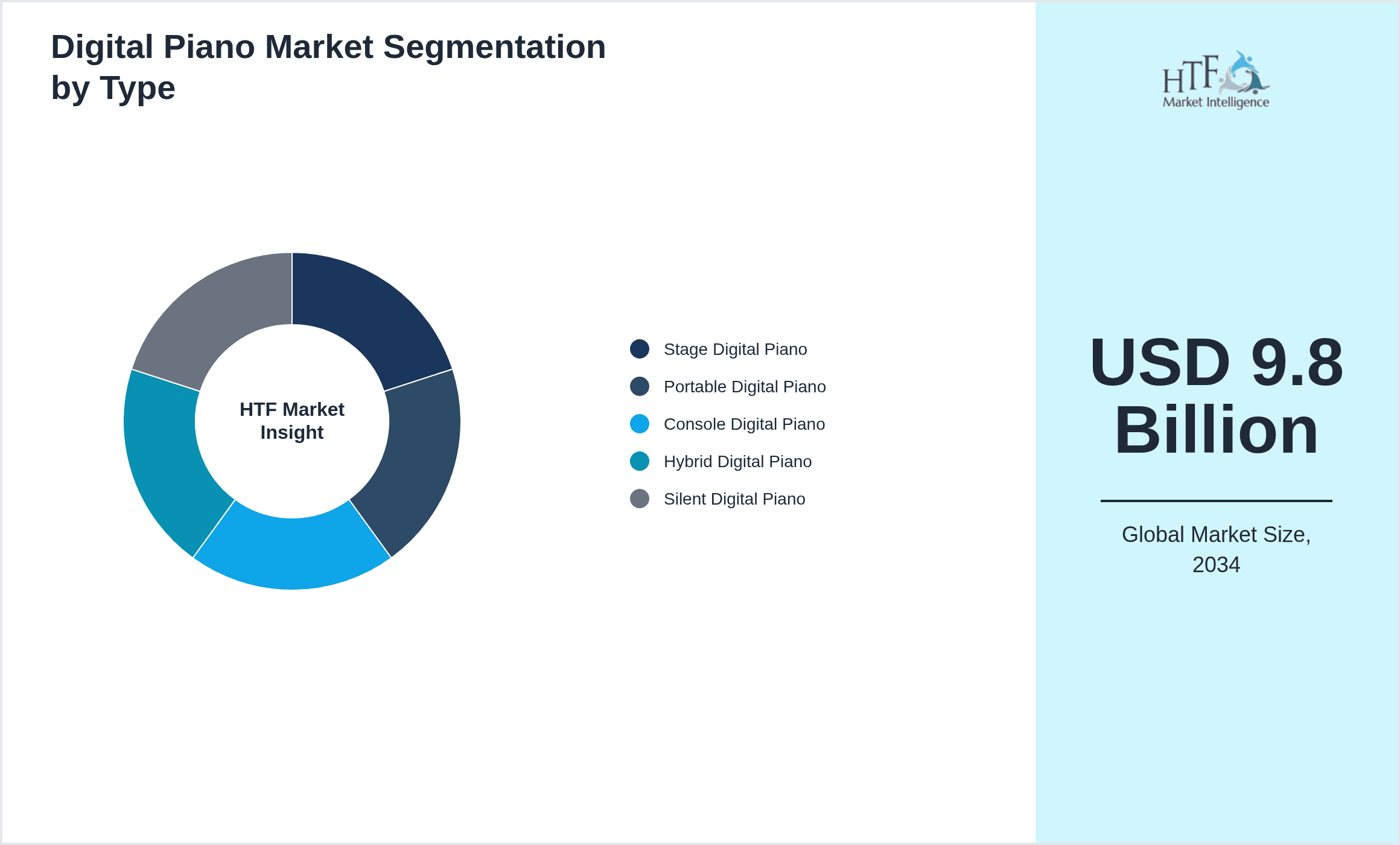
- •By Product Type
- ◦Stage Digital Piano
- ◦Portable Digital Piano
- ◦Console Digital Piano
- ◦Hybrid Digital Piano
- ◦Silent Digital Piano
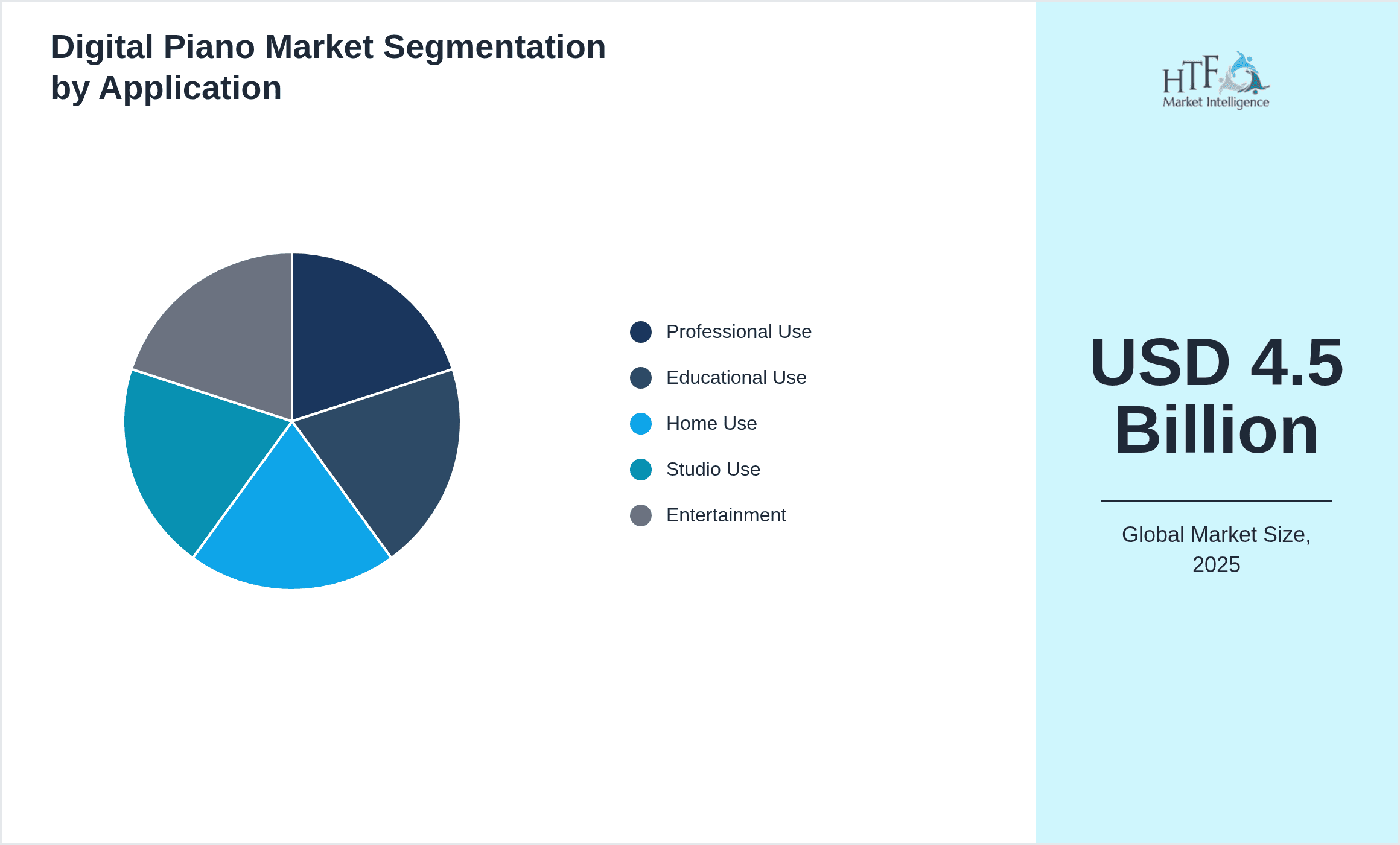
- •By Application
- ◦Professional Use
- ◦Educational Use
- ◦Home Use
- ◦Studio Use
- ◦Entertainment
- •By End-User
- ◦Musicians
- ◦Music Schools
- ◦Home Consumers
- ◦Recording Studios
- •By Distribution Channel
- ◦Retail Stores
- ◦Online Sales
- ◦Music Institutions
Growth Dynamics
The global digital piano market growth is primarily driven by the increasing adoption of music education worldwide. Educational institutions and private music schools are integrating digital pianos due to their affordability, portability, and advanced features that facilitate learning. Rising interest in digital music production and performance among younger demographics is expanding the customer base. Technological advancements such as improved sound sampling, digital connectivity with music software, and touch-sensitive keys have enhanced product appeal. Additionally, the growing popularity of home entertainment and hobbyist musicians has fueled demand. Increasing disposable incomes and expanding e-commerce channels worldwide further support market expansion. The COVID-19 pandemic accelerated digital adoption as remote learning and home-based music activities surged, creating long-term growth opportunities. The confluence of technology and lifestyle trends positions the digital piano market for robust growth through 2034.
Market Trends
One significant trend in the digital piano market is the integration of smart technologies and connectivity features, allowing users to connect instruments to apps, learning platforms, and recording software. This digital ecosystem enhances user experiences by providing interactive lessons, customizable sounds, and seamless sharing capabilities. Manufacturers are also focusing on miniaturization and portability, catering to mobile musicians and live performers. Sustainability trends are influencing product design, with companies adopting eco-friendly materials and energy-efficient manufacturing processes. The rise of online music content creation and social media platforms is boosting demand for versatile digital pianos that support streaming and recording. Furthermore, collaborations between technology firms and instrument makers are fostering innovative product launches that blend traditional piano feel with modern digital functionalities, shaping market evolution.
Market Opportunities
Emerging markets in Asia-Pacific and Latin America present vast growth opportunities for digital piano manufacturers due to rising middle-class populations and increasing music education initiatives. Expanding online sales platforms and digital marketing strategies can enhance market reach and consumer engagement. Innovation opportunities exist in developing hybrid models that combine acoustic piano characteristics with digital versatility, appealing to traditional pianists and tech-savvy users alike. Customizable sound libraries and integration with AI-based learning systems can differentiate products, creating unique value propositions. Partnerships with educational institutions and music content creators can drive adoption and brand loyalty. Additionally, expanding product lines to include budget-friendly models for beginners alongside premium instruments for professionals can capture diverse market segments, fostering sustained growth.
Market Challenges
The digital piano market faces challenges including high initial costs of advanced models, which can limit accessibility in price-sensitive regions. Intense competition from alternative keyboard instruments and acoustic pianos affects consumer preference. Technical limitations such as latency issues and less authentic sound compared to traditional pianos may deter professional users. Supply chain disruptions and component shortages pose risks to timely product availability and cost management. Furthermore, digital fatigue among users and preference for acoustic instruments in certain cultures can restrain market penetration. Regulatory compliance across diverse global markets adds complexity for manufacturers. Addressing these challenges requires continuous innovation, competitive pricing, and effective marketing strategies to maintain growth momentum.
Regulatory Framework
Between 2019 and 2024, key regulatory updates affecting the global digital piano market have focused on electronic product safety, environmental compliance, and import-export standards. The implementation of stricter RoHS (Restriction of Hazardous Substances) directives across Europe and North America mandates reduction of hazardous materials in manufacturing, prompting companies to adopt eco-friendly components. Energy efficiency standards have been enhanced to reduce power consumption of digital instruments, impacting design and production processes. Additionally, intellectual property regulations and licensing requirements related to digital sound sampling and software integration are increasingly enforced globally. Trade policies and tariffs introduced during this period have influenced supply chain strategies, especially between Asia-Pacific and Western markets. Manufacturers must comply with varying national certifications and labeling requirements, ensuring product safety and quality while navigating complex regulatory landscapes to facilitate international distribution.
Market Intelligence
- •15th January 2024, Yamaha Corporation launched the Clavinova CSP-200 series, featuring enhanced smart piano technology that integrates with mobile devices to provide interactive learning and performance capabilities. The new series offers improved sound sampling and touch response, targeting both amateur and professional segments worldwide. This launch underscores Yamaha's commitment to blending traditional piano craftsmanship with modern digital innovations, supporting educational and entertainment applications. The product has been well received in North America and Asia-Pacific markets, driving renewed consumer interest in digital pianos. Source: Yamaha Official Press Release
- •7th September 2023, Roland Corporation introduced the FP-X series of portable digital pianos, emphasizing compact design and wireless connectivity suited for mobile musicians and live performers. The series incorporates advanced sound modeling technology and Bluetooth integration, enabling seamless connection to digital devices and music apps. This strategic product expansion aims to capture growing demand in the Asia-Pacific region, where increasing numbers of young musicians seek versatile, travel-friendly instruments. Roland's innovation reflects broader market trends towards smart, portable solutions. Source: Roland Corporate Announcement
- •12th February 2024, Casio Computer Co., Ltd. announced a strategic partnership with an online music education platform to bundle digital pianos with interactive learning subscriptions. This collaboration enhances user engagement by providing integrated hardware and software solutions tailored for beginner and intermediate learners globally. The initiative targets growth in home use and educational segments, especially in North America and Europe. Casio aims to strengthen its market presence through value-added services complementing its product offerings. Source: Casio Press Release
- •28th November 2023, Kawai Musical Instruments Manufacturing Co., Ltd. expanded its digital piano lineup with the introduction of the CA98 model, featuring hybrid acoustic-digital technology with silent play capabilities. This innovation appeals to professional musicians requiring authentic piano feel with modern functionalities. The launch has bolstered Kawai’s competitive positioning in premium segments across Europe and North America, responding to evolving consumer preferences. Source: Kawai Corporate News
Regional Outlook
The North America currently holds a significant share of the market, primarily due to several key factors: increasing consumption rates, a burgeoning population, and robust economic momentum. These elements collectively drive demand, positioning this region as a leader in the market. On the other hand, Asia-Pacific is rapidly emerging as the fastest-growing area within the industry. This remarkable growth can be attributed to swift infrastructure development, the expansion of various industrial sectors, and a marked increase in consumer demand. These dynamics make this region a crucial player in shaping future market growth.
In our report, we cover a comprehensive analysis of the following regions and countries:
- North America
- LATAM
- West Europe
- Central & Eastern Europe
- Northern Europe
- Southern Europe
- East Asia
- Southeast Asia
- South Asia
- Central Asia
- Oceania
- MEA
| Feature | Details |
|---|---|
| Base Year Market Size | USD 4.5 Billion |
| Forecast Year Market Size | USD 9.8 Billion |
| CAGR | 7.8% |
| Forecast Period | 2026 to 2033 |
| YoY Growth | 7.5% |
| Scope of Report | Market is segmented by Product Type (Stage Digital Piano, Portable Digital Piano, Console Digital Piano, Hybrid Digital Piano, Silent Digital Piano), Application (Professional Use, Educational Use, Home Use, Studio Use, Entertainment), End-User (Musicians, Music Schools, Home Consumers, Recording Studios), Distribution Channel (Retail Stores, Online Sales, Music Institutions) |
| Regions Covered | North America, LATAM, West Europe, Central & Eastern Europe, Northern Europe, Southern Europe, East Asia, Southeast Asia, South Asia, Central Asia, Oceania, MEA |
| Key Companies | Yamaha Corporation (Japan), Roland Corporation (Japan), Kawai Musical Instruments Manufacturing Co., Ltd. (Japan), Casio Computer Co., Ltd. (Japan), Korg Inc. (Japan), Dexibell S.r.l. (Italy), Kurzweil Music Systems (United States), Nord Keyboards by Clavia Digital Musical Instruments AB (Sweden), Alesis (United States), Kurzweil Music Systems (United States), Medeli Electronics Ltd. (Hong Kong), Dexibell S.r.l. (Italy), Arturia (France), Studiologic (Italy), Casio Computer Co., Ltd. (Japan), Williams Music (United States), Korg Inc. (Japan), Suzuki Musical Instrument Corporation (Japan), Hohner Musikinstrumente GmbH & Co. KG (Germany), Dexibell S.r.l. (Italy), Roland Corporation (Japan), Yamaha Corporation (Japan), Medeli Electronics Ltd. (Hong Kong), Casio Computer Co., Ltd. (Japan), Alesis (United States) |
Global Digital Piano Market Size, Growth & Revenue 2024-2034 - Table of Contents
Multidisciplinary researcher with 10+ years of experience uncovering insights across diverse domains focused on uncovering insights that drive informed decisions.
Frequently Asked Questions (FAQ):
The Compact Track Loaders market is projected to grow at a CAGR of 6.8% from 2025 to 2030, driven by increasing demand in construction and agricultural sectors.
North America currently leads the market with approximately 45% market share, followed by Europe at 28% and Asia-Pacific at 22%. The remaining regions account for 5% of the global market.
Key growth drivers include increasing construction activities, rising demand for versatile equipment in agriculture, technological advancements in track loader design, and growing preference for compact equipment in urban construction projects.